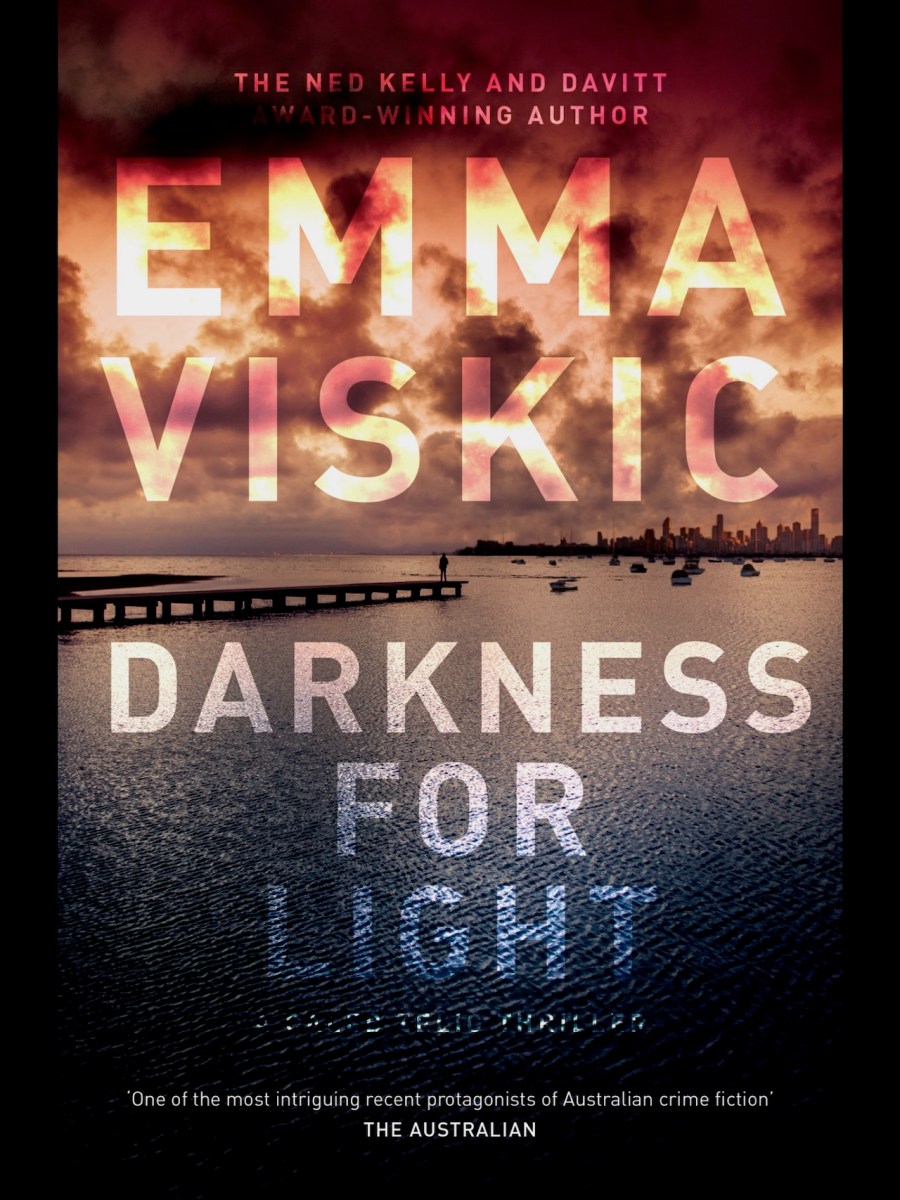
Book review: Darkness for Light by Emma Viskic

Who doesn’t love a good crime novel set in their home town?

Caleb Zelic is getting his shit together. He’s in therapy. He’s reconciling with his pregnant wife. He’s building relationships in the deaf community. He’s making good decisions.

A mysterious new client, Martin Amon, wants to meet Caleb urgently at Collingwood Children’s Farm. Caleb finds Amon’s body, bullet to the back of the head, bled out amongst the chickens.

Federal cop, Imogen Blain, chases Caleb down in the street. She’s wants him to help her find Frankie, Caleb’s old business partner, whom he wants nothing to do with. Frankie was an unreliable, lying addict. Caleb thinks Imogen might be a rogue cop. When he refuses to help her, Imogen threatens him with a blackmail he’s afraid could stick, so he goes looking for Frankie. Seems, the not so good decisions of Caleb’s past won’t leave him alone.

The yachts in the marina were lifting on a choppy swell, their masts tickling a presto beat. Across the bay, the city towers glinted against a leaden sky. Nobody on the foreshore now, just a lone man fishing from the retaining wall, rainproof jacket zipped to the neck. No threat – he’d been here the past hour. Caleb glanced in his bucket as they passed: two small fish gaped desperately, their eyes dull silver coins.

Darkness for Light is the third thriller in the Caleb Zelic series, and like its predecessors it’s crawling with narrative tension and plot twists. From the tension caused by Caleb’s disability – he’s deaf but struggles to accept this himself, and missing lots of information he’s commonly misunderstood, often resulting in him getting entangled in dangerous situations. Then there’s the tension in his relationship – his wife has had previous miscarriages and he thinks the success of this pregnancy will make or break their relationship. To his love-hate relationship with his old business partner, Frankie who he’s never sure he can trust, but is bound to by their shared history. Viskic’s clipped writing style and generous sprinkle of short sentences give the reader a regular jolt, just in case you weren’t paying attention, and of course there are the complex series of alarming and often violent events that unfold from the twisty plot.

Relief from the carnage and story tension is provided in the moments when Caleb reflects on his love for his wife and family, his occasional meetings with Henry his therapist for a session at Queen Victoria Market, and the dry humour. Henry pokes and prods Caleb’s brain, exploring his neurosis while sniff testing melons and buy in potatoes.

Henry pressed his nose to another rockmelon. The man had clearly been a labrador in a previous life: the same floppy gold hair and outward geniality, same ability to grip his prey in unyielding jaws. Caleb usually went home from thier sessions feeling like his brain had been gently shaken loose. They’d been at it twenty minutes now and he already had a low-grade headache.

Viskic came out of the blocks firing with her first novel in the series. Resurrection Bay won the 2016 Ned Kelly Award for Best First Fiction, three Davitt Awards, a shortlist place for the UK Crime Writers’ Association Gold Dagger and New Blood awards, and the iBooks Australia’s Crime Novel of the Year award. Book two, And Fire Came Down won the 2018 Davitt Award for Best Novel, so it will be interesting to see what accolades Darkness for Light attracts.

Seminal moments

There are seminal moments in life – those experiences that leave indelible impressions on our psyche. They can be positive or negative but they impact us in ways that mobilise us emotionally, spiritually or physically, cause us to sit up and take notice, inject a sense of urgency, and they can reverberate throughout our lives. Such experiences can pop up unexpectedly and may provide inspiration for our writing practice. Recently I was reminded of a couple of such moments from many years ago. This time of isolation lends itself to a bit of reflection, so I thought I’d write them down…

When you’re eighteen, with all the attitude that the age embodies – you’ve just finished high school, the thing you love most is horses, you find people perplexing, you’re itchin’ to move out of home and someone you know calls you and offers the opportunity of a lifetime, you jump right? Right. So I did.

I packed up all my stuff and moved. Two hundred and thirty kilometres from Melbourne, the last five up a deserted dirt road into the foothills of the Avon Wilderness. Our electricity was generated by the sun, or an old diesel generator that often needed to be started by winding an oily crank handle until your shoulders ached. Warmth was throw from wood fires glowing with timber you chopped yourself. Cooking relied on a wood heated slow combustion oven that meant if you wanted a roast you had to put it on at two in the afternoon to be ready for dinner. When water ran out – it ran out.

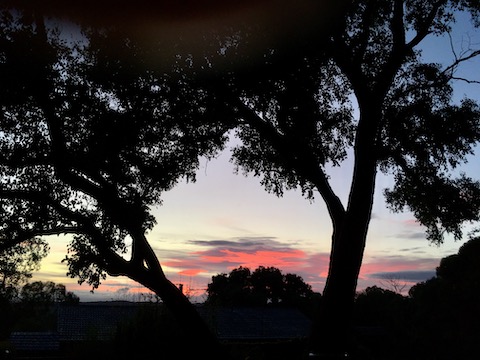
Autumn Sunrise

At the time, the place was considered so isolated that when we kept having trouble with the phone line, the Telstra repair guy showed us how to fix the problem ourselves and left us spare parts so he didn’t have to come back again. When an intruder came in the night banging on windows we got the rifle out and fired into the night to frighten them off.

We were two teenage women with drive, a can do outlook, a protective guard dog, and an endless wilderness to play in. It was magical, spectacular, dangerous country that offered boundless adventures that we embraced it with the zest of youth. I learnt to wrangle cattle, fix fences, shoe horses, run a business, farm, fight fires and engage with people from all walks of life.

The property was my friends family farm, in one of the most beautiful places in the country, with mountains as far as you could see. We ran a business taking tourists trekking on horseback though the mountains. Our guests were all sorts – from over confident schools kids, to families, to an unusual wealthy men’s group who left their wives at home and came away with their sons and one lone woman in a caravan, who they referred to as the ‘company secretary’. Her secretarial duties seemed to be in demand at all times of day and night.

My girls own adventure gave me a love of the Australian bush and carried me into young adulthood. I fell in love with the place where I now live, and have done for twenty years because something about it reminded me of that farm. The location provided inspiration for my second manuscript, which I’m about 15,000 words into now. Here’s the logline:

In denial that her past is holding her back, a private investigator goes to a closed small-town community to investigate the death of an environmental activist in a logging coup. She uncovers more than she bargained for and is forced to confront her own long buried grief to uncover the truth about what really happened.

Curiously living in this remote place in eastern Victoria provided the launching pad for an early career as a horse trainer and after a couple of years in the bush I ended up on the other side of the world in Portugal as a student of one of the worlds greatest horse trainers in the art of classical dressage, but more on that another time…

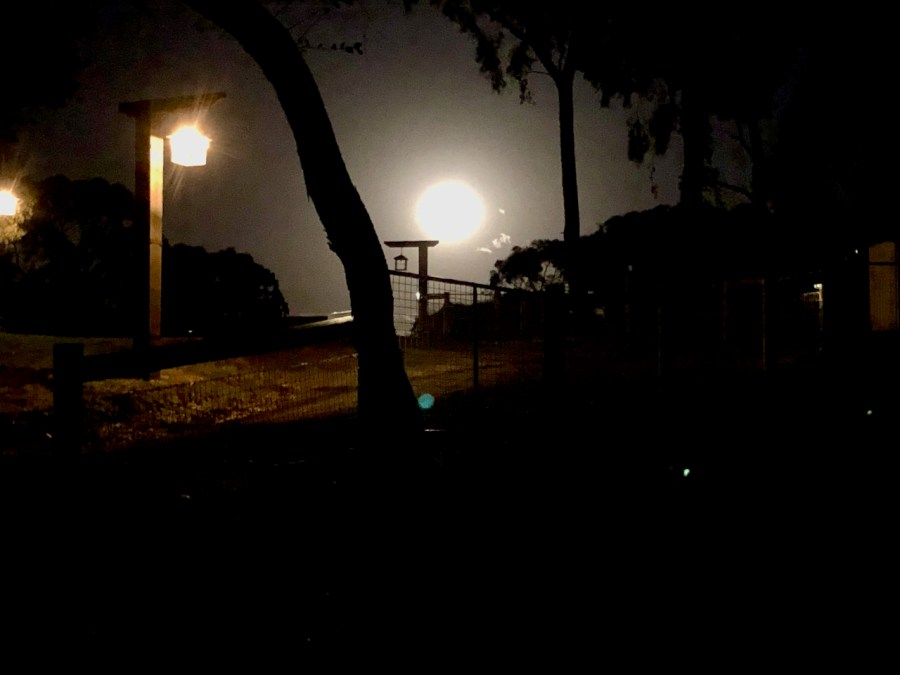
Main image: Late night stroll

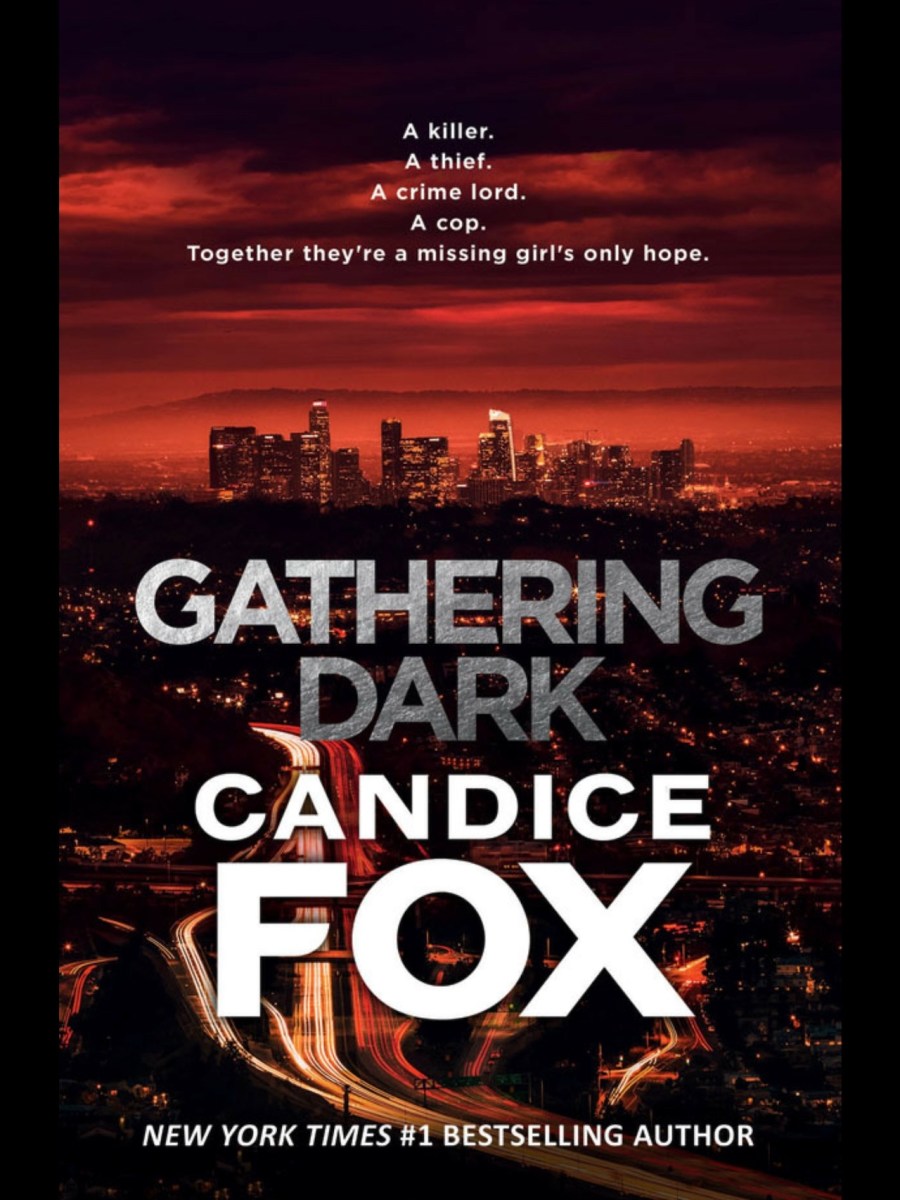
Book review: Gathering Dark by Candice Fox

Candice Fox’s latest novel Gathering Dark, in its second print run already, is a page turning romp of a thriller set in Los Angeles and spilling over with larger than life characters.

Recently released from jail, Blair Harbour was a well respected paediatric surgeon leading a privileged life and about to become a mother, then she shot and killed her next door neighbour, went to jail and had her child taken from her. Now she works the graveyard shift at a cartel owned gas station while she tries to get her life back together. When she is held up one night by the daughter of the woman she’d shared a cell with, and her cell mate, Sneak, turns up looking for help to track down her daughter who has disappeared, Blair agrees.

Screaming would have been a terrible idea. If I startled her, that slippery finger was going to jerk on the trigger and blow my brains all over the cigarette cabinet behind me. I didn’t want to be wasted in my stupid uniform, my hat emblazoned with a big pink kangaroo and the badge on my chest that truthfully read ‘Blair’ but lied ‘I love to serve!’

Gathering Dark

Jessica Sanchez is a detective who doesn’t quite fit the force and is being ostracised by her colleagues because an old man left his fortune to her after she solved the murder case of his daughter. The mansion he bequeathed her is next door to the house where the son of Blair, who Sanchez put away for murder, now lives.

But then she saw the blood on his hands, all over his face, her neck. Jessica thought of vampires and zombies, of magical, impossible things, and had to steady herself against a pool table. Her mind split as the full force of terror hit, half of it wailing and screaming at her to flee, the other half assessing what this was: a vicious assault in progress. Assailant likely under the influence of drugs. Bath salts–they’d been hitting the streets hard in the past few weeks, making kids do crazy things: gouge their own eyes out, kill animals, ride their bikes off cliffs. She was watching a man eat a woman alive.

Gathering Dark

What unfolds is a complex web of lies, crime and deception, packaged in a tight plot, with well crafted dialogue, rolling prose and a good dose of black humour. I loved the tough female characters, the bad ass baddies, oh, and the gopher, got to love the gopher.

Candice Fox has been running a regular Wednesday Facebook Live write club of late. You can logon and write with her for an hour, then take part in a half hour Q&A where she answers all your writing questions. She’s an incredibly generous, funny and talented writer. I have enjoyed her writing since picking up her first novel Hades, but am now a lifetime fan, so if you are a crime reader and haven’t yet devoured any of her work – get onto it.

Online writing course reviews

I love a good writing workshop, and there are quite a few online options around at the moment. Soon after the COVID lock down began I panic bought a load of writing courses to keep me amused in my spare time. Here’s a wrap up of them so far.

Writers Victoria

Writers Victoria have traditionally run face to face workshops, but have been moving their offerings online in order to continue their programs by pivoting their one day workshops into webinars. I have done two of these now: Showing and Telling with Emily Bitto, and The Art of the Redraft with Penni Russon. The format for both these workshops mirrored their live options as closely as possible. There were two eighty minute learning videos, and a one hour live Q&A session with the presenters so you could get all your questions answered. Both courses included handouts and exercises, and the big bonus for me was the personalised feedback on a 500 word piece of your own writing. The presenters are all accomplished writers or writing professionals in their own right. The courses cost $155 dollars, and and you can watch the webinars again at your leasure via a link again later.

Kill Your Darlings

Kill Your Darlings have a neat online learning tool for their suit of self paced courses. I completed their Writing A Thriller course with J.P. Pomare, author of Call Me Evie recently. It took about six hours total to complete, including exercises. The course is a nice mix of reading, audio and video lessons, and practical exercises, and the $149 purchase gives you lifetime access to the course materials.

Australian Writers Centre

I’ve done and reviewed the Australian Writers Centre’s online courses before in some detail (here and here). My most recent sojourn included Fiction Essentials – Grammar and Punctuation; Fiction Essentials – Dialogue; and Fiction Essentials – Characters. These three self paced courses took about 2.5 hours each to complete. The first included some online exercises to test your knowledge as you go, the other two have handouts. All three were a mix of video slides and/or audio lessons. They cost $137 each (usually $195), so a little on the pricey side compared to the others, but the course content is good.

Writing courses are a fun way to spend some of your free time, and a good use of the funds you’re saving if you are working from home and not going out. Writing courses help keep me motivated for my own writing, and I get some valuable tips to improve my writing practice. I also feel like I am supporting the creative writing industry to get through these lean times. I for one want to see the creative industries survive through the current global malaise so will keep doing what I can to help keep them afloat. Now to choose what to do next…

What online writing or reading experiences have you had of late?

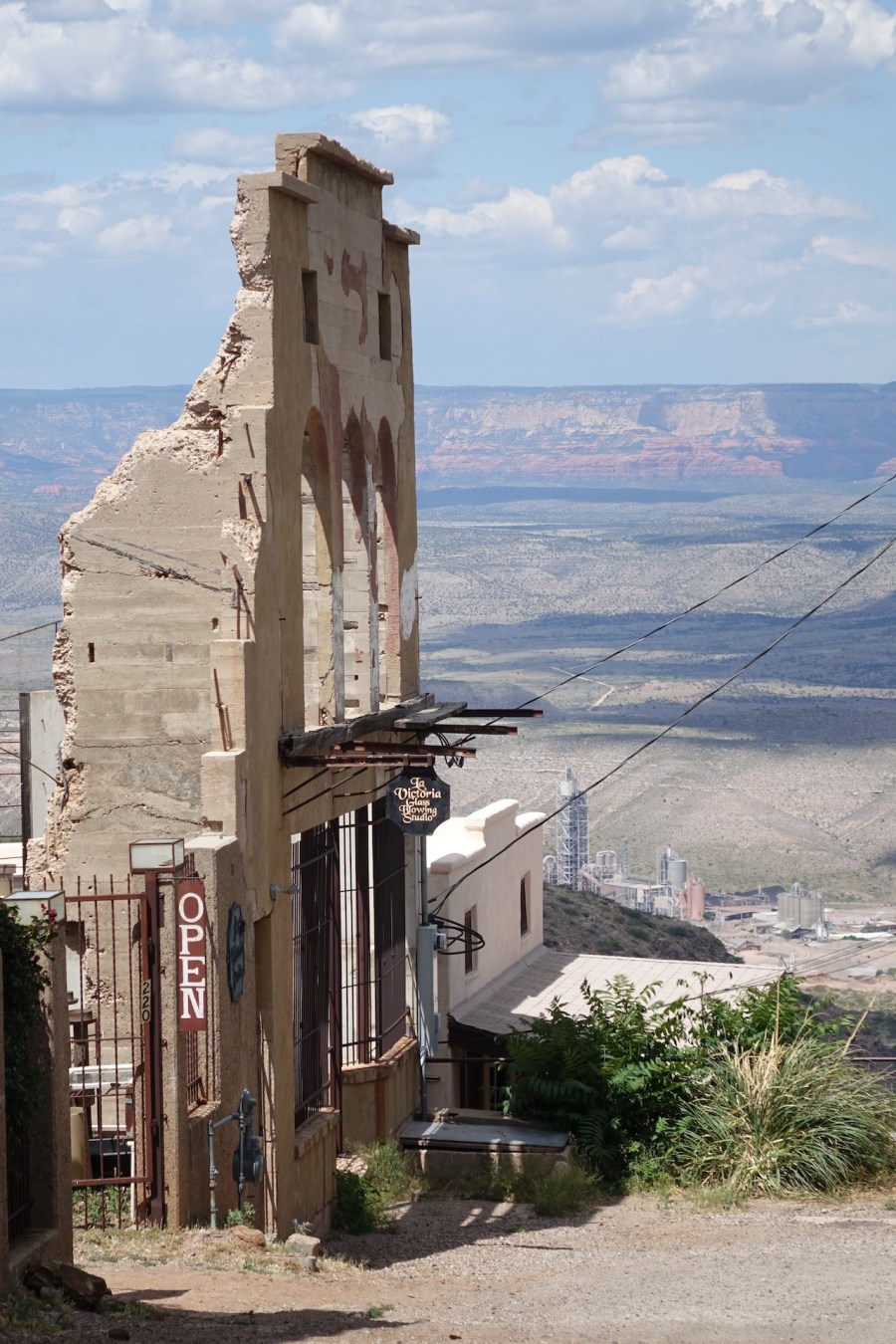
Image: Jerome, Arizona

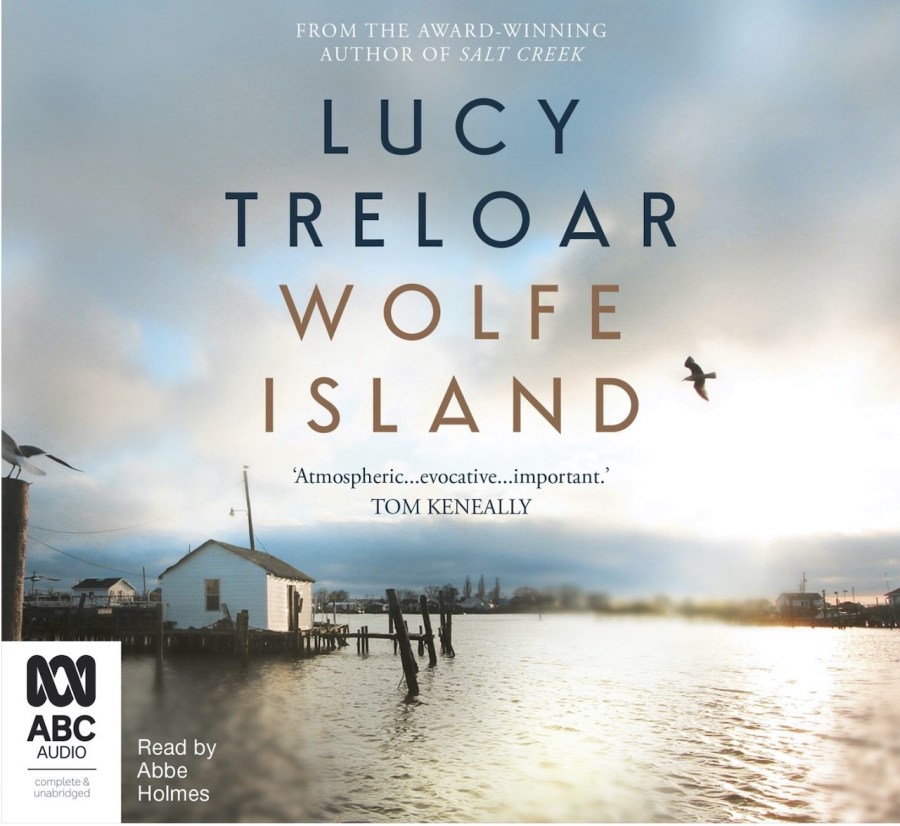
Book review: Wolfe Island by Lucy Treloar

There was something about listening to the audiobook of Wolfe Island whilst I worked in my own bubble in my vegetable garden – weeding, harvesting, fertilising, mulching, planting – the attention to detail those tasks demand slows time. The activity threw me deeper into a novel that I’m sure I would have been enthralled by anyway, and submerged me into the melancholic world of Kitty Hawke.

Kitty is a resilient and resourceful woman of fortitude, and the last human inhabitant of Wolfe Island, which is being devoured by the rising sea. She lives a solitary, creative existence with her wolfdog, Girl, and makes art from found objects that she sells to the mainland. Kitty and Girl both come across as half wild and half domesticated, each lends the other a strength that is fortified by the Waterman giant talisman statues Kitty constructed from found objects to protect the island.

It was exhausting being around people and noticing them, thinking about them. I felt roughened and coarse now, as if I was rubbing against the grain of Wolfe Island. It used to be that I could forget myself and be, spend hours in the marshes watching the tides and the grasses, birds walking over my feet. I’d been still so long, listening to the unintelligible wind, I was part of it then, and insignificant. I missed that. The writing helped a little.

Wolfe Island

Kitty is drawn to reconnect with the outside world when her granddaughter arrives with some friends who are in danger because of their status as climate refugees. On the mainland climate refugees are ‘runners’ and vigilante ‘hunters’ chase them down and kill them. Gradually the young people let her into their troubles and she connects with them, eventually their cause becoming hers. When the island ceases to be a refuge for the runners, the group set off seeking safety in the north.

The islands were worlds and you didn’t move lightly from one to the other, and people’s way of speaking wasn’t quite the same from one island to the next. If we ran into each other on the main – a no-man’s-land to us – we saw our resemblance to each other, and heard our own foreignness in each other’s voices and prickled up and felt the eyes of people on us, assessing us for threat in the same way that we did them, resenting them for it and feeling their resentment toward us.

Wolfe Island

Lucy Treloar’s first novel Salt Creek won the Matt Richell Award for a New Writer, the Dobbie Literary Award and the Indies Award for Debut Fiction. It was also shortlisted for the Walter Scott Prize for Historical Fiction, the Miles Franklin Literary Award, and the Readings Prize for New Australian Fiction 2016. Wolfe Island is deserving of its own accolades and I’ll watch with interest to see how it goes.

I say, ‘Girl, Girl,’ and she comes to me like a myth, her coat sleeked smooth, her tail back out. She is in a line, a ripple through the long grass, and butterflies and hoppers rise in her wake, lifting like spume and catching the light. She passes me by with a rush of wind and her sweet wolf scent, leading the way to anything.

Wolfe Island

Wolfe Island is a slow, lyrical lament on the state of the world in the grip of climate change, and the subtlety with which Treloar brings you to realise you are in a very near dystopian future is a little alarming. The novel is written in three parts – the island, the journey and return home, each revealing a different lense on a climate impacted world and Kitty’s relationship with her family, her place in the world and herself. Oh, not to forget her wolfdog, Girl, I’m a sucker for a novel with a dog as girls best friend…now I must go and turn that pumpkin I picked into soup.

Spoken word: Feet of clay

I have written a couple of blogs about spoken word. My first spoken word event was for a local festival in the town I live in a little over a year ago – Poetry and Prose at the Pub. I decided to do it to challenge myself – it was an introverts nightmare. Nervous as a long tailed cat in a room full of rocking chairs, I read up on tips for delivery and practiced for hours, the dog listening patiently in the background. I delivered my piece, script in shaking hand, to a local audience of about thirty people, and to my releif it went down well.

My second spoken word outing was at the Terror Australis Readers and Writers Festival in Tasmania, last year. This time I delivered my piece freestyle, having learnt it off by heart. My best tip for remembering a script is to record yourself reading your work and play it back over and over, and practicing delivery until you nail it. At Noir at the Bar in Cygnet there were about seventy people in the audience.

The Artistic Director of Terror Australis tracked me down a couple of weeks ago and asked me to record my spoken word piece Feet of Clay for a Facebook live event she’d started hosting called BookLove Tuesdays. Feet of Clay combines my dual interests of poetry and crime fiction and tells a story of ambition, love and jealousy in the pottery world. It’s a bit creepy, but I hope you enjoy it.

I would love to write an entire novel using this rhythmic style one day – although I think it would be hard to keep this type of cadence up for an entire manuscript – a challenge for another time perhaps!

What are some of the things you have done to challenge yourself or your writing?

Main image: Tanna, Vanuatu

Book Review: Sold by Blair Denholm

Nothing like a bit of noir to make you feel better about your own circumstances…

He and Maddie should simply disappear from the Gold Coast. The gaudy city masqueraded as paradise, but sometimes it was hell on Earth.

Gary Braswell is a ball scratching Gold Coast car salesman, a chain smoking compulsive liar with drinking and gambling habits, and he’s not averse to a bit of illicit drug taking either. His act now, worry about consequences later approach to life have left him in debt to a loan shark, Jocko, whose hired muscle is the worst kind of ex crim. Gary thinks his luck has turned when a wealthy Russian couple buy four cars from him that enable him to pay back his debt to Jocko, but Jocko wants Gary to run a little package to Bali for him as a late payment penalty. If he refuses Gary’s wife will be paid an unwanted visit from Jocko’s muscle.

When it came to heterosexual couples and serious vehicle purchasing Mr usually did the talking and Mrs the listening, and sometimes the eye-batting, lip-licking and hair-twirling. There were rare exceptions, about as rare as Gary tipping the first try scorer. He imagined the ‘work’ the woman referred to might be pole dancing or selling pot.

While Gary’s trying to work out what to do, his wife goes to stay with her mother for her own safety. Meanwhile Gary gets a new job as a real estate salesman chasing bigger returns with his bullshit, and his best mate agrees to help him hatch a plan to get him out of his pickle with the help of the federal police, some of whom are as dodgy as Jocko’s muscle. Of course Gary just ends up in deeper shit involving dodgy money laundering Russians, and his life spirals more and more out of control on sex, drugs and booze.

Snot dripped from his nose. He placed a hand to his forehead. Temperature seemed normal, but his arsehole was red raw. And if that wasn’t enough, the itchy balls were back.

Blair Denholm’s novel published by Clan Destine Press is quintessentially Australian noir with plenty of Aussie expletives. Denholm, who has an interesting past himself, crafts a protagonist who is wholly unlikeable, but redeemed for the reader by his habitual haplessness and a huge dose of gaudy humour. I’m just glad I’m not Gary Braswell’s wife, Maddie.

Gary’s bag of excuses was empty. He stared at Foss and gathered his thoughts. Suddenly his arms and legs started to jerk like Peter Garret at a Midnight Oil concert. In one rapid motion he collapsed and curled his body into the foetal position. He pulled his arms in by his sides and, unseen by Foss, pinched the soft skin on the inside of his bicep, and launched into a juddering, rocking motion. He grunted out primal-sounding noises which soon escalated into unearthly wailing.

Sold is not for the faint hearted, or those who are queasy about body fluids – it’s no cosy mystery – but it is a fun romp of a read if you like a walk on the wild side, and it could make your isolation seem not so bad after all. The sequel, Sold to the Devil is due out soon.

Strange times indeed

Where to begin when you sit down to write for the first time in three weeks and the world is a completely different place to what it was last time you faced a blank page? And how does one reclaim a creative space embattled by a mountain of work priorities driven by a virus taking an extraordinary toll on humanity?

In the grand scheme of things I am incredibly fortunate in these uncertain times – I have a stable job and I can now work from home, I am holed up in a comfortable house surrounded by hilltops, forests and the constant chatter of bird life, I have a garden to potter in and grow a lot of my own food, and a person and a dog who I am happy to be locked up with. I am also a natural introvert, so am not overly distressed by the idea of staying home for six months, after all I voluntarily did exactly that for 12 months only a little over a year ago when I took time off to write.

So what is it that leaves me a little discombobulated? There is of course the great sadness experienced when reading the news about the toll the virus is taking on the world, the shock at how this situation exposes the fragility of our globally interconnected economic and social systems, the fear that this even event will not be enough for us to find a different way to live in relation to nature, and for the well-being of people I care about. It is perfectly normal to feel a little shell shocked in the early period of a crisis of this scale, regardless of how well protected from it you might feel individually.

A situation such as this requires a significant mental shift as well as a physical reorganisation, and a willingness to embrace a new normal. The last three weeks have been a work whirlwind – we had 100 people we needed to try to reorganise to be able to work from home. This took a mammoth effort from myself and colleagues. We also have thousands of stakeholders we needed to provide urgent information to – to help them understand the changes to our workplace, and to connect them with information to help them weather the storm.

Prioritising taking care of the work team has been important, and I have been happy to do so, but at the same time I lament the intrusion into my personal space, particularly my creative space, and how the separation between this and work demands have become blurred. I need to trust that on the other side of this shift I will find my creative, resilient brain waiting for me. It made me realise how much routine plays a part in making time for ourselves – I used to use the time commuting to and from work as my creative writing time, with that gone, I need to create a new routine that allows time for writing.

It is clear the current situation is going to last for a long time, at least until a vaccine is found – conservative estimates suggest at least six months, if not years,. The situation demands finding a new routine that allows for as much of the fullness of our lives as can be managed within the restrictions we must live with out of compassion and care for our fellow human beings, as well as our own. My frustration of recent weeks led me to think about what a new structure might look like…here are some of my thoughts.

On the intrusion of work

The voice of work can be loud voice and demanding. We need to take the time to set up a comfortable workspace and make it as private as circumstances allow. Find new ways using technology to stay connected to staff and colleagues now you can’t lob up at their desk. Build in regular welfare checks to make sure they are ok. Carve out time blocks for different categories of your work – do the easy things when stress levels are high and the more challenging jobs when your concentration is at its best. Don’t expect your productivity to be what it was – at least not immediately.

Take regular breaks – make a cuppa, drink water, pat the dog/cat, talk to the houseplant, walk around the garden or gaze out the window. Even better open all the windows and blast out the house with fresh air.

Keep time sheets to help yourself contain your day job to reasonable hours the loss of a commute removes the natural boundary of home time.

Personal Wellness

Create a routine. Keep getting up and going to bed at a reasonable time. Move your body in a way that makes you energised at the start of the day. My go to exercise is running or walking with the hound, yoga by YouTube or a bike ride. I will also make time for the solace of gardening. Last weekend I spent time in the veggie patch, weeding and planting seeds – my own version of hoarding whilst others were madly buying toilet paper and cleaning products.

Do some of those jobs you’ve been putting off forever because you were too busy – tidy those cupboards, paint a room, finish the landscape project, organise your bookshelf – control the things you can it can ground us when things are a little chaotic.

Eat well – if you weren’t a cook before, maybe now is a good time to learn the skill, and to appreciate the comfort in it – a couple of the my favourite places to go for tasty recipes are Arthur Street Kitchen and Ottolenghi. Identify things you can do to you bring you peace or joy – take a bath, sort your holiday photos, paint or journal, find a place you can retreat to. What things would you put in your self care toolkit? Keep them close and turn to when needed.

It is important to stay up to date with what’s happening in your world, but it’s also easy to be sucked into obsessing about it. Place limits on your engagement with news and social media about the COVID conversation and remember the media is often sensationalist, so acquire your information from trusted reliable sources. Don’t lose sight of what is good in the world.
Look for things to laugh at each day – your pet being amusing, silly memes online, and when it all seems too much – reach out for assistance.

Creativity

Carve out time for creativity and make sure you use that time for something connected to your creative interests. Now is the time to start that long term project you’ve been thinking about on and off. My plan is to set aside a block of time each day to write, perhaps I will finish my second book sooner than I thought. On the days I don’t actually write I will use my creative time for a connected activity like reading or online learning on writing. The Australian Writers Centre delivers some great online courses for writers and Writers Victoria are moving a lot of their workshops online, one of which I am doing tomorrow.

Your creative thing might be painting, knitting, sewing, or learning an instrument. Don’t limit yourself to things you already know how to do – get online and find someone who’s moved their teaching practice online – you could learn a new craft and support another creative at the same time.

Social connectivity

The political narrative about needing to keep our distance from people to contain the spread of COVID-19 uses the term social distancing. For many, the term spells isolation and loneliness. I wish the policy-makers had considered this and referred to physical distancing instead, as at times of stress, social connection is even more important than usual. It provides ballast and helps to keep people mentally well. Find ways to connect with friends and loved ones that keeps everyone safe, whether its Snapchat, video catch ups or long phone conversations. The time for hanging out in coffee shops and hugs will return eventually. We tried our first digital dinner party last week, and I was pleasantly surprised at how well it can work. Some tips:

  • Keep up communication as you cook so you can time your dial in to get everyone eating together
  • Set your laptop up at least arms length from where you sit (a bit further away than where you lay the table) so everyone can be seen in the picture together
  • Sit the laptop up on some books – it works better if the camera is slightly above your eye level
  • Bring your best self to these occasions, people are dealing with the changed world in different ways, and we need to bring compassion for those we care about – it can bring out both the best and worst in people.
    If you want to hang out online because that’s the only option while you are in isolation there are loads of apps for that – Zoom, Skype, House party, Google hangouts.

This weekend we’re going to try one where everyone taking part cooks the same meal.

Community

Continue to greet neighbours from a respectable distance when you pass them in the street, when you can – support local businesses that are staying open to service your needs or donate to your favourite creative organisation. When businesses set up rules to help keep customers safe and trade fairly in response to some individuals being overtaken by individual greed – follow them without griping – it’s a time to loosen our grip on control and individualism and think more collectively. In Australia there is still plenty to go around – toilet paper, food and cleaning products included.Hoarding is really not necessary and probably tells us more about our mental health than it does about supply and demand – so if you are doing it perhaps consider spending the money on a therapist instead.

This new world order is going to be a marathon, not a sprint so railing against it will not help, now is the time for radical acceptance and innovating to make your life as full as it can be within the circumstances in which we find ourselves, with much lower expectations than you may have had previously. Chunk your days into bite sized manageable segments to avoid the existential dread of the unknown taking over and when you notice the current situation enabling injustices that make your blood boil – channel that energy into writing to your local MP, or the newspaper to call them out so the annoyance doesn’t fester.

If you wear yourself out at the beginning you may not make the distance in one piece, so take the time to find a way to be that offers you the best change of wellness, serenity and productivity for the long haul. And for those of us who take solace from creative pursuits, we must make room for them.

Stay well.

Book Reviews: Bitter Wash Road and Peace by Gary Disher

Australian veteran author Garry Disher has written over fifty books in a range of genres: crime thrillers, literary/general novels, short-story collections, YA/children’s novels, and writers’ handbooks. Disher produces about a book a year and was recognised for his extensive work when awarded the Ned Kelly Lifetime Achievement Award, 2018.

I recently read Bitter Wash Road (2013) and Peace (2019). Stand alone crime fiction novels, though they both have the same protagonist and are set in the same town. Bitter Wash Road was shortlisted for the Ned Kelly Awards, Best Crime Novel, 2014. Both novels are complex slow burners with multi layered plots that keep the reader engaged and guessing.

It was heart-stopping, seeing Wendy Street at a Hills Hoist set in the lawn, battling a great flower head of white sheets onto the line. They flung themselves about, enveloping, licking and taunting, flattening against her body and filling with air again. He watched her wreathe and dance, fighting, feeling blindly for the pegs and the line.

Bitter Wash Road

Constable Paul Hirschhausen (Hirsch), the protagonist in these two books is a whistleblower cop who was demoted and sent to remote, dusty Tiverton, three hours north of Adelaide off the highway in South Australia. Other cops don’t trust him and internal investigations keep hounding him. Hirsch spends his days trying to do the right thing and stay out of trouble trawling the country roads and building relations with the locals, doing welfare checks and resolving small grievances until more serious crimes take place and all hell breaks loose.

This close to Christmas, the mid-north sun had some heft to it, house bricks, roofing iron, asphalt and the red-dirt plains giving back all the heat of all the days.

Peace

Disher knows rural SA intimately having grown up there and invokes the isolation of a small country town and its inhabitants beautifully, using economical pared back prose to show the climate, distance, inhabitants and challenges of remote towns. Disher’s plotting is subtle and the years developing his skills shine through in these well crafted novels with complex characters.

Book Review: The Fragments by Toni Jordan

Who doesn’t love a writerly mystery novel?

Popular Austrian-American author Inga Karlson and her publisher were killed in a mysterious warehouse fire in New York in 1939, along with every copy of Karlson’s highly anticipated novel. The two were believed to be the only one’s who ever read the manuscript and all that remains are a few page fragments. Over the next forty years Karlson becomes a cult figure and the fragments become much studied and analysed.

And in the end, all we have are the hours and the days, the minutes and the way we bear them, the seconds spent on this earth and the number of them that truly mattered.
― Toni Jordan, The Fragments

Caddie Walker was named after a character in Karlson’s first novel and works as a bookstore assistant in Brisbane in 1986 after dropping out of university because of a failed love affair with a professor. When the Karlson fragments are bought to Australia and put on display in a Brisbane museum Caddie meets an old woman who calls herself Rachel and quotes what sounds like additional text from the book fragments that supposedly no one has read, and a mystery is born which Caddie is determined to solve.

“To spend her days reading and growing things. Could there be any better life?”
― Toni Jordan, The Fragments

The Fragments tells Karlson and Caddie’s stories across two different time periods, both of which Jordan brings brilliantly to life through her use of sights, sounds, smells and carefully selected cultural references. The character’s stories unfold at a pace into a twisty intermeshed climax. Part historical novel and part contemporary mystery the two stories are held together by the fragments and the theme of loss that runs through both characters lives. The Fragments is a page turner, and highly recommended.

“Books are time travel and space travel and mood-altering drugs. They are mind-melds and telepathy and past-life regression. How people can stand here and not sense the magic in them – it’s inconceivable to her.”
― Toni Jordan, The Fragments

The Fragments (2018) is Melbourne author, Toni Jordan’s fourth novel and the first I have read, but I’ll certainly be reading more her other work. Her debut Addition (2008) was long listed for the Miles Franklin Award, her second Fall Girl (2010) was optioned for film, Nine Days (2012) was named the Indie Book of the Year by the Australian Booksellers in 2013, and Our Tiny Useless Hearts (2016) was long listed for the International Dublin Literary Award.