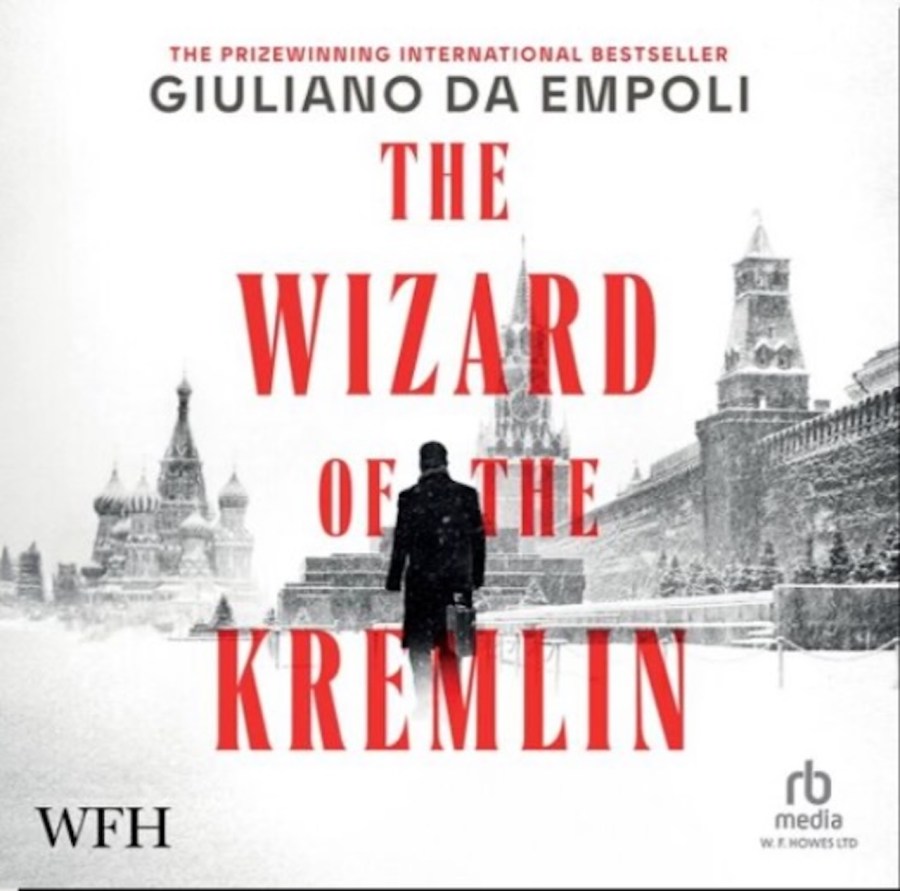
I was fascinated by Russian history in high school, so couldn’t resist The Wizard of the Kremlin by Giuliano Da Empoli. The book is a political thriller about how power is won and held, and it presents a fascinating insight into Putin’s belief system.
The winner is always the one whose power base is at court. Which is why adulation is more effective than talent, and silence than eloquence
The story is told through the lens of a single long interview Vadim Baranov, the Wizard, has with a journalist he invites to the secluded dacha he’s retired to. Baranov is a proxy for Vladislav Surkov, Putin’s former chief policymaker and appears to be one of the few Kremlin officials who has actually retired – most have fatal accidents.
Russia is a country of mutes, a Sleeping Beauty country, lovely but lifeless because the breath of freedom is missing
Vadim Baranov is a young zealot and spin doctor who aligned with Putin in the late 1990s when Putin was the head of the Federal Security Service of the Russian Federation. Baranov worked on a campaign by Boris Berezovsky to help Putin win power and replace Boris Yeltsin. The narrative covers that time and up to the period just before the current war in Ukraine.
We immediately started to breathe in the air of excitement and madness that surrounds a war, when just staying alive is itself an adrenaline rush.
Interspersed with the political narrative is Baranov’s story about his childhood and young adulthood when the USSR and censorship came to an end, and communism began to give way to democracy. Baranov is ambitious and finds himself aligning with other ambitious men who are disappointed by the changes. Baranov is a strategist and an organiser and he collaborates with the likes of entrepreneur Mikhail Khodorkovsky, oligarch Boris Berezovsky, and then Vladimir Putin who wants to restore Russia to its former imperial glory days. Putin believes the Russian people’s desire for stability can only be achieved through raw power and an appeal to nationalism.
Like great dictators throughout history, Ksenia instinctively knew that nothing inspires more fear than random punishment. If punishment can strike unexpectedly and for no apparent reason, one’s subjects will be kept in a state of constant alert
The Wizard of the Kremlin’s narrative is engaging, ironic and humorous, and weaves historical events with fiction. A fitting structure for a story that is ostensibly about manipulation and political guile.

