Review: Adelaide Festival Theatre and WOMADelaide

On my annual pilgrimage to Adelaide for Adelaide Festival, Adelaide Writers Week and WOMADelaide, there was so much to see I’ve milked a couple of weeks worth of blogs from it. I had only been there a little over twenty four hours and my brain had already been thoroughly exercised.

Being immersed in a diversity of creative arts of all kinds provides inspiration and motivation for writing. This blog covers the theatre I attended and WOMADelaide music festival.

The Doctor By Robert Icke

The Doctor starring Juliet Stevenson, is an adaptation, by Robert Icke, of the play by Viennese dramatist, short story writer and novelist Arthur Schnitzler’s 1912 production Professor Bernhardi, a portrait of antisemitism.

The adaptation broadens out the focus of the play to be about identity politics (gender, sexuality, race and class), ethics (medical, religious, parental) and power dynamics. The director extended the issues and really messed with the audiences head, perceptions and biases by casting women as men, white people as black and black as white.

The protagonist Ruth Wolff is a Alzheimer’s medical practitioner and secular Jew. She prevents a priest seeing a fourteen year old girl dying of sepsis as the result of a self administered abortion. He was called by the parents but the girl is not in a state to decide for herself if she wants to see the priest. The incident goes viral and provokes a petition and TV debates, that jeopardise Ruth’s career and the medical institutes funding. ‘The incident’ itself had some of the qualities of The Slap by Christos Tsiolkas in its impact.

All the characters in the play claim righteousness in their own positions and all are shown to be potentially compromised by their own characteristics or beliefs. The playwright employs an exquisitely torturous interrogation of the use and misuse of language, and the play was an exhausting, mind bending, and brilliantly performed piece of theatre that I will be pondering for some time. If you ever get a chance, go and see it.

Dimanche by Chaliwaté and Focus

The Belgian theatre production Dimanche (meaning Sunday) was both beautiful and harrowing. The almost wordless performance was delivered through the mediums of film, acting, sound and puppetry and depicts three friends tracking and filming the cataclysmic impacts of climate change.

It begins with three filmmakers journeying in an imaginary truck to the arctic to document the breakup of ice flows. Only two survive the experience and we cut to life size polar bear puppets on a futile search for food as their habitat disintegrates. The set switches to a couple living with an elderly relative in extreme heat. As they swelter under fans, the furniture melts, and eventually the elderly woman succumbs to the elements.

With each new scene, another of the friends falls victim to the impacts of climate change until the final scene which depicts the world under water. It was a stunning piece of theatre, precisely executed. I am very glad I went to see it despite leaving feeling like a frog in a slowly boiling pot of water.

WOMADelaide

WOMAD is a four day music, arts and dance festival held in Adelaide’s shady Botanic Park and a chance to immerse oneself in what feels like a parallel universe. Around 20,000 people per day and hundreds of artist from around the world gather each day to celebrate the diversity or music and arts with performances across eight stages scattered through the park.

My favourites included music by The Blind Boys of Alabama, Tami Neilson, Mavis Staples and Spinifex Gum; acrobatic performance by Gravity and Other Myths; and climate talks by Cristiana Figures the former UN Secretary for Climate and reflections on climate optimism by film maker Damon Gameau, scientist Will Steffen, environmental lawyer Michelle Lim and Adelaide Lord Mayor Sandy Verschoor.

I departed Adelaide full of creative inspiration and having done some internal plotting and written a few scenes for my next novel, which will have an environmental theme and be set partly in Melbourne, partly in East Gippsland. Watch this space.

Theatre images from the internet

Book review: The End of the Ocean by Maja Lunde

I almost drowned in the beauty and tragedy of this watery novel. The End of the Ocean is two stories that converge twenty-four years apart, either side of climate change induced environmental and societal collapse.

They talked, the two men, and the mountain ate up their words.

The End of the Ocean

In 2017, seventy year old Norwegian sailor, journalist and environmental activist Signe visits the place of her childhood. Once a place of great natural beauty, the river and waterfalls have been diverted for hydro electricity, events that destroyed the habitat of much flora and fauna, her parents marriage and her own first relationship. The glaciers are melting and she discovers her old love, whom she has never gotten over, is contributing to their destruction by selling glacial ice to the Middle East as a luxury item. She is infuriated and tips most of a load of ice into the ocean to melt and sets off in her sailing boat, Blue, with the remaining twelve non-degradable blue plastic containers in search of her old lover so she can dump them in his yard.

It is strange—no, surreal, surreal is the word—that I’m one of them, the old people, when I am still so completely myself through and through, the same person I have always been; whether I am fifteen, thirty-five or fifty, I am a constant, unchanged mass, like the person I am in a dream, like a stone, like one-thousand-year-old ice. My age is disconnected from me, only when I move does its presence become perceptible—then it makes itself known through all its pains, the aching knees, the stiff neck, the grumbling hip.

The End of the Ocean

In 2041, twenty five year old David worked at a desalination plant until the drought became so severe he had to flee with his family. He is a climate refugee in a French refugee camp trying to find his wife and infant son who he and his six year old daughter Lou became separated from when they had to abandon their home due to the drought and a massive fire. Once they have reunited they will head north to the water countries.

But the power came and went, the stores were emptied of food staples and the city became emptier, quieter. And hotter. Because the drier the earth became, the hotter the air was. Previously the sun had applied its forces to evaporation. When there was no longer any moisture on the earth, we became the sun’s target.

The End of the Ocean

Signe’s journey is fuelled by anger and despair at humanities destruction of the environment and personal sadness about her own relationships. As she encounters many perils on her sea voyage she reflects on her own life and relationships, and why she lives such an isolated existence. David’s journey is driven by desperation and the longing to be reunited with his wife and son as he tries to provide for himself and his daughter in a world where climate change and water shortages means day to day survival is tenuous. Gradually the two stories converge across time when David and Lou stumble across an old sailboat under tarps at an abandoned house far from the sea.

I have really tried, I have been fighting for my entire life, but I have been mostly alone; there are so few of us, it was futile, everything we talked about, everything we said would happen has happened, the heat has already arrived, nobody listened.

The End of the Ocean

The speculative fiction novel is a meditation on human destruction of the environment, climate change, family relationships and human resilience. The End of the Ocean, translated from the original Norwegian by Diane Oatley, is beautifully written yet a frightening rendering of what a future world might look like in the face of climate change. The ambiguous ending contributes to the haunting sadness infused throughout, a must read, but not a feel good one. Lunde, a climate change advocate, is also the author of The History of Bees (2015) and Przewalskis Horse (yet to be translated), both of which I will add to my reading list.

Book Review: The Dark Lake By Sarah Bailey

Secrets are at the heart of a good mystery and Sarah Bailey packs them into her debut psychological mystery, The Dark Lake.

The house turned out to hold more of Robbie’s secrets than I had ever expected, though I am sure there are many more that we will never know

The Dark Lake

Gemma Woodstock is a cop in Smithson, the small town in New South Wales where she grew up. She’s good at her job but a personal train wreck, which stems back to the suicide of her first boyfriend at the end of high school ten years earlier. Her relationship with her loving partner and father of her child is distant, she is sleeping with her married work partner Felix, struggles to be a good parent to the son she loves, and drowns her emotions in booze.

Probably I should move away, leave Smithson, but starting over has never been a strength of mine. I have trouble letting go.

The Dark Lake

When high school drama teacher Rosalind Ryan, who Gemma went to school with, is murdered, the small town is shocked. Gemma and Felix start to investigate the crime and the intertwined secrets of Rosalind and Gemma start to emerge. The investigation almost undoes Gemma in her effort to keep her own history and emotions separate from the case.

I allow myself to process the fact that Rosalind Ryan is dead. I suddenly feel startled to find myself a fully grown adult.

The Dark Lake

The book is a well written slow burner and hooks you in with a compelling and complex story line. It’s character driven with a well drawn cast who are easy to like and/or hate. The story shifts from the present to ten years earlier, gradually revealing the interlinking stories as the secrets are revealed.

Set in between a burst of mountain ranges, Smithson is a little oasis of greenery in the middle of endless fawn-colored acres of Aussie farmland.

The Dark Lake

I liked it enough that I will read the next in the series, Into the Night.

Grand Dames of Crime: Helen de Guerry Simpson

Australian born of French heritage, Helen de Guerry Simpson (1897-1940) achieved much in her relatively short life. Simpson moved to England as a teenager and was educated at Oxford where she studied music. Her education was interrupted by the war, and in 1917 she joined the Women’s Royal Naval Services to work as an interpreter and decoder, unscrambling secret messages for the British Admiralty.

Simpson met and became close friends with another female crime writer, Dorothy L. Sayers in London. Both women were early members of the Detection Club along with other well known British detective writers like Agatha Christie. Sayers contributed to two of the Detection Club’s round-robin works The Floating Admiral (1931) and Ask a Policeman (1933) and the creative non-fiction The Anatomy of Murder (1936).

Do you promise that your detectives shall well and truly detect the crimes presented to them using those wits which it may please you to bestow upon them and not placing reliance on nor making use of Divine Revelation, Feminine Intuition, Mumbo Jumbo, Jiggery-Pokery, Coincidence, or Act of God?

Oath of the Detective Club

Simpson was a woman with dynamic energy and broad interests. She was known to be a good fencer, an accomplished horsewoman, and a student of witchcraft. She played the flute and piano and was an excellent cook and wine maker using ancient recipes to make her brews which she stored in the cellars under her London house. She also worked as a radio broadcaster, a playwright and ran unsuccessfully as a Liberal candidate on the Isle of Wight in 1938.

Simpson was a versatile writer, publishing poetry, writing plays, short stories, crime fiction, historical fiction and historical biography and non-fiction. Her first book, Aquittal (1925), was written in five weeks as the result of a bet. Five of her novels were mysteries, three of which were written in collaboration with English novelist and playwright Clemence Dane (also known as Winifred Ashton) whom Simpson named her own daughter after. The authors first collaborative work was Enter Sir John (1928), followed by Printer’s Devil (1930) and Re-Enter Sir John (1932) set in the English theatre world with protagonist, amateur sleuth and actor Sir John. During this period Simpson also wrote the dark political novel Vantage Striker (1931).

Simpson won the James Tait Black Memorial Prize for her 1932 novel Boomerang which was her first big success. Two of Simpsons novels and one collaboration were turned into movies. Enter Sir John (1929), written with Clemence Dane, was filmed as Murder! (1930) by Alfred Hitchcock; Under Capricorn (1937) set in NSW was turned to film by Alfred Hitchcock in 1949 and starred Ingrid Bergman and Michael Wilding; and Saraband for Dead Lovers (1935) was filmed in 1948.

Simpson died age 42 in October 1940 after a short illness.

Bibliography

Novels:
Acquittal (1925)
Cups, Wands and Swords (1927)
The Desolate House (1929)
Enter Sir John (1929)(with Clemence Dane)-filmed as Murder! (1930) by Alfred Hitchcock
Printer’s Devil (1930)(with Clemence Dane)
Vantage Striker (1931)
Re-enter Sir John (1932)(with Clemence Dane)
Boomerang (1932), winner of the James Tait Black Memorial Prize
The Woman on the Beast (1933)
Saraband for Dead Lovers (1935, produced as a film)
The Female Felon (1935)
Under Capricorn (1937, produced as a film in 1949)
A Woman Among Wild Men (1938)(with Clemence Dane)
Maid No More (1940)

Biographies:
The Spanish Marriage (1933)(with Clemence Dane)
Henry VIII (1934)(with Clemence Dane)

Collections:
Philosophies in Little (1921)
The Baseless Fabric (1925) Short stories
Mumbudget (1928) short fairy stories for children
Heartsease and Honesty: Being the Pastimes of the Sieur de Grammont (1935). Translation from the French

Drama:
Masks (1921)
A Man of His Time (1923)
Pan in Pimlico, collected in Four One Act Plays, edited by AP Herbert (1923)
The Women’s Comedy (1926)
Gooseberry Fool (1929), with Clemence Dane
Oxford Preserved (1930), with music by Richard Addinsell

Non-fiction:
The Waiting City: Paris 1782-1788 (1933), an abridged translation of Le Tableau de Paris by Louis-Sebastien Mercier
Has Russia Hoaxed the Worker?. Billings Gazette, 15 January 1933
What Communism Does to Women. Los Angeles Times, 29 January 1933
The Happy Housewife (1934)
The Witch Unbound. Collected in The Boat Train (1934), edited by Mary Agnes Hamilton
What’s Wrong with Our Hospitals?. Time and Tide, 1934
The Female Felon (1935)

Short fiction:
[Title unknown]. Nash’s Magazine, December 1928
My Daughter’s Daughter. Sphere, 1 December 1929
London in June. Sphere, 14 June 1930
Death Versus Debt. Broadcast as a reading by Simpson. BBC National Service, 29 June 1934
Puss in Boots. Collected in The Fairies Return (1934)
No Jewel Is Like Rosalind (1938). Broadcast as a reading by Simpson on the BBC (1938)

Translation:
A selection from Louis-Sebastian Mercier’s Le Tableau de Paris under the title ‘The Waiting City’ (1933).

Images: from the web

Book review: Into the Woods by Anna Krien

Deep down in our bones we must know – we must know that nothing we do is done in isolation. Cause and effect: how did it get so noisy in between?

Into the Woods

It’s hard not to talk about the climate and weather when it’s so in your face, and you spend a significant amount of your spare time cleaning up after it. We had a hailstorm with the ferocity of a tempest last weekend. One moment I was in the vegetable garden doing a bit of weeding, the next I was running for cover as hailstones the size of golf balls were hurled from the sky. Water tanks overflowed, gutters strained under the weight of the ice, paths washed away and torrents of water formed creeks where none had run before.

It was another of those moments, increasing in their frequency, where I marvelled at the awe inspiring ferocity of nature as she strives to demonstrate for humanity that climate change is real. Meanwhile many of our political leaders still grasp desperately to denial and the power bestowed on them by lobbyists, the powerful elites in the mining industry, and the likes of the Murdoch Press.

…those that have the power to change the situation are too scared to do anything in case they lose that power.

Into the Woods

I am half way through reading Anna Krien’s beautifully written narrative non-fiction book Into the Woods about the struggle over Tasmania’s wilderness areas, the people who exploit them and the people who try and protect them. Krien’s work is an exploration of the polarised and conflicting convictions, motives, emotions, power dynamics and allegiances of those involved in the struggles over the forests.

On the rear window of almost half the cars I see, there are stickers in eternal argument with on another. ‘Tasmania: The Corrupt State’ and ’Save the Styx’ versus ‘Greens tell lies,’ ‘Greens Cost Jobs’ or simply ‘Green Scum’ – slightly tamer versions of older stickers that read ‘Keep Warm This Winter: Burn a Greenie.’ It is said each glut of car stickers in Tasmania signals a new chapter in this intense and deeply personal debate that has been going for forty years.

Into the Woods

Krien speaks to everyone on her investigative search for information and understanding: activists, greenies, loggers, politicians, resident citizens. The only obviously absent voice, because they refused to speak to her, is Gunns who hold the economic monopoly over the logging and wood chipping industry in the state.

The UN’s Intergovernmental Panel on Climate Change estimates that deforestation and forest degradation contribute 17% of the worlds greenhouse gas emissions

Into the Woods

Reading Into the Woods has echoes of the debates that happen all over the world in places where natural heritage and human greed come into conflict. Big companies chasing profits by selling products for humanities insatiable appetite for consumption of oil, coal, gas, timber, minerals, and land. Big public companies motivated by shareholder profits that have significant influence over the politicians they lobby and fund, stand in opposition to the passionate defence of forests and rivers and oceans by activists and environmentalists, with politicians riling the camps to maintain conflict in order to further their own agendas. Because conflict demands taking sides and creating allegiances, and allegiance translates into votes.

The activists tread a fine line between drawing attention to threatened areas and provoking resentment that can ultimately backfire against the forest.

Into the Woods

We are all complicit in the supply chain that leads to the destruction of our environment. We influence it in the day to day decisions we make about consumption, by how we vote, what we will tolerate, and what actions we are prepared to take to preserve the natural environment that sustains us. Krien’s work meditates on the world we have made and the complexity of the choices we must make. Into the Woods has astonishing resonance for the current re-ignition of the climate change debate in Australia as bushfires continue to rage across the country.

Most people travelling through Tasmania will never know of the long-running game of hide-and-seek taking place in the labyrinth of logging roads beyond the bitumen.

Into the Woods

It is often not until something impacts us in a direct and personal way that we take notice. This summer it seems that Australia is getting a taste of the future. It is an experience that has bought the issue of climate change into the fore again, while politicians of the day continue to try and smooth the way for them to get back to doing very little about it.

If anything there appears to be an indignant kind of mateship here, a loyalty that precludes empathy

Into the Woods

As I have been reading Into the Woods and Krien’s struggle to understand Tasmania’s relationship with the wilderness I had been pondering our current governments stance on climate change. Is it some kind of misinformed ideology? Religious beliefs? Naivety? Ignorance? Shape-shifting party power dynamics that mean being bold would result in loss of power, possibly being knifed by your own colleagues with the help of the Murdoch Press?

It doesn’t matter if you’re a logger or a greenie,’ she says, ‘it’s the fact that our government thinks its electorate are a bunch of dimwits.’

Into the Woods

The rhetoric about maintaining the coal industry is about jobs, but I am reminded of a section in Into the Woods where Krien notes the primary argument for logging in Tasmania was jobs. Then she goes on to write that in reality machines may be a bigger threat to timber jobs than ‘any greenie’. I suspect the same applies to the coal industry, which is increasingly automated. Then I saw a piece of Michael West’s investigative journalism called Dirty Power made for Greenpeace. It’s a social network analysis of connections between the Coalition and the Coal Industry, and is fascinating viewing. After seeing it I concluded the primary motivations to maintain the status quo must be a particular blend of allegiances, greed and power.

Standing on a lookout with the maps spread out around us, I can imagine how easily deals might be done in boardrooms, where wilderness is reduced to abstract numbers of hectares and its fate sealed with a handshake.

Into the Woods

While Krien was writing her book, I was studying climate change at university; reading Thoreau, studying bushfire behaviour with Kevin Tolhorst, and reading documents like the Intergovernmental Panels on Climate Change reports predicting would happen without action to reduce greenhouse emissions. I am sad to say it all appears to be starting to come to fruition in a much more obvious way.

Why Tasmania?’ Barry Chipman once asked me. He’s right–in the greater scheme of things, the island is nothing but a drop in the ocean. But its story is universal–and what goes on in Tasmania goes on in the mainland, goes on in the Pacific islands, in other continents, until it comes straight back over the ice to Tasmania again. You can follow its story like a ball of wool, get tangled in it and unravel it.

Into the Woods

Once the summer is over and the fires are out, when the smoke has cleared and the first green shoots start to appear in the charred remains of Australia’s forests I can’t help wonder what will happen. Will we all breathe out a sigh and go back to doing what we’ve always done as our memory of what happened fades? Or will our collective shock at what we have done to our planet, and its consequences maintain enough rage to motivate citizens to drive our coal loving, climate change denying political leaders and their allies to take steps to make the changes we need to at least try to get a different outcome?

Some scientists are beginning to describe the modern geological era as the Anthropocene, the sixth in a series of mass extinctions, all said to be caused by extreme phenomena, in this case the harmful activities of humans. Perhaps even more poignant is biologist Edward O. Wilson’s description of the period that will follow. Wilson says it will be ‘the Age of Loneliness’–a planet inhabited by us and not much else. In his version of the future there is no apocalypse, no doom, no gates of hell, no wrath of god or mass hysteria, only sadness. I wonder if perhaps the Age of Loneliness has already begun, its effects far more complicated than we realise.

Into the Woods

I highly recommend reading Into the Woods, for its insights into Tasmania, the politics of forestry, its resonance with the global debate about climate change and for the beauty of its writing.

Grand Dames Of Crime: Dorothy Salisbury Davis

This post continues my Grand Dames of Crime series exploring some of the best women crime writers from history.

American mystery writer Dorothy Salisbury Davis (1916-2014) was born in Chicago and adopted out to a tenant dairy farmer and his Irish immigrant wife. Davis grew up in Illinois and Wisconsin, only finding out she was adopted in adulthood. She studied English and History, graduated in 1938 in the middle of the Great Depression and secured a job as a magician’s assistant, an experience that emerged in her novels which often included a seedy magician. Eventually she moved on from magic after finding a job in public relations and become a magazine editor. She married character actor Harry Davis (The Fortune Cookie, America America) in 1946 and they moved to New York where she began to write.

We reveal more of ourselves in the lies we tell than we do when we try to tell the truth.

A Death in the Life

Her first novel, the Judas Cat was published in 1949. The story opens with the mysterious death of a recluse in a small town, his bloody demise witnessed only by his cat. Davis often murdered people and animals in the first pages of her books, but her tautly crafted stories generally contained little violence otherwise, though they were not cosy mysteries. The author relied on plots driven by psychological suspense and portrayed complex characters and strong women.

Flattery makes fools of the best of us

A Death in the Life

A Gentle Murderer, Davis’s third novel published in 1951 was selected to be included in the Haycraft-Queen Cornerstones of Crime as one the 125 best mysteries ever written. She was nominated eight times for the renowned Edgar Award for best novel, and served as the president of the Mystery Writers of America in 1956. In 1985 Davis was awarded the Mystery Writers of America Grand Master award for her body of work, and was one of the founding members of Sisters in Crime along with Sara Paretsky in 1987, an organisation dedicated to supporting women who write crime fiction. In 1989, she earned the Lifetime Achievement Award at Bouchercon, and in 1994, Malice Domestic named her their Guest of Honor.

Davis wrote twenty novels and more than thirty short stories during her five decade career. Apart from the Mrs Norris series (three books) and the Julie Hayes mysteries (four books), Davis novels were stand alone, which along with her mysteries containing little violence made her unusual in the world of crime fiction. Most of her work was in the mystery genre, though she also wrote a number of historical fiction novels including Men of No Property (1956), set in Ireland during the potato famine, The Evening of the Good Samaritan (1962) set during and after the Second World War, and God Speed Night (1968), a suspense about Nazi resistance during the second world war.

Beware of feelings, Father. They are the biggest liars in us. They make truth what we want it to be.

Where the Dark Streets Go

After her husband Harry died in 1993, Davis stopped writing novels but continued to produce short stories. The last one titled Emily was written when she was 91 for the 2009 Mystery Writers of America anthology to celebrate the 200th anniversary of the birth of Edgar Allan Poe. In 2013, the year before her death, Open Road Media reprinted twenty two of her novels including her most commercially successful novel A Gentle Murderer, first published in 1951 about the psychological disintegration of the young murderer of women. Davis died in 2014 aged 98.

Books by Dorothy Salisbury Davis

Grand dames of crime: Mary Roberts Rinehart

Born in the same year as Custer made his last stand, Mary Roberts Rinehart (1876-1958), from Pittsburgh, Pennsylvania, first trained as a nurse then took up writing post marriage in 1903 at the age of twenty-seven, spurred by financial necessity. Her first mystery novel, The Circular Staircase, was published in 1908 and her second The Man in Lower Ten published the following year. These two pulp novels were very successful, and are the earliest works by an American author still in print purely for entertainment, (as opposed to being classics or literature), a testament to her storytelling capabilities.

…a man may shout the eternal virtues and be unheard forever, but if he babble nonsense in a wilderness it will travel around the world.”

The Red Lamp

A feminist, Rinehart created middle aged spinster Tish in 1910. Tish become the central protagonist in a serious of comic long short stories that ran over thirty years. The series was about the wild adventures of the protagonist and her friends, Aggie and Lizzie, who did all the things women were not supposed to at the time, like race cars, do stunt work, and hunt.

The author (web image)

Rinehart’s work has much in common with hard boiled crime and scientific detection in style and subject, and she utilised realism to depict life and social issues of the time, such as class and gender. Her writing often combined murder, love, surrealism and humour, and she wrote a series of love stories dealing with nurses and hospital life, as well as several Broaway comedies. The most popular stage production, Seven Days, written with Avery Hopwood in 1909, was a farce based on Rinehart’s novella of the same name, and became a runaway hit.

…at last she drew on her gloves, straightened her hat, and went away with that odd self-possession which seems to characterize all the older women of the Crescent. Time takes its toll of them, death and tragedy come inevitably, but they face the world with quiet faces and unbroken dignity.

The Album

During the First World War Rinehart became a correspondent for The Saturday Evening Post and after using her nurse training to earn Red Cross credentials was allowed to got to the front where she visited hospitals, toured “No Man’s Land,” and interviewed both the king of Belgium and the queen of England.

The chef did it (web photo from Crimereads)

The biggest cliche in mystery writing, the Butler did it is often attributed to Rinehart’s novel The Door, published in 1930, in which the Butler turns out to be the villain, although the phrase itself does not appear in the text. An obliging mother, Rinehart wrote The Door in a hurry whilst recovering from an illness in hospital to help her sons fledgling publishing house. Rinehart was the near victim of a servant herself in 1947, when her chef tried to shoot and stab her in the library of her home. She was saved from injury by the brave intervention of her butler and some other servants. So apparently, it was the chef who did it in the library after all.

People that trust themselves a dozen miles from the city, in strange houses, with servants they don’t know, needn’t be surprised if they wake up some morning and find their throats cut.

The Circular Staircase

Her last book, The Confession, was published the year after her death in 1959. At the time, her books had sold more than 10 million copies, which is partly why she is often compared to Agatha Christie.

More information:

Book review: Circe by Madeline Miller

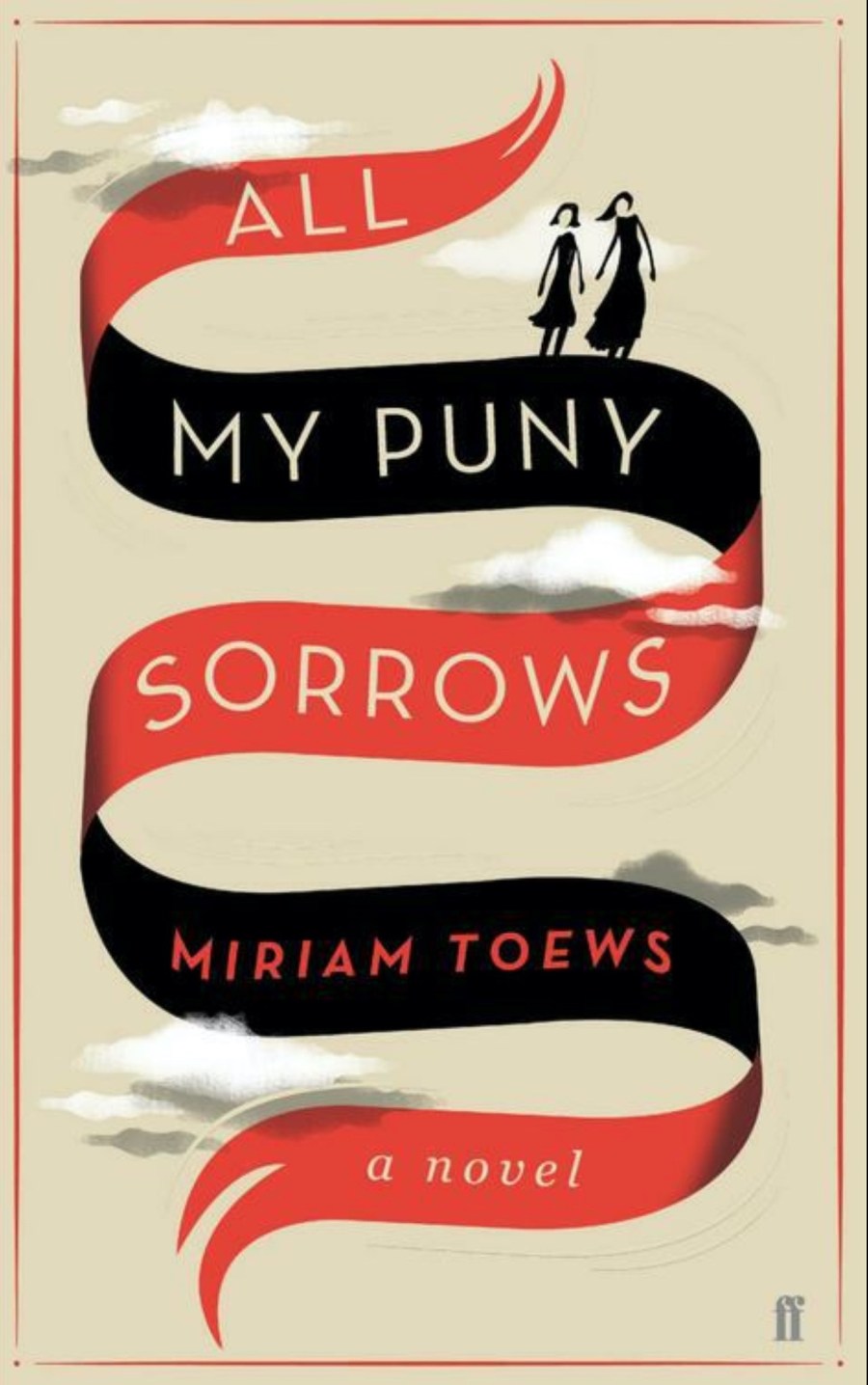
They say that writers should read widely, so not all my book reviews will be crime, though bloodshed may prove to be a common theme. Recently I dived into Greek Mythology. Madeline Miller’s Circe is a feminist spin on the epic tale of the immortal nymph sea witch by that name. Circe appeared as a minor character in the Homeric poem, The Odyssey.

Circe, the protagonist is the daughter of Helios, the sun god. As a child she is made brutally aware of her inferior status by her family. She was not born a god, is plain to the eye, and has the voice of a mortal. In her youth she was tormented by her siblings and barely seen by her parents.

I asked her how she did it once, how she understood the world so clearly. She told me that it was a matter of keeping very still and showing no emotions, leaving room for others to reveal themselves.

In coming to know love, jealousy and rage, Circe discovers her sorcerer powers, which she unleashes on her sister, a beautiful sea nymph, and the object of her envy. As punishment she is exiled to a picturesque, unpeopled island called Aiaia by her father.

Humbling women seems to me a chief pastime of poets. As if there can be no story unless we crawl and weep.

Circe eventually comes to revel in her solitude and spends her time developing her occult arts and witchcraft, and taming the animals of Aiaia for company.

This was how mortals found fame, I thought. Through practice and diligence, tending their skills like gardens until they glowed beneath the sun. But gods are born of ichor and nectar, their excellences already bursting from their fingertips. So they find their fame by proving what they can mar: destroying cities, starting wars, breeding plagues and monsters. All that smoke and savor rising so delicately from our altars. It leaves only ash behind.

It is on the island, surrounded by tame wolves and lions and pigs – the latter formerly sailors who she turned to swine after they tried to attack her – that Odysseus comes across Circe. He becomes her lover and she bares his child.

I was captured by Miller’s lush poetic prose, which is like reading a song. Her reimagining of the myth brings one of the women from the original tale into the light. Her work was criticised by a few crusty old blokes for historical inaccuracy, perhaps because they prefer the original misogynist fantasy, but I found a beautiful remake of Homers epic poem in Circe. The novel gives a nod to other myths as well, including Daedalus and Icarus; Medea and Jason with the Golden Fleece.

I loved Circe’s chutzpah, she is a woman who will not be silenced and turns an ancient tale of female subjugation into one that is teeming with contemporary reverberations of empowerment and courage. Circe is Miller’s second novel and rivals her first, The Song of Achilles, a stirring reimagining of another of Homer’s epic poems, The Iliad. The Song of Achilles received the Orange Prize for Fiction in 2012.

I highly recommend Circe, which was shortlisted for the Women’s Prize for Fiction this year. It’s a particularly good read for writers who seek inspiration, and to broaden their writing technique, style, and craft skills.

No wonder I have been so slow, I thought. All this while, I have been a weaver without wool, a ship without the sea. Yet now look where I sail.

Grand dames of crime: Ngaio Marsh

In a previous post I wrote about Charlotte Jay and a session at the Terror Australis Readers and Writers Festival inspired me to investigate more of the grand dames of crime fiction. This week I take a look at Dame Ngaio Marsh.

New Zealand born Ngaio Marsh (1895-1982) has ancestry that traces back to the twelfth-century de Marisco family of pirate lords operating from Lundy Isle (at the entrance to the Bristol Channel). This might be where she inherited her Amazonian appearance from. It is said she was a charismatic woman with a deep powerful voice, a powerhouse, domineering and determined, characteristics she no doubt needed as a single woman to make it in a mans world.

Marsh was the only child of unconventional parents, raised on a diet of Shakespeare and Sherlock Holmes. Her governess Miss Ffitch would often read her The Tragedy of King Lear, so little wonder she grew up to be one of the original queens of crime and well as a theatre director.

She painted, wrote and acted all through school but her writing career took off after she sailed to the UK in 1928 and started to carve out a name as a crime fiction author alongside other greats such as Agatha Christie, Dorothy Sayers and Margery Ellingham. Marsh’s first novel A Man Lay Dead, written in the depths of the Depression, introduced Roderick Alleyn, a tall, cultured, detached, thorough Scotland Yard Detective Inspector. An objective man with a poor memory which meant he kept a small note book of important facts on hand constantly.

Marsh went on to write thirty two crime detective novels mostly set in English theatres and country houses, plus four in New Zealand, thirty-two with the Alleyn character. More popular than Agatha Christie at the peak of her career, one million copies of ten of her titles were released by Penguin and Collins on the same day in 1949, all of which sold.

When Marsh returned to New Zealand to care for ailing parents the second world war broke out. During the war period she volunteered as a Red Cross ambulance driver ferrying repatriated soldiers around for Christchurch’s Burwood Hospital, and continued to write novels, producing four book during the war period (Death of a Peer, Death and the Dancing Footman, Colour Scheme and Died in the Wool).

A woman with energy and an appetite for productivity she also began an association with the Canterbury University College Drama Society during this time which enabled her to invigorate her love of Shakespeare. The association resulted in more than twenty full-scale Shakespearean productions, from her 1943 modern-dress Hamlet to A Midsummer Night’s Dream (starring Sam Neil) in 1969. Marsh’s last theatrical effort was to write and produce a one-man show in 1976 on the Bard of Avon, Sweet Mr Shakespeare.

Marsh never married or had children and was fiercely protective of her private life. She enjoyed the close companionship of women including her lifelong friend Sylvia Fox, and a coterie of handsome gay boys, but denied being a lesbian. She was generous with her knowledge and skills and nurtured many young writers and actors, splitting her time between New Zealand and the UK.

Marsh’s autobiography, Black Beech and Honeydew was published in 1965 to no great acclaim, then in June 1966 she became Dame Ngaio Marsh (Civil Division) in the Queen’s Birthday Honours. In 1978 four of her novels were adapted for New Zealand television, and she received the Grand Master Award for lifetime achievement as a detective novelist from the Mystery Writers of America. She just just managed to complete her final work, Light Thickens, a mere six weeks before her death from a cerebral haemorrhage and eight weeks before her eighty-seventh birthday. She died in her own home, which was subsequently turned into a museum.

Marsh’s elegant writing style and well crafted characters set in credible settings was said to have helped raise the whodunit detective novel to the level of a respectable literary genre. Harper Collins published a biography of Ngaio Marsh by Joanne Drayton in 2008 (Ngaio Marsh – her life in crime) which is said to have bought Marsh to life removing her from the cardboard cutout of respectability and decorum she presented publicly to the world to reveal a more textured and fascinating story of a woman with ambiguous sexuality who revealed in the abandon of the Bohemian Riviera and enjoyed her place at the table of the English in-set.

More information:

Images from the web: Book covers; the woman herself; immortalised on a New Zealand stamp.

Online course review: Pitch Your Novel: How to Attract Agents and Publishers

It the second Australian Writers Centre course I have completed this year. I signed up for Pitch your novel: how to attract agents and publishers as I thought it would be a good companion course to Inside Publishing which I reviewed in August, and I was right.

The online self-paced course was created by historical novel writer Natashia Lester and includes nine modules. As with Inside Publishing purchase of the course gives you twelve months access to it online, and allows you to download the resources. The course presents advice on strategy and practice tips to get yourself pitch ready.

Module one focuses on developing a writing CV which includes building an author platform, an overview of relevant writers societies, creating a pitch package and putting yourself out there to build a writing network.

In the second module Natashia provides advice on how to make your manuscript pitch ready including what professional services are available to provide assistance, and free sources you can tap into for help.

Module three focuses on literary agents – what value they add, why your should consider pitching to agents before publishers, how to identify agents to pitch to, developing a pitch and keeping track of your approaches to agents.

The fourth module focuses on the pitch itself. Natashia provides advice on developing three different types of synopsis and when to use them, including examples from her own work.

Module five covers preparing a pitch package. It explains what research you need to do to develop your pitch package, what to include in the package and in what order.

In modules six and seven you’ll find out about what to do when you get a response from an agent, other than get excited. These modules provide practical advice about how long the process might take and what to do if you receive feedback from an agent.

Module eight moves onto pitching directly to publishers including which publishers are out there, how to find them and decide whether you should pitch to them. Practical advice about submission guidelines, how to organise your material and decide in which order you should approach publishers.

Natashia explores other ways to get published in module nine, including entering competitions, how to find these opportunities, information about some of the main ones in Australia and things to consider when submitting to these programs and prizes.

The final module looks at what to do if you get an offer including some basic advice about contracts and when and how to get help (I recommend Inside Publishing for more detail on actual contracts), as well as dealing with rejection because we all know we’re going to get some of that.

After completing a couple of the Australian Writers Centre online course, I’m a convert. They are professionally constructed, practical and chock a block full of good advice and resources.

Main image: Everything You’ve Got, Epi Island, Vanuatu