Book review: The Lonely City by Olivia Laing

I have a longstanding interest in the relationship between creativity and mental health. Creating art allows us to disconnect from stress, express inner thoughts and feelings, and often to enter that beautiful meditative state of ‘flow’. As a writer, I find the act of writing soothing.

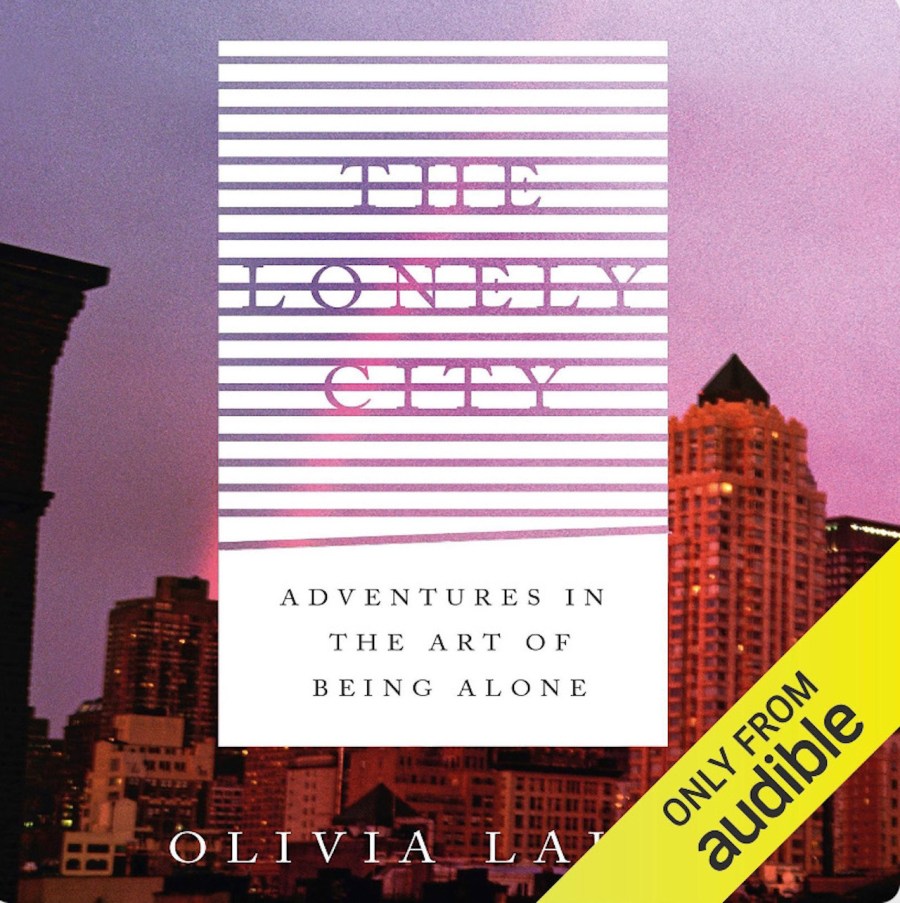
I was fascinated to discover and read Olivia Laing’s The Lonely City recently. The book investigates creativity as an antidote to loneliness, a largely taboo subject about the feeling that arises when we become distressed by the perceived gap between our desire for social connection and our actual experience of it.

Laing found herself alone in New York after the relationship that drew her there from Britain ended abruptly. She set out to investigate the state of loneliness, state that society finds difficult, through works of art that arose out of that state, and to record her own journey to master being alone.

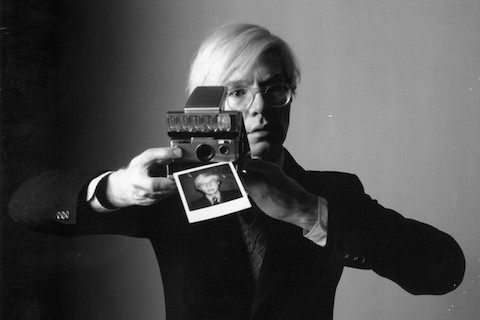
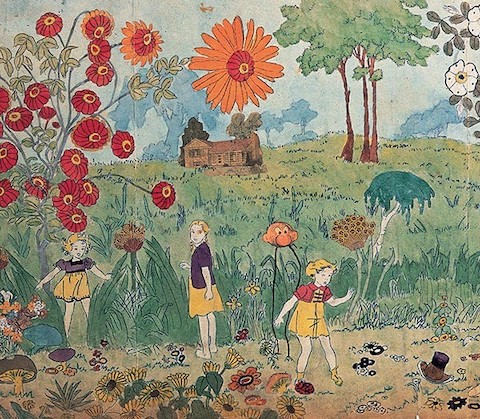
Laing’s main subjects were: Edward Hopper (1882-1967), the American realist painter and print maker who captured the loneliness and alienation of modern life in his work; Andy Warhol (1928-1987) a leading figure in the visual art movement; David Wojnarowicz (1954-1992) the Polish American painter, photographer, writer, filmmaker, performance artist, songwriter/recording artist and AIDS activist; and Henry Darger (1892-1973), the isolated American janitor who was posthumously recognised for his writing and art, including collages, and drawings, and 15,000 pages of handwritten prose.

images from web

Each artist was studied by Laing to create what she called a ‘map of loneliness’. Hopper’s Nighthawks is used to explore the spacial dynamics of loneliness with its characters trapped in an iceberg of greenish glass. Warhol’s machine-like aesthetic and the way he mediated intimacy via his tape recorder and camera explores the social strategies used to bridge a sense of strangeness and ‘not belonging’. Wojnarowicz provides a case study of the politics of loneliness and what happens when society excludes people from its ranks. Darger’s extreme isolation throughout his life presents a psychological case study of the condition of loneliness.

The setting of the work in New York city is demonstrative of the fact that being alone and loneliness are not the same thing. Loneliness is a condition that arises from within, an uncomfortable feeling that for some becomes unbearable. Some, like Warhol surround themselves with people but still feel a deep sense of loneliness, whilst others spend significant amounts of time alone without experiencing the condition of loneliness.

Laing explores the gendered nature of loneliness reflecting on Valerie Solanas (who shot Warhol), Greta Garbo and her paparazzo stalker, Ted Leyson, and Laing’s own forays into online dating.

The Lonely City is part biography, part memoir and part cultural criticism about the spaces between people and the things that draw them together. It is a broad ranging meditation on sexuality, mortality, loneliness, and the possibilities of art as an antidote. A fascinating read (or listen – I bought the audio book).

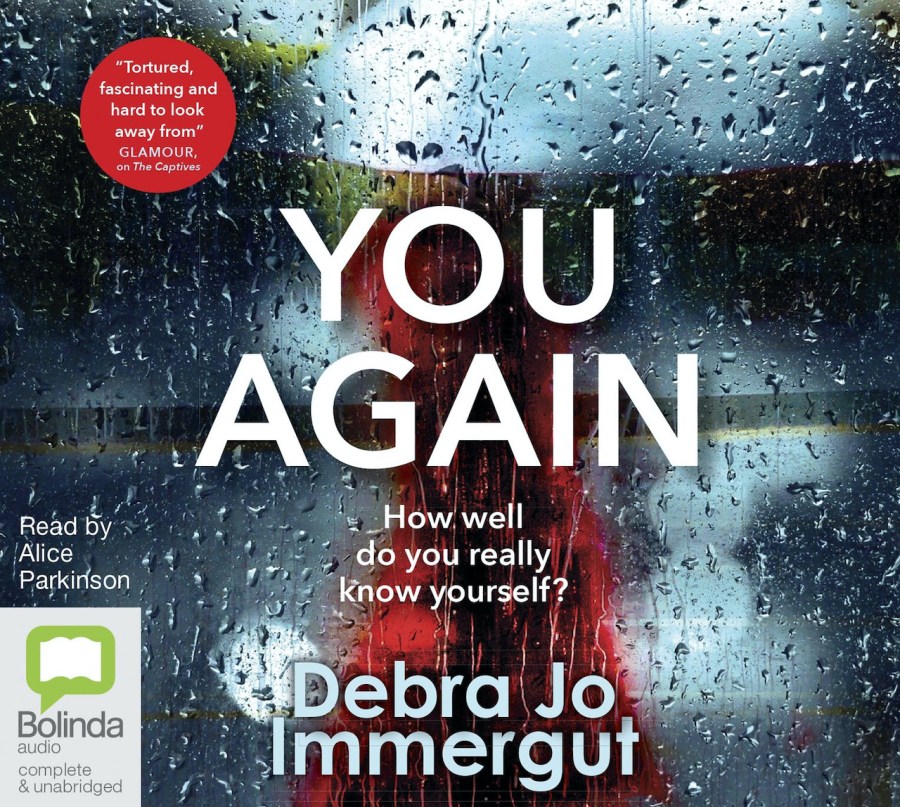
Book review: You Again by Debra Jo Immergut

You Again is Edgar Award finalist (for The Captives) Debra Jo Immergut’s second novel about a middle aged woman haunted by herself. I don’t know about you, but if I think I saw my younger self I couldn’t resist the temptation to offer myself some frank and fearless advice about a thing or two.

Abigail Willard keeps meeting her younger self in her old haunts around New York. A talented painter who abandoned her art for marriage and parenthood and an ordinary day job, at first she wonders if she’s having a midlife crisis and hallucinating about her lost youth. Then, as it keeps happening, she wonders if she has some neurological or psychiatric condition and goes to see a shrink and to get brain scans.

Meanwhile she is also contending with her rebelious son and questioning her relationship with her husband.

Journal entries form the narrative as Abigail’s life unfolds and she wonders whether she should warn her younger self about what is going to happen. There are echoes of magical realism in the plot as the narrative takes you from inside Abigail’s head to a doctor who is trying to work out why her patient is having these strange experiences.

You Again combines psychological suspense and fantasy in a meditation on time, existence, consciousness, fate, love, ambition and regret.

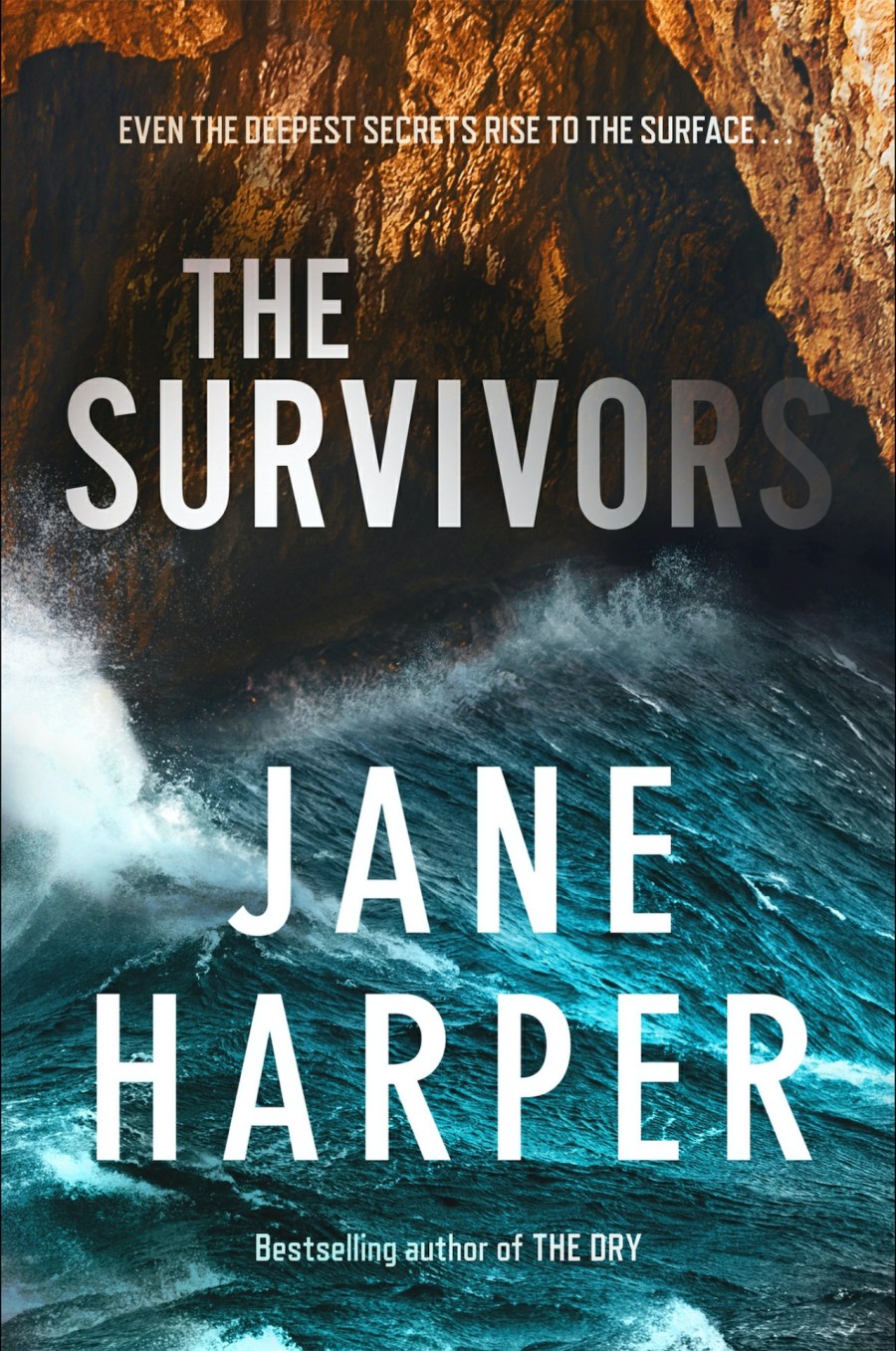
Book review: The Survivors by Jane Harper

In The Survivors, Jane Harper takes us to an isolated small town on the Tasmanian coast riddled with a labyrinthe of dangerous caves that fill and empty with the tide. Getting trapped in there at high tide means certain death.

Evelyn Bay is a small, struggling, but close knit community, reliant on tourist visiting for whale watching and diving an old ship wreck in the bay. It has a pub and a police station that is about to be closed because not much happens.

Keiran Elliott left Evelyn Bay years ago, after his brother drowned at sea. He believes his was responsible for what happened to his brother and struggles guilt. He has returned with his wife and baby to visit his parents. Keiran’s father is suffering from early onset dementia and needs care so they are about to sell the family home and move because of this.

The Survivors, three statues commissioned in tribute to the 54 passengers and crew who died in a shipwreck a century earlier, stand as a mythic presence in the town. The waves lap at their feet, almost, but never completely consuming them at high tide. They are a constant reminder of the oceans ferocity, and auger when it is and is not safe to be on the beach.

Everyone knows everyone’s business. Towns people still grieve the losses of some of its members in the crashing waves during a terrible storm a decade earlier. When a second tragedy occurs – a young woman visiting during a break from university who is found dead on the beach – long buried secrets and grievances begin to emerge.

The police investigate the girls death while the townsfolk go wild with speculation on social media. Anger at a newcomer author who bought the house of the local landscaper’s grandmother, and ripped up the garden almost comes to blows in the pub. Animosity and guilt about who’s fault it was that three community members died in the storm all those years ago simmers near the surface, straining long held friendships.

The mystery unfolds as the characters grapple with grief, guilt and regrets that make some stronger, whilst others unravel. Another good read from Jane Harper.

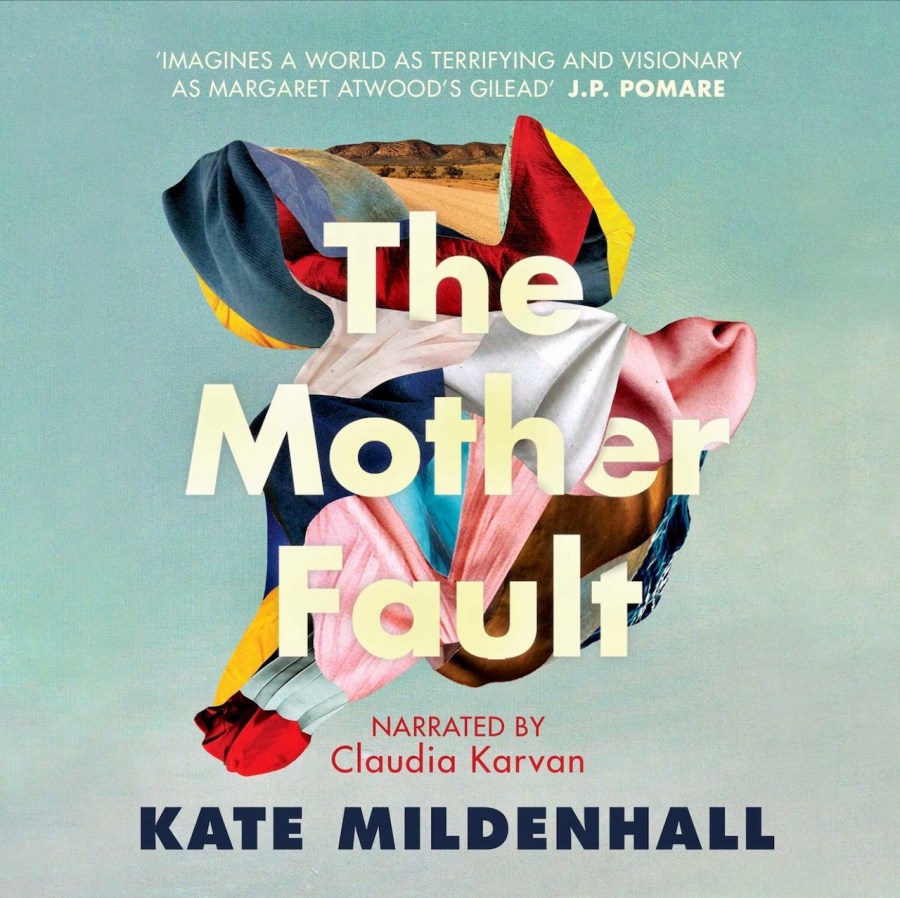
Book review: The Mother Fault by Kate Mildenhall

One word to describe this dystopian novel – gripping. My heart was racing within the first few pages. I listened to it as an audiobook read by Claudia Carvan and turned it on compulsively in every spare minute till the end.

Near future climate changed world. People chipped like pets. One government, The Department controls everything. Mim’s husband goes missing. The Department warns her not to tell anyone, not to go anywhere, or risk her children being taken into care. She’s already told a journalist that Ben is missing in Indonesia.

The world shifted slowly, then so fast, while they watched but didn’t see. They weren’t stupid. Or even oppressed at the beginning. Let the record show that. There were no assassinations. No riots. The people invited the new government to take charge at the ballot box. The two parties had consumed themselves. Left the system wide open for a third option. Reasonable, populated by diverse public figures, backed by both big money and bid ideology. On a platform of innovative and economically viable responses to the climate emergency, a rehaul of the health, housing and disability schemes that would see the most vulnerable members of the community cared for, and a foreign policy that miraculously spoke to fear of the other and fluid borders ideal for capital in and capital out, the new party was humbly triumphant on election night. Simple, elegant. No need for finite portfolios and the bullshit of bureaucracy (their words, appealing to the everyday Australian). Centralised power was the answer. On Department for One Nation.

Mim decides to run. She goes to visit her family home in the country on the pretense of chasing work. The Department know where she is. They call and warns her to go home. Her friend removes the chips from her and her children’s palms, inserts them in some rats she releases into the bush, and Mim and the kids drive away. She soon discovers how serious The Department’s controls are when they visit her family and her friend has ‘an accident’. A house fire.

A strong but flawed female protagonist, protective of her children and desperate to find her husband. Somehow the strange COVID world we are living in now, with ever enhanced technology and increased government rules, makes the already plausible Gilead Esque world created by Mildenhall even easier to imagine into existence.

The narrator, Carvan, executes the audiobook with the skill you’d expect from a good actor. A compelling delivery that brings the characters to life by capturing their emotions and builds an exquisite tension throughout the story.

A brilliantly executed speculative fiction thriller.

Grand Dames of Crime: Ethel Lina White

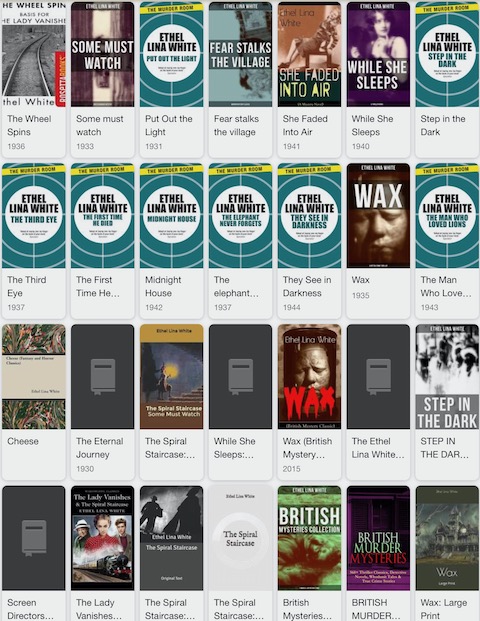
Largely forgotten today, Welsh crime writer Ethel Lina White (1876-1944) wrote 17 novels. In her day she was as well known as writers like Agatha Christie. White started out writing short stories and working at the Ministry of Pensions but left her job to scratch out a living as a writer after an offer of ten-pounds for a short story.

Lost causes are the only causes worth fighting for

Ethel Lina White

White wrote three non-crime novels between 1927 and 1930 before turning to crime. Her first crime novel Put Out the Light was published in 1931 when she was fifty-five. Her work often featured lonely but strong heroines in dark country houses as metaphors for repression. She became known for writing suspense that set your heart racing, as well as her colloquial conversation style in dialogue. Some of these skills were probably picked up while indulging her favourite downtime activity of watching films.

Her novel Some Must Watch (1933) was made into a Hollywood Movie called The Spiral Staircase (1946). The Wheel Spins (1936) was filmed by Alfred Hitchcock as The Lady Vanishes (1938). Midnight House (1942) was also filmed as The Unseen with Raymond Chandler as one of the script writers.

Bibliography

The Wish-Bone (1927)
Twill Soon Be Dark (1929)
The Eternal Journey (1930)
Put Out the Light (1931) aka Sinister Light
Fear Stalks the Village (1932)
Some Must Watch (1933) aka The Spiral Staircase
Wax (1935)
The First Time He Died (1935)
The Wheel Spins (1936) aka The Lady Vanishes
The Third Eye (1937)
The Elephant Never Forgets (1937)
Step in the Dark (1938)
While She Sleeps (1940)
She Faded Into Air (1941)
Midnight House (1942) aka Her Heart in Her Throat, The Unseen
The Man Who Loved Lions (1943) aka The Man Who Was Not There
They See in Darkness (1944)

Book review: Death in Her Hands by Ottessa Moshfegh

Vesta Gul is an ageing widow who lives in a small cabin on a lake with her dog Charlie. She is a curiosity to the local townsfolk. Out walking in the woods one morning, Vesta finds a note on the ground held down with stones suggesting a woman called Magda has been killed.

Her name was Magda. Nobody will ever know who killed her. It wasn’t me. Here is her dead body. But there was no body. No bloodstain. No tangle of hair caught on the coarse fallen branches, no red wool scarf damp with morning dew festooned across the bushes. There was just the note on the ground, rustling at my feet in the soft May wind. I happened upon it on my dawn walk through the birch woods with my dog, Charlie.

There is no body in sight so Vesta decides to become a sleuth and try to work out what happened to Magda. She begins to concoct Magda’s story by writing it down following instructions on how to write a good mystery. She develops characters with elaborate backstories and conspiracy theories inspired by red herrings. She talks to Charlie and reflects on what her dead husband, Walter might make of her antics.

Reading lots of mysteries is essential. That seemed like ridiculous advice. The last thing anyone should do is stuff her head full of other people’s ways of doing things. That would take all the fun out. Does one study children before copulating to produce one? Does one perform a thorough examination of others’ feces before rushing to the toilet? Does one go around asking people to recount their dreams before going to sleep? No. Composing a mystery was a creative endeavor, not some calculated procedure.

Vesta’s adventure both enthrals and frightens her as she develops a detailed backstories for Magda and all the other characters in her mystery. Walter berates her continually in her head as she goes, as he evidently did in life, and Vesta seems to get some satisfaction out of defying him.

An ax murderer wouldn’t be very quick on his feet, carrying an ax and all. Charlie’s warning would give me time enough to collect my coat and purse, even. I wasn’t worried that I would be hacked to death, fed to the wolves, even if there were wolves out there, which there weren’t. At least none that we’d ever seen. Nor bears. Though there were foxes. But the most they were known to do was break into people’s garbage and make a mess. They were no worse than skunks or raccoons or opossums. Still, I’d taken a butcher knife up to bed with me and had slid it under the mattress. Just in case. Because who knew? Who knew? … And that was what was keeping me awake—not knowing, and wanting to know.

In the absence of human company, Vesta’s imagination recasts her view of the real world. She buys a camouflage onesie online and sets booby traps around her home. The woman becomes more and more unhinged from reality as she attempts to solve the mystery of the note.

Death in Her Hands is the story of an ageing woman facing a life of emptiness who uses her imagination to escape from her solitude.

The book unfolds in long rambling paragraphs across only seven chapters. It is is Ottessa Moshfegh’s third novel (the others being Eileen and My Year of Rest and Relaxation). Death in Her Hands is part mystery, part suspense, and part black comedy.

Book review: The Ruin by Dervla McTiernan

The Ruin is the first book in the Cormac Reilly series by Dervla McTieran. Published in 2018, it is a gritty, atmospheric page turning police procedural.

Rookie copy Cormac Reilly is called out to investigate a domestic in Galway, Ireland in 1993. He is greeted by an under-nourished 15 year old girl at a dilapidated house. Her mother is in bed, dead from an apparent heroin overdose, and she has her much younger brother in her care. Cormac takes the kids to a hospital were the girl disappears and it is revealed the boy has unexplained injuries all over his body.

By 2013, Cormac has risen through the ranks to become a member of an elite anti-terror squad in Dublin. He moves back to Galway to be with his biologist partner, Emma who gets a lucrative research gig there.

Aisling is an ambitious young doctor training to become a surgeon. She lives with her boyfriend Jack. When she discovers she is pregnant, the couple have an intense discussion about whether they should keep the baby. Jack goes out to get some air and clear his head. His body is discovered in the river the next day, and his death declared a suicide.

Jack’s sister Maude, who has been living in Australia for years, arrives back in Ireland and pursues the police to look further into Jack’s death. She does not believe it was suicide. When Aisling meets her she joins Maude in pursuing this line of enquiry. The police view the women as a nuisance.

Cormac finds himself an outsider back in Galway, and is relegated to reviewing cold-case investigations – including the 1993 death he attended as a rookie. It turns our Jack who was found in the river was the little boy Cormac took to the hospital.

Cormac, Aisling and Maude’s trajectories begin to intersect as issues including child abuse, addiction, abortion and corruption are explored.

Book review: Case Histories by Kate Atkinson

Normal programming resumes this week with a book review of Kate Atkinson’s novel, Case Histories, book 1 in the Jackson Brodie series. I listened to this one in audio book format whilst working on the shed renovating iso project. More on that story later.

She should have done science, not spent all her time with her head in novels. Novels gave you a completely false idea about life, they told lies and they implied there were endings when in reality there were no endings, everything just went on and on and on.

In 1970, a girl called Olivia goes missing at night from a tent in her parents back yard. She is never found. A young woman called Laura is brutally murdered in her fathers city law office in 1994, the killer never identified, leaving her father wracked with guilt. An isolated young mother called Shiriley feels trapped with a baby and a demanding husband and takes to her husband with an axe during an argument in 1979. She goes to jail. Her child, given over to her husbands parents has for all intents and purposes, vanished.

The survivors of the tragedies are haunted by unresolved grief.

When you chopped logs with the ax and they split open they smelled beautiful, like Christmas. But when you split someone’s head open it smelled like abattoir and quite overpowered the scent of the wild lilacs you’d cut and brought into the house only this morning, which was already another life.

Ex-cop, and soon to be divorced private investigator Jackson Brodie is pursuing a flight attendant who’s husband believes she is cheating on him. His other case involves searching for an eccentric old ladies missing cats.

Time was a thief, he stole your life away from you and the only way you could get it back was to outwit him and snatch it right back.

Brodie is approached by Olivia’s sisters. They found their sisters toy hidden in their dead fathers belongings and want Brodie to investigate her disappearance thirty years after it occurred. Laura’s father hires Brodie to find the man in a yellow golfing sweater believed to have murdered his daughter. Shirley’s sister asks Brodie to find her niece who disappeared after her sister went to jail.

The seemingly unconnected cases begin to converge.

Doing nothing was much more productive than people thought; Jackson often had his most profound insights when he appeared to be entirely idle. He didn’t get bored, he just went into a nothing kind of place.

The novel jumps back and forth in time and from case to case. The threads are held together by the sense of isolation of each of the characters as they journey to find connection beyond their own tragedies. The reader is challenged to keep track of the many narratives, and compelled by Atkinson’s vivid and funny character sketches that draw the reader to them. Atkinson lightens the sense of grief and loss that permeates the novel with plenty of humour and perceptive insights.

The plot thickens,” he said, and wished he hadn’t said that because it sounded like something from a bad detective novel. “I think we have a suspect.” That didn’t sound much better. “My house has just exploded, by the way.” At least that was novel.

An intelligent and novel detective novel.

Book Review: Metal Fish, Falling Snow by Cath Moore

Fourteen year old Dylan lives in a tiny outback town. Her absent dad was black and her mum is a white French lady. The two of them dream of one sailing across the ocean to France. When her mother dies in a tragic accident, Dylan is left with her mum’s boyfriend, Pat, a man with a bit of a gambling habit.

I felt sick all through the funeral. Pat had put Mum in the dress she’d worn when they first met. Made it all about him, and I felt thunder in my chest. Death is like the last glass of milk when there is no more in the fridge and the shop is closed ’cause it’s late Sunday arvo

After a flurry of mysterious phone calls the grieving pair set off on a road trip across outback Australia to a destination unknown to Dylan. People keep asking Dylan where she’s from because her skin is the wrong color.

Out here with Pat in the middle of nowhere, I wonder if all these other gum trees are safekeeping secrets too. Maybe there are stories deep down inside the roots or buried between layers of bark.

Dylan has a very specific way of seeing the world. She likes forks and Tina Arena and water. She doesn’t like bad parking or the wolf that lives inside her. She eats white before green and often finds herself in other people’s dreams.

The air is filled with Pat’s other memories trying to be heard. Some fall into the fire, they screech out with pain as they die. Others make a run for it hoping Pat will forget about them all together. One of them dances over the fire and flickers into my dreams.

On the road trip Dylan’s anger and grief get her and Pat into all sorts of strife, but an unlikely bond forms between the pair. Until Dylan realises their destination.

When we are shelling peas for Friday night fritters, all you can hear is pop pop pop! Little peas tumbling into the bowl just like Mum and me used to do, and that was nice, finding a memory in something small and green.

Told in the first person, Dylan’s voice is unique, imaginative and lyrical. Metal Fish, Falling Snow is an emotional journey about grief, friendship, identity, family, coming of age, resilience, and internalised racism. The intensity of the subject matter is lightened by a good dose of magical realism and Dylan’s unique lens on the world.

Born in Guyana and raised in Australia, Cath Moore is of Irish/Afro-Caribbean heritage. Metal Fish, Falling Snow is the screenwriters debut novel. Highly recommended reading,

Book review: Ash Mountain by Helen Fitzgerald

Ash Mountain by Helen Fitzgerald is domestic noir meets disaster thriller – dark, tragic and funny.

Fran Collins returns to the Australian small country town she grew up in to care for her sick father, reluctant teenage daughter in tow for the weekends.

Ash Mountain is full of childhood memories – Fran’s son from a teenage pregnancy, old friends and rivals, and dark secrets in the seminary – all of which return to haunt her at the same time as she is falling in love. The attraction to her love interest, the Captain, is complicated by the fact that their daughters are also forming a budding relationship.

The story is set against the backdrop of a scorching summer in the days leading up to a cataclysmic bushfire as one timeline, and events from thirty years earlier in another. The claustrophobic small town setting and the knowledge of the pending doomsday bushfire keep the tension cranked, and the narration by a prickly resentful middle aged woman brings plenty of droll humour to the table.

If, like me you live in a bushfire prone are, I recommend reading it in winter.