I’m not sure what the equivalent term is for a page turner when it’s a podcast. Ear grabber, binge listen or hearing hair-raiser perhaps. The latest offering from Unravel is called Snowball and it’s one of the best and most bizarre true crime offerings I’ve ever listened to…and nobody died for it.
Naive New Zealand man Greg Wards fell in love and married charismatic American con artist, Lezlie Manukian from California after meeting her on a backpacking trip to the UK. Lezlie moved to New Zealand with him and ripped off his whole family. Right before Lezlie got on a plane to go back to the US to visit her family she had a parting message for Greg.
“The snowball is about to hit you.”
Soon after his family discover that Lezlie had defrauded over a million dollars from them. Greg’s brother Ollie Wards, a journalist, decided to investigate Lezlie in an attempt to understand what happened and help his family put the experience behind them. Ollie’s podcast paints a picture of a genuine, warm, compassionate and close knit kiwi family and the trail of destruction left across the globe by Lezlie.
It was a fascinating study into the art of the con artist, one of the worlds oldest professions. Grifters, scammers, hustlers, swindlers, fleecers. They make a living out of violating trust. It’s all about brains, not brawn. They play to emotions and hone in on vulnerability.
Greg was a perfect target. A naive New Zealander on a big exciting adventure. A Yankophile in the United Kingdom who heard the confident American at a crowded party and was immediately enchanted. She would have charmed him, a master actor and a good listener who excelled at fabricating common ground to break down her targets defences. She didn’t grow a pinocchio nose when she lied, and what man would expect a beautiful charismatic woman fascinated by their greatest desires to rip the rug right out from under them? As one of her victims said, he’d come home to a beer and a blow job…emotion trumps reason.
I felt a great deal of warmth toward the Wards and was gobsmacked by what happened to them. I was also flabbergasted by the chutzpah of Manukian. You have to wonder why people like her don’t just go into acting – I’d have thought it would be much more rewarding in the long run. An extraordinary tale that had me gasping ‘no way’ at every turn.
I picked up Kristoff’s epic fantasy novel after hearing him interviewed on The Garrett podcast. I don’t read a lot of fantasy, but he seemed like an interesting guy. Godsgrave is the second in a chronicle and it’s fare to say after reading it I wish I’d started with book one.
Our scars are just gifts from our enemies…reminding us they weren’t good enough to kill us.
Mia Corvere wants revenge for the murder of her familia, and she’s ruthless. She orchestrates herself to be sold off as a slave to a gladiatorial collegium. But it’s a tough and bloody road to revenge in Nevernight. Mia encounters allies, rivals and lovers all the way egged on by her mysterious magical shadows. Kristoff puts Mia under more and more pressure as the story unfolds and forces her to choose between pursuing revenge or friendships.
The old man hooked his thumbs into his waistcoat. ‘Problem with being a librarian is there’s some lessons you just can’t learn from books. And the problem with being an assassin is there’s some mysteries you just can’t solve by stabbing the fuck out of them.
The book is a long, dark, blood soaked, sexy, action packed page turner with plenty of twists to keep you on your toes. The world building is grand, the action spectacular, the narrator playful and amusing (if you read the footnotes), and the writing style poetically gruesome. And it ends on a cliffhanger.
Because the voices in your head that say otherwise are just fear talking. Never listen to fear.
I have a couple of friends who host fabulous soirées. They are a raucous blend of performance, music and readings and loads of laughs and great conversation. Last weekends gathering was a salon for a bunch of literary and music types – a get together to learn from, and amuse one another. The theme was What floats your boat?
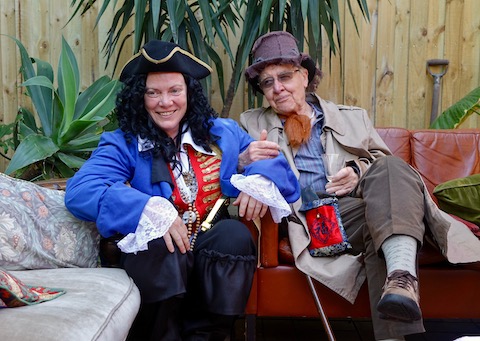
Dress Up Party
Over the course of the afternoon I learnt about beer brewing; about Arabic numbers and plural leaders; what reading meant to one woman; another’s passion for the tango; what it’s like to have spent thirty years advocating for piece workers; the experience of finding someone in China to teach you mandarin via Skype; the research involved in writing a historical novel; and was serenaded by a musician who had just handed in her music PhD. I read an excerpt from my work in progress mystery manuscript and was delighted with the reception. An afternoon of exploring what nurtures and fuels others passions was refreshing, and a lovely way to get to know people a bit.
The soirée got me thinking about gatherings in fiction. I do love an intimate gathering, but must confess the bigger the bash, and the less people I know, the less appealing they become – it’s the introverts dilemma. Jay Gatsby’s elaborate and decadent soirées in The Great Gatsby by F. Scott Fitzgerald come immediately to mind.
And I like large parties. They’re so intimate. At small parties there isn’t any privacy.
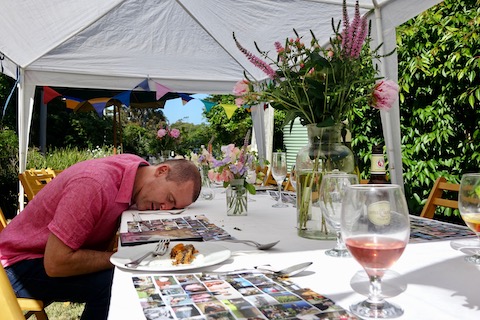
Welcome Party
The quote is from the aloof dishonest socialite Jordan Baker. It’s short, but says a lot about the character. At a big party she can control who she speaks to and blend in. At smaller gatherings she has less control, could be forced to speak to people she doesn’t want to and exposed for the liar she is.
Other memorable fiction parties include the Mad Hatters tea party in Alice in Wonderland, and the illicit shindig at the psychiatric institution in One Flew Over the Cuckoos Nest when McMurphy smuggled wine and women into the asylum after dark so the inmates could have a good time.
Parties, soirées, crowds and gatherings are a great vehicle for conflict in fiction. We can showcase our characters personality by how they respond to a crowd. Gatherings can heighten emotions, raise the stakes, be exciting and fun or provocative and anxiety generating. What if our protagonist meets someone they dread?
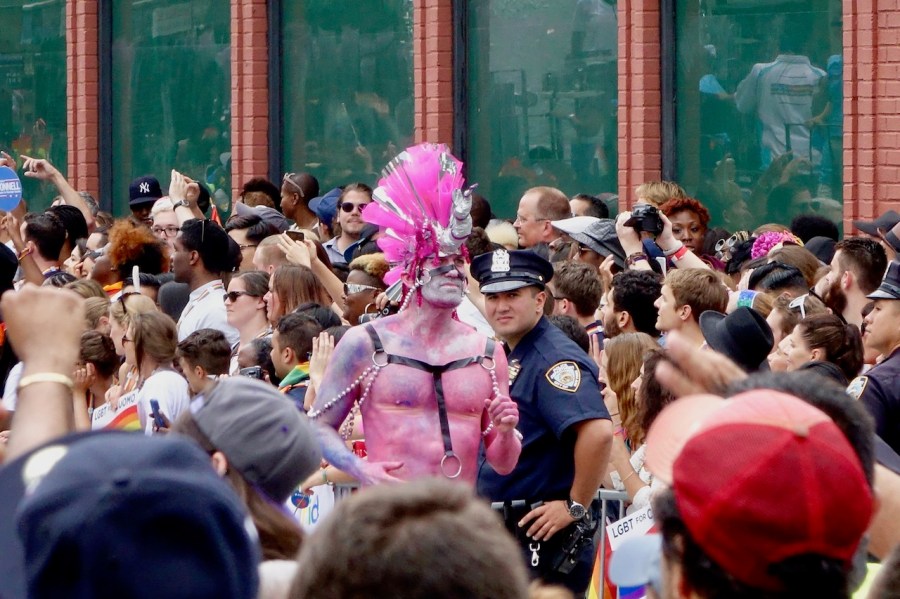
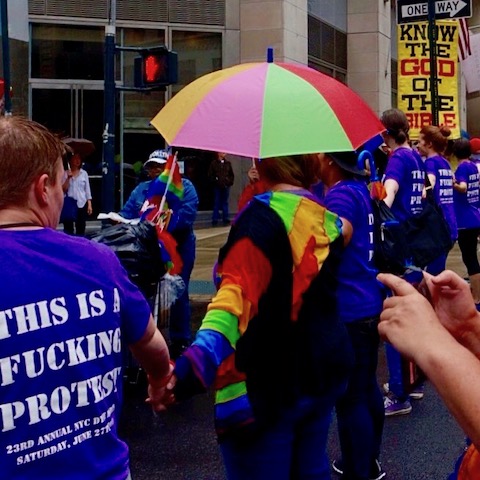
The Protest
We can fill a party with movement, color, action, uncertainty, intrigue, or deception. Our protagonist may feel welcome or isolated. They can experience the unusual, unexpected or surreal. Venue, decorations and people’s clothes provide setting; snippets of conversation and the people our protagonist seeks out, or avoids tells the story. All fodder for character and plot development, not to mention humour. A party has its own arc – a story within a story. It includes getting ready for the party, arrival, the event, departure and reflections the following day. How might a character respond to each element? How do you think Ray might respond to this comment in Jason Medina’s A Ghost In New Orleans? What will his response tell us about him…
So, Ray… you seem like a cool cat,” she said. “Are you into alternative lifestyle parties?
My current work in progress contains a soirée, a protest and a conference. Each presented a chance to reveal character, advance plot and apply pressure to my protagonist. When my protagonist arrives at the soirée the greeting she receives is less than ideal…
Within a minute it swung open. Freya looked up at Jude’s face then swept her gaze downward. Then up again with a skeptical expression that made Jude want to pull away. No sign of the welcome friendliness of their first encounter.
The party starts with conflict that unbalances my protagonist. Of course a lot can happen in a few hours in a crowd, and the morning after the soirée my protagonist had a lot to think about…
On her way to consciousness, images of exotic creatures from the night before danced vivid behind Jude’s closed eyes. She tried to push thoughts of the investigation to the dark recesses and enjoy her fantasy.
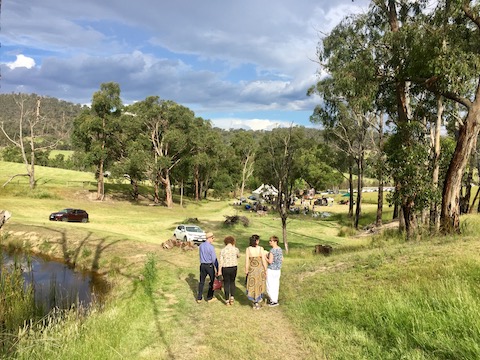
Outdoor Do
There are a lot of questions to be asked about our protagonists if we plan to send them to gatherings. How would you show the answer to the following questions when writing your crowd/party scenes?
Does the protagonist want to go? Why? Are they excited or apprehensive?
Do they worry about their appearance?
How well do they know other people there?
What type of crowd is it – a party, a protest, an event, a shopping centre, a horse or car race, a church service, a funeral or a carnival? Each evokes a different feeling
Are they the centre of attention or an outsider? An extrovert or a wallflower?
Who does your character meet? What are they wearing, eating, drinking?
What does your protagonist discover directly, or indirectly?
Are there people there they want to avoid or who want to avoid them?
What does your protagonist see, hear, smell, taste?
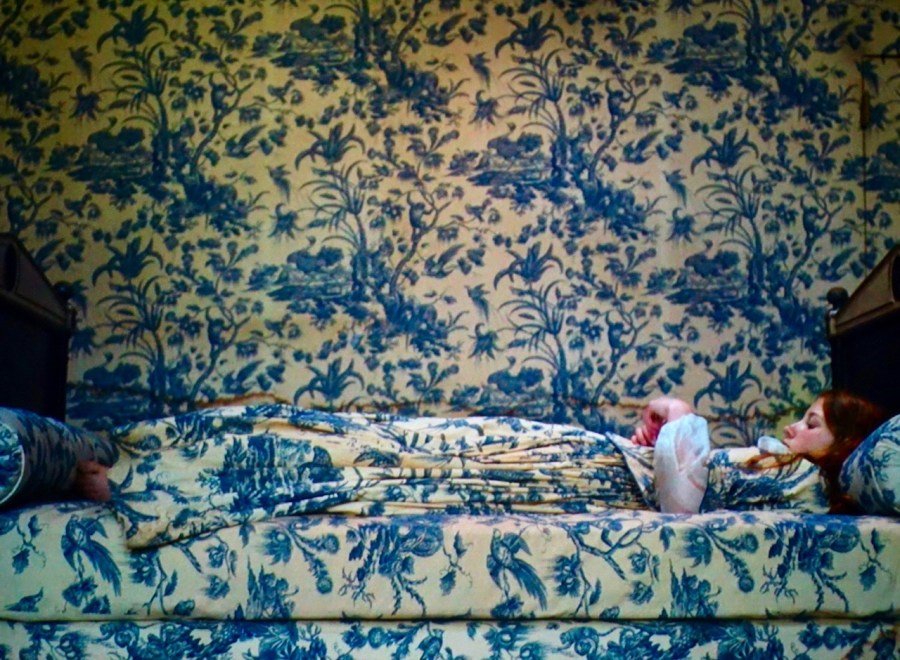
The Aftermath
The novel Chocolat by Joanne Harris opens when the protagonist arrives on the square of a tiny French village on shrove Tuesday as the villagers clear away the remains of the carnival to herald the beginning of Lent. Harris evokes the scene beautifully, capturing the season, smells, sounds and atmosphere.
We came on the wind of the carnival. A warm wind for February, laden with the hot greasy scents of frying pancakes and sausage and powdery-sweet waffles cooked on the hotplate right there by the roadside, with the confetti sleeting down collars and cuffs and rolling in the gutters.
Do you take your characters out into groups or crowds of people? How do they handle it?
I have written a few posts about editing. The last one was titled Editing Hell. The name of the post reminds me of how frustrated I must have been feeling at the time. It also made me notice how time and experience change us. The other day I told someone I loved editing. I have observed this change at work as well. My job involves quite a bit of revising others work and I used to hate it – thought it tedious. I am not sure exactly when it happened, but of late I have felt a growing sense of joy in the process of revising and editing. Yes you did read that right, joy. I must be a geek right?
I have come to appreciate that as writers, we want to produce work that people love, or hate for the right reasons – like because it touches a nerve the reader has been avoiding. We want readers to immerse themselves in our stories, and if we’re lucky be transformed by them in some small way. But raw imagination is messy. To turn a piece of writing into something beautiful to read takes a lot of work. The desire for our work to tell a good story and to be beautiful can blind us to the purpose of editing – which is to find fault and identify what needs to be changed. I have come to understand that the work of writing a novel, is much more about the editing process than inventing the raw story, so learning to love it matters if we are to achieve our goals.
“The first draft reveals the art; revision reveals the artist.” – Michael Lee
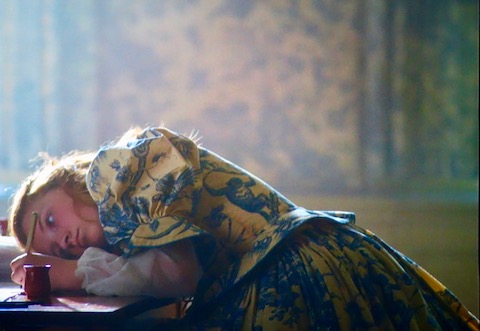
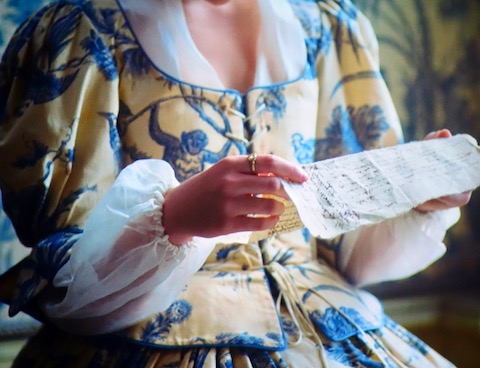
The more I edit, the more respect I have for those who work as editors. They must find and iron out the faults in order to polish a writers work so that it really sings like a finely tuned instrument, yet balance that imperative with the limits to which they can push a writers ego. No wasted words, no words out of place. And anyone who has had to provide ‘constructive feedback’ knows how hard a line that can be to walk when your hope is to get the best outcome. For many writers their work makes them vulnerable and can be a vehicle for their hopes. Push too far and the feedback can be lost in the others woundedness. Don’t push enough and the work may never meet the authors expectations once out in the world.
“Writing improves in direct ratio to the number of things we can keep out of it that shouldn’t be there.” ― William Zinsser, On Writing Well: The Classic Guide to Writing Nonfiction
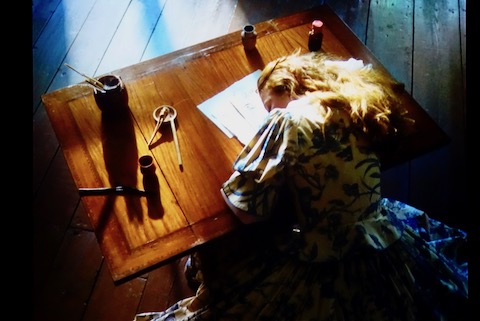
In the moments I feel like I am getting sick of editing I remind myself why I’m doing it. I want to make the work as polished as I can – before one of my beta readers, or an actual professional editor reads it. Because then I will get the best out of the collaborative editing process.
One day last week I left a one hour long meeting at work to discover I had received thirty emails. All demanded immediate attention. The pace at work has been frenetic due to a period of high volume competing demands, clashing deadlines and reduced staffing. My back yard has been teeming with builders working on repairs for several weeks as well. Not a lot of creative writing had been done. As the saying goes, I was over it and craving some down time. So how lucky was I that a member of my writing group invited us to her new place in Warburton for a writing weekend.
You are not a drop in the ocean. You are the entire ocean in a drop – Rumi
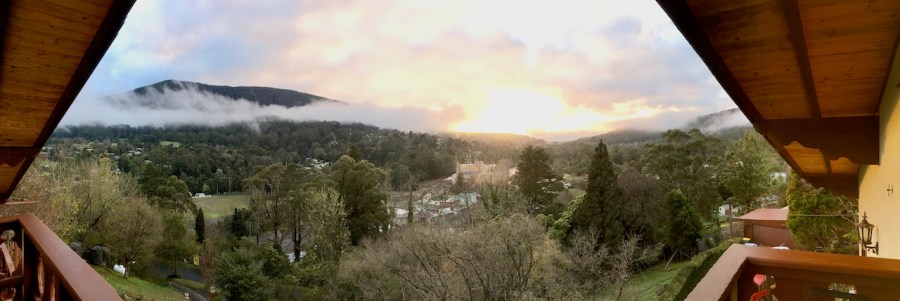
I trundled up there late last Friday after cooking some food and arrived just after dark to a beautiful meal and long chats about writing and books over red wine. My room was in an apartment at the top of the main residence set high up on a steep hill. I woke to a view to die for (as you can see from the main picture), and took a long deep breathe. The cult of busyness, so antithetical to considered thought, melted away as I absorbed the peace of the place.
An entire weekend dedicated to nurturing writing seemed quite decadent, but there is a lot to be gained from interacting with other writers and having a chunk of uninterrupted time to work. Over two days we read and critiqued each others work, discussed approaches to writing, and the publishing industry in between disappearing to our own corners to connect with our works in progress.
A sheep in wolf’s clothing
The first signs of spring are here and I sense the frenetic pace subsiding for a while. I shall try and take my lead from the wolf and chill in this lovely weather. Needless to say this post is visual heavy and text light as I’m keen to make the most of the sunshine.
She turned to the sunlight
And shook her yellow head,
And whispered to her neighbor:
“Winter is dead.” – AA Milne, When We Were Very Young
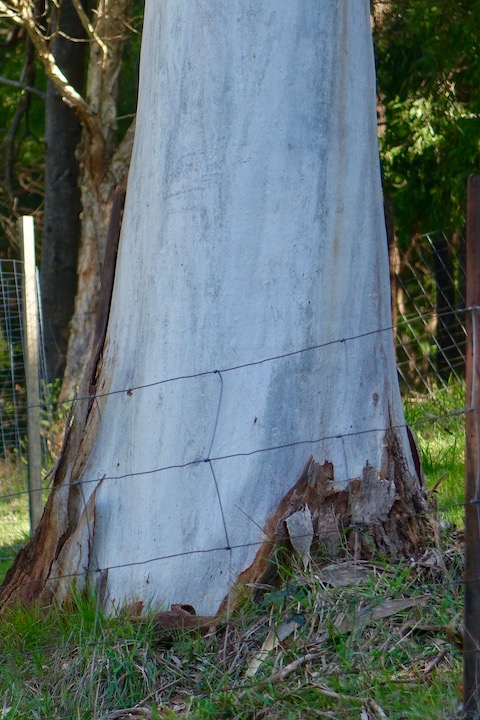
What happened when you saw the main image on this post? Did you automatically think palm trees and cows?
Humans love to organise, categorise and classify. Slapping a label on things helps us make sense of the world, and prevents us from becoming overwhelmed by it. The publishing industry is no different. There is a preference to categorise authors – mystery, romance, literary, science fiction, speculative fiction. Apparently they like authors to ‘stick to their genre.’ Failing to do so might confuse readers, not to mention the marketing team.
I can’t blame you for trying to categorize me. It’s a human instinct. It’s why scientists are, to this day, completely flabbergasted by the duck-billed platypus: it’s furry like a mammal, but lays eggs like a bird. It defies conventional classification.
Jeff Garvin, Symptoms of Being Human
Categories can be hot air, Instrument Museum, Prague
It’s an interesting perspective given one of the other key pieces of advice for writers is to read widely across genres. Reading improves vocabulary, teaches us how to build narrative structure and tension, create interesting characters, and construct dialogue. Reading broadly also provides inspiration. If our creativity is enhanced from reading across genres, the result presumably includes some leakage from what we absorb to what we produce. Novel ideas emerge and the genre lines start to blur.
I just finished reading Kate Atkinson’s A God in Ruins. It’s an absorbing read as well as a great title. A saga about postwar Britain told from the perspective of a single family over four generations. I was captivated by Atkinson’s use of language. Her writing is elegant, poetic and humorous. The story is an expertly plotted, time skipping narrative with rich three dimensional characters. It is rare that a novel will bring me to tears, but some of main character Teddy Todd’s reflections on life did just that.
A God in Ruins is a historical fiction novel written by an author previously best know known by her mystery writing about protagonist detective Jackson Brodie, and her earliest works were family sagas. Atkinson has definitely not stuck to her knitting. She is an author who is unbound by genre conventions, rules and categories. She even makes reference to the genre box in A God in Ruins when Viola, Teddy’s writer daughter is on her way to a literary festival in Singapore.
…she was also down for a couple of panel events as well. The role of the writer in the contemporary world, popular versus literary, a false divide. Something like that.
Kate Atkinson, A God in Ruins
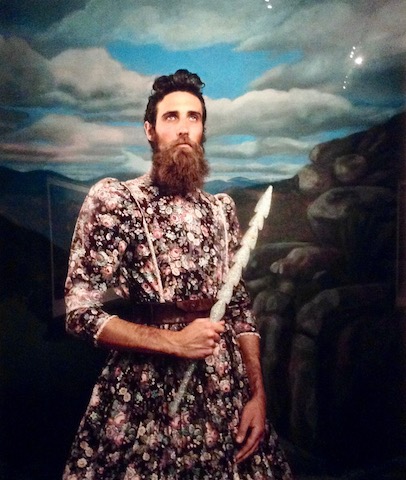
Image: Jacqui Stockdale, Mann of Quinn from the series The Boho – 2015, Adelaide Biennial of Art, 2016. Art Gallery of South Australia.
Atkinson is not alone in the endeavour of writing in different genres. She keeps the company of well known names such as Stephen King (science fiction, fantasy, mystery, and suspense); Margaret Atwood (children’s books, literary novels, speculative and historical fiction); and JK Rowling (children’s and adult mystery)
I love that Atkinson has written what takes her creative interest, rather than what might be expected, regardless of genre, and she done it always using her own name.
Would you be brave enough to defy a genre category?
“She had become really quite expert, she thought, at listening as though she didn’t listen, at sitting in other people’s lives just for a minute while they talked round her.”
Katherine Mansfield, Miss Brill
I’m a fairly quiet person myself, but a good listener, and there are gems among the mundanities of everyday conversations. Sometimes I am overcome with a desire to write down what someone says before it is lost in the onslaught of babble. I wonder if any of my friends will recognise themselves in snippets from my novel. The characters are all fictional of course, but some of what they utter is not.
When I write I tend to lead with dialogue. I find my story in the conversations between characters, then go back and fill out the spaces and places and body language. In reality much of our daily prattle is nothing but fill that would bore people to death if we stuffed our novels with it.
“I love to talk about nothing. It’s the only thing I know anything about.”
Oscar Wilde
Credible interactions in fiction are a long way from the chaos of everyday conversations. Dialogue needs to be tight. Stripped bare of small talk and stuffing (like umm and yeah) till all that is left is plot, character reveal, subtext and a rhythm distinct to each speakers vocabulary. It needs to be pruned to reveal what people want from one another, and to dramatise their power struggles. If it doesn’t serve a purpose – cut it.
What is not said tells us something
What is not said is as important as what is said. Like all writing, dialogue is show don’t tell – feeling is conveyed through choice of words. Body language and inner voice interspersed around, or interrupting dialogue demonstrates the feeling where the words themselves do not.
“I can’t wait to see Jane,” he said excitedly.
In this sentence, the dialogue itself conveys excitement, there’s no need to explain it to the reader a second time with an adverbial dialogue tag – a tell rather than a show. Dialogue tags should only be used when its not clear who is speaking and for the most part, kept pared back so they don’t distract readers. He said, she said, said David, said Jane, is usually sufficient.
Body language conveys feeling
Every character has a unique way of talking. Good dialogue opens up our fictional worlds and offers a sense of place and time. It draws out characters personalities and relationships, creates conflict and moves the story forward.
People who deliver endless monologues in real life are dull, and the same applies on the page. Dialogue is like a dance between characters. It mixes up exposition, and exposition keeps readers grounded in time and place when interspersed with dialogue.
Unless you are being experimental, dialogue generally conforms to conventions:
paragraphs are indented
each speaker starts on a new paragraph
punctuation for what’s said stays inside the quotation marks
when dialogue goes over more than one paragraph, only the end of the last paragraph has end quotation marks, all have start quotation marks
when the person speaking is quoting someone else, use single quotes
Study the work of some great dialogue fiction writers to see how they do it:
Peter Temple – Truth
Toni Morrison – Jazz
Douglas Adams – Hitch Hikers Guide to the Galaxy
John Steinbeck – Of Mice and Men
Hilary Mantel – Wolf Hall
Raymond Chandler – Farewell My Lovely
Elmore Leonard – Get Shorty
Read your dialogue out loud, or get someone else, or your computer to read it to you. If it doesn’t sound right, or you stumble it probably needs more editing.
“A good story is life, with the dull parts taken out.”
I recently completed, the Australian Writers Centre’s online course Inside Publishing – What You Need to Know to Get Published, which delivers a comprehensive overview of the global publishing landscape. This is a must do course for anyone thinking about publishing a book and not already familiar with how the publishing industry works. The course is self paced and contains five modules, each consisting of videos, handouts and links to relevant resources, all of which you can download for future reference. AWC does a great job of breaking down complex legal and technical concepts and explaining them in accessible language. It offers a terrific overview of how the publishing world its together, as well as providing handy tips for writers about to launch themselves into it.
The first module is about copyright – boring right? Surprisingly I found it fascinating. It explains in plain language how copyright works and the curious way it is carved up across geography, languages, film, television and books. It delves into what you own, what is yours to sell and the role of agents in getting you the best deal. Learn about the structure of the global publishing industry, the professional roles of various people who work in publishing houses, and how they make decisions. There are also tips on what to look for and what to avoid in the industry.
Module two focusses on the broad array of book formats – hardcopy sizes, audio, ebooks, why different book formats are produced and what it means for the author. This module then goes onto to explain how different formats relate to book marketing, buying, distribution, audiences, how sales are measured and how this guides publishing decisions about printing, as well as what happens to books that aren’t sold. The module also touches on the differences between the traditional publishing route and indie publishing and things to think about when considering which way to go.
The third module goes in deep on author editor relationships from the time they pitch to the final proofread. It explains all the different types of edits, the difference between editing and proofreading and the value of a good edit. Of course first you have to submit a manuscript and this module covers the pros and cons of submitting to agents versus direct to publishers and what you need to think about with both of these approaches. The resources include sample pitches and submissions, dealing with rejection, how to use rejections to improve your work and what happens after your receive an offer from a publisher.
Module four gets down to the nitty gritty of offers and what you need to think about, including how advances work, marketing, royalties, public lending rights (libraries), and educational lending rights, and an introduction to some of the things to look for in contracts.
Contracts is the focus of module five, which sensibly comes with a disclaimer that it’s not a substitute for legal advice. Make sure you’ve had your morning coffee as this is the serious end of the business and requires some concentration. This lesson talks about negotiating contract terms and goes into quite a bit of detail about the various clauses in standard publishing contracts. It ends with a little reminder that publishing is a business, so you have to approach your author journey professionally and do your best to educate yourself about how the industry and the publishing process work.
I got a lot out of this course and one of the best things about it is that when you enrol, you get access to the online materials for twelve months. I’m confident I’ll go through it a couple more times before that time is up and will learn a bit more with each viewing.
I don’t read a lot of true crime but just finished Helen Garner’s work, This House of Grief. I know some people find the genre too hard because of the voyeuristic nature of it, or because they cannot bear to hear about the terrible things people are capable of doing to one another. The genre is often criticised for being disrespectful to victims and their families, an argument that primarily revolves around issues of consent, appropriation, representation and concerns when stories are embellished for the purposes of drama.
Those who do like true crime reference its value in providing insight into, and an understanding of, the inner workings of the legal system and human behaviour. There have been instances of true crime pieces shining a light on forgotten cases and having an extraordinary impact, such as facilitating the resolution of unsolved crimes or the reopening of cold case investigations. Rachael Brown’s, Trace, a true crime podcast series about the cold case of the murder of single mother Maria James at the back of her bookshop in 1980 resulted in a new coronial investigation. Katherine Kovacic’s historical fiction novel, The Portrait of Molly Dean, based on a 1930 unsolved murder delivers a sensitive remembrance for a largely unknown young woman who’s life might otherwise have been forgotten.
This House of Grief by Helen Garner is a non fiction true crime story about the murder trial of Robert Farquharson. Farquharson was charged after the car he was driving left the road and crashed into a dam outside of Winchelsea, Victoria and resulted in the death of his three children on Father’s Day. Farquharson was convicted to three terms of life imprisonment without parole in 2007. The original conviction was overturned in 2009 but a retrial again found him guilty of murder and he was sentenced to life imprisonment with a 33 year minimum.
Garner never interviewed Farquharson but did attend both trials as part of her process of writing the book. The trial and re-trial form the narrative spine of the novel in which Garner herself is both a witness to events, and a character within the text. The story blends Garner’s personal experience of the harrowing trial with the procedural formality of the legal system. Her her own emotional responses to the unfolding evidence, and the mundanities of her everyday life run along side the factual reporting of the trials. It is written with the calm eloquent voice of an observer equipped with the exceptional skills of a fiction author and a fearless honesty. Garner strives for an empathic understanding of the terrible event as the rational, ordered legal system tries to make sense of it and find the truth at the centre of all the swirling grief. She lays her own and others emotions, prejudices, and preconceived notions of human behaviour bare, challenging their intractable nature and unreliability on the page.
As Garner records and critiques the courtroom drama and her own conflicting responses to it, she describes in expressive detail impressions of the people she encounters in appearance, language and tone, the mood of the room, the surreptitious glances and subtle shifts in body language. When the evidence leans toward a guilty verdict Garner clings to the possibility of reasonable doubt because she doesn’t want to believe a father could be capable of intentionally killing his three children. When rebuked by a barrister friend, she reflects on the question of why lawyers always make her feel stupid. It seems to be a comment on gendered views where the legal system is masculine and certain, but she is feminine and tentative.
Garner has received both praised and criticism for this work and other true crime books she has written (Joe Cinque’s Consolation; The First Stone). I found This House of Grief a fascinated and compellingly intimate insight into Garners inner world. In striving to be objective she had to wade through confusion, doubt and sudden flights of compassion or repulsion she felt for the subjects of her study, and her own responses to those feeling.
Ultimately This House of Grief raised more questions for me than it answered – about the fallibility of the legal system and the ambiguity in taking a highly technical procedural process and asking ordinary emotion laden laypeople to make a judgement of certainty about what they hear; about our societies insistence on imposing gender stereotypes that sometimes turn out men so incapable of managing their own emotional turmoil they carry out terrible acts in some misconceived belief it will soothe their own pain; about women unable to reconcile the possibility that love and vengeance can coexist in a way that can make the ones they love capable of both great heroism and of terrible violence; about how our own social conditioning, past experiences and emotional worlds shape how we perceive and interpret what goes on around us; and how our individual prejudices and beliefs shape what we can and cannot bear to hear and believe about the world.
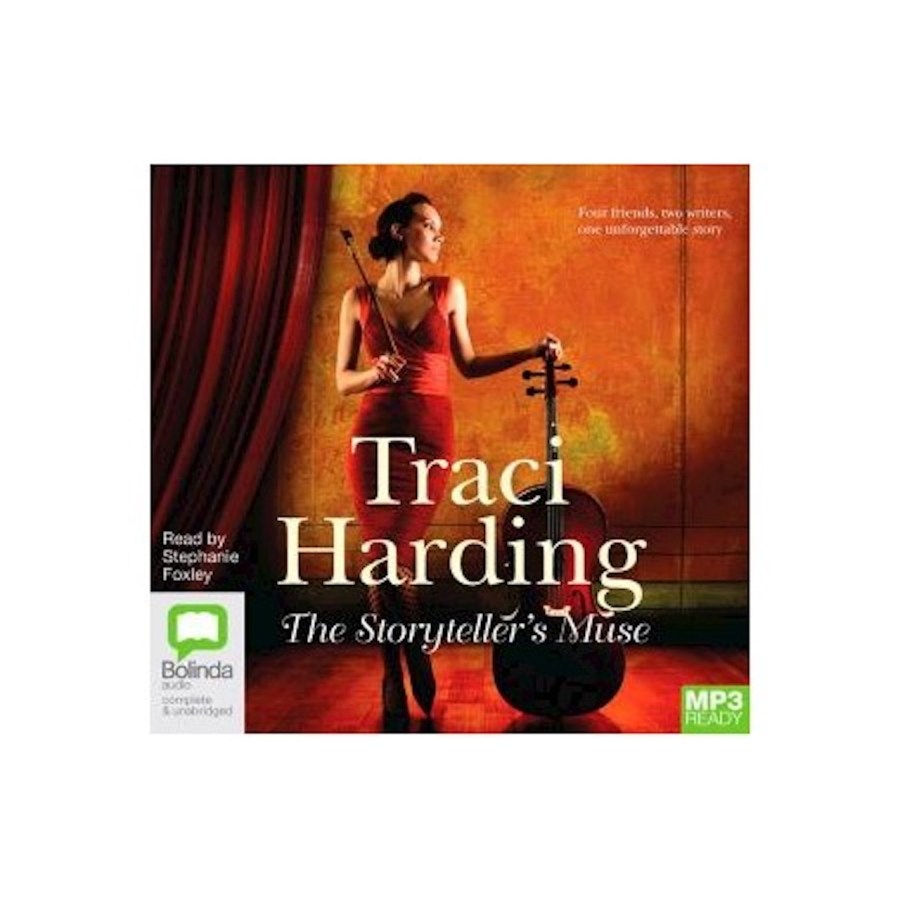
Peter stifled his ambitions to become a writer and studied nursing in order to meet his parents expectations. Penelope Whitman was a famous author, but now she’s a crabby old woman nearing the end of her life in the nursing home where Peter works. Her eyes are fading and her arthritic hands can’t hold a pen, so she passes the time absorbed in her imagination. There’s one problem, a story in her head that persists in wanting to be told to the world. When Peter discovers who Penelope is, he sets out to befriend her and eventually becomes her protege when she asks him to transcribe her story.
As the telling and transcribing progress it becomes apparent there are other forces lurking. Em Jewel for one. Em is a creative, temperamental and supernatural force with the capacity to both inspire and destroy.
Part way through the telling of Penelope’s story, tragedy strikes and Peter has to find a way to finish the tale without her. What unfolds is a bit Agatha Christie for psychics – part supernatural mystery, part love story, part adventure and part historical intrigue spanning several generations. It’s a story within a story within a story.
The Story Tellers Muse is the first Traci Harding book I’ve read. Most of the works of this Australian author are science/fantasy series. I picked it up because it was in the mystery genre but might dip into some of her other work now I’ve had a taste of her writing. As an artist developing her craft, I particularly enjoyed the theme in the book that explored the relationship between creative artists and their muses. The Story Tellers Muse was also a fun and easy read that had me turning the pages – or rather pressing the play key as I ‘read’ the audio book, rather than the paper version.




 The more I edit, the more respect I have for those who work as editors. They must find and iron out the faults in order to polish a writers work so that it really sings like a finely tuned instrument, yet balance that imperative with the limits to which they can push a writers ego. No wasted words, no words out of place. And anyone who has had to provide ‘constructive feedback’ knows how hard a line that can be to walk when your hope is to get the best outcome. For many writers their work makes them vulnerable and can be a vehicle for their hopes. Push too far and the feedback can be lost in the others woundedness. Don’t push enough and the work may never meet the authors expectations once out in the world.
 In the moments I feel like I am getting sick of editing I remind myself why I’m doing it. I want to make the work as polished as I can – before one of my beta readers, or an actual professional editor reads it. Because then I will get the best out of the collaborative editing process.