Be Afraid: Terror Australis Readers and Writers Festival

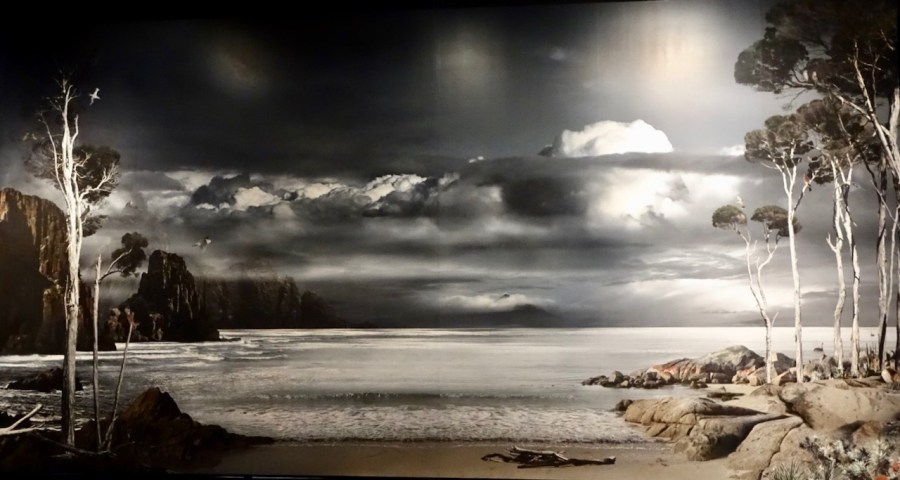
‘Prospero’s Island’, Valerie Sparks

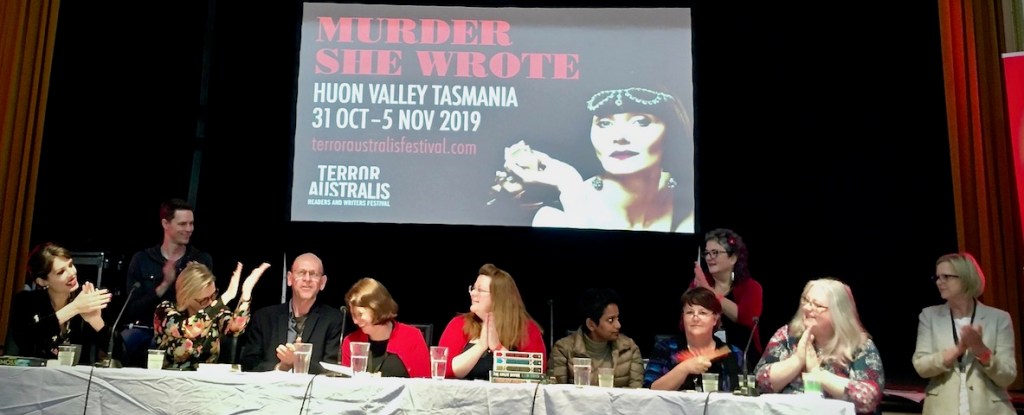
If you’re not into horse racing, bypass Melbourne and head straight down to Hobart over the Halloween – Melbourne cup weekend. Terror Australis Readers and Writers Festival (TAF2019) is a new biennial literary festival to be held at Cygnet in the beautiful Huon Valley 31 October – 5 November. I’ve been looking forward to it for months.

The festival celebrates the work of female crime writers with the theme “Murder She Wrote,” inspired by a visit to Tasmania by Agatha Christie. Christie was on a ten month tour of the British empire taking in South Africa, Australia, New Zealand and Canada in 1922. The correspondence of her travels was published in The Grand Tour: Around the World with the Queen of Mystery. She was so enamoured by Tasmania apparently she said she’d like to live there one day. I’m with Agatha – Tasmania is one of my favourite places also.

“From Australia we went to Tasmania, driving from Launceston to Hobart. Incredibly beautiful Hobart, with its deep blue sea and harbour, and its flowers, trees and shrubs. I planned to come back and live there one day. From Hobart we went to New Zealand.”

– Agatha Christie
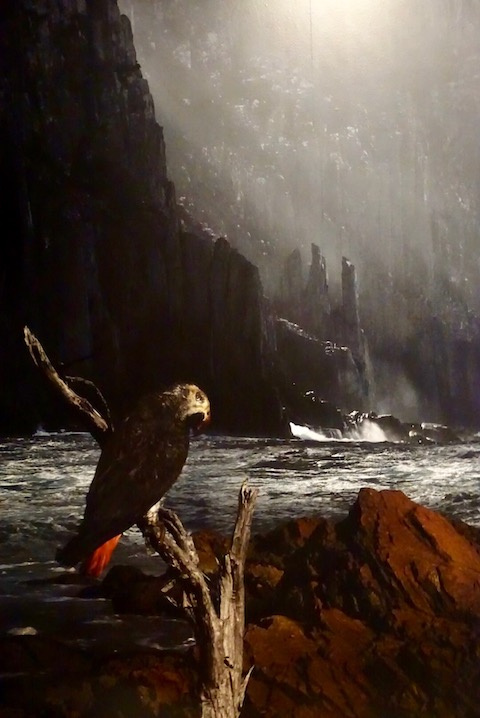
‘Prospero’s Island’, Valerie Sparks

I heard someone comment at a writing event I attended a while ago that crime writers are the most fun, and looking at the TAF2019 program, I can see why. The festival kicks off on Thursday and Friday with two days of writing workshops and masterclasses, as well as pitch to the publisher sessions. I’ve booked in for two masterclasses on Friday – one run by Angela Savage and the other by Meg Keneally. I’ll also be performing a spoken word piece at Friday night’s Noir at the Bar – a night of speakeasy jazz, spoken word and cocktails hosted by Naomi Edwards with a 1920’s theme.

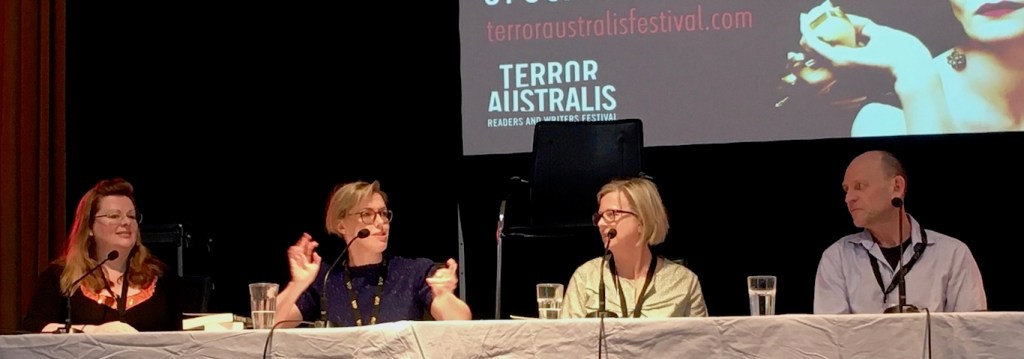
Saturday and Sunday hosts a cracker line up of panellists celebrating and exploring crime fiction. I’m looking forward to hearing what some of these folk have to say – Tara Moss, Angela Meyer, Jack Heath, Tansy Rayer Roberts, Meg Keneally, Margaret Keneally, Shamini Flint, Angela Savage,Lindy Cameron, Joanna Baker, Marta Dusseldorp, David Owen, Debi Marshall, Livia Day, Sulari Gentill, L.J.M Owen, and more.

The weekend will be broken up by a Murder Mystery immersive whodunit dinner party on Saturday night set on an archaeological site in 1920’s Cairo. The theme is Curse of the Sphinx in a nod to Agatha Christie’s Death on the Nile. Guests will inhabit a character and try to solve a murder over dinner before coffee is done. Apart from the writers panels and the dinner I’ll also be imbibing a literary whisky with First Dog on the Moon and Angela Meyer on Sunday afternoon while they chat about Angela’s 2018 debut novel, A Superior Spectre.

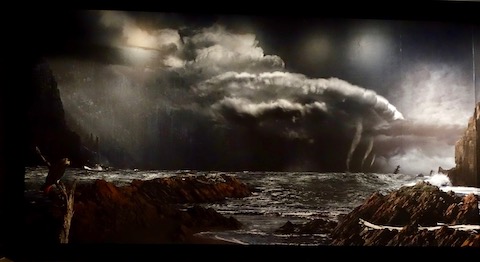
‘Prospero’s Island’, Valerie Sparks

For those who haven’t had their fill on the weekend, its bookended by two days of food and wine inspired, mouth watering culinary events on Monday and Tuesday. As part of Trail of Writers Tears, you can eat and drink your way around the region, learn bookbinding, making Chinese dumplings, Italian food, or go and visit Fat Pig Farm for lunch.

For more information check out the TAF2019 website and listen to an interview with Festival Director, Dr L.J.M Owen with David Milne here. See you on the other side Bwa ha ha ha…

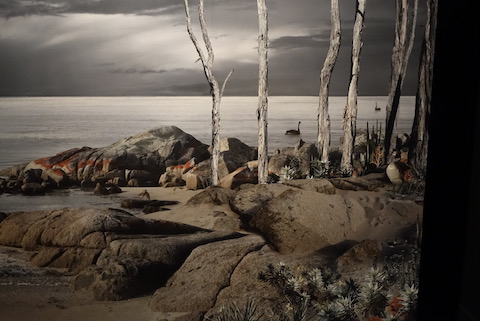
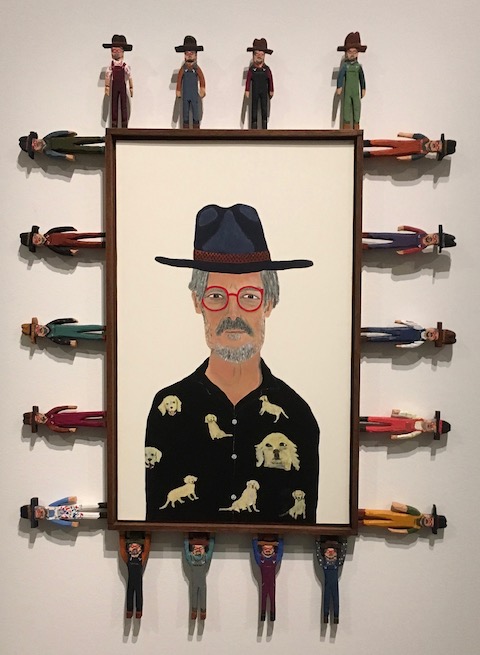
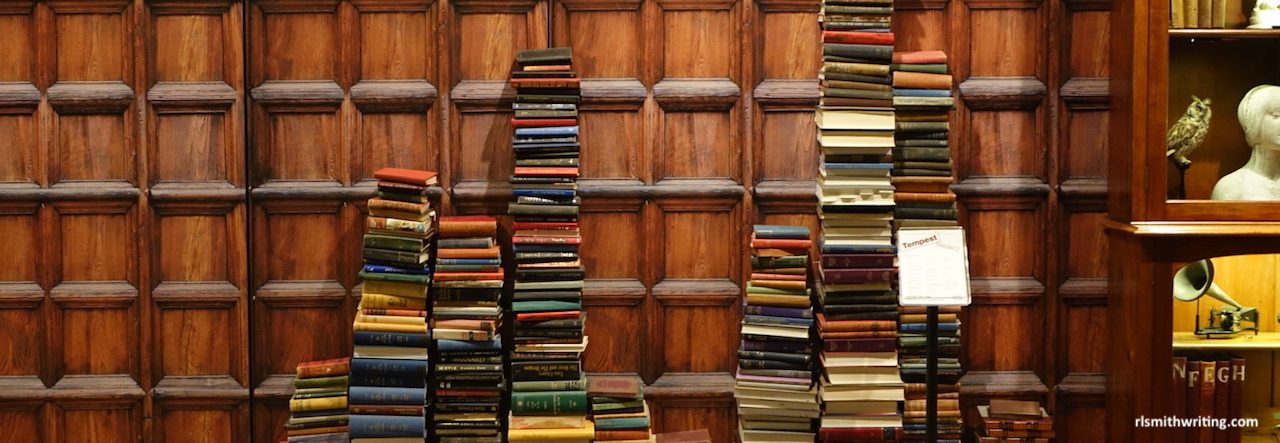
Images: ‘Prospero’s Island’ (2015-16) by Valerie Sparks. Commissioned by TMAG for Tempest

On writing style: Patrick White and Peter Carey

I was captured by the style and writing rhythm of two audio books I listened recently, even more so than their stories. Both The Twyborn Affair by Patrick White published in 1979, and My Life as a Fake by Peter Carey published in 2003 explore identity. In each the authors distinctive styles paint rich pictures of their characters and they were beautiful to listen to.

The Twyborn Affair is written in three parts. One set in a villa on the French Riviera pre-world war one, the second on a sheep station near the Snowy Mountains in the inter-war period, and the third in London just before the second world war. The title of the novel, also the core characters name, provides a clue to the novels story – Twyborn meaning twice-born, and Affair eluding to the characters various love affairs. The story charts the transmigration of a soul throughout three different identities – Eudoxia, Eddie and Eadith – a man bookended by two women. It explores transvestism, split personality and the loss of identity through death and re-birth. It places the anxiety and uncertainty of the human condition under a microscope, expunged of the dichotomy of gender.

It was still impossible for the watcher to decide whether the hair, illuminated by sudden slicks of light, was that of a folle Anglaise or pédéraste romantique, but in whatever form, the swimmer was making for the open sea, thrashing from side to side with strong, sure, professional strokes. It must be a man, Monsieur Pelletier decided, and yet there was a certain poetry of movement, a softness of light surrounding the swimmer, that seduced him into concluding it could only be a woman.

White’s writing style is dense, vivid and beautifully poetic to read. He applies a rhythmic lyricism and elaborate imagery drawing on myth, symbolism and allegory to explore ambiguity, identity, isolation and the search for meaning.

Yet whatever form she took, or whatever the illusion temporarily possessing her, the reality of love, which is the core of reality itself, had eluded her and perhaps always would.”

My Life as a Fake is set in 1972. An editor of an English poetry magazine goes on a junket to Kuala Lumpur and comes across a white man in a bicycle repair shop with ulcers on his legs. He is reading Rilke. The editor discovers that at the end of world war two this man was responsible for a great Australian literary hoax.

Remember, this is the country of the duck-billed platypus. When you are cut off from the rest of the world, things are bound to develop in interesting ways.

Carey toys with mythology in this novel inspired by a true story – the Ern Malley Affair. It explores identity, authenticity and the cultural anxieties of colonial societies. The Ern Malley Affair was a literary hoax involving the publication of poems dashed off as a joke to show that meaningless balony could get taken seriously by the avant-garde. The poems were subsequently published to great acclaim in the Autumn 1944 issue of Angry Penguins. The publication resulted in the humiliation and prosecution of Max Harris, the editor and a champion of modernist poetry, for publishing ‘indecent matter’. Carey draws on original source material but swaps out identities and names of the protagonists and adds in some wholly fictional characters.

I went to bed with the disconcerting knowledge that almost everything I had assumed about my life was incorrect, that I had been baptised in blood and raised on secrets and misconstructions which had, obviously, made me who I was.

Carey plays with Malaysian English slang and the work overflows with literary references including Frankenstein, Milton and WH Auden amongst others. There is a truly distinct use of narrative voice in My Life as a Fake from the crisp upper-class intellectual prose of Sarah, to Slater’s British bluff and effrontery, Chubbs defensive punctuated mash up of Australian and Malay, an aggressive Chinese-Malaysian woman with fractured English, and the elaborate deference of Mulaha. In the written text, one characters dialogue blends into another and folds into the narrative without the benefit of quotation marks.

He is right, he said quietly. The hoax misfired. I wished to make a point, but only to a few. Who cares about poetry? Fifty people in Australia? Ten with minds you might respect. Once Weiss had declared my fake was a work of genius, I wished those ten people to know. That was it, Mem. I never wanted the tabloids. Who would expect the Melbourne Argus would ever be interested in poetry. This was not their business, but what a caning-lah, what a public lashing poor old Weiss was given. I could never have foreseen that.

Both White and Carey have distinctive voices, original styles, and make great use of vocabulary and literary techniques, authors worth studying for any writer.

Creating Characters: the Archibald Prize

JF Archibald (1856-1919) was a Victorian journalist and founder of the Bulletin magazine. He served as a trustee for the Art Gallery of NSW and during that time commissioned portrait artist John Longstaff to paint poet Henry Lawson. He was so enamoured with the work that he left money in his will for an annual portrait prize.

Painting, like writing has genres. Portrait painting became a thing in the thirteenth century and its roots are in memorialising the rich and powerful. The word means to show a likeness. A portrait is an intimate character sketch that seeks to capture the inner essence of its subject, in much the same way as a novel aims to express the inner world of its characters.

The history of the Archibald presents something of a cultural snapshot of Australian society – up until recent years all winners were caucasian males, usually from Victoria or NSW, who painted caucasian male subjects – a mirror of our societies discrimination in education, opportunities and social views of the times. The first woman to win the Archibald was Nora Heyson for her portrait of Madame Elink Schuurman in 1938.

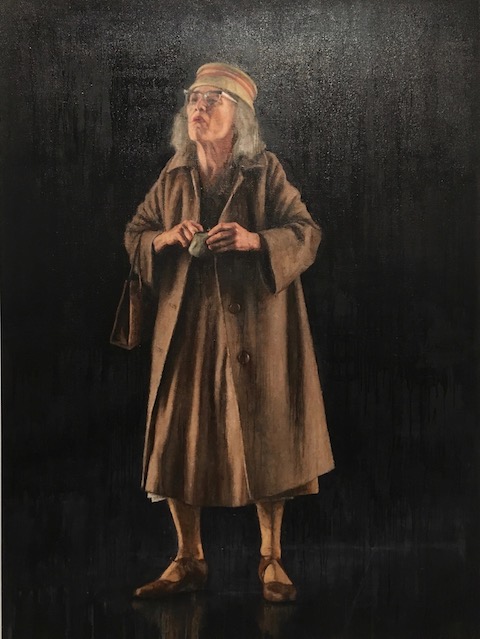
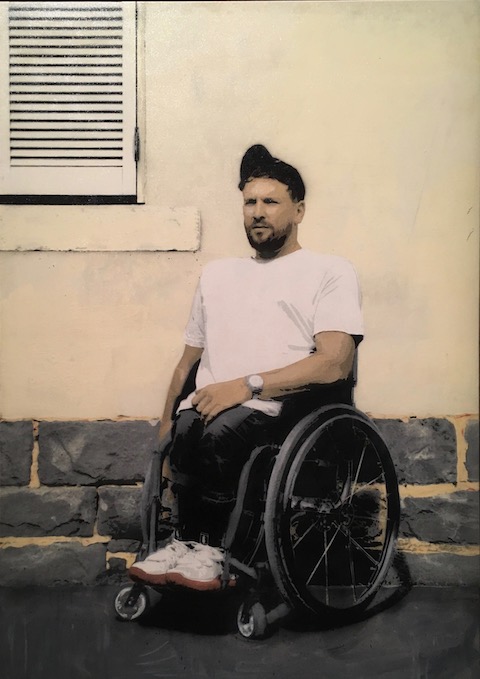
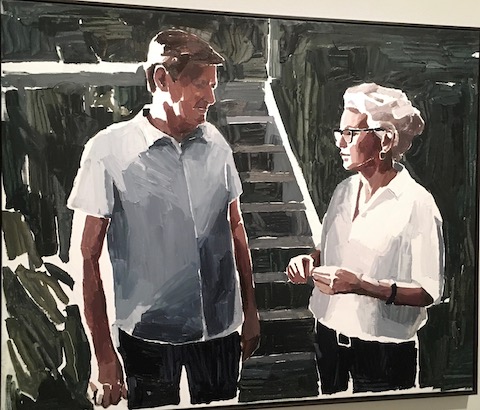
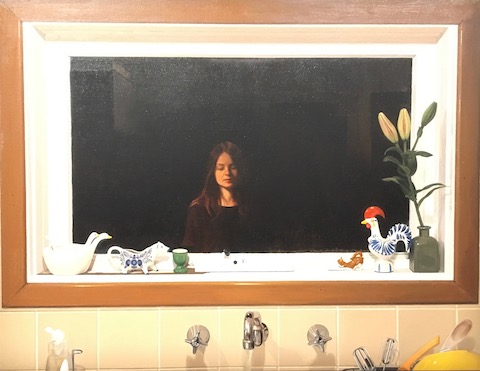
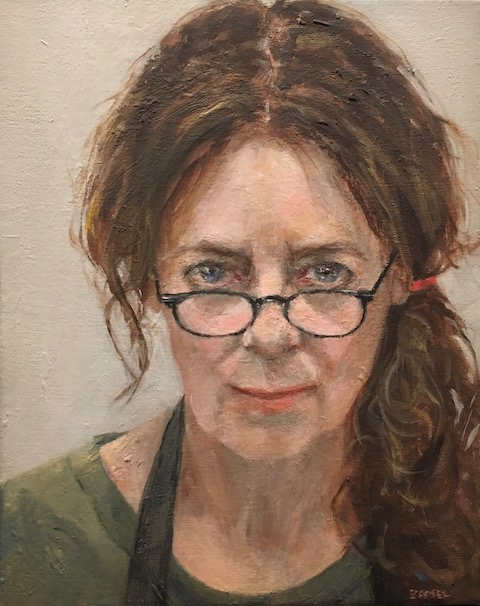
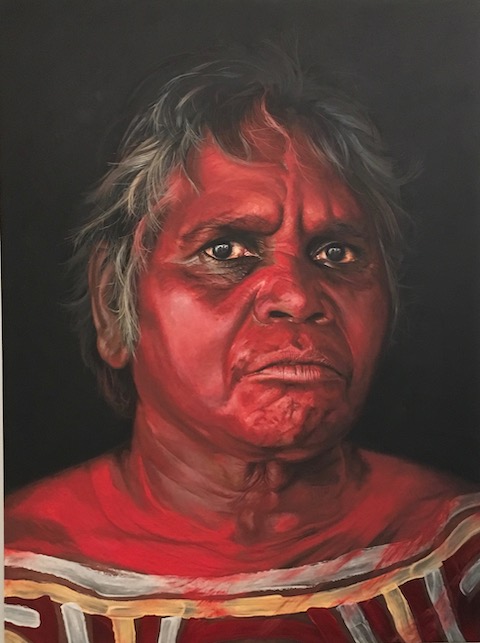
Today, both the subjects and artists are much more representative of Australia’s diversity. This years Archibald finalists include portraits of women of color, Aboriginal Australians, a subject with a disability, queer and elderly subjects. There was in fact a noticeable absence of old white suited men in armchairs and politicians. As I walked around the gallery, I couldn’t help wondering, what were the characters thinking in the moment captured, what is their life like, and what kind of relationship they have to the artist. Each tells a story.

Main image: Sarah Peirse as Miss Docker in Patrick Whites ‘A cheery soul’, Jude Rae

Book Review: The Tattooist of Auschwitz

I’m a writer of fiction, I make stuff up and my work is almost all in the mystery/crime genre. It attempts to shine a light on some elements of the darker side of life, but in truth my imagination ain’t got nothing on reality.

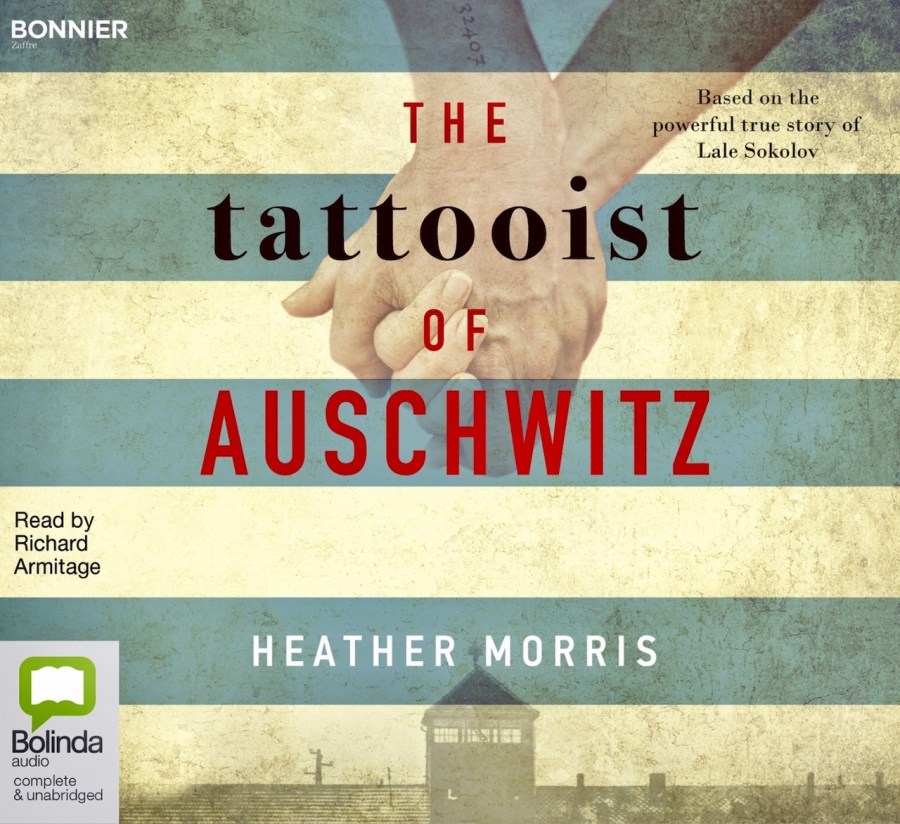
Last week I listened to the audiobook of The Tattooist of Auschwitz by Heather Morris. If I was to use two words to describe this novel they would be harrowing and hopeful. The Tattooist of Auschwitz is the story of Slovakian Jew Lale Sokolov. Lale was imprisoned at Auschwitz in 1942 and became the Tätowierer – the man who tattooed identification numbers on the arms of incoming prisoners. Lale met a young woman called Gita Furman in the camp and the two fell in love. Both survived three years in the concentration camp, partly due to Lale using his privileged position to smuggle additional rations to other prisoners. After the war Lale and Gita moved to Melbourne, where Lale met Morris who was to write his story. When the two discussed the project and Morris confessed she wasn’t Jewish, Lale indicated he thought this was good – he didn’t want anyone else’s baggage to cloud his personal story.

The book received much acclaim and become a best seller, but also received its fare share of criticism. Despite the novel never claiming to be anything other than historical fiction based on Lale’s memories, historians have criticised some details of the work as containing errors, exaggerations and misrepresentations.

Memory is a complicated thing, a relative to truth, but not its twin. – Barbara Kingslover

Interestingly one of the things most criticised was that Gita’s tattooed number in the book is wrong. Lale was 87 when he and Morris began working together, and Gita had already died. Gita had the tattoo removed when she was in her sixties, so presumably if incorrect, the number was incorrectly remembered by Lale.

The controversy around the work raises some interesting reflections about memory and truth. The story is Lale’s, his memory, recollections of his life as reflected on his twighlight years, some seventy years after the events. Perhaps his mis-remembering the number simply reflected his reclamation of his and Gita’s identities as being much more than a tattooed number. Morris committed to tell his story as he tod it, it’s why he trusted her and chose her for the task. She honoured that trust by telling his story as he relayed it, using fiction to fill in the gaps. If Morris had disregarded some of Lale’s most pressing memories in favour of hard historical facts, the novel may have been a more accurate historical account, but would it have been dishonouring Lale’s memories and his story? Lale has passed away, so we cannot ask him how he might have felt about this.

The debate about the value of the work as a resource to understand the history of Auschwitz is interesting and perhaps the incredibly sensitive nature of the Holocaust lends itself to significant scrutiny. I have read some of the criticism including one stating ‘that the novel is “an impression about Auschwitz inspired by authentic events, almost without any value as a document”. It is a sentiment that I must disagree with. Having read the novel, and the criticism, I do not believe the details raised would have significantly changed my experience of the story. I listened to much of it whilst pottering around in the garden and it bought me both to tears and laughter at times. It also significantly increased my very limited knowledge of that period in history – the fictional I Am David by Anne Holm, Viktor Frankel’s Man’s Search for Meaning and Thomas Kenneally’s Schindler’s List being the only other books I’ve read on the subject. It’s knowledge I probably would not have otherwise gained as I would not have been motivated to read an academic paper about it.

The novel may be a blend of an ageing man’s memories, fiction and facts, but it has never claimed to be more than that and should not be devalued on that basis. I found the The Tattooist of Auschwitz to be a moving and well written story and encourage you to read it if you have not already.

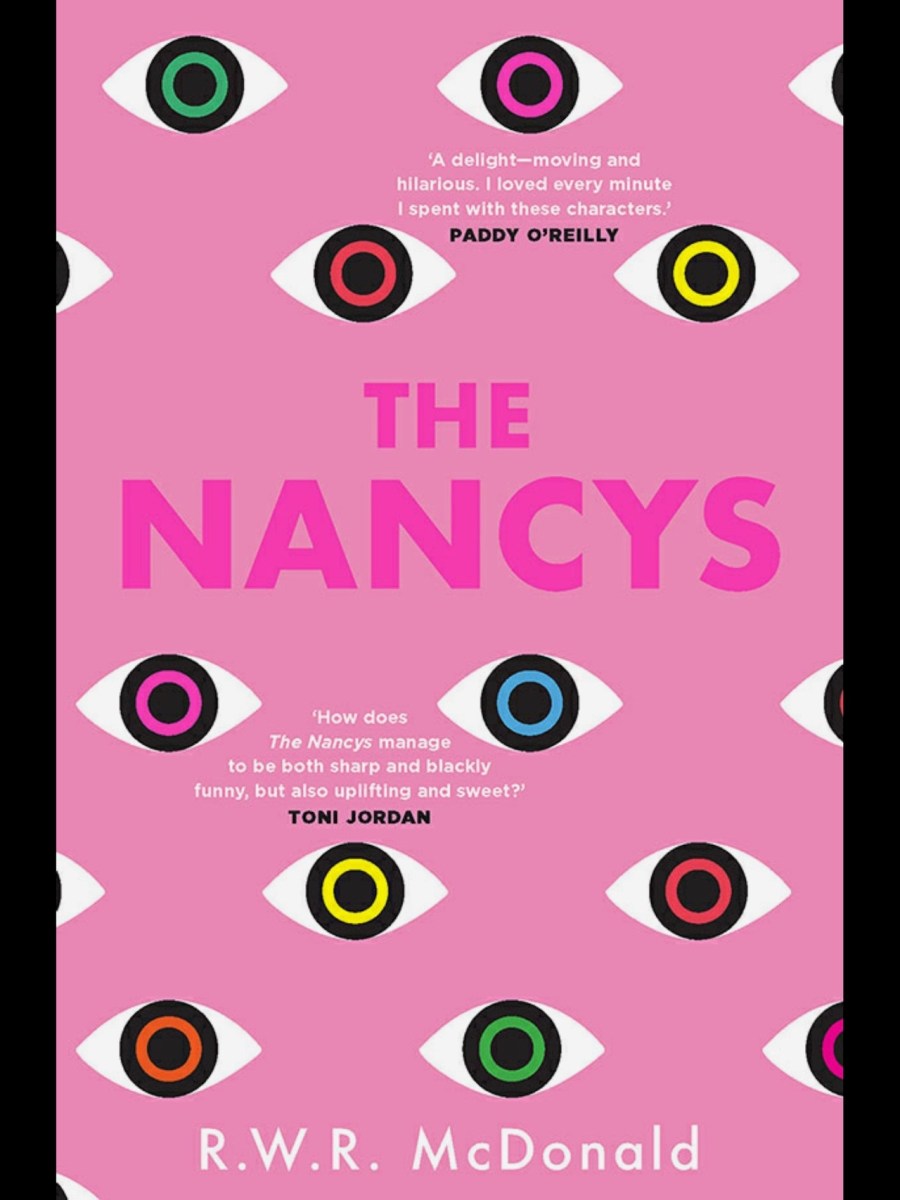
Book review: The Nancys

Tippy Chan’s mum goes on holidays and her Uncle Pike and his boyfriend come to Riverstone, the small town in New Zealand where she lives, to look after her. When Tippy’s friend has an accident and her school teacher is murdered, the three bond over a common love of Nancy Drew and set out to investigate. Uncle Pike’s boyfriend Devon is a clothes designer and runs out a series of prototype matching Nancys T-shirt’s for them to try. The novel has subplots on grief and fashion and is brimming with quirky characters.The Nancys is a light, fun, queer romp told through the eyes of an eleven year old.

Uncle Pike’s plane was late and, and my hair was a sweaty mess thanks to the crimson anti-kidnapping jacket and hateful Santa hat mum had made me wear.

The Nancys is RWR McDonald’s debut novel and it was highly commended for an Unpublished Manuscript in the 2017 Victorian Premier Literary Awards. It’s unusual to find adult fiction told from an adolescent point of view and McDonald does an excellent job creating the voice of Tippy who narrates the story in first person point of view.

To create a convincing young voice, writers need to describe life from a developmentally appropriate context and keep their adult knowledge and experience from intruding. The mind of a teenager moves quickly from one idea to another and leaves little room for reflection. Adolescents can make perceptive observations untainted by extended life knowledge and they experience the world with literal immediacy. Tippy’s adolescent understanding of adult concepts and informal diction makes the narrative jump around in the way young people do and ads to the authenticity of the character. Random observations and snippets of thought to give the narrative a slightly jolty feel and insight into the randomness of Tippy’s inner life. There’s also a good dose of youthful humour and fun subplots.

The next morning Uncle Pike gave me a choice, I didn’t have to go to school if I didn’t want to. It was a no-brainer. Finally I was living the Nancy Drew life-with a mystery to solve and no annoying classes to get in my way. After breakfast Devon made us go to the driveway for a runway show. He modelled a new tight Nancys T-shirt. ‘Tada!’

The novel doesn’t roll at your traditionally fast crime fiction pace – it starts quite slowly and picks up pace as the story unfolds driving you to race through the final chapters. It’s small town expose, family saga and detective story wrapped up in a blend of teen and gay laugh out loud, slightly bawdy humour and is filled with the genuine warmth the characters have for one another.

The author was also interviewed on The First Time Podcast last week if you are interested to hear him talk about his book.

Podcast review: Snowball

I’m not sure what the equivalent term is for a page turner when it’s a podcast. Ear grabber, binge listen or hearing hair-raiser perhaps. The latest offering from Unravel is called Snowball and it’s one of the best and most bizarre true crime offerings I’ve ever listened to…and nobody died for it.

Naive New Zealand man Greg Wards fell in love and married charismatic American con artist, Lezlie Manukian from California after meeting her on a backpacking trip to the UK. Lezlie moved to New Zealand with him and ripped off his whole family. Right before Lezlie got on a plane to go back to the US to visit her family she had a parting message for Greg.

“The snowball is about to hit you.”

Soon after his family discover that Lezlie had defrauded over a million dollars from them. Greg’s brother Ollie Wards, a journalist, decided to investigate Lezlie in an attempt to understand what happened and help his family put the experience behind them. Ollie’s podcast paints a picture of a genuine, warm, compassionate and close knit kiwi family and the trail of destruction left across the globe by Lezlie.

It was a fascinating study into the art of the con artist, one of the worlds oldest professions. Grifters, scammers, hustlers, swindlers, fleecers. They make a living out of violating trust. It’s all about brains, not brawn. They play to emotions and hone in on vulnerability.

Greg was a perfect target. A naive New Zealander on a big exciting adventure. A Yankophile in the United Kingdom who heard the confident American at a crowded party and was immediately enchanted. She would have charmed him, a master actor and a good listener who excelled at fabricating common ground to break down her targets defences. She didn’t grow a pinocchio nose when she lied, and what man would expect a beautiful charismatic woman fascinated by their greatest desires to rip the rug right out from under them? As one of her victims said, he’d come home to a beer and a blow job…emotion trumps reason.

I felt a great deal of warmth toward the Wards and was gobsmacked by what happened to them. I was also flabbergasted by the chutzpah of Manukian. You have to wonder why people like her don’t just go into acting – I’d have thought it would be much more rewarding in the long run. An extraordinary tale that had me gasping ‘no way’ at every turn.

Book Review: Godsgrave by Jay Christoff

If Vengeance has a mother, her name is Patience.

I picked up Kristoff’s epic fantasy novel after hearing him interviewed on The Garrett podcast. I don’t read a lot of fantasy, but he seemed like an interesting guy. Godsgrave is the second in a chronicle and it’s fare to say after reading it I wish I’d started with book one.

Our scars are just gifts from our enemies…reminding us they weren’t good enough to kill us.

Mia Corvere wants revenge for the murder of her familia, and she’s ruthless. She orchestrates herself to be sold off as a slave to a gladiatorial collegium. But it’s a tough and bloody road to revenge in Nevernight. Mia encounters allies, rivals and lovers all the way egged on by her mysterious magical shadows. Kristoff puts Mia under more and more pressure as the story unfolds and forces her to choose between pursuing revenge or friendships.

The old man hooked his thumbs into his waistcoat. ‘Problem with being a librarian is there’s some lessons you just can’t learn from books. And the problem with being an assassin is there’s some mysteries you just can’t solve by stabbing the fuck out of them.

The book is a long, dark, blood soaked, sexy, action packed page turner with plenty of twists to keep you on your toes. The world building is grand, the action spectacular, the narrator playful and amusing (if you read the footnotes), and the writing style poetically gruesome. And it ends on a cliffhanger.

Because the voices in your head that say otherwise are just fear talking. Never listen to fear.

Parties, soirées and crowds

I have a couple of friends who host fabulous soirées. They are a raucous blend of performance, music and readings and loads of laughs and great conversation. Last weekends gathering was a salon for a bunch of literary and music types – a get together to learn from, and amuse one another. The theme was What floats your boat?

DSC03552
Dress Up Party

Over the course of the afternoon I learnt about beer brewing; about Arabic numbers and plural leaders; what reading meant to one woman; another’s passion for the tango; what it’s like to have spent thirty years advocating for piece workers; the experience of finding someone in China to teach you mandarin via Skype; the research involved in writing a historical novel; and was serenaded by a musician who had just handed in her music PhD. I read an excerpt from my work in progress mystery manuscript and was delighted with the reception. An afternoon of exploring what nurtures and fuels others passions was refreshing, and a lovely way to get to know people a bit.

The soirée got me thinking about gatherings in fiction. I do love an intimate gathering, but must confess the bigger the bash, and the less people I know, the less appealing they become – it’s the introverts dilemma.  Jay Gatsby’s elaborate and decadent soirées in The Great Gatsby by F. Scott Fitzgerald come immediately to mind.

And I like large parties. They’re so intimate. At small parties there isn’t any privacy.

DSC00467
Welcome Party

The quote is from the aloof dishonest socialite Jordan Baker. It’s short, but says a lot about the character. At a big party she can control who she speaks to and blend in. At smaller gatherings she has less control, could be forced to speak to people she doesn’t want to and exposed for the liar she is.

Other memorable fiction parties include the Mad Hatters tea party in Alice in Wonderland, and the illicit shindig at the psychiatric institution in One Flew Over the Cuckoos Nest when McMurphy smuggled wine and women into the asylum after dark so the inmates could have a good time.

Parties, soirées, crowds and gatherings are a great vehicle for conflict in fiction. We can showcase our characters personality by how they respond to a crowd. Gatherings can heighten emotions, raise the stakes, be exciting and fun or provocative and anxiety generating. What if our protagonist meets someone they dread?

IMG_4317
The Protest

We can fill a party with movement, color, action, uncertainty, intrigue, or deception. Our protagonist may feel welcome or isolated. They can experience the unusual, unexpected or surreal. Venue, decorations and people’s clothes provide setting; snippets of conversation and the people our protagonist seeks out, or avoids tells the story. All fodder for character and plot development, not to mention humour. A party has its own arc – a story within a story. It includes getting ready for the party, arrival, the event, departure and reflections the following day. How might a character respond to each element? How do you think Ray might respond to this comment in Jason Medina’s A Ghost In New Orleans? What will his response tell us about him…

So, Ray… you seem like a cool cat,” she said. “Are you into alternative lifestyle parties?

My current work in progress contains a soirée, a protest and a conference. Each presented a chance to reveal character, advance plot and apply pressure to my protagonist. When my protagonist arrives at the soirée the greeting she receives is less than ideal…

Within a minute it swung open. Freya looked up at Jude’s face then swept her gaze downward. Then up again with a skeptical expression that made Jude want to pull away. No sign of the welcome friendliness of their first encounter.

The party starts with conflict that unbalances my protagonist. Of course a lot can happen in a few hours in a crowd, and the morning after the soirée my protagonist had a lot to think about…

On her way to consciousness, images of exotic creatures from the night before danced vivid behind Jude’s closed eyes. She tried to push thoughts of the investigation to the dark recesses and enjoy her fantasy.

IMG_0599
Outdoor Do

There are a lot of questions to be asked about our protagonists if we plan to send them to gatherings. How would you show the answer to the following questions when writing your crowd/party scenes?

  • Does the protagonist want to go? Why? Are they excited or apprehensive?
  • Do they worry about their appearance?
  • How well do they know other people there?
  • What type of crowd is it – a party, a protest, an event, a shopping centre, a horse or car race, a church service, a funeral or a carnival? Each evokes a different feeling
  • Are they the centre of attention or an outsider? An extrovert or a wallflower?
  • Who does your character meet? What are they wearing, eating, drinking?
  • What does your protagonist discover directly, or indirectly?
  • Are there people there they want to avoid or who want to avoid them?
  • What does your protagonist see, hear, smell, taste?
DSC00823
The Aftermath

The novel Chocolat by Joanne Harris opens when the protagonist arrives on the square of a tiny French village on shrove Tuesday as the villagers clear away the remains of the carnival to herald the beginning of Lent. Harris evokes the scene beautifully, capturing the season, smells, sounds and atmosphere.

We came on the wind of the carnival. A warm wind for February, laden with the hot greasy scents of frying pancakes and sausage and powdery-sweet waffles cooked on the hotplate right there by the roadside, with the confetti sleeting down collars and cuffs and rolling in the gutters.

Do you take your characters out into groups or crowds of people? How do they handle it?

Main image: New York Pride

Love an edit

I have written a few posts about editing. The last one was titled Editing Hell. The name of the post reminds me of how frustrated I must have been feeling at the time. It also made me notice how time and experience change us. The other day I told someone I loved editing. I have observed this change at work as well. My job involves quite a bit of revising others work and I used to hate it – thought it tedious. I am not sure exactly when it happened, but of late I have felt a growing sense of joy in the process of revising and editing. Yes you did read that right, joy. I must be a geek right?

IMG_0511

I have come to appreciate that as writers, we want to produce work that people love, or hate for the right reasons – like because it touches a nerve the reader has been avoiding. We want readers to immerse themselves in our stories, and if we’re lucky be transformed by them in some small way. But raw imagination is messy. To turn a piece of writing into something beautiful to read takes a lot of work. The desire for our work to tell a good story and to be beautiful can blind us to the purpose of editing – which is to find fault and identify what needs to be changed. I have come to understand that the work of writing a novel, is much more about the editing process than inventing the raw story, so learning to love it matters if we are to achieve our goals.

“The first draft reveals the art; revision reveals the artist.”  – Michael Lee

IMG_0510The more I edit, the more respect I have for those who work as editors. They must find and iron out the faults in order to polish a writers work so that it really sings like a finely tuned instrument, yet balance that imperative with the limits to which they can push a writers ego. No wasted words, no words out of place. And anyone who has had to provide ‘constructive feedback’ knows how hard a line that can be to walk when your hope is to get the best outcome. For many writers their work makes them vulnerable and can be a vehicle for their hopes. Push too far and the feedback can be lost in the others woundedness. Don’t push enough and the work may never meet the authors expectations once out in the world.

“Writing improves in direct ratio to the number of things we can keep out of it that shouldn’t be there.” ― William Zinsser, On Writing Well: The Classic Guide to Writing Nonfiction

IMG_0505In the moments I feel like I am getting sick of editing I remind myself why I’m doing it. I want to make the work as polished as I can – before one of my beta readers, or an actual professional editor reads it. Because then I will get the best out of the collaborative editing process.


Images: Tempest, Tasmanian Museum and Art Gallery

Be like a duck

One day last week I left a one hour long meeting at work to discover I had received thirty emails. All demanded immediate attention. The pace at work has been frenetic due to a period of high volume competing demands, clashing deadlines and reduced staffing. My back yard has been teeming with builders working on repairs for several weeks as well. Not a lot of creative writing had been done. As the saying goes, I was over it and craving some down time. So how lucky was I that a member of my writing group invited us to her new place in Warburton for a writing weekend.

You are not a drop in the ocean. You are the entire ocean in a drop – Rumi

DSC06215

I trundled up there late last Friday after cooking some food and arrived just after dark to a beautiful meal and long chats about writing and books over red wine. My room was in an apartment at the top of the main residence set high up on a steep hill. I woke to a view to die for (as you can see from the main picture), and took a long deep breathe. The cult of busyness, so antithetical to considered thought, melted away as I absorbed the peace of the place.

DSC06217

An entire weekend dedicated to nurturing writing seemed quite decadent, but there is a lot to be gained from interacting with other writers and having a chunk of uninterrupted time to work. Over two days we read and critiqued each others work, discussed approaches to writing, and the publishing industry in between disappearing to our own corners to connect with our works in progress.

DSC06226
A sheep in wolf’s clothing

The first signs of spring are here and I sense the frenetic pace subsiding for a while. I shall try and take my lead from the wolf and chill in this lovely weather. Needless to say this post is visual heavy and text light as I’m keen to make the most of the sunshine.

She turned to the sunlight
And shook her yellow head,
And whispered to her neighbor:
“Winter is dead.” – AA Milne, When We Were Very Young

Main image: Warburton