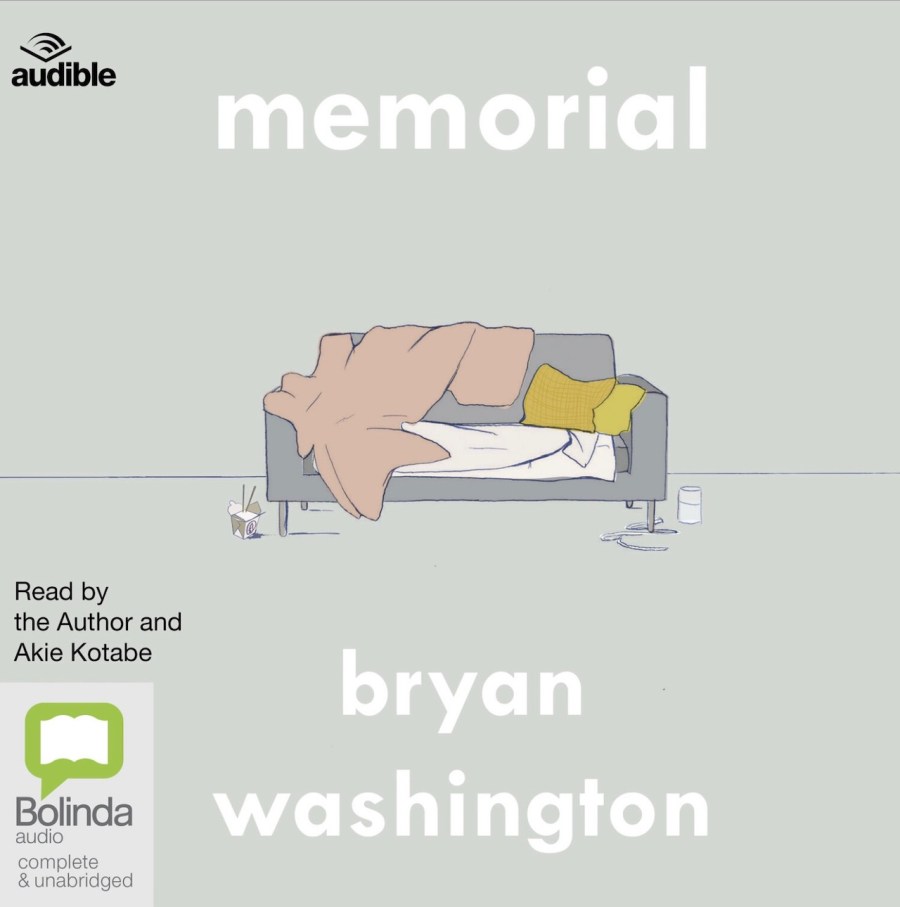
Book review: Memorial by Bryan Washington

Benson and Mike’s relationship has never been easy and now it’s in a rut. Their fights with words and fists end in sex. Each is unsure about what their relationship is or where its going. Memorial is a modern story of the relationship between two gay men – one Japanese, one a black man – and their relationships with their families.

That loving a person means letting them change when they need to. And letting them go when they need to. And that doesn’t make them any less of a home. Just maybe not one for you. Or only for a season or two. But that doesn’t diminish the love. It just changes forms.

Sexuality, race, class, trauma and grief are the subjects of Memorial by Bryan Washington.   The story is written in three parts across two locations – Houston and Osaka – and told from the perspective of the two men.  

You’re taking up space in another human’s brain, she said. You’re a foreign entity. A parasite. That’s a lot by itself.

Memorial opens from Benson’s perspective. His partner, Mike has decided to go back to Japan to see his dying father. Mike’s mother, Mitsuko, who Benson has never met arrives to stay the day before Mike leaves. Benson finds himself sharing a house with a Japanese woman he doesn’t know in a predominately black neighbourhood in the throes of gentrification. Mitsuko is disappointed that her son has run off to be with her ex-husband just as she arrives and resists Benson’s attempts to draw her out.

He came out of my body. He’s a homosexual. He left his mother with a stranger. I’ve already got everything I need to know.

Mike arrives in Japan and takes up residence with his estranged, dying father, Eiju, who runs a bar and pretends nothing is wrong. Mike communicates via sporadic text messages with Benson and equally sporadic conversions with his father.

There are a lot of spaces in this novel. The unanswered questions and awkward silences between characters draw your attention to what is not said, revealing that there is as much, if not more meaning in the unspoken than the spoken. A beautifully written insight into the ordinary life of men.
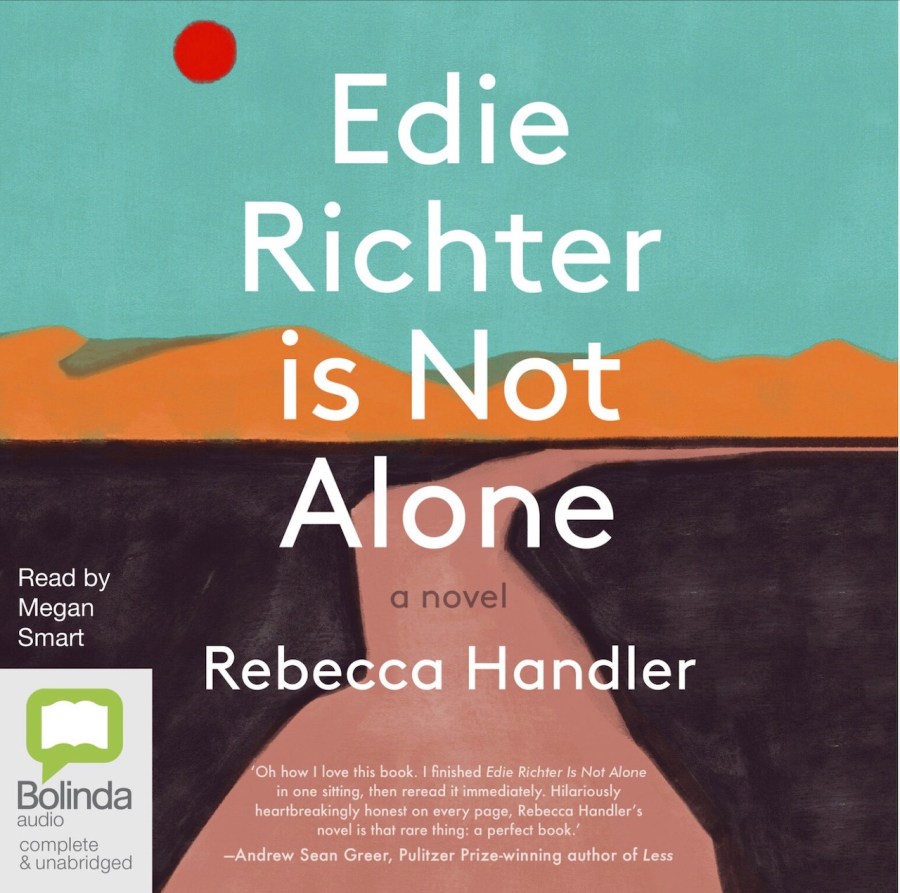
Book review: Edie Richter is Not Alone by Rebecca Handler

Rebecca Handler’s debut novel Edie Richter is Not Alone explores Alzheimer’s and the impact of euthanasia on families. Edie, her mother and sister care for their father/husband with early onset Alzheimers. When he no longer recognises her and stops eating Edie decides to suffocate her father without telling anyone.

After Dad’s diagnosis, Mom started labeling things and let Dad grow a beard. She went to a baby store and bought plastic child-protection locks for the kitchen. Just so he won’t stab me, she said, as I wrestled with one of them, trying to get a corkscrew out from a drawer. You remember Tanya from my walking group? Her mother attacked the cleaning lady and they had to move her into a home. 

After the funeral Edie and her husband, Oren, relocate from San Francisco to Perth, Australia. The story unfolds with dark humour as Edie explores her new home and is incrementally undone by her dark secret. She murdered her own father. Eadie’s behaviour becomes increasingly unpredictable and outlandish. The story is a well crafted, if discomforting, study of a woman unravelling due to her own lack of insight into her very complicated grief. Oren scrabbles around in fruitless frustration trying to penetrate her emotional defences and help.

I thought that life was about moving from one thing to another, all the previous things falling down behind you, but I was beginning to see this was not the case at all. That in fact every action, every thought, and every word uttered, they all stayed with you and formed a sort of jumbled collage

I found this novel morbidly compelling, a little voyeuristic and viscerally uncomfortable. It is a study of a woman’s mental and emotional disintegration resulting from her inability to open up to others about what pains her the most. She pushes away those closest to her and behaves in such appalling ways that she infuriates others who begin to believe she really is either bad or mad. As Edie becomes more and more isolated her realtionships and inner life fray. Eventually something has to give. 

A challenging, engaging and thought provoking read.

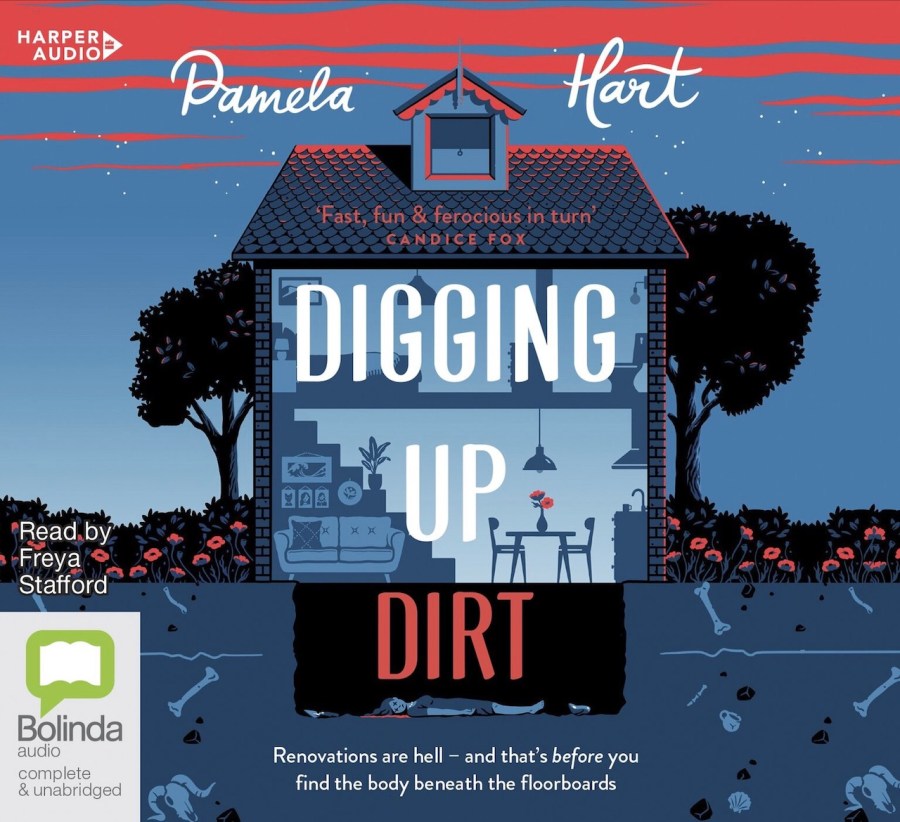
Book review: Digging Up Dirt by Pamela Hart

Thought I’d lighten things up a bit this week with a cozy mystery. Cozies are an easy read that can be gobbled up without any uncomfortable feelings, whilst still offering satisfying twists and turns. Digging Up Dirt also includes a splash of simmering romance.

Nothing like the builder digging up bones to halt the work on your renovation. TV researcher Poppy McGowan needs to find out if the bones are human or animal so she can get on with finishing her house. When archaeologist, Dr Julieanne Weaver, whom Poppy doesn’t like, interferes and slaps a heritage order over the property because she thinks the bones a significant Poppy is really annoyed. But then Julieanne is found murdered onsite, face down in the excavation dressed in heels and an evening frock, and things get really complicated.

Pamela Hart is a prolific author who has written more than 35 books and successfully crosses the genre divide. She is best known for her historical fiction (The Soldiers Wife, The War Bride, A Letter from Italy and The Desert Nurse).

Hart has also penned speculative fiction (Ember and Ash)and children’s books under the name Pamela Freeman as well as being an accomplished scriptwriter for ABC kids. I’ve done a few of the online courses she has written for the Australian Writers Centre as well, which have all been of good quality. She’s no slouch!

Digging Up Dirt is Hart’s first mystery novel and it’s a fun Australian read (or listen to the audio book). 

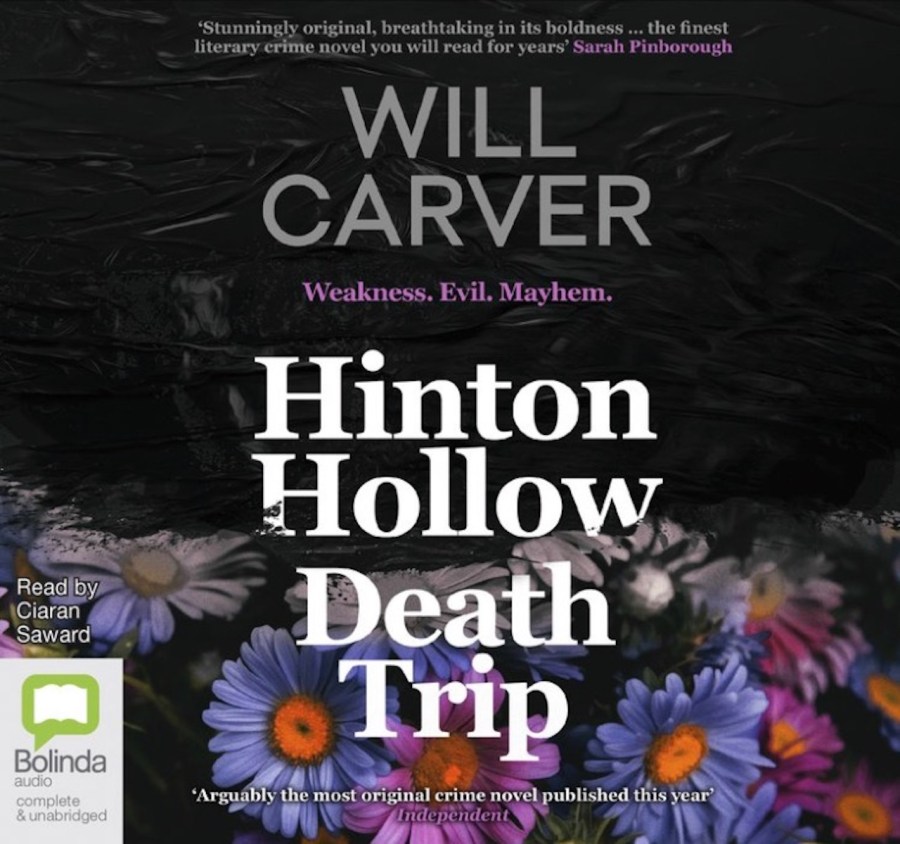
Book review: Hinton Hollow Death Trip by Will Carver

The devil made me do it.

Fear is my greatest tool. It can be used to make a person do almost anything. You can take education, information, motivation and throw it all away, fear is the only thing you require. It is a slow and deadly poison. And it is effective.

Detective Sergeant Pace flees London to return to his hometown of Hinton Hollow for some respite after the trauma of his previous case. Pace’s shadow follows him, enveloping the idyllic small town in darkness and creating disarray in the community. Hinton Hollow Death Trip is the third Carver novel featuring Pace (see Good Samaritans and Nothing Important Happened Today) but could also be read as a stand alone.

The story is a noirish pulp meditation on what can happen when we abandon our values and give into our darkest parts, unleashing the monster within driven by our disappointments, bitterness, resentment and jealousies.

This is how evil works. I just have to get you started. What you do with that feeling is entirely down to you.

The unique twist in this tale is the narrator. Evil. Evil takes great pleasure insinuating itself into the cracks of people’s goodness, prodding at their insecurities and encouraging them to indulge the more selfish, destructive and violent elements of their nature. The message here is that we all have this capacity for destruction in us, but we make choices in response to experiences that determine whether we indulge our malevolent sides or keep turning toward the good in ourselves and others. Evil encourages the characters of Hinton Hollow to indulge their blackness and cheat, steal and kill.

Where everything happened for a reason. A leap of faith. Detective Sergeant Pace is no good. Detective Sergeant Pace is a footnote. Detective Sergeant Pace is a small story. 

In keeping with Will Carvers style, Hinton Hollow Death Trip, its cast and their behaviour leave the reader feeling queezy, despite the macabre content being tempered with equally dark humour. The characters are outrageous but believable and the narrative has a way of making the reader reflect on their own dark corners. 

This is not a story for the squeamish so if you can’t stomach a bit of graphic violence, stick with the cosies. It seems the writing of the story was also uncomfortable for Carver. Apparently the manuscript landed in the bin twice before Carver felt it was good enough to call complete. 

Some people are more comfortable in the dark. Some seek it out. Some thrive there…

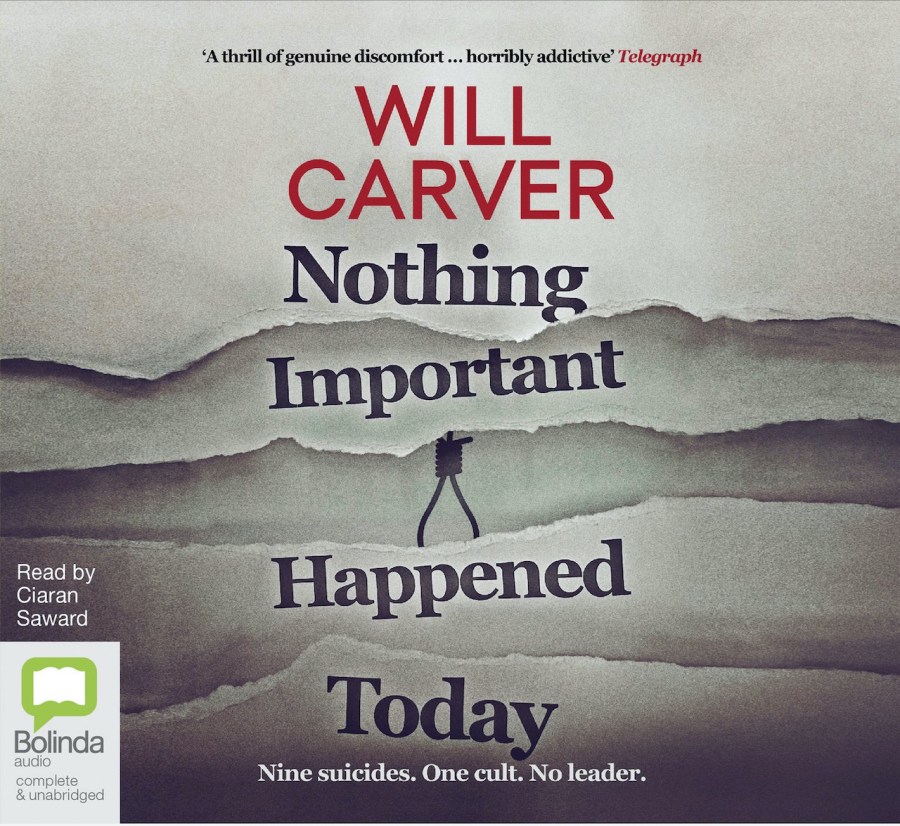
Book review: Nothing Important Happened Today by Will Carver

Creepy. Lets face it Will Carver knows how to write a creepy, mesmerising, noirish thriller – remember Good Samaritans?

London Detective Sergeant Pace returns in Nothing Important Happened Today, a story about a cult in which perfect strangers commit group suicide by jumping off bridges after receiving a white envelope containing the words ‘Nothing important happened today’. This message tells the receiver they have been chosen to become part of the People of Choice and off they trot calmly to meet their maker.

At its heart Nothing Important Happened Today is a story about human psychology, vulnerability and the power of suggestion. Carver splashes the narrative with reflections on the damaging effects of social media, how it provides a mechanism to airbrush our lives and foster an insatiable need for validation that can be really damaging to one’s self confidence. It makes you pause and take stock of the madness of the online environment and its mirage of connection.

We are so connected that we have become disconnected. We can’t have a thought, we have to have an opinion. Freedom of speech has gone too fucking far when we feel the need to share everything. When we filter the image of ourselves but feel no need to filter what we say out loud, hidden behind a new status and picture of ourselves when we were twenty pounds lighter.

There is something mildly detached about Carver’s writing style in this novel, written in the third person and collective first person, that fits neatly with the mindset of a cult leader. It shows the chilling lengths some people will go to get others to do their bidding. The cult leader in Nothing Important Happened Today sends person after person to their death to satisfy their own need for power and a twisted idea of their sense of importance in the world. Each victim is simply seen as a number by an anonymous person operating with the aim of making themselves the best cult leader ever, measured by the number of casualties they can motivate to initiate their own demise.

The fictional story is interspersed with facts about real life cults, how they came about and what drove their leaders. This addition helps lead the reader to ponder whether the actual story, which hovers on the edge of believably, is real or fiction, it’s a mind bending narrative.

Carver is clever at crafting a tale to make the hair on your neck stand up and leave you feeling a little discombobulated and disorientated. He causes you to pause and reflect on reality, illusion and what holds real value and meaning in life.

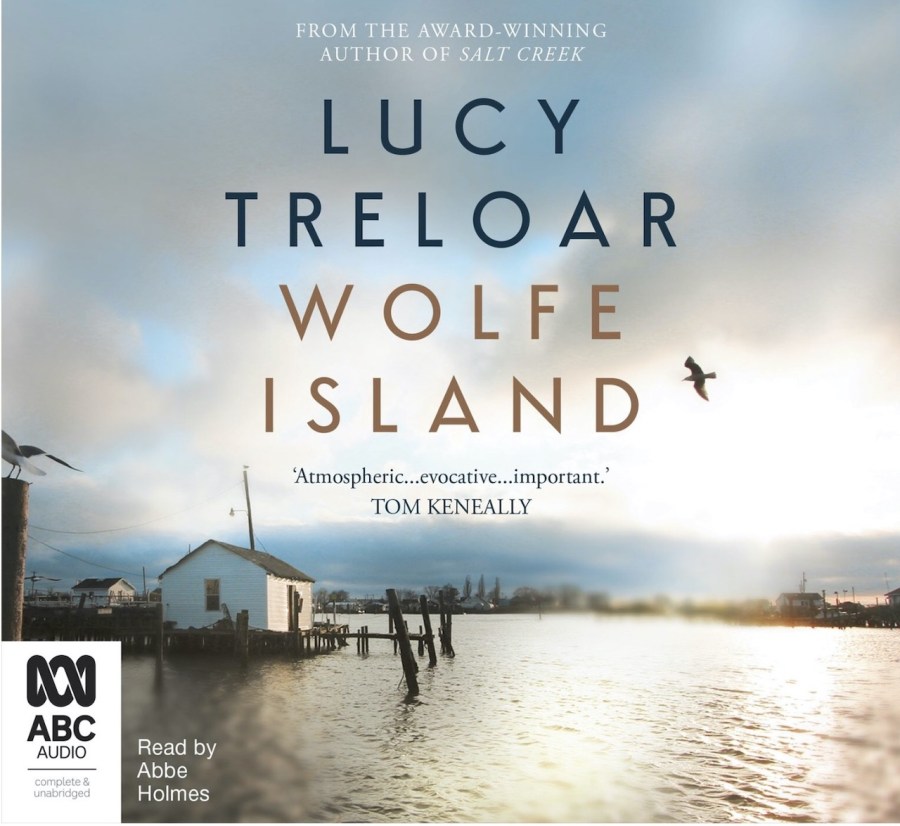
Book review: Wolfe Island by Lucy Treloar

There was something about listening to the audiobook of Wolfe Island whilst I worked in my own bubble in my vegetable garden – weeding, harvesting, fertilising, mulching, planting – the attention to detail those tasks demand slows time. The activity threw me deeper into a novel that I’m sure I would have been enthralled by anyway, and submerged me into the melancholic world of Kitty Hawke.

Kitty is a resilient and resourceful woman of fortitude, and the last human inhabitant of Wolfe Island, which is being devoured by the rising sea. She lives a solitary, creative existence with her wolfdog, Girl, and makes art from found objects that she sells to the mainland. Kitty and Girl both come across as half wild and half domesticated, each lends the other a strength that is fortified by the Waterman giant talisman statues Kitty constructed from found objects to protect the island.

It was exhausting being around people and noticing them, thinking about them. I felt roughened and coarse now, as if I was rubbing against the grain of Wolfe Island. It used to be that I could forget myself and be, spend hours in the marshes watching the tides and the grasses, birds walking over my feet. I’d been still so long, listening to the unintelligible wind, I was part of it then, and insignificant. I missed that. The writing helped a little.

Wolfe Island

Kitty is drawn to reconnect with the outside world when her granddaughter arrives with some friends who are in danger because of their status as climate refugees. On the mainland climate refugees are ‘runners’ and vigilante ‘hunters’ chase them down and kill them. Gradually the young people let her into their troubles and she connects with them, eventually their cause becoming hers. When the island ceases to be a refuge for the runners, the group set off seeking safety in the north.

The islands were worlds and you didn’t move lightly from one to the other, and people’s way of speaking wasn’t quite the same from one island to the next. If we ran into each other on the main – a no-man’s-land to us – we saw our resemblance to each other, and heard our own foreignness in each other’s voices and prickled up and felt the eyes of people on us, assessing us for threat in the same way that we did them, resenting them for it and feeling their resentment toward us.

Wolfe Island

Lucy Treloar’s first novel Salt Creek won the Matt Richell Award for a New Writer, the Dobbie Literary Award and the Indies Award for Debut Fiction. It was also shortlisted for the Walter Scott Prize for Historical Fiction, the Miles Franklin Literary Award, and the Readings Prize for New Australian Fiction 2016. Wolfe Island is deserving of its own accolades and I’ll watch with interest to see how it goes.

I say, ‘Girl, Girl,’ and she comes to me like a myth, her coat sleeked smooth, her tail back out. She is in a line, a ripple through the long grass, and butterflies and hoppers rise in her wake, lifting like spume and catching the light. She passes me by with a rush of wind and her sweet wolf scent, leading the way to anything.

Wolfe Island

Wolfe Island is a slow, lyrical lament on the state of the world in the grip of climate change, and the subtlety with which Treloar brings you to realise you are in a very near dystopian future is a little alarming. The novel is written in three parts – the island, the journey and return home, each revealing a different lense on a climate impacted world and Kitty’s relationship with her family, her place in the world and herself. Oh, not to forget her wolfdog, Girl, I’m a sucker for a novel with a dog as girls best friend…now I must go and turn that pumpkin I picked into soup.

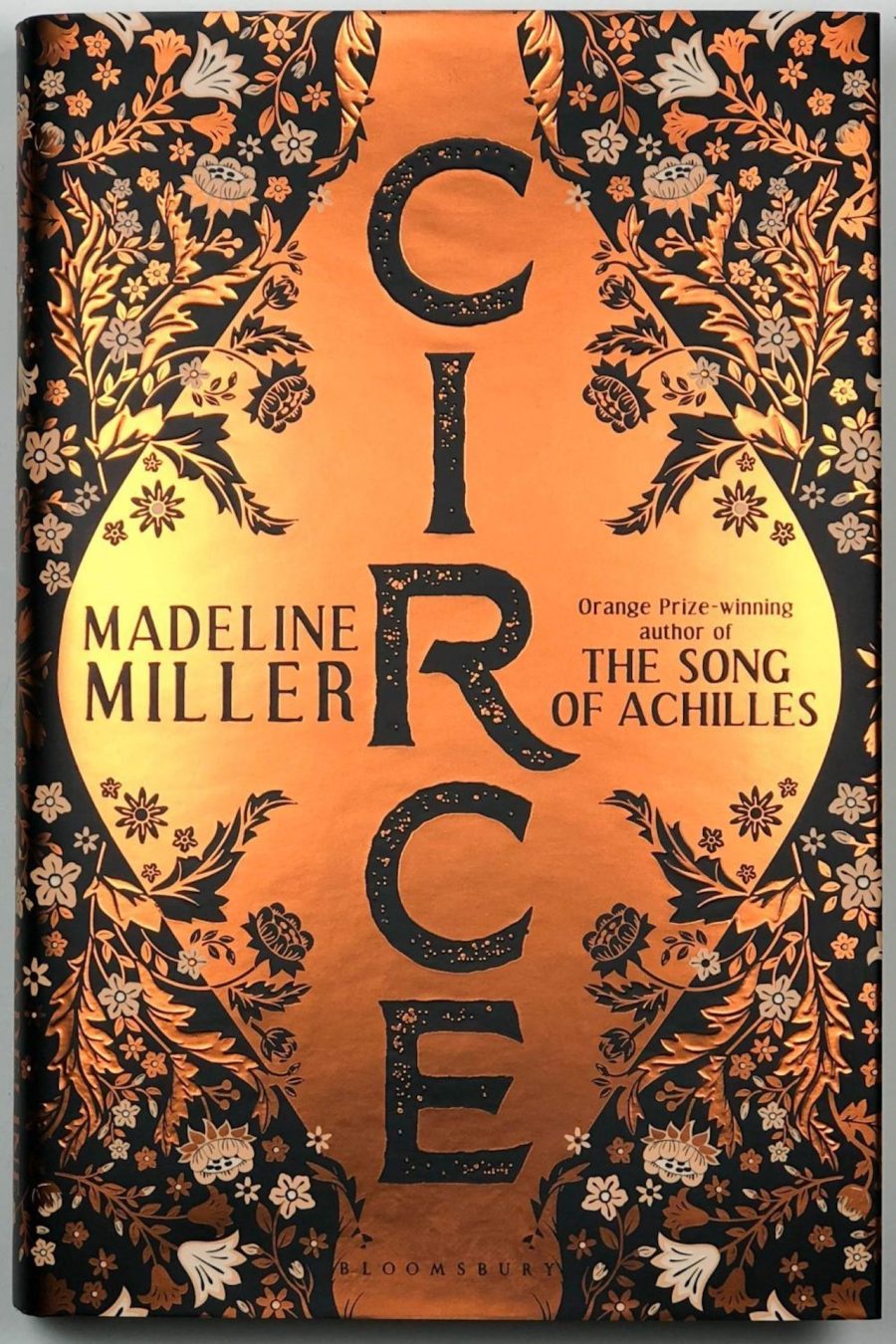
Book review: Circe by Madeline Miller

They say that writers should read widely, so not all my book reviews will be crime, though bloodshed may prove to be a common theme. Recently I dived into Greek Mythology. Madeline Miller’s Circe is a feminist spin on the epic tale of the immortal nymph sea witch by that name. Circe appeared as a minor character in the Homeric poem, The Odyssey.

Circe, the protagonist is the daughter of Helios, the sun god. As a child she is made brutally aware of her inferior status by her family. She was not born a god, is plain to the eye, and has the voice of a mortal. In her youth she was tormented by her siblings and barely seen by her parents.

I asked her how she did it once, how she understood the world so clearly. She told me that it was a matter of keeping very still and showing no emotions, leaving room for others to reveal themselves.

In coming to know love, jealousy and rage, Circe discovers her sorcerer powers, which she unleashes on her sister, a beautiful sea nymph, and the object of her envy. As punishment she is exiled to a picturesque, unpeopled island called Aiaia by her father.

Humbling women seems to me a chief pastime of poets. As if there can be no story unless we crawl and weep.

Circe eventually comes to revel in her solitude and spends her time developing her occult arts and witchcraft, and taming the animals of Aiaia for company.

This was how mortals found fame, I thought. Through practice and diligence, tending their skills like gardens until they glowed beneath the sun. But gods are born of ichor and nectar, their excellences already bursting from their fingertips. So they find their fame by proving what they can mar: destroying cities, starting wars, breeding plagues and monsters. All that smoke and savor rising so delicately from our altars. It leaves only ash behind.

It is on the island, surrounded by tame wolves and lions and pigs – the latter formerly sailors who she turned to swine after they tried to attack her – that Odysseus comes across Circe. He becomes her lover and she bares his child.

I was captured by Miller’s lush poetic prose, which is like reading a song. Her reimagining of the myth brings one of the women from the original tale into the light. Her work was criticised by a few crusty old blokes for historical inaccuracy, perhaps because they prefer the original misogynist fantasy, but I found a beautiful remake of Homers epic poem in Circe. The novel gives a nod to other myths as well, including Daedalus and Icarus; Medea and Jason with the Golden Fleece.

I loved Circe’s chutzpah, she is a woman who will not be silenced and turns an ancient tale of female subjugation into one that is teeming with contemporary reverberations of empowerment and courage. Circe is Miller’s second novel and rivals her first, The Song of Achilles, a stirring reimagining of another of Homer’s epic poems, The Iliad. The Song of Achilles received the Orange Prize for Fiction in 2012.

I highly recommend Circe, which was shortlisted for the Women’s Prize for Fiction this year. It’s a particularly good read for writers who seek inspiration, and to broaden their writing technique, style, and craft skills.

No wonder I have been so slow, I thought. All this while, I have been a weaver without wool, a ship without the sea. Yet now look where I sail.

Book review: Eden by Candice Fox

Reading Candice Fox’s novel Hades (reviewed in last weeks blog) set me off on a binge and I followed it straight up with the sequel Eden which won the 2015 Ned Kelly Award for best crime novel. Like it’s predecessor, Eden has several narratives running through it.

We are thrown back to discover how Hades, who bought up Eden and her brother came to be the man he became, the go-to body disposal guy who runs the tip, makes elaborate sculptures from discarded metal and causes many a grown man to tremble in their boots with fear, yet has a heart capable of great love.

Frank the cop who has fallen into a pit of drunken despair after the death of his lover, the death of a colleague and almost dying himself, is forced out of his misery by his work partner, the mysterious and dangerous Eden who loves hunting criminals but doesn’t always wait for the justice system to determine their sentence. She wants Frank back on his feet as they are to be assigned to a murder investigation that will require her to go undercover. She wants him to watch her back on surveillance and Frank can’t say no to her because she knows his dark secret.

As Frank gets drawn into Hades world, helping him solve a long ago mystery an unexpected twist nearly gets Eden killed. Dark, gritty, noirish and poetic, another great read.

Editing Hell

Anthony Burgess wrote A Clockwork Orange in three weeks to earn aquick buck and Fyodor Dostoyevsky wrote The Gambler in a few days when he was broke and desperate due to his compulsive gambling habits. But these books are the freaks, the anomalies driven by some kind of demon writing force. At the other end of the spectrum, J.R.R. Tolkien took twelve years to complete Lord of the Rings.

Brunswick Picture House, Brunswick Heads

It was Ernest Hemingway who said the first draft of anything is shit. Some famous writers have completely trashed their first drafts and rewritten them, the published work unrecognizable from the original draft – think William Golding’s Lord of the Flies and Harper Lee’s To Kill a Mockingbird. 

I have listened to many writers being asked how long it takes to write a book in interviews. Most published authors seem to answer somewhere between one and ten years and they may produce as many as fifteen drafts (though the most I’ve heard quoted was 30).

There is endless advice available on how many drafts it takes to write a book – the three-draft method, the five-draft plan, the seven-draft process. But the more you listen and read, the more it becomes clear that there are as many ways to write a novel as there are writers.

Queensland Museum, Brisbane

What most writers seem to agree on is that the first draft is the vomit draft – your writing is focused only on extracting your imagination to get a version of your story on the page. It’s great fun to write and terrible to read. After that all bets are off. One thing is certain, you have to learn to love editing, and be prepared to kill your darlings, because you will probably go through many more erasers than you will pencils.

How people edit depends on how they write their first draft. For example I have noticed that I find dialogue relatively easy, but tend to leave out the protagonists internal emotional life in a first draft which I have to go back and write it in later. I also have some pet words I like to repeat over and over which I go back to and delete or change.

I have started work on a checklist for my editing to try and make it more efficient and have included it below. It is not exhaustive and I will continue to work on my ‘cheat sheet’ as I learn more about the editing process. I also think about editing at the microlevel of the scene, the mid-level of the chapter and the macrolevel of the overall story. Most of the following list is drawn from the works on my links page Books on writing, particularly the text Self-editing for fiction writers by Renni Browne and Dave King.

Guggenheim Museum, New York
  1. Openings: are they clear, engaging and connected to emotion? Do they raise a questions or hook that makes you want to keep reading? Was there a hint of conflict?
  2. Character: are the characters unique and interesting? Do you care about them (or hate them), do they have believable weaknesses, motivations and challenges?
  3. Characterization and exposition: let readers get to know your characters gradually by showing who they are. Look for where you have too much exposition – describing characters or their history – how much do readers need to know to understand the story and when do they need to know it? Take out what isn’t critical.
  4. Emotion and narrative voice: Read each main characters dialogue aloud – do you detect a unique voice for each, does what they say fit them? Do you feel like you get inside the main characters head? Are you emotionally connected to them?
  5. Drama and story: Is there tension in every scene? Is the story well-paced and does it have forward momentum? Are the stakes high enough? What could be cut/shortened? Are there gaps that need to be expanded?
  6. Themes, subtext and moral dilemmas: what themes and moral dilemmas emerge? Can you see subtext?
  7. World: is the world created unique and interesting? Have you told your reader enough, or too much about it?
  8. Prose: do the story and the characters feel believable? Is it easy to read? Is anything confusing? Is there a strong and consistent point of view? Does it make you want to read on?
  9. Dialogue: is there too much, or too little? Does it reveal character? Is there subtext? Check for emotions mentioned outside of dialogue – they are probably explanations – cut them and see how the dialogue reads – if it’s worse re-write it; are there any verbs other than said? Minimize benign verbs like replied or answered as they are obtrusive to the reader – where possible get rid of speaker attributions all together if it’s clear without them; Have you referred to a character more than one way in a scene ? – it’s confusing be consistent. Do you have the right balance of dialogue and beats (the action interspersed through a scene) to keep you reader grounded? Are your beats too repetitive? Do they show your characters?
  10. Dialogue sound: Read out loud. When you are tempted to change a word – do; does your dialogue sound realistic with enough contractions, fragments, run-on sentences? If your dialogue sounds stiff – is it exposition in disguise? How well do your characters understand one another? Do they mislead one another?
  11. Show and tell: Have you got the right balance between narrative summary and enough real time action? If there’s too much narrative summary can you convert sections into scenes? Do you describe or show your characters feelings? Cut all explanations of feelings (angry, sad, happy) and show them instead.
  12. Be proportionate: Are the characters you develop most fully the important ones throughout the story? Are the descriptive details you provide those your viewpoint character would notice? Do all the subplots and tangents advance the plot? If there aren’t any, should there be? Have you got on your hobby horse and spent too much time on a pet interest?
  13. White space: are your paragraphs too long or are there scenes with no longer paragraphs – Have you got the right balance?
  14. Rude bits: do you use too much swearing? If you have sex scenes, how much do you leave to your readers imagination (you don’t want to win the bad sex award, do you)?
  15. Words – remove unintentional word repeats (I have tendency to use realized and looked way too much) Word hippo is a great resource for synonyms; search and find ‘ly’ adverb – most of them are probably superfluous particularly if they are based on adjectives describing an emotion; minimize ‘ing’ words and ‘as’ phrases; remove extra words; sentences that don’t make sense; if you have lots of short sentences, would they be better strung together with commas? Minimize exclamation points and italics.
  16. Check spelling and grammar.

I recommend focusing on each of the editing elements separately.

What would you add to this list?

Main image: Mount Yasur, Vanuatu

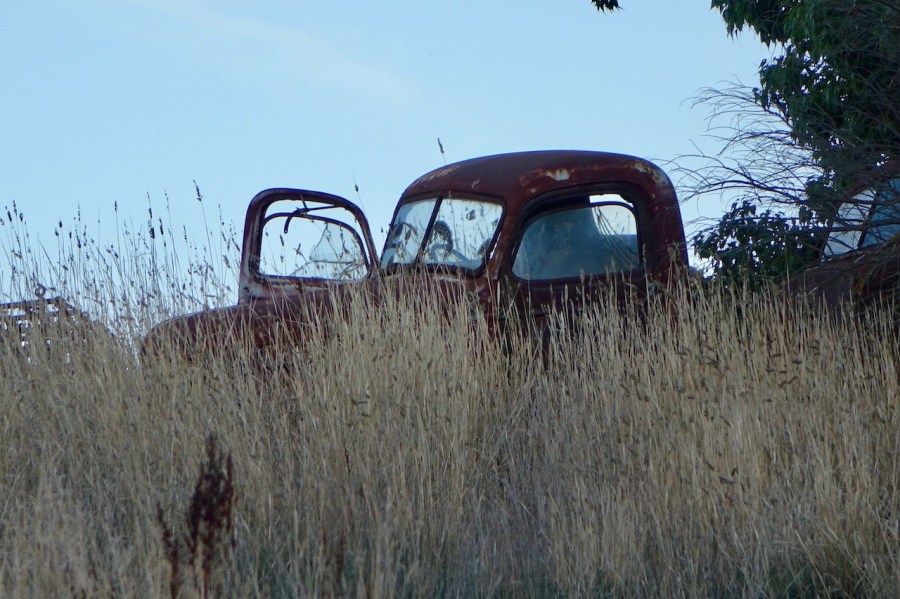
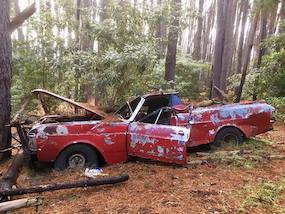
rusted old truck in long grass

A bit of noir

It’s murderously hot today. The thermometer is expected to reach 38 degrees celsius and strong north winds are blowing in from the sizzling centre of Australia. It’s the kind of day that conjures a mood of disorder and threat, like it’s cousin on the spectrum, the chilled isolation of excessive cold climates. Extremes are both thrilling and dangerous.

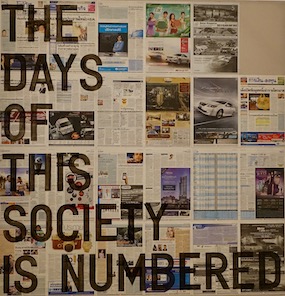
MoMA, New York City

Humans are so vulnerable to weather extremes yet we have been pitting ourselves against nature infinitum with a naive belief that we can prevail in a moral vacuum where the planet is concerned. My bet is on nature in the long run, if we don’t learn to live more harmoniously with the planet.

For some reason, when the elements are severe my mind wanders to noir at the extreme of crime fiction.  Climate change, like reading noir, summons an inescapable bleakness. Both contain themes where collective denial operates within a prism of political dysfunction and citizen hopelessness. Perhaps it is the existential angst, imbued in the idea that humanity could wipe itself out by failing to take action on climate change, that is nudged whenever the weather gets irritable that makes me draw parallels to noir.

MoMA, New York City

The world of noir is dark, chaotic and alienating, and full of the type of moral ambiguity and hypocrisy that points at human existence and calls it absurd and meaningless. In noir everyone one is imperfect and what is right and wrong are unclear. Noir is complex and messy and has a way of teasing out our interdependence as human beings in the global web of power and influence in which we live. It is much more like real life than cosy crime where the hero prevails unscathed, as if wearing teflon. Noir is saturated with the voices of angry protest against entrenched privilege and systems in which the average citizen feels powerless against inequality and corruption, yet it is often delivered with dark humour.

Wreck

There’s icy Nordic noir like Miss Smilla’s Feeling for Snow by Peter Hoeg and Fargo by the Coen brothers if you want to cool down, or stories like the shorts in Sunshine Noir by Annamaria Alfieri and Michael Stanley to warm up with.

Historically, noir has been dominated by white men but I have noticed that modern noir is increasing in diversity as more women like Clare Blanchard, Nikki Dolson, Saira Viola and Jo Perry (published by Fahrenheit Press) pick up the crime pen.

South Australian Museum, Adelaide

I’m currently reading Mistress Murder by Mark Ramsden also published by Fahrenheit Press (I only recently discovered this small crime publisher with attitude and am looking forward to making my way through their collection). Mistress Murder is the story of Susie Goldy, a transgressive, hedonistic, drug addicted dominatrix trying to get on with her life of mayhem whilst being pursued by an unknown malevolent stalker who has taken umbrage with her and her lifestyle. I’m finding the voice of Ramsden hilarious and the black and satirical take on a subculture most of us would never encounter has me fascinated and cringing in equal measure. Just right for a sweltering afternoon.

What are your favourite noir reads?

Main image: Rusted Out, Yandoit, Victoria