Between my attempts to get some writing done I have worked my way through the obligatory list of tasks that required completion this week before we pack up and head off on a road trip. Like changing the washer on that tap that’s been dripping for months. We will travel to Byron Bay for a few weeks to surf and enjoy some warmer weather. A journey within a journey. My laptop will accompany me so I can continue to work on my novel with some inspiration from the Australian landscape and the characters I meet along the way.
When I started writing I spent a bit of time developing the personalities of the characters for my novel. I wrote back stories for the main players that explained how they came to embody who they are at the start of the book. Most of this material will never be included but was necessary for me to understand them.
All of the characters are completely fictitious, except one. A colleague from my workplace inspired my protagonists sidekick. Before I started my long service leave I decided I’d better tell James and check how he felt about it. He was flattered, but a little cautious. What kind of person had I made him? I promised I would give him some material to read in due course and if he wasn’t happy about the idea I would make changes to the character to create more distance.
I emailed the first three chapters to James this week and waited to hear what he thought, holding my breath figuratively speaking. To my relief he said he loved the story and was happy with the persona he’d inspired (particularly the six-pack I gave him). James is my favourite person in the novel and he’s a great foil for my protagonist, Jude Lawson. He and his relationship with Jude are what injects humor into the story and I enjoy writing the banter they have.
The process of developing the personalities of all the characters in the novel included deciding on names, age, occupation and character traits. I wrote personal story lines to identify what drives each person and what their hidden agendas are. I wrote a back story to find the ghost of each character. I wrote about what has made them the person they are at the start of the story and how they know the other players. I explored what each character wants that they won’t admit to themselves as well as what they want in concrete terms and why it is important to them. I wrote about the conflict that exists to works against them reaching their goal. I tried to find any epiphanies they might have as events unfold and I told the story in summary from each main characters own point of view. It resulted in thousands of words that will never appear in the book but were necessary to find depth in the people. The process of getting to know them is similar to getting to know a real person and they continue to reveal more of themselves to me as I write.
Packing the car will be tricky as I have to make room for all our stuff and my imaginary friends. There’s nothing like travelling to test friendships. I hope they all travel light and and don’t argue about directions or ask ‘are we there yet’ too often.
Image: unformed characters…


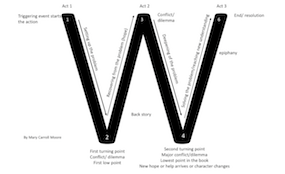
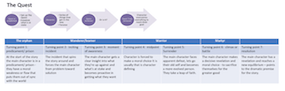 basic structural elements of a story as without it your story is likely to flop soon after take-off or require endless re-writing to turn it into something that will engage readers.
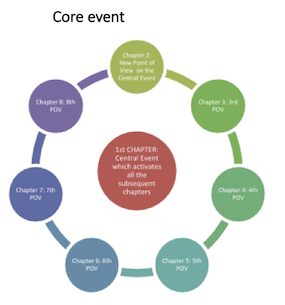 points that each align with an archetype.
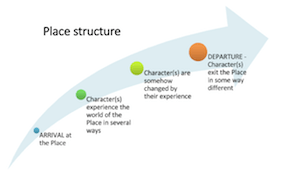 when they leave.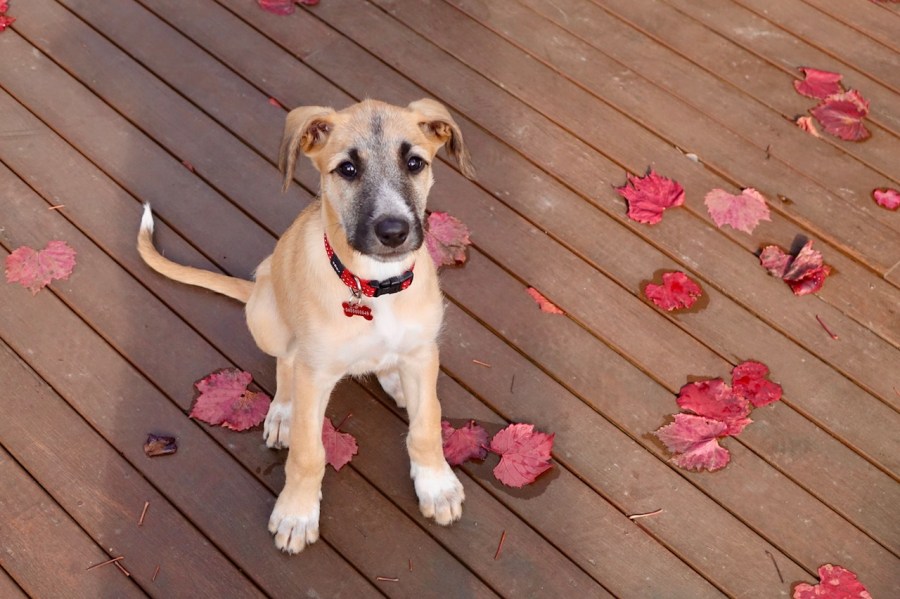
 tribulations and adventures of a sleek black horse. Black Beauty highlighted the issue of animal welfare and the importance of treating others with kindness, respect and sympathy. Important lessons for any child. Roald Dahl bought garden bugs to life in his 1961 novel James and the Giant Peach that explored the themes of friendship, death, hope, fear, abandonment, rebellion and transformation. I remember being fascinated by the giant caterpillar who had to tie the shoe laces on his many pairs of boots every morning. The book is still on my shelves and I pull it out and re-read it every now and then.
 allegory of the Manor Farm ruled by pigs. As power goes to their heads the pigs start to run the place on the premise that “All animals are equal but some animals are more equal than others.” They become so much like the humans they overthrew that eventually they transform into humans themselves.
 fair to stay things were going swimmingly. I had established a great routine of writing early, doing some exercise then either writing again, reading or heading out into the garden depending on the weather. Then along came Harper.
 Many country dogs get adopted in Melbourne, and Seymour is a liaison point apparently. The industry is quite mysterious and I think there could be a great fiction story written about the rescue, movement and adoption of animals.
 Staghound-kelpie cross at home. “Best dog he’d ever had,” he said, “affectionate, trainable and not as energetic as a kelpie. Likes to lie around on the couch and watch TV.” Sounded like an ideal writing companion.
 people who dropped by and Bunning’s. Believe it or not Bunning’s has a very detailed dog positive policy and we were able to take Harper around the store introducing her to the weird and wonderful world of the great Aussie tradition of a trip to the hardware store.