Book review: Who is Vera Kelly? by Rosalie Knecht

Who is Vera Kelly? set across dual timelines (1957 and 1966) and two countries (Maryland, USA and Buenos Aires, Argentina) is coming of age meets coming out meets espionage with a side of literary historical fiction.

Vera Kelly is a troubled teenager coming to terms with her sexuality. Her mother lands her in a juvenile detention centre after she steals a car. When released she moves to Greenwich Village in New York City and works night shift at a radio station and tentatively explore the queer scene.

On a Tuesday I came home from school to an empty house, watched the evening news, and then took Equanil caplets lifted from my mother. Nothing happened, so after an hour I took three more, and then maybe after that, I can’t remember.

Vera Kelly is a young CIA agent with a flair for electronics on her first big mission to Buenos Aries during the Cold War in the lead up to a coup. Revolución Argentina would establish Juan Carlos Ongania as defacto president. Vera rents an apartment and pretends to be a Canadian student befriending a group of local students suspected of being KGB agents.

I had found the apartment in San Telmo with the help of a motherly rental agent in a pink suit who had tried to cheat me on her percentage not once but twice, and reacted with a broad and charming laugh both times I pointed it out, as if we were flirting on a date and I was removing her hand from my thigh.

Vera bugs the students bicycles and with the help of a local contact, the Argentina Vice President’s office, tracking the students movements during the day and transcribing conversations from the officials office at night. When the coup seems imminent Vera decides to action her escape plan but the borders are closed faster than she can escape. Upon returning to her apartment she finds she’s been betrayed by her local contact and has to go into hiding until she can find another way out.

Oh my God, you should have seen us in ’55, ’56, ’62,’ he said, sighing. ‘Every year, another old man shouting from a grandstand with all his medals on. “I’ve come to replace your previous old man.” Some people would go to jail, everyone else would get used to it, and then it would start all over

There’s a long set up in this novel, but the character of Vera carries it off with her whip smart intellect, dry humour and keen observations of the times. I really enjoyed the insights into the New York queer scene in the early 60’s when being queer was illegal, and the history of Argentina. There is a correlation between being gay when it’s illegal and a spy running through the novel – the coded language and pretending to be someone you are not.

Vera is a relatable character and if you like women driven, realistic spy stories with a strong plot – this book could be for you. Even better, there are two more Vera Kelly novels to devour – Vera Kelly is not a Mystery (2020) and Vera Kelly Lost and Found (2022)

I woke with an ache in my chest and heard the subsiding whistle of a teakettle in the kitchen. I read the spines of the paperbacks on the night table: Graham Greene, Patricia Highsmith. Novels about liars. I needed to call Gerry.
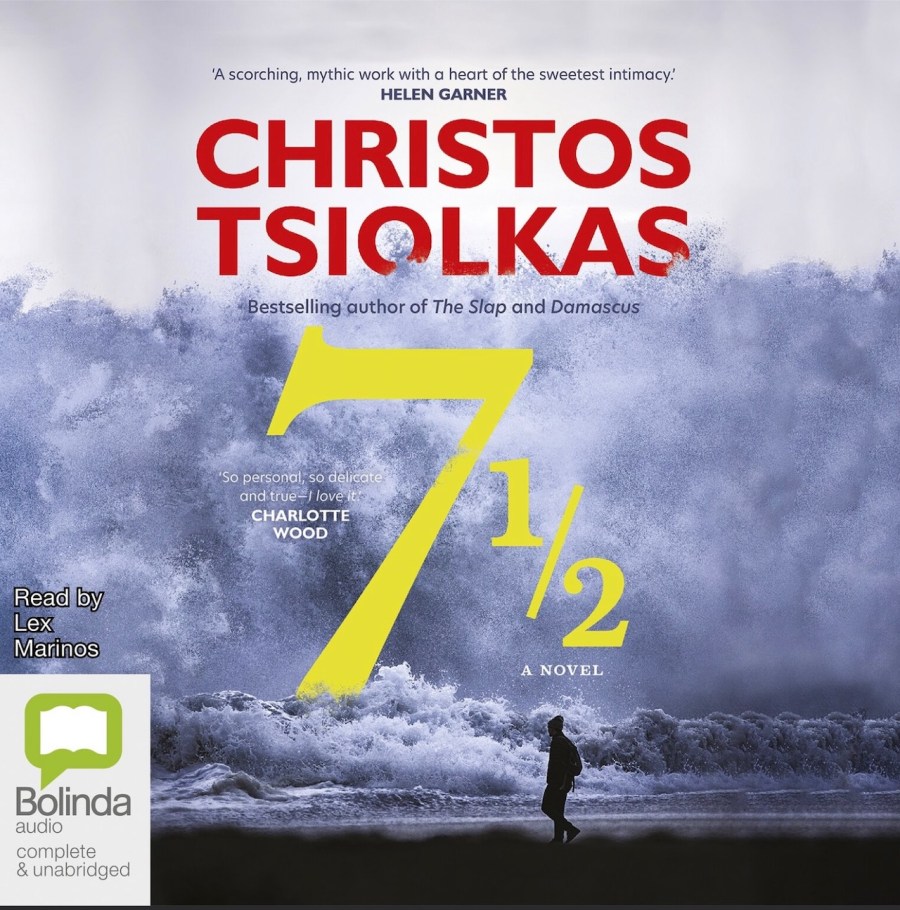
Book review: 7 1/2 by Christos Tsiolkas

7 1/2 is a book about an author (Christos) who has fled the city to an isolated small town on the East Coast of Australia to write a story that has been lingering in his mind for years. Chistos wants the book to be about beauty – an antidote to a world that has been brimming over with crisis. And there is much beauty in it – landscapes and the weather and animals that pass across them, human connections and bodies are described lavishly. He also reflects on his pleasure in his writing process, and with affection on his childhood and the people who made him the man he has become.

I listened to the audiobook (twice) narrated by Lex Marinos and the words spilled over me like honey as I toiled in my Autumn garden and cooked and preserved the excess produce in my kitchen. Whilst listening to Christos’s writing about the things he loved, I was doing things that I love. Turning the soil, making pickled zucchini, poached quinces, pumpkin gnocchi and soup from the abundance of Autumn produce for my freezer whilst glancing out at the grapevine turning fire red through my kitchen window.

But I no longer trust the judgements of my age. The critic now assesses the writer’s life as much as her work. The judges award prizes according to a checklist of criteria created by corporations and bureaucrats. And we writers and artists acquiesce, fearful of a word that might be misconstrued or an image that might cause offence. I read many of the books nominated for the globalised book prizes; so many of them priggish and scolding, or contrite and chastened. I feel the same way about those films feted at global festivals and award ceremonies. It’s not even that it is dead art: it’s worse, it’s safe art. Most of them don’t even have the dignity of real decay and desiccation: like the puritan elect, they want to take their piety into the next world. Their books and their films don’t even have the power to raise a good stench. The safe is always antiseptic.

A man in middle age reflects on what he loves about being in the world. The book is auto fiction – part deeply personal and part fiction. The novel the protagonist is writing is called ‘Sweet Thing’ and is about an ageing ex-porn star and drug addict who leaves his wife and child temporarily to take a trip from Australia home to the USA where his is confronted by his past.

At the start of the novel Christos declares that he is tired of writing about issues – politics, sexuality, race, history, gender and morality – they bore him. Yet there are echoes of these topics throughout the novel – because they are part of life and it is difficult to separate ourselves from them completely. Ugliness and beauty coexist. We never really know what a thing is unless we can give an adequate account of its antithesis – a concepts Christos acknowledges at one point in 7 1/2.

There were moments in this book that were so personal, poetic and exquisite, they bought tears to my eyes. I will no doubt read it again just to inspire my own writing.

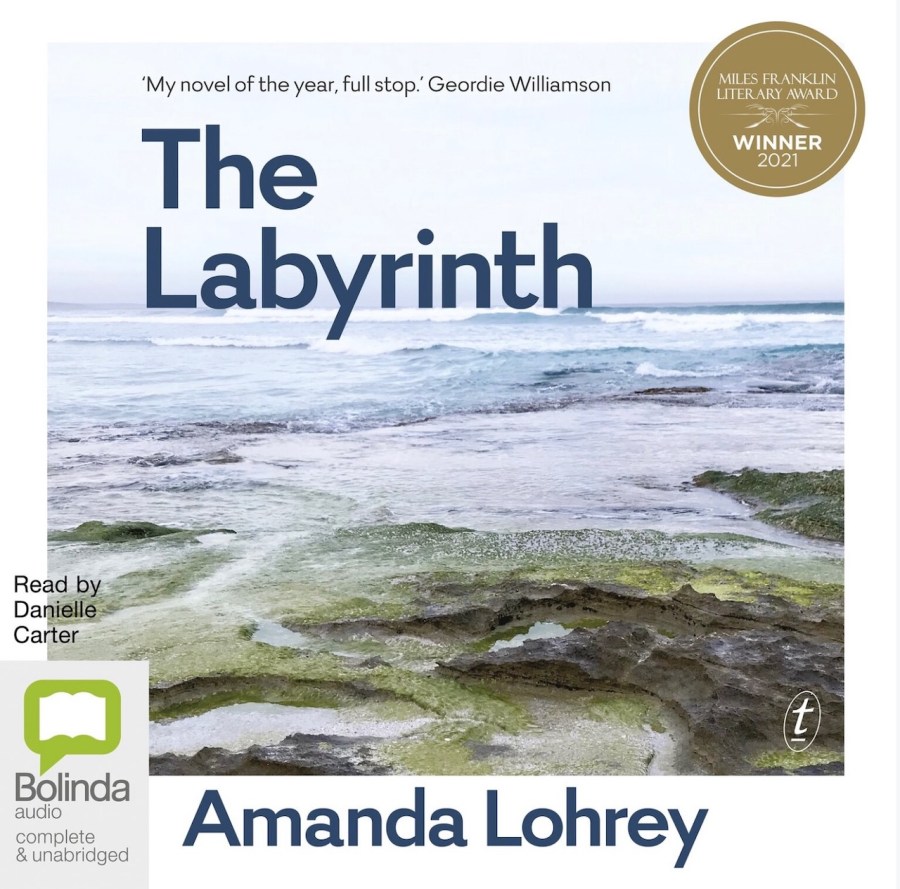
Book Review: The Labyrinth by Amanda Lohrey

The cure for many ills, is to build something.

A Labyrinth is often used as a walking meditation. The meandering path that leads to the centre creates a symbolic journey for personal, psychological and spiritual transformation.

The novel by that name written by Amanda Lohrey is a story of a personal journey, of taking oneself out of ordinary life to reflect and make space for change, to surrender to forces greater than oneself. A space to meditate on past patterns and symbolism, where outsiders gravitate in to become friends, catalysts or allies who help heal and find a new footing in the world. There is something almost gothic about the story. The reading is of itself meditative, and it demands to be read more than once in order to plumb it’s depths.

Time is a disease of the human psyche. One of my father’s precepts.  Sane people live in the moment, they do not dwell on the past and they do not succumb to fantasies about the future.  But on other occasions he would contradict himself.  When people go mad, he would say, they step out of time because time has become unmanageable and everything is chaotic flux.  They cannot put one foot in front of the other in any meaningful way.  Nor can they make a decisive intervention in the sequence of time as measured in units by the society around them. Chronology defeats them.  One disease generates another.  The larger social disease—generates the smaller private one: a mad resistance.

Erica Marsden abandons her urban life to be near her artist son housed in a jail near the NSW coast for manslaughter. Her visits to Daniel are torturous, but in between Erica tries to piece together a new life, separate from, yet drawing on reflections of her earlier years.

The walls of the visitors’ room are a violent mustard yellow,  On one wall there is a huge mural of crudely drawn trees and boulders in shades of muddy orange and greenish brown.  It has the quality of sludge.  Two warders escort me to a steel table, bolted to the floor, and I sit on a steel chair, also bolted to the floor.  Everything here is steel and concrete; even the air has a metallic taste.

Erica buys an old shack on the beach and decides to build a labyrinth like one she remembers from years ago. Abandoned by her mother as a child, she grew up on the grounds of a psychiatric institution were her father was the chief psychiatrist. She seeks meaning in her own existence as well as for why her son turned out the way he did. In this isolated town filled with other isolated people, Erica starts a new life and befriends those she would never have encountered in other circumstances.

Jurko, an outsider and illegal immigrant with the stonemason skills she requires to build the labyrinth appears in Erica’s orbit and the two form an unlikely alliance, then friendship through the building of the structure. In The Labyrinth, as in life, there is no neat ending just an unfolding that speaks to the complexities of existence and how one continues to unfold in the wake of disaster. It is a powerful and subtle story worthy of more than one visit.

I have learned that a simple labyrinth can be laid out by anyone, unlike a maze, which is a puzzle of mostly blind alleys designed for entrapment.  The maze is a challenge to the brain (how smart are you), the labyrinth to the heart (will you surrender).  In the maze you grapple with the challenge but in the labyrinth you let go.  Effortlessly you come back to where you started, somehow changed by the act of surrender.  In this way the labyrinth is said to be a model of reversible destiny.

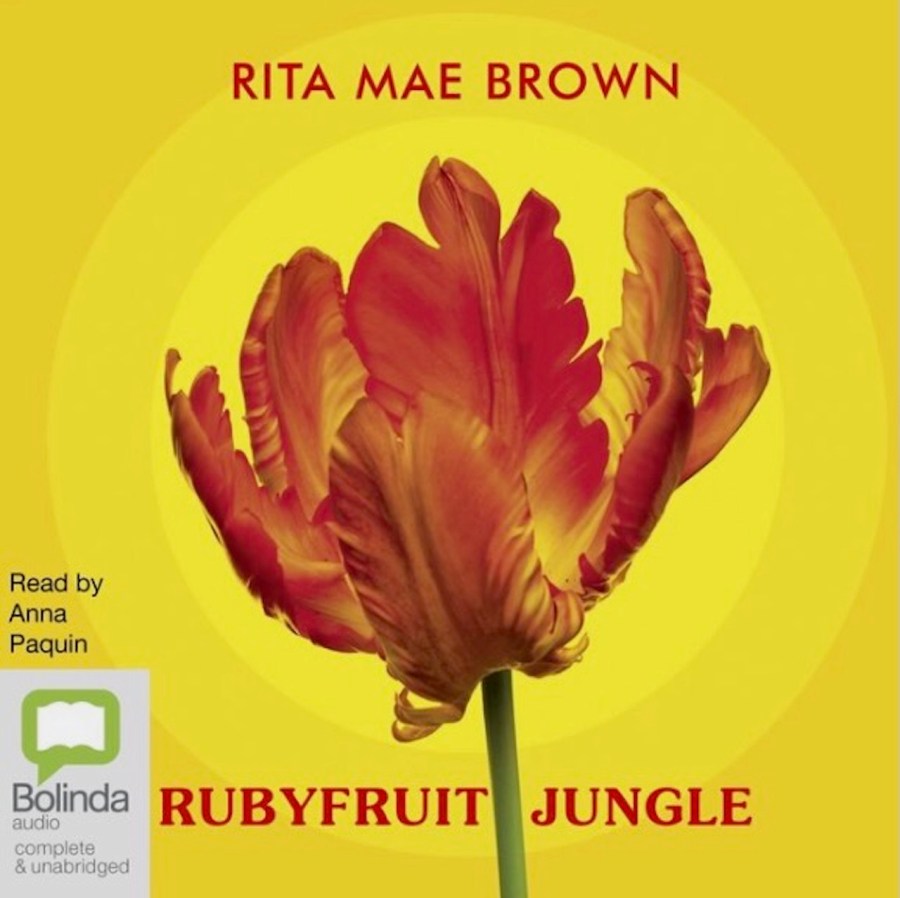
Book review: Rubyfruit Jungle by Rita Mae Brown

Refreshingly and unapologetically individual. Rubyfruit Jungle by Rita Mae Brown, set in the USA in the 1950s is a bold celebration of growing up as a lesbian, the shedding of labels and limits, life as an adventure and making it out of poverty.

Oh great, you too. So now I wear this label ‘Queer’ emblazoned across my chest. Or I could always carve a scarlet ‘L’ on my forehead. Why does everyone have to put you in a box and nail the lid on it? I don’t know what I am—polymorphous and perverse. Shit. I don’t even know if I’m white. I’m me. That’s all I am and all I want to be. Do I have to be something?

Molly Bolt is the beautiful, smart, adopted daughter of a poor family with a very strong sense of self. She shrugs off the labels people, including her mother, try to attach to her – bastard, orphan, lesbian, queer, spic, – she shrugs them off and focusses on the things she is passionate about. Molly is bold, funny and shrewd. She shines a light on prejudice and difficulty with humour and is unashamed about not fitting the mould.

I had never thought I had much in common with anybody. I had no mother, no father, no roots, no biological similarities called sisters and brothers. And for a future I didn’t want a split-level home with a station wagon, pastel refrigerator, and a houseful of blonde children evenly spaced through the years. I didn’t want to walk into the pages of McCall’s magazine and become the model housewife. I didn’t even want a husband or any man for that matter. I wanted to go my own way. That’s all I think I ever wanted, to go my own way and maybe find some love here and there. Love, but not the now and forever kind with chains around your vagina and a short circuit in your brain. I’d rather be alone.

It’s hard to believe Rubyfruit Jungle was first published in 1973 but I wish I’d known about it then — it’s so much more uplifting than The Well of Loneliness which was the first novel depicting lesbians that I read — and it was bloody depressing. I love Molly’s frank, tell it like it is boldness and that she is fully committed to just being herself in a world that wants everyone to be the same. She understands equivocally that the ‘problem’ is societies cookie cutter attitude toward what is ‘normal’.

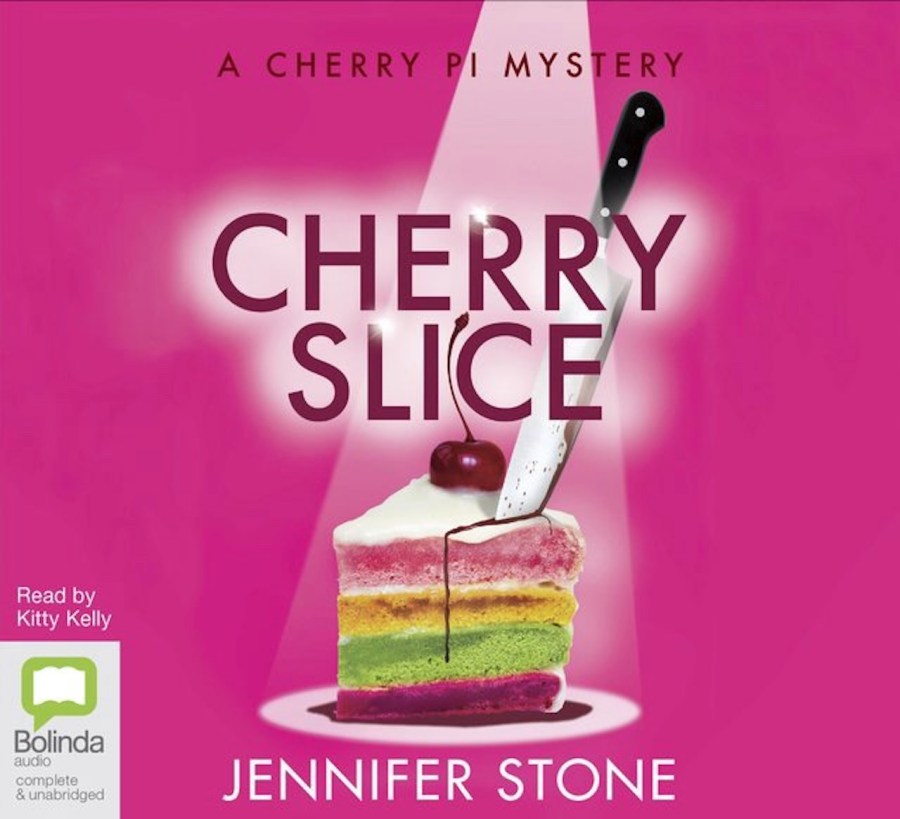
Book review: Cherry Slice by Jennifer Stone

Cherry Hinton is an investigative reporter turned cake shop owner turned private investigator in Cherry Slice by Jennifer Stone. There’s b-grade celebrities, reality TV, Snapchat, Instagram and Twitter in this bawdy chick lit meets crime fiction, fast paced funny novel set in Essex.

We’d spent the day slumped on the settee, only leaving it to get top-ups of drinks and crisps. I had Twitter running on my phone, Facebook on my iPad. The hot topic of conversation was who was going to get voted off that night and whether Jodrell Banks would manage to claw back her glamorous modelling career in light of having lost two stone with Big Blubbers help.

Martin was arrested and jailed for murdering contestant Kenny Thorpe on Big Blubber weight loss reality TV show but on his deathbed he wrote a letter to Kenny’s sister swearing he didn’t do it. Why would he do that if it wasn’t true? Kenny’s sister wants Cherry to find out.

I knew she didn’t believe me but the way I saw it, I was doing her a favour. Those Chavalicious girls were alright but they were a bit dull. A night down the cage fighting contest was much better option.

The reason Cherry is running her parents cake shop is that her reporting reputation was destroyed and she was dumped by her paper after being exposed (naked) going undercover on another reality TV show, Caravan of Love. This makes her the ideal candidate to investigate other reality TV contestants…

A light, quick, cozy locked room type mystery to disappear into the weird universe of reality TV with an Agatha Christie style ending. I listened to it whilst doing the gardening – the neighbours probably wondered what I was laughing at.

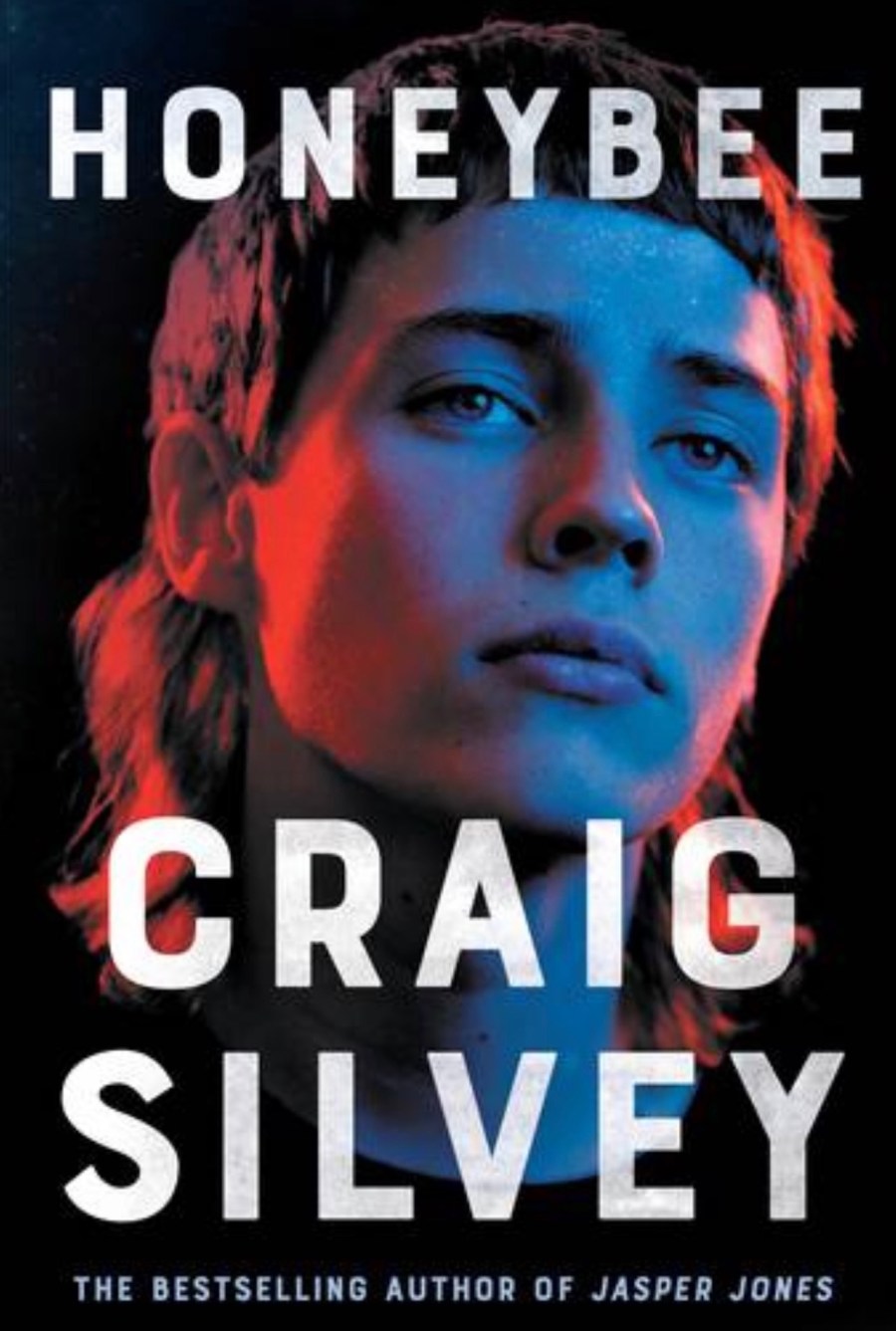
Book review: Honeybee by Craig Silvey

Heart wrenchingly sad, tender and beautiful, Honeybee is the coming of age story of Sam Watson, a fourteen year old boy with gender dysphoria on the cusp of puberty. The book opens with Sam standing on the wrong side of the railings of an overpass, driven to despair by his ‘otherness’ and the hurt and rejection that he has already been subject to because he is different in a society that cannot tolerate diversity.

It was very timely reading this book whilst the Australian Parliament argued over the so called ‘religious freedom bill’, that if passed, would favour the protection of religious people over rights of LGBTI folk – particularly trans kids and allow religious institutions to discriminate against those who do not conform to their particular principles. The bill was debated a week after one christian school had asked parents to sign an enrolment contract that referred to homosexuality as a sin – including it in a list of ‘immoral’ behaviour alongside bestiality, incest and pedophilia. The outrage that followed caused the school to withdraw the letter.

All these vitriolic shenanigans are backlash following the 2017 same sex marriage vote from a small group of the not so loving (hateful) faithful who still struggle to accept that humanity is a broad, diverse church – and that is ok. I have waxed lyrical about this before. Some people just love to hate, but fortunately a few politicians voted with their conscience resulting in the bill being shelved…for now.

…back to Honeybee. Sam grew up in poverty with a single mum he adored but who suffered from addiction issues and falling for abusive, criminal men. Sam is too gentle for this life. Whilst standing on the bridge he sees an older man, Vic, also standing on the wrong side of the railings. The meeting prevents both from following through their intentions and the two becomes friends – finding in one another a reason to keep living, and Sam finds his logical family.

Honeybee is a book about what and unaccepting society does to people who are different, and how love and acceptance can change an outsiders trajectory to one of self-discovery and self-acceptance. Here’s hoping that religious freedom bill gathers dust on the shelf until the silverfish are sated.

Honeybee has been subject to some debate over the efficacy of the story because ‘it was written by a cis man using predictable tropes’ – there is a view that writers should only write from their own experience and leave own voices to tell their stories themselves. My concern is that this limitation could result in very little on mainstream shelves about diversity, and marginal groups need allies to help drive change in mainstream hearts. Personally I was moved by Honeybee, it made me feel a lot of things and I wanted Sam to be ok, so that’s a good thing.

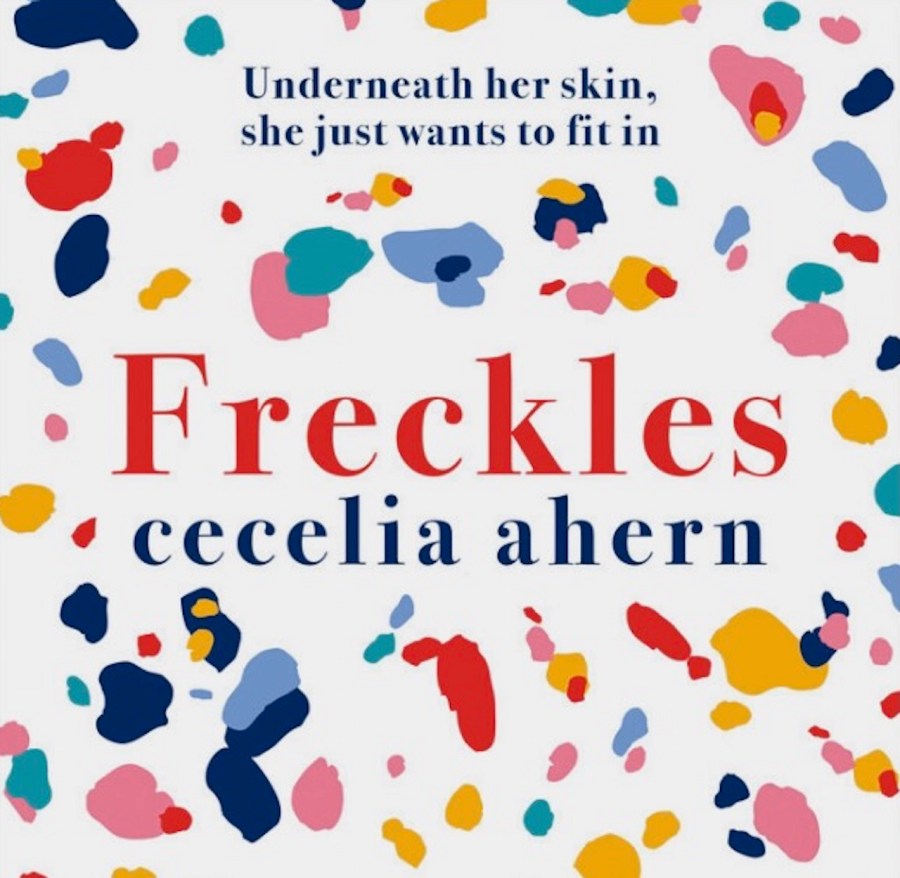
Book review: Freckles by Cecelia Ahern

Alegra Bird was raised on Valentia Island by her deeply eccentric father after her mother abandoned them soon after Allegra’s birth. Alegra is nicknamed Freckles (for obvious reasons) and grows up wanting to join the Garda. When that dream doesn’t eventuate, she moves to Dublin to become a parking warden and a life model and lives in a flat above a gym . She is kind of kooky and awkward. Her days revolve around a regimented routine, order, being rule observant (mostly) and the desire to find her long lost mother.

There is a guy who drives a yellow Lamborghini and never pays for parking. Freckles dutifully issues him parking tickets frequently. One day the driver confronts her and yells aggressively, ‘you are the average of the five people you spend the most time with’, implying that her five must be losers, just like her.

They say you’re the average of the five people you spend the most time with, he says, glaring at me, nostrils flaring like a wolf. Doesn’t say a lot about the company you keep, does it. That’s one, he points in Paddy’s direction. I wonder who the other four losers are in your life.

The confrontation sets Allegra obsessing about her ‘five’, she not even sure if she has five and what that says about her. She develops a determination to get the five right people into her life to shape her and her future, and help her join the dots.

But this is what happens when you come apart, the secret bits you knew about each other dissolve into nothing.

The story is told from Allegra’s point of view (free of speech quotation marks which seems to accelerate the pace) who is an endearing, flawed character. Freckles is light, funny, at times sad, but ultimately an uplifting story about human connection, friendship and self discovery.

Book review: The Outsider by Stephen King

Stephen King has published 63 novels, but The Outsider, a horror/crime fiction novel is the first one I have read. If you want to frighten yourself, this could be the book for you. One hot night whilst absorbed in the story I had to get up and close and lock all the doors after I started to get spooked. As it turns out I needn’t have bothered because the thing that had frightened me could have gotten in if it wanted to, doors locked or not.

‘Once you eliminate the impossible, whatever remains, no matter how improbable, must be the truth.’

A young boy is abducted and brutally murdered in Flint City. A witness saw the local little league coach, English teacher and father of two girls drive him off in a white van, another saw him emerge from where the body was found covered in blood, a third saw him dump the van and drive away in another car…Detective Ralph Anderson swoops in mid game to arrest Terry Maitland in front of the kids, parents and Terry’s own family — the man had coached Ralph’s son as well and he’s outraged. Soon Anderson has DNA evidence and fingerprints as well — a quick resolution to a sordid tale. Or is it?

There was one rock-hard fact, as unassailable as gravity: a man could not be in two places at the same time.

Terry Maitland has an alibi. He was also caught on video, and his fingerprints found at a conference in another town when the murder was taking place.

Enter stage left, eccentric private investigator Holly Gibney to help Anderson get to the truth. I loved the character of Holly – she’s extraordinary in her ordinariness. She’s on the Autism spectrum, obsessive-compulsive and has sensory processing issues. She’s extremely intelligent and observant but her awkward, self deprecating, uncertainty make her uncomfortable in her own skin and self-conscious around others. Yet she is brave and can be relied on in a crisis.

Themes include justice triumphs over evil, loss of innocence, identity, belief and disbelief. I don’t usually read horror, but it would be fair to say the crime element and the character of Holly were major factors that kept me glued to The Outsider at every chance I got – devouring it hungrily till the end.

Book review: Snowflake by Louise Nealon

Snowflake is a coming of age story set in Ireland about a young woman called Debbie who is naive, vulnerable and determined. The novel is Louise Nealon’s debut.

Debbie lives on a dairy farm in Kildare with her mentally ill mother, Maeve, who writes down dreams and takes to her bed for long stretches of time. She tells Debbie she doesn’t know who Debbie’s father is. Her mother’s younger boyfriend, James, also lives with them.

When we fall asleep, we go to a place where words dissolve and become meaningless, like rain dropping into the ocean. As soon as rain hits the ocean it is no longer called rain. As soon as a dreamer enters a dream there is no longer the dreamer. There is only the dream.

Debbie’s uncle Billy lives in a caravan out the back of the farm house. He drinks too much but he is also the constant and stability in Debbie’s life. He wants her to have more from her life than the farm. He teaches her everything he knows and pushes her to go to college, which she does, commuting to university in Dublin.

We look at the sky as though it depends on us to hold it up there

At university Debbie is befriended by Xanthe, more sophisticated and worldly than Debbie and fascinated by Debbie’s farm life.

Told in first person, present tense the story rolls through Debbie’s first eyeopening year at university. We experience her relationships with those around her and her relationship with herself. She fears she may share her mothers illness — she dreams other people’s dreams. The exploration of mental illness is handled well and sensitively with humour.

Snowflake encompasses a strong sense of both place and character from which the well paced story emerges. The title of the novel is a nod to, and attempt to take ownership of the term sometimes used to describe millennials who are often seen as oversensitive and lacking resilience.

Book review: How to Kill Your Family by Bella Mackie

I wrote this a week ago, but decided publishing a review of a book called How to Kill your Family on Christmas Eve was in poor taste, particularly as my dad reads this blog (for the record the thought has never crossed my mind).

Kelly decided that I was her new best friend, and worse, a trophy cellmate. At breakfast, she will bustle up to me, linking arms and whispering to me as if we are in the middle of a confidential discussion. I’ve heard her talking to the other prisoners, her voice dropping to a stage whisper, as she intimates that I’ve confessed all the details of my crime to her. She wants leverage and respect from the other girls, and if anyone can provider her with it, the Morton murderer can. It is immensely tiresome.

Grace Bernard is writing her memoir from a jail cell in Limehouse prison. She was locked up for a murder she did not commit. Her memoir confesses to murders that she did commit. By age 28 she had killed six members of her own family.

Helene was kind, but she was hardly a great intellect, and had a fairly basic level of insight. Her favourite shows were all on ITV, if that makes it at all clearer.

She was raised by a single mother who died of cancer and exhaustion when Grace was a teenager. Whilst her mother was dying Grace discovered that her father was a business tycoon and owner of a well known fashion label. He had abandoned her mother and wanted nothing to do with Grace. Grace spends her remaining teenage years plotting revenge.

How to Kill Your Family is a story of class, family, betrayal, rejection and retribution. Dark and at times brutal, yet told with a hilarious wry humour.

Kelly asks if I want to talk anything over, tilting her head in what I image she thinks is a sympathetic gesture. She knows my final appeal is due any day now, and her recent forays into group therapy seem to have convinced her that she has a bright future in counselling. I have to stifle the urge to explain that the vest therapy that Harley Street has to offer wouldn’t help me much, so I doubt that Kelly’s offer of trying to contact my inner child will suddenly fix whatever she imagines might be wrong with me. Besides the fact that Kelly is an undeniable moron, I think talking is overrated.

The character of Grace is a little reminiscent of Villanelle from Killing Eve. Grace is smart, sarcastic, cunning, meticulous, judgemental and conniving. Yet despite her psychopathic tendencies and twisted view of the world, you can’t help but like her.

A great read for when you a looking for some light-hearted dark humour.

Happy New Year, may 2022 be kind to you. See you out the other side.