Book review: In at the Deep End by Kate Davies

In at the Deep End is a queer coming out edgy rom-com. Twenty-something Julia is sick of listening to her flat mates nightly dalliance. She hasn’t had sex for three years and the last time her one night stand accused her of breaking his penis. When she goes to a warehouse party and meets a butch charismatic conceptual artist who paints the women she has sex with, everything changes.

One Saturday morning last January, Alice pointed out that I hadn’t had sex in three years. I knew I’d been going through a dry patch – I’d been getting through vibrator batteries incredibly fast, and a few days previously I’d Googled penis just to remind myself what one looked like.

Julia’s new lover, Sam, introduces her to lesbian life, gay bars, polyamory and BDSM clubs. What follows is drama, navigating power dynamics and control and, well, lots of raunchy sex. Relief from the heat is provided by Julia’s visits to see her middle-class parents and her letter writing to an elderly widower in her civil service job.

It’s hard to accept that you’re the villain of someone else’s story.

In at the Deep End is a graphic and funny story about coming out, love, abuse and finding yourself. It’s Bridget Jones Diary meets Fifty Shades of Grey pulp fiction – not for the fainthearted.

Book review: Cold Enough for Snow by Jessica Au

Melbourne writer, Jessica Au’s novella Cold Enough for Snow reads like a meditation. The narrator and her mother, originally from rural China, go to Japan on holidays during the typhoon season. Their story unfolds in a dreamlike narrative brimming with beautiful imagery as they travel.

The best we could do in this life was to pass through it, like smoke through the branches, suffering, until we either reached a state of nothingness, or else suffered elsewhere. She spoke about other tenets, of goodness and giving, the accumulation of kindness like a trove of wealth. She was looking at me then, and I knew that she wanted me to be with her on this, to follow her, but to my shame I found that I could not and worse, that I could not even pretend. I instead I looked at my watch and said that visiting hours were almost over, and that we should probably go

Cold enough for Snow is told from the daughters first person perspective as she reminisces about events from her life and she and her mother move through the landscape taking in galleries and shops, eating and talking. It is a story told in glimpses that drift off on the wind – about a mother and daughter, about connection and separation.

They had seemed to me then, as now, like paintings about time. It felt like the artist was looking at the field with two gazes. The first was the gaze of youth, awakening to a dawn of pink light on the grass and looking with possibility on everything, the work he had done just the day before, the work he had still to do in the future. The second was the gaze of an older man, perhaps older than Monet had been when he painted them, that was looking at the same view, and remembering these earlier feelings and trying to recapture them, only he was unable to do so without infusing it with his own sense of inevitability. Looking at them, I felt a little like I felt sometimes after reading a certain book, or hearing a fragment of a certain song.

May you go gently into the new year and 2023 be kind to you.

Book reviews: Hot Reads by Femme Fatales

I was going to focus on Christmas themed murder mysteries, but most of them seem to be set in the northern hemisphere in cold snowscapes, and whilst I love a chilling thriller, they don’t seem quite right for an Australian Christmas. Especially given we’ve not really had any summer yet! So to tempt the sun to come out I’m going to go for sizzling thrillers for Christmas.

The heat takes us to exotic and faraway places. Hot weather as a narrative device puts us on edge, invites lawlessness, builds pressure and mind altering ominous undertones. Heat is oppressive and invites tension and conflict. And that’s before any characters are even introduced! Throw in the frayed nerves and sweaty palms of fermenting humans and the tension (whether it be sexual or savage) can be of gothic proportions. Here’s a few hot reads from some femme fatales.

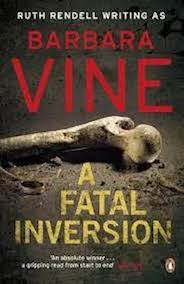
A Fatal Inversion (1987) by Barbara Vine (ada Ruth Rendell)

Whilst burying a pet dog in the animal cemetery at Suffolk country property, Wyvis Hall, the owner stumbles across the skeletal remains of a woman and baby. Ten years earlier a group of young people spent the sweltering 1976 summer at the property after nineteen year old Adam inherited it from his great-uncle and decided to make it a commune. The story plays out beneath the tension of who will break first to reveal what really happened that sweltering summer.

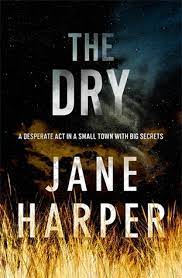
The Dry (2016) by Jane Harper

What sweaty reading list would be without an Australian rural mystery? I have written about The Dry set in a small drought riddled outback town before.

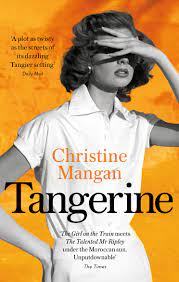
Tangerine (2018) by Christine Mangan

Former college roommates, Alice Shipley and Lucy Mason reunite in the simmering heat of Tangier in 1956. Then Alice’s husband goes missing. Tangerine is a vivid, precisely plotted story about obsession and manipulation told from the perspective of two equally unreliable narrators. It’s like watching a spider lure its prey into a web.

Hard Rain (2020) by Irma Venter

Journalist Alex meets photographer Ranna whilst on assignment in Tanzania and the two start a sizzling push-pull romance. Things get sticky when the body of an IT billionaire washes up onshore in the hot humidity of a flood and Ranna becomes a suspect.

Mexican Gothic (2020) by Silvia Moreno-Garcia

Noemi is a rich, glamorous party girl with an interest in anthropology living in Mexico City in the 1950s. She goes to High Place to check on her newly wed cousin after receiving a disturbing letter saying her cousin thinks she is being poisoned. Creepy, unsettling and intoxicating feminist post colonial horror novel set in a haunted house on a hill.

The Castaways (2020) by Lucy Clarke

A thrilling action packed survival story that plays with the past and present, set on the pristine beaches of humid Fiji. Two sisters fall out just before a planned vacation to Fiji. Only one goes and the plane she is on disappears without a trace. The surviving sister decides to go to Fiji to try and find out what happened. This is a story about solving a mystery, family dynamics and survivor guilt. Perfect Christmas reading!

Have a great break, see you on the other side.
Book review: The Exhibitionist by Charlotte Mendelson

Who doesn’t love a dysfunctional family story where the central character is a pompous, patriarchal, narcissistic artist with delusions of grandeur at its centre in the lead up to Christmas?

Tolstoy was an idiot

Ray Hanrahan is a painter who believes he is special and that his family exist in subjugation to support his greatness. Ray’s wife Lucia is a talented artist in her own right but self sabotages her own career for the sake of her husbands ego, ignoring calls from her gallerist with good news because it will upset Ray.

All that crap about happy families. It’s the unhappy families who’re alike. Uptight, cold…ugh

The Exhibitionist by Charlotte Mendelson is set over a weekend on which Ray has engaged his family and friends to celebrate the opening of his first art exhibition in years. His domination of his family has them scuttling around in fear to keep him calm, whilst concealing their dissatisfaction with their circumstances by acting in subterfuge to get their own needs met.

Artists need wives; everyone tells Ray this, or no ties at all.

Ray’s wife Lucia is having a clandestine affair with a politician, Priya. Lucia’s son (Ray’s stepson) is treated like the house slave by Ray and lives in a dilapidated caravan in the garden weighed down by, and trying to dodge, his stepfather’s bullying. Ray and Lucia’s eldest daughter, Leah is her fathers charlady and the youngest, Jess is the family rebel.

Longlisted for the Women’s prize for fiction, The Exhibitionist is a vivid, drily hilarious story about a middle class domestic tyrant. Perfect Christmas reading!

Dames of Crime: Maj Sjöwall

Who doesn’t love a bit of Nordic Noir? Long dark winter days, chilling temperatures and vast bleak wildernesses make for perfect dramatic plots and the dark narratives of grim crime fiction.

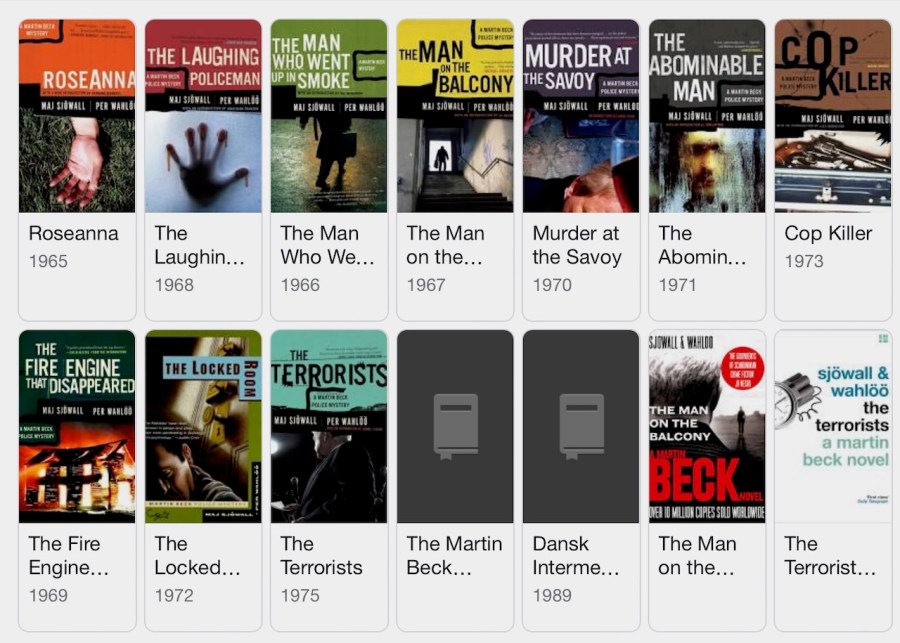
Maj Sjöwall was widely regarded as the godmother of modern Nordic Noir, or Scandi crime as it is also known. She co-authored 10 police procedurals featuring dour, middle aged Martin Beck with her third partner, Per Wahlöö whom she met whilst both worked as magazine journalists in 1962. Their influence can be seen in subsequent Scani noir such as Stieg Larsson’s The Girl With the Dragon Tattoo and Jo Nesbo’s Blake mystery The Man on the Balcony.

“that you have three of the most important virtues a policeman can have,” he thought. “You are stubborn and logical, and completely calm.”

Roseanna

The two conceived a project to write a series of ten books together, each writing alternate chapters in the evenings after work. The first book, Roseanna about the strangling death of a young tourist, was published in 1965. Their pared back, terse, fast-moving style of detective story was fresh and new and received rave reviews when they started to be published in translation in 1968.

January 7 arrived and looked like January 7. The streets were full of gray, frozen people without money.

Roseanna

The Laughing Policeman won the Edward Award in 1971 for best mystery novel and was made into a film in 1973. The tenth and final novel The Terrorists was published in 1975 shortly before Wahlöö died. The entire work can be read as a Marxist critique of the failings of Swedish society and is meticulously researched to include authentic details.

Recently—no; for as long as I can remember, large and powerful nations within the capitalist bloc have been ruled by people who according to accepted legal norms are simply criminals, who from a lust for power and financial gain have led their peoples into an abyss of egoism, self-indulgence and a view of life based entirely on materialism and ruthlessness toward their fellow human beings. Only in very few cases are such politicians punished, but the punishments are token and the guilty persons’ successors are guided by the same motives.

The Terrorists

Sjöwall was born 25th September 1935 in Stockholm and grew up in one of the hotels manager by her father, complete with round the clock room service. She was a single mother at twenty-one, then married and divorced two older men before meeting Wahlöö, a left-wing journalist and novelist. The two fell in love over crime fiction. They were together thirteen years until Wahlöö’s death in 1975. After Wahlöö’s death Sjöwall returned to a bohemian life writing for magazines and co-authoring a number of books and translating the American crime novels of Robert B Parker into Swedish. She died in April 2020.

The consumer society and its harassed citizens had other things to think of. Although it was a month to Christmas, the advertising orgy had begun and the buying hysteria spread as swiftly and ruthlessly as the Black Death along the festooned shopping streets. The epidemic swept all before it and there was no escape. It ate its way into homes and apartments, poisoning and braking down everything and everyone in its path.

The Laughing Policeman

Martin Beck Series

  • Roseanna
  • The Man Who Went Up in Smoke
  • The Man on the Balcony
  • The Laughing Policeman
  • The Fire Engine that Disappeared
  • Murder at the Savoy
  • The Abominable Man
  • The Locked Room
  • Cop Killer
  • The Terrorists

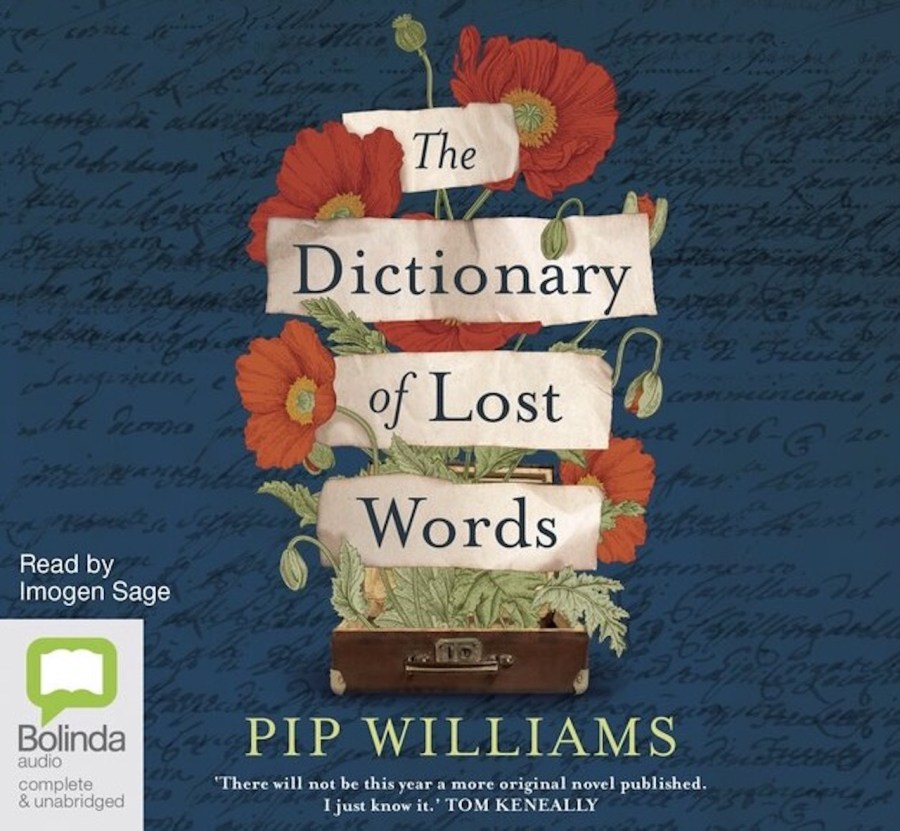
Book Review: The Dictionary Of Lost Words by Pip Williams

In my early twenties whilst living in Portugal I took it upon myself to read the Oxford English Dictionary (OED) from cover to cover in search of words I did not know (we had no TV in the house). When I found one of particularly interest, such as discombobulated (still one of my favourites), I wrote it down in my own notebook for later reference. At the time I remember wondering how words got into and out of the dictionary.

Words define us, they explain us, and, on occasion, they serve to control or isolate us.

The first part of the OED was originally published in 1884, twenty-seven years after the idea was initally proposed by members of the Philological Society of London. It was a massive endeavour because the English language is forever evolving, so its documentation can quickly become incomplete. In 1901 a concerned citizen wrote to the men compiling the OED to raise concerns about a missing word – bondmaid – a young woman bound to serve until her death. It was this idea of a missing word that sparked Pip Williams idea to write the Dictionary of Lost Words.

Words are like stories … They change as they are passed from mouth to mouth; their meanings stretch or truncate to fit what needs to be said.

Our protagonist, Esme spends most of her time under the table in the Scriptorium where her father works on the compilation of the first OED. One day a lexicographer drops a slip of paper containing a word. Esme saves the word and places the paper in a wooden suitcase in the housemaids room. The word is ‘bondmaid’. The event sets Esme on a path of collecting lost words, from the scriptorium, but also from the stallholders in the covered market whose words are often considered vulgar. Esme collects the words in her own manuscript, Women’s Words and their Meanings.

A vulgar word, well placed and said with just enough vigour, can express far more than its polite equivalent.

Set when the women’s suffrage was at its peak, Dictionary of Lost Words is a poetic, thought provoking story about the power of language, who controls the narrative, and that women need to be at the table when decisions are made about which words and stories are preserved.

Book review: The Final Confessions of Mabel Stark by Robert Hough

I’ve always held a fascination for the circus. I wanted to run away to one when I was a kid – it was a toss up between becoming a trick rider or a lion tamer. When I joined a circus as a young adult I became an acrobat for a time and it was a lot of fun. Needless to say when I saw The Final Confessions of Mabel Stark by journalist Robert Hough, I HAD to read it, and I wasn’t disappointed.

If I stop to describe exactly how scared I was every time something scary happens, we’ll be here for the next ten years. So do me a favour. At parts like this imagine how you’d’ve felt, and we’ll both do fine.

Hough scoured the archives for information about Stark and built a fictional story around the facts he discovered, draughting a novel that serves as a fictional suicide note.

There ain’t a problem on this great green earth helped by feeling sorry for yourself.

Born Mary Haynie, we meet Stark when she was a nurse in Louisville. She soon found herself on the other side of the ward after being institutionalised in a psychiatric hospital for rebelling against her husband (as was common in the day). After a psychiatrist got a crush on her and and helped her escape, she fled to Tennessee and became Little Egypt, a belly dancer with the Great Parker Carnival. She was rescued from dancing by circus owner AL G. Barnes at 23 and learnt to work with tigers from the shows animal trainer who fell for her. The story follows Mabel’s rise to fame with her Bengal tiger Rajah who she raises from a cub.

We all have our battle scars, Kentucky. The ones who wear them on the outside are just a little more honest about it, that’s all.

Mabel was one of the most famous tiger trainers in history, doing manoeuvres that no one thought possible. She was the finale act during the heyday of the Ringling brothers circus in the 1920s and 30s, then committed suicide after being forcibly retired as she was turning 80 in 1968.

The character of Mabel is straight talking, sassy and opinionated about life, tigers and her many husbands. Her brutally honest confessions told with a wry sense of humour are compelling, as is her determination and survival instinct. It’s a rip roaring tale and I’m sure you’ll enjoy the ride if you get on board.

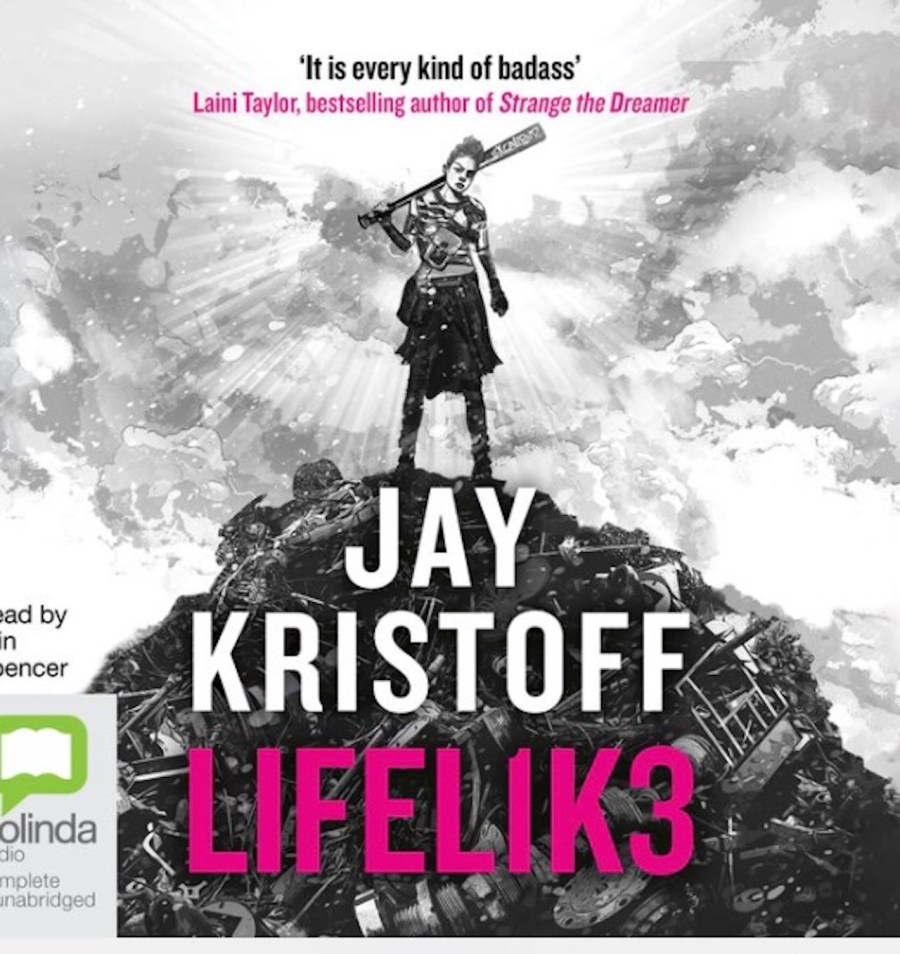
Book review: LIFEL1K3 by Jay Kristoff

Jay Kristoff writes strong women really well and it is no different in his YA dystopian thriller LIFEL1K3.

She didn’t want to die here. She hadn’t liked it much the first time.

Seventeen year old Eve builds robotic gladiators to earn credits to buy medicine for her sick Grandpa, who is her last remaining family member. When her robot gladiator is destroyed in a fight and the opposition comes after her as well, she manages to stop the attack with the power of her mind and a raging scream. Unbeknownst to Eve, her powers of destruction have drawn the attention of the Brotherhood who decide to hunt her down and kill her because of this abnormality.

Look outside that door, and you will see a world built on metal backs. Held together by metal hands. And one day, those hands will close. And they will become fists.

On her way home with her gal-pal Lemon Fresh and her AI robot Cricket they discover the remains of an android boy in a scrap pile and take him home for parts. To her surprise the android boy, Ezekiel, comes to life and he recognises Eve and the those who are out to get her because of her powers. The motley crew of misfits, along with Kaiser, a fierce and protective robotic dog set off across their post-apocalyptic world to save Eve’s loved ones and discover the secrets of her past.

It’s simple to love someone on the days that are easy. But you find out what your love is made of on the days that are hard.

LIFEL1K3 is an action packed roller coaster ride through a world run by a couple of big corporations that use robots as slaves and leave everyone else to fend for themselves in the ruins of the Mad Max–like world. The story explores what happens when beings made with cybernetics and artificial intelligence become sentient and understand that they do not own their own minds, but want to.

Imagine having all your capacity for love and hate and joy and rage and only a couple of years to learn to handle all of it. Sometimes it feels like a flood inside my mind, and it’s all I can do not to drown.

In true Kristoff style, the story is full of twists and turns, a fast paced suspenseful action packed plot, incredible world building, great characterisation and humour, all used to tell a unique story about a girl finding her place in a world, not being defined by our past, and found family. Themes include exploration of corporate powers, resource depletion, AI and what makes us human (which reminded me of a mind bending subject I studied in philosophy at university), societal collapse, love and lies. And of course the story ends on a cliffhanger as there are two more books following it – DEV1AT3 and TRUEL1F3.

Your past doesn’t make calls on your future. It doesn’t matter who you were. Only who you are.

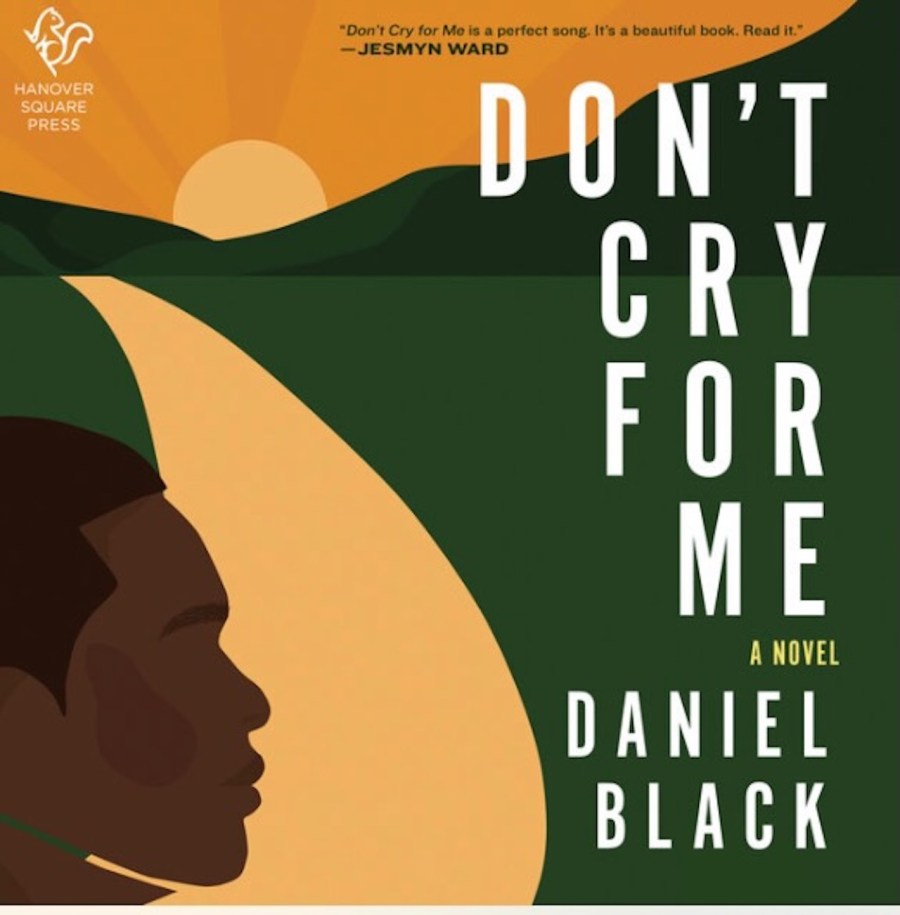
Book review: Don’t Cry for Me by Daniel Black

At once beautiful, poetic, hopeful and sad, Don’t Cry for Me is a the story of Jacob, a dying black man trying to make amends with his gay son Isaac, whom he has not spoken to for years. The novel is written through a series of letters from father to son.

You must learn to uproot unwanted seeds without destroying the entire harvest. This is the son’s lesson. Nurture good sprouts, Isaac. Toss weeds aside and never think of them again. Just remember that sprouts and weeds are planted together, and weeds have a valuable function. They teach you what to avoid, what not to embrace. There is no good planting without them.

In Don’t Cry for Me, author Daniel Black provides insight into African American history and the accomplishments and legacies of growing up black in the American South. The story brings to the surface the effects of intergenerational trauma with its roots in slavery, the treatment of black American’s as second class citizens, the ingrained need for obedience and conformity as a means of survival and the effects of limited access to education.

Everything we did, whether we were aware or not, we did with white people in mind. Our life’s aim was to make them believe we had value and worth, so we spent our nights trying to figure out what they liked, then spent our days trying to do it. We still haven’t pleased them, and truth is, we never will.

This history shaped gender roles and what it meant to be a man. In knowledge is power and when Jacob starts to read, he is changed. His rigid views about who he is and who his son and wife should be change and soften. He becomes a man who exchanges judgement and self righteousness for understanding and tolerance.

Reading taught me that a man’s life is his own responsibility, his own creation. Blaming others is a waste of time. No one can make you happy if you’re determined to be miserable.

Despite Don’t Cry for Me being about relationships between men, I found it to be an illuminating and powerful read about black history, systemic racism, prejudice, ways of thinking, forgiveness and healing. It made me think and feel deeply, a sign of a good novel.

Theatre review: Stranger Sings! The Parody Musical

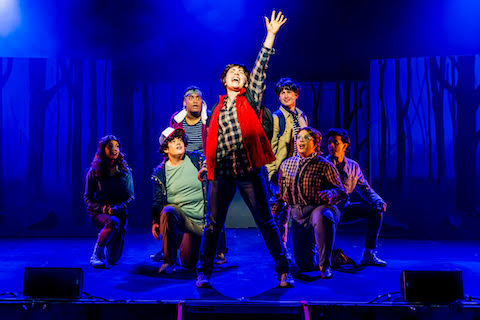
Enter an 80’s parallel universe through the quirky, boppy, playful romp – Stranger Sings! The Parody Musical – a nostalgic, rock-driven song and dance spoof poking fun at the 80s – you’ll recognise references to Dungeons and Dragons, Dirty Dancing and Slushie’s, just to name a few.

Not much happens in small towns – until it does. When teenager Will goes missing in Hawkins, Indiana in 1983, his nerdy mates go looking for him. Turns out Will has been kidnapped by an interdimensional monster and it takes a strange telepathic girl called Eleven to help find him.

The Australian premier of this Off-Broadway show inspired by the Netflix series Stranger Things is preformed by Salty Theatre. The choreography is excellent, the music nostalgically catchy and the acting to a professional standard. The character Barb Holland (Stacey-Louise Camilleri), a dorky girl with raging hormones, second fiddle to her gal pal, Nancy, stole the show for me with her larger than life personality.

If you’ve seen Stranger Things this show will be familiar but you don’t need to be a fan to enjoy the performance – it had me laughing out loud.

Stranger Sings! The Parody Musical is on at Meat Market in North Melbourne with its spectacular barrel vaulted ceiling. The venue is a heritage listed building that was home to Melbourne’s wholesale meat trade in the 1880’s and was transformed into an arts hub. There’s parking just around the corner in Bedford Street.

Stranger Sings! The Parody Musical runs till 19th November. Last night was a raucous full house, so get your tickets soon if you don’t want to miss out.