Book Review: Chaos Agent by Lee Winter

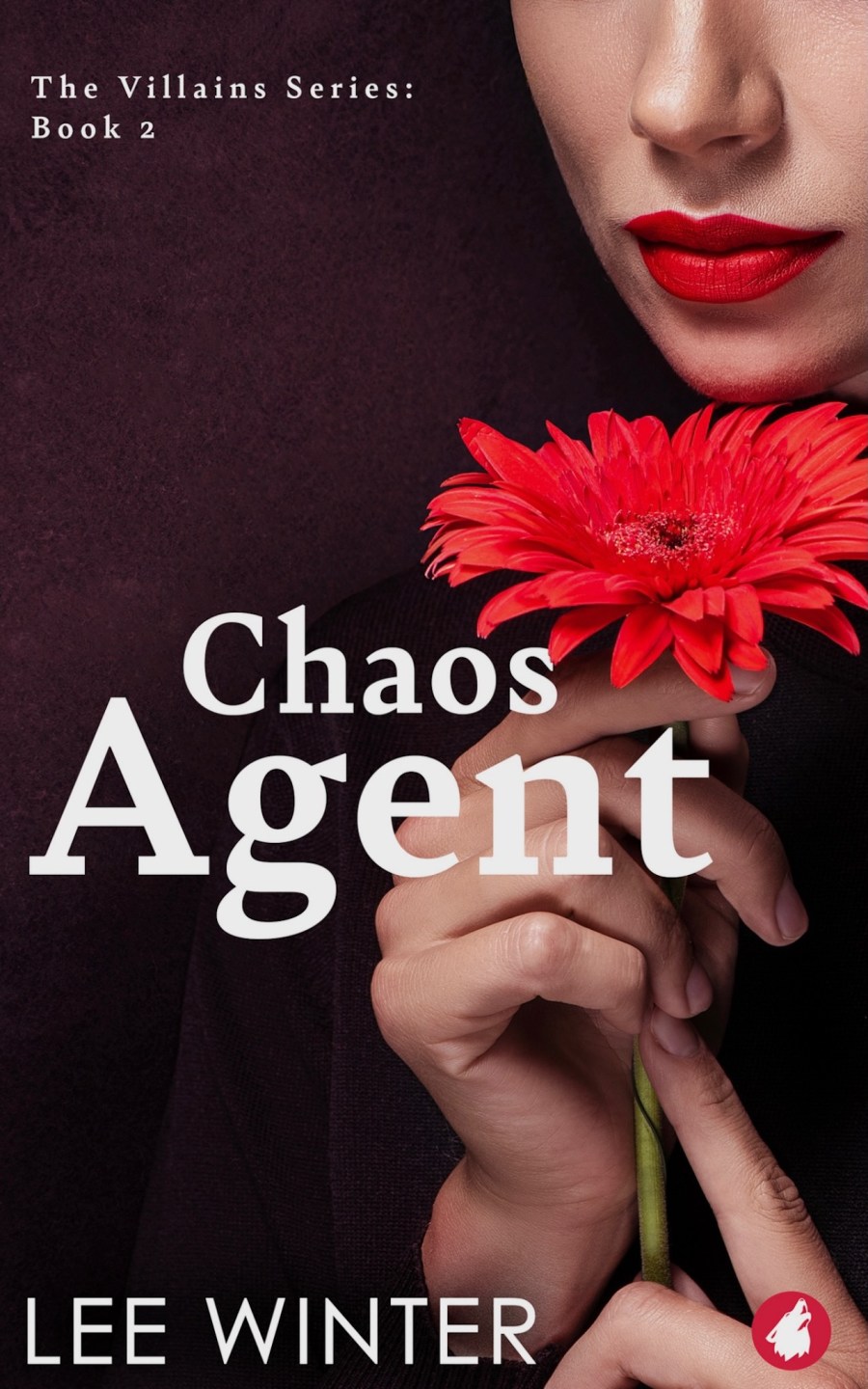
I reviewed book 1 of Lee Winter’s Villain series last week. I read book 2 on the train from Sydney to Melbourne and it did a great job of helping pass the time. In Chaos Agent Michelle Hastings has hired Eden Lawless to work at the Fixers – an excuse to keep Eden in her orbit, given she can’t bring herself to admit her attraction.

The problem is that Michelle knows that the work the Fixers does would not sit well with Eden’s ethics if she found out the truth. Michelle seeks out the ‘less bad’ jobs that could be interpreted as aligning with Eden’s view of the world and assigns them to her. She also tells her EA to make sure others in the office know to keep the truth from Eden (aka the Panda). Meanwhile Michelle starts to question her own ethics as she believes deep down she is evil.

Eden starts her first ever office job and sets out to do what she does best – community building in an office full of ex-FBI, CIA, hackers and criminal types. She starts a weekly coffee club focused on ethically grown beans and fills the office with plants to improve the air. Her colleagues soon fall for her just as much as her boss has.

“And I, for one, worship at your stupid, unfashionable, vegan-leather-wearing feet,” Daphne said. “Between our boss and these evil little reprobates, I declare you The Asshole Whisperer!” She lifted her glass and smirked at her colleagues amidst good-natured cheers and boos.

The charade fails when Eden discovers that the Fixers really is a depraved company that will do almost anything to protect and advance the rich and powerful. Eden leaves and sets out to expose the Fixers. Michelle fights back. The problem is the women have a persistent attraction to one another.

Chaos Agent is an unusual romance with loads of subplots. The push-pull between the women is a vehicle to explore what it means to be good, how we are accountable for our mistakes, that we can hold opposing feelings about others, and that the lines of right and wrong are not always clear.

It had been a month since Lawless had quit, and Michelle’s office was in disarray. Employees were cranky, mistakes were being made, and everyone seemed to silently blame her for the absence of their favorite colleague.

Eden is witty, kind and funny, if a little black and white in her idealism. Michelle is distant, strategically scheming, (mostly) ruthless and tormented by self-loathing – the classic ice queen. Their journeys are supported by a cast of unique and interesting characters from Michelle’s grandmother, Hannah, to Phelim, the Fixers brutish head of security. Chaos Agent is another slow burning romp full of adventure, fun, moments of cringe, and a bit more edge than The Fixers. I loved it as much as the first in the series.

Book Review: The Fixer by Lee Winter

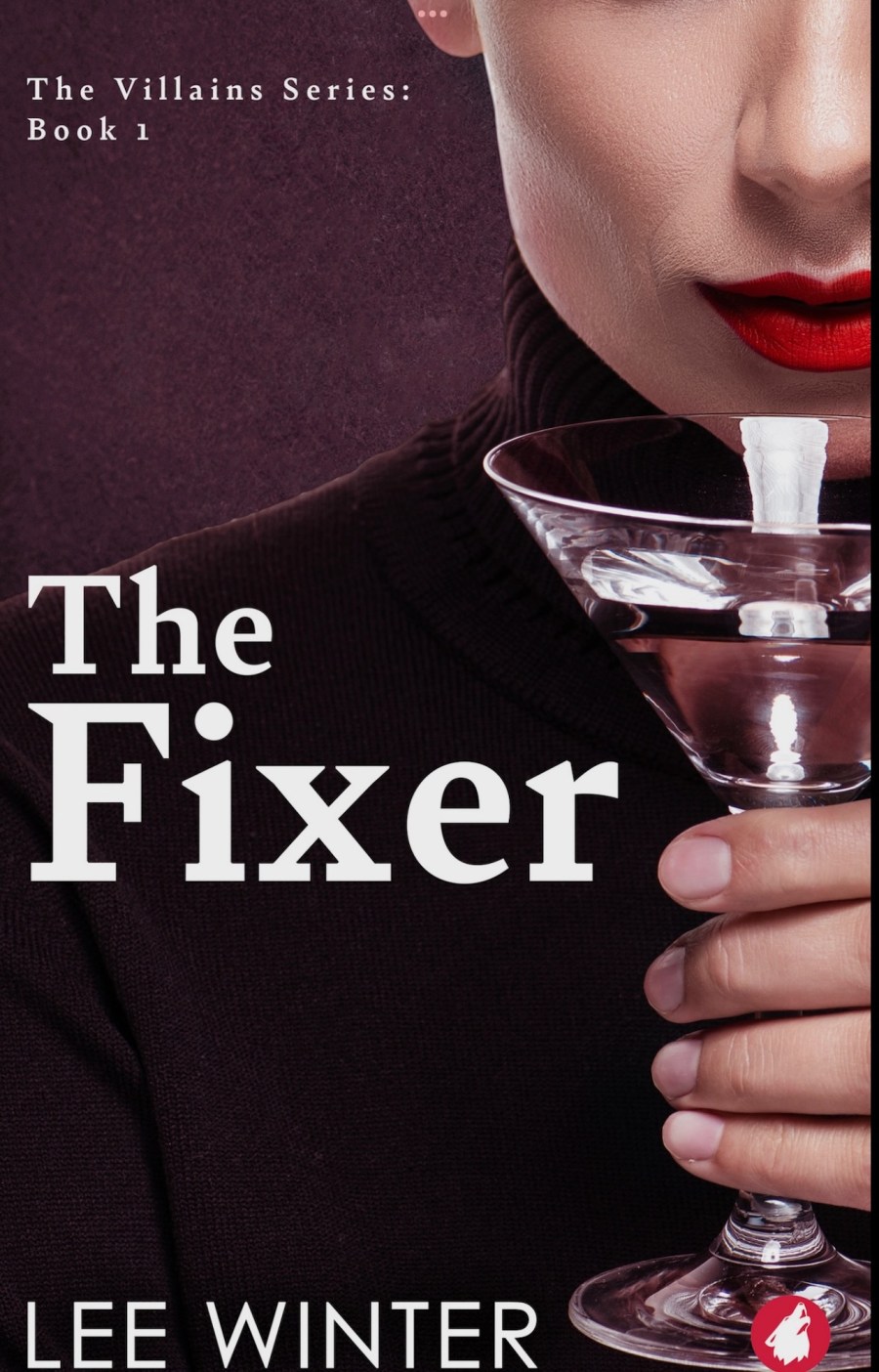
Eden Lawless is a brilliant, idealistic, if somewhat naive activist fighting the good fight. A change maker sticking up for the underdogs of society.

The downside of being a minor revolutionary was the fact Eden spent most of her life living out of her van. Gloria smelled of dirt collected from across America no matter how often she cleaned her.

Misunderstood ice queen Michelle Hastings is a corporate CEO of a secretive corporation with tentacles everywhere. The Fixers make the problems of the rich and powerful go away in order to make them, well richer and more powerful.

Cheeky. Michelle put down her phone with a smirk, deciding that, if nothing else, Lawless might be marginally entertaining. As long as she didn’t cross any lines or disrespect Michelle, she would allow it. She leaned back in her chair and gazed out at her view as she mentally ran through her task list. Something unsavory floated to the top of the pile.

Hastings hires Lawless to return to her hometown of Winpago and prevent her old nemesis, the town Mayor from winning the next election. She soon nicknames Lawless the Panda behind her back on account of her naive idealism.

Whilst supervising her new employee, a push-pull attraction grows over their weekly zoom meetings where Eden reports in her progress with the Mayor. The denial of attraction between the two women throws them both off their game just enough to create great tension amongst the action. After Eden completed her assignment, Hastings doesn’t want to let her go, nor admit her attraction, so she hires her.

‘Hey, Michell,’ Lawless said cheerfully, ‘How’s it going?’

Michelle. The impertinence of calling her by her first name still burned a little, but she was in too good a mood to argue the point when Lawless was never going to budge. ‘It goes,’ Michelle said neutrally. ‘Report’.

The Fixer by Lee Winter is a funny, cute, character driven, adventurous romp. It is the first book in the Villian series and was so much fun to read I immediately got the second one to find out what happens when Eden starts her first ever office job…review to come.

Book Review: The Bluffs By Kyle Perry

Remote Tasmania is such a great location for creepy crime novels. Debut novel The Bluffs by Kyle Perry is Picnic at Hanging Rock meets Some Girls Are.

Four teenage girls go missing from a school camp in Tasmania’s Great Western Tiers. The residents of Limestone Creek start searching for the missing and are soon joined by a hoard of well-meaning volunteers rustled up by social media influencer and mean girl Maddison.

Up in the hills, he hides and kills.
Down in the caves, he hides and waits.
The Hungry Man, who likes little girls,
with their pretty faces and pretty curls.
Don’t believe what the grown-ups say,
the Hungry Man will find a way.
So I won’t walk alone by the mountain trees,
or the Hungry Man will come for me.

The mystery deepens when one of the missing girls is found mauled at the base of a cliff, her shoes neatly tied and placed at the spot from which she fell. As the story unfolds, the suspects pile up – the local drug dealer and father of one of the missing girls, the mythical bear like creature – the Hungry Man, and one of the school teachers are all suspects.

Detective Badenhorst, still stuggling with PTSD from another case has to negotiate a labyrinth of community suspicions, police corruption, folklore, and teenage politics to try and find the missing girls.

The story is told predominately from three points of view which aids to maintain the uncertainty, misdirection and foreshadowing that holds through the novel. There’s a lot of action and tension in The Bluffs, a twisty, atmospheric page turner with flawed three dimensional characters, all with something to hide.

Book Review: The Torrent by Dinuka McKenzie

Back to my favourite genre – Australian crime fiction…

Detective Kate Miles is a cop of Sri Lankan descent in the Northern NSW country town of Esserton. Miles is heavily pregnant and trying to wrap up an armed holdup case a week off maternity leave when her boss asks her to review a closed case. The drowning of a man in the river during a flood seems straight forward until Miles starts digging.

They walked on, Kate doing her best to keep pace, her hand moving to support the bulk of her belly and stepping with care along the muddy creek bed. She noticed several thick tree branches, rocks of all sizes, and even the odd shopping trolley. Flood debris, lying where the waters had dropped them, inert and innocent.

Dinuka McKenzie’s debt novel The Torrent won the Harper Collins Australia 2020 Banjo Prize. The police procedural is an easy read that explores country life, a woman making her way in a man’s world, and diversity – without making an issue if it.

There was a slight insolence in his manner. Nothing obvious that she could put her finger on. Maybe it was because she was a woman. Possibly it was her colour, though she didn’t think so. He didn’t strike her as that kind of insecure.

Protagonist Kate Miles makes a refreshing change from the usual jaded middle aged male cop in Australian crime novels. She’s complex, smart and dogged. The plot is tight, the characters unusual but believable, and the prose well crafted.

Book review: Love Me Tender by Constance Debré

Writer Constance Debré, from a prestigious French family quit her job as a lawyer and left her husband of twenty years in pursuit of herself as a butch lesbian. When she tells her ex-husband she is sleeping with women and wants a divorce, he responds by telling her that their eight year old son Paul hates her. He takes custody of their son and severs Debré’s relationship with him. Love Me Tender is about her journey as her life is falling apart.

I spit it out, I say, I’ve started seeing girls. Just in case there was any doubt in his mind, with the new short hair, the new tattoos, the look in general. It’s basically the same as before, obviously just a bit more distinct.

After six months Debré applies for joint custody, only to be accused of incest and paedophilia. The judge grants the ex-husband sole custody, and Debré only supervised visits under the watchful eyes of experts. One hours every fifteen days until the next hearing in two years time. By the time the courts grant her access rights to spend time alone with her son, the distance between them cannot be bridged, largely due to her ex-husband’s campaign against her. Eventually she gives up, grieves her son and moves on.

As for your dad and I, his anger towards me, everything he’s said about me, to the judge, to you, don’t take it to heart. Don’t be angry with him. This kind of thing happens all the time, arguments between two people who once loved each other. That’s the ways it’s always been, acid getting thrown in faces when people fall out of love.

Debré’s life shrinks. She gives up the apartment that she once shared with her son to stay in cheap studios and the beds of lovers and friends. She sheds possessions down to three t-shirts, two pairs of jeans, an old leather jacket and a Rolex. She spends her time swimming, smoking cigarettes and having sex. Swimming keeps her sane. Sex is addiction, not romance – it obliterates the self.

I don’t know if you hate me. You don’t have to answer. You’re allowed to hate me. In fact, hate is a necessary part of love. There is no love without hate. Anyone who says otherwise is a liar or a coward.

Love Me Tender tracks Debré’s transformation. She does not just come out and continue her life trajectory. She sheds people and things and femininity and embraces a kind of machismo, shaving her head, getting tattoos and giving her lovers, ‘the girls’, a number rather than a name.

I don’t see why the love between a mother and son should be any different from other kinds of love. Why shouldn’t we be allowed to stop loving each other? Why shouldn’t we be allowed to break up?

Her refusal to participate in a way that is expected of a woman of her class results in her sliding from her formerly bourgeois life and being rejected by her family. As her roles as a wife, mother and professional dissolve, she becomes a new person and takes on a new existence and life and relationship to the world.

I wasn’t made for the domestic life. That’s usually the reason it doesn’t work out with girls.

Love Me Tender is a short book (only 165 pages) with free flowing sentences that make compelling reading. Neither the book nor Debré will be for everyone, but we all respond differently and grief. Perhaps is the due to the distance at which she keeps her reader, that I could not turn away and kept turning the pages, hoping to get beneath the lack of sentimentality and almost blasé tone. Her prose is punchy, unapologetic and hauntingly honest. I found Love Me Tender uncomfortably refreshing and could not put it down.

Review: The Complete Ripley Radio Mysteries by Patricia Highsmith

A couple of weeks ago I went to see the documentary Loving Highsmith about American author Patricia Highsmith. The content for the doco was drawn from her unpublished diaries and notebooks, and the personal accounts of her lovers, friends and family.

But love and hate, he thought now, good and evil, lived side by side in the human heart, and not merely in differing proportions in one man and the next, but all good and all evil. One had merely to look for a little of either to find it all, one had merely to scratch the surface. All things had opposites close by, every decision a reason against it, every animal an animal that destroys it, the male the female, the positive the negative.

Strangers on a Train

Highsmith was best known for her psychological thrillers (Strangers on a Train and The Talented Mr. Ripley) and for being part of the Modernist movement. Most of her novels were adapted to the big screen, notably with little need to be changed for the screen.

The partly autobiographical The Price of Salt written in the 1950s and published under the pseudonym Claire Morgan was also adapted for film in 2015 as Carol. Due to the social morals of the time, Highsmith led a double life, hiding her love affairs with women from the public and her family, but reflecting on them in her personal writings. Carol was the first lesbian story with a happy ending published in the USA.

Happiness was like a green vine spreading through her, stretching fine tendrils, bearing flowers through her flesh.

Carol

The documentary was fascinating and led me to seek out the audio series, Ripley Radio Mysteries that dramatises her five Ripley novels. The character of Ripley was inspired by a man Highsmith saw from a hotel room in Italy after she moved to Europe. Ripley is not a nice man, though he only kills when absolutely necessary (I mean who doesn’t?). Highsmith wrote him empathetically so as a reader I both liked and loathed him – it’s creepy.

He loved possessions, not masses of them, but a select few that he did not part with. They gave a man self-respect. Not ostentation but quality, and the love that cherished the quality. Possessions reminded him that he existed, and made him enjoy his existence.

The Talented Mr Ripley

Protagonist Tom Ripley is materialistic, though not in the usual way. He has an unstable sense of identity and possessions give him a feeling of safety and stability. It is this that leads him to his first kill. He befriended Dickie but felt uncertain about their relationship and killing reduced his friend to a collection of possession of clothes, rings and cash – much more predictable.

The series is tense, atmospheric and twisted. Perfect for a thriller!

Theatre review: Devastating Beauty by Christopher Fieldus

Midsummer show Devastating Beauty by Christopher Fieldus is an original performance fusing prose poetry, storytelling and cabaret.

From a boy in Thailand who felt he was ‘too much’ to a young lover in Melbourne who discovered he was ‘not enough’. Devastating Beauty is about growing up queer and personal crises.

Fieldus enters the stage in dazzling drag, including the most exquisite sequin platform shoes. They start to tell us about a young boy growing up in an expat family in Thailand who then moved to Melbourne.

As a story of longing unfolds, Fieldus tells of their journey to adulthood, shedding clothing along the way to reveal their true self.

Fieldus has an extraordinary vocal range reminiscent of a young Freddie Mercury or Paul Capsis. In Devastating Beauty they do justice to music by the likes of Celine Dion, Róisín Murphy and The Killers intertwined in a spoken word story of self discovery that will touch your heart.

Devastating Beauty runs nightly at 7.15pm till Saturday 11th February at The Motley Bauhaus in Carlton. The Motley is an intimate venue with a bar and snacks so go a bit early and grab a beer for the show.

Get tickets for Devastating Beauty and support Midsumma live performances, you won’t be disappointed.

Dames of Crime: Dorothy B. Hughes

Dorothy B. Hughes (1904-1993) was a journalist, crime fiction reviewer and crime writer of fourteen novels in the hardboiled and noir style.

She carried her head like a lady and her body like a snake.

Dread Journey

Hughes first published book was Dark Certainty (1931) a volume of poetry, followed by Pueblo On the Mesa (1939), a history of the first fifty years of the University of New Mexico. She worked as a journalist in Missouri, New York and New Mexico and Married Levi Allan Hughes Jr. in 1932. They had two children.

By 1940 she had turned to crime with her first novel The So Blue Marble (1940), an Art Deco suspense set in the glamour and luxury of New York’s elite. Hughes then went on to write eleven novels in seven years. All bar one, Johnnie (1944) were crime novels. Influenced by writers such as Eric Ambler, Graham Greene, and William Faulkner she wrote tight suspenseful plots centred around outsiders, haunted loners, or upper-class characters involved in evil intrigues.

Once he’d had happiness but for so brief a time; happiness was made of quicksilver, it ran out of your hand like quicksilver. There was the heat of tears suddenly in his eyes and he shook his head angrily. He would not think about it, he would never think of that again. It was long ago in an ancient past. To hell with happiness. More important was excitement and power and the hot stir of lust. Those made you forget. They made happiness a pink marshmallow.

In a Lonely Place

Three of her crime novels for which she is best known were adapted for Hollywood films – The Fallen Sparrow (1943), Ride the Pink Horse (1947) and In A Lonely Place (1950) about toxic masculinity with a feminist resolution.

Hughes became a professional crime fiction reviewer around 1940 and moved to Los Angeles in 1944. She wrote for the Los Angeles Times, the New York Herald Tribune and the Albuquerque Tribune.

She was afraid. It wasn’t a tremble of fear. It was a dark hood hanging over her head. She was meant to die. That was why she was on the Chief speeding eastward. This was her bier.

Dread Journey

Her last novel, The Expendable Man was published in 1963. She continued to publish short stories and won an Edgar Award for best critical/biographical work for Erle Stanley Gardner: The Case of the Real Perry Mason (1978)

Being a poet before she began writing crime, Hughes books were known for their ominous and mournful quality of mood, infused with dread and intrigue. On their surface they had a middle class normalcy, but scratch the facade and her characters lives were full of danger, desperation and despair that unsettles the reader.

He drove until emotional exhaustion left him empty as a gourd. Until no tears, no rage, no pity had meaning for him.

In a Lonely Place

Published Books

  • Dark Certainty (1931) – poetry
  • Pueblo on the Mesa: The First Fifty Years of the University of New Mexico (1939) – non-fiction
  • The So Blue Marble (1940) – first novel
  • The Cross-Eyed Bear (1940)
  • The Bamboo Blonde (1941)
  • The Fallen Sparrow (1942) – filmed in 1943
  • The Blackbirder (1943)
  • The Delicate Ape (1944)
  • Johnnie (1944)
  • Dread Journey (1945)
  • Ride the Pink Horse (1946) – filmed in 1947
  • The Scarlet Imperial (1946)
  • In a Lonely Place (1947) – filmed in 1950
  • The Big Barbecue (1949)
  • The Candy Kid (1950)
  • The Davidian Report (1952)
  • The Expendable Man (1963)
  • Erle Stanley Gardner: The Case of the Real Perry Mason (1978) – critical biography

Book review: Finlay Donovan is Killing It by Elle Cosimano

Young adult suspense writer, Bram Stoker Award finalist and Edgar Award nominee, Elle Cosimano, has turned her hand to adult fiction and she’s a hoot. Finlay Donovan is Killing It is the first in a series of three books, and I’m pretty sure I’ll be reading the other two after book one.

Don’t get me wrong, I’d liked South Riding, before the divorce. Back before I’d known my husband was sleeping with our real estate agent, who also sat on the board of the homeowners association. Somehow, I’m guessing that’s not what the saleslady had in mind when she’d described our suburban mecca as having a ‘small-town’ feel.

Crime fiction writer Finlay Donovan’s husband ran off with another woman. Finlay is broke, the bills are piling up, she’s late submitting a manuscript to her agent and her husband is threatening to take the kids.

The brochure had featured photos of happy families hugging each other on quaint front porches. It had used words like idyllic and peaceful to describe the neighbourhood, because in the glossy pages of a real estate magazine, no one can see through the windows to the exhausted stabby mommy, or the naked sticky toddler, or the hair and blood and coffee on the floor.

Finlay meets her agent in a cafe to try and get more time to finish her book, after she leaves without success she finds a note in her bag from a woman at the adjacent table who misinterpreted her conversation with her agent thinking Finlay’s a contract killer. The note asks her to kill the woman’s husband for $50,000 and where Finlay can find him on a certain date. Finlay is aghast, but starts to think about what she could do with the money and wondering what’s wrong with the guy that his wife wants him dead.

Fantasies where I let myself calculate how many economy-size packs of Huggies, Lean Cuisines, and baby wipes fifty thousand dollars could buy.

Curiosity gets the better of her and she goes to check the guy out, inadvertently interrupting him attempting to drug a woman in a bar. Finlay diverts the victim, switches the drinks and drugs the husband, rolling him unconsious into her van and driving home. She goes inside to call her policewoman sister who is looking after her kids and when she goes back out to the garage, the guy is dead from the exhaust fumes of her combi. Finlay is in trouble, but this is only the start.

My Google search history alone was probably enough to put me on a government watch list. I wrote suspense novels about murders like this. I’d searched every possible way to kill someone. With every conceivable kind of weapon.

Finlay Donovan is Killing It is full of big bold characters including police, the mob, women who want their husbands dead, Finlay’s nanny and two recalcitrant children. The narrative is fast paced with a twisty plot that will keep you turning the pages as Finlay gets into deeper and deeper trouble. Highly recommended.

Theatre review: promiscuous/cities by Lachlan Philpott

Midsumma Festival, Melbourne’s queer arts and cultural festival runs 21 January to 12 February and boy has it come a long way since it began in 1989. Last night I went to see Promiscuous Cities written by Lachlan Philpott and showing at Theatre Works in St Kilda.

The production is set in the round and opens with a lone woman sitting on a stool, then it explodes. The props are sparse but versatile, and well designed costumes help bring the characters of the twelve talented young actors to life. The choreography is exquisite and creative and moves the actors seamlessly at pace from scene to scene in a way that enhances the aesthetics.

Promiscuous Cities has a bit of everything – at one moment like a cabaret, then a ballet, then a traditional play – but what sounds like a mish-mash works beautifully to tell a tale of the city of San Francisco. Multiple fast paced story lines run through the show exposing the underbelly of San Francisco, famed as a place of freedom and liberal thought.

What you get is glimpses into the cities many subcultures, the impact of the IT boom and the gentrification that has spawned homelessness, the ongoing legacy of the HIV pandemic, and the impacts of street violence and drugs. Promiscuous Cities show oozes queerness and reminded me of a trip I did to San Fran about eight years ago when I was lucky enough to get some insights from a local I met there.

Promiscuous Cities is a professional quality production that deserves a full house every night, so get a ticket before they all sell out. The show runs till 24th January.