Really the title of this blog post should be write, edit, edit, edit, edit, edit, submit. In my #AuthorsForFireys blog I mentioned that I had sent my manuscript off to an assessor. About ten days ago, editor Dan Hanks sent me his feedback and report on my manuscript. I was chuffed to read this comment in his email: The long and short of it is that this was a tremendously fun story.
Dan’s report is a considered breakdown of everything he thought worked or needed polishing. He also included a brain dump of notes scattered through the manuscript, pointing out his thoughts as he went which was really helpful. I have quoted some of his comments in this blog.
The story unfolds at pace, the structure is all present and correct, and the characters are so well written in their shades of grey that you’re never quite sure who is going to end up being good or bad or somewhere in between. Which means the tension is kept cranked up to 11 for most of the book and the reader can’t help but keep turning the page to find out how it’s all going to end. Great stuff!
manuscript assessment comment
I have heard varied opinions about the value of manuscript assessments, so I did enter into this exercise with a degree of skepticism. It was with welcome relief that found it to be very valuable. There is also the added bonus of an injection of confidence when someone you don’t know, and who’s job it is to be critical, reviews your work.
The writing style is crisp and clean and punchy, as you would hope from a book of this genre, but there is certainly scope to vary the rhythm in places and build on the beautiful flourishes of prose that crop up from time to time – which I believe will lift the book to the next level.
manuscript assessment comment
Here are the things I found most helpful from Dan’s feedback…
On story, plot and structure:
identified some gaps and areas he felt needed to be fleshed out – particularly to give context to make it work more effectively for an international market
inject a little more scene setting
identified a loose end I hadn’t accounted for that needed tying up
There is a big theme here about having the freedom to be yourself. Theme is a big way to turn a perfectly fine and well plotted story into something that the reader can’t stop thinking about after they’ve put the book down. And what you’ve done with these characters – set against a backdrop of a campaign arguing for the right to be able to be yourself – is quite special.
manuscript assessment comment
On characters:
a couple of minor characters he felt needed a bit more distinction between them
On writing style (description/dialogue):
identified a few areas to tidy up to improve clarity and flow
a couple of spots to improve logic or continuity for the reader
some advice on grouping dialogue snippets appropriately so it’s easy for the reader to understand who is saying what
The forest for the trees
Last week I worked through all Dan’s feedback and made most of the changes he suggested. The other interesting thing for me about this exercise was that between the beta readers and the manuscript assessment I set the work aside for about a month without looking at, or thinking about it at all. I had one of those ‘aha’ moments when I went back to the work, about why people say you should let your manuscript ‘breathe’. Looking at it with fresh eyes gave me a new perspective, and I made some more new changes I identified myself, because of the distance.
All in all this is a really entertaining read, with a surprising amount of heart for a thriller, and some great characters to follow as they try to solve this mystery (and hopefully more in the future??).
manuscript assessment comment
I still have some minor tidying up to do, but did send a synopsis and a sample of the work I have completed revising to query a couple of agents last week, so I feel I have now started the next part of this journey. As I enter the querying phase, I am following the approach I learnt from completing the online Pitch Your Novel course I wrote an earlier blog about and look forward to seeing how that goes, though no doubt the waiting will be a challenge!
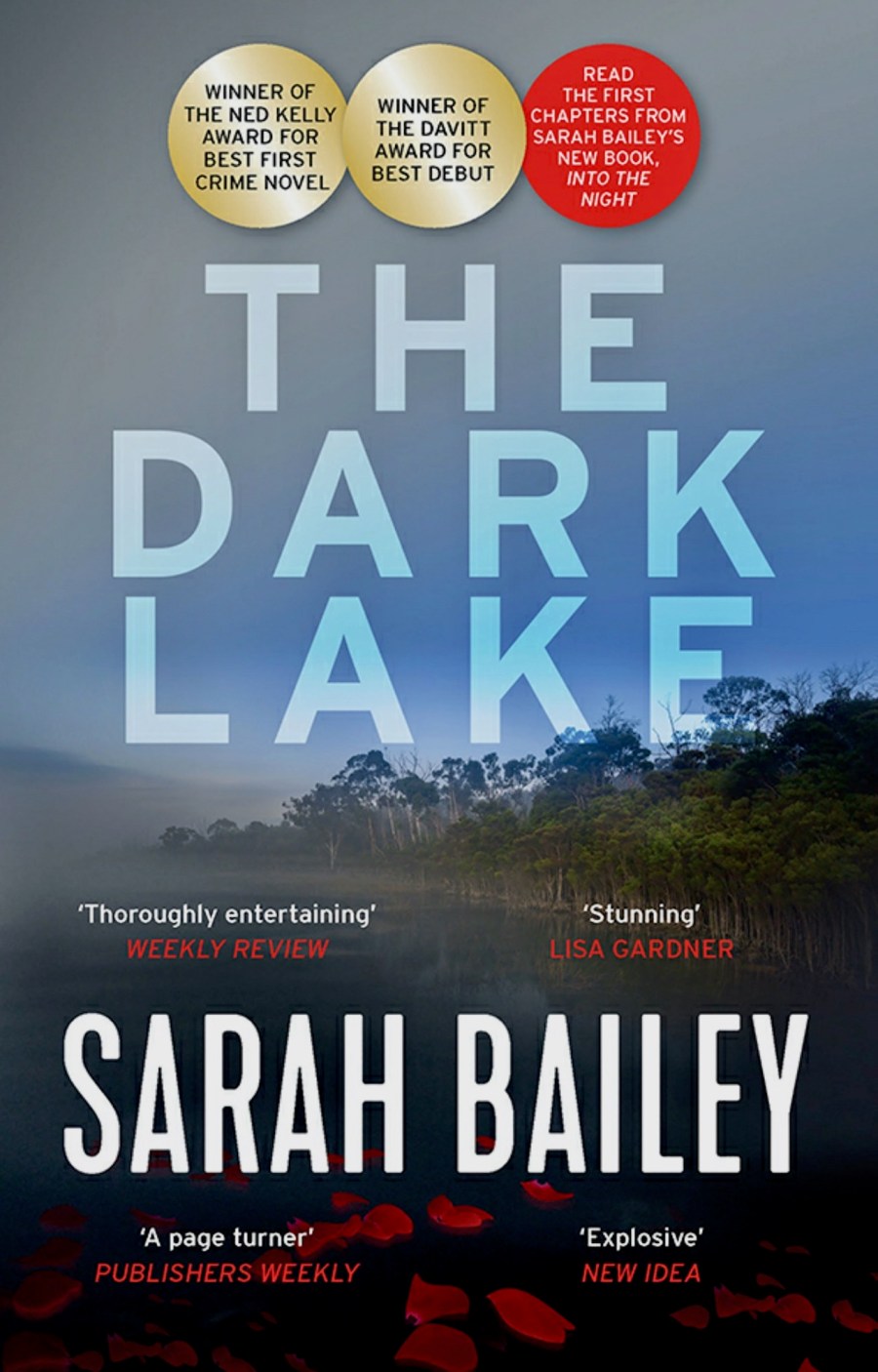
Secrets are at the heart of a good mystery and Sarah Bailey packs them into her debut psychological mystery, The Dark Lake.
The house turned out to hold more of Robbie’s secrets than I had ever expected, though I am sure there are many more that we will never know
The Dark Lake
Gemma Woodstock is a cop in Smithson, the small town in New South Wales where she grew up. She’s good at her job but a personal train wreck, which stems back to the suicide of her first boyfriend at the end of high school ten years earlier. Her relationship with her loving partner and father of her child is distant, she is sleeping with her married work partner Felix, struggles to be a good parent to the son she loves, and drowns her emotions in booze.
Probably I should move away, leave Smithson, but starting over has never been a strength of mine. I have trouble letting go.
The Dark Lake
When high school drama teacher Rosalind Ryan, who Gemma went to school with, is murdered, the small town is shocked. Gemma and Felix start to investigate the crime and the intertwined secrets of Rosalind and Gemma start to emerge. The investigation almost undoes Gemma in her effort to keep her own history and emotions separate from the case.
I allow myself to process the fact that Rosalind Ryan is dead. I suddenly feel startled to find myself a fully grown adult.
The Dark Lake
The book is a well written slow burner and hooks you in with a compelling and complex story line. It’s character driven with a well drawn cast who are easy to like and/or hate. The story shifts from the present to ten years earlier, gradually revealing the interlinking stories as the secrets are revealed.
Set in between a burst of mountain ranges, Smithson is a little oasis of greenery in the middle of endless fawn-colored acres of Aussie farmland.
The Dark Lake
I liked it enough that I will read the next in the series, Into the Night.
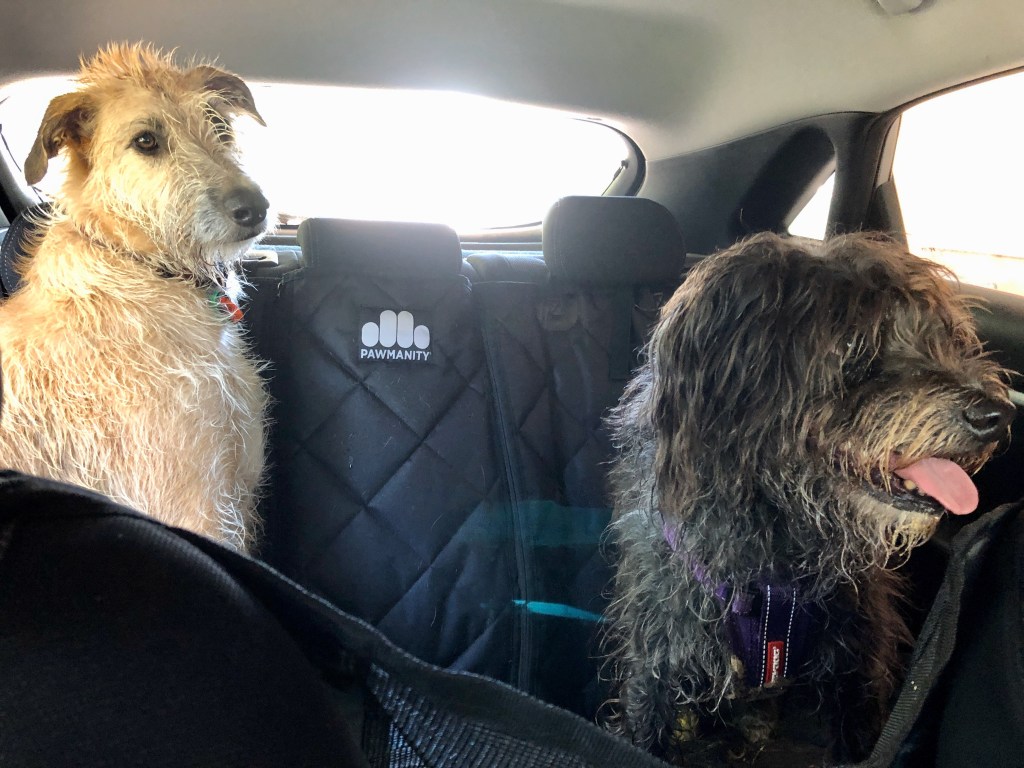
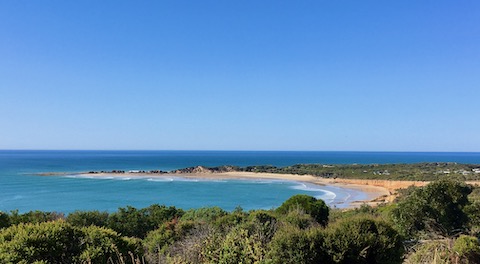
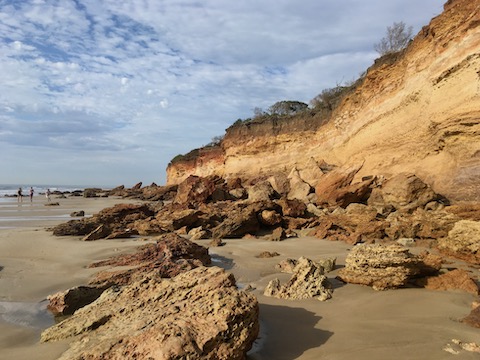
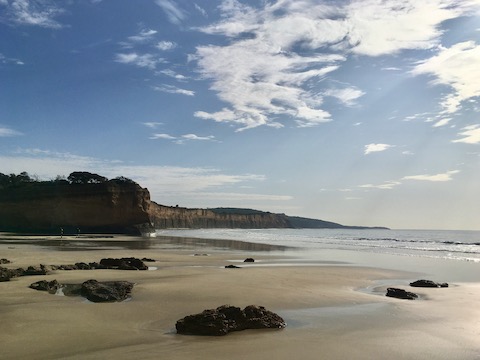
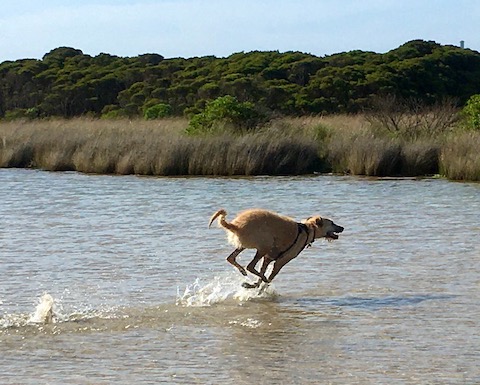
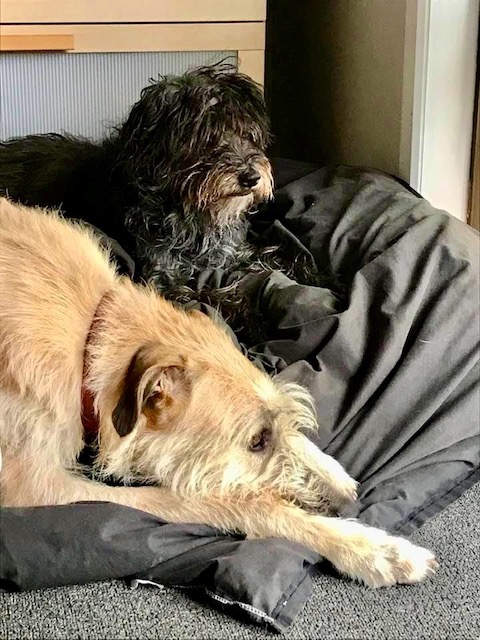
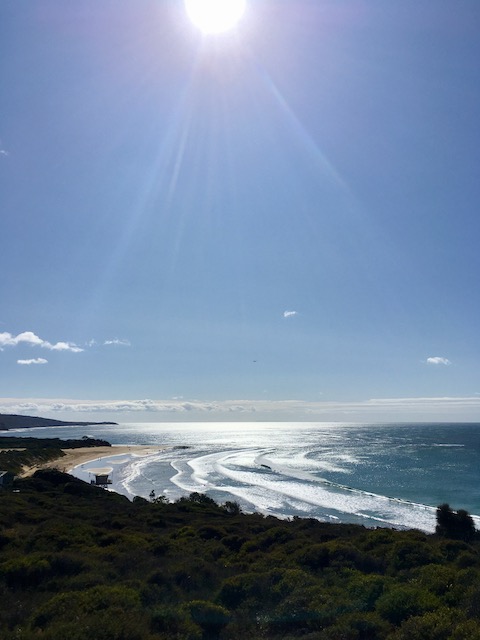
I had a week off last week and went surfing with some friends and a couple of hounds. It was also an intentional week off from writing, so I prepared last weeks blog post in advance and wrote this one after I got home. Having subscribed to a ‘write every day,’ or at lease most days philosophy for the last four years, it was an interesting exercise.
Point Roadknight
Of course there is a good reason for writing every day. The practice, like developing an exercise routine, drives momentum, improves your writing technique and keeps you connected to the story you are working on. The flip side is that stopping (like stopping exercise) makes me worry I may lose my writing muscle and struggle to get back into it. It’s a bizarre bind. When I’m writing I often worry about the other things, like domestic chores, that I should be doing, yet when I’m not writing I worry that I’m not – in case I lose momentum. Despite my contrary feelings, the week off was refreshing and fun.
Main beach
Main beach
Anglesea is about 115 kilometres west of Melbourne at the northern end of the Great Ocean Road on the Anglesea River. It has a resident population of about 2,500 people and retains the feel of a sleepy village. We stayed at a house close to a bushland reserve and the local golf course which is home to a mob of kangaroos. It was quite lovely to hear the thud of kangaroos hopping through the garden in the night and to be woken by early morning bird calls each day.
Who’s got the ball?
The locale is a great spot to get away and relax, walk parts of the 44km coastal walk or through the beautiful wetlands at the head of the river, surf the long rolling waves, eat fresh fish and produce from one of the many local farmers markets, or simply read a book and gaze out over the bushland. And I did all of those things.
Yippee!
One day a friend who is the chef at a local cafe dropped by with fresh caught tuna which was delicious barbequed and served with fresh salads and overcooked potatoe chips. On another night we ate at Captain Moonlite, an eatery jutting out over the main beach in the surf lifesaving club restaurant that serves up coastal views and a fresh modern seaside inspired menu that is updated daily. A must for a night out in Anglesea.
Rest time
One afternoon we made the half hour drive to Lorne along the Great Ocean Road. It’s a drive that makes you realise just how beautiful the Australian coastline is – who needs Greece! Lorne is home to an old Art Deco theatre built in 1937 to cater to tourism after the completion of the Great Ocean Road. The cinema has terrazzo floors and is one of the few single screen theatres left in Australia. We saw the movie Little Women, which I enjoyed but found a bit long. The theatre is worth a visit, just remember to take cash as there’s no credit card facilities.
Raining Roo
The complete change of scenery felt much longer than a week and I feel quite refreshed. I’ll start to get back into the swing of writing this week and expect to get my manuscript assessment back soon so I can make what changes I need to, start querying in earnest and get on with my next book, which cogitated quietly in the background while I was away.
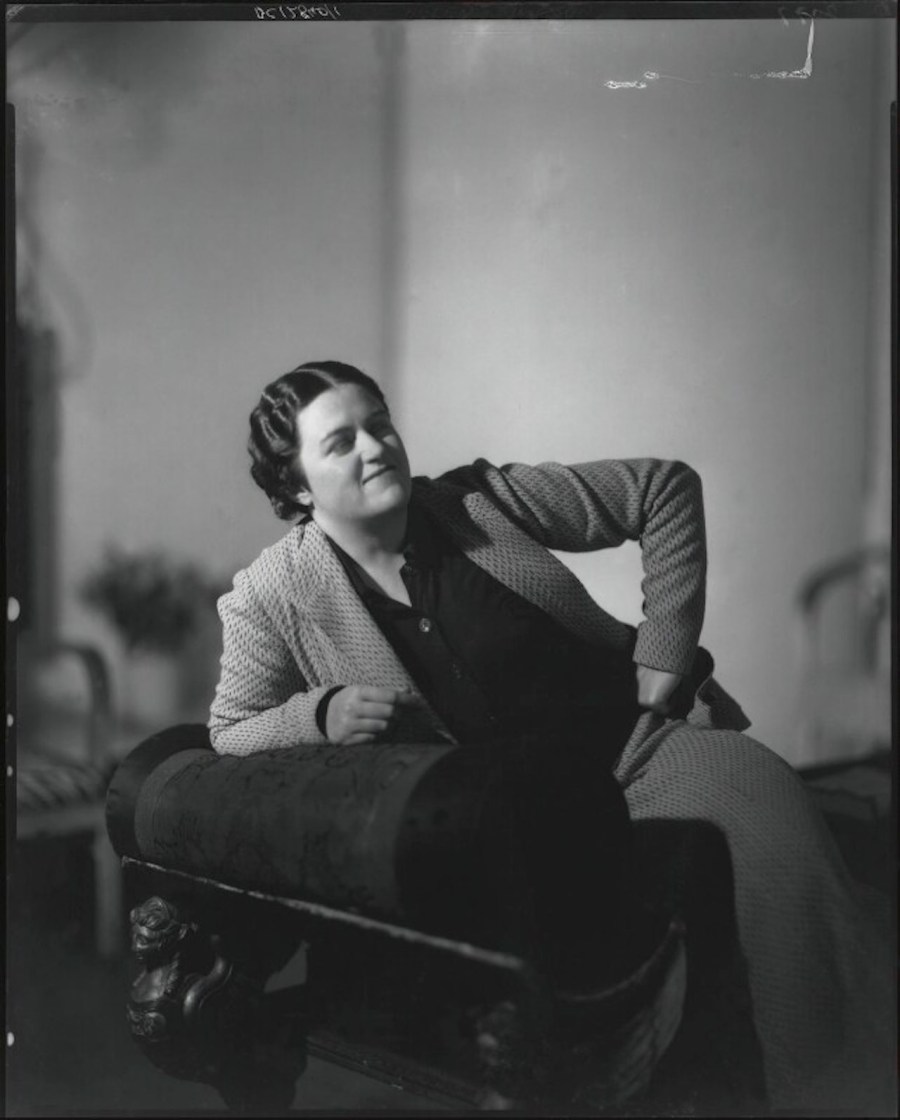
Australian born of French heritage, Helen de Guerry Simpson (1897-1940) achieved much in her relatively short life. Simpson moved to England as a teenager and was educated at Oxford where she studied music. Her education was interrupted by the war, and in 1917 she joined the Women’s Royal Naval Services to work as an interpreter and decoder, unscrambling secret messages for the British Admiralty.
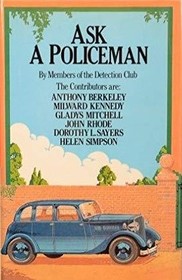
Simpson met and became close friends with another female crime writer, Dorothy L. Sayers in London. Both women were early members of the Detection Club along with other well known British detective writers like Agatha Christie. Sayers contributed to two of the Detection Club’s round-robin works The Floating Admiral (1931) and Ask a Policeman (1933) and the creative non-fiction The Anatomy of Murder (1936).
Do you promise that your detectives shall well and truly detect the crimes presented to them using those wits which it may please you to bestow upon them and not placing reliance on nor making use of Divine Revelation, Feminine Intuition, Mumbo Jumbo, Jiggery-Pokery, Coincidence, or Act of God?
Oath of the Detective Club
Simpson was a woman with dynamic energy and broad interests. She was known to be a good fencer, an accomplished horsewoman, and a student of witchcraft. She played the flute and piano and was an excellent cook and wine maker using ancient recipes to make her brews which she stored in the cellars under her London house. She also worked as a radio broadcaster, a playwright and ran unsuccessfully as a Liberal candidate on the Isle of Wight in 1938.
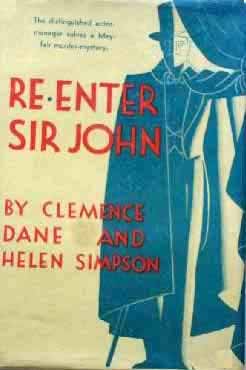
Simpson was a versatile writer, publishing poetry, writing plays, short stories, crime fiction, historical fiction and historical biography and non-fiction. Her first book, Aquittal (1925), was written in five weeks as the result of a bet. Five of her novels were mysteries, three of which were written in collaboration with English novelist and playwright Clemence Dane (also known as Winifred Ashton) whom Simpson named her own daughter after. The authors first collaborative work was Enter Sir John (1928), followed by Printer’s Devil (1930) and Re-Enter Sir John (1932) set in the English theatre world with protagonist, amateur sleuth and actor Sir John. During this period Simpson also wrote the dark political novel Vantage Striker (1931).
Simpson won the James Tait Black Memorial Prize for her 1932 novel Boomerang which was her first big success. Two of Simpsons novels and one collaboration were turned into movies. Enter Sir John (1929), written with Clemence Dane, was filmed as Murder! (1930) by Alfred Hitchcock; Under Capricorn (1937) set in NSW was turned to film by Alfred Hitchcock in 1949 and starred Ingrid Bergman and Michael Wilding; and Saraband for Dead Lovers (1935) was filmed in 1948.
Simpson died age 42 in October 1940 after a short illness.
Bibliography
Novels: Acquittal (1925) Cups, Wands and Swords (1927) The Desolate House (1929) Enter Sir John (1929)(with Clemence Dane)-filmed as Murder! (1930) by Alfred Hitchcock Printer’s Devil (1930)(with Clemence Dane) Vantage Striker (1931) Re-enter Sir John (1932)(with Clemence Dane) Boomerang (1932), winner of the James Tait Black Memorial Prize The Woman on the Beast (1933) Saraband for Dead Lovers (1935, produced as a film) The Female Felon (1935) Under Capricorn (1937, produced as a film in 1949) A Woman Among Wild Men (1938)(with Clemence Dane) Maid No More (1940)
Biographies: The Spanish Marriage (1933)(with Clemence Dane) Henry VIII (1934)(with Clemence Dane)
Collections: Philosophies in Little (1921) The Baseless Fabric (1925) Short stories Mumbudget (1928) short fairy stories for children Heartsease and Honesty: Being the Pastimes of the Sieur de Grammont (1935). Translation from the French
Drama: Masks (1921) A Man of His Time (1923) Pan in Pimlico, collected in Four One Act Plays, edited by AP Herbert (1923) The Women’s Comedy (1926) Gooseberry Fool (1929), with Clemence Dane Oxford Preserved (1930), with music by Richard Addinsell
Non-fiction: The Waiting City: Paris 1782-1788 (1933), an abridged translation of Le Tableau de Paris by Louis-Sebastien Mercier Has Russia Hoaxed the Worker?. Billings Gazette, 15 January 1933 What Communism Does to Women. Los Angeles Times, 29 January 1933 The Happy Housewife (1934) The Witch Unbound. Collected in The Boat Train (1934), edited by Mary Agnes Hamilton What’s Wrong with Our Hospitals?. Time and Tide, 1934 The Female Felon (1935)
Short fiction: [Title unknown]. Nash’s Magazine, December 1928 My Daughter’s Daughter. Sphere, 1 December 1929 London in June. Sphere, 14 June 1930 Death Versus Debt. Broadcast as a reading by Simpson. BBC National Service, 29 June 1934 Puss in Boots. Collected in The Fairies Return (1934) No Jewel Is Like Rosalind (1938). Broadcast as a reading by Simpson on the BBC (1938)
Translation: A selection from Louis-Sebastian Mercier’s Le Tableau de Paris under the title ‘The Waiting City’ (1933).
Deep down in our bones we must know – we must know that nothing we do is done in isolation. Cause and effect: how did it get so noisy in between?
Into the Woods
It’s hard not to talk about the climate and weather when it’s so in your face, and you spend a significant amount of your spare time cleaning up after it. We had a hailstorm with the ferocity of a tempest last weekend. One moment I was in the vegetable garden doing a bit of weeding, the next I was running for cover as hailstones the size of golf balls were hurled from the sky. Water tanks overflowed, gutters strained under the weight of the ice, paths washed away and torrents of water formed creeks where none had run before.
It was another of those moments, increasing in their frequency, where I marvelled at the awe inspiring ferocity of nature as she strives to demonstrate for humanity that climate change is real. Meanwhile many of our political leaders still grasp desperately to denial and the power bestowed on them by lobbyists, the powerful elites in the mining industry, and the likes of the Murdoch Press.
…those that have the power to change the situation are too scared to do anything in case they lose that power.
Into the Woods
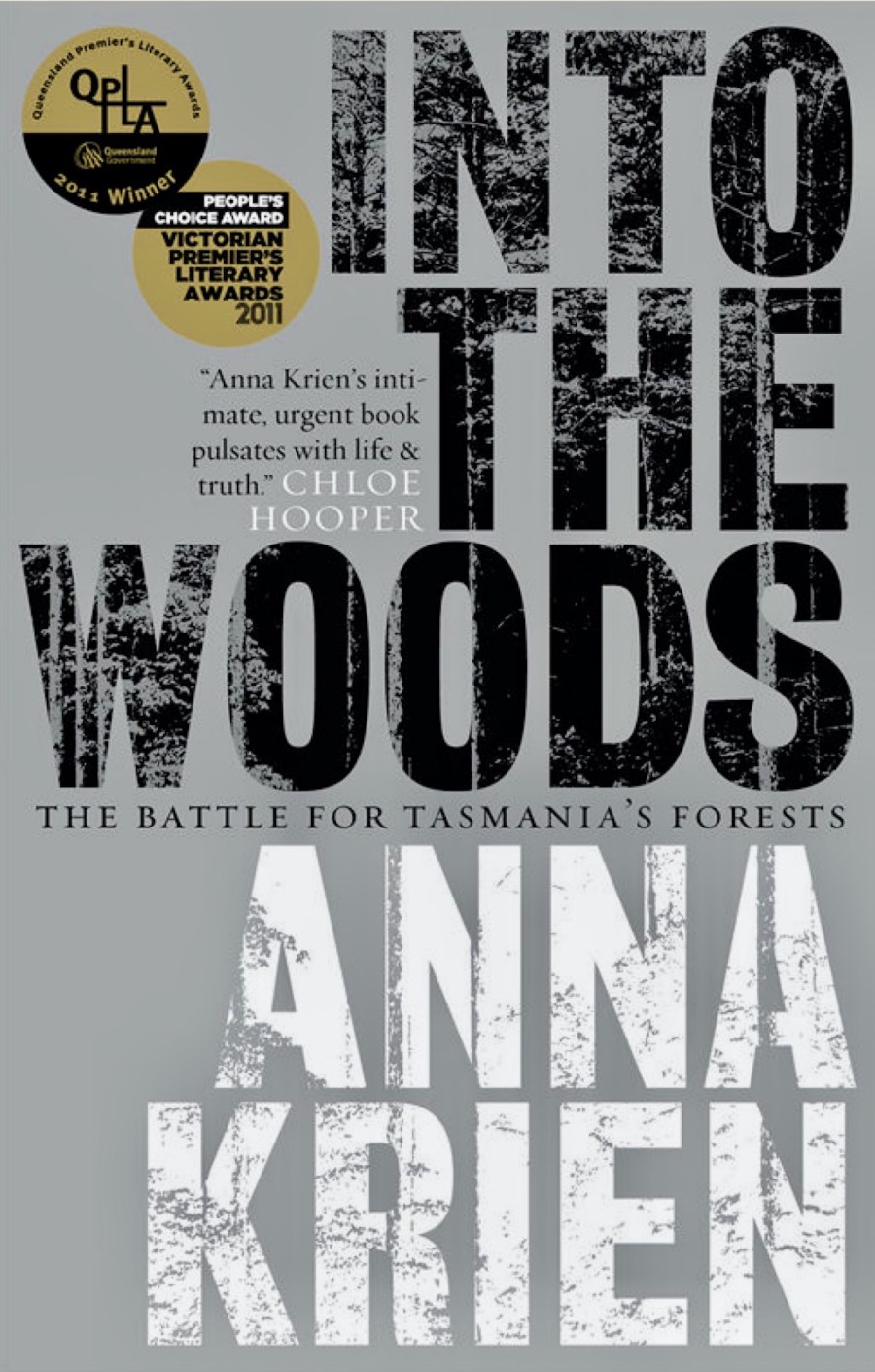
I am half way through reading Anna Krien’s beautifully written narrative non-fiction book Into the Woods about the struggle over Tasmania’s wilderness areas, the people who exploit them and the people who try and protect them. Krien’s work is an exploration of the polarised and conflicting convictions, motives, emotions, power dynamics and allegiances of those involved in the struggles over the forests.
On the rear window of almost half the cars I see, there are stickers in eternal argument with on another. ‘Tasmania: The Corrupt State’ and ’Save the Styx’ versus ‘Greens tell lies,’ ‘Greens Cost Jobs’ or simply ‘Green Scum’ – slightly tamer versions of older stickers that read ‘Keep Warm This Winter: Burn a Greenie.’ It is said each glut of car stickers in Tasmania signals a new chapter in this intense and deeply personal debate that has been going for forty years.
Into the Woods
Krien speaks to everyone on her investigative search for information and understanding: activists, greenies, loggers, politicians, resident citizens. The only obviously absent voice, because they refused to speak to her, is Gunns who hold the economic monopoly over the logging and wood chipping industry in the state.
The UN’s Intergovernmental Panel on Climate Change estimates that deforestation and forest degradation contribute 17% of the worlds greenhouse gas emissions
Into the Woods
Reading Into the Woods has echoes of the debates that happen all over the world in places where natural heritage and human greed come into conflict. Big companies chasing profits by selling products for humanities insatiable appetite for consumption of oil, coal, gas, timber, minerals, and land. Big public companies motivated by shareholder profits that have significant influence over the politicians they lobby and fund, stand in opposition to the passionate defence of forests and rivers and oceans by activists and environmentalists, with politicians riling the camps to maintain conflict in order to further their own agendas. Because conflict demands taking sides and creating allegiances, and allegiance translates into votes.
The activists tread a fine line between drawing attention to threatened areas and provoking resentment that can ultimately backfire against the forest.
Into the Woods
We are all complicit in the supply chain that leads to the destruction of our environment. We influence it in the day to day decisions we make about consumption, by how we vote, what we will tolerate, and what actions we are prepared to take to preserve the natural environment that sustains us. Krien’s work meditates on the world we have made and the complexity of the choices we must make. Into the Woods has astonishing resonance for the current re-ignition of the climate change debate in Australia as bushfires continue to rage across the country.
Most people travelling through Tasmania will never know of the long-running game of hide-and-seek taking place in the labyrinth of logging roads beyond the bitumen.
Into the Woods
It is often not until something impacts us in a direct and personal way that we take notice. This summer it seems that Australia is getting a taste of the future. It is an experience that has bought the issue of climate change into the fore again, while politicians of the day continue to try and smooth the way for them to get back to doing very little about it.
If anything there appears to be an indignant kind of mateship here, a loyalty that precludes empathy
Into the Woods
As I have been reading Into the Woods and Krien’s struggle to understand Tasmania’s relationship with the wilderness I had been pondering our current governments stance on climate change. Is it some kind of misinformed ideology? Religious beliefs? Naivety? Ignorance? Shape-shifting party power dynamics that mean being bold would result in loss of power, possibly being knifed by your own colleagues with the help of the Murdoch Press?
It doesn’t matter if you’re a logger or a greenie,’ she says, ‘it’s the fact that our government thinks its electorate are a bunch of dimwits.’
Into the Woods
The rhetoric about maintaining the coal industry is about jobs, but I am reminded of a section in Into the Woods where Krien notes the primary argument for logging in Tasmania was jobs. Then she goes on to write that in reality machines may be a bigger threat to timber jobs than ‘any greenie’. I suspect the same applies to the coal industry, which is increasingly automated. Then I saw a piece of Michael West’s investigative journalism called Dirty Power made for Greenpeace. It’s a social network analysis of connections between the Coalition and the Coal Industry, and is fascinating viewing. After seeing it I concluded the primary motivations to maintain the status quo must be a particular blend of allegiances, greed and power.
Standing on a lookout with the maps spread out around us, I can imagine how easily deals might be done in boardrooms, where wilderness is reduced to abstract numbers of hectares and its fate sealed with a handshake.
Into the Woods
While Krien was writing her book, I was studying climate change at university; reading Thoreau, studying bushfire behaviour with Kevin Tolhorst, and reading documents like the Intergovernmental Panels on Climate Change reports predicting would happen without action to reduce greenhouse emissions. I am sad to say it all appears to be starting to come to fruition in a much more obvious way.
Why Tasmania?’ Barry Chipman once asked me. He’s right–in the greater scheme of things, the island is nothing but a drop in the ocean. But its story is universal–and what goes on in Tasmania goes on in the mainland, goes on in the Pacific islands, in other continents, until it comes straight back over the ice to Tasmania again. You can follow its story like a ball of wool, get tangled in it and unravel it.
Into the Woods
Once the summer is over and the fires are out, when the smoke has cleared and the first green shoots start to appear in the charred remains of Australia’s forests I can’t help wonder what will happen. Will we all breathe out a sigh and go back to doing what we’ve always done as our memory of what happened fades? Or will our collective shock at what we have done to our planet, and its consequences maintain enough rage to motivate citizens to drive our coal loving, climate change denying political leaders and their allies to take steps to make the changes we need to at least try to get a different outcome?
Some scientists are beginning to describe the modern geological era as the Anthropocene, the sixth in a series of mass extinctions, all said to be caused by extreme phenomena, in this case the harmful activities of humans. Perhaps even more poignant is biologist Edward O. Wilson’s description of the period that will follow. Wilson says it will be ‘the Age of Loneliness’–a planet inhabited by us and not much else. In his version of the future there is no apocalypse, no doom, no gates of hell, no wrath of god or mass hysteria, only sadness. I wonder if perhaps the Age of Loneliness has already begun, its effects far more complicated than we realise.
Into the Woods
I highly recommend reading Into the Woods, for its insights into Tasmania, the politics of forestry, its resonance with the global debate about climate change and for the beauty of its writing.
I’ve been on Facebook for years, but never really understood the point of Twitter. The social media platform seemed to me like a chaotic crowd of people shouting short sentences at each other. A couple of years into writing my book and listening to writerly podcasts advising on the importance of an ‘author platform’ I decided I needed to do something about it, and in January 2018 I set up this website and joined Twitter.
As I began to understand how Twitter worked, I began to find value in it because there are a lot of writers and other creatives on the platform. Australian writers (#Auswrites) connect up and play writing prompt games, ‘meet’ in a 6am writers group, share successes and disappointments, favourite books and authors. Some even meet up in real life for coffee/brunch occasionally. A global writers group (#writerscommunity) provides similar connections across the world. #PitMad is a regular pitch party where writers can tweet a 280-character pitch for their unpublished manuscripts and agents and editors make requests by liking or favoriting the tweeted pitch. And the list goes on…twitter writers are a friendly, engaging and welcoming bunch.
Twitter is also a place for writers to do good for the community. In early January a small group of YA and Children’s authors got together and organised #AuthorsForFireys, a twitter auction designed to channel funds to firefighters and agencies providing relief for those impacted by the Australian bushfires. Over 500 creatives participated in Authors For Fireys, a week long auction of signed books, illustrations, unique experiences, one-off opportunities and writers’ services. Authors from publishing houses like Penguin Random House, Allen and Unwin, and Harper Collins got in on the act. You could bid to have Clementine Ford cook you dinner, to sip champagne with Annabelle Crab and Leigh Sales after Chat10Looks3, get your hands on a leather bound edition of Cheryl Strayed’s Wild or offerings from a diversity of people from Nick Cave to Kevin Rudd to Christos Tsiolkas, who isn’t even on Twitter. My personal favourite was the $5,000 bid by Trades Hall for a personalised poem by Maxine Beneba Clarke – no pressure there!
I bid on a number of items and was lucky enough to end up with a manuscript assessment from Dan Hanks, a professional editor in the UK. All donations went to fire services or disaster recovery appeals across the country and as of yesterday the initiative had raised AUD225k and counting, and lifted the spirits of all those who participated.
This post continues my Grand Dames of Crime series exploring some of the best women crime writers from history.
American mystery writer Dorothy Salisbury Davis (1916-2014) was born in Chicago and adopted out to a tenant dairy farmer and his Irish immigrant wife. Davis grew up in Illinois and Wisconsin, only finding out she was adopted in adulthood. She studied English and History, graduated in 1938 in the middle of the Great Depression and secured a job as a magician’s assistant, an experience that emerged in her novels which often included a seedy magician. Eventually she moved on from magic after finding a job in public relations and become a magazine editor. She married character actor Harry Davis (The Fortune Cookie, America America) in 1946 and they moved to New York where she began to write.
We reveal more of ourselves in the lies we tell than we do when we try to tell the truth.
A Death in the Life
Her first novel, the Judas Cat was published in 1949. The story opens with the mysterious death of a recluse in a small town, his bloody demise witnessed only by his cat. Davis often murdered people and animals in the first pages of her books, but her tautly crafted stories generally contained little violence otherwise, though they were not cosy mysteries. The author relied on plots driven by psychological suspense and portrayed complex characters and strong women.
Flattery makes fools of the best of us
A Death in the Life
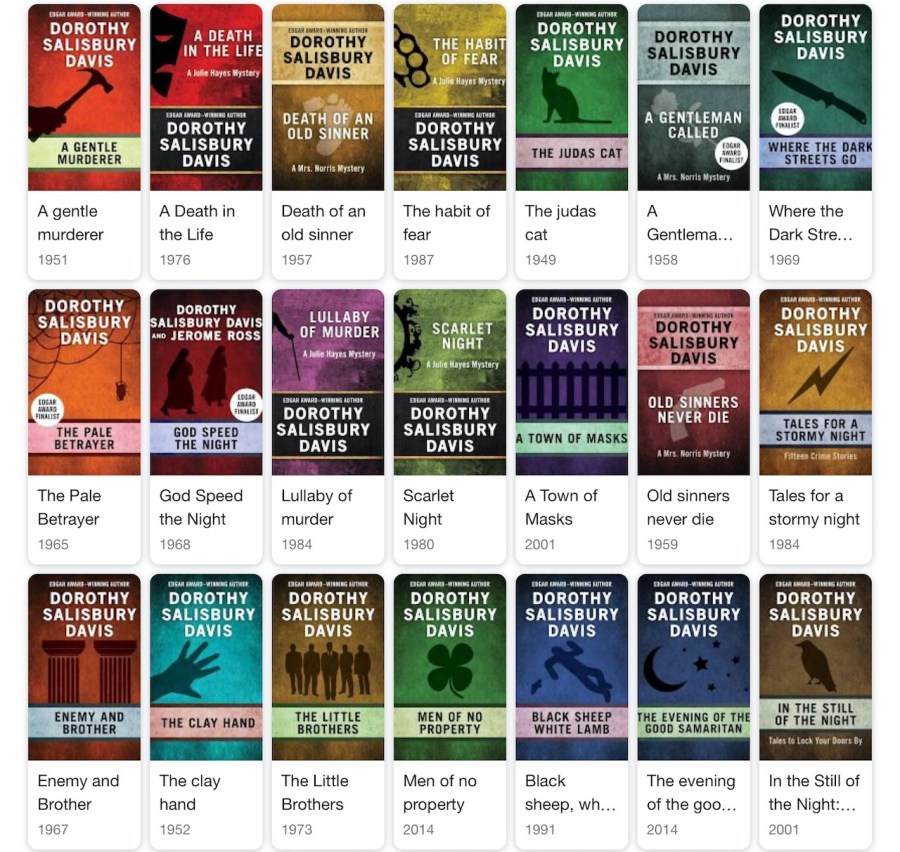
A Gentle Murderer, Davis’s third novel published in 1951 was selected to be included in the Haycraft-Queen Cornerstones of Crime as one the 125 best mysteries ever written. She was nominated eight times for the renowned Edgar Award for best novel, and served as the president of the Mystery Writers of America in 1956. In 1985 Davis was awarded the Mystery Writers of America Grand Master award for her body of work, and was one of the founding members of Sisters in Crime along with Sara Paretsky in 1987, an organisation dedicated to supporting women who write crime fiction. In 1989, she earned the Lifetime Achievement Award at Bouchercon, and in 1994, Malice Domestic named her their Guest of Honor.
Davis wrote twenty novels and more than thirty short stories during her five decade career. Apart from the Mrs Norris series (three books) and the Julie Hayes mysteries (four books), Davis novels were stand alone, which along with her mysteries containing little violence made her unusual in the world of crime fiction. Most of her work was in the mystery genre, though she also wrote a number of historical fiction novels including Men of No Property (1956), set in Ireland during the potato famine, The Evening of the Good Samaritan (1962) set during and after the Second World War, and God Speed Night (1968), a suspense about Nazi resistance during the second world war.
Beware of feelings, Father. They are the biggest liars in us. They make truth what we want it to be.
Where the Dark Streets Go
After her husband Harry died in 1993, Davis stopped writing novels but continued to produce short stories. The last one titled Emily was written when she was 91 for the 2009 Mystery Writers of America anthology to celebrate the 200th anniversary of the birth of Edgar Allan Poe. In 2013, the year before her death, Open Road Media reprinted twenty two of her novels including her most commercially successful novel A Gentle Murderer, first published in 1951 about the psychological disintegration of the young murderer of women. Davis died in 2014 aged 98.
Happy New Year! This is not a writing post. It is another rant about some of the things I thought about whilst enjoying a beautiful evening in a bushland setting on the Yarra River on new year’s eve. Feel free to turn away, normal writing programming will resume next week.
I had mixed feelings about celebrating new year’s eve when catastrophic bushfires were raging across the country destroying some of Australia’s most precious bushland, decimating wildlife populations and ravaging human communities in their path. Despite the valiant efforts of underfunded volunteer fire fighters, Australia’s east coast has been burning since September 2019. Many of the fires remain out of control and will likely continue that way throughout the summer unless significant rain falls on the fire grounds.
Canberra was rated to have the worst air quality in the world on Wednesday due to smoke, killing one elderly woman on Thursday. Meanwhile Scotty from Marketing (aka PM Scott Morrison) kept up his ‘nothing new to see here’ stance over champagne at Kirribilli house and entertaining the Australian and New Zealand cricket teams. On Thursday he delivered a press conference, and was on the back foot.
Of course Scotty from Marketing’s claims that climate change doesn’t cause bushfires, and Australia has always had droughts are technically correct, but incomplete and misleading. Suggesting the best way to respond to natural disasters is by ‘doing what we’ve always done’ sounds like a commitment to kick back and allow the problem to perpetuate. And saying Australia cutting emissions will make no difference globally is shirking responsibility. I bet he’s thanking his lucky stars that the millions of tonnes of carbon dioxide released by the current fires don’t count toward the countries emissions footprint or he’d have to do a lot more creative accounting than he is already to meet our Paris targets..
Climate variability does influence fire and the changes we are experiencing will make fire management more complicated because it alters ecosystems function. Fire is a physiochemical process that can be represented by a simple equation: fuel + oxygen + heat. Remove one from the equation and fire cannot take hold, turn up the volume of the elements and the frequency and intensity of bushfires increases.
Climate change contributes to creating the perfect weather conditions for dangerous bushfires. CO2 concentration impacts the amount and composition of fuel loads because it alters the growth rate of plants, and thus the frequency and intensity of fires when they occur. Increased and more extreme temperatures reduce humidity and moisture content, compounding drought conditions caused by diminished rainfall. Drier conditions bring vegetation closer to its ignition point and ensures it burns hotter and faster once ignited. Extended drought reduces fires intervals and the wild winds caused by changes in air pressure create perfect conditions to drive wildfires to their most dangerous conflations. Wildfires themselves then contribute to perpetuating climate change because they release a lot of greenhouse gas.
We are fast heading toward a new normal of longer, hotter, drier fire seasons and more intense fires. In Gippsland, rainforest that has never burnt are being engulfed. It’s likely that some plant and animal species may not recover because available habitats for some organisms will be diminished and shorter fire intervals may not allow time for even fire adapted plant species to mature. The result could be local extinctions due to an absence of seeds.
Contemplate an entangled bank, clothed with many plants of many kinds, with birds singing on the bushes, with various insects flitting about, and with worms crawling through the damp earth…reflect that these elaborately constructed forms, so different from each other, and dependent on each other in so complex a manner, have all been produced by laws acting around us.
Darwin, The Origin of Species
We do not survive in isolation from our environment. We are like the frog, who when placed in a pan of tepid water that is slowly bought to boil, does not perceive the danger of its situation, does not attempt to jump out and gets cooked. We are blind to our own growing vulnerability. Despite the scientific evidence, the Australian government has no credible policies to address climate change – either to reduce our greenhouse gas pollution and transition to clean energy, or to invest in disaster management and adaptation to build resilience to cope with the new normal. Thoughts and prayers and patience will not solve this wicked problem and I suspect history will reflect poorly on many of the current world leaders.
In the absence of political leadership we place our hopes in the likes of Swedish teenager Greta Thunberg to remind us of our collective failings and inspire action by uniting young and old to tackle contemporary environmental issue. Scott called for patience on Thursday, but it’s time to stop being patient and force the hand of the global political elite who prefer denial and maintenance of their ties with fossil fuel industries to carefully considered policies to a more sustainable way of living. My hope is that this bushfire season will spur more citizens into action. That we demand our governments take climate change seriously, start to think long term about minimising our contribution to emissions and begin to make the structural adjustments we need to build climate resilient communities.
I trust everyone is having a pleasant festive season. The timing of Christmas in the middle of the week seems to have thrown significant confusion my way. For some reason I didn’t realise it was Friday yesterday and forgot to do all the things I might usually do on a Friday, including posting a blog post, so apologies for being a day late. Last week marked a milestone for this blog – my 100th post, so it would be remiss of me to fail to post this week. Better late than never…
This morning I did research and preparation for querying my manuscript as I want to be prepared to get started once all the beta reader feedback is in and incorporated. The querying process will involve a bit of administration and organisation, so I set up a spreadsheet to help me, and who doesn’t love a spreadsheet I hear you ask…? Said spreadsheet has three tabs – one for literary agents, one for publishers and one for manuscripts writing prizes – all avenues that could lead to publishing.
Having ummed and ahhed about the agented or not agented approach to publishing, I have decided that I will start with querying some agents. The decision to try agents first was driven in part by the fact that I work almost full-time and want to use my meagre spare time for writing, rather than focussing on the business end of publishing. In addition there are obvious benefits in having someone who really knows the industry going in to bat for you and taking care of contracts and guiding you through the process.
I reaseached agents, publishers and competitions and picked about ten of each to start with. My spreadsheet is a place to keep a summary of them – names, websites, submission requirements, when they are open for submission, what their estimated turn around times are, whether they accept submissions in my genre, and if they have other authors or novels that are comparable to mine.
My go to places for this exercise, and to find information about publishing have been:
All three websites have great advice on the publishing industry and getting published. I also made use of the course materials from a couple of Australian Writers Centre online course which I have reviewed in previous blogs – Inside Publishing and Pitch Your Novel.
Once my spreadsheet was set up I identified two agents who will be open to queries in late January and prepared submission packages, taking care to ensure what I send covers all their submission requirements. I now have a good start to a plan of attack to give myself the best chance of getting my manuscript published in 2020. I’m expecting a lot of this process to be a waiting game, so I will also keep working on my next manuscript, the second in the series. The added benefit of starting another novel is that if I get any nibbles with my querying and am asked if I am working on anything else, I can hand on heart say yes.
I was going to do a bookish Christmas post, but have concluded that Christmas is a bit overrated. Besides, a few things have got my goat this week, so a pre-Christmas rant is in order.
On a day of 44 degrees in Melbourne, when half the coastline of the country is ablaze, and NSW is in a state of emergency, my dystopian fantasy of our future world is right on my doorstep and plastered all over the media. Meanwhile, our political leaders continue to bury their heads in the sand about climate change and the environment. I use the term leader loosely as it’s an attribute I feel is sorely lacking among our current political class. The best Scott Morrison seems prepared to offer is thoughts and prayers in its place.
You may be wondering why a fiction writer is having a rant about politics on a blog about writing? As it happens the crime fiction manuscript that I will start querying in the new year has political hypocrisy as one of its central themes, and it is something I am both fascinated and repelled by in the real world as well.
Morrison has gone to some lengths to avoid engaging in discussion about climate change and has pushed his perverse nothing to see here stance while communities are raised, flora and fauna are decimated, and city populations choke on the smoke. Earlier this month the man determined holding a press conference about his controversial Religious Freedoms Bills was more important than showing leadership about the bushfires. The first version of the bills had been heavily criticised by faith and secular groups alike, and I can tell you the second version is no better.
While Sydneysiders were gasping on smoke, Morrison was touting a package of legislation with potential to significantly change Australia. It may prevent many individuals accessing services such as medical, education, employment, aged care, and some commercial services on the basis of their otherness. Not to mention the Isreal Falau clause about how we can interact on social media. It is the most hateful piece of legislation to be tabled in some time.
I find it curious that institutions that were called out on poor governance, lack of transparency, and accountability in the Royal Commission into Institutional Responses to Child Sexual Abuse should now be deemed in need of the types of protections that will enable them to be even more closed and secretive by excluding anyone they view as other from their ranks. It strikes me as a recipe for more festering problems and institutional failure.
The religious freedoms debate started as a knee-jerk reaction to a small group of ultra conservatives railing against a secular state and afraid that allowing gays to marry would cause the sky to fall. After years of preventing progress in this area these conservatives were over ruled by the Australian public who voted in favour of same sex marriage. The religious right were offered a review to assess the state of religious liberty in Australia by the government as a consolation prize for the postal vote on same sex marriage to keep them sweet. Phillip Ruddock was tasked with overseeing the review. The first airing of the reviews outcomes was in the form of leaks of key findings around the time of Malcolm Turnbull’s demise. The leaks exposed the fact existing law already exempted religious groups from discrimination laws and enabled them to discriminate against teachers and students. They could sack teachers and expel students of diverse sexualities already if they chose to – it caused a moment of outrage, that many may have forgotten.
Subsequently Attorney-General Christian Porter was tasked with turning Ruddock’s review into legislation. It took an extraordinarily long time because ultra conservatives did not just want anti-discrimination laws for religious groups, they wanted a positive right to discriminate. Any reasonable person would agree that an individual should not be discriminated against on the basis of their faith, but what the religious right wanted was a weapon to strike out at people they deemed unworthy, like the LGBTI community, not just a shield to protect their faith. The laws are not about freedom to speak ones religion, but freedom for institutions to hire, fire, deny service, insult and humiliate based on an individuals personal characteristics. The cynic in me can’t help thinking Morrison may have chosen that moment on 10th December to announce the bills, with Australia burning in the background, to invoke some kind of symbolic fire and brimstone moment. But in reality who knows what Morrison really thinks about anything (he abstained from voting on same sex marriage)? He appears to be a man who will go wherever the favourable winds of power blow.
On the same day as focussing on a bill few deemed necessary, Morrison insulted volunteer firefighters by downplaying their work. Two CFA volunteers died fighting fires yesterday, and three more were injured. I wonder if Scott still thinks they really want to be doing this job?
…they’re tired, but they also want to be out there defending their communities…
Scott Morrison
All the volunteers were, foregoing income and time with their families to risk their lives fighting fires with often substandard equipment, yet Morrison was more interested in announcing legislation that has never been needed, and has the potential to create great divisions in society.
The wife of a firefighter wrote a heartfelt response to Morrison’s insensitive comments about our volunteer fire fighters that touched on another of Morrison’s blind spots – climate change. The blog has had over 80,000 views in a week. Remember Morrison is the guy who loves coal so much, he took a piece (which had been cleaned) into parliamentin order to demonstrate his committment to a carbon-intensive economy and mock those concerned about climate change.
In November Morrison declared the bushfires had nothing to do with climate change and has been actively and publicly trying to shut down climate protesters because he doesn’t like their message, and clearly struggles to understand the science. He’s since made some concessional comments that climate change may be a factor, though I suspect that’s because he’s afraid of losing public support, he must have felt the winds changing. One wonders if he is confusing his own beliefs with science. He’s a Pentecostal. The evangelic religion emphasises the idea of the Rapture – that when it arrives, the chosen will ascend to heaven while the rest of us suffer the Tribulation – fires, floods and famines that will kill most of us, while he and his fellow chosen believers wait for the Second Coming.
Meanwhile, Scott has packed up his family and gone off on holidays. I don’t actually resent Scott having a holiday, we all need one now and then after all, but the act does expose a nasty element in his makeup and a big hypocritical black hole in the mans psyche. You might think that comment a bit harsh, but let me take you back to the Black Saturday fires that started on 7 February 2009 in Victoria.
I remember the day well as I was at home and could see the red orb thrown by the fires over the King Lake Ranges from my house. Apparently my town was spared by ten minutes and a wind change, my cousin wasn’t so lucky – her place burnt to the ground. In the aftermath, when people were looking for answers, and perhaps a few scapegoats, an ambitious young politician called Scott Morrison made an appearance on the ABC’s Q&A program and had a few things to say about the fact that Police Chief Christine Nixon left the incident room and went out to dinner that night.
“She’s clearly made a bad judgement call. That happens to people from time to time, but this was a very serious issue…I think there are very serious concerns in the community about exercising judgement, and it’s incumbent on all of us in public life to make decisions following that in the best interests of the ongoing nature of the program.”
Scott Morrison, Q&A 2010
Christine Nixon ultimately lost her job over the dinner decision. The comments then, and Morrison’s actions now, are an indication of the shallowness of the mans convictions. Ultimately he’s simply playing the politician, but his actions in recent weeks also call his judgement into questions based on his own benchmark. The image I have of Morrison lands somewhere between a crazed religious zealot determined to impose his beliefs on all of us, and Nero fiddling while Rome burns. The BBC delivered an interesting summary on Australia’s leadership failure on climate this week.
He’s not my Prime Minister, never was, never will be. I just hope the rest of Australia wakes up to his disastrous Prime Ministership soon and vote someone in capable of real leadership on the big challenges of our time.









 R L Smith