Book review: The Lamplighters by Emma Stonex

There is something about a lighthouse as a setting, with its gothic, cramped solitary creepiness, that makes the stark structure ideal for a whodunnit psychological horror.

In all my years I’ve realized there are two kinds of people. The ones who hear a creak in a dark, lonely house, and shut the windows because it must have been the wind. And the ones who hear a creak in a dark, lonely house, light a candle, and go to take a look.

In The Lamplighters, Emma Stonex’s debut novel three lighthouse keeper’s disappear in seemingly impossible circumstances. The Maiden Rock lighthouse is fifteen nautical miles southwest of Land’s End in the sea. When a boat arrives on New Year’s Eve 1972 to relieve the three men on duty, the lighthouse is empty, the door barred from the inside, the table set and the only two clocks stopped at eight forty-five. Twenty years later a writer of maritime adventure stories seeks out the wives of the lighthouse men to interview them for his book about the incident. Stonex was inspired to write The Lamp by the disappearance of the lighthouse keepers of the remote Flannan Isles in the Outer Hebrides in the early 20th century.

It felt like the more I read, the more free I was in my mind, and if you’re free in your mind, then it doesn’t matter what else is going on.

The story moves back and forth in time from before the disappearance to the present, slowly unpacking the secrets surrounding the incident and circling the truth in ever decreasing circles. Stonex drip feeds the reader, gradually pulling together the multiple threads of the story through the eyes of the six main characters, each differently impacted by the monotony and isolation of lighthouse life.

Nothing changed, in the aftermath of loss. Songs kept getting written. Books kept getting read. Wars didn’t stop…Life renewed itself, over and over, without sympathy. Time surged on in its usual rhythms, those comings and goings, beginnings and ends, sensible progressions that fixed things in place, without a thought to the whistling in the woods on the outskirts of town…

The Lamplighters is a novel with intricate plotting, well crafted characters, good tension and a mystery that will compel you to keep turning the pages.

Time gives you a bit of distance where you can look back on whatever’s happened to you and not feel all the feelings you once had; those feeling have calmed down and they’re not at the forefront of your mind in the way they are at the beginning.
Cool rocks, where geology and literature collide

The poet Sappho, known for her word play and hyperbole, is said to have written about Selene and her longing for Endymion in the early 6th century. Selene is the goddess of the moon. She fell in love with the mortal shepherd, Endymion, and drove her moon chariot across the heavens to visit her love whilst he slept.

On 14th November 2016 I was on a surfing holiday at the most eastern point of Australia, Byron Bay, and witnessed the biggest super moon in almost 70 years rise over the ocean whilst dolphins and whales swum below the cliffs. This spectacular super moon is called a perigee, the name for when the moon’s orbit is closest to the Earth giving it the illusion of being enormous. I sat on the clifftop and was inspired. The poem I wrote is called Perigee and was the result of landscape, mythology and awe colliding with my pen.

My poem and one of the photos I took at Byron were selected for publication by Cool Rock Repository for their Luna Expo. Cool Rock is an online storage facility dedicated to literary and geological junctions.

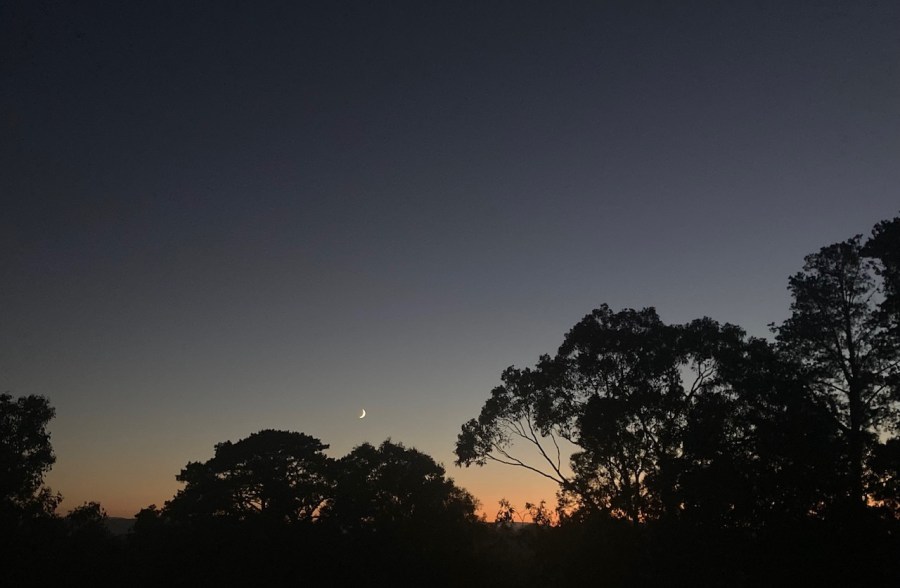
Image: Sunrise and moon, Warrandyte

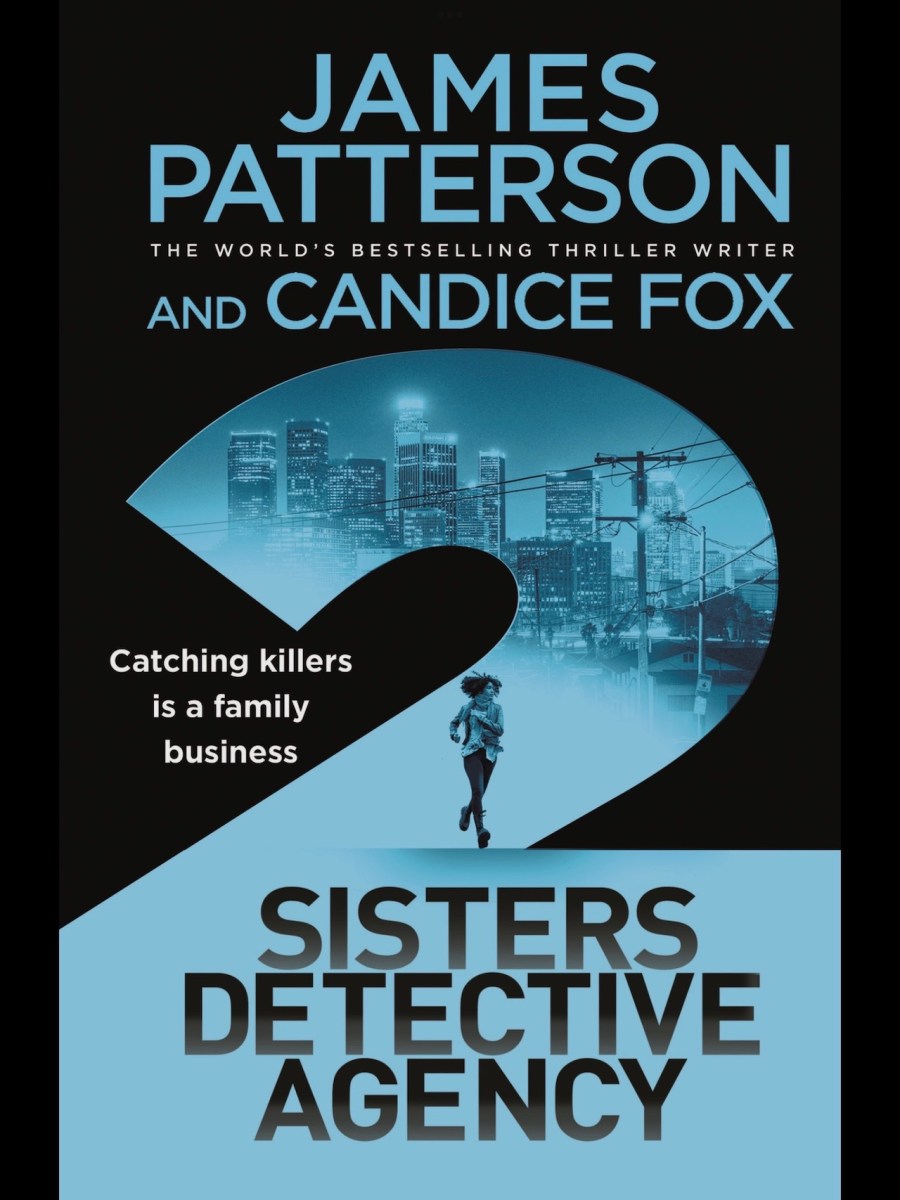
Book review: 2 Sisters Detective Agency by James Patterson, Candice Fox

Candice Fox partnered with James Patterson to write this cracker of a crime novel. The two met at a cocktail party and have worked on a few books together, most notably the Harriet Blue series. 2 Sisters Detective Agency is their latest offering, a stand alone detective thriller.

Rhonda Bird is a fabulous character. A fat, pink haired attorney who wears rock band t-shirts and spends her time helping young people on the wrong side of the law. When she gets a call advising that her estranged father, Earl, is dead and she needs to return to LA to sort out his affairs, she does so reluctantly, anticipating being landed with all his debts. What she finds are two unexpected surprises.

As big as I am – 260 pounds, some of it well-earned muscle and some of it long-maintained fat – there’s no point trying to fit in with the crowd. The pink hair was just the latest shade in a rotating kaleidoscope of colors I applied to my half shaved, wavy quiff, and I always wore rock bank shirts in the courtroom under my blazer.

Earl bequeathed Rhonda his dodgy private detective agency and his fifteen year old obnoxious, black, leggy, Instagram influencer daughter, Baby, whose existence Rhonda was unaware of. Whilst Rhonda grapples with who her father was and what to do about the brat half-sister she’s been gifted, the two women find themselves in the firing line of an angry Russian criminal cartel and an awakened ex-assassin with a lust for revenge, thanks to Earl’s dodgy operations.

As you’d expect from Candice Fox, 2 Sisters Detective Agency is jam packed with bigger than life bold characters, plenty of action and laugh out loud humour.

I’m a huge Candice fan (previous reviews here, here, here, and here), and could see her fingerprints all over this story, but she doesn’t get all the accolades as the work was a collaboration. I’ve never read James Patterson before, but will do so now as I found myself pondering whilst I read the book how they worked together. Did they write alternate chapters? Did they choose characters and write one each? Did they edit each other’s work? I imagine collaborative writing adds an interesting zing to the usually solitary process. Perhaps reading some of Patterson’s work will reveal his style and enable me to tell more easily which voice is him and which is Candice.

I started reading 2 Sisters Detective Agency the day after Melbourne’s long lockdown ended and was so captured I had to drag myself away from the story to attend to the social catch ups I’d prearranged. I almost wished lockdown had been extended for a day or so to give me the excuse to just lie on the sofa and get lost in the adventure. Highly recommended.

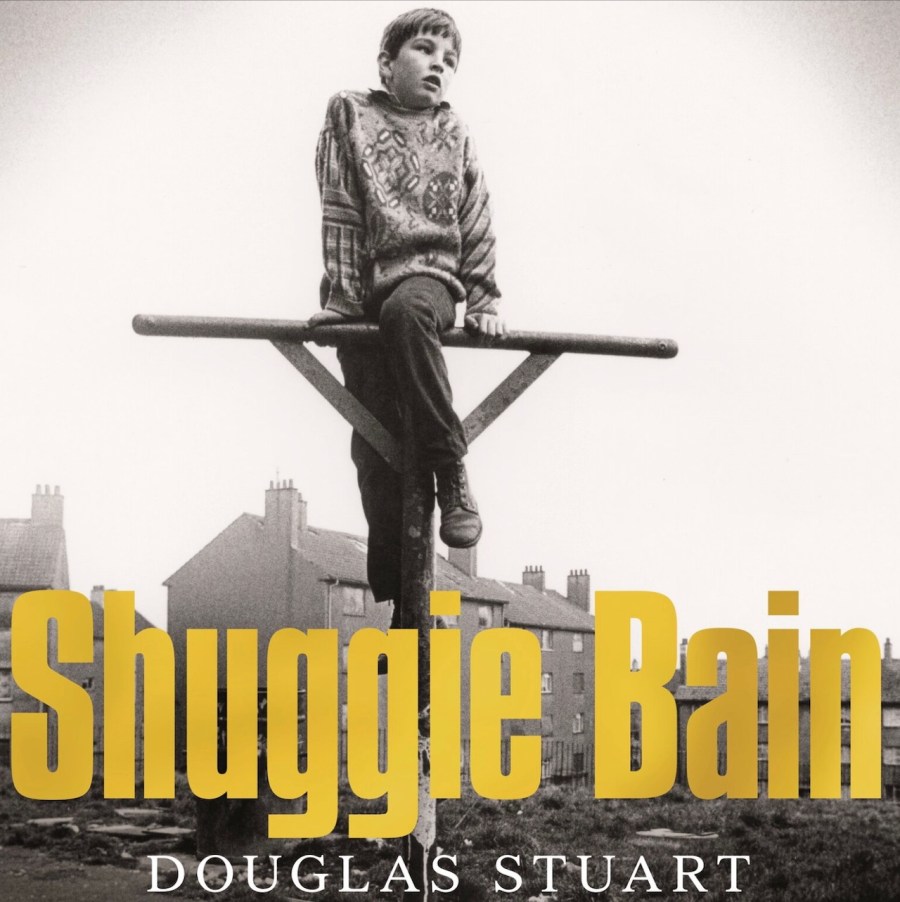
Book review: Shuggie Bain by Douglas Stuart

Beautifully sad and stark and longlisted for this years Booker Prize, Shuggie Bain is an uncensored story about poverty, addiction and abuse in Scotland in the 1980s. At sixteen Shuggie Bain lives alone in a grotty bedsit in Southern Glasgow and works at a supermarket deli. Shuggie Bain is Douglas Stuart’s debut novel and it tells the story of how Shuggie got there.

Agnes Bain lives in a high-rise council block with her second husband and three children all crammed together in her mother’s flat. Her husband is a philandering abusive taxi driver who takes advantage of her when she is at her most vulnerable and eventually abandons her.

She had loved him, and he had needed to break her completely to leave her for good. Agnes Bain was too rare a thing to let someone else love. It wouldn’t do to leave pieces of her for another man to collect and repair later.

Agnes descends further and further into poverty and addiction, the only constant her children and her heroic ability to get up every morning and face the world looking her best. Shuggie is the youngest, he does not fit the mould of Glaswegian masculinity, and finds himself as the sole carer of his mother as a young teenager in the post-industrial wasteland of a pit town.

She was no use at maths homework, and some days you could starve rather than get a hot meal from her, but Shuggie looked at her now and understood this was where she excelled. Everyday with the make-up on and her hair done, she climbed out of her grave and held her head high. When she had disgraced herself with drink, she got up the next day, put on her best coat, and faced the world. When her belly was empty and her weans were hungry, she did her hair and let the world think otherwise.

Agnes descends into addiction, failing repeatedly to save herself, or to be saved by Shuggie, a prissy, precise misfit of a kid who loves his ma. He tries repeatedly to help her but fails. He is coming of age in a Scotland that is descending into its own tragedy of unemployment, industrial collapse and recession. He is too gentle for the hostile world he lives in, but he is also strong and a survivor.

I really do not think I can live here. It smells like cabbages and batteries. It’s simply impossible.

The story has a whiff of Oliver Twist and Trainspotting in that it turns an unflinching lens on poverty, yet reading it does not cause a spiral of descent into despair because there is also love and kindness. And an endearing young boy who steals a girls My Little Pony toy because he is drawn to its pastel colouring and lush mane. You know that despite the torment and challenges of his young life, he is going to make good. Highly recommended.

Flames are not just the end, they are also the beginning. For everything that you have destroyed can be rebuilt. From your own ashes you can grow again.

Meet The Creator…poet soup

Being creative nourishes the soul and gives expression to kaleidoscopic thoughts and feelings. When imaginative motivation wanes, creatives must seek small inspirations that will bring us back to our craft.

One of my habits is to leave books of poetry scattered around the house to scoop up at random and dive into. Poetry is playful and exploratory, it can spark ideas, deepen our understanding of language, make us better writers and help us understand the world around us.

Too many times
I find myself searching my poems
To see if they make sense

When will I learn
That joy has its own logic
Shaped like a sunburst!

Besteller, MTC Cronin

I first encountered MTC Cronin in 2003 when I came across her collection beautiful, unfinished. Her work is intelligent and thoughtful, and steeped in paradox and surrealism. I like the way she writes in fragments leaving plenty of space for the reader to fill in, or fodder to cogitate on. Her work explores and plays with the idiosyncrasies of language and breaks many of its rules. And Cronin is prolific, having produced more than 20 books, some of which are in translation – so there are plenty to choose from.

what if everything broke
in our world
and we just had to sit there
on the ground
until we were dead

excerpt from The questions I would ask & the statements I would make, My Lovers Back: 79 Love Poems, MTC Cronin

Dr Seuss and my father’s love of the limerick ignited an early childish attraction to verse and by age ten I believed I would be a poet. Recently, I stumbled across an old note book from my childhood containing my early poetic endeavours. My personal favourite is a piece titled The Man Who Brushed His Teeth With Paint.

As I grew up, encounters with poets and lovers of poetry stoked the flames of my enthusiasm. An adult who read one of my childish versus gave me a book called Poetry A Modern Guide to its Understanding and Enjoyment containing a message ‘to use when you are very much older’. I still have it. As a teenager I sent one of my poems to Nan Witcomb and to my surprise she responded to my letter with a note saying ‘I wish I had written it.’ Poets can be generous souls.

Sit awhile with time wasted
There’s solitude in every journey
Picking up what might be
and taking it to another place
Fire suspended
Knife attracting history
to its sharp blade

V, from beautiful, unfinished, MTC Cronin

Darby Hudson stuck samples of his poetry on poles around my local town a while ago and I got great pleasure from hunting for them on my morning dog walks. Small acts of inspiration or encouragement stoke the embers for the work and solitude of writing.

In June I received a random message via my website in which the sender asked if I wanted them to send me a book. I recognised the name in the email address and had a fan moment. A short exchange followed, then in September a parcel arrived in the post with three books What We Have: Except When We Are Lost; Bestseller; and My Lover’s Back: 79 Love Poems. What a feast.

Bestseller (2001), Cronin’s fourth book explores the life of the poet, poetry as a form of writing, making meaning, and communication. In My Lover’s Back: 79 Love Poems (2002) Cronin pays tribute to the insecurities of love, its ambivalence and disquieting qualities in all their technicolour. What We Have: Except When We Are Lost (2020) is a collaboration with Melbourne poet, lyricist and librettist Maria Zajkowski. A small book, a Fat lady, poet soup.

In poetry, evening and twilight balance perfectly.
Mystery balances with any word you choose to weigh it against.
Poetry, however, puts the whole world out of whack.
When you read it you drift up or down
while everything else goes in the opposite direction.

excerpt from The Imbalance, The Law of Poetry, MTC Cronin

I highly recommend any of MTC Cronin’s work for those who enjoy poetry that plays with language and makes you think.

Book review: Close Your Eyes by Rachel Abbott

Close Your Eyes is book 10 from the Tom Douglas series by Rachel Abbott. It’s my second cultish psychological thriller in a month.

Douglas finds himself investigating the murder of the wife of a successful tech businessman. Martha, who works for the businessman, is entrusted with taking care of all his financial affairs so she knows where the bodies are buried. She does a disappearing act with her young son soon after the killing and becomes a prime suspect in the murder investigation.

Told from the points of view of Martha and Douglas, there is a gradual unfolding of both the investigation and Martha’s past. The underlying themes of the novel are coercive control and psychological abuse using cults as a vehicle.

Words can manipulate to create a false sense of shared values, close down debate and coerce obedience. The language of cults aims to make people feel simultaneously unique and connected with each other, separate from ‘others’ and dependent on the leader to such an extent that life without them feels impossible. Cults engender both devotion and financial commitment (or abuse depending on how you view it) to create an environment ripe for exploitation.

To drift from the path of the cultish group’s expectations means exclusion and isolation, feeding on people’s fear of being an outsider. Mental manipulation convinces people to behave in ways that are in conflict with their former integrity and sense of self. The same methods can be successfully applied whether it’s a religious cult, a commercial cult, a conspiracy theorist group, a political or racist cult, or a toxic intimate relationship. And for dissidents, it’s off with their heads, either metaphorically of literally.

As Martha’s backstory unfolds we discover why she is such a secretive person and why she did a runner when the police turned up. The plot of Close Your Eyes is well crafted and sets a good pace. With carefully placed red herrings and blind alleys. The story gradually unfolds in a way that is disquietingly claustrophobic and discomforting.

Close Your Eyes can be read as a standalone, so don’t feel you have to start at book one if you don’t want to, though I doubt you’d be disappointed if you did.

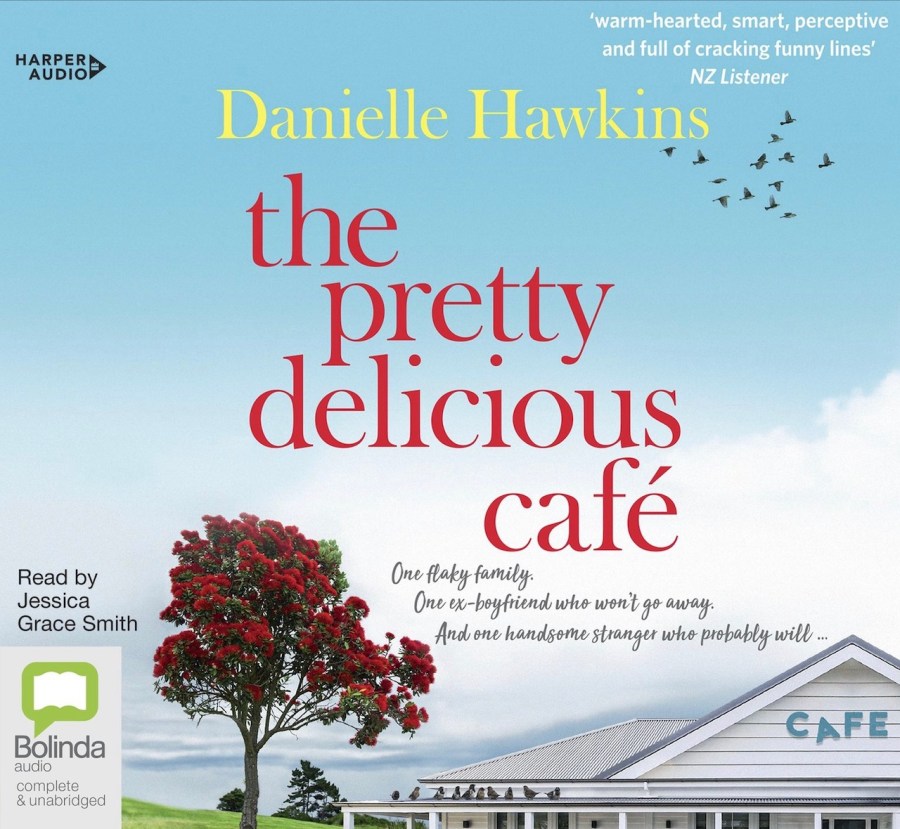
Book review: The Pretty Delicious Cafe by Danielle Hawkins

I don’t generally consider myself a romance reader but the current state of the world demanded something light.

The Pretty Delicious Cafe by Danielle Hawkins is set in a small New Zealand seaside town with abundant food, twin telepathy, a hippie mung bean mother, an unhinged stalker ex-boyfriend, and a hero love interest.

Lia and her best friend Anna, who has food issues and is about to marry Lia’s twin brother, run a cafe in a seasonal seaside town. The busy season is about to arrive when a new good looking man rolls into town. Lia is attracted to him but is also trying to deal with an ex-boyfriend who isn’t taking ‘it’s over’ well.

I listened to the audio book whilst making sourdough and then gardening. The story sets a good pace and has quirky, likeable characters (except for the crazy ex). It’s a feel good eccentric romantic comedy that’s got plenty of laughs and will make your mouth water for boysenberry cheesecake. Luckily the end of the book has a catalogue of recipes from the cafe you can try out.

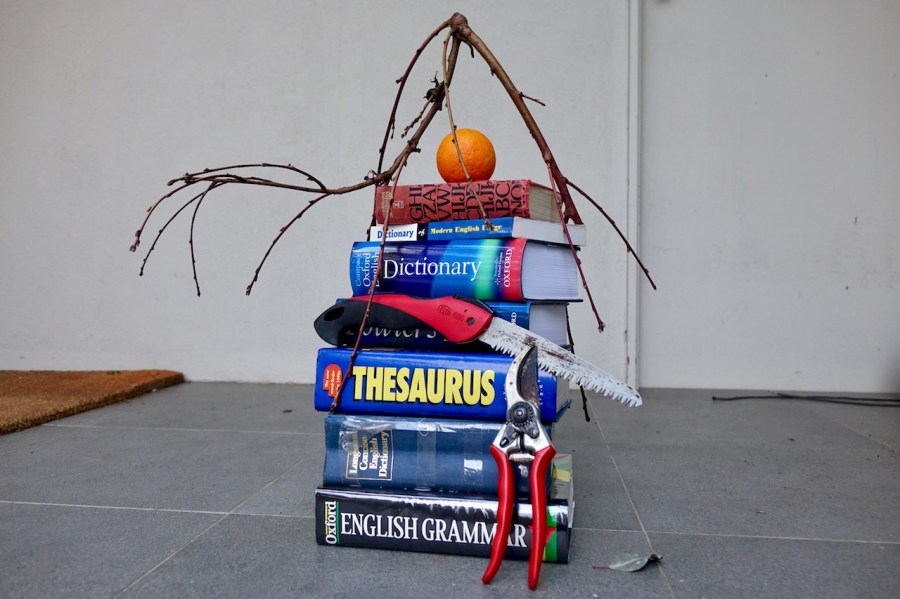
pile of dictionaries, pruning implements and an orange

Online course review: Cut, Shape, Polish by the Australian Writers Centre

If you have a completed manuscript ready to edit and you’re not quite sure where or how to start, I have a solution for you. The Australian Writers Centre online Cut, Shape, Polish course is one of the most useful writing courses I have completed to date, and there have been quite a few.

Cut, Shape, Polish is a practical step by step course that will provide you with a framework, tools and templates to complete a comprehensive edit of your manuscript. The course has five modules with audio tutorials and downloadable handouts.

It starts from the macro. Get your plot and structure right to ensure a satisfying outcome, identify themes and the questions your story is asking. Learn how to map your story structure with easy to use templates so that you can dissect it for plot holes, inconsistencies and gaps and make sure tensions rise and fall in the right places.

Module two dives into character to ensure your characters develop and drive the story. Learn how to check if your characters will be engaging and believable for readers, and if their dialogue is convincing and moves the story along. Identify and resolve issues with tone, voice and motivation so that your characters are convincing and keep readers engaged throughout the story arc.

Module three covers theme, setting and descriptions. Check if you are getting your point across through layering a cohesive thread through your work. Identify and resolve issues with world building and setting, build in motifs and symbols where they can improve your story. Bring to life the story your unconscious wanted you to tell.

You will move your focus from the macro to the micro in module four and study the sentence level. Make sure your point of view is working for the story. Interrogate the balance of show versus tell, info dumps and exposition, make sure your tense is consistent and consider sentence structure and style.

The last module hones in on openings and endings of sentences, chapters, the story and the overall story arc. Catch your cliches, find the words you repeat over and over, and over. Consider the value of Beta readers, taking feedback like an adult and whether you would benefit from the services of a professional editor.

The best time to start this course is after you have completed a first draft and left it to rest for a few months. This will give you twelve months of course access to work through your edits alongside the lessons. There is a lot in the course, so you’ll probably want to complete it more than once.

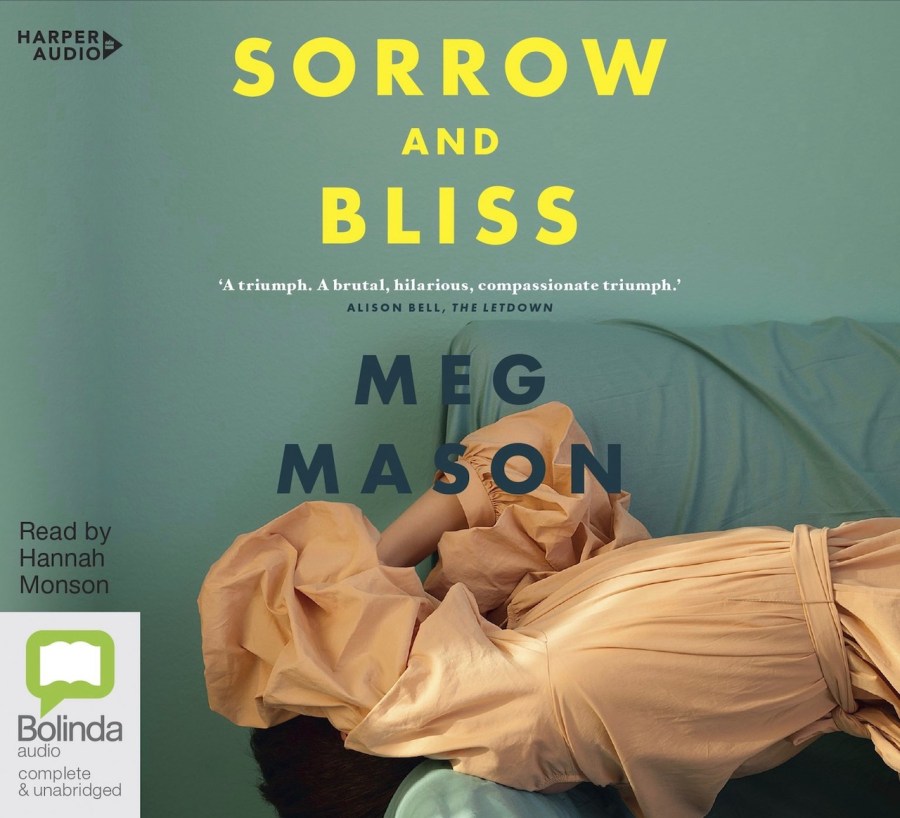
Book review: Sorrow and Bliss by Meg Mason

Sorrow and Bliss is one of those books that straddles commercial and literary fiction. The story made me laugh out loud one moment and cry the next. 

First novels are autobiography and wish fulfilment. Evidently, one’s got to push all one’s disappointments and unmet desires through the pipes before one can write anything useful.

Food writer, Martha, is reflecting on her life soon after separating from her husband and about six months after finally getting an accurate diagnosis and treatment for a mental illness that has plagued her for all of her adult life. She reflects on the the two decades that have passed since ‘a little bomb went off’ in her brain at seventeen.

Everything is redeemable, Martha. Even decisions that end up with you unconscious and bleeding in a pedestrian underpass, like me. Although ideally, you want to figure out the reason why you keep burning your own house down.

Martha’s telling of her life is deadpan and comically tragic. She is not a particularly likeable character, yet she becomes an endearing narrator as the reader comes to understand her struggle with her own behaviour and identity.

Everything is broken and messed up and completely fine. That is what life is. It’s only the ratios that change. usually on their own.

Sorrow and Bliss is a love story set in London and Oxford. It is a novel about mental illness and it’s effects on sufferers and those who love them, including their uniquely dysfunctional middle class families. 

After that, Nicholas got up, stretched, and told me I could have his spot because he just remembered a girl he need to make amends with because his final act before rehab was putting a nine iron through her windscreen after taking more than his recommended daily intake of methamphetamine. ‘Which I discover is non. Back shortly.’

Various doctors, psychologists and prescriptions have failed to help Martha. She and those around her fall back on the belief that she is simply too sensitive, and a bit difficult. Martha searches for answers, knowing that something isn’t right. Her experience exposes the fallibility of the medical profession that often gets things quite wrong, and through doing so can change the course of a persons life in ways that can be quite damaging.

Suffering is unavoidable, the only thing one gets to choose is the backdrop

Interestingly Martha’s illness is never named. I found this both liberating and frustrating. It forces the reader to understand her issues purely from her perspective on the world and the lived experience of her illness. It also frustrated that very human drive to label and categorise things.

I was the victim, and victims of course are allowed to behave however they like.

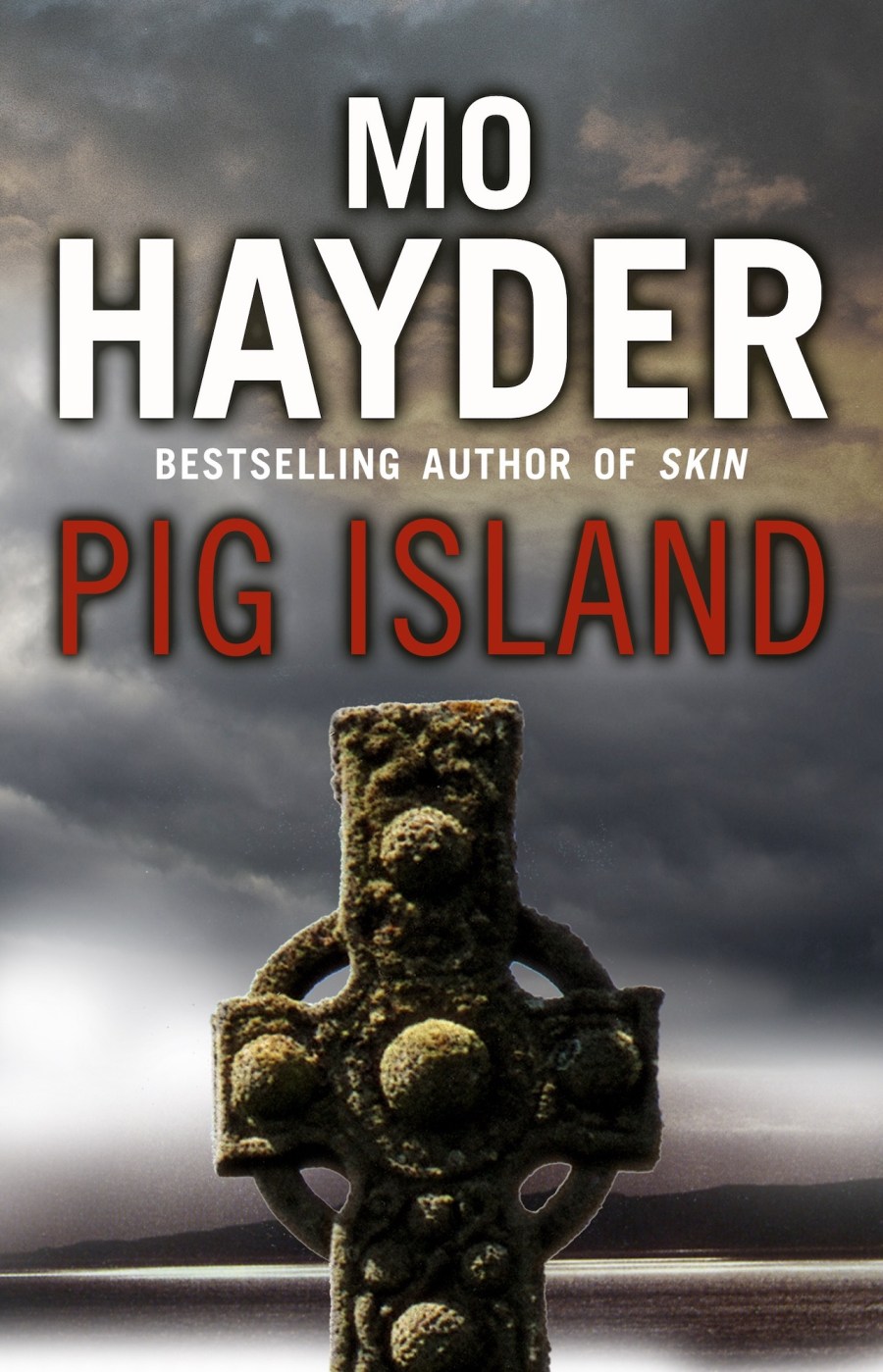
Book review: Pig Island by Mo Hayder

Grisly. A faith healing cult on an isolated island divided by a fence and inhabited by wild pigs, the preacher gone mad and isolated away from his flock with his disabled daughter on one side, the rest of the faithful on the other. A story starts circulating on the mainland that a half human-half animal creature has been seen wandering the island.

Everyone hates him. Me – I think I can see the sun shine when he bends over.

Journalist Joe Oakes is invited by the Psychogneic Healing Ministries to visit the island in order to debunk the myth that a devil is running around. The cult members don’t realise that Joe has history with the mad minister. Years previously he wrote an article under a pseudonym calling the minister a sham healer. 

What unfolds is a gruesome, page turning thriller with a twist that will make your skin crawl. If you can’t stomach a bit of graphic violence it may not be for you. It may also give you nightmares.

Pig Island is the fourth novel by Mo Hayder, the pen name for Beatrice Bastin who died recently from complications of Motor Neurone Disease. Pig Island was nominated for a Barry Award for Best British crime novel and a CWA dagger.

Hayder wrote ten thrillers, earning herself the title of ‘queen of fear’. There is also another due out in 2022 written under the name Theo Clare:

Jack Caffery series

  • Birdman (2000)
  • The Treatment (2001)
  • Ritual (2008)
  • Skin (2009)
  • Gone (2010)
  • Poppet (2013)
  • Wolf (2014)

Stand-alone novels

  • Tokyo (2004), also published as The Devil of Nanking (2010)
  • Pig Island (2006)
  • Hanging Hill (2011)

Writing as Theo Clare

  • The Book of Sand (2022)