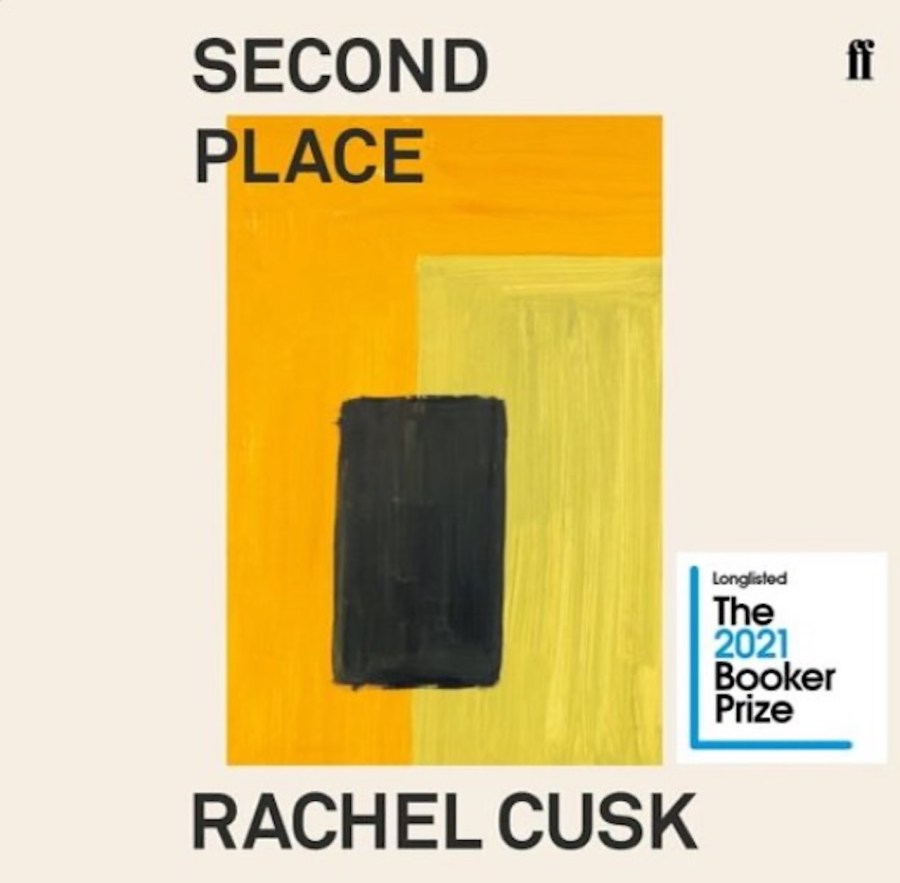
Long listed for the Booker Prize in 2021, Second Place by Rachel Cusk is about M, a middle aged writer with a past. While the details of that past are never fully explained to the reader, it remains in the forefront due to M’s fears, insecurities and inner demons. The story is narrated as a letter from M to a person called Jeffers.
Some people write simply because they don’t know how to live in the moment and have to reconstruct it and live in it afterwards
M is an anxious woman who lives on an isolated marshland property with her second husband, the easy going Tony. There are two residences on the property – one, a cottage reserved for guests. M invites famous artist, L, to stay. She hopes to become his muse and that he will be inspired by the landscape.
Why do we live so painfully in our fictions? Why do we suffer so, from the things we ourselves have invented?
At first L says no, but then an unspecified event that leaves him in financial difficulties leads him to accept. M had imagined him a soulful visionary artist, but finds him a narcissistic and disagreeable individual. L arrives with a wealthy, beautiful and uninvited young woman called Brett in tow. L is not the man M was expecting and the two are immediately at odds.
I’m not the kind of woman who intuitively understands or sympathises with other women, probably because I don’t understand or sympathise all that much with myself.
Justine, M’s twenty one year old daughter and her boyfriend Kurt, a pretentious aspiring writer also come to stay. What follow is a study of the group dynamics, told through M’s eyes.
You get tired of reality, and then you discover it’s already gotten tired of you.
Second place explores power dynamics, gender, motherhood, marriage, aging and art. The carefully crafted, exquisite language of the book is melancholic and unsettling.


