Book review: Never Let Me Go by Kazuo Ishiguro

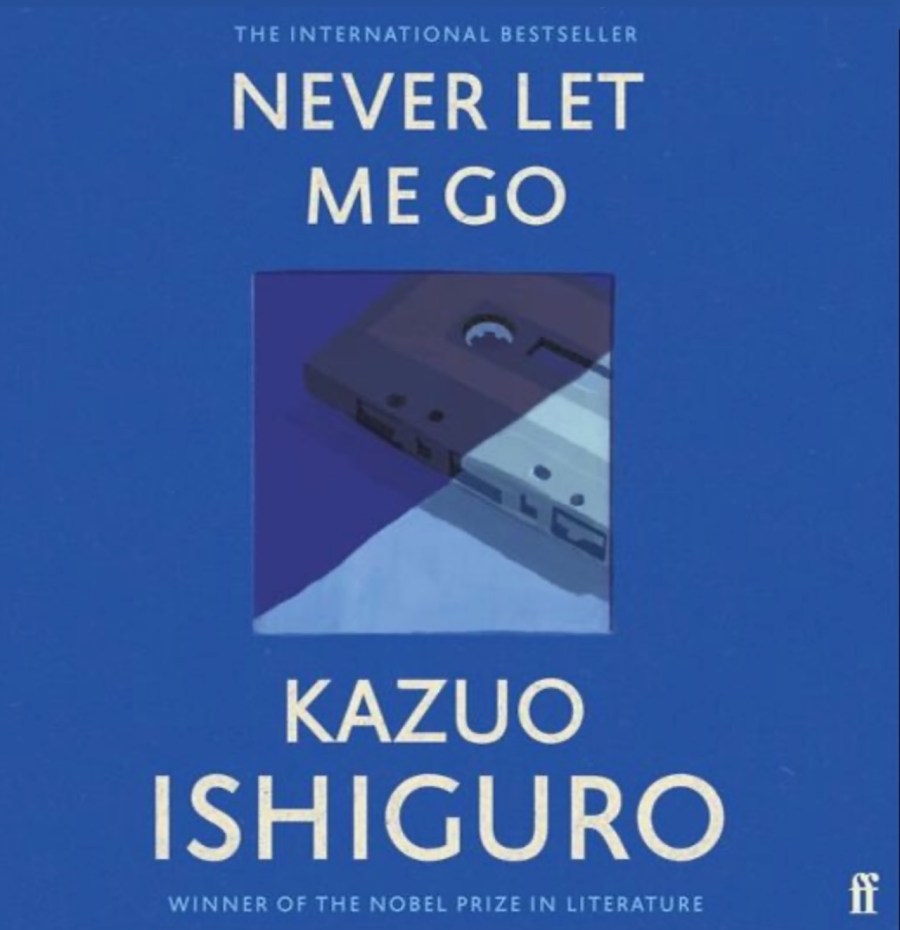
In Never Let Me Go by Kazuo Ishiguro, Kathy, now 31, is reflecting on her experience as a student at an English boarding school called Hailsham. I’ve heard very few good stories from friends who attended boarding schools, but Ishiguro takes the experience to a whole new level.

I keep thinking about this river somewhere, with the water moving really fast. And these two people in the water, trying to hold onto each other, holding on as hard as they can, but in the end it’s just too much. The current’s too strong. They’ve got to let go, drift apart. That’s how it is with us. It’s a shame, Kath, because we’ve loved each other all our lives. But in the end, we can’t stay together forever.

In this dystopian story, Hailsham was established to indoctrinate its students to prepare them for their pre-ordained destiny – as clones for organ harvesting (think Dolly the sheep). Kathy has spent most of her adulthood caring for her peers who have become donors. Their unsettling reality slowly dawns on the reader via Ishiguro’s trickle of details as Kathy recalls her past. 

We took away your art because we thought it would reveal your souls. Or to put it more finely, we did it to prove you had souls at all.

The existence of the Hilsham students is the ultimate form of ‘othering’. They are bred to be sacrificed to extend the lives of the dominant class. The body parts of the Hilsham students will treat life limiting illnesses of the rest of the community – until they expire from losing too much of themselves. The normalisation of this practice is extremely disturbing. The Halisham youth, can, in many ways lead normal lives including having jobs and relationships, but there is a question about whether ordinary life if for all intents and purposes meaningless for them given their destiny, including a short life, is preordained.

We all complete. Maybe none of us really understand what we’ve lived through, or feel we’ve had enough time.

Never Let Me Go is a meditation on life and death, what it means to be human, the shaping of destiny, friendship, the role of art in life and the importance of ethics in science. 

Book review: Klara and The Sun by Kazuo Ishiguro

I was out to lunch the other day and a friend spoke about their robot vacuum as if it were a new housemate. It had a character of its own and was not ‘just a machine’. As humans become more isolated and individualistic, our lives become more computerised. Do we impose greater meaning on this human-robot interface?

In the morning when the Sun returns. It’s possible for us to hope.

Klara and the Sun by Kazuo Ishiguro tells the story of the human-machine relationship. The story is from the perspective of an almost human android called Klara. Klara is a solar powered artificial friend. After a long time as a display in an android shop, she is purchased as a companion for Josie. Josie is a 14 year old girl with an unnamed illness and a dead sister. Josie warns Klara that there is something strange in her household. This comment sets up a creeping anxiety in the story. Hints are dropped about the nature of the strangeness but it doesn’t become apparent for some time what it is. The tension is heightened by the narrators limited and slightly naive perspective.

Yes. Until recently, I didn’t think that humans could choose loneliness. That there were sometimes forces more powerful than the wish to avoid loneliness.

Klara is designed to observe, learn, understand and serve her human. She is more than a friend – loyal, good and selfless. Klara also has the ability to learn about the emotional contradictions of humans. Yet, she also believes the sun has special powers that provide life giving nourishment. When Klara becomes increasingly concerned about Josie’s deteriorating health she seeks the suns help to heal her friend.

At the same time, what was becoming clear to me was the extent to which humans, in their wish to escape loneliness, made maneuvers that were very complex and hard to fathom.

The constructed world in which Klara lives is a hierarchical society of the ‘lifted’ and ‘uplifted’. The former have access to special privileges. And as one would expect, they are prone to be entitled brats. Klara’s charge Josie is lifted and more compassionate than her other lifted friends, perhaps due to her illness. Josie’s best friend and neighbour, Rick, is ‘unlifted’ and their relationship becomes something that Klara also protects and nurtures.

As I say, these were helpful lessons for me. Not only had I learnt that changes were a part of Josie, and that I should be ready to accommodate them, I’d begun to understand also, that this wasn’t a trait peculiar just to Josie, that people often felt the need to prepare a side of themselves to display to passersby – as they might in a store window, and that such display needn’t be taken so seriously once the moment had passed.”

As Klara learns to understand humans more and more, she seems to become more human herself. However fully grasping them always remains just out of reach. Though her observations do enable the reader to fully experience what she cannot. Klara observes, analyses and reports but the reader overlays meaning to connect the dots.

The heart you speak of,’ I said. ‘It might indeed be the hardest part of Josie to learn. It might be like a house with many rooms. Even so, a devoted AF, given time, could walk through each of those rooms, studying them carefully in turn, until they became like her own home

Klara and the Sun is a speculative fiction novel that explores what it means to be human, loneliness and love. Beautifully written with an eloquent subtlety that expresses complexity through simplicity.