Book review: Still Life by Sarah Winman

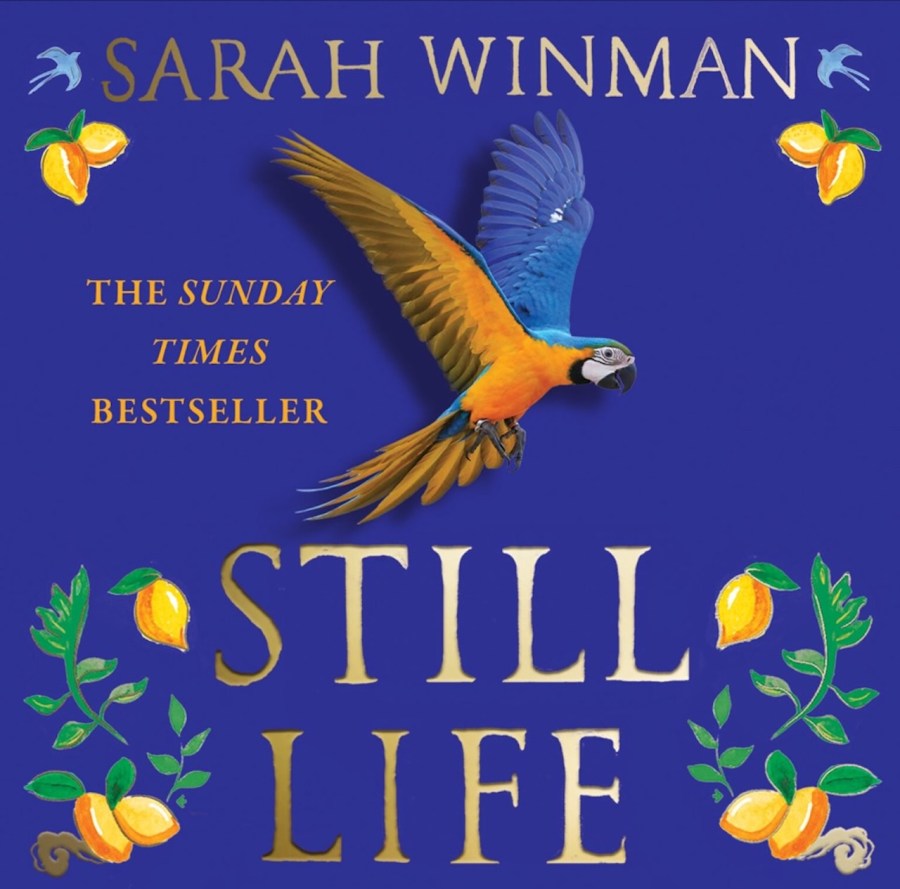
Sarah Winman’s Still Live is a character driven historical fiction novel with a fascinating caste that spans the decades from WWII through to the 1960s. It speaks to a series of life moments and how art, music and food can move us emotionally.

There are moments in life, so monumental and still, that the memory can never be retrieved without a catch to the throat or an interruption to the beat of the heart. Can never be retrieved without the rumbling disquiet of how close that moment came to not having happened at all.

Twenty four year old English soldier Ulysses Temper finds himself in the wine cellar of a deserted Tuscany village during a bombing blitz in 1944. Sixty four year old Evelyn Skinner is a middle aged art historian visiting Italy to salvage paintings and reminisce about her youth. The two meet and connect by chance and the impression they make on one another is enduring. 

Art versus humanity is not the question, Ulysses. One doesn’t exist without the other. Art is the antidote.

Evelyn returns to London to teach. Ulysses returns home and reintegrates with his eclectic friends at The Stout and Parrot until a surprise inheritance from a man whose life he saved sends him back to Italy along with his ex-wife’s daughter, Alys and his friend Cress. Cress talks to trees and recites poetry, and has a parrot Claude who quotes Shakespeare.

So, time heals. Mostly. Sometimes carelessly. And in unsuspecting moments, the pain catches and reminds one of all that’s been missing. The fulcrum of what might have been. But then it passes. Winter moves into spring and swallows return. The proximity of new skin returns to the sheets. Beauty does what is required. Jobs fulfil and conversations inspire. Loneliness becomes a mere Sunday. Scattered clothes. Empty bowls. Rotting fruit. Passing time. But still life in all its beauty and complexity.

There is a beautiful section about the 1966 floods of Arno in Florence where neighbours looked out for one another communicating by candle light. The flood devastated the city displacing citizens and destroying millions of books and artworks.

And for two hours the wine was poured, the cheese cut, and the two men talked. Of what? Who knows? Of love, of war, of the past. And they listened with hearts instead of ears, and in the candle-lit kitchen three floors up in an old palazzo, death was put on hold.

Still Life is a story about what it means to be human, of the many ways we can love people, friendship and chosen family. Art, beauty and luck and how they can move and shape us thread through the narrative.

Book review: Rapture by Emily Maguire

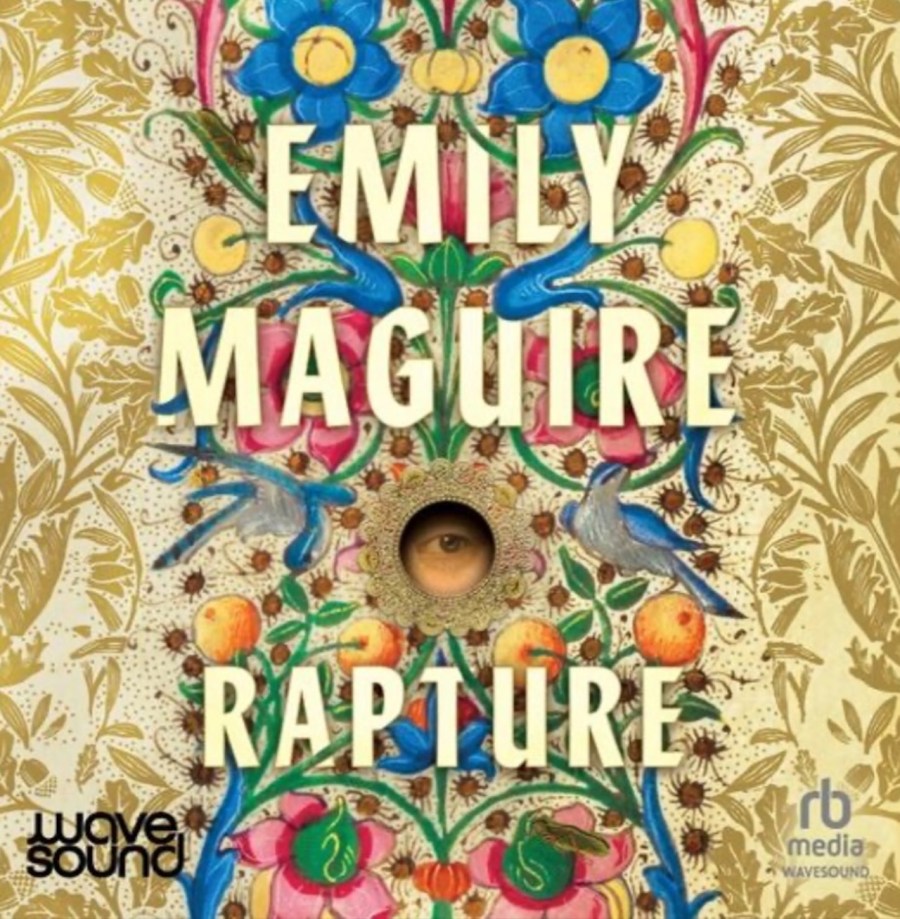
As a young person in my twenties I spent a couple of years performing acrobalance in a circus. One year we put on a show about the life of Pope Joan, a woman who disguised herself as a man and became pope during the Middle Ages. I became fascinated by that story. Emily Maguire’s historical fiction novel, Rapture, took inspiration from the story of Pope Jaon. 

She does not know it is odd for a girl to read until one of her father’s guests, a Benedictine from Fulda Abbey, spots her bent over a book by the fire and roars as though he’s spied a deer hunting a man.

Set in ninth century Mainz (Germany), Rapture is the story of Agnes whose mother died in childbirth and whose English father, a priest, educates her and raises her to be devout and curious about learning. Not surprisingly Agnes sees no future for herself as a wife and mother, so sheds her identity and dresses as a man to become John in order to have the freedom to follow her interests.

Her self is an illusion yet it is one beloved by most everyone who has heard her speak . . . She is thirty-three years old and there is no one else in the world who knows who she used to be.

Rapture follows Agnes journey from learning from the men in her father’s life while sitting under the dinner table as they talked, to becoming a man and a Benedictine monk so she can be privy to the teachings of god, then rising through the ranks to become a renowned scholar and the Bishop of Rome. Throughout her journey as a man she reflects on her duality as a women in hiding and subjugating her body so it does not betray her.

Thus she learns that great and wise men felt as she had as a child on the forest floor. She learns there are systems of morality based on reason rather than God’s will … She learns that the monks of Fulda can read most anything they like and call it Christian work.

The more I read, the more I was drawn into this meticulously researched story. Despite the subject matter, you do not need to have any interest in religion to read Rapture. It is a beautifully written, thought provoking and engaging story. 

Book review: A Gentleman in Moscow by Amor Towles

I studied Russian history in high school and became fascinated by the Tsars, so when I heard about A Gentleman in Moscow by Amor Towles, I had to read it. I was not disappointed, the historical novel has a bit of everything – poetry, politics, espionage, friendship, romance and  parental duties.

If a man does not master his circumstances then he is bound to be mastered by them.

In 1922 after the Russian Revolution, aristocratic count Alexander Ilyich Rostov is accused of writing a counter revolutionary poem by the Emergency Committee of the People’s Commissariat for Internal Affairs and sentenced to a life of confinement in Moscow’s Hotel Metrolpol. He is moved from his luxury suit at the hotel to a cramped room on the 6th floor. 

Alexander Rostov was neither scientist nor sage; but at the age of sixty-four he was wise enough to know that life does not proceed by leaps and bounds. It unfolds. At any given moment, it is the manifestation of a thousand transitions. Our faculties wax and wane, our experiences accumulate and our opinions evolve–if not glacially, then at least gradually. Such that the events of an average day are as likely to transform who we are as a pinch of pepper is to transform a stew.

Over the decades of his incarceration Count Rostov overcomes despair at his circumstances to make a full life for himself within the confines of the hotel, inspired by a young girl he meets who has a great curiosity and a skeleton key. He discovers the hotels hidden treasures and idiosyncrasies. Through the years at the hotel, Count Rostov becomes a waiter with a knack for seating guests in such a way as to avoid any disruptions to diners, falls in love and has a daughter.

If patience wasn’t so easily tested, then it would hardly be a virtue. . . 

A charming romp through Russian history, A Gentleman in Moscow has a fairytale quality about it, but is also a beautiful literary novel brimming with delightful colourful characters and a setting that adds colour to the suffering taking place outside its walls through decades of wars and revolutions.

Book review: The Book Thief by Markus Zusak

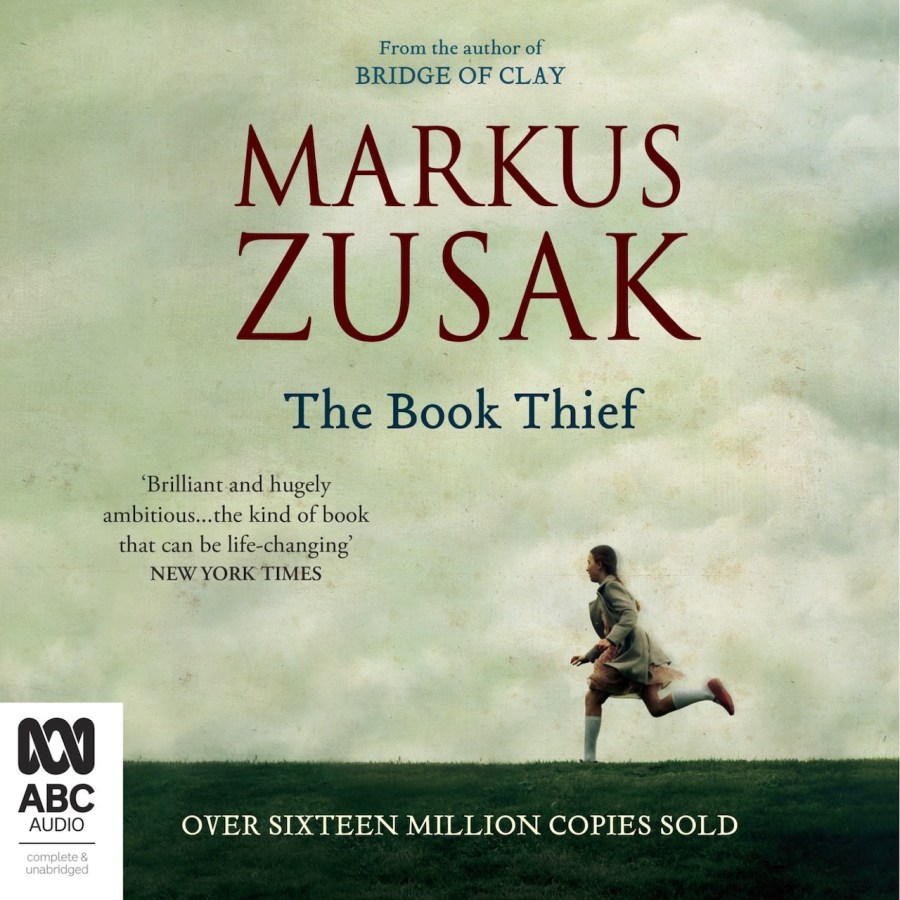
Set in Nazi Germany at the beginning of World War Two, The Book Thief by Markus Zusak is narrated by Death, a philosophical, sentimental, melancholy grim reaper. Death shares his observations of humans as he collects souls throughout the story.

I wanted to tell the book thief many things, about beauty and brutality. But what could I tell her about those things that she didn’t already know? I wanted to explain that I am constantly overestimating and underestimating the human race—that rarely do I ever simply estimate it. I wanted to ask her how the same thing could be so ugly and so glorious, and its words and stories so damning and brilliant.

The Book Thief tells the story of ten year old Liesel Meminger, beginning when her father is captured and her brother dies, and she steals her first book (The Gravedigger’s Handbook) just before her mother gives her up for adoption.

When she came to write her story, she would wonder when the books and the words started to mean not just something, but everything.

Liesel’s new parents are Hans Hubermann an accordion playing man who teaches Liesel to read, and his wife Rosa, a stern woman who beats Liesel with a wooden spoon intermittently. Neighbour, Rudy Steiner, becomes Liesel’s best friend and the two get up to childhood mischief. 

A snowball in the face is surely the perfect beginning to a lasting friendship.

Reading helps Liesel connect with the living and the dead and she learns how words can heal and instil hope. She develops a penchant for stealing books, taking them from the mayor’s wife’s library by climbing through an open window, and at Nazi book-burnings she shoves books up her shirt while still hot.

The words were on their way, and when they arrived, she would hold them in her hands like the clouds, and she would wring them out like the rain.

When Max Vandenburg, a young Jewish man grappling with guilt for leaving his family to save himself, is taken in and hidden in the basement, Liesel’s life changes as she has to keep him a secret in order for them all to be safe.

In years to come, he would be a giver of bread, not a stealer – proof again of the contradictory human being. So much good, so much evil. Just add water.

There is intense emotion in The Book Thief, a blend of humour, sadness, and hope personified by Liesel in stark contrast to the persecution, propaganda and violence around her. The characters are compelling, the benevolent Death strangely likeable, and the ending will drag tears from your eyes. The Book Thief was made into a film in 2013.

One was a book thief. The other stole the sky.

Book review: Dust Child by Nguyễn Phan Quế Mai

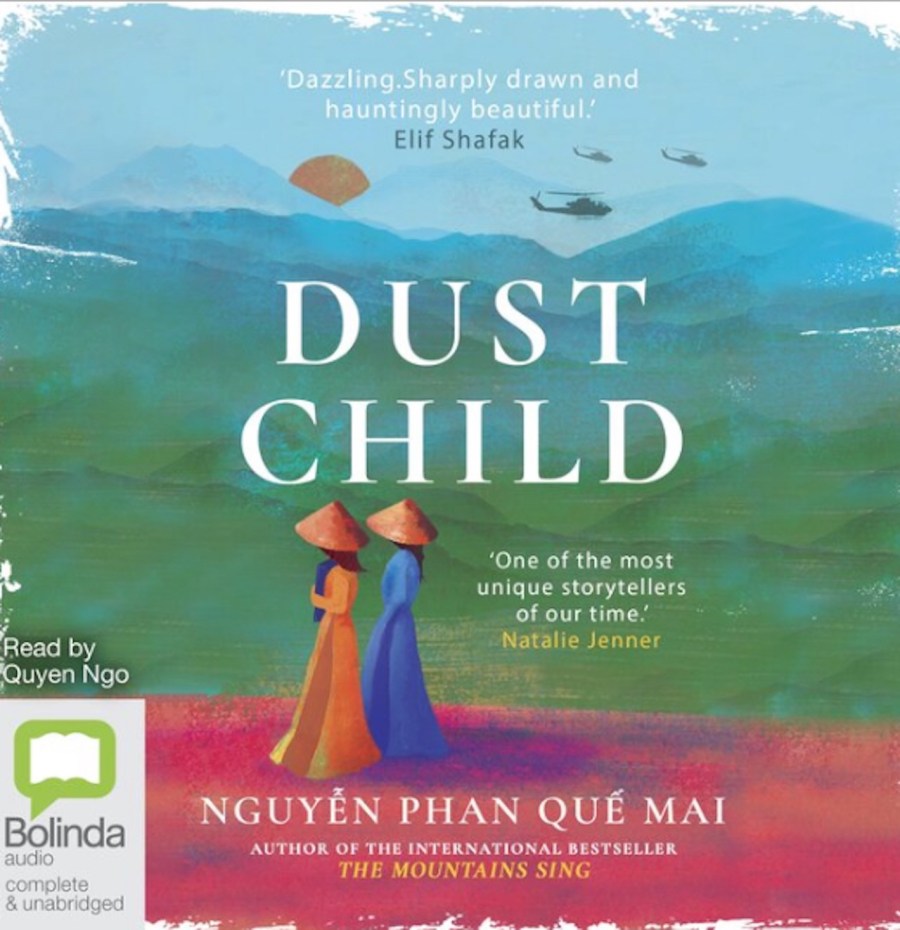
Dust Child by Nguyễn Phan Quế Mai was based on her doctoral research on Vietnamese Amerasians. The seven years of research shows in the detail about the history, culture and Vietnam. The story spans multiple timelines between 1969 and 2016.

Vietnamese Amerasian, Nguyễn Tấn Phong’s application for an American visa for himself and his family under the Amerasian Homecoming Act is denied. He was caught out having had applied before and attempting to include people he was not related to. 

During the Vietnam War, tens of children were born into relationships between American soldiers and Vietnamese women. Tragic circumstances separated most of these Amerasian children from their fathers and, later their mothers. Many have not found each other again.

Soon after Phong meets an American couple, Dan and Linda who (according to Linda) have come to Vietnam as therapy for her veteran husband’s trauma. Linda doesn’t know that Dan wants to find Kim (real name Trang), a woman he had kept as a mistress while he was a helicopter pilot during the Vietnam war. Phong undertakes to help him and act as the couple’s tour guide.

She had tried to live an honest life, but the war had given her no choice. It had forced her to make up a version of herself which was acceptable to others. In a way, making up stories had been the basis of her survival and her success.

The story is told on two timelines – Phong and Dan’s present-day narration and Kim’s war-time story when she was and her sister worked to earn money to pay off their parents debts by keeping American soldiers company. Dan leaves Vietnam, abandoning a pregnant Kim.

Everyone came from dust and would one day return to dust. Life is transitory, after all.

Soon the three storylines converge.

What I found most interesting about Dust Child is that it tells the Vietnam war experience from the perspective of ordinary Vietnamese people both during the war and afterward, shining a light on the lasting effects.

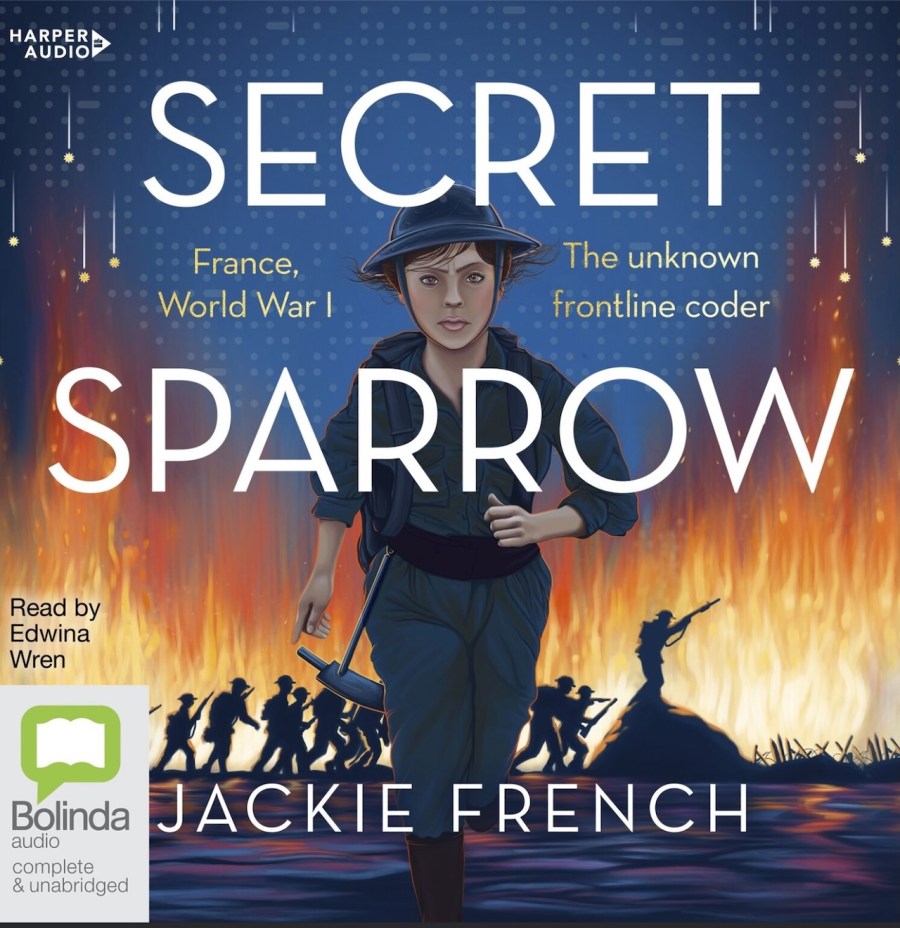
Book review: Secret Sparrow by Jackie French

Secret Sparrow by Jackie French is a historical fiction novel about the contribution a female signallers to the war effort during World War I. Sixteen year old Jean McLain works in a post office in England. When she wins a national Morse code competition, the British army approaches her to become a clandestine signaller in France. Her contribution could help Britain win the war.

Jean was fast. Faster than her older brothers, who had learned Morse code from the crystal radio sets they’d built. Before the war they tapped out message to each other on their bedroom walls.

Jean will be one of a team of women at Rouen receiving and sending messages for the army, working in 12 hours shifts without so much as a toilet break. The British army wished to hide the involvement of women so much that they burned every document evidencing how women and girls were working in the trenches and battles of World War I. Soon, Jean is sent to the front due to her exceptional skills to help at the ill fated Battle of Cambrai.

The motorbike swerved wildly, jumping up onto the footpath then into the slightly higher ground of the new park, tearing through the marigolds. Bikies don’t care about flowers, thought Arjun, then realised the figure he held wasn’t the sturdy shape of a bloke, but a woman’s, skinny under the leather jacket. Her helmet hid her face.

The story of Secret Sparrow is told in 1978 by an old postmistresses, about her time as a ‘telegraph girl’ in WWI. She she tells her tale to Arjun, a young boy, after she rescues him from a flood on her motorbike in the country town of Burrangong. She relays her story to pass the time while they are sheltering in a bin on top of a hill above floodwaters trying to keep warm in the rain. 

But women signallers? She’d never heard of such a thing. There’d been no reports of women doing any such work in the newspapers.

Secret Sparrow is based on true events and gives women who were involved in the war effort a voice. The story sets a cracking pace, and while it does not shy away from describing the terrible conditions of war, it is crafted to be suitable for readers of 12+.

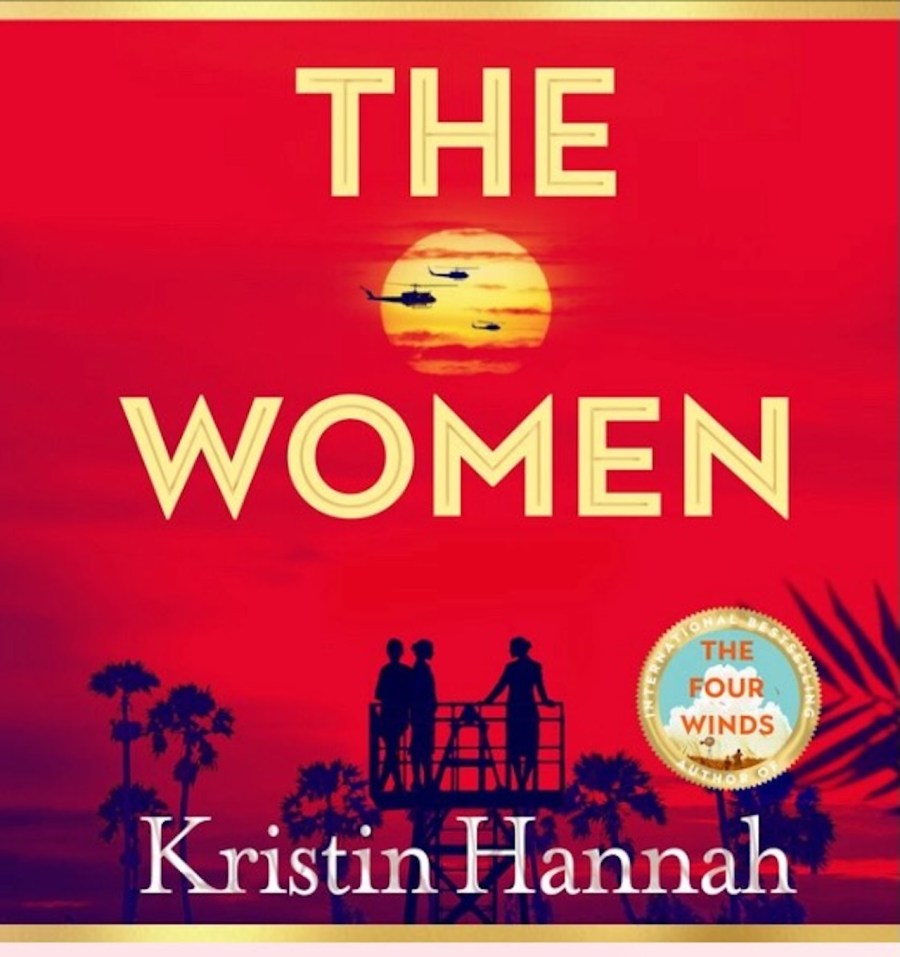
Book review: The Women by Kristin Hannah

I enjoy stories that highlight the important roles women played in history, when they have so frequently been relegated to the shadows. 

Thank God for girlfriends. In this crazy, chaotic, divided world that was run by men, you could count on the women.

Anyone who grew up in the 70s and 80s would remember the controversial Vietnam war, intended to contain the spread of communism. In The Women, Kristin Hannah tells a story about the Vietnam war through a women’s gaze, that of military nurses who worked on bases and in field hospitals under fire.

The women had a story to tell, even if the world wasn’t quite yet ready to hear it, and their story began with three simple words. We were there.

In 1966, Frances’s (or Frankie as she becomes known) brother leaves for the Vietnam war. Frankie’s pre-planned debutante life is set to change irrevocably when she decides to enlist as an Army nurse after her brother’s friend tells her ‘Women can be heroes.’

From here, the war was almost beautiful. Maybe that was a fundamental truth: War looked one way for those who saw it from a safe distance. Close up, the view was different

Frankie lands in Vietnam with inadequate training. It’s a ‘learn or die’ situation where she is tutored by seasoned nurses and doctors to patch up men and civilians maimed by military weapons and napalm. Soon she will be able to work during a blackout with bombs dropping around her and a flashlight gripped between her teeth while she staunches a gut wound.

Damn it, McGrath! We don’t have time for fear. You’re good enough. Do it!

While she is away public sentiment turns against America’s involvement in the war, and when Frankie returns, it is not to a hero’s welcome but to shame, protests, nightmares and a family who refuse to acknowledge what she has been doing.

We laugh so we don’t cry.

Reading The Women is a visceral experience. From the chaos and gut wrenching losses of the combat zone to the aftermath and returning home and PTSD. Hannah’s research is impeccable and she keeps the reader absorbed through action and plot twists, recasting the Vietnam war narrative. The Women is not a book for the queasy or faint hearted, but is a captivating, heart wrenching, moving and important fictional contribution to the historical narrative of the Vietnam war.

Book review: The Librarian of Burned Books by Brianna Labuskes

Librarians are superheroes – the keepers of stories, champions of intellectual freedom, truth tellers, supporters of shy and weird kids. 

I can tell you that banning books, burning books, blocking books is often used as a way to erase people, a belief system, or culture.

The Librarian of Burned Books by Brianna Labuskes is a histrical novel set during World War II that pays homage to the importance of protecting books, and the free flow of information and ideas they represent. It’s dedication reads ‘To librarians, the guardians of books’.

Books are a way we leave a mark on the world, aren’t they? They say we were here, we loved and we grieved and we laughed and we made mistakes and we existed. They can be burned halfway across the world, but the words cannot be unread, the stories cannot be untold. They do live on in this library, but more importantly they are immortalized in anyone who has read them.

The story follows three timelines through the points of view of three women devoted to the printed word. Althea is a naive American debut author visiting Berlin on a cultural exchange in 1933 who discovers the Nazi’s who invited her are not what they pretend to be; Hannah Brecht is a German Jew and lesbian who works at the Library of Burned Books (around 1936) and is involved with the Communist Party opposing Hitler’s rise to power – she was there when the Nazis torched huge pyres of banned books. Vivian Childs is a war widow advocating against 1944 censorship laws that would block her organisations efforts to send books to soldiers fighting overseas. The three women’s narratives interview and connect as they each try to fight for freedom of thought.

There are moments in life when you have to put what is right over what party you vote for. And if you can’t recognize those moments when the stakes are low—let me assure you, you won’t recognize them when the stakes are high. 

I thoroughly enjoyed The Librarian of Burned Books – strong female characters, great descriptive insights into queer Berlin, and the challenges for Paris and Brooklyn during the war, it’s a well researched, emotionally moving and provocative story with a hint of lesbian romance. What more could you want in a good story!

Burning books about things you do not like or understand does not mean those things no longer exist.

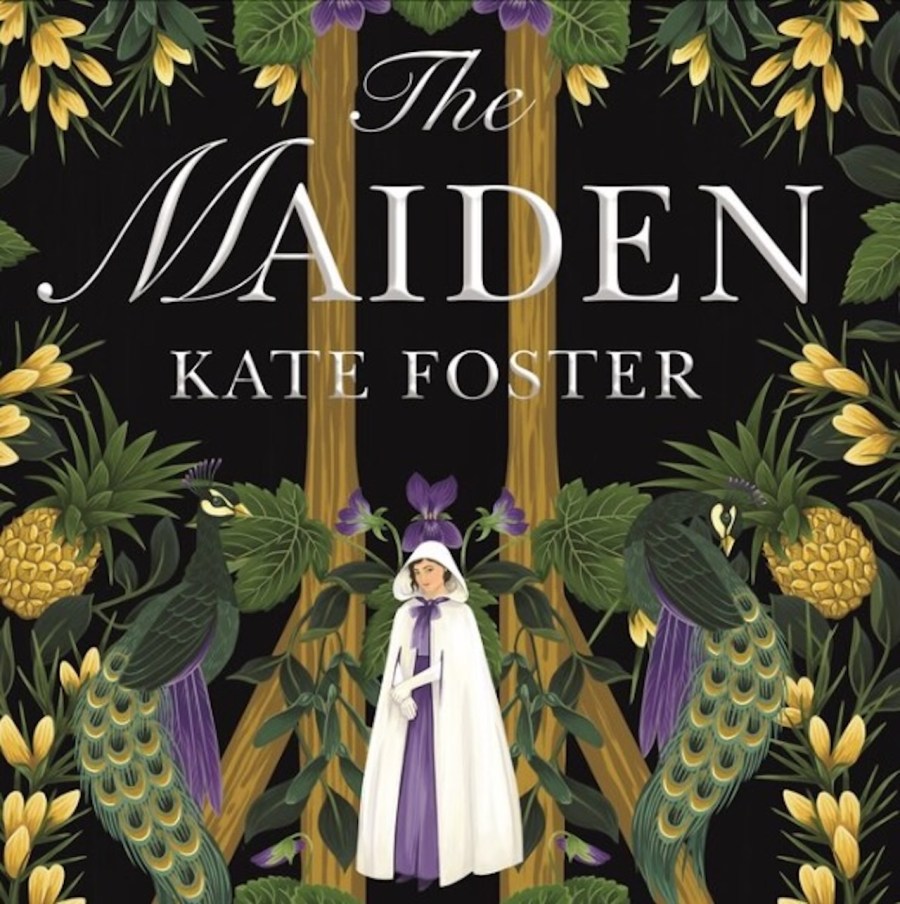
Book review: The Maiden by Kate Foster

In 1679, Lord James Forrester was stabbed to death beneath an old sycamore tree with his own sword. Lady Nimmo was beheaded for the crime, and is said to haunt the site of the deed.

In the end, it did not matter what I said at my trial. No one believed me.

Lord James Forrester of Corstorphine, a village on the outskirts of Edinburgh, was a womaniser, gambler and drinker, who hid his debauchery behind the veil of being a respectably married Presbyterian. Lady Christian Nimmo, niece of Lord Forrester, was said to be wild, impulsive, and passionate, and a woman with a ferocious temper. She was married to a respectable fabric merchant, but it was portrayed as a sexless union.

It is this story that Kate Foster’s debut historical fiction novel, The Maiden is based on. A Maiden, is the name of the guillontine-like execution device used to behead criminals at the time. Foster’s novel is a sympathetic exploration of what would drive a relatively privileged, intelligent, married young woman, to murder her lover (nowadays an uncle hitting on his niece would be sufficient, but back then its wasn’t unheard of to get together with a relative).

The story is narrated by Lady Nimmo and Forrester’s maid, Violet, who is also a sex worker. A young Violet was cut adrift after her family died and had to work in a brothel to survive. She was paid to spend a month living in luxury in a turret at Lord James castle in exchange for sex.

Foster does an excellent job of capturing the period – from the stench of the rat-ridden city streets, to the violent lives of prostitutes, the class divide, and the luxurious country lives of the wealthy. There is superstition, reputation destroying gossip, god of course, and repentance. You could even buy a mutton pie and watch a hanging, like olden day football entertainment.

Although I read avidly and wrote with flair, far exceeding the direction of the tutor who came to Roseburn, these assets were not considered to be as attractive as obedience or serenity or silence.

Personally I am surprised there were not a lot more murders like this given the way women were treated at the time. The Maiden is a gripping read and would make a great film.

Book review: Her Lost Words by Stephanie Marie Thornton

Who doesn’t love a literary novel about fierce feminist writers? Her Lost Words chronicles the lives of mother and daughter authors Mary Wollstonecraft and Mary Shelley.

Words have the power to transform us, Mary. They can lift us from our grief. The ideas they form can even offer humanity the hope for the future,

Teenage Wollstonecraft fled her violent father’s home in 1775 and was taken in by a reverend’s family who encouraged her love of reading and helped her find a life for herself with a job as a governess. She became one of the founding feminist philosophers with her book A Vindication of the Rights of Women in which she proposed that women were equal to men. Vindication was a trailblazing feminist text.

Mary did know, she’d learned from Claire—who had heard it from her mother—that Mary Wollstonecraft’s life had scandalized society to the point where the entry for prostitution in the conservative publication The Anti-Jacobin Review read “see: Mary Wollstonecraft.”

An independent woman who never bowed to conventions, Wollstonecraft died soon after giving birth to her daughter, Mary. Mary Shelley grew up in the shadow of her mother. Even her lover, Percy Bysshe Shelley, whom she met at a dinner party and then eloped with, first confessed to being a fan of her mother’s writings.

Knowledge is the fairest fruit and the food of joy. You must never forget that. And you must swear a solemn oath that you will never stop reading, or learning, or sharing that knowledge, like the philosophers of old.

Her Lost Words is a historical fiction novel based on the real lives of women who went against the grain and forged their own paths. The story spans England, France during the revolution, Switzerland and Italy. It tells of their loves and loves lost, their relationships with one another and the world around them at at time when women were on the cusp of changing the world and its relationship to them. A touching and inspiring tribute to two literary women of history.

This is a love letter to two brilliant women who lit the way for not just women writers, but all women.

authors note