Book review: The Librarian of Burned Books by Brianna Labuskes

Librarians are superheroes – the keepers of stories, champions of intellectual freedom, truth tellers, supporters of shy and weird kids. 

I can tell you that banning books, burning books, blocking books is often used as a way to erase people, a belief system, or culture.

The Librarian of Burned Books by Brianna Labuskes is a histrical novel set during World War II that pays homage to the importance of protecting books, and the free flow of information and ideas they represent. It’s dedication reads ‘To librarians, the guardians of books’.

Books are a way we leave a mark on the world, aren’t they? They say we were here, we loved and we grieved and we laughed and we made mistakes and we existed. They can be burned halfway across the world, but the words cannot be unread, the stories cannot be untold. They do live on in this library, but more importantly they are immortalized in anyone who has read them.

The story follows three timelines through the points of view of three women devoted to the printed word. Althea is a naive American debut author visiting Berlin on a cultural exchange in 1933 who discovers the Nazi’s who invited her are not what they pretend to be; Hannah Brecht is a German Jew and lesbian who works at the Library of Burned Books (around 1936) and is involved with the Communist Party opposing Hitler’s rise to power – she was there when the Nazis torched huge pyres of banned books. Vivian Childs is a war widow advocating against 1944 censorship laws that would block her organisations efforts to send books to soldiers fighting overseas. The three women’s narratives interview and connect as they each try to fight for freedom of thought.

There are moments in life when you have to put what is right over what party you vote for. And if you can’t recognize those moments when the stakes are low—let me assure you, you won’t recognize them when the stakes are high. 

I thoroughly enjoyed The Librarian of Burned Books – strong female characters, great descriptive insights into queer Berlin, and the challenges for Paris and Brooklyn during the war, it’s a well researched, emotionally moving and provocative story with a hint of lesbian romance. What more could you want in a good story!

Burning books about things you do not like or understand does not mean those things no longer exist.

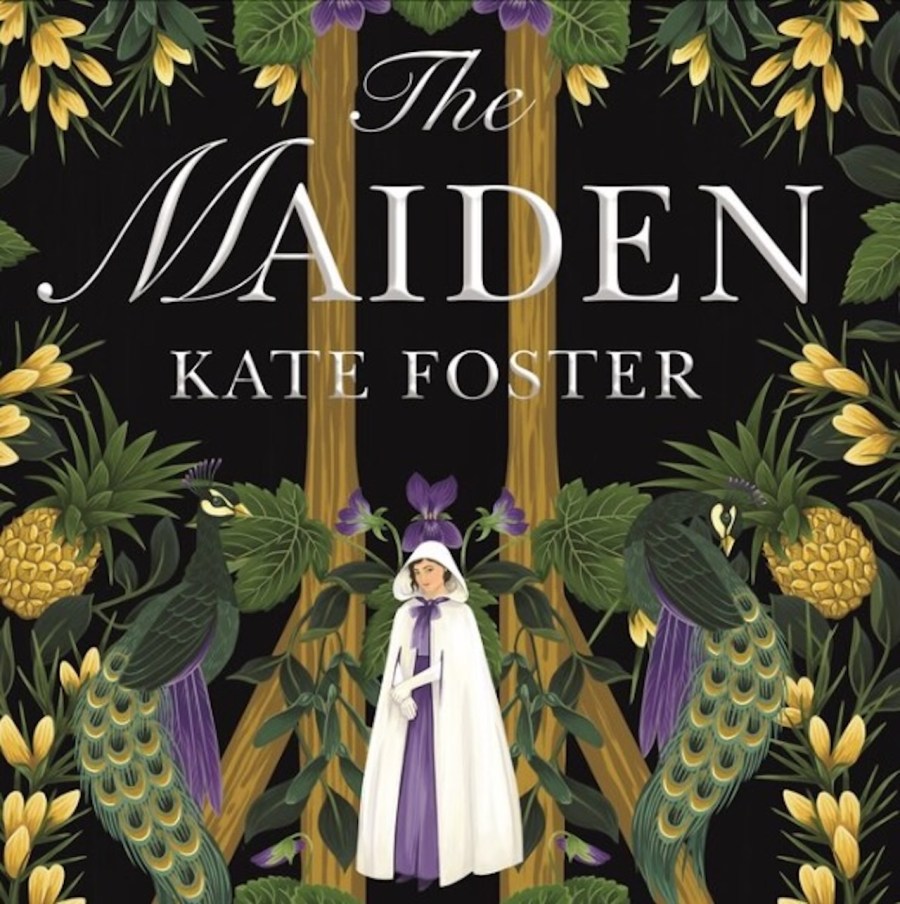
Book review: The Maiden by Kate Foster

In 1679, Lord James Forrester was stabbed to death beneath an old sycamore tree with his own sword. Lady Nimmo was beheaded for the crime, and is said to haunt the site of the deed.

In the end, it did not matter what I said at my trial. No one believed me.

Lord James Forrester of Corstorphine, a village on the outskirts of Edinburgh, was a womaniser, gambler and drinker, who hid his debauchery behind the veil of being a respectably married Presbyterian. Lady Christian Nimmo, niece of Lord Forrester, was said to be wild, impulsive, and passionate, and a woman with a ferocious temper. She was married to a respectable fabric merchant, but it was portrayed as a sexless union.

It is this story that Kate Foster’s debut historical fiction novel, The Maiden is based on. A Maiden, is the name of the guillontine-like execution device used to behead criminals at the time. Foster’s novel is a sympathetic exploration of what would drive a relatively privileged, intelligent, married young woman, to murder her lover (nowadays an uncle hitting on his niece would be sufficient, but back then its wasn’t unheard of to get together with a relative).

The story is narrated by Lady Nimmo and Forrester’s maid, Violet, who is also a sex worker. A young Violet was cut adrift after her family died and had to work in a brothel to survive. She was paid to spend a month living in luxury in a turret at Lord James castle in exchange for sex.

Foster does an excellent job of capturing the period – from the stench of the rat-ridden city streets, to the violent lives of prostitutes, the class divide, and the luxurious country lives of the wealthy. There is superstition, reputation destroying gossip, god of course, and repentance. You could even buy a mutton pie and watch a hanging, like olden day football entertainment.

Although I read avidly and wrote with flair, far exceeding the direction of the tutor who came to Roseburn, these assets were not considered to be as attractive as obedience or serenity or silence.

Personally I am surprised there were not a lot more murders like this given the way women were treated at the time. The Maiden is a gripping read and would make a great film.

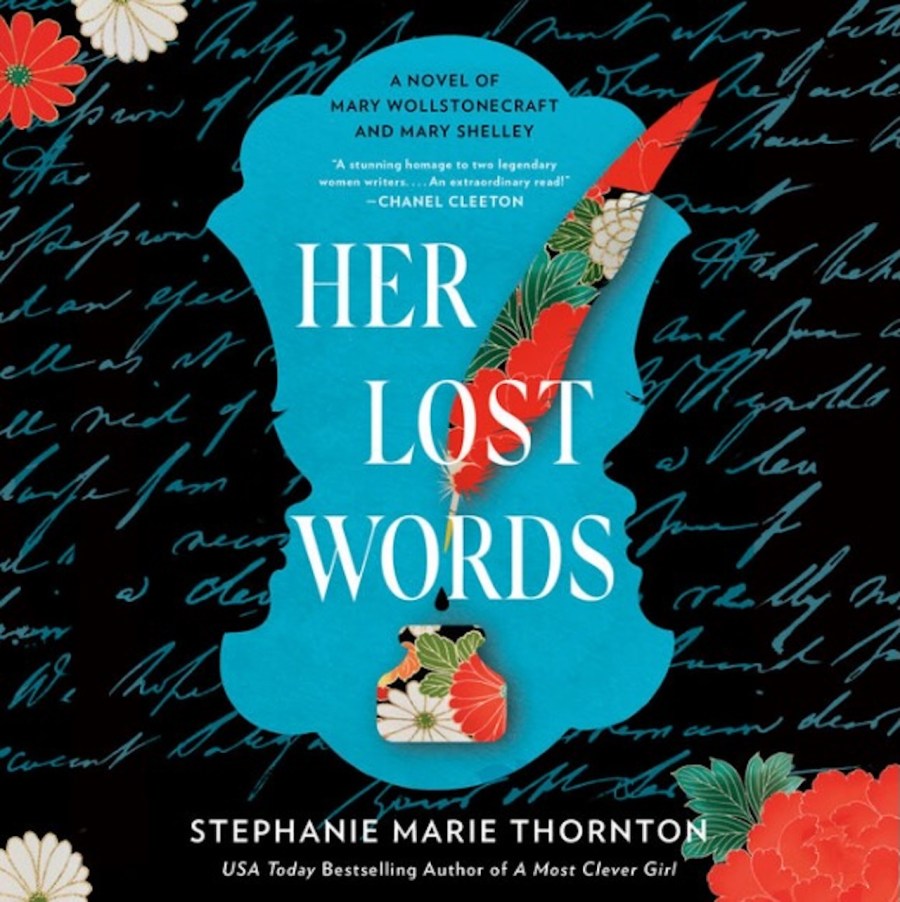
Book review: Her Lost Words by Stephanie Marie Thornton

Who doesn’t love a literary novel about fierce feminist writers? Her Lost Words chronicles the lives of mother and daughter authors Mary Wollstonecraft and Mary Shelley.

Words have the power to transform us, Mary. They can lift us from our grief. The ideas they form can even offer humanity the hope for the future,

Teenage Wollstonecraft fled her violent father’s home in 1775 and was taken in by a reverend’s family who encouraged her love of reading and helped her find a life for herself with a job as a governess. She became one of the founding feminist philosophers with her book A Vindication of the Rights of Women in which she proposed that women were equal to men. Vindication was a trailblazing feminist text.

Mary did know, she’d learned from Claire—who had heard it from her mother—that Mary Wollstonecraft’s life had scandalized society to the point where the entry for prostitution in the conservative publication The Anti-Jacobin Review read “see: Mary Wollstonecraft.”

An independent woman who never bowed to conventions, Wollstonecraft died soon after giving birth to her daughter, Mary. Mary Shelley grew up in the shadow of her mother. Even her lover, Percy Bysshe Shelley, whom she met at a dinner party and then eloped with, first confessed to being a fan of her mother’s writings.

Knowledge is the fairest fruit and the food of joy. You must never forget that. And you must swear a solemn oath that you will never stop reading, or learning, or sharing that knowledge, like the philosophers of old.

Her Lost Words is a historical fiction novel based on the real lives of women who went against the grain and forged their own paths. The story spans England, France during the revolution, Switzerland and Italy. It tells of their loves and loves lost, their relationships with one another and the world around them at at time when women were on the cusp of changing the world and its relationship to them. A touching and inspiring tribute to two literary women of history.

This is a love letter to two brilliant women who lit the way for not just women writers, but all women.

authors note

Book Review: Wolf Hall By Hilary Mantel

Hilary Mantel’s recent death prompted me to pick up Wolf Hall her epic 16th century fictional portrait of Henry VIII’s turbulent court. Thomas Cromwell, a man of humble beginnings rose through perseverance and ambition to become a political fixer and ruthless servant to the king. It is through Cromwell’s third person POV, with his wit and intelligence, that we travel the thirty-five years of English and European history.

Cromwell had a hand in all the important matters of Henry VIII – both personal and professional. He was central in trying to bring about the annulment of Henry’s marriage to his first wife, Katherine of Aragon, to clear the way for him to marry Anne Boleyn. His political maneuverings were key to the battle between Catholicism and Protestantism and Henry’s desire to separate the Church of England from the authority of Rome.

The fate of peoples is made like this, two men in small rooms. Forget the coronations, the conclaves of cardinals, the pomp and processions. This is how the world changes: a counter pushed across a table, a pen stroke that alters the force of a phrase, a woman’s sigh as she passes and leaves on the air a trail of orange flower or rose water; her hand pulling close the bed curtain, the discreet sigh of flesh against flesh

As with all great epics Wolf Hall is abundant with intrigue, betrayal and bloody battles, but an easy read it is not. The prose is sophisticated and eloquent but the cast is large and the narrative so rich in complexity it requires your full attention to keep across who is who. The more you know about the political history of the time, the easier it will be for you to follow.

Wolf Hall is a novel about the old world but it also shines a light on contemporary concerns such as religious extremism, government abuse of authority, separation of church and state, the wealth-poverty gap and all the exploitation that divide entails, torture, and national conflicts driven by private motivations. Perhaps humanity has not changed that much…

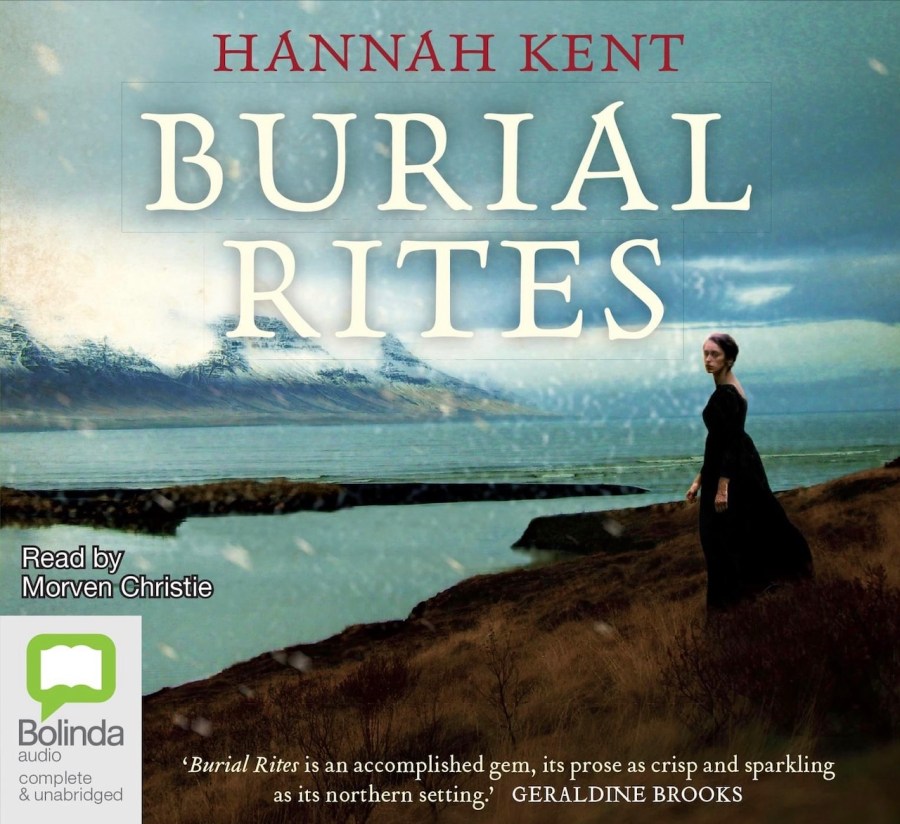
Burial Rites by Hannah Kent

To know what a person has done, and to know who a person is, are very different things.

Iceland’s last public execution took place in 1829 when a man and a woman were beheaded for a murder that took place on a remote farm. The woman was detained on a farm over winter whilst she awaited her execution as there were no jails. Hannah Kent’s meticulously researched award winning novel, Burial Rites, imagines that woman story.

She made mistakes and others made up their minds about her. People around here don’t let you forget your misdeeds. They think them the only things worth writing down.

The harsh Icelandic setting of the novel amplifies the brutal reality of class and peasant life of the time. Whilst interned on the farm of Margret, Jon and their two daughters, with a year to live, Agnes reflects on her life leading up to the murder. Her presence creates tensions in the family obliged to keep her, and suspicion in the local rural community. Priest in training, Reverend Tóti, there to help Agnes come to terms with her fate is the device that helps unravel Agnes’s story, maintain peace in the family and develop their relationship with the condemned woman.

Up in the highlands blizzards howl like the widows of fishermen and the wind blisters the skin off your face. Winter comes like a punch in the dark. The uninhabited places are as cruel as any executioner.

Kent has conjured up a voice from the margins in Agnes, a whip smart, dirt poor peasant girl – a combination that set her up for trouble in the times when intelligent outspoken women were cause for grave concern. It was these qualities that drew the attention of freethinker Naan Ketilsson whom she was subsequently accused of murdering. She is only a whisper away from being called a witch.

They see I’ve got a head on my shoulders, and believe a thinking woman cannot be trusted.

The language and voice in the book are striking and amplify the gothic feel of the story through its analogies and painterly descriptors. Burial rites is gothic romance with the feel of an Icelandic saga that deals with ordinary people living in extreme conditions. A remarkable, dark debut novel by Hannah Kent who went on to write The Good People and Devotion.

“He lay back down on the snow. “What’s the name for the space between stars?” “No such name.” “Make one up.” I thought about it. “The soul asylum.”

Book review: The Animals at Lockwood Manor by Jane Healey

The Animals at Lockwood Manor is a gothic queer historical fiction come love story set in London in 1939.

Awkward but determined Hetty Cartwright, an assistant at the history museum has to evacuate the museums sizeable taxidermy collection to a safe place called Lockwood Manor in the countryside. Lockwood turns out to house both attraction and danger.

This was their chosen sacrifice: where other owners of country houses would be preparing for evacuated children and babies, the Lockwood would receive a quiet menagerie

The taxidermied animals move around the house at night, a ghost lurks the hallways, the house staff are hostile, as is Major Lockwood who owns the property, and bugs start eating the taxidermy. However, Major Lockwood has a beautiful but emotionally unstable daughter Lucy and the two women develop a bond.

I had never been the sort of person who was first to offer sympathy, a handkerchief, a listening ear, to an acquaintance who looked distressed, but something about Lucy made me wish to be. I wanted to help her; I wanted to make her smile.

The story is a slow burn. Gently spooky, atmospheric and moody with plenty of creepy cliffhangers. Themes including misogyny, lesbian love, outcasts, colonisation, class, sexual violence and facing your fears. In was particularly fascinated by the taxidermy.