Book review: Lucy by the Sea by Elizabeth Strout

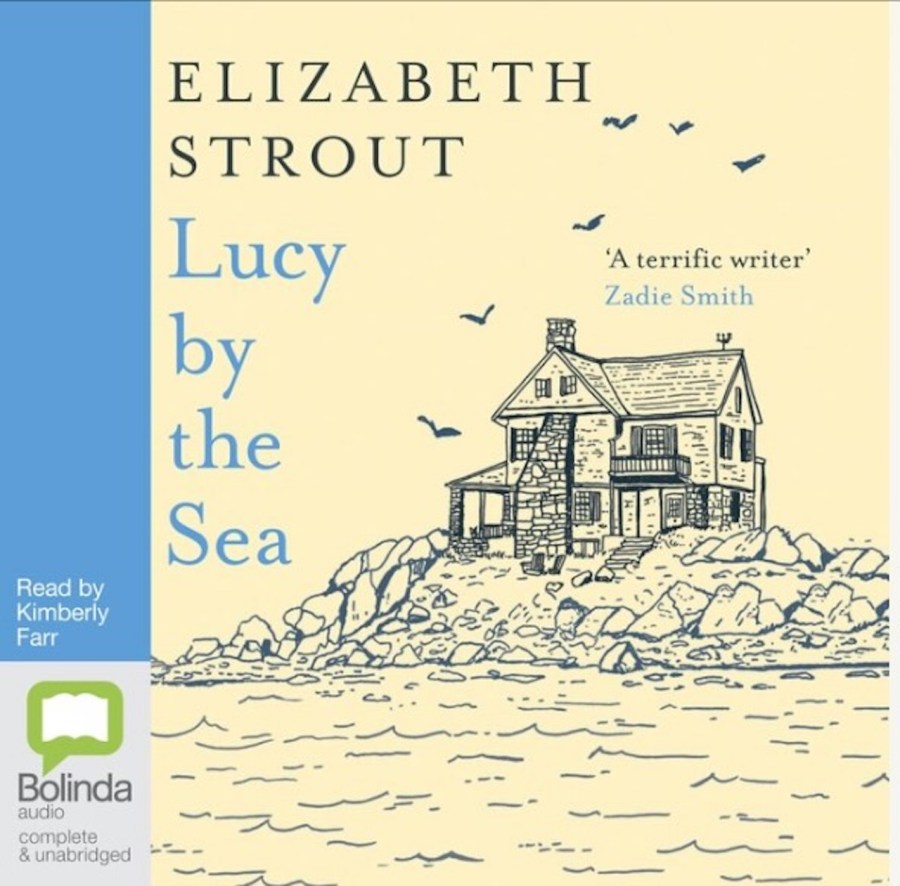
Have you ever naively read a book at random and come away thinking it was non-fiction, then to be told a friend it was fiction? I confess this is what happened to me when I red Lucy by the Sea by Elizabeth Strout. I think it is probably a sign of a very well crafted novel.

It is a gift in this life that we do not know what awaits us.

Lucy by the Sea is a sequel to a book called Oh William, that I have neither read, nor was aware of. Perhaps I was just in a general state of vagueness when I picked up Lucy by the Sea! Needless to say it holds up perfectly well as a stand alone novel.

We all live with people — and places — and things — that we have given great weight to. But we are weightless, in the end.

When the pandemic strikes, Lucy’s ex-husband, a scientist, sees what’s coming and takes charge. He rents a house on the coast of Maine and insists that Lucy goes there with him to wait it out for a few weeks. Lucy is grieving the death of her second husband and goes along with Williams demands in a state of detachment bewilderment. William also begs their daughters Becky and Chrissy to leave New York with their husbands – one does, and one doesn’t.

Who knows why people are different? We are born with a certain nature, I think. And then the world takes its swings at us.

Lucy is a midlife writer and what follows is her account of the day to day and minute of what we all experienced through the pandemic. Working from home, cancelled events, people dying on ventilators, no funerals, face masks, surgical gloves and hoarding supplies. Lucy and Williams fill their days with walks along the cliffs, trying to work, and to manage familial relations from a distance. Lucy becomes frustrated with their circumstances, she hates Maine and at times cannot stand William. He is endlessly patient and as time passes, they become closer.

What is it like to be you? I need to say: This is the question that has made me a writer; always that deep desire to know what it feels like to be a different person.

Lucy by the Seas is a moving, meandering account of the pandemic that exquisitely captures the frustration, boredom and fears experienced across the globe during the pandemic before vaccines became available. It is an extraordinary story about the ordinary in extraordinary circumstances.

Book review: Cat Lady by Dawn O’Porter

Everyone has heard of the archetype of the crazy cat lady…the sometimes humorous, sometimes affectionate, label for a cat hoarding spinster. Dawn O’Porter has taken the concept and blown it up large in her rom-com novel Cat Lady.

People who hate cats are like atheists, they cannot get through a conversation without telling you their views. There is such a righteousness that comes with it. You tell someone you have a cat, and they tell you, to your face, that they hate the thing you love. There are so few instances in life where this is acceptable.

Mia is a successful businesswoman in her forties working for a boutique jewellery designer. She is married to Tristan and step mother to his son from a previous marriage and goes out of her way to make sure their life runs like clockwork. Tristan and Mia retain separate bedrooms due to Mia’s devotion to her cat Pigeon and Tristan’s aversion to said cat. Tristan’s ex-wife, with whom he still attends regular counselling is a constant in their lives.

There is no such thing as ‘just’ a pet. They are family, our heart and soul. It’s not fair that their lives are so short, and even worse when their lives are cut shorter than they should be. I wrote this book because pet grief is real, and it deserves to be written about. Be there for your friends when this happens, they really need you.

Mia is complex in ways that unfold with the story. She joins a pet bereavement group, despite Pigeon being very much alive. The bereavement group becomes critical to Mia’s wellbeing as her life starts to fall apart after she catches her husband having sex with his ex-wife in their kitchen and she loses her job. Mia is forced to make decisions about how she really wants to live and we, the reader, get to go along for the hilarious, tragic ride.

If you can’t scratch your itchy bush in a doctor’s waiting room, then where can you scratch it?

I’m more of a dog person myself, but I found Cat Lady to be both amusing, tragically sad, and cringe worthily politically incorrect.

Book review: Thorn In My Side by C.J. Skuse

I did that thing I wouldn’t normally do…I dove right into the middle of a series. I have never ready C.J. Skuse before, but found their darkly humorous thriller, Thorn In My Side, uncomfortably hilarious and enthralling. And best of all, it didn’t matter that I have not read the first three books.

Rhiannon Lewis is a serial killer trying to live a quiet life. She had to change her identity (now known as Ophelia) and move to San Diego to escape the law in England. She left her daughter behind in England and has one clandestine phone call per month with her sister for updates on her daughters wellbeing.

The old Penny D has been a boon for a serial killer in hiding. Stay-at-home orders. Forced distancing. No meaningless conversations on dog walks. Face masks. Little did I know when I had facial reconstruction surgery that I’d pen the next year and a half behind a fucking mask but there you go.

Ophelia lives with her South American fiancee Raf who has a talent for taming her fiery temper, and she hasn’t killed anyone for more than 800 days (yes, she’s counting). Everyday she still thinks about killing and writes a list of the type of people she would target.

Her restraint eventually fails when her soon-to-be sister in-law calls her for help with her abusive ex. Before long she finds herself with more bodies on her hands, but after all, like Dexter, she only kills bad people. Meanwhile, Rhiannon struggles with the fact that her man, who she adores, and his family do not truly know her (not even her real name) and she want’s to be seen. But how do you tell your sweetheart that you are a serial killer?

One old fart’s petunias won’t grow, he digs a bit too deep to check for tree roots and hits a femur. And suddenly my name is everywhere again. There are debates about me on morning TV. Sales of Rhiannon T-shirts spike again. Overly woke TikTokkers with no discernible qualifications perform monologues telling ‘the kids’ not to obsess about murderers and to always choose kindness.

The story ends on a cliffhanger…

I enjoyed reading a thriller told from the point of view of a villain who manages to make the reader sympathetic to such incredibly anti-social behaviour, to the point where you can see the value in the service she is providing…bwahaha!

Book review: The Angry Women’s Choir by Meg Bignell

If you’re a middle aged feminist (or you love a middle aged feminist) who relates to the concept of being invisible and you are looking for a light summer read, The Angry Women’s Choir by Meg Bignell could be for you. It’s a cracker of a yarn, and perfect for curling up on the sofa with on a wet summer afternoon.

Be a good listener. Don’t join a conversation merely to wait for your turn to speak or to offer advice. Joint to listen (from La Lista).

Freycinet Barnes is a woman with an unusual past who has eked out an idyllic, ordered middle class life in Tasmania with her successful husband and three children. One day after dropping her popular, award winning dancer daughter at the Derwent Dance Academy, she goes for a walk and distractedly steps off a curb into the path of a Fiat 500 occupied by Kyrie and Rosanna, two members of the Moonah Women’s Choir.

Frey gets up and puts the kettle on, washes a few dishes, then says, ‘I got hit by a car at low speed last week.’
‘How’d you go with that?’ Roger briefly scans his daughter for signs of injury.
‘Not bad. I jumped. It was a Fiat 500.’

Little does Freycinet realise that soon after she catches her husband in the embrace of another woman, these women will change her life forever. The Moonah Women’s choir are a motley band who love to sing. Each is drawn with wonderful characterisation that develops to its full potential over the course of the novel as they come fully into themselves.

Home is one thing, but only when you step out of it and see other places and other worlds will you know that home is everything (from La Lista).

There is Italian Rosanna, mother and wife who has a terminal illness and writes a list for those she is leaving behind (items from La Lista are scattered through the novel); Bizzy, the choir director and lifetime advocate and protester for just causes; Eleanor who is learning to feel emotions; Avni, who came to Australia as a refugee and writes beautiful music; Irene who sees and speaks to her dead husband; Quin, reformed criminal pregnant with triplets; and more. The main character, Freycinet, is of course full of surprises, but you’ll have to read the novel to find out about her secrets.

There are two things you need to know about women and you’ll be all set,’ says Roger. They wait as he pauses for effect. ‘She can eat your chips, but you can’t eat hers. Also, mark in your diary when her hormones are on the rise and set down eggshells for yourself. Hormones are a great, powerful mystery and you’d do well to do the washing up for them.’

The Angry Women’s Choir is a story about friendship, about not letting middle age put you into a box, about finding your inner voice and holding your own space. The novel is funny and heartfelt and quintessentially Tasmanian.

Before you give your heart away to anyone, make sure they are kind to animals and think first are funny (from La Lista).

Book Review: The Philosopher’s Doll By Amanda Lohrey

The Philosopher’s Doll by Amanda Lohrey is about domestic politics and conflict between the head and the heart. What happens when a woman’s biological clock is ticking and her partner is reluctant to commit to children?

I was fascinated by this novel, in part because I have never experienced the biological clock phenomenon, though I have been witness to it in friends. The Philosopher’s Doll delivers a deep three-dimensional dive into the inner thoughts of couples grappling with the issue.

Lindsay, a Melbourne philosophy academic and Kirsten, a counsellor are renovating their house. Their divergent priorities lead increasingly to arguments and perverse behaviours. He has other plans he wants to pursue, including completing the house renovations before committing to having children. He decides, without telling her, to buy Kirsten a puppy as a kind of substitute. Kirsten’s biological clock is getting louder, and after a drunken night of sex, she falls pregnant and finds herself with a conundrum. She is unable to tell Lindsay and unable to decide to terminate her pregnancy.

But now she is even more withdrawn from him, and has taken to compensating for her indecision with a series of ruthless fantasies. She will deliver an ultimatum and if he reacts badly, she will leave him. She will live somewhere in a small, light-filled apartment and it will just be the two of them, mother and child. The sperm has flown to the mark: the father has served his purpose and he can be dispensed with. These fantasies come to her like little jabs of false cognition, and then fade

As the story unfolds, Kristen and Lindsay reveal less and less of themselves to each other and more and more to the reader through their inner narratives. There is then an abrupt entrance of a third narrator some ten year later, Sonia, a student infatuated with Lindsay, who reveals what happened after the events, the decisions Lindsay and Kristen made, and who they became.

The Philosopher’s Doll is a rich, multi-layered dive into a very real life conundrum and how people grapple with very personal decisions when life throws them wildcards. Lohery is also author of The Labyrinth, which won the Miles Franklin Literary Award and the Prime Minister’s Literary award for fiction in 2021. Her writing is not light, but it is elegant and marked by profound characterisation and is beautifully meditative to listen to in audiobook form. Her work is born out of deep thought, clashing personal narratives, vexed choices, and meditations on the complexity of interpersonal relationships.

Book review: Lessons in Chemistry by Bonnie Garmus

Lessons in Chemistry by Bonnie Garmus is an original, laugh out loud, keenly observant romp through through the world of sexism, discrimination and stereotypes of the late 50s and early 60s.

Your days are numbered. Use them to throw open the windows of your soul to the sun

The story opens in 1961 and is told (mostly) by the no-nonsense Elizabeth Zott, a quirky, self-assured pioneering chemist, feminist, cooking show host, mother of an illegitimate daughter, and a very intelligent and insightful dog.

I don’t have hopes,” Mad explained, studying the address. “I have faith.” He looked at her in surprise. “Well, that’s a funny word to hear coming from you.” “How come?” “Because,” he said, “well, you know. Religion is based on faith.” “But you realize,” she said carefully, as if not to embarrass him further, “that faith isn’t based on religion. Right?

Elizabeth Zott’s profession was as an unapologetically blunt and brilliant research chemist, but her career had been frustrated because a) she’s a woman b) she’s unapologetically independent c) she lives with the man she fell I love with (her soul mate) but refuses to marry him d) her lover dies and she bears his illegitimate child e) misogyny.

No surprise. Idiots make it into every company. They tend to interview well.

By an accident of fate she becomes the star host of television cooking show, Supper at Six, after the love of her life dies and she is fired from her job at the research institute. She decides to ignore the show’s producers and uses the platform to speak to millions of housewives about realising their own potential.

“I call this the ‘love at first sight’ bond because both parties are drawn to each other based solely on visual information: you like his smile, he likes your hair. But then you talk and discover he’s a closet Nazi and thinks women complain too much. Poof. Just like that the delicate bond is broken. That’s the hydrogen bond for you ladies — a chemical reminder that if things are too good to be true, they probably are.”

Lessons in Chemistry is brimming with idiosyncratic characters including Elizabeth’s soul mate, fellow scientist and Nobel-Prize nominated, grudge holding, orphaned, rower who doesn’t like rain, Calvin Evans; her highly inquisitive and intelligent daughter Mad Zott; their pooch, failed bomb disposal dog Six-Thirty; neighbour Harriet Sloane who hates her husband but holds out the hope of true love; and Walter Pine, TV producer and single father of Mad’s friend who steals her lunch.

Whenever you feel afraid, just remember. Courage is the root of change – and change is what we’re chemically designed to do. So when you wake up tomorrow, make this pledge. No more holding yourself back. No more subscribing to others’ opinions of what you can and cannot achieve. And no more allowing anyone to pigeonhole you into useless categories of sex, race, economic status, and religion. Do not allow your talents to lie dormant, ladies. Design your own future.

Garmus’s debut, Lessons in Chemistry covers serious themes with dark comedic grace and absurdity through a fresh lens. The novel won the Australian Book Industry Awards International book of the year. It was a joy to read and one of those rare books I couldn’t put down, and I love that Garmus was 65 when it was published – what an inspiration!

Book review: Sedating Elaine by Dawn Winter

Sedating Elaine is a tale about broken hearts, bad decisions and unresolved childhood trauma told with dry, dark humour.

Young Londoner, Francis drinks and takes drugs to avoid her feelings, problems and a girlfriend she doesn’t really want. Inevitably the drugs become her problem when she finds herself in debt to her drug dealer for a lot of money she doesn’t have. Her job in a restaurant won’t raise what she needs before her dealer comes good on his threat and sends his debt collectors around to teach Francis a lesson.

This is the problem when a person makes everyone feel special; it means none of them are special.

Francis is still hung up on the last girlfriend who dumped her. She doesn’t particularly like her current sex crazed girlfriend Elaine who she picked up at a bar one night and has been hanging around ever since. But she asks Elaine to move in and pay rent so she can pay off her debt.

Francis was the sort of person who accumulated incredibly short, intense relationships that ended explosively, beyond repair, well beyond salvaging a friendship

When Elaine moves in with all her stuff and her noise, Francis starts to be driven mad. She craves quiet and alone time, so she decides to drug Elaine to keep her quiet until she’s paid her debt. Then she’ll dump her.

Elaine greeted her at the door wearing g a face of concern and nothing else.

The morally unhinged cringeworthy protagonist in Sedating Elaine will take you on an outrageous rollicking ride through her dysfunctional life. The debut novel was an easy, if uncomfortable read that had me laughing inappropriately all the way through.

Book review: The Island of Missing Trees by Elif Shafak

I have been know talk to trees and animals myself, so a novel that includes the point of view of a fig tree was enticing. The Island of Missing Trees by Elif Shafak is a beautiful story about the turbulent history of Cyprus and its impact on the lives of ordinary people. The story contains three narratives.

Because in real life, unlike in history books, stories come to us not in their entirety but in bits and pieces, broken segments and partial echoes, a full sentence here, a fragment there, a clue hidden in between. in life, unlike in books, we have to weave our stories out of threads as fine as the gossamer veins that run through a butterfly’s wings.

A forbidden marriage between a Greek Christian and a Turkish Moslem during the post colonial violence in Cyprus is so disapproved of that Kostas and Defne Kazantzakis move to England. As young lovers in 1974 they met in secret at The Happy Fig, a tavern owned by two men who understand forbidden love.

That is what migrations and relocations do to us: when you leave your home for unknown shores, you don’t simply carry on as before; a part of you dies inside so that another part can start all over again.

Kosta and Defne’s 16-year-old Ada in London in the 2010’s is grieving her mother’s death when her aunt Meryem arrives and unravels the Cypriot history of Ada’s parents.

So I guess it is in my genes, this melancholy I can never quite shake off. Carved with an invisible knife into my arborescent skin.

The third narrative belongs to the talkative fig tree originally growing at the The Happy Fig tavern. A cutting of the fig is transplanted into an English garden by Kosta.

I wish I could have told him that loneliness is a human invention. Trees are never lonely. Humans think they know with certainty where there being ends and someone else’s starts. With there roots tangled and caught up underground, linked to fungi and bacteria, trees harbour no such illusions. For us, everything is interconnected

The Island of Missing Trees is about beauty and violence, secrets, history, natural history, love, trauma and resilience. The story examines ordinary lives can be recast by societal events, what compels someone to leave their homeland, the adjustments of immigration and the impact of the consequent loss of culture.

Book review: Biography of X by Catherine Lacey

The title of this book—as titles so often are—is a lie.

Biography of X by Catherine Lacey is an odd, but compelling genre-bending work of fiction. It is written in the style of a biography, including photographs, bibliography and references with footnotes, by a narrator who is a journalist. Biography of X is set in a USA with an alternative history in which the southern states have succeeded during the ‘great disunion’ of 1945 and become a dictatorial theocracy.

The sky was moonless and blasted full of stars, and as I looked at them, exhausted into naïveté, I felt almost fearful of the vastness above me.

X was an eclectic artist, of books, music and art installations. Before her death in 1996, the mysterious X had collaborated with the likes of David Bowie and Tom Waits. She took the name X in 1982. It was unclear whether any of her many prior pseudonyms where her real name.

The first winter she was dead it seemed every day for months on end was damp and bright—it had always just rained, but I could never remember the rain—and I took the train down to the city a few days a week, searching (it seemed) for a building I might enter and fall from, a task about which I could never quite determine my own sincerity, as it seemed to me the seriousness of anyone looking for such a thing could not be understood until a body needed to be scraped from the sidewalk.

The narrator/author of the biography is, CM Luca, X’s widow. She is obsessed with trying to find the truth about the woman to whom she was married. She is motivated to write the biography after becoming infuriated by another published by someone else that she feels misrepresents her beloved.

This pathetic boy—no biographer, not even a writer—was simply one of X’s deranged fans. I don’t know why she attracted so many mad people, but she did, all the time: stalkers, obsessives, people who fainted at the sight of her. A skilled plagiarist had merely recognized a good opportunity and taken it, as people besotted with such delusion hold their wallets loosely.

Despite their marriage, when X died, Luca did not know her birthplace, date or real name. She sets out to piece together X’s past, untangle fact from fiction and process her own grief through a series of interviews with former spouses, lovers, and friends. Luca trawls through papers left behind by X trying to make sense of who her wife was and by extension their relationship and herself.

We cannot see the full and terrible truth of anyone with whom we closely live. Everything blurs when held too near.

X was clearly brilliant, difficult and troubled in the way that great artist often are. Her relationship with Luca was imbalanced and dysfunctional. Luca traces X’s origins to the Southern Territories and seeks out her family of origin, her roots as a revolutionary or terrorist depending on whom she speaks to.

But I did not find this so awful. Grief has a warring logic; it always wants something impossible, something worse and something better.

Biography of X is one of the most unusual and ambitious works of fiction I have read in a long time. Its mesh of genres, bending of history, and melding of the real with the imagined is discombobulating and enthralling.

Perhaps your ability to feel it waned, perhaps you are the one who ruins things, it was you, you—and there it was again, that useless, human blame two people will toss between each other when they become too tired or weak to carry the weight of love.

There was so much in this novel, both in form, content and emotion that it took me a long time to read it, but I am glad I did.

Book review: Cleave by Nikki Gemmell

Cleave by Nikki Gemmell is a story about the relationship between a father and his daughter set against the stark landscape of the desert in the Australian outback.

The story begins with a cheque. The envelope that carried it was bruised with grubbiness and worn thin from too many hands. The envelope took two months to find her. The amount of the cheque was substantial and the typewritten instructions were blunt: hunt him down

Thirty year old Snip Freeman is a nomadic loner and artist based in Sydney. Her grandmother died and left her enough money to buy a ute and a request to return to Alice Springs and find her father, Bud. Dave responds to an add Snip places for someone to share the journey and the two strike up a relationship of sorts. Dave is fascinated by Snip’s free spiritedness, even after she abandons him.

A man told her once she’s the type of woman men never leave. They don’t. She leaves them. She gives them the feeling that any minute she’ll be off, so while they’re with her they’re obsessed.

Snip and Bud’s relationship is complicated. He absconded with her when she was a child after his relationship with her mother ended, cut Snip’s hair and turned her into a boy to disguise who she was. Their reunion almost becomes deadly when the two of them take trip into the desert.

People without curiosity are like houses without books: there’s something unsettling about them.

Cleave was written in 1998, but its outback setting gives it a timeless quality. The story includes Indigenous characters written without appropriation – perhaps a consequence of Gemmell’s personal experience of living in Alice Springs.