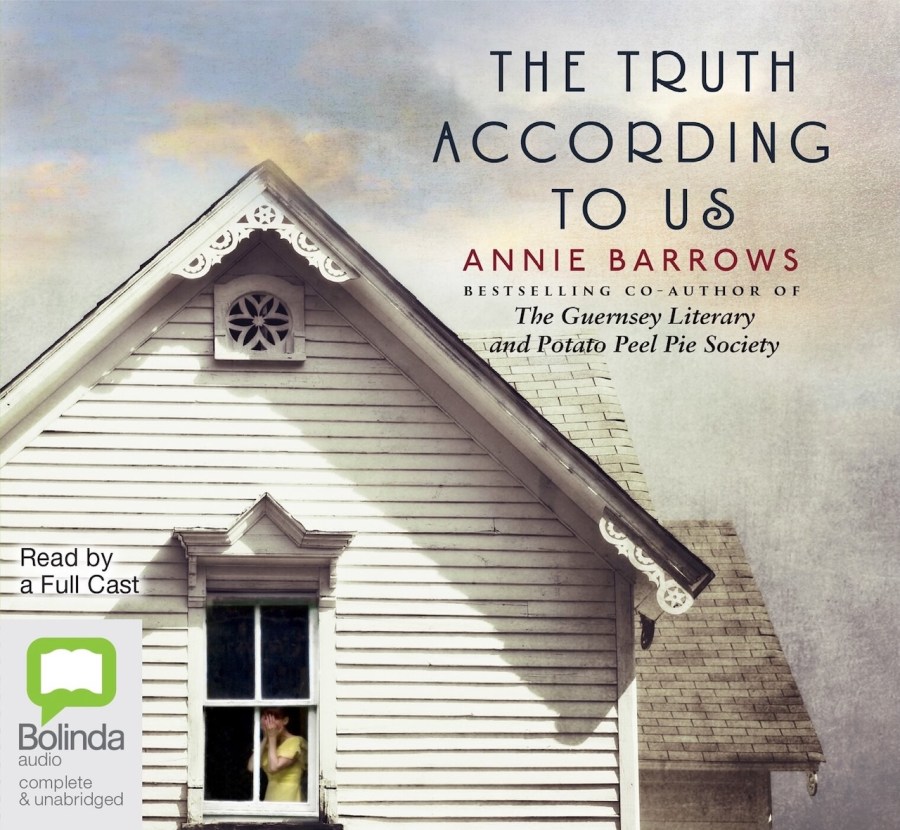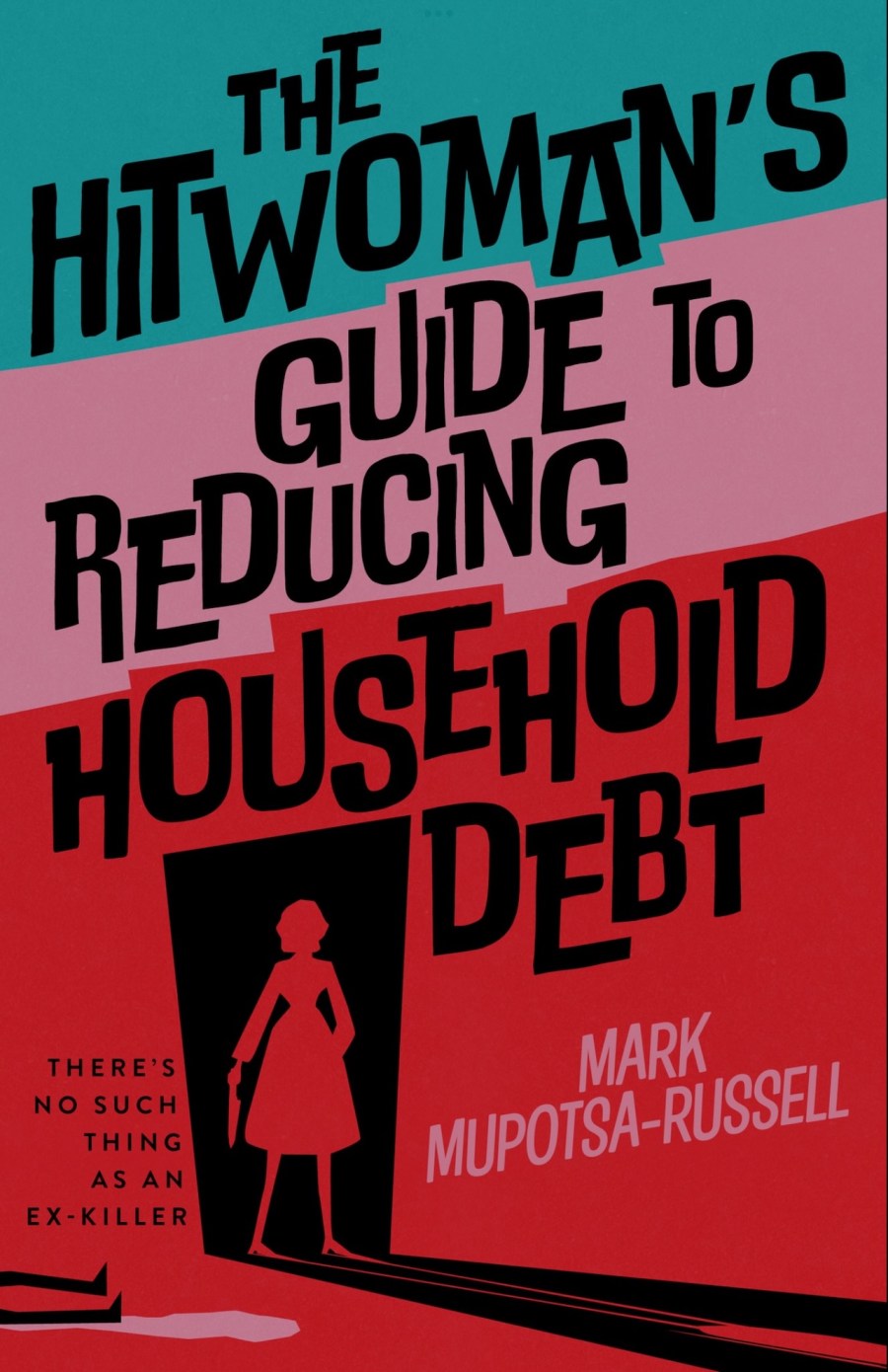
Book review: Conversations with Friends by Sally Rooney

Set in Dublin during financial crisis in 2008, Conversations with Friends is written by Irish author Sally Rooney, who also wrote Normal People.

Everyone’s always going through something, aren’t they?

Conversations with Friends is a meandering story focussed largely around Francis and her relationships with the people around her. Francis is a mass of contradictions. Intelligent, ironic, fragile, nervous and terrified of showing her vulnerability to others.

I realised my life would be full of mundane physical suffering, and that there was nothing special about it. Suffering wouldn’t make me special, and pretending not to suffer wouldn’t make me special. Talking about it, or even writing about it, would not transform the suffering into something useful.

Bobbi is a pragmatic lesbian who goes to university with Francis. She and Francis were lovers for two years and remain friends, performing spoken work poetry together. 

The acclaim also felt like part of the performance itself, the best part, and the most pure expression of what I was trying to do, which was to make myself into this kind of person: someone worthy of praise, worthy of love.

After one performance Francis and Bobbi meet Melissa, a photographer and essayist a decade older. She wants to profile them for a magazine and they go to her house where they meet her husband, Nick an actor. Francis begins an elicit and toxic affair with Nick in which their need to feel wanted by each other seems to become necessary in order to feel anything about themselves. 

I was like an empty cup, which Nick has emptied out, and now I had to look at what has spilled out of me: all my delusional beliefs about my own value and pretensions to being a kind of person I wasn’t. When I was full of these things I couldn’t see them. Now that I was nothing, only an empty glass, I could see everything about myself.

The novel tracks the next seven months and the relationships between these four individuals, though largely it is Francis’s relationships with Bobbi and Nick that take centre stage. 

He was the first person I had met since Bobbi who made me enjoy conversation, in the same irrational and sensuous way I enjoyed coffee or loud music.’

Conversations with Friends is a very human book about poor choices, identity formation, sexuality, desire, and power dynamics.

Book review: Appreciation by Liam Pieper

Appreciation is a novel by Liam Pieper that has (apparently) many parallels to his own life as a ghost writer for celebrities. I don’t know which celebrities, because no one outside the publishing business seems to know which books he wrote, and he would be bound by some kind of confidentiality agreement. I can understand why he is a sought after ghost writer – because he writes very well.

The night of his cancellation, Oli does not sleep. He is unable to stop reading the posts calling for him to be stripped of prizes, fellowships, his honorary doctorate.

Australian queer painter, Oliver Darling (Oli) is the toast of the town until he causes himself to be cancelled after a drug fuelled rant on live television. The incident causes the value of his work to tank, infuriating investors and mobilising a mob of unsavoury debt collectors.

Oli circumnavigated the party once, twice, and settled finally into conversation with the person he found the most interesting, because she was the richest.

Appreciation is the story about how Oli got to where he is, his floundering attempts to redeem himself, salvage his career, and save his own life and that of his agent by writing a memoir with a ghost writer.

How to explain the appeal of Old? He is wonderfully charming when he needs to be. He has a way of shuffling into the room like a very old dog, turning his attention to you, and in doing so lighting up your day.

Appreciation is a satirical novel about the art world, the struggle to make money from art, celebrity, authenticity, the precarious nature of fame, toxic masculinity, personal myth and vanity, and the world of drugs and criminals. The book has received mixed reviews, but I enjoyed the journey and Pieper’s excellent writing skills.

Book review: The Hypnotist’s Love Story by Liane Moriarty

The Hypnotist’s Love Story by Liane Moriarty, is a melodramatic romantic comedy about a hypnotist, a widowed surveyor, his young son, and a stalker.

Hindsight, it’s always just a fraction too late.

Ellen is an empath and a hypnotist who is fascinated by human behaviour and helps people with issues like giving up smoking and pain management. When she starts dating single dad Patrick and he tells her about an ex-girlfriend, Saskia, who has been stalking him relentlessly, Ellen becomes intrigued by her motivation. Even when it becomes evident that she is actually one of Ellen’s clients, using a fake name and Saskia’s behviour becomes more and more obsessive and bizarre, Ellen maintains a level of sympathy for her.

Mum used to say that when she met my dad it was like a perfect love story. I thought Patrick was my perfect love story. Except he’s not. He’s the hypnotist’s love story. I’m the ex-girlfriend in the hypnotist’s love story. Not the heroine. I’m only a minor character.

The story unfolds through the duel points of view of Ellen and Saskia, and we observe Patrick’s anxiety, paranoia and anger at being constantly followed and watched through their lens. Patrick is also grieving his deceased wife while growing to love Ellen. 

I liked Kate. She was a tiny bit odd. Not eccentric, just a bit off-kilter. She always spoke a beat too late or too soon.

The Hypnotist’s Love Story is ultimately about letting go, and while it grapples with some serious topics, it does so with a sense of whimsy that keeps the story light and the villain likeable.

I’d forgotten that the best part of dating wasn’t the actual dating at all but the talking about it: the analysis of potential new boyfriends with your girlfriends.

Moriarty has a skill for amplifying ordinary human frailties and exploring them with humour through quirky larger than life, yet believable characters. The Hypnotist’s Love Story is an entertaining holiday read.

Book review: The Great Alone by Kristin Hannah

The Great Alone by Kristin Hannah is a semi-autobiographical novel about a family’s move to Alaska, set in the 1970s.

You know what they say about finding a man in Alaska—the odds are good, but the goods are odd.

Former POW and Vietnam War veteran with untreated PTSD, Ernt Allbright, decides to move his family to Alaska on impulse, hoping it will enable him to escape his torment. His hippie wife, Cora, and thirteen year old daughter, Leni, go along with it hoping the next move will restore Ernt’s wellbeing.

Alaska isn’t about who you were when you headed this way. It’s about who you become.

Of course moving a slightly unhinged man to an isolated location populated with a tight community of other people escaping civilisation for one reason or another, is unlikely to end well. As the day’s grow shorter and the winter darkness descends, Ernt’s behaviour becomes more and more bizarre and violent. Cora continues to make excuses for him, and Leni finds their living arrangements more and more claustrophobic.

like all fairy tales, theirs was filled with thickets and dark places and broken dreams, and runaway girls.

Characters brimming with eccentricities, small town politics and paranoia’s, good guys, bad guys and the vast Alaskan wilderness tell a story of human resilience and vulnerability living on frontiers.  The Great Alone is a dramatic, harrowing tale about family, trauma, small town communities, survival, and the beauty and brutality of the northern wilderness. A gripping read, but not for the faint hearted.

Book review: Yellowface by Rebecca F Kuang

A member of my writing group recommended Yellowface to me, and ironically I began reading it a few days prior to printing out my latest manuscript to give to my writing group colleagues to critique.

Every writer I know feels this way about someone else. Writing is such a solitary activity. You have no assurance that what you’re creating has any value, and any indication that you’re behind in the rat race sends you spiraling into the pits of despair. Keep your eyes on your own paper, they say. But that’s hard to do when everyone else’s papers are flapping constantly in your face.

Yellowface is a story about two ambitious young novelists who met at college. Athena has written a critically acclaimed novel that’s also secured a deal with Netflix, and she is revelling in her success. Her friend Juniper’s debut has almost disappeared from the shelves of bookstores due to poor sales, and she struggles with jealousy of her successful friend.

Writing is the closest thing we have to real magic. Writing is creating something out of nothing, is opening doors to other lands. Writing gives you power to shape your own world when the real one hurts too much.

The young women go out on the town to celebrate Athena’s success then return to Anthea’s apartment where she shows Juniper her, until now, unseen new manuscript. She also decides makes pancakes to dilute their boozy evening. Suddenly, Athena is choking on pancake, clawing at her throat, unable to breathe. She dies while Juniper is on the phone to emergency services.

But the best revenge is to thrive.

On impulse, Juniper slips Anthea’s secret new manuscript into her bag and takes it home to study. Before she knows it she’s refining and editing, then publishing the manuscript as her own work, using her middle name as her surname as it, well, sounds more Asian. June Song. And Juniper’s dream of becoming a famous writer comes true.

The truth is fluid, there is always another way to spin the story.

The trouble with deception is that you set yourself up against both your internal and external worlds, and it’s a fraught space to maintain a fake self. There’s constantly needing to convince yourself that you are not a fraud, it’s as much your work as your dead friends given all the effort you put into making it publishing ready after all. Then there’s the worry about evidence in the world that the work actually belonged to Athena, managing the reactions when people discover you are not in fact Asian, and the growing whispers on Twitter about plagiarism.

But Twitter is real life; it’s realer than real life, because that is the realm that the social economy of publishing exists on, because the industry has no alternative.

Yellowface is a literary heist about the fickle publishing industry, cultural appropriation, and writing the other. It is also a hilarious literary caper told by an unreliable narrator, about the creative life and the desire to be seen. It will particularly appeal to the writers among us. 

I wonder if that’s the final, obscure part of how publishing works: if the books that become big do so because at some point everyone decided, for no good reason at all, that this would be the title of the moment.

And, if I suddenly stop my Friday blog, you’ll know where to start looking.

Book review: Magpie by Elizabeth Day

I heard about Magpie by Elizabeth Day on a podcast I was listening to and looked it up without paying any attention to what it was about. Initially I thought it was a run of the mill, if well written, domestic drama about heteronormative relationships and trying to have children. I was about to put it down when things started to get weird.

they had to adapt their dreams, to cut the starry cloth of their imaginings to fit the circumstance of their reality,

Marisa, a children’s book illustrator, falls pregnant only three months into a relationship with Jake and they move in together. When Jake’s work has a crisis that causes his income to dip, they decide to take in a lodger to help pay the mortgage. 

That’s the problem with charm. It means you get away with stuff. It means you never have to develop a real character because no one remembers to look for one. They’re too busy basking in the glow of your attention. They’re too busy being impressed.

Kate, a film publicist, moves in. She is nice but a bit too friendly and Marisa begins to think she could have an ulterior motive. She puts her toothbrush in the master bathroom alongside Jake and Marisa’s then starts to do things like cook Jake his favourite meal. Jake seems to be oblivious.

She had mistaken the bubbles of anxiety in her stomach for a simmering romantic passion, wrongly believing that love felt unsettled, like a half-packed suitcase awaiting a trip that never comes.

Then there is a change of view point and a massive and completely unexpected plot twist, and the story takes on the tone of a baroque domestic noir thriller. And I’m not going to tell you any more as it will give too much away.

I began to realise that if I never achieved anything outwardly ever again, I would still exist. The voice in my head is not who I am.

Magpie is an exceptionally well crafted book, no wonder it was recommended on a writing podcast. It is an exemplary example of the unreliable narrator. Themes include fertility, toxic relationships, dysfunctional families, mental illness, betrayal, and the female gaze. 

Book review: Normal People by Sally Rooney

Having last week claimed I am not a romance reader, I appear to be on a bit of a run of them. Though I would say the ones I am reading are not your standard tropes. Normal People by Sally Rooney is a short economical coming of age love story.

Life offers up these moments of joy despite everything,

A couple of whip smart, awkward teenagers from the same school, but different sides of the class divide begin an intense relationship in secret. Marianne, from a wealthy but dysfunctional family is determinedly her own person, but considered a misfit amongst her peers at school. 

Marianne had the sense that her real life was happening somewhere very far away, happening without her, and she didn’t know if she would ever find out where it was or become part of it.

Connell is an awkward intelligent, sensitive, popular young jock of few words constrained by gender and tormented by his own vulnerabilities. His mother is the house cleaner for Marianne’s family mansion and the two find themselves spending enough time together to become familiar.

Connell wished he knew how other people conducted their private lives, so that he could copy from example.

After high school they both go to Trinity college in Dublin and their roles are reversed – Marianne becomes popular and Connell the outsider. Their on-again-off-again love affair is at times beautiful and sometimes painful to observe.

Generally I find men are a lot more concerned with limiting the freedoms of women than exercising personal freedom for themselves.

To begin with, Marianne and Connell are plagued with low self esteem and a tendency toward self destructive behaviours. Gradually the two shape one another to understand and feel worthy of love and overcome the mistakes they have made with one another. Through their transformation, both become better people.

All these years, they’ve been like two little plants sharing the same plot of soil, growing around one another, contorting to make room, taking certain unlikely positions.

The character building in Normal People is excellent, and the dialogue pitch perfect as the author takes the reader on a journey that is both comedic and tragic. I soon became totally absorbed in this story and particularly fond of the awkward Connell.

Book review: My Favourite Mistake by Marian Keyes

My Favourite Mistake by Marian Keyes is a contemporary romance that celebrates women in mid life. Not a romance reader? Neither am I usually, but I really enjoyed this novel – so read on.

There’s more to this story than the clickbait headlines, but yes, in simple terms, I had a dream life – then I took a flamethrower to it.

It’s post pandemic and Anna lives in Manhattan with her partner, Angelo, who she refers to as a ‘feathery stroker’. Their relationship is fond, equal and respectful but lacks passion. Her successful high flying PR job with a beauty firm is wearing a bit thin, she misses her family in Ireland, and she’s perimenopausal. Look out for a middle aged woman with fluctuating hormones!

The unfairness had made me deeply sad. Unfortunately I was paid to be manically enthusiastic, usually something I managed even if it was as fake as my eyelashes. This time it was almost impossible. The phrase burnout had been floating in my head for a while.

Sounds like a recipe for a midlife crisis right? Right. Anna walks away from it all and heads home to Ireland, moving in with one of her siblings while she decides what to do with the next phase of her life.

Although I tended towards optimism, I’d expected that my re-entry into Irish life would be bumpy. But nothing could have prepared me for just how bruising it had been.

Just when she starts to think she’s made a big mistake, a job comes up through her sisters friend whose plans to build a luxury hotel and spa have hit some blockers. They need some savvy PR to help to get the locals onboard with the project, and Anna is their woman.

Eventually, the universe threw me a bone… 

When she gets there, Anna discovers that the finance broker for the project is an old crush who shunned her many years earlier. The very hot player, Joey Armstrong.

Their tag line was Give us your body and we’ll give you back your soul. I wouldn’t have minded six moths there myself.

What unfolds is part mystery (getting to the bottom of why the locals are against the development and solving the problems), and part romance (working through her past relationship issues and her mixed feelings toward Joey, who says he’s a changed man). There is also plenty of small town and friendship dramas in the mix (Joey is the father of Anna’s best friends child). Ooh, ahh.

My Favourite Mistake is a funny, well crafted read. A deep rom com for the middle aged.

Book review: The Little Prince by Antoine de Saint-Exupéry

Written in 1942, The Little Prince by Antoine de Saint-Exupéry is a philosophical fable and allegory translated from French. It is a book about what it is to be human. The narrator, a pilot, tells the story six years after he meets the Little Prince in the desert.

The most beautiful things in the world cannot be seen or touched, they are felt with the heart.

A little boy leaves his tiny planet where he lived with a single rose. He departs out of loneliness, catching a ride with a flock of birds to travel the universe. Eventually he comes to Earth and is tutored by a fox who reveals truths to him as he learns about adult behaviour through a series of chance encounters.

If you love a flower that lives on a star, it is sweet to look at the sky at night. All the stars are a-bloom with flowers.

A pilot crashes in the Sahara desert, he will die if he cannot repair his plane. This is where he meets the Little Prince. The pilot laments the adult world and their lack of creative thought, as a child he wanted to be an artist, but was discouraged by his parents. The Little Prince recognises his drawings immediately, and asks for a drawing of a sheep. Through his relationship with the Little Prince, the pilot begins to open up and to draw again.

Grown-ups never understand anything by themselves, and it is tiresome for children to be always and forever explaining things to them.

Eventually the Little Prince realises the importance of the relationship he developed with his rose through caring for it, and that he must return to his plant to be with the flower. But he must die in order to return, so seeks the help of a sinister snake.

I have lived a great deal among grown-ups. I have seen them intimately, close at hand. And that hasn’t much improved my opinion of them.

At its root, The Little Prince is about how curiosity, connection and love are the antidote to uncertainty, fear and exile. A timeless story worth revisiting if you have read it before, and seeking out if you have not.

Book review: Butter by Asako Yuzuki

Butter by Asako Yuzuki is an English translation of the Japanese bestseller. It provides a fascinating insight into Japanese culture, friendships, gender relations, societal norms about body type and beauty, and our relationships with food. 

I learned from my late father that women should show generosity towards everyone. But there are two things that I simply cannot tolerate: feminists and margarine.

One of the central characters is based on the real life Konkatsu Killer, a con woman and gourmet cook called Kanae Kijimo who was convicted of poisoning three of her lovers. But the story is much more about food than murder.

The whipped butter had already started melting across the waffles’ latticed brown surface, creating a golden trickling waterfall that pooled in their hollows. Rika bit into the dough, savoring how juicy and moist it had become with all the butter it had absorbed, with a pleasant saltiness.

Tokyo journalist Rita Machinda is determined to land an exclusive interview with Manako Kijii, a blogger and exceptional cook who is in jail for murdering a number of her lovers. Rita writes to Manako and asks for her beef stew recipe to try and get an interview with the media shy murdress. 

Every night, those women would clean out the toxins that had built up in their partners’ bodies and souls over the course of the day–toxins that, if left untouched for too long, would eat a person away.

Rita rarely cooks but her correspondence and visits to Manako in jail soon become a masterclass in food, and Rita is gradually transformed. When I read the scene on her first cooking instruction from Manako, I had to try it  – steamed rice topped with very good quality butter and soy sauce. It was surprisingly tasty. But you cannot go wrong with lashings of Butter.