Book review: The Pretty Delicious Cafe by Danielle Hawkins

I don’t generally consider myself a romance reader but the current state of the world demanded something light.

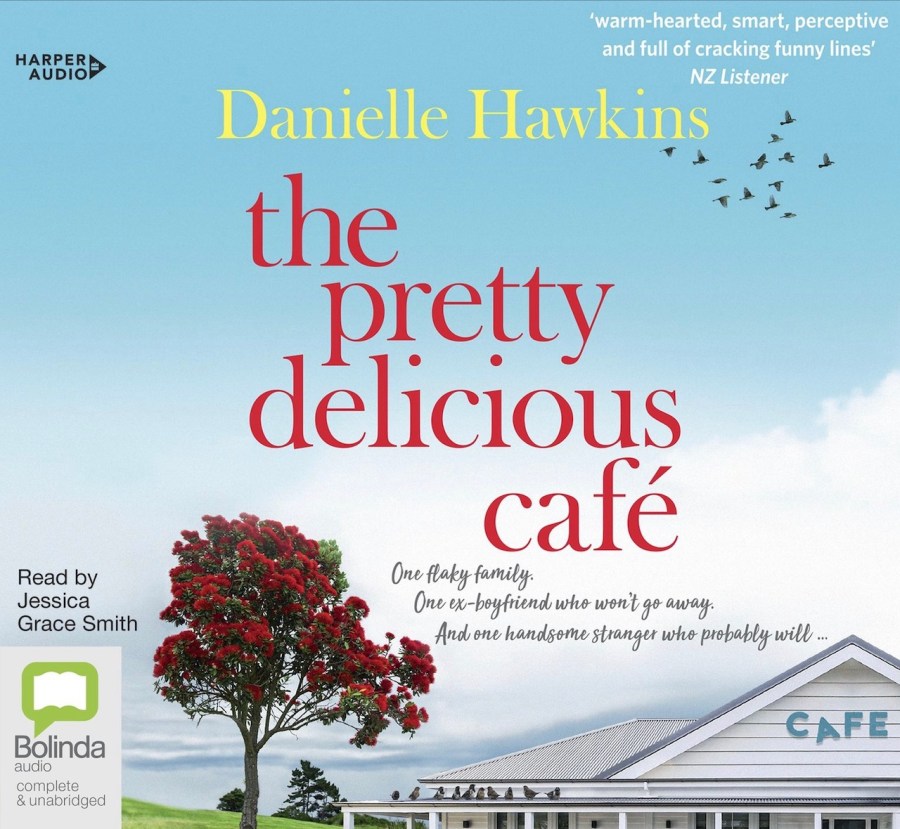
The Pretty Delicious Cafe by Danielle Hawkins is set in a small New Zealand seaside town with abundant food, twin telepathy, a hippie mung bean mother, an unhinged stalker ex-boyfriend, and a hero love interest.

Lia and her best friend Anna, who has food issues and is about to marry Lia’s twin brother, run a cafe in a seasonal seaside town. The busy season is about to arrive when a new good looking man rolls into town. Lia is attracted to him but is also trying to deal with an ex-boyfriend who isn’t taking ‘it’s over’ well.

I listened to the audio book whilst making sourdough and then gardening. The story sets a good pace and has quirky, likeable characters (except for the crazy ex). It’s a feel good eccentric romantic comedy that’s got plenty of laughs and will make your mouth water for boysenberry cheesecake. Luckily the end of the book has a catalogue of recipes from the cafe you can try out.

Book review: Sorrow and Bliss by Meg Mason

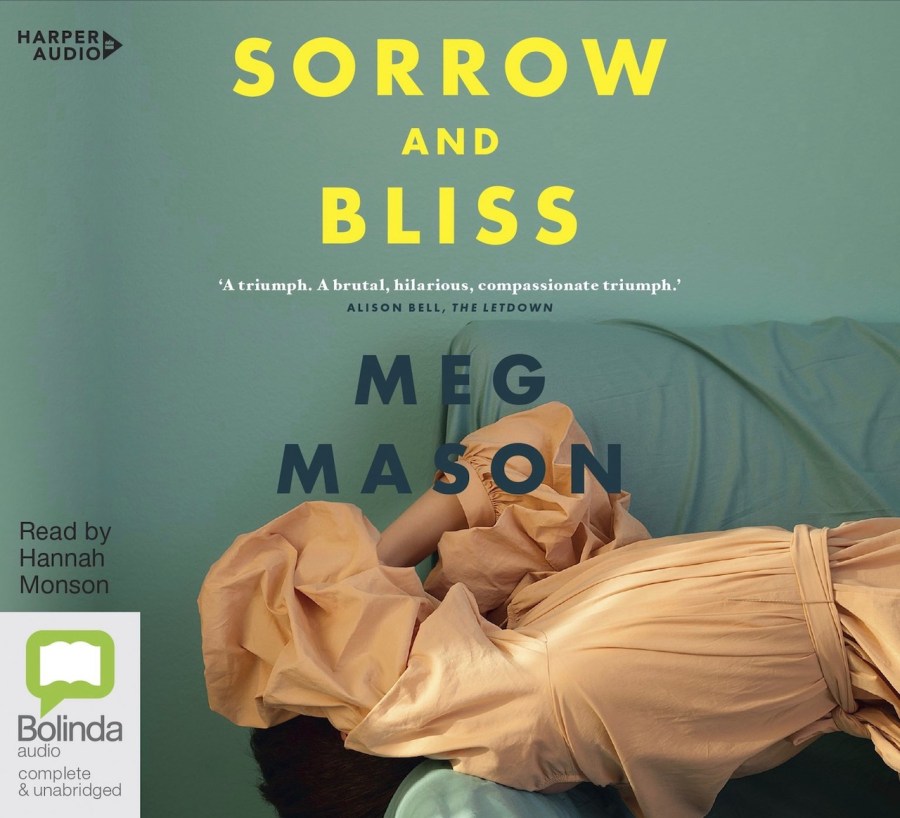
Sorrow and Bliss is one of those books that straddles commercial and literary fiction. The story made me laugh out loud one moment and cry the next. 

First novels are autobiography and wish fulfilment. Evidently, one’s got to push all one’s disappointments and unmet desires through the pipes before one can write anything useful.

Food writer, Martha, is reflecting on her life soon after separating from her husband and about six months after finally getting an accurate diagnosis and treatment for a mental illness that has plagued her for all of her adult life. She reflects on the the two decades that have passed since ‘a little bomb went off’ in her brain at seventeen.

Everything is redeemable, Martha. Even decisions that end up with you unconscious and bleeding in a pedestrian underpass, like me. Although ideally, you want to figure out the reason why you keep burning your own house down.

Martha’s telling of her life is deadpan and comically tragic. She is not a particularly likeable character, yet she becomes an endearing narrator as the reader comes to understand her struggle with her own behaviour and identity.

Everything is broken and messed up and completely fine. That is what life is. It’s only the ratios that change. usually on their own.

Sorrow and Bliss is a love story set in London and Oxford. It is a novel about mental illness and it’s effects on sufferers and those who love them, including their uniquely dysfunctional middle class families. 

After that, Nicholas got up, stretched, and told me I could have his spot because he just remembered a girl he need to make amends with because his final act before rehab was putting a nine iron through her windscreen after taking more than his recommended daily intake of methamphetamine. ‘Which I discover is non. Back shortly.’

Various doctors, psychologists and prescriptions have failed to help Martha. She and those around her fall back on the belief that she is simply too sensitive, and a bit difficult. Martha searches for answers, knowing that something isn’t right. Her experience exposes the fallibility of the medical profession that often gets things quite wrong, and through doing so can change the course of a persons life in ways that can be quite damaging.

Suffering is unavoidable, the only thing one gets to choose is the backdrop

Interestingly Martha’s illness is never named. I found this both liberating and frustrating. It forces the reader to understand her issues purely from her perspective on the world and the lived experience of her illness. It also frustrated that very human drive to label and categorise things.

I was the victim, and victims of course are allowed to behave however they like.

Book review: Pig Island by Mo Hayder

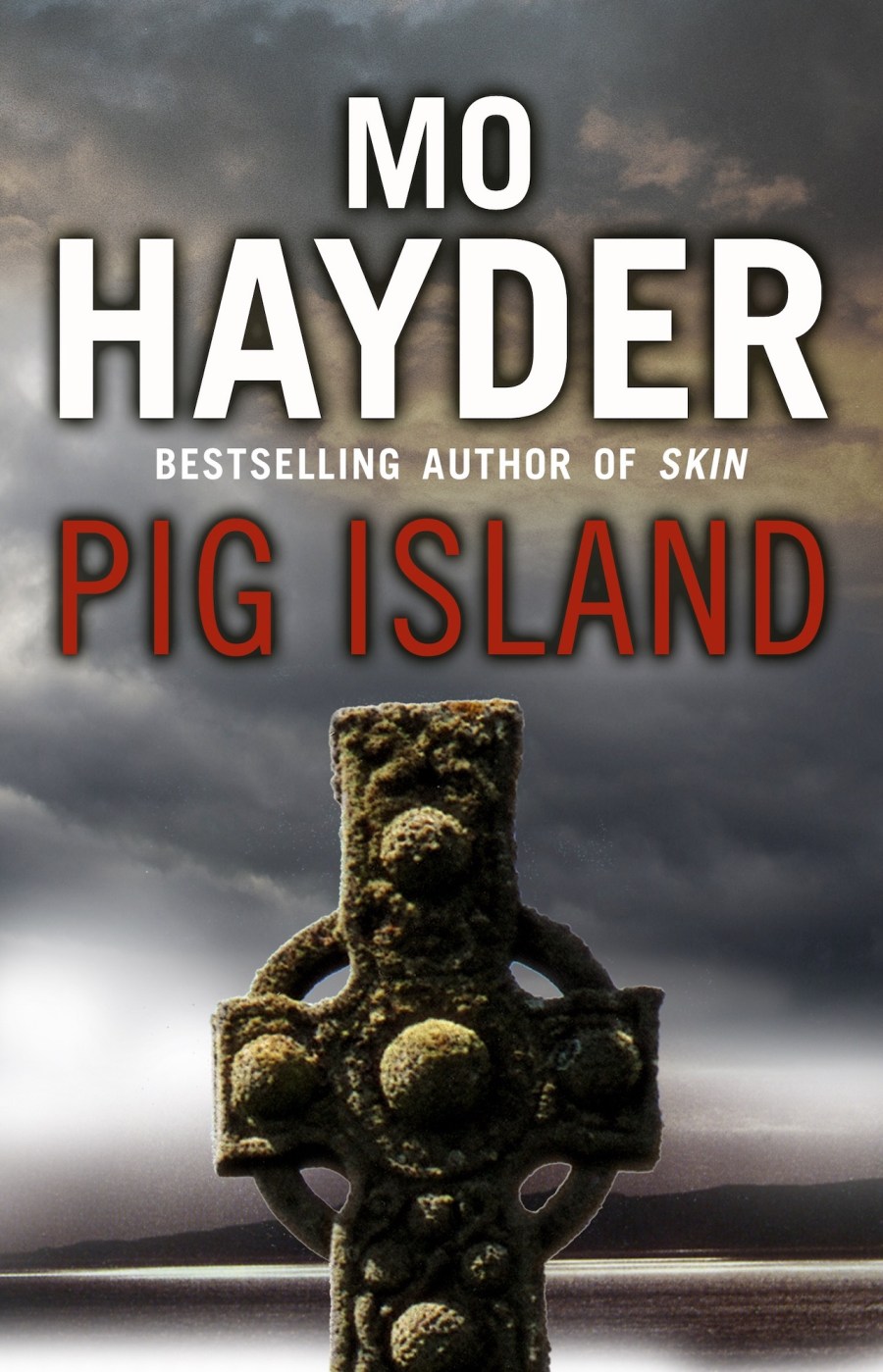
Grisly. A faith healing cult on an isolated island divided by a fence and inhabited by wild pigs, the preacher gone mad and isolated away from his flock with his disabled daughter on one side, the rest of the faithful on the other. A story starts circulating on the mainland that a half human-half animal creature has been seen wandering the island.

Everyone hates him. Me – I think I can see the sun shine when he bends over.

Journalist Joe Oakes is invited by the Psychogneic Healing Ministries to visit the island in order to debunk the myth that a devil is running around. The cult members don’t realise that Joe has history with the mad minister. Years previously he wrote an article under a pseudonym calling the minister a sham healer. 

What unfolds is a gruesome, page turning thriller with a twist that will make your skin crawl. If you can’t stomach a bit of graphic violence it may not be for you. It may also give you nightmares.

Pig Island is the fourth novel by Mo Hayder, the pen name for Beatrice Bastin who died recently from complications of Motor Neurone Disease. Pig Island was nominated for a Barry Award for Best British crime novel and a CWA dagger.

Hayder wrote ten thrillers, earning herself the title of ‘queen of fear’. There is also another due out in 2022 written under the name Theo Clare:

Jack Caffery series

  • Birdman (2000)
  • The Treatment (2001)
  • Ritual (2008)
  • Skin (2009)
  • Gone (2010)
  • Poppet (2013)
  • Wolf (2014)

Stand-alone novels

  • Tokyo (2004), also published as The Devil of Nanking (2010)
  • Pig Island (2006)
  • Hanging Hill (2011)

Writing as Theo Clare

  • The Book of Sand (2022)

Book review: Memorial by Bryan Washington

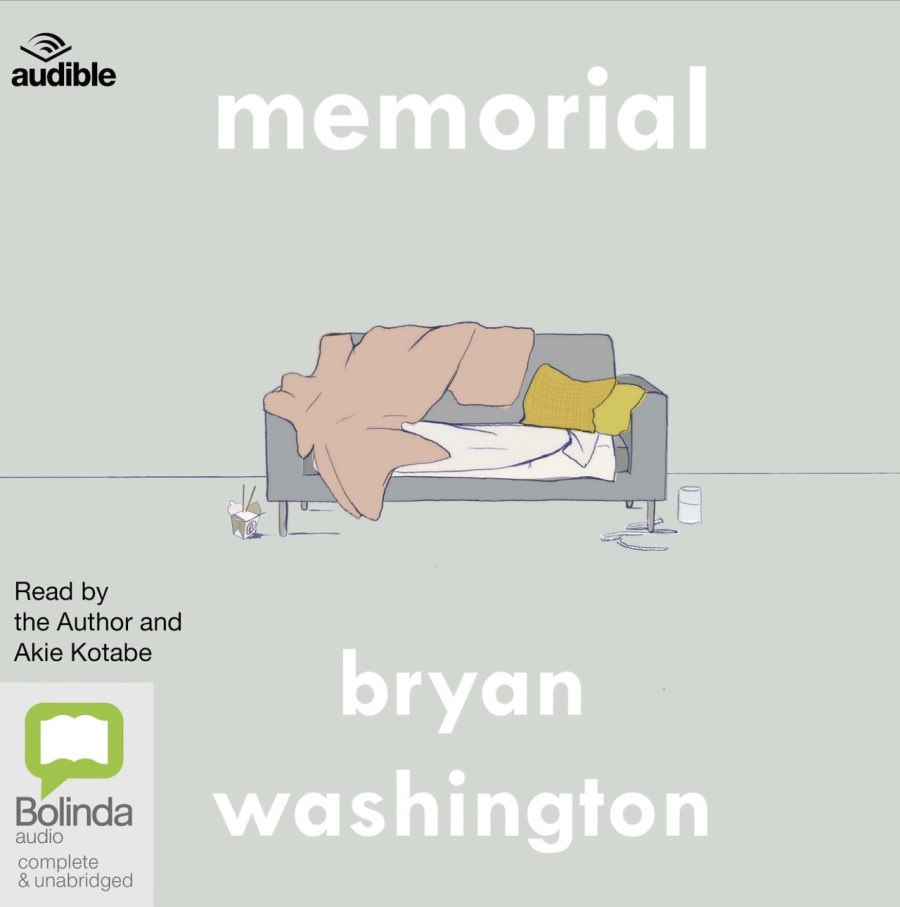
Benson and Mike’s relationship has never been easy and now it’s in a rut. Their fights with words and fists end in sex. Each is unsure about what their relationship is or where its going. Memorial is a modern story of the relationship between two gay men – one Japanese, one a black man – and their relationships with their families.

That loving a person means letting them change when they need to. And letting them go when they need to. And that doesn’t make them any less of a home. Just maybe not one for you. Or only for a season or two. But that doesn’t diminish the love. It just changes forms.

Sexuality, race, class, trauma and grief are the subjects of Memorial by Bryan Washington.   The story is written in three parts across two locations – Houston and Osaka – and told from the perspective of the two men.  

You’re taking up space in another human’s brain, she said. You’re a foreign entity. A parasite. That’s a lot by itself.

Memorial opens from Benson’s perspective. His partner, Mike has decided to go back to Japan to see his dying father. Mike’s mother, Mitsuko, who Benson has never met arrives to stay the day before Mike leaves. Benson finds himself sharing a house with a Japanese woman he doesn’t know in a predominately black neighbourhood in the throes of gentrification. Mitsuko is disappointed that her son has run off to be with her ex-husband just as she arrives and resists Benson’s attempts to draw her out.

He came out of my body. He’s a homosexual. He left his mother with a stranger. I’ve already got everything I need to know.

Mike arrives in Japan and takes up residence with his estranged, dying father, Eiju, who runs a bar and pretends nothing is wrong. Mike communicates via sporadic text messages with Benson and equally sporadic conversions with his father.

There are a lot of spaces in this novel. The unanswered questions and awkward silences between characters draw your attention to what is not said, revealing that there is as much, if not more meaning in the unspoken than the spoken. A beautifully written insight into the ordinary life of men.

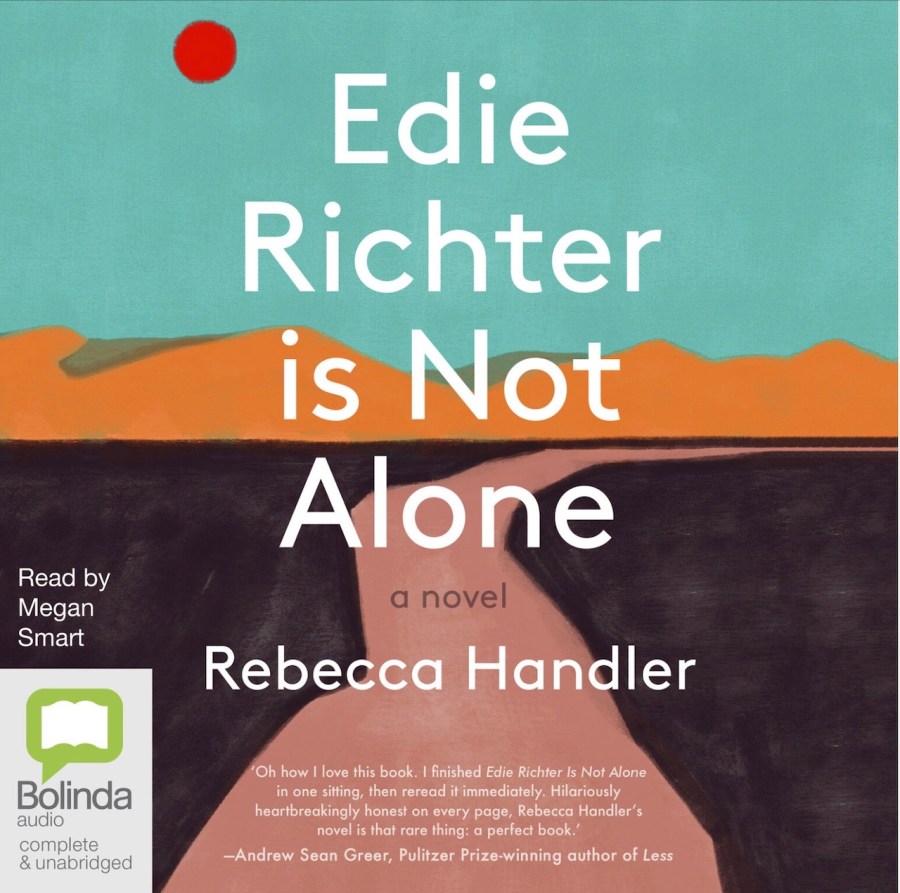
Book review: Edie Richter is Not Alone by Rebecca Handler

Rebecca Handler’s debut novel Edie Richter is Not Alone explores Alzheimer’s and the impact of euthanasia on families. Edie, her mother and sister care for their father/husband with early onset Alzheimers. When he no longer recognises her and stops eating Edie decides to suffocate her father without telling anyone.

After Dad’s diagnosis, Mom started labeling things and let Dad grow a beard. She went to a baby store and bought plastic child-protection locks for the kitchen. Just so he won’t stab me, she said, as I wrestled with one of them, trying to get a corkscrew out from a drawer. You remember Tanya from my walking group? Her mother attacked the cleaning lady and they had to move her into a home. 

After the funeral Edie and her husband, Oren, relocate from San Francisco to Perth, Australia. The story unfolds with dark humour as Edie explores her new home and is incrementally undone by her dark secret. She murdered her own father. Eadie’s behaviour becomes increasingly unpredictable and outlandish. The story is a well crafted, if discomforting, study of a woman unravelling due to her own lack of insight into her very complicated grief. Oren scrabbles around in fruitless frustration trying to penetrate her emotional defences and help.

I thought that life was about moving from one thing to another, all the previous things falling down behind you, but I was beginning to see this was not the case at all. That in fact every action, every thought, and every word uttered, they all stayed with you and formed a sort of jumbled collage

I found this novel morbidly compelling, a little voyeuristic and viscerally uncomfortable. It is a study of a woman’s mental and emotional disintegration resulting from her inability to open up to others about what pains her the most. She pushes away those closest to her and behaves in such appalling ways that she infuriates others who begin to believe she really is either bad or mad. As Edie becomes more and more isolated her realtionships and inner life fray. Eventually something has to give. 

A challenging, engaging and thought provoking read.

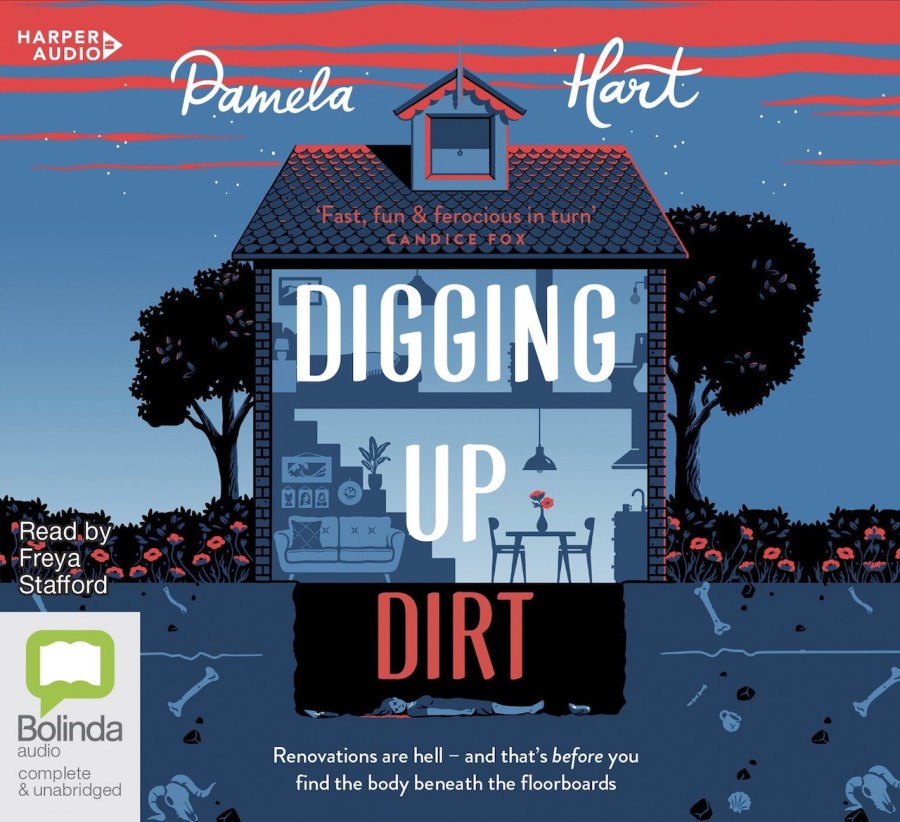
Book review: Digging Up Dirt by Pamela Hart

Thought I’d lighten things up a bit this week with a cozy mystery. Cozies are an easy read that can be gobbled up without any uncomfortable feelings, whilst still offering satisfying twists and turns. Digging Up Dirt also includes a splash of simmering romance.

Nothing like the builder digging up bones to halt the work on your renovation. TV researcher Poppy McGowan needs to find out if the bones are human or animal so she can get on with finishing her house. When archaeologist, Dr Julieanne Weaver, whom Poppy doesn’t like, interferes and slaps a heritage order over the property because she thinks the bones a significant Poppy is really annoyed. But then Julieanne is found murdered onsite, face down in the excavation dressed in heels and an evening frock, and things get really complicated.

Pamela Hart is a prolific author who has written more than 35 books and successfully crosses the genre divide. She is best known for her historical fiction (The Soldiers Wife, The War Bride, A Letter from Italy and The Desert Nurse).

Hart has also penned speculative fiction (Ember and Ash)and children’s books under the name Pamela Freeman as well as being an accomplished scriptwriter for ABC kids. I’ve done a few of the online courses she has written for the Australian Writers Centre as well, which have all been of good quality. She’s no slouch!

Digging Up Dirt is Hart’s first mystery novel and it’s a fun Australian read (or listen to the audio book). 

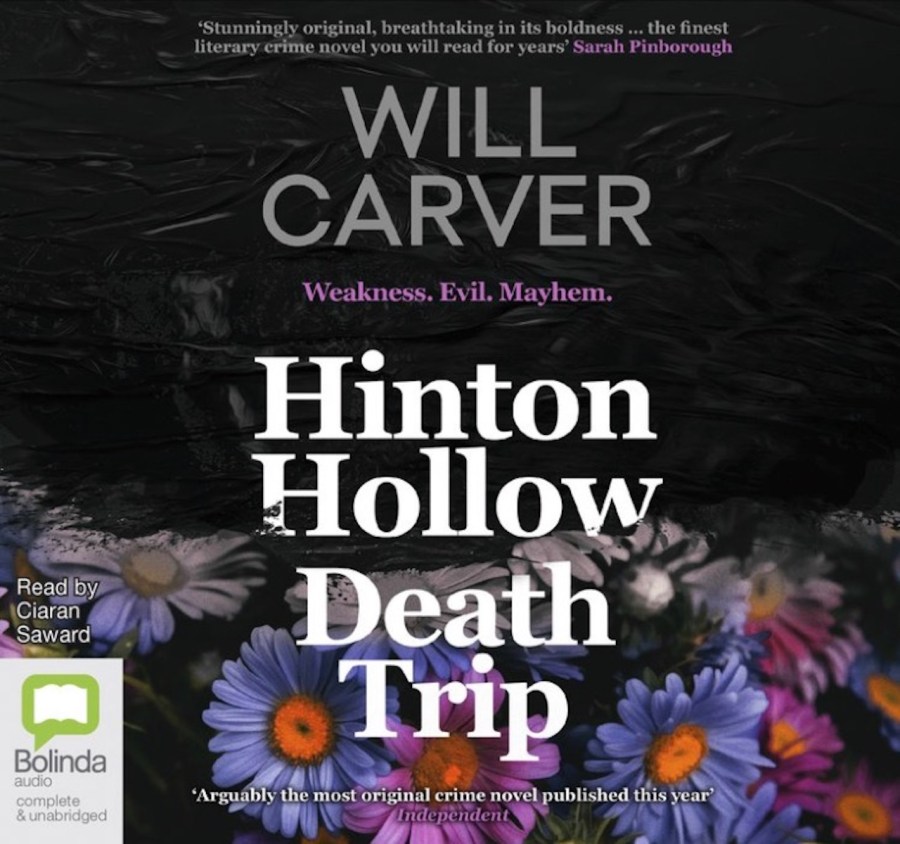
Book review: Hinton Hollow Death Trip by Will Carver

The devil made me do it.

Fear is my greatest tool. It can be used to make a person do almost anything. You can take education, information, motivation and throw it all away, fear is the only thing you require. It is a slow and deadly poison. And it is effective.

Detective Sergeant Pace flees London to return to his hometown of Hinton Hollow for some respite after the trauma of his previous case. Pace’s shadow follows him, enveloping the idyllic small town in darkness and creating disarray in the community. Hinton Hollow Death Trip is the third Carver novel featuring Pace (see Good Samaritans and Nothing Important Happened Today) but could also be read as a stand alone.

The story is a noirish pulp meditation on what can happen when we abandon our values and give into our darkest parts, unleashing the monster within driven by our disappointments, bitterness, resentment and jealousies.

This is how evil works. I just have to get you started. What you do with that feeling is entirely down to you.

The unique twist in this tale is the narrator. Evil. Evil takes great pleasure insinuating itself into the cracks of people’s goodness, prodding at their insecurities and encouraging them to indulge the more selfish, destructive and violent elements of their nature. The message here is that we all have this capacity for destruction in us, but we make choices in response to experiences that determine whether we indulge our malevolent sides or keep turning toward the good in ourselves and others. Evil encourages the characters of Hinton Hollow to indulge their blackness and cheat, steal and kill.

Where everything happened for a reason. A leap of faith. Detective Sergeant Pace is no good. Detective Sergeant Pace is a footnote. Detective Sergeant Pace is a small story. 

In keeping with Will Carvers style, Hinton Hollow Death Trip, its cast and their behaviour leave the reader feeling queezy, despite the macabre content being tempered with equally dark humour. The characters are outrageous but believable and the narrative has a way of making the reader reflect on their own dark corners. 

This is not a story for the squeamish so if you can’t stomach a bit of graphic violence, stick with the cosies. It seems the writing of the story was also uncomfortable for Carver. Apparently the manuscript landed in the bin twice before Carver felt it was good enough to call complete. 

Some people are more comfortable in the dark. Some seek it out. Some thrive there…

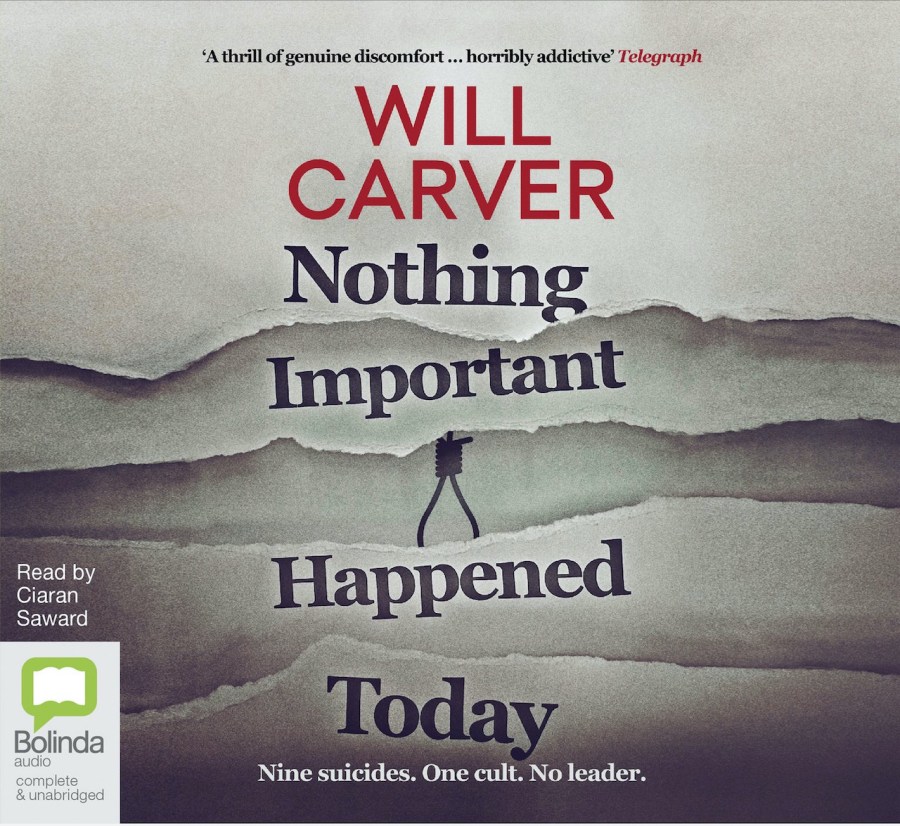
Book review: Nothing Important Happened Today by Will Carver

Creepy. Lets face it Will Carver knows how to write a creepy, mesmerising, noirish thriller – remember Good Samaritans?

London Detective Sergeant Pace returns in Nothing Important Happened Today, a story about a cult in which perfect strangers commit group suicide by jumping off bridges after receiving a white envelope containing the words ‘Nothing important happened today’. This message tells the receiver they have been chosen to become part of the People of Choice and off they trot calmly to meet their maker.

At its heart Nothing Important Happened Today is a story about human psychology, vulnerability and the power of suggestion. Carver splashes the narrative with reflections on the damaging effects of social media, how it provides a mechanism to airbrush our lives and foster an insatiable need for validation that can be really damaging to one’s self confidence. It makes you pause and take stock of the madness of the online environment and its mirage of connection.

We are so connected that we have become disconnected. We can’t have a thought, we have to have an opinion. Freedom of speech has gone too fucking far when we feel the need to share everything. When we filter the image of ourselves but feel no need to filter what we say out loud, hidden behind a new status and picture of ourselves when we were twenty pounds lighter.

There is something mildly detached about Carver’s writing style in this novel, written in the third person and collective first person, that fits neatly with the mindset of a cult leader. It shows the chilling lengths some people will go to get others to do their bidding. The cult leader in Nothing Important Happened Today sends person after person to their death to satisfy their own need for power and a twisted idea of their sense of importance in the world. Each victim is simply seen as a number by an anonymous person operating with the aim of making themselves the best cult leader ever, measured by the number of casualties they can motivate to initiate their own demise.

The fictional story is interspersed with facts about real life cults, how they came about and what drove their leaders. This addition helps lead the reader to ponder whether the actual story, which hovers on the edge of believably, is real or fiction, it’s a mind bending narrative.

Carver is clever at crafting a tale to make the hair on your neck stand up and leave you feeling a little discombobulated and disorientated. He causes you to pause and reflect on reality, illusion and what holds real value and meaning in life.

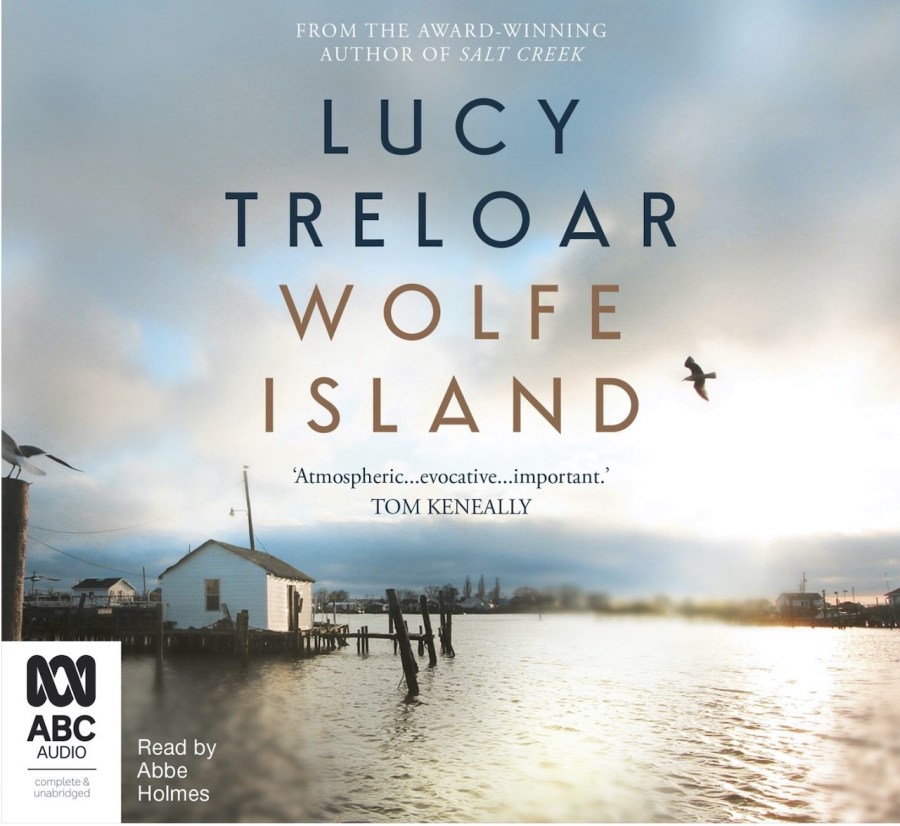
Book review: Wolfe Island by Lucy Treloar

There was something about listening to the audiobook of Wolfe Island whilst I worked in my own bubble in my vegetable garden – weeding, harvesting, fertilising, mulching, planting – the attention to detail those tasks demand slows time. The activity threw me deeper into a novel that I’m sure I would have been enthralled by anyway, and submerged me into the melancholic world of Kitty Hawke.

Kitty is a resilient and resourceful woman of fortitude, and the last human inhabitant of Wolfe Island, which is being devoured by the rising sea. She lives a solitary, creative existence with her wolfdog, Girl, and makes art from found objects that she sells to the mainland. Kitty and Girl both come across as half wild and half domesticated, each lends the other a strength that is fortified by the Waterman giant talisman statues Kitty constructed from found objects to protect the island.

It was exhausting being around people and noticing them, thinking about them. I felt roughened and coarse now, as if I was rubbing against the grain of Wolfe Island. It used to be that I could forget myself and be, spend hours in the marshes watching the tides and the grasses, birds walking over my feet. I’d been still so long, listening to the unintelligible wind, I was part of it then, and insignificant. I missed that. The writing helped a little.

Wolfe Island

Kitty is drawn to reconnect with the outside world when her granddaughter arrives with some friends who are in danger because of their status as climate refugees. On the mainland climate refugees are ‘runners’ and vigilante ‘hunters’ chase them down and kill them. Gradually the young people let her into their troubles and she connects with them, eventually their cause becoming hers. When the island ceases to be a refuge for the runners, the group set off seeking safety in the north.

The islands were worlds and you didn’t move lightly from one to the other, and people’s way of speaking wasn’t quite the same from one island to the next. If we ran into each other on the main – a no-man’s-land to us – we saw our resemblance to each other, and heard our own foreignness in each other’s voices and prickled up and felt the eyes of people on us, assessing us for threat in the same way that we did them, resenting them for it and feeling their resentment toward us.

Wolfe Island

Lucy Treloar’s first novel Salt Creek won the Matt Richell Award for a New Writer, the Dobbie Literary Award and the Indies Award for Debut Fiction. It was also shortlisted for the Walter Scott Prize for Historical Fiction, the Miles Franklin Literary Award, and the Readings Prize for New Australian Fiction 2016. Wolfe Island is deserving of its own accolades and I’ll watch with interest to see how it goes.

I say, ‘Girl, Girl,’ and she comes to me like a myth, her coat sleeked smooth, her tail back out. She is in a line, a ripple through the long grass, and butterflies and hoppers rise in her wake, lifting like spume and catching the light. She passes me by with a rush of wind and her sweet wolf scent, leading the way to anything.

Wolfe Island

Wolfe Island is a slow, lyrical lament on the state of the world in the grip of climate change, and the subtlety with which Treloar brings you to realise you are in a very near dystopian future is a little alarming. The novel is written in three parts – the island, the journey and return home, each revealing a different lense on a climate impacted world and Kitty’s relationship with her family, her place in the world and herself. Oh, not to forget her wolfdog, Girl, I’m a sucker for a novel with a dog as girls best friend…now I must go and turn that pumpkin I picked into soup.

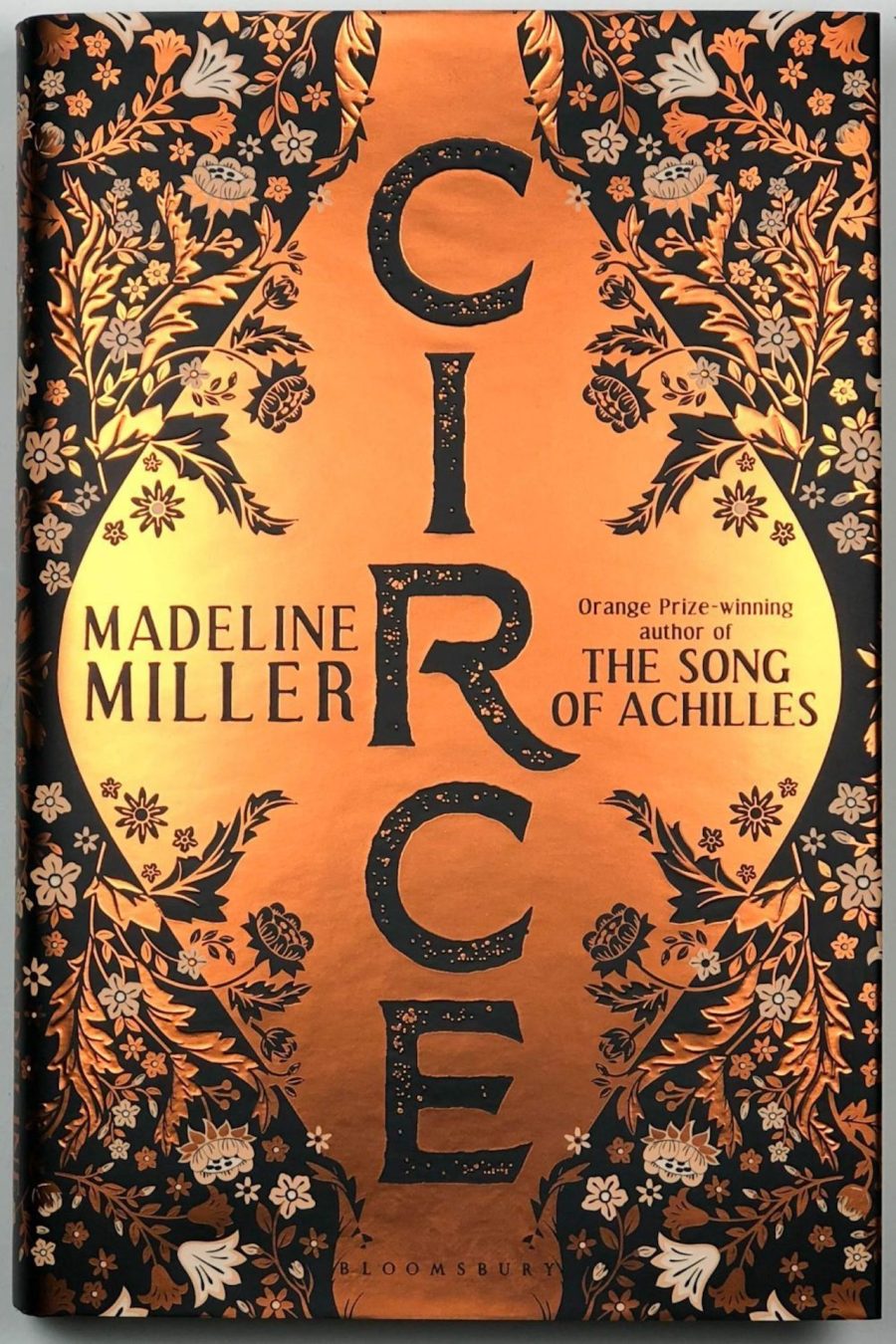
Book review: Circe by Madeline Miller

They say that writers should read widely, so not all my book reviews will be crime, though bloodshed may prove to be a common theme. Recently I dived into Greek Mythology. Madeline Miller’s Circe is a feminist spin on the epic tale of the immortal nymph sea witch by that name. Circe appeared as a minor character in the Homeric poem, The Odyssey.

Circe, the protagonist is the daughter of Helios, the sun god. As a child she is made brutally aware of her inferior status by her family. She was not born a god, is plain to the eye, and has the voice of a mortal. In her youth she was tormented by her siblings and barely seen by her parents.

I asked her how she did it once, how she understood the world so clearly. She told me that it was a matter of keeping very still and showing no emotions, leaving room for others to reveal themselves.

In coming to know love, jealousy and rage, Circe discovers her sorcerer powers, which she unleashes on her sister, a beautiful sea nymph, and the object of her envy. As punishment she is exiled to a picturesque, unpeopled island called Aiaia by her father.

Humbling women seems to me a chief pastime of poets. As if there can be no story unless we crawl and weep.

Circe eventually comes to revel in her solitude and spends her time developing her occult arts and witchcraft, and taming the animals of Aiaia for company.

This was how mortals found fame, I thought. Through practice and diligence, tending their skills like gardens until they glowed beneath the sun. But gods are born of ichor and nectar, their excellences already bursting from their fingertips. So they find their fame by proving what they can mar: destroying cities, starting wars, breeding plagues and monsters. All that smoke and savor rising so delicately from our altars. It leaves only ash behind.

It is on the island, surrounded by tame wolves and lions and pigs – the latter formerly sailors who she turned to swine after they tried to attack her – that Odysseus comes across Circe. He becomes her lover and she bares his child.

I was captured by Miller’s lush poetic prose, which is like reading a song. Her reimagining of the myth brings one of the women from the original tale into the light. Her work was criticised by a few crusty old blokes for historical inaccuracy, perhaps because they prefer the original misogynist fantasy, but I found a beautiful remake of Homers epic poem in Circe. The novel gives a nod to other myths as well, including Daedalus and Icarus; Medea and Jason with the Golden Fleece.

I loved Circe’s chutzpah, she is a woman who will not be silenced and turns an ancient tale of female subjugation into one that is teeming with contemporary reverberations of empowerment and courage. Circe is Miller’s second novel and rivals her first, The Song of Achilles, a stirring reimagining of another of Homer’s epic poems, The Iliad. The Song of Achilles received the Orange Prize for Fiction in 2012.

I highly recommend Circe, which was shortlisted for the Women’s Prize for Fiction this year. It’s a particularly good read for writers who seek inspiration, and to broaden their writing technique, style, and craft skills.

No wonder I have been so slow, I thought. All this while, I have been a weaver without wool, a ship without the sea. Yet now look where I sail.