Book review: Normal People by Sally Rooney

Having last week claimed I am not a romance reader, I appear to be on a bit of a run of them. Though I would say the ones I am reading are not your standard tropes. Normal People by Sally Rooney is a short economical coming of age love story.

Life offers up these moments of joy despite everything,

A couple of whip smart, awkward teenagers from the same school, but different sides of the class divide begin an intense relationship in secret. Marianne, from a wealthy but dysfunctional family is determinedly her own person, but considered a misfit amongst her peers at school. 

Marianne had the sense that her real life was happening somewhere very far away, happening without her, and she didn’t know if she would ever find out where it was or become part of it.

Connell is an awkward intelligent, sensitive, popular young jock of few words constrained by gender and tormented by his own vulnerabilities. His mother is the house cleaner for Marianne’s family mansion and the two find themselves spending enough time together to become familiar.

Connell wished he knew how other people conducted their private lives, so that he could copy from example.

After high school they both go to Trinity college in Dublin and their roles are reversed – Marianne becomes popular and Connell the outsider. Their on-again-off-again love affair is at times beautiful and sometimes painful to observe.

Generally I find men are a lot more concerned with limiting the freedoms of women than exercising personal freedom for themselves.

To begin with, Marianne and Connell are plagued with low self esteem and a tendency toward self destructive behaviours. Gradually the two shape one another to understand and feel worthy of love and overcome the mistakes they have made with one another. Through their transformation, both become better people.

All these years, they’ve been like two little plants sharing the same plot of soil, growing around one another, contorting to make room, taking certain unlikely positions.

The character building in Normal People is excellent, and the dialogue pitch perfect as the author takes the reader on a journey that is both comedic and tragic. I soon became totally absorbed in this story and particularly fond of the awkward Connell.

Book review: My Favourite Mistake by Marian Keyes

My Favourite Mistake by Marian Keyes is a contemporary romance that celebrates women in mid life. Not a romance reader? Neither am I usually, but I really enjoyed this novel – so read on.

There’s more to this story than the clickbait headlines, but yes, in simple terms, I had a dream life – then I took a flamethrower to it.

It’s post pandemic and Anna lives in Manhattan with her partner, Angelo, who she refers to as a ‘feathery stroker’. Their relationship is fond, equal and respectful but lacks passion. Her successful high flying PR job with a beauty firm is wearing a bit thin, she misses her family in Ireland, and she’s perimenopausal. Look out for a middle aged woman with fluctuating hormones!

The unfairness had made me deeply sad. Unfortunately I was paid to be manically enthusiastic, usually something I managed even if it was as fake as my eyelashes. This time it was almost impossible. The phrase burnout had been floating in my head for a while.

Sounds like a recipe for a midlife crisis right? Right. Anna walks away from it all and heads home to Ireland, moving in with one of her siblings while she decides what to do with the next phase of her life.

Although I tended towards optimism, I’d expected that my re-entry into Irish life would be bumpy. But nothing could have prepared me for just how bruising it had been.

Just when she starts to think she’s made a big mistake, a job comes up through her sisters friend whose plans to build a luxury hotel and spa have hit some blockers. They need some savvy PR to help to get the locals onboard with the project, and Anna is their woman.

Eventually, the universe threw me a bone… 

When she gets there, Anna discovers that the finance broker for the project is an old crush who shunned her many years earlier. The very hot player, Joey Armstrong.

Their tag line was Give us your body and we’ll give you back your soul. I wouldn’t have minded six moths there myself.

What unfolds is part mystery (getting to the bottom of why the locals are against the development and solving the problems), and part romance (working through her past relationship issues and her mixed feelings toward Joey, who says he’s a changed man). There is also plenty of small town and friendship dramas in the mix (Joey is the father of Anna’s best friends child). Ooh, ahh.

My Favourite Mistake is a funny, well crafted read. A deep rom com for the middle aged.

Book review: The Little Prince by Antoine de Saint-Exupéry

Written in 1942, The Little Prince by Antoine de Saint-Exupéry is a philosophical fable and allegory translated from French. It is a book about what it is to be human. The narrator, a pilot, tells the story six years after he meets the Little Prince in the desert.

The most beautiful things in the world cannot be seen or touched, they are felt with the heart.

A little boy leaves his tiny planet where he lived with a single rose. He departs out of loneliness, catching a ride with a flock of birds to travel the universe. Eventually he comes to Earth and is tutored by a fox who reveals truths to him as he learns about adult behaviour through a series of chance encounters.

If you love a flower that lives on a star, it is sweet to look at the sky at night. All the stars are a-bloom with flowers.

A pilot crashes in the Sahara desert, he will die if he cannot repair his plane. This is where he meets the Little Prince. The pilot laments the adult world and their lack of creative thought, as a child he wanted to be an artist, but was discouraged by his parents. The Little Prince recognises his drawings immediately, and asks for a drawing of a sheep. Through his relationship with the Little Prince, the pilot begins to open up and to draw again.

Grown-ups never understand anything by themselves, and it is tiresome for children to be always and forever explaining things to them.

Eventually the Little Prince realises the importance of the relationship he developed with his rose through caring for it, and that he must return to his plant to be with the flower. But he must die in order to return, so seeks the help of a sinister snake.

I have lived a great deal among grown-ups. I have seen them intimately, close at hand. And that hasn’t much improved my opinion of them.

At its root, The Little Prince is about how curiosity, connection and love are the antidote to uncertainty, fear and exile. A timeless story worth revisiting if you have read it before, and seeking out if you have not.

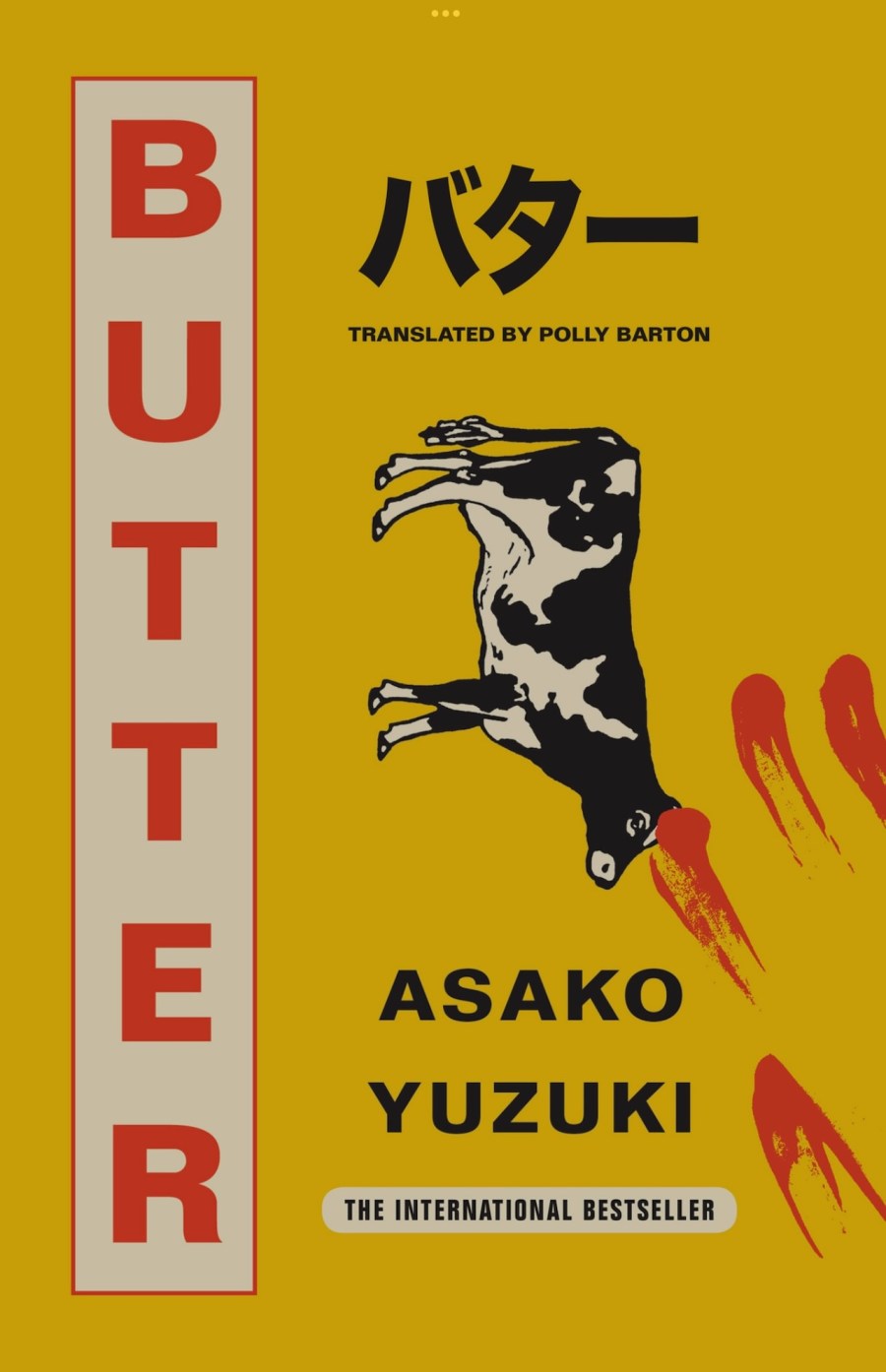
Book review: Butter by Asako Yuzuki

Butter by Asako Yuzuki is an English translation of the Japanese bestseller. It provides a fascinating insight into Japanese culture, friendships, gender relations, societal norms about body type and beauty, and our relationships with food. 

I learned from my late father that women should show generosity towards everyone. But there are two things that I simply cannot tolerate: feminists and margarine.

One of the central characters is based on the real life Konkatsu Killer, a con woman and gourmet cook called Kanae Kijimo who was convicted of poisoning three of her lovers. But the story is much more about food than murder.

The whipped butter had already started melting across the waffles’ latticed brown surface, creating a golden trickling waterfall that pooled in their hollows. Rika bit into the dough, savoring how juicy and moist it had become with all the butter it had absorbed, with a pleasant saltiness.

Tokyo journalist Rita Machinda is determined to land an exclusive interview with Manako Kijii, a blogger and exceptional cook who is in jail for murdering a number of her lovers. Rita writes to Manako and asks for her beef stew recipe to try and get an interview with the media shy murdress. 

Every night, those women would clean out the toxins that had built up in their partners’ bodies and souls over the course of the day–toxins that, if left untouched for too long, would eat a person away.

Rita rarely cooks but her correspondence and visits to Manako in jail soon become a masterclass in food, and Rita is gradually transformed. When I read the scene on her first cooking instruction from Manako, I had to try it  – steamed rice topped with very good quality butter and soy sauce. It was surprisingly tasty. But you cannot go wrong with lashings of Butter.

Book review: The Librarian of Burned Books by Brianna Labuskes

Librarians are superheroes – the keepers of stories, champions of intellectual freedom, truth tellers, supporters of shy and weird kids. 

I can tell you that banning books, burning books, blocking books is often used as a way to erase people, a belief system, or culture.

The Librarian of Burned Books by Brianna Labuskes is a histrical novel set during World War II that pays homage to the importance of protecting books, and the free flow of information and ideas they represent. It’s dedication reads ‘To librarians, the guardians of books’.

Books are a way we leave a mark on the world, aren’t they? They say we were here, we loved and we grieved and we laughed and we made mistakes and we existed. They can be burned halfway across the world, but the words cannot be unread, the stories cannot be untold. They do live on in this library, but more importantly they are immortalized in anyone who has read them.

The story follows three timelines through the points of view of three women devoted to the printed word. Althea is a naive American debut author visiting Berlin on a cultural exchange in 1933 who discovers the Nazi’s who invited her are not what they pretend to be; Hannah Brecht is a German Jew and lesbian who works at the Library of Burned Books (around 1936) and is involved with the Communist Party opposing Hitler’s rise to power – she was there when the Nazis torched huge pyres of banned books. Vivian Childs is a war widow advocating against 1944 censorship laws that would block her organisations efforts to send books to soldiers fighting overseas. The three women’s narratives interview and connect as they each try to fight for freedom of thought.

There are moments in life when you have to put what is right over what party you vote for. And if you can’t recognize those moments when the stakes are low—let me assure you, you won’t recognize them when the stakes are high. 

I thoroughly enjoyed The Librarian of Burned Books – strong female characters, great descriptive insights into queer Berlin, and the challenges for Paris and Brooklyn during the war, it’s a well researched, emotionally moving and provocative story with a hint of lesbian romance. What more could you want in a good story!

Burning books about things you do not like or understand does not mean those things no longer exist.

Book review: Bodies of Light by Jennifer Down

Bodies of Light by Jennifer Down is fiction written in the style of memoir. The book won the 2022 Miles Franklin Literary Award. 

The story spans the years from 1975 to 2018 in the life of Maggie Sullivan and takes us from Australia to New Zealand to America. Bodies of Light is not an easy book to read – it’s emotionally demanding on the reader, and leaves a lasting impression.

I became a new person a long time ago, and by the time I got that message, I didn’t think anyone was looking for who I used to be.

Maggie spent her childhood institutionalised, or in foster families, after her drug addicted father went to jail for injecting and killing one of this friends. Her mother was already dead from an overdoes when Maggie was just two years old. She soon discovers that the world of ‘care’ is not always caring and suffers at the hands of various people who take advantage of the vulnerability of parentless children.

I have a good memory, but there’s no space for my mother in it. She is only a feeling, very faint; a map of nothing. She’s a straw sunhat, a clip-on earring in the shape of a fish, a bowl of peanuts.

Maggie becomes adept at compartmentalising her life, but at 19 experiences catatonia and psychosis and lands in a psych ward for a period. In her 20s she marries and is then accused of infanticide after her three babies die. She makes herself disappear, then is alarmed when a man from her past contacts her and asks if she knows what happened to a woman who looked a lot like her and disappeared twenty years earlier.

The Sydney of this time was a different place to the honeymoon city I’d visited with Damien. That one was the crescent of the bridge, the rolling waves beneath the ferry, the shaded streets in The Rocks where we’d bought touristy postcards to send home. Everywhere was so lush, everything blue and green. 

In Bodies of Light the narration of Maggie’s life tackles heavy topics head on, including sexual abuse, suicide, drug addiction, infanticide, suicide and broken relationships. It is story about the effects of trauma, resilience, hope, reinvention and kindness as Maggie strives to find a place where she belongs.

Book review: Our Wives Under the Sea by Julia Armfield

Our Wives Under the Sea by Julia Armfield is a novel about what happens when you go too deep. Leah is a marine biologist who goes on deep sea missions. Her most recent mission went horribly wrong after the vessel lost power and disappeared for six months. They saw otherworldly sights in the depths of the ocean, and one colleague died.

To know the ocean, I have always felt, is to recognise the teeth it keeps half-hidden.

Miri thinks life will return to normal once Leah is home, but soon realises that Leah has been changed by her deep sea experience, and continues a metamorphosis, both physically and mentally, on dry land. She spends entire nights in the bathtub and drinks saltwater.

I used to imagine the sea as something that seethed and then quietened, a froth of activity tapering down into the dark and still. I know now that this isn’t how it goes, that things beneath the surface are what have to move and change to cause the chain reaction higher up.

Miri reminisces about the love they had before her Leah was lost to the ocean floor, and watches on in despair as her lover slowly dissolves.

What persists after this is only air and water and me between them, not quite either and with one foot straining for the sand.

Our Wives Under the Sea is a story about grief and love, and living with uncertainty, told in alternate points of view by Leah about the mission, and Miri about what happens after the mission. It is a weirdly beautiful and at times grotesque book.

Book review: The 10pm Question by Kate de Goldi

Young adult novel The 10pm Question by Kate de Goldi is about 12 year old Frankie Parsons. He’s a worrier. 

Frankie lay in his bed. He lay facing the wall, his eyes open, but seeing only blackness. His entire body ached. He wanted to cry but it wouldn’t happen. His insides were dried out, somehow. He was prickly and withered and exhausted

Frankie worries about all the illnesses he could catch, about his mother who never leaves the house, the fat content of his food, whether his cat has worms and smoke alarm batteries. He recites the names of birds to try and keep his unruly mind, the rodent voice, under control. Then, at 10pm every night he goes to his mother’s room for comfort, to tell her about his worries and hear her tell him everything will be ok.

He was a funny guy, and a smart one- and the smartest thing about him, in Frankie’s view, was that he never, ever, ever worried.

Frankie marvels that his best friend Gigs never seems to worry. The two of them love to sneak up on, and frighten the yappy dog they pass on the way to school every day. The dog falls for it every time. Frankie’s carefully controlled world is disrupted when a new girl with dreadlocks starts at his school. Sydney is opinionated, loud, spontaneous and vibrant and makes her own clothes. She also asks a lot of awkward questions that make Frankie look at his life through different eyes.

‘She has to be a caged bird, doesn’t she?’ He kept looking ahead. ‘Something that’s had its wings clipped. Something really pretty, but a bit sad.’

The 10pm Question is overflowing with eccentric three dimentional characters beautifully bought to life. A whimsical, heartbreaking, hilarious, thoughtful eccentric story about anxiety and mental illness more generally, told with great compassion. Enjoyable for young people and grown-ups alike.

Book review: Trust by Chris Hammer

Trust is book #3 (following Scrublands and Silver)of Chris Hammer’s Martin Scarsden series. If you’re not a ‘series person’, Trust is also perfectly readable as a standalone. The thing I love most about Hammer’s novels is their tightly woven, complex plotting, and book #3 did no disappoint. 

I liked him. He had a commitment to the truth. Lawyers don’t, as a rule: we just seek and reward the better argument.

When Martin listens to a phone message from his partner Mandy and hears a terrified scream, he races back to their isolated house on the hill to find her missing, and an unconscious policemen on the floor. He goes in search of Mandy and finds himself in Sydney. Meanwhile Mandy’s kidnappers reveal themselves to be violent people from a past she’s been trying to forget, and they have tentacles reaching into her and Martin’s present lives.

They didn’t live quarantined from the consequences of their actions; they could not travel unimpeded to new worlds; there was no vaccine against the past.

What ensues is a fight for survival in a plot mired in power-games, greed, corruption, privilege and fraud. Martin and Mandy must uncover the truth in order to free themselves from the past.

Trust is fast paced, action packed, Australian noir, with a dense plot that takes the reader on a roller-coaster ride. A novel for crime fiction lovers.

Book review: The Horse by Willy Vlautin

The Horse by Willy Vlautin was a very random selection for me, but I am glad I picked it up.

67 year old Al Ward is a jaded, drunken country singer/songwriter living alone in an abandoned mine in the Nevada desert where he goes to try and dry out. Only his memories are keeping him company until one day an old injured horse appears blinded and bloody at his door. 

‘There’s a horse’, he whispered. ‘An old horse that’s standing in front of my house. He’s blind and he won’t eat and I don’t know what to do.’

When the horse doesn’t leave and coyotes and bad weather start to close in Al decides he needs to try and save the beast. It is after all a kind of metaphor of himself. His journey with the horse is interspersed with memories of his life as a musician, his bandmates and his loves.

“…I like sad songs and sad singers the best…You write with a broken heart and I understand broken hearts.”

The Horse is a short, bleak, melancholic but heartfelt story about devotion to creativity, loneliness, addiction, regret, love and the underbelly of America.