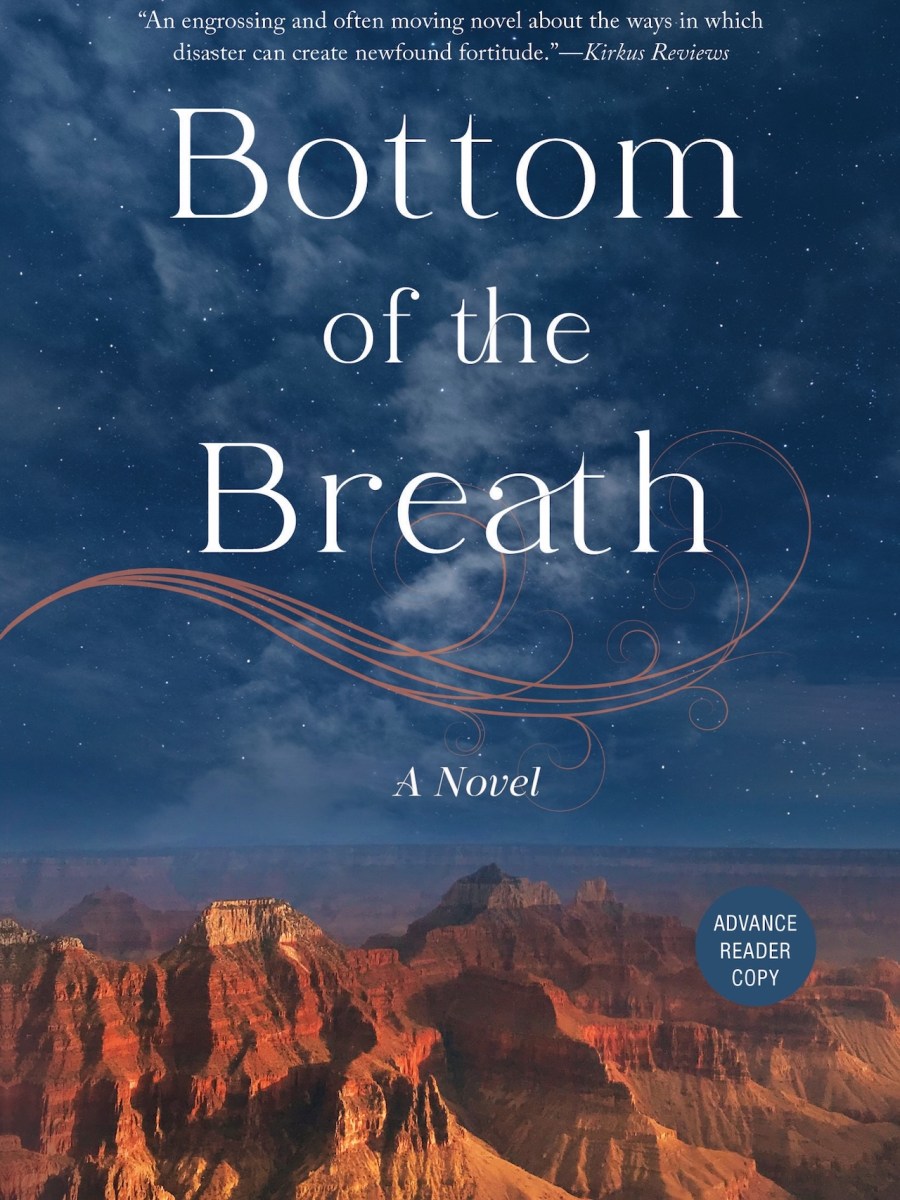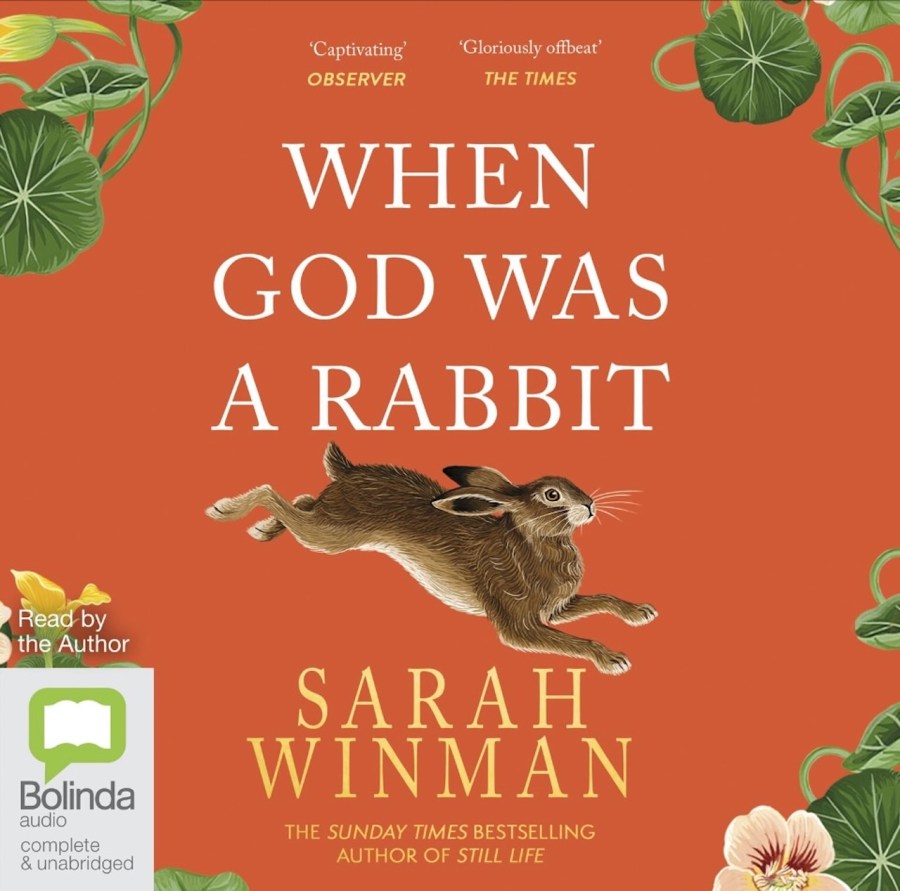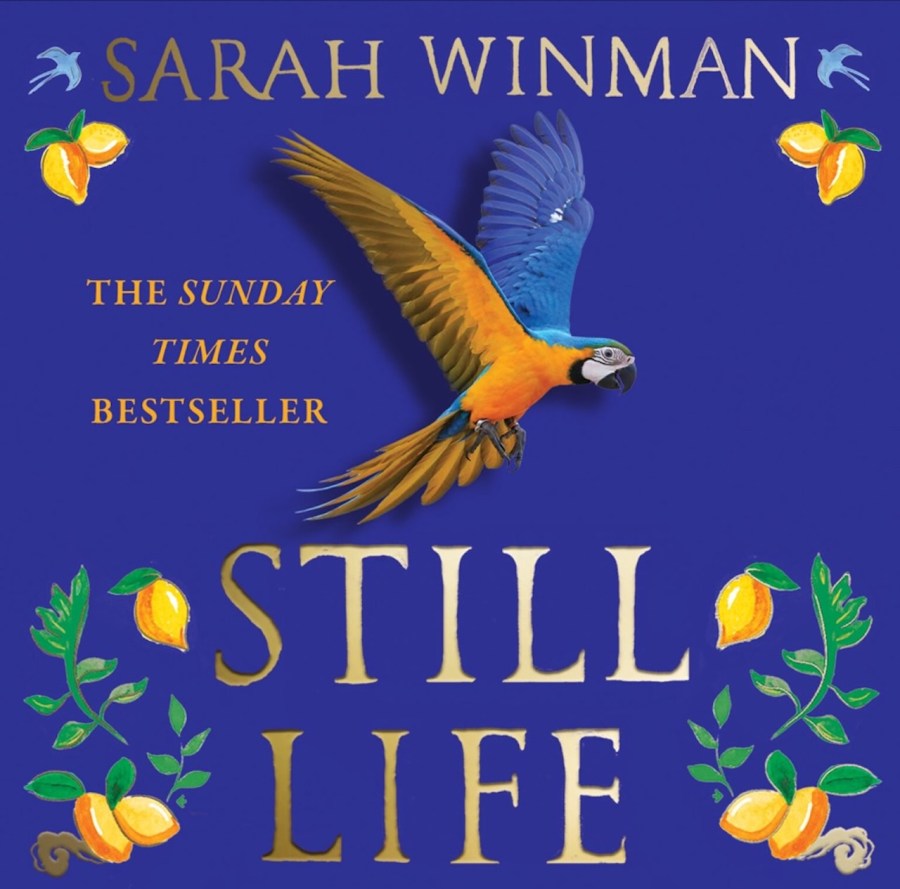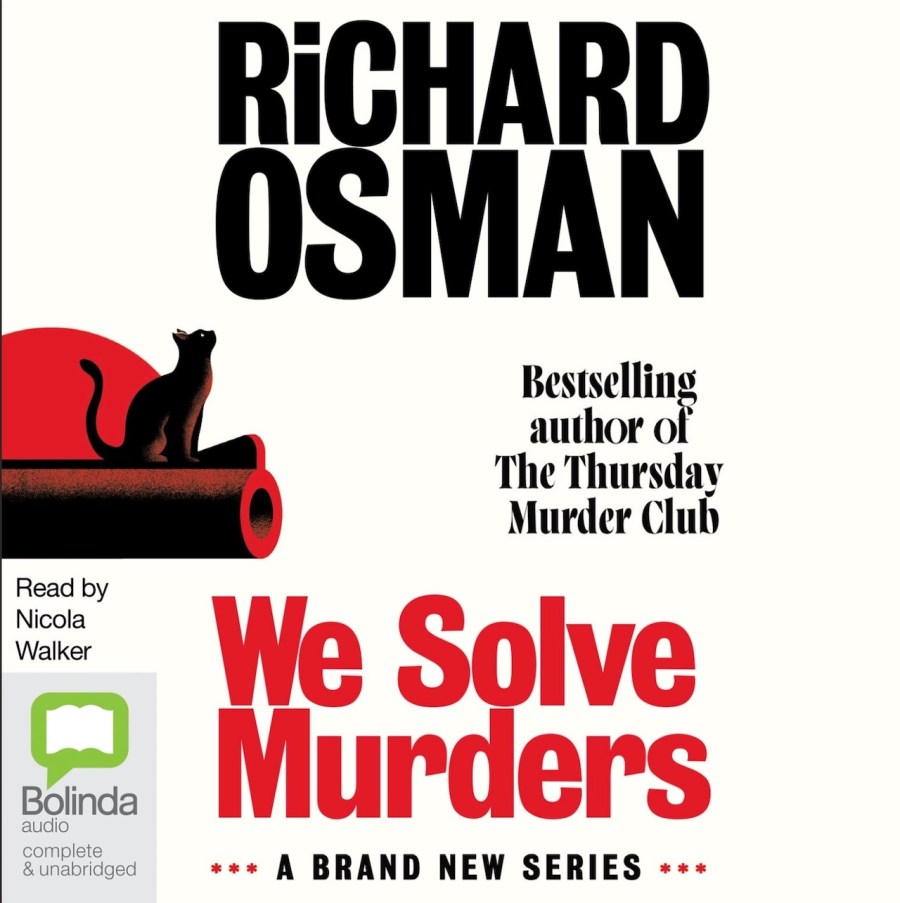

Book review: Stoneyard Devotional by Charlotte Wood

Who hasn’t fantasised about abandoning their life responsibilities and running away to a different life?

After so many years of living in cities, the endlessness of the night sky here pours a wild, brilliant vertigo into me.

In Charlotte Wood’s Stone Yard Devotional, that is what her protagonist does. She leaves her marriage and her job and runs to Monaro in New South Wales to live amongst nuns in a reclusive religious compound, despite being sceptical about religion.  

In her remaining life there was only room for the truth, and sometimes that would be brutal. It was sad, but it was too late; she had to prepare herself for what was to come. Only what was essential could be allowed to reach her now.

Our unnamed narrator applies herself to her daily tasks like scrubbing the floor with vigour and we become privy to her memories and flashbacks that indicate some kind of existential crisis. In the outside world covid and bushfires rage, while in the convent the focus is on a mouse plague, and the skeletal remains of a dead nun returned to her proper resting place

There may be a word in another language for what brought me to this place; to describe my particular kind of despair at that time. But I’ve never heard a word to express what I felt and what my body knew, which was that I had a need, an animal need, to find a place I had never been but which was still, in some undeniable way, my home.

Stone Yard Devotional is a meditation on escape, letting go, living with life’s choices, the nature of women’s friendships, belonging, devotion and sacrifice.

The beauty of being here is largely the silence, after all. Not having to explain, or endlessly converse.

Book review: Devil’s Kitchen by Candice Fox

Another great Candice Fox crime novel. Devil’s Kitchen was a red hot holiday read. Rogue New York firefighters using their good Samaritan jobs as cover to heist millions of dollars from banks, art galleries and jewelry stores. The crew leader is ruthless in his demand for loyalty. They need to protect their cover, but each of the men has a secret.

Fire is loud. It calls to people. Probably had been doing that since the dawn of time, Ben guessed. 

Enter Andy Nearland, the newest member of the Engine 99 fire crew. In fact Andy is an undercover specialist operative hired by the FBI to find out what the hell is going on with the robberies. She’s also tasked with tracking down the missing partner and child of one of the crew. Andy is smart, sassy, and ruthless, and not averse to using her looks as a secret weapon. But can she outsmart four desperate fire fighters?

Andy looked at Ben. Met his frantic gaze. She saw it in his eyes, the scene playing out. Andy taking the bullet in the brain. Her body rag-dolling on the floor. Ben next.

In typical Fox style Devil’s Kitchen is an action packed thriller. The story is crafted with rigorous research, quality writing, bold characters, humour and plenty of tension. Keep ‘em coming Candice!

Book review: Peel Me a Lotus by Charmian Clift

I loved Peel Me a Lotus by Charmian Clift,  first published in 1959, mainly because of its exquisite evocation of place. But there was also something about it that reminded me a little of the two years I spent living in a Portuguese village in the ’80’s that made me feel quite nostalgic.

To accomplish anything it is obvious that a talent is not enough. You need a motive, an aim, an incentive, an overwhelming interest be it ambition or fear or curiosity or only the necessity to fill your belly. You need a star to steer by, a cause a creed, an idea, a passionate attachment. Something must beckon you or nothing is done – something about which you ask no questions.

Charmian Clift and George Johnston fled post war London for Greece in 1951, settling on the island of Kalymnos. Later they moved to Hydra where they bought a house. Peel Me a Lotus is a chronology from February to October as they get to know their new home and the people of Hydra. It is the companion volume to Mermaid Singing (which I have not yet read).

Today we bought the house by the well.

Peel Me a Lotus opens with the family of four in the process of buying a crumbling stone villa, almost exhausting their savings in the process. In the same month Charmian receives news that an American publisher will publish Mermaid Singing.

Was it for this that I so gladly renounced the pleasures of material success? The assurance of the monthly cheque? The visible achievements? The automobile, the well-dressed wife, the comfortable apartment at a ‘good’ address, the tidy, well-mannered children going to tidy, well-mannered schools?”

The villa is on the island of Hydra that has a sizeable expat community made up mostly of artists, writers and intellectuals. Charmian is expecting their third child and there is an urgency to make the house habitable before the baby arrives. The first part of the novel focusses on the trials and tribulations of renovating the property, the people they encounter, moving in, and having the baby. The children slide into their new life, attending Greek school and running amok on the streets of Hydra.

Every one of us, in his own particular way, is a protestant against the rat race of modern commercialisation, against the faster and faster scuttling through an endless succession of sterile days that begin without hope and end without joy. Each of us has somehow managed to stumble off the treadmill, determined to do his own work in his own way…

As spring gives way to summer, their sleepy island paradise grows to be a destination for day-trippers, artists seeking a new life and international celebrities, along with an entire film crew that arrive to shoot the film Island of Love. They bring a promise of change and income for the islanders, while apologising for spoiling their paradise. By the end of that Summer, Charmian’s husband George threatened to sell the house back to London.

Ask nothing of it and the soul retires, the flame of life flickers, burns lower, expires for want of air. Here, in the midst of all our difficulties, life burns high. Though it seems sometimes that we make no progress towards the ideal, yet the ideal exists, and our energies are directed towards it.

Peel Me a Lotus is a beautifully written lyrical memoir about the struggle to make a living from a writing life on a rural island amongst a mix of locals and expats without modern amenities, little water in summer, dodgy sewage, cheap and bountiful food and a magnificent landscape. 

We are poor, but then we have been poor for the last two years – poorer, indeed, than we are now, with a house of our own, and enough money to live for another six months or so even if we should earn nothing more. Those two years of poverty have been the most eventful, the most enjoyable, the most exciting of our lives; we have felt richly defiant and adventurous eating lentils and wearing darned sweaters and thumbing our noses at the Jeremiahs who had said we couldn’t do it. 

Book review: Conversations with Friends by Sally Rooney

Set in Dublin during financial crisis in 2008, Conversations with Friends is written by Irish author Sally Rooney, who also wrote Normal People.

Everyone’s always going through something, aren’t they?

Conversations with Friends is a meandering story focussed largely around Francis and her relationships with the people around her. Francis is a mass of contradictions. Intelligent, ironic, fragile, nervous and terrified of showing her vulnerability to others.

I realised my life would be full of mundane physical suffering, and that there was nothing special about it. Suffering wouldn’t make me special, and pretending not to suffer wouldn’t make me special. Talking about it, or even writing about it, would not transform the suffering into something useful.

Bobbi is a pragmatic lesbian who goes to university with Francis. She and Francis were lovers for two years and remain friends, performing spoken work poetry together. 

The acclaim also felt like part of the performance itself, the best part, and the most pure expression of what I was trying to do, which was to make myself into this kind of person: someone worthy of praise, worthy of love.

After one performance Francis and Bobbi meet Melissa, a photographer and essayist a decade older. She wants to profile them for a magazine and they go to her house where they meet her husband, Nick an actor. Francis begins an elicit and toxic affair with Nick in which their need to feel wanted by each other seems to become necessary in order to feel anything about themselves. 

I was like an empty cup, which Nick has emptied out, and now I had to look at what has spilled out of me: all my delusional beliefs about my own value and pretensions to being a kind of person I wasn’t. When I was full of these things I couldn’t see them. Now that I was nothing, only an empty glass, I could see everything about myself.

The novel tracks the next seven months and the relationships between these four individuals, though largely it is Francis’s relationships with Bobbi and Nick that take centre stage. 

He was the first person I had met since Bobbi who made me enjoy conversation, in the same irrational and sensuous way I enjoyed coffee or loud music.’

Conversations with Friends is a very human book about poor choices, identity formation, sexuality, desire, and power dynamics.

Book review: The Clan of the Cave Bear by Jean M. Auel

I recently revisited Jean M. Auel’s The Clan of the Cave Bear, first published in 1980. It is an epic novel and the first of the authors Earth’s Children six part series exploring the possibility of interactions between Neanderthal and modern Cro-Magnon humans.

You must learn to understand with your heart and mind, not your eyes and ears, then you will know.

Five year old Cro-Magnon child Ayla is left an orphan after an earthquake and after wandering alone for days and being attacked by a cave lion is rescued by the medicine woman of a Clan of Neanderthals. Despite the two groups having a history of suspicion and antagonism toward one another, medicine woman Iza adopts Ayla with the permission of her brother, Creb and the three form a kind of family group. Creb believes the girl is protected by her spirit animal, the cave lion, a very powerful totem.

As Creb looked at the peaceful, trusting face of the strange girl in his lap, he felt a deep love flowering in his soul for her. He couldn’t have loved her more if she were his own.

Ayla is raised by Neanderthals and trained into their conservative, non-verbal, cultural ways that keep women in their place and limit the things they are allowed to do. Iza teaches Alya the ways of the medicine woman, but Alya is a rule breaker and innovator and teaches herself to hunt in secret. She also excels as a medicine woman due to her high level thinking and analytic observation skills. 

No one told her it was impossible to rapid-fire two stones from a sling, because it had never been done before, and since no one told her she couldn’t, she taught herself to do it.

Alya’s difference means she is never fully one of the clan and when her secret hunting skills are discovered she is subject to a death curse. Even after surviving the curse when the clan must accept her as ‘the woman to you hunts’, there are those in the clan who remain opposed to Alya’s presence amongst them, so her position remains precarious. 

Ayla loved these moments of solitude. Basking in the sun, feeling relaxed and content, she thought about nothing in particular, except the beautiful day and how happy she was.

The Clan of the Cave Bear is a long but well researched anthropological prehistoric work of fiction. While the novel’s narrative is not crafted particularly lyrically, it is an original idea and an epic saga about difference, cross cultural relationships, misogyny, and love. An ambitious book that has stood the test of time remarkable well.

Book review: High Wire by Candice Fox

I went along to Sisters in Crime’s Scarlet Stiletto Awards a couple of weeks ago for an event to celebrate women’s crime writing. Our compares for the evening were authors Candice Fox and Sarah Bailey (you can find reviews from both authors on this blog). I’ve been a big fan of Candice Fox, in particular, for years. Not only is she a formidable crime writer, but she seems like a genuinely good egg, and as I discovered at the awards she is also very funny.

I purchased Candice’s most recent novel High Wire, published in September and gobbled it up in a few days. In the acknowledgements Fox says that High Wire is a kind of love letter to Lee Child and his well known character Jack Reacher.

This was bad. Very, very bad. Because whoever these guys were, they had either law enforcement or military training. 

Set in the remote desert of north east South Australia, High Wire is outback gothic crime fiction – riveting, moody and brimming with suspense, as well as a good dose of Fox humour. In a hurry to get to his dying girlfriend after the airport is closed, Veteran Harvey Buck takes the High Wire, a secret track cut through the outback from Broome to Sydney. He comes across a women, Clare Holland, whose car broke down and caught fire, and offers her a ride. A bit further down the track, the pair are ambushed, strapped into bomb vests and thrown into the back of a truck. They are driven across the desert and forced to complete a number of criminal acts.

Harvey stopped his vehicle, got out, looked all around. Saw the same thing he’d been seeing for the past three and a half hours. Emptiness. One flat black mass, slightly darker tan the black mass blanketed over it, peppered with stars and milky galaxies he’d known the name of once.

Meanwhile local copper, Senior Sergeant Edna Norris, rescues an oversized teenage boy called Talon from a man in an isolated farmhouse who had posed as a teenage girl online. While driving the youth to send him back to Adelaide, Edna receives a call to attend to a burnt out car on the High Wire. The pair find Clare’s burnt out vehicle then stumble across Harvey’s car with the body of a balaclava clad man lying beside it. The pair start to form theories about what happened and are soon pursuing the crime.

Edna started the car and put it into gear. ‘Buckle up, kid,’ she said. ‘We’re taking a little detour.’

As Clare and Harvey’s pasts unfold to reveal why they found themselves in their dilemma, Edna and Talon grow closer and work together to solve the unfolding crimes. 

But he decided, there in the dark, that he would go on, anyway. Even without strength, or fight, or a solid sense of how he could change his outcome. Because going always onward, even if it was directly towards pain, was better than the pain of lying down and wondering in his final moments what one more step could have brought him.

The things I love most about Candice’s work are her characterisation and ability to create really complex impossible plots and make them believable.

Book review: Appreciation by Liam Pieper

Appreciation is a novel by Liam Pieper that has (apparently) many parallels to his own life as a ghost writer for celebrities. I don’t know which celebrities, because no one outside the publishing business seems to know which books he wrote, and he would be bound by some kind of confidentiality agreement. I can understand why he is a sought after ghost writer – because he writes very well.

The night of his cancellation, Oli does not sleep. He is unable to stop reading the posts calling for him to be stripped of prizes, fellowships, his honorary doctorate.

Australian queer painter, Oliver Darling (Oli) is the toast of the town until he causes himself to be cancelled after a drug fuelled rant on live television. The incident causes the value of his work to tank, infuriating investors and mobilising a mob of unsavoury debt collectors.

Oli circumnavigated the party once, twice, and settled finally into conversation with the person he found the most interesting, because she was the richest.

Appreciation is the story about how Oli got to where he is, his floundering attempts to redeem himself, salvage his career, and save his own life and that of his agent by writing a memoir with a ghost writer.

How to explain the appeal of Old? He is wonderfully charming when he needs to be. He has a way of shuffling into the room like a very old dog, turning his attention to you, and in doing so lighting up your day.

Appreciation is a satirical novel about the art world, the struggle to make money from art, celebrity, authenticity, the precarious nature of fame, toxic masculinity, personal myth and vanity, and the world of drugs and criminals. The book has received mixed reviews, but I enjoyed the journey and Pieper’s excellent writing skills.

Book review: The Hypnotist’s Love Story by Liane Moriarty

The Hypnotist’s Love Story by Liane Moriarty, is a melodramatic romantic comedy about a hypnotist, a widowed surveyor, his young son, and a stalker.

Hindsight, it’s always just a fraction too late.

Ellen is an empath and a hypnotist who is fascinated by human behaviour and helps people with issues like giving up smoking and pain management. When she starts dating single dad Patrick and he tells her about an ex-girlfriend, Saskia, who has been stalking him relentlessly, Ellen becomes intrigued by her motivation. Even when it becomes evident that she is actually one of Ellen’s clients, using a fake name and Saskia’s behviour becomes more and more obsessive and bizarre, Ellen maintains a level of sympathy for her.

Mum used to say that when she met my dad it was like a perfect love story. I thought Patrick was my perfect love story. Except he’s not. He’s the hypnotist’s love story. I’m the ex-girlfriend in the hypnotist’s love story. Not the heroine. I’m only a minor character.

The story unfolds through the duel points of view of Ellen and Saskia, and we observe Patrick’s anxiety, paranoia and anger at being constantly followed and watched through their lens. Patrick is also grieving his deceased wife while growing to love Ellen. 

I liked Kate. She was a tiny bit odd. Not eccentric, just a bit off-kilter. She always spoke a beat too late or too soon.

The Hypnotist’s Love Story is ultimately about letting go, and while it grapples with some serious topics, it does so with a sense of whimsy that keeps the story light and the villain likeable.

I’d forgotten that the best part of dating wasn’t the actual dating at all but the talking about it: the analysis of potential new boyfriends with your girlfriends.

Moriarty has a skill for amplifying ordinary human frailties and exploring them with humour through quirky larger than life, yet believable characters. The Hypnotist’s Love Story is an entertaining holiday read.

Book review: The Great Alone by Kristin Hannah

The Great Alone by Kristin Hannah is a semi-autobiographical novel about a family’s move to Alaska, set in the 1970s.

You know what they say about finding a man in Alaska—the odds are good, but the goods are odd.

Former POW and Vietnam War veteran with untreated PTSD, Ernt Allbright, decides to move his family to Alaska on impulse, hoping it will enable him to escape his torment. His hippie wife, Cora, and thirteen year old daughter, Leni, go along with it hoping the next move will restore Ernt’s wellbeing.

Alaska isn’t about who you were when you headed this way. It’s about who you become.

Of course moving a slightly unhinged man to an isolated location populated with a tight community of other people escaping civilisation for one reason or another, is unlikely to end well. As the day’s grow shorter and the winter darkness descends, Ernt’s behaviour becomes more and more bizarre and violent. Cora continues to make excuses for him, and Leni finds their living arrangements more and more claustrophobic.

like all fairy tales, theirs was filled with thickets and dark places and broken dreams, and runaway girls.

Characters brimming with eccentricities, small town politics and paranoia’s, good guys, bad guys and the vast Alaskan wilderness tell a story of human resilience and vulnerability living on frontiers.  The Great Alone is a dramatic, harrowing tale about family, trauma, small town communities, survival, and the beauty and brutality of the northern wilderness. A gripping read, but not for the faint hearted.

Book review: A Gentleman in Moscow by Amor Towles

I studied Russian history in high school and became fascinated by the Tsars, so when I heard about A Gentleman in Moscow by Amor Towles, I had to read it. I was not disappointed, the historical novel has a bit of everything – poetry, politics, espionage, friendship, romance and  parental duties.

If a man does not master his circumstances then he is bound to be mastered by them.

In 1922 after the Russian Revolution, aristocratic count Alexander Ilyich Rostov is accused of writing a counter revolutionary poem by the Emergency Committee of the People’s Commissariat for Internal Affairs and sentenced to a life of confinement in Moscow’s Hotel Metrolpol. He is moved from his luxury suit at the hotel to a cramped room on the 6th floor. 

Alexander Rostov was neither scientist nor sage; but at the age of sixty-four he was wise enough to know that life does not proceed by leaps and bounds. It unfolds. At any given moment, it is the manifestation of a thousand transitions. Our faculties wax and wane, our experiences accumulate and our opinions evolve–if not glacially, then at least gradually. Such that the events of an average day are as likely to transform who we are as a pinch of pepper is to transform a stew.

Over the decades of his incarceration Count Rostov overcomes despair at his circumstances to make a full life for himself within the confines of the hotel, inspired by a young girl he meets who has a great curiosity and a skeleton key. He discovers the hotels hidden treasures and idiosyncrasies. Through the years at the hotel, Count Rostov becomes a waiter with a knack for seating guests in such a way as to avoid any disruptions to diners, falls in love and has a daughter.

If patience wasn’t so easily tested, then it would hardly be a virtue. . . 

A charming romp through Russian history, A Gentleman in Moscow has a fairytale quality about it, but is also a beautiful literary novel brimming with delightful colourful characters and a setting that adds colour to the suffering taking place outside its walls through decades of wars and revolutions.