Book review: Conversations with Friends by Sally Rooney

Set in Dublin during financial crisis in 2008, Conversations with Friends is written by Irish author Sally Rooney, who also wrote Normal People.

Everyone’s always going through something, aren’t they?

Conversations with Friends is a meandering story focussed largely around Francis and her relationships with the people around her. Francis is a mass of contradictions. Intelligent, ironic, fragile, nervous and terrified of showing her vulnerability to others.

I realised my life would be full of mundane physical suffering, and that there was nothing special about it. Suffering wouldn’t make me special, and pretending not to suffer wouldn’t make me special. Talking about it, or even writing about it, would not transform the suffering into something useful.

Bobbi is a pragmatic lesbian who goes to university with Francis. She and Francis were lovers for two years and remain friends, performing spoken work poetry together. 

The acclaim also felt like part of the performance itself, the best part, and the most pure expression of what I was trying to do, which was to make myself into this kind of person: someone worthy of praise, worthy of love.

After one performance Francis and Bobbi meet Melissa, a photographer and essayist a decade older. She wants to profile them for a magazine and they go to her house where they meet her husband, Nick an actor. Francis begins an elicit and toxic affair with Nick in which their need to feel wanted by each other seems to become necessary in order to feel anything about themselves. 

I was like an empty cup, which Nick has emptied out, and now I had to look at what has spilled out of me: all my delusional beliefs about my own value and pretensions to being a kind of person I wasn’t. When I was full of these things I couldn’t see them. Now that I was nothing, only an empty glass, I could see everything about myself.

The novel tracks the next seven months and the relationships between these four individuals, though largely it is Francis’s relationships with Bobbi and Nick that take centre stage. 

He was the first person I had met since Bobbi who made me enjoy conversation, in the same irrational and sensuous way I enjoyed coffee or loud music.’

Conversations with Friends is a very human book about poor choices, identity formation, sexuality, desire, and power dynamics.

Book review: The Clan of the Cave Bear by Jean M. Auel

I recently revisited Jean M. Auel’s The Clan of the Cave Bear, first published in 1980. It is an epic novel and the first of the authors Earth’s Children six part series exploring the possibility of interactions between Neanderthal and modern Cro-Magnon humans.

You must learn to understand with your heart and mind, not your eyes and ears, then you will know.

Five year old Cro-Magnon child Ayla is left an orphan after an earthquake and after wandering alone for days and being attacked by a cave lion is rescued by the medicine woman of a Clan of Neanderthals. Despite the two groups having a history of suspicion and antagonism toward one another, medicine woman Iza adopts Ayla with the permission of her brother, Creb and the three form a kind of family group. Creb believes the girl is protected by her spirit animal, the cave lion, a very powerful totem.

As Creb looked at the peaceful, trusting face of the strange girl in his lap, he felt a deep love flowering in his soul for her. He couldn’t have loved her more if she were his own.

Ayla is raised by Neanderthals and trained into their conservative, non-verbal, cultural ways that keep women in their place and limit the things they are allowed to do. Iza teaches Alya the ways of the medicine woman, but Alya is a rule breaker and innovator and teaches herself to hunt in secret. She also excels as a medicine woman due to her high level thinking and analytic observation skills. 

No one told her it was impossible to rapid-fire two stones from a sling, because it had never been done before, and since no one told her she couldn’t, she taught herself to do it.

Alya’s difference means she is never fully one of the clan and when her secret hunting skills are discovered she is subject to a death curse. Even after surviving the curse when the clan must accept her as ‘the woman to you hunts’, there are those in the clan who remain opposed to Alya’s presence amongst them, so her position remains precarious. 

Ayla loved these moments of solitude. Basking in the sun, feeling relaxed and content, she thought about nothing in particular, except the beautiful day and how happy she was.

The Clan of the Cave Bear is a long but well researched anthropological prehistoric work of fiction. While the novel’s narrative is not crafted particularly lyrically, it is an original idea and an epic saga about difference, cross cultural relationships, misogyny, and love. An ambitious book that has stood the test of time remarkable well.

Book review: High Wire by Candice Fox

I went along to Sisters in Crime’s Scarlet Stiletto Awards a couple of weeks ago for an event to celebrate women’s crime writing. Our compares for the evening were authors Candice Fox and Sarah Bailey (you can find reviews from both authors on this blog). I’ve been a big fan of Candice Fox, in particular, for years. Not only is she a formidable crime writer, but she seems like a genuinely good egg, and as I discovered at the awards she is also very funny.

I purchased Candice’s most recent novel High Wire, published in September and gobbled it up in a few days. In the acknowledgements Fox says that High Wire is a kind of love letter to Lee Child and his well known character Jack Reacher.

This was bad. Very, very bad. Because whoever these guys were, they had either law enforcement or military training. 

Set in the remote desert of north east South Australia, High Wire is outback gothic crime fiction – riveting, moody and brimming with suspense, as well as a good dose of Fox humour. In a hurry to get to his dying girlfriend after the airport is closed, Veteran Harvey Buck takes the High Wire, a secret track cut through the outback from Broome to Sydney. He comes across a women, Clare Holland, whose car broke down and caught fire, and offers her a ride. A bit further down the track, the pair are ambushed, strapped into bomb vests and thrown into the back of a truck. They are driven across the desert and forced to complete a number of criminal acts.

Harvey stopped his vehicle, got out, looked all around. Saw the same thing he’d been seeing for the past three and a half hours. Emptiness. One flat black mass, slightly darker tan the black mass blanketed over it, peppered with stars and milky galaxies he’d known the name of once.

Meanwhile local copper, Senior Sergeant Edna Norris, rescues an oversized teenage boy called Talon from a man in an isolated farmhouse who had posed as a teenage girl online. While driving the youth to send him back to Adelaide, Edna receives a call to attend to a burnt out car on the High Wire. The pair find Clare’s burnt out vehicle then stumble across Harvey’s car with the body of a balaclava clad man lying beside it. The pair start to form theories about what happened and are soon pursuing the crime.

Edna started the car and put it into gear. ‘Buckle up, kid,’ she said. ‘We’re taking a little detour.’

As Clare and Harvey’s pasts unfold to reveal why they found themselves in their dilemma, Edna and Talon grow closer and work together to solve the unfolding crimes. 

But he decided, there in the dark, that he would go on, anyway. Even without strength, or fight, or a solid sense of how he could change his outcome. Because going always onward, even if it was directly towards pain, was better than the pain of lying down and wondering in his final moments what one more step could have brought him.

The things I love most about Candice’s work are her characterisation and ability to create really complex impossible plots and make them believable.

Book review: Appreciation by Liam Pieper

Appreciation is a novel by Liam Pieper that has (apparently) many parallels to his own life as a ghost writer for celebrities. I don’t know which celebrities, because no one outside the publishing business seems to know which books he wrote, and he would be bound by some kind of confidentiality agreement. I can understand why he is a sought after ghost writer – because he writes very well.

The night of his cancellation, Oli does not sleep. He is unable to stop reading the posts calling for him to be stripped of prizes, fellowships, his honorary doctorate.

Australian queer painter, Oliver Darling (Oli) is the toast of the town until he causes himself to be cancelled after a drug fuelled rant on live television. The incident causes the value of his work to tank, infuriating investors and mobilising a mob of unsavoury debt collectors.

Oli circumnavigated the party once, twice, and settled finally into conversation with the person he found the most interesting, because she was the richest.

Appreciation is the story about how Oli got to where he is, his floundering attempts to redeem himself, salvage his career, and save his own life and that of his agent by writing a memoir with a ghost writer.

How to explain the appeal of Old? He is wonderfully charming when he needs to be. He has a way of shuffling into the room like a very old dog, turning his attention to you, and in doing so lighting up your day.

Appreciation is a satirical novel about the art world, the struggle to make money from art, celebrity, authenticity, the precarious nature of fame, toxic masculinity, personal myth and vanity, and the world of drugs and criminals. The book has received mixed reviews, but I enjoyed the journey and Pieper’s excellent writing skills.

Book review: The Hypnotist’s Love Story by Liane Moriarty

The Hypnotist’s Love Story by Liane Moriarty, is a melodramatic romantic comedy about a hypnotist, a widowed surveyor, his young son, and a stalker.

Hindsight, it’s always just a fraction too late.

Ellen is an empath and a hypnotist who is fascinated by human behaviour and helps people with issues like giving up smoking and pain management. When she starts dating single dad Patrick and he tells her about an ex-girlfriend, Saskia, who has been stalking him relentlessly, Ellen becomes intrigued by her motivation. Even when it becomes evident that she is actually one of Ellen’s clients, using a fake name and Saskia’s behviour becomes more and more obsessive and bizarre, Ellen maintains a level of sympathy for her.

Mum used to say that when she met my dad it was like a perfect love story. I thought Patrick was my perfect love story. Except he’s not. He’s the hypnotist’s love story. I’m the ex-girlfriend in the hypnotist’s love story. Not the heroine. I’m only a minor character.

The story unfolds through the duel points of view of Ellen and Saskia, and we observe Patrick’s anxiety, paranoia and anger at being constantly followed and watched through their lens. Patrick is also grieving his deceased wife while growing to love Ellen. 

I liked Kate. She was a tiny bit odd. Not eccentric, just a bit off-kilter. She always spoke a beat too late or too soon.

The Hypnotist’s Love Story is ultimately about letting go, and while it grapples with some serious topics, it does so with a sense of whimsy that keeps the story light and the villain likeable.

I’d forgotten that the best part of dating wasn’t the actual dating at all but the talking about it: the analysis of potential new boyfriends with your girlfriends.

Moriarty has a skill for amplifying ordinary human frailties and exploring them with humour through quirky larger than life, yet believable characters. The Hypnotist’s Love Story is an entertaining holiday read.

Book review: The Great Alone by Kristin Hannah

The Great Alone by Kristin Hannah is a semi-autobiographical novel about a family’s move to Alaska, set in the 1970s.

You know what they say about finding a man in Alaska—the odds are good, but the goods are odd.

Former POW and Vietnam War veteran with untreated PTSD, Ernt Allbright, decides to move his family to Alaska on impulse, hoping it will enable him to escape his torment. His hippie wife, Cora, and thirteen year old daughter, Leni, go along with it hoping the next move will restore Ernt’s wellbeing.

Alaska isn’t about who you were when you headed this way. It’s about who you become.

Of course moving a slightly unhinged man to an isolated location populated with a tight community of other people escaping civilisation for one reason or another, is unlikely to end well. As the day’s grow shorter and the winter darkness descends, Ernt’s behaviour becomes more and more bizarre and violent. Cora continues to make excuses for him, and Leni finds their living arrangements more and more claustrophobic.

like all fairy tales, theirs was filled with thickets and dark places and broken dreams, and runaway girls.

Characters brimming with eccentricities, small town politics and paranoia’s, good guys, bad guys and the vast Alaskan wilderness tell a story of human resilience and vulnerability living on frontiers.  The Great Alone is a dramatic, harrowing tale about family, trauma, small town communities, survival, and the beauty and brutality of the northern wilderness. A gripping read, but not for the faint hearted.

Book review: A Gentleman in Moscow by Amor Towles

I studied Russian history in high school and became fascinated by the Tsars, so when I heard about A Gentleman in Moscow by Amor Towles, I had to read it. I was not disappointed, the historical novel has a bit of everything – poetry, politics, espionage, friendship, romance and  parental duties.

If a man does not master his circumstances then he is bound to be mastered by them.

In 1922 after the Russian Revolution, aristocratic count Alexander Ilyich Rostov is accused of writing a counter revolutionary poem by the Emergency Committee of the People’s Commissariat for Internal Affairs and sentenced to a life of confinement in Moscow’s Hotel Metrolpol. He is moved from his luxury suit at the hotel to a cramped room on the 6th floor. 

Alexander Rostov was neither scientist nor sage; but at the age of sixty-four he was wise enough to know that life does not proceed by leaps and bounds. It unfolds. At any given moment, it is the manifestation of a thousand transitions. Our faculties wax and wane, our experiences accumulate and our opinions evolve–if not glacially, then at least gradually. Such that the events of an average day are as likely to transform who we are as a pinch of pepper is to transform a stew.

Over the decades of his incarceration Count Rostov overcomes despair at his circumstances to make a full life for himself within the confines of the hotel, inspired by a young girl he meets who has a great curiosity and a skeleton key. He discovers the hotels hidden treasures and idiosyncrasies. Through the years at the hotel, Count Rostov becomes a waiter with a knack for seating guests in such a way as to avoid any disruptions to diners, falls in love and has a daughter.

If patience wasn’t so easily tested, then it would hardly be a virtue. . . 

A charming romp through Russian history, A Gentleman in Moscow has a fairytale quality about it, but is also a beautiful literary novel brimming with delightful colourful characters and a setting that adds colour to the suffering taking place outside its walls through decades of wars and revolutions.

Book review: We are the Stars by Gina Chick

I rarely watch television, but was compelled to last year after a number of people insisted that I would enjoy Alone season 1 set in Tasmania. They were right – I love the Tasmanian wilderness and I loved that an unassuming middle aged women beat a load of blokes at a survival contest while being real and vulnerable. That was my first encounter with Gina Chick. 

Music grows into crips, sonic flowers. Harmonic fragrances weave and bloom. It’s an anthem I know and my heart grows wings.

At my last book group meeting, Gina’s memoir, we are the stars, was selected for our monthly read. I can say that it exceeded my expectations and at various times made me laugh and weep. Her writing voice has a lovely poetic magical realism quality to it that captured me.

I’ve lost connection with the girl who danced with storms and talked to birds. Forgotten what it is to follow a flickering shadow, tracking the scalloped breast of a hunting eagle, primary feathers splayed, micro adjustments to keep its body suspended on a cushion of air. I can’t remember the last time I walked barefoot in the bush, lit a fire and slept beside it, caught starts on my tongue, let the booboo’s haunting refrain circle my dreams.

Gina grew up in Jarvis Bay and was, in her own words, a strange kid. She had a greater affinity with animals than other children and was ostracised by her peers at school. Fortunately she had a loving family, a love of reading, and an endless stream of critters to look after, to fortifier her from loneliness during her childhood.

When did I abandon the fey creature who saw worlds of wonder hiding beyond the membrane of the real, and brimmed with love for every living thing?

As a young person at university in Sydney, she found her people in the queer community and at dance parties. But she also possessed a naivety, and that, along with a lingering sense of ‘otherness’ and desire to be liked, meant she was vulnerable to exploitation and found herself in a relationship with a con man who left her with a large debt to pay off. 

Every heart is a house of cards, easily undone by the right lever. The right words. The con whispers a spell, the mark activates it and confers the power to self-destruct, simply by believing it. That’s the kicker with a con. They set things up so we willingly take the gun they’ve so lovingly prepared, turn it on ourselves, and pull the trigger.

Her mother suggests to her that she could be autistic, which makes sense given her narrative about her childhood, forthrightness and vulnerability to exploitation. Despite the setback, soon her extraordinary resilience kicked in and she found a way to clear herself of debt and find her way back to herself through reconnecting with the wilderness. 

I’ve never been able to hate Grayson. He behaved in his nature and I in mine. I wonder if my curse follows him; the consequences of his actions a slow, creeping raft of misery and loneliness. A long life looking out of his own eyes, hearing only the hollow rattle of his stories in the echo chamber of his castle of lies. 

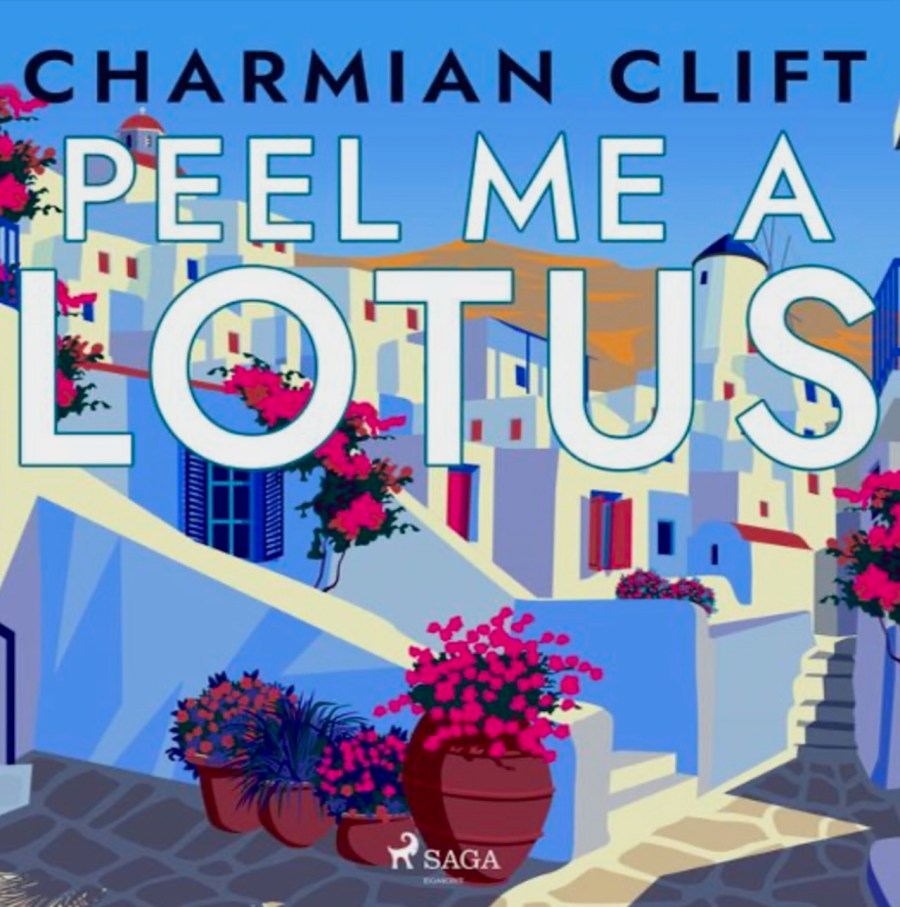
Gina’s mother was adopted. When Gina was 18 her mother discovered her birthmother was writer Charmain Clift, another unconventional women, who’s discovery helped Gina to make more sense of herself.

Stooped into itself, a piano beckons with sweet purity. I’m grateful for the balm of music. 

True love found Gina in the US in a man she met on a wilderness survival course. The two married and had a child called Blaize. Tragedy struck the couple when their daughter died, aged three. Gina shares her deep grief with an extraordinary vulnerability in her memoir – this is the point where I found myself in tears on an plane on my way to Canberra. 

Our only true safety lies in our own resilience and honesty, in being able to look our darkness in the eye and say, yes, you are part of me, a segment of my deepest mystery, even if I don’t understand you yet. Safe is being willing to reach through our fear to clasp the hands of our demons and welcome them in. Not hiding from any part of ourselves.

I think parts of Gina’s story will resonate with many women who grew up in the 80s, and it’s wonderful to see a woman living boldly in mid life. There are so are so many moments that present opportunity for connection for readers – from her love of nature, challenges growing up, finding her people and partying, her losses and grief as an adult, and her life-force that endows her with an extraordinary human resilience and a strength to carry on. We are the stars is a beautifully crafted memoir that inspires reflection on life and what is important. Highly recommend it.

In the magnificent wilderness of my body I’ve become a gardener, hands buried to the elbows in earth and mud and the rot of compost, churning and turning the soil, uncovering small, sad seeds of belief that I’m not enough. It takes tenderness to plant them, right side up, water them with benedictions and whispered spell of forgiveness. With enoughness.

Book review: Dust Child by Nguyễn Phan Quế Mai

Dust Child by Nguyễn Phan Quế Mai was based on her doctoral research on Vietnamese Amerasians. The seven years of research shows in the detail about the history, culture and Vietnam. The story spans multiple timelines between 1969 and 2016.

Vietnamese Amerasian, Nguyễn Tấn Phong’s application for an American visa for himself and his family under the Amerasian Homecoming Act is denied. He was caught out having had applied before and attempting to include people he was not related to. 

During the Vietnam War, tens of children were born into relationships between American soldiers and Vietnamese women. Tragic circumstances separated most of these Amerasian children from their fathers and, later their mothers. Many have not found each other again.

Soon after Phong meets an American couple, Dan and Linda who (according to Linda) have come to Vietnam as therapy for her veteran husband’s trauma. Linda doesn’t know that Dan wants to find Kim (real name Trang), a woman he had kept as a mistress while he was a helicopter pilot during the Vietnam war. Phong undertakes to help him and act as the couple’s tour guide.

She had tried to live an honest life, but the war had given her no choice. It had forced her to make up a version of herself which was acceptable to others. In a way, making up stories had been the basis of her survival and her success.

The story is told on two timelines – Phong and Dan’s present-day narration and Kim’s war-time story when she was and her sister worked to earn money to pay off their parents debts by keeping American soldiers company. Dan leaves Vietnam, abandoning a pregnant Kim.

Everyone came from dust and would one day return to dust. Life is transitory, after all.

Soon the three storylines converge.

What I found most interesting about Dust Child is that it tells the Vietnam war experience from the perspective of ordinary Vietnamese people both during the war and afterward, shining a light on the lasting effects.

Book review: Secret Sparrow by Jackie French

Secret Sparrow by Jackie French is a historical fiction novel about the contribution a female signallers to the war effort during World War I. Sixteen year old Jean McLain works in a post office in England. When she wins a national Morse code competition, the British army approaches her to become a clandestine signaller in France. Her contribution could help Britain win the war.

Jean was fast. Faster than her older brothers, who had learned Morse code from the crystal radio sets they’d built. Before the war they tapped out message to each other on their bedroom walls.

Jean will be one of a team of women at Rouen receiving and sending messages for the army, working in 12 hours shifts without so much as a toilet break. The British army wished to hide the involvement of women so much that they burned every document evidencing how women and girls were working in the trenches and battles of World War I. Soon, Jean is sent to the front due to her exceptional skills to help at the ill fated Battle of Cambrai.

The motorbike swerved wildly, jumping up onto the footpath then into the slightly higher ground of the new park, tearing through the marigolds. Bikies don’t care about flowers, thought Arjun, then realised the figure he held wasn’t the sturdy shape of a bloke, but a woman’s, skinny under the leather jacket. Her helmet hid her face.

The story of Secret Sparrow is told in 1978 by an old postmistresses, about her time as a ‘telegraph girl’ in WWI. She she tells her tale to Arjun, a young boy, after she rescues him from a flood on her motorbike in the country town of Burrangong. She relays her story to pass the time while they are sheltering in a bin on top of a hill above floodwaters trying to keep warm in the rain. 

But women signallers? She’d never heard of such a thing. There’d been no reports of women doing any such work in the newspapers.

Secret Sparrow is based on true events and gives women who were involved in the war effort a voice. The story sets a cracking pace, and while it does not shy away from describing the terrible conditions of war, it is crafted to be suitable for readers of 12+.