Book review: Seed to Dust. A Gardener’s Story by Marc Hamer

staghound dog staning in the Yarra river. River bank behind shows tall eucalypts and greenery
Natures landscaping

If lockdown continues for much longer, I may well complete most of that list of outstanding jobs that has been hanging around, some for longer than I care to admit. When I go for my daily walks in the forest I notice what a superb landscaper nature is. She throws together trees and shrubs and rocks and delicate flowers to create a display of visual perfection that I strive to emulate in parts of my constructed garden.

There is a patch of gravel beside my house that has been largely unchanged for over twenty years as I have never been quite sure what to do with it. The area is in a cutting and shaded and damp in winter, dry in summer. I had an inspiration after discovering some discarded pavers beneath the house and set to work over two weekends.

I often listen to audio books whilst working in the garden and chose Seed and Dust. A Gardener’s Story by Marc Hamer. His story was the perfect companion. Told over a twelve month period when Marc tended elderly Miss Cashemere’s garden on her country estate, the story is a meditation on gardening, nature and life.

In my imagination, this life has been a path with many, many forks, each one a choice to be made. Each unchosen route fading from view as it became the past, its destination unknowable. No destination is really known until you arrive, and then it becomes merely a point along the way — a vague place rarely planned for, simply the start of another adventure. The only thing to do is be happy with the outcome, whatever it is. The path leads to the end, as all paths do.

The story meanders month by month through the seasons honing in on minute changes on the estate. Marc’s work in the garden reflects his love for nature and his distant yet intimate relationship with its owner who observes him and occasionally interacts with him is tentative yet tender. Reflections on nature are interspersed with Marc’s reflections on his own life and philosophical observations of humanity and what gardening has taught him about life. It is a beautifully written story. I really enjoyed listening to the rambling baritone of actor Owen Teale reading the audio.

By the time I got to the end I had fallen in love with the garden the man and the voice and started listening to it again.

Seed to Dust was shortlisted for the Wainwright Price in 2021 (winner to be announced next week on 7th September). I understand that the printed novel is beautifully illustrated and have ordered a copy for my shelves as well as one I have sent as a gift to someone I think will enjoy it also.

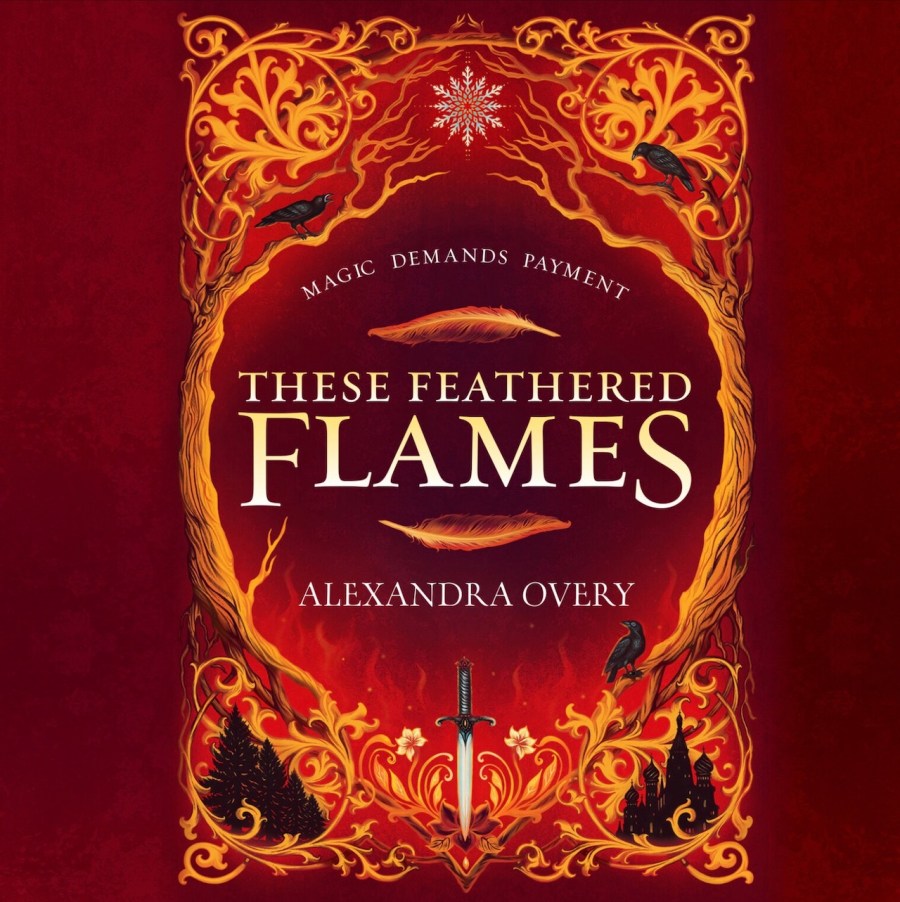
Book review: The Feathered Flames by Alexandra Overy

These Feathered Flames is a young adult fantasy reimagining the Russian folktale The Firebird. Alexandra Overy’s debut novel is about sibling relationships and politics. Twin sisters Izaveta and Asya are born into the royal family and separated at age ten. One is destined to become the next queen of Tourin and the other chosen to train as the new (reluctant) Firebird whose role is to ensure magic in the realm remains balanced. 

How was it that her sister had been taken to live with a monster, but somehow Izaveta had become one? A creature molded by her mother’s manipulations, by the constant betrayals of the court. Asya might have a monster beneath her skin, but Izaveta had one in her heart—in her very essence. So much a part of herself that she no longer knew how to separate one from the other.

When the girls are seventeen the queen dies unexpectedly. The Firebird, Asya, receives a Calling that the queen’s death was due to a magical imbalance and returns to the palace. The princesses must step into their respective roles prematurely and become reacquainted with one another as they work out who they can trust and who killed their mother. 

Whispers are enough to bring down a queendom

The fantasy genre is a fun way to escape the world entirely whilst still exploring the human condition, good, evil, power and morality. These Feathered Flames unfolds from the perspective of each of the sisters with political intrigue, swash buckling action scenes, magic and a little girl on girl romance. The story ends with a cliffhanger in preparation for book 2.

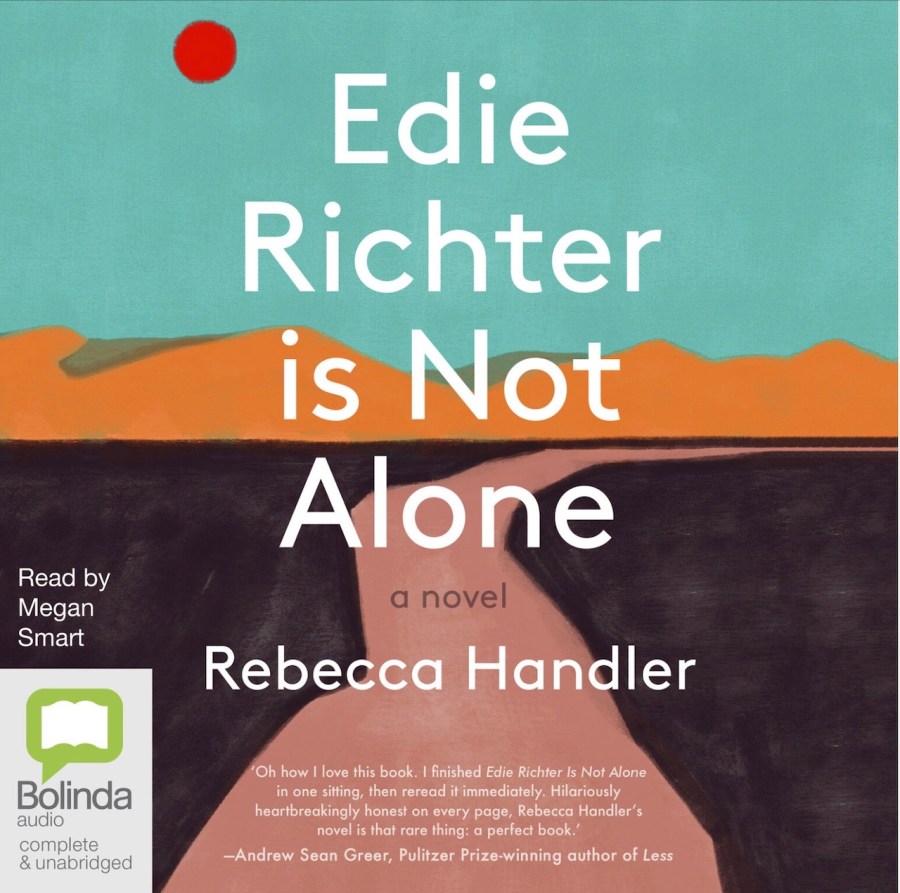
Book review: Edie Richter is Not Alone by Rebecca Handler

Rebecca Handler’s debut novel Edie Richter is Not Alone explores Alzheimer’s and the impact of euthanasia on families. Edie, her mother and sister care for their father/husband with early onset Alzheimers. When he no longer recognises her and stops eating Edie decides to suffocate her father without telling anyone.

After Dad’s diagnosis, Mom started labeling things and let Dad grow a beard. She went to a baby store and bought plastic child-protection locks for the kitchen. Just so he won’t stab me, she said, as I wrestled with one of them, trying to get a corkscrew out from a drawer. You remember Tanya from my walking group? Her mother attacked the cleaning lady and they had to move her into a home. 

After the funeral Edie and her husband, Oren, relocate from San Francisco to Perth, Australia. The story unfolds with dark humour as Edie explores her new home and is incrementally undone by her dark secret. She murdered her own father. Eadie’s behaviour becomes increasingly unpredictable and outlandish. The story is a well crafted, if discomforting, study of a woman unravelling due to her own lack of insight into her very complicated grief. Oren scrabbles around in fruitless frustration trying to penetrate her emotional defences and help.

I thought that life was about moving from one thing to another, all the previous things falling down behind you, but I was beginning to see this was not the case at all. That in fact every action, every thought, and every word uttered, they all stayed with you and formed a sort of jumbled collage

I found this novel morbidly compelling, a little voyeuristic and viscerally uncomfortable. It is a study of a woman’s mental and emotional disintegration resulting from her inability to open up to others about what pains her the most. She pushes away those closest to her and behaves in such appalling ways that she infuriates others who begin to believe she really is either bad or mad. As Edie becomes more and more isolated her realtionships and inner life fray. Eventually something has to give. 

A challenging, engaging and thought provoking read.

Book review: The Art of Being Normal by Lisa Williamson

I don’t read a lot of young adult fiction, but enjoy it almost without fail when I do. The Art of Being Normal is a story about a couple of teenagers on the outer. David is on the cusp of puberty and hasn’t told his parents that he is transgender – they just think he’s gay.

Leo is the new kid at school. He’s from the wrong side of the tracks and there are rumours he was kicked out of his previous school for doing something terrible. Most of the kids avoid him as they think he’s dangerous. David decides to try and befriend him. Leo doesn’t want (nor think he needs) friends and just wants to be left alone. His councillor talks to him about anger management and thinks he would benefit from making friends.

Participating?’ I ask, screwing up my face. ‘Participating in what?

Jenny sighs again. ‘In life, Leo. I want you to start participating in life.’

Author Lisa Williams was inspired to write the story after working in the national health service in England in a department focussed on helping teenagers who are questioning their gender identity. I would be interested to know the perspective of someone with lived experience, but for me it was a refreshing read. Diversity of representation is an important progression in fiction – stories like this did not have exist in mainstream fiction until quite recently. We all want to be ‘seen’ and being reflected in fiction contributes to that sense.

For someone so convinced that life isn’t fair, she plays an awful lot of bingo.

Told in first person, The Art of Being Normal is a funny and moving story about class, coming of age, and coming out in all its multi-colours. Told with plenty of surprising plot twists, the story is beautifully and sensitively written and had me laughing out loud in places. A great book for young people who don’t fit the mould and anyone who wants to engender a greater understanding and empathy for difference and diversity.

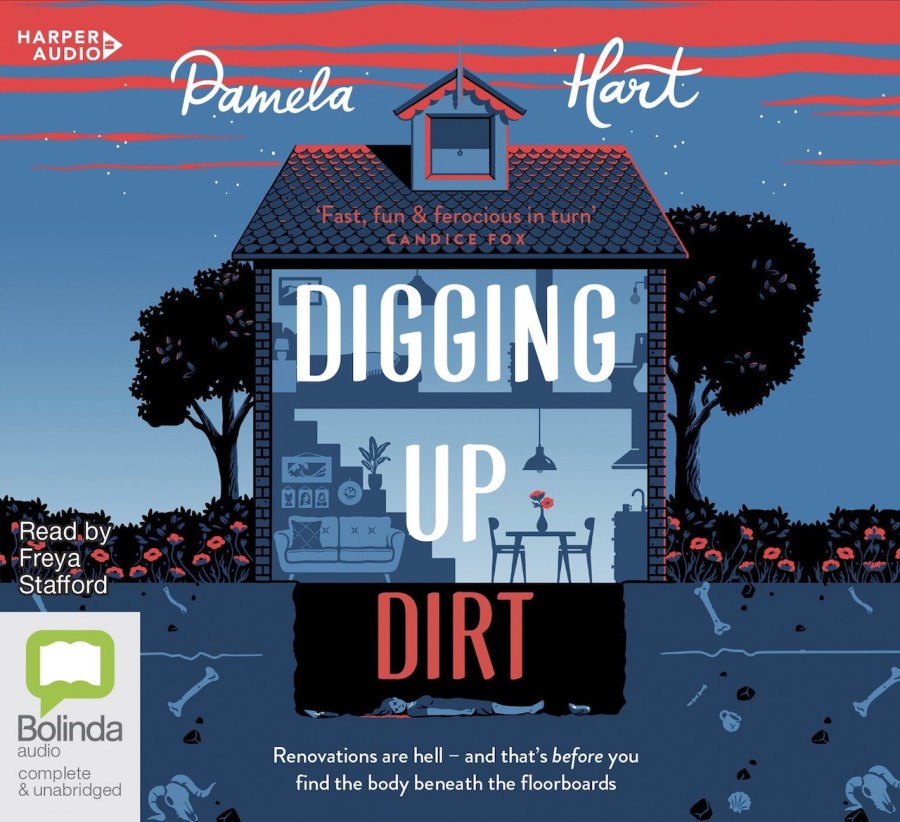
Book review: Digging Up Dirt by Pamela Hart

Thought I’d lighten things up a bit this week with a cozy mystery. Cozies are an easy read that can be gobbled up without any uncomfortable feelings, whilst still offering satisfying twists and turns. Digging Up Dirt also includes a splash of simmering romance.

Nothing like the builder digging up bones to halt the work on your renovation. TV researcher Poppy McGowan needs to find out if the bones are human or animal so she can get on with finishing her house. When archaeologist, Dr Julieanne Weaver, whom Poppy doesn’t like, interferes and slaps a heritage order over the property because she thinks the bones a significant Poppy is really annoyed. But then Julieanne is found murdered onsite, face down in the excavation dressed in heels and an evening frock, and things get really complicated.

Pamela Hart is a prolific author who has written more than 35 books and successfully crosses the genre divide. She is best known for her historical fiction (The Soldiers Wife, The War Bride, A Letter from Italy and The Desert Nurse).

Hart has also penned speculative fiction (Ember and Ash)and children’s books under the name Pamela Freeman as well as being an accomplished scriptwriter for ABC kids. I’ve done a few of the online courses she has written for the Australian Writers Centre as well, which have all been of good quality. She’s no slouch!

Digging Up Dirt is Hart’s first mystery novel and it’s a fun Australian read (or listen to the audio book). 

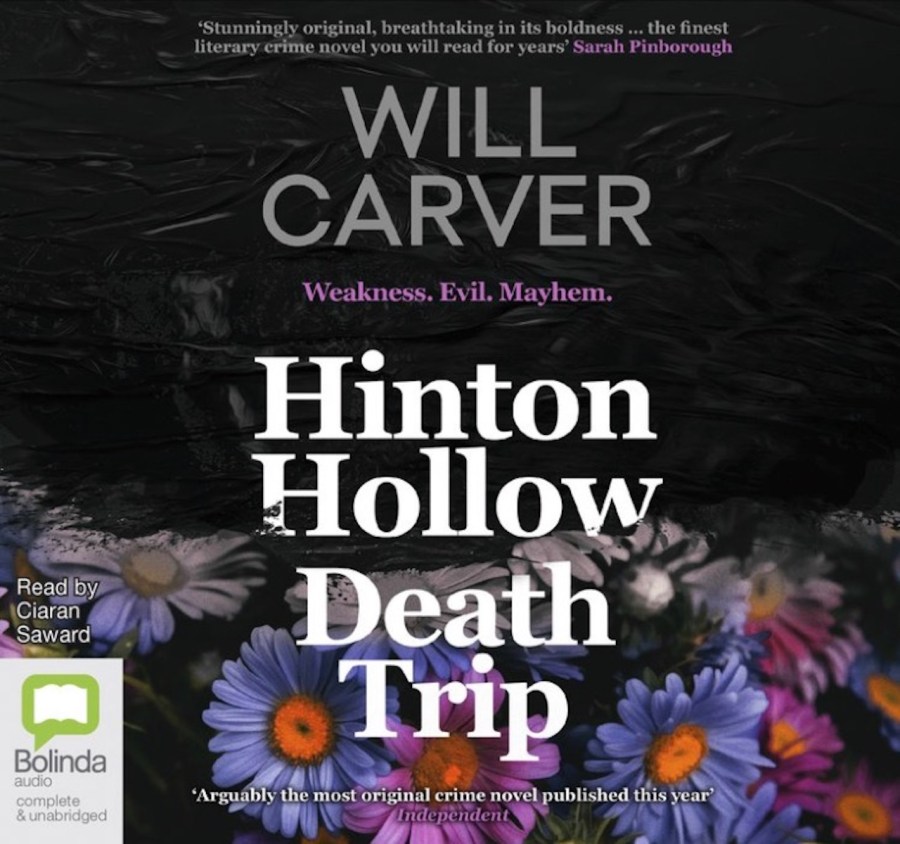
Book review: Hinton Hollow Death Trip by Will Carver

The devil made me do it.

Fear is my greatest tool. It can be used to make a person do almost anything. You can take education, information, motivation and throw it all away, fear is the only thing you require. It is a slow and deadly poison. And it is effective.

Detective Sergeant Pace flees London to return to his hometown of Hinton Hollow for some respite after the trauma of his previous case. Pace’s shadow follows him, enveloping the idyllic small town in darkness and creating disarray in the community. Hinton Hollow Death Trip is the third Carver novel featuring Pace (see Good Samaritans and Nothing Important Happened Today) but could also be read as a stand alone.

The story is a noirish pulp meditation on what can happen when we abandon our values and give into our darkest parts, unleashing the monster within driven by our disappointments, bitterness, resentment and jealousies.

This is how evil works. I just have to get you started. What you do with that feeling is entirely down to you.

The unique twist in this tale is the narrator. Evil. Evil takes great pleasure insinuating itself into the cracks of people’s goodness, prodding at their insecurities and encouraging them to indulge the more selfish, destructive and violent elements of their nature. The message here is that we all have this capacity for destruction in us, but we make choices in response to experiences that determine whether we indulge our malevolent sides or keep turning toward the good in ourselves and others. Evil encourages the characters of Hinton Hollow to indulge their blackness and cheat, steal and kill.

Where everything happened for a reason. A leap of faith. Detective Sergeant Pace is no good. Detective Sergeant Pace is a footnote. Detective Sergeant Pace is a small story. 

In keeping with Will Carvers style, Hinton Hollow Death Trip, its cast and their behaviour leave the reader feeling queezy, despite the macabre content being tempered with equally dark humour. The characters are outrageous but believable and the narrative has a way of making the reader reflect on their own dark corners. 

This is not a story for the squeamish so if you can’t stomach a bit of graphic violence, stick with the cosies. It seems the writing of the story was also uncomfortable for Carver. Apparently the manuscript landed in the bin twice before Carver felt it was good enough to call complete. 

Some people are more comfortable in the dark. Some seek it out. Some thrive there…

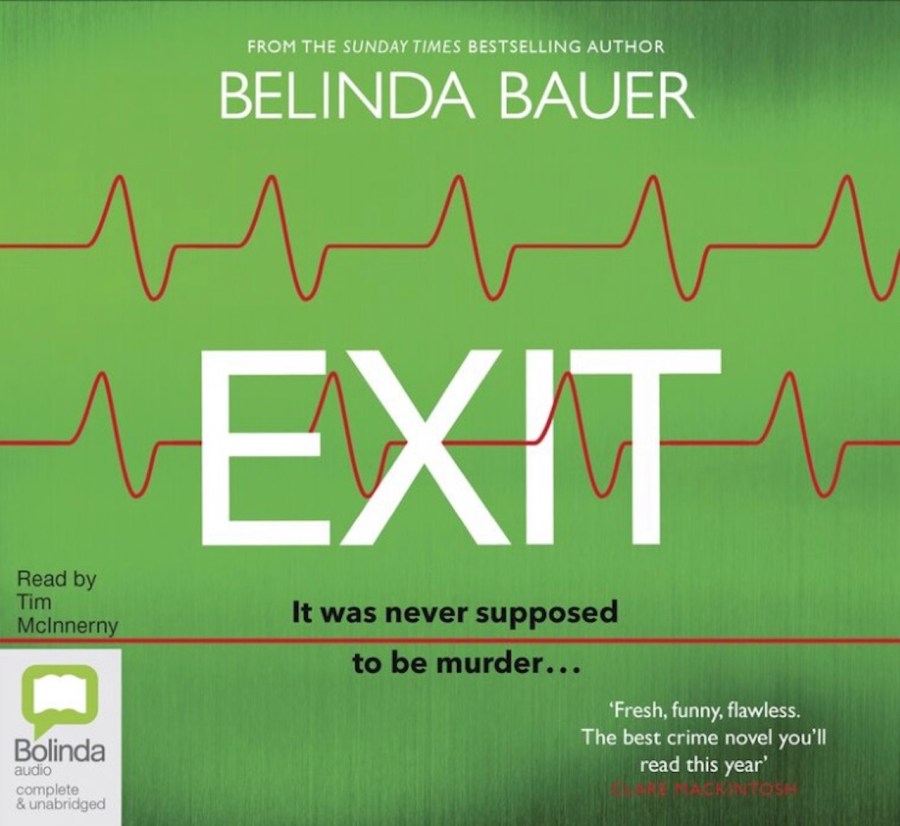
Book review: Exit by Belinda Bauer

I used to love old British cop shows like The Bill, Inspector Morse and Taggart. British crime shows are memorable for slow-moving mystery plots and complex characters. Belinda Bauer’s crime novels are similar.

Despite sounding like a juxtaposition, Bauer’s most recent novel, Exit, is a hilarious crime thriller.

Amanda was at his shoulder now. ‘What is it?’ she said, but Felix couldn’t speak because all the words he’d ever known seemed to be whirling around inside his skull like bingo balls.
The ones he needed finally dropped slowly from his numb lips.
‘We killed the wrong man.’

Seventy-five year old widower Felix Pink is a member of the Exiteers, a secret group that supports the right to die by baring witness to the suicide of terminally ill patients then disposing of any evidence to ensure their deaths appear natural. Everything goes horribly wrong when Felix and new young Exiteer, Amanda, accidentally help the wrong patient to die.

The second voice in the story is PC Calvin Bridge, a small town policeman, and in his own eyes a failed detective. Calvin has no confidence in his own abilities. He also hoards a shameful secret past.

Even now, if she spotted Calvin from any distance, Shirley made a point fo glowering at him. And if she were with somebody else, she’d turn to them and say something, and then that person would glower at him too, which made him feel like a bad person – which he knew he wasn’t – so if he ever spotted Shirley before she spotted him, he always just hid.

A comedy of errors unfolds as Felix tries to find out whether he is guilty of murder or something more sinister is afoot, and Calvin finds himself doing the detective work he’s been avoiding.

According to British author Bauer, crime novels are about how the stories of our lives can be suddenly changed by the misdeeds of others. Life is a river and crime the rocks – it is when our lives hit a rock that we find out if we are life’s swimmers or sinkers. Bauer’s novels focus on survival and recovery after a calamity.

Baur has a knack for crafting original, oddball characters that endear the reader to them. Exit is a delightful, hilarious and farcical look at life and death, the invisibility of ageing, friendship, morality and loyalty.

Exit is Bauer’s ninth crime novel. I have written about the author before. See my review of The Shut Eye here

Book review: Nothing Important Happened Today by Will Carver

Creepy. Lets face it Will Carver knows how to write a creepy, mesmerising, noirish thriller – remember Good Samaritans?

London Detective Sergeant Pace returns in Nothing Important Happened Today, a story about a cult in which perfect strangers commit group suicide by jumping off bridges after receiving a white envelope containing the words ‘Nothing important happened today’. This message tells the receiver they have been chosen to become part of the People of Choice and off they trot calmly to meet their maker.

At its heart Nothing Important Happened Today is a story about human psychology, vulnerability and the power of suggestion. Carver splashes the narrative with reflections on the damaging effects of social media, how it provides a mechanism to airbrush our lives and foster an insatiable need for validation that can be really damaging to one’s self confidence. It makes you pause and take stock of the madness of the online environment and its mirage of connection.

We are so connected that we have become disconnected. We can’t have a thought, we have to have an opinion. Freedom of speech has gone too fucking far when we feel the need to share everything. When we filter the image of ourselves but feel no need to filter what we say out loud, hidden behind a new status and picture of ourselves when we were twenty pounds lighter.

There is something mildly detached about Carver’s writing style in this novel, written in the third person and collective first person, that fits neatly with the mindset of a cult leader. It shows the chilling lengths some people will go to get others to do their bidding. The cult leader in Nothing Important Happened Today sends person after person to their death to satisfy their own need for power and a twisted idea of their sense of importance in the world. Each victim is simply seen as a number by an anonymous person operating with the aim of making themselves the best cult leader ever, measured by the number of casualties they can motivate to initiate their own demise.

The fictional story is interspersed with facts about real life cults, how they came about and what drove their leaders. This addition helps lead the reader to ponder whether the actual story, which hovers on the edge of believably, is real or fiction, it’s a mind bending narrative.

Carver is clever at crafting a tale to make the hair on your neck stand up and leave you feeling a little discombobulated and disorientated. He causes you to pause and reflect on reality, illusion and what holds real value and meaning in life.

Book Review: All Systems Red by Martha Wells

Whenever I visit my GP we talk about books and writing. She once filled an entire appointment telling me about the crime fiction novel she was writing about a GP who murders people. Lucky I’m a crime writer as well or I might have been reticent to accept any more scripts from her. On my last visit she got very animated about Martha Wells’s The Murderbot Diaries so I borrowed the first one to find out what her excitement was about.

All Systems Red is a 2017 science fiction novella and the first in The Murderbot Diaries series. For a simple story, it packs a powerful punch – I listened to the audiobook in one sitting whilst gardening, giggling to myself as I pulled weeds. The premise is simple: Two groups of scientists on an alien plant; something terrible happens to one lot and the others have to work out what, before the terrible thing happens to them as well. So what’s so good about it? …Murderbot…

I could have become a mass murderer after I hacked my governor module, but then I realized I could access the combined feed of entertainment channels carried on the company satellites. It had been well over 35,000 hours or so since then, with still not much murdering, but probably, I don’t know, a little under 35,000 hours of movies, serials, books, plays and music consumed. As a heartless killing machine, I was a terrible failure.

Murderbot is a part organic-part robot SecUnit – a security guard of unspecified gender for hire to protect explorers of the universe. Murderbot is a little bit different to the other SecUnits because they have disabled their governing programming unit, giving them agency. The sulky Murderbot keeps this secret, along with their addiction to binge-watching soap operas. They just want to be left alone.

Murderbot is a kind of coming out story because this SecUnit feels like they need to hide an essential part of themselves from everyone else – those who are more powerful than Murderbot and wouldn’t understand.

Wells has given Murderbot, who is essentially a killing machine, extraordinary vulnerability as they struggle with their fears about their robot and human parts. They are trying to work out how to be comfortable in their own skin, and their efforts to hide this from those around them are touchingly hilarious.

The best part? There are five more books in the series.

Book review: Too Much Lip by Melissa Lucashenko

Kerry Salter’s girlfriend is in jail and her pop is dying, so she leaves Brisbane and her arrest warrants behind and heads south on a stolen Harley to her hometown of Durrongo – a place she’s been avoiding.

Thing is, you run now, after last night, and it’ll haunt you forever. You can go as far away as you like, but the past always comes along for the ride.

Too Much Lip is Goorie author Melissa Lucashenko’s seventh novel. Shortlisted for the Victorian Premier’s Literary Award and the Stella Prize and winner of the 2019 Miles Franklin Award, it is a dark, funny story about family, home, country, intergenerational trauma, evil property developers, talking animals, life and death.

Kerry knew from long experience that there was no winning an argument with her mother. To Pretty Mary she was and always would be the Great Abandoner. Shame enough to turn out a dyke, but her far greater sin was the empty hole she’d left behind her in the family. Even in the terrible dark shadow cast by Donna’s disappearance, Kerry had still up and left to live among whitefellas and city people. Sharper than a serpent’s tooth, blah blah de-fucken-blah.

Bundjalung language words are peppered through a narrative that exposes the impacts of the history of colonisation and dispossession on Australian Aboriginal people. Lucashenko’s voice in the novel is unique and effectively echoes the voices of Australian aboriginal people I have known. I have never read a novel like it – which primarily tells me that there are far too few Indigenous voices in literature.

Kerry looked around the deserted road.

‘Yugam baugal jang! Buiyala galli! Yugam yan moogle Goorie Brisbanyu? You could help instead of sitting up there like a mug liar from the city.

Kerry looked around again. The waark hopped up and down in rage.

Then the second crow chimed in, dripping scorn.

It’s no good to ya, fang face. Can’t talk lingo! Can’t even find its way home! Turned right at the Cal River when it shoulda kept going straight. It’s as moggle as you look.’

On being awarded the Miles Franklin some critics claimed Too Much Lip to be undeserving as Lucashenko’s voice was not ‘literary’. My reading of that criticism is that those critics are pompous, entitled gits – probably in need of empathy training – and most likely educated in posh private schools with little experience of diversity and no understanding or appreciation of its value.

For a moment Kerry thought her mother was talking about killing the old man. Putting him down gently. Her second thought, hard on the heels of the first, was: just as well Ken’s drug of choice isn’t morphine. If the hospital had prescribed malt whisky to ease Pop’s last days they would have been in trouble.

The Salter family are gritty representations of people living in poverty and battling with day-to-day existence in all its joys, sorrows, and frustrations. Their education is primarily in their own culture, and in survival – not academia and privilege. They are flawed, funny survivours who love and hurt the people they care about, and go through life trying to make the best of it.

Into the river that was about to be stolen away again, as it always had been since Captain James Nunne Esq. first rode up with his troopers, one two three, crying I’ll have that, and that, oh, and that too, while I’m at it.

Too Much Lip is a political novel, which perhaps makes it confronting and challenging for some white Australians to read, but we all should read it because within its pages there is opportunity for greater understanding, and that might help lift our humanity above our turned-up wanker noses.

I’ll definitely be adding more of Lucashenko’s work to my reading list.