Book review: The Lost Flowers of Alice Hart by Holly Ringland

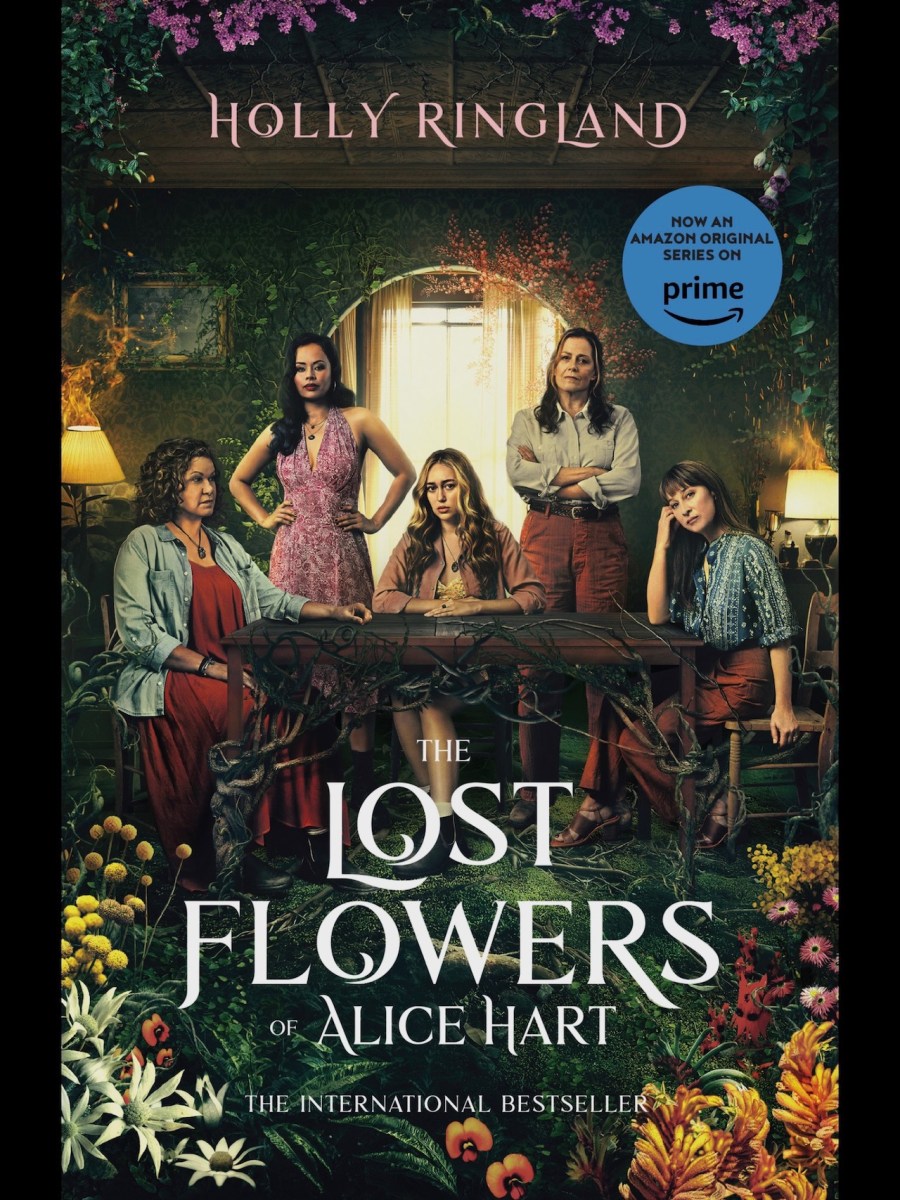
The Lost Flowers of Alice Hart by Holly Ringland is an aesthetically beautiful book. Each chapter is represented by a botanical drawing of a native flower drawn by artist Edith Rewa. There is also poetry peppered through the text, juxtaposing the challenging terrain that the story covers.

In the weatherboard house at the end of the lane, nine-year-old Alice Hart sat at her desk by the window and dreamed of ways to set her father on fire.

Nine year old Alice Hart’s father made her a beautiful desk from eucalyptus when he was feeling remorseful after one of his rages during which he would beat Alice’s mother, Alice and any pets that got in the way. Alice and her mother walk on eggshells waiting for Mr Hart to erupt. The girl reads about the phoenix rising from the ashes and wonders how she could set fire to her father so that he could rise anew with only the good parts of himself in tact.

Wave after wave curled and crested, gathering strength as it raced towards her. She tried to crawl away, scrambling to get further up the beach, but she couldn’t get traction in the soft sand. Trapped, she turned, helpless as the ocean of fire wheeled over her, a swirling wall of flames. Pressure surged from her gut, but when she took a deep breath, all that tumbled from her lungs was a silent scream of tiny white flowers.

A tragedy strikes the family. Alice is the only survivor and is taken in by her gruff, Blundstone and Akubra wearing, whisky drinking grandmother and flower farmer, June. The workers on the farm (called The Flowers) are all troubled women who found their way to June’s refuge.

…life is lived forward but you only understood backward. You can’t see the landscape you’re in while you’re in it.

June teaches her traumatised granddaughter the language of flowers, which become her means of communicating when she can’t find words. Alice didn’t know she had a grandmother and starts to wonder what other family secrets exist, but June is tight lipped. Then, as a young adult, Alice experiences a betrayal at the hands of her grandmother and flees the flower farm to the desert.

Around them, the willowy needles of desert oak trees swayed in the pale orange light. Wafts of yellow butterflies fluttered low over acacia and mulga bushes.  The crater wall slowly change colour as the sun sank, from flat ochre to blazing red to chocolate-purple. The sun slipped under the dark line of the horizon, glowing like an ember as it threw its last light into the sky.

The Lost Flowers of Alice Hart is both beautiful and brutal. The beauty of the prose, the Australian landscapes and native flowers offset the brutality of themes of domestic and family violence, trauma, secrets and grief. It explores how friendship and language are so important to breaking past patterns. The book has been adapted to film and premiers in Australia on Prime from today.

Book Review: The End Of The World Is Bigger Than Love By Davina Bell

Post apocalyptic young adult novel, The End of the World is Bigger than Love is mind-bending idiosyncratic and weird, in a compelling way.

We live on a blue planet that circles around a ball of fire next to a moon that moves the sea, and you don’t believe in miracles?

Identical teenage twin sisters Summer and Winter live alone on an island surviving on rations stockpiles by their father before he died. They spend their time reading the classics and hiding from a world destroyed by a virus.

When a stranger called Edward appears, their bubble of existence begins to unravel. Their past is slowly revealed via the alternating points of view of the girls and we see how their world has shrunk from a happy family of world travellers to an isolated family of two.

I will say it again in case you missed it: the world had stopped turning, just like they say might happen in corny love songs if the lovers are ripped apart, and little did we know there were earthquakes rumbling all around the rest of the planet, like deeper hunger pangs, a blanket of fog was settling down on the top of the cold slabs of sea, like when you toss a doona up over your bed and it drifts down in perfect rumples that make you want to lie on top of it immediately.

Edward appears and changes everything. Winter falls in love and Summer become jealous and suspicious of their relationship. But both sisters are unreliable narrators, so the reader is unsure who to believe as their stories diverge. Then the world stops turning.

And Summer isn’t with me. Perhaps she never was.

The End of the World is Bigger than Love is a dystopian speculative fiction story about control, love, grief, family, sisters, and survival, all soften by some beautiful magical realism.

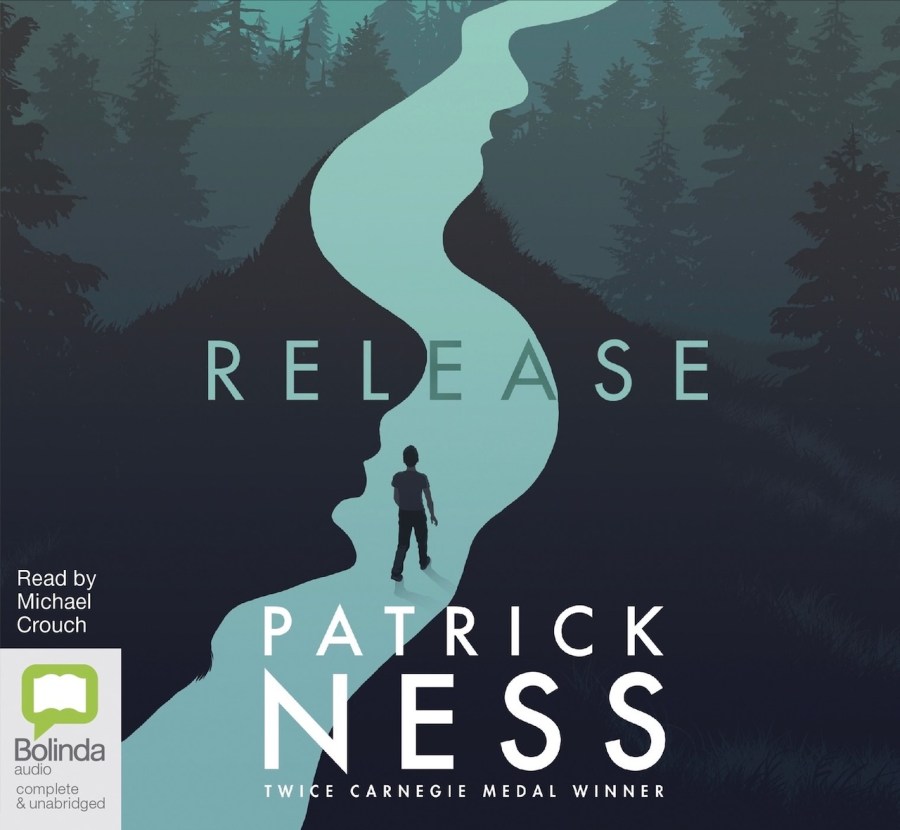
Book Review: Release By Patrick Ness

What happens when you are the gay teenage son of a devout conservative homophobic preacher in a small town? Young adult novel, Release by Patrick Ness is the story of a day in the life of seventeen year old Adam.

They’re your parents. They’re meant to love you because. Never in spite.

Adam knows who he is, but has to hide it from his parents. Knowing that his parents wouldn’t accept him if they knew means he struggles with his self worth and lives a double life. His funny, open minded friend Angela is his solid ground. The ‘yolk’ as he calls it is only till he finishes school. Simultaneously Adam is dealing with an exploitative, lecherous boss, the end of one relationship with Enzo, and the beginning of another with the sensitive, thoughtful Linus.

Why did everyone no longer a teenager automatically dismiss any feeling you had then? Who cared if he’d grow out of it? That didn’t make it any less true in those painful and euphoric days when it was happening.

Release has a dual supernatural narrative about a Queen and a Faun that is set in the spirit world. The queen’s spirit is entwined with a murdered teen and she wants revenge.

It may cost you, my Queen. It may cost you dear.”
“All the best journeys do, faun.”

At first I was confused by the dual narrative, but as the story progressed, I started to anticipate it, wanting to know what that narrative was about. It’s an unusual literary device, and the novel would have been great with Adam’s narrative as a stand alone. But the supernatural-magical-realism twist does add an unusual angle, and right at the end the two stories overlap, entwined by a drop of blood.

Marty: Dad’s right about you. You got lost on your journey somewhere.
Adam: That’s what everyone says who never bothered to go on a journey in the first place

Release is about freeing yourself, coming out, religion, sex, sexual harassment, love, heartbreak, friendship, logical family, toxic relationships and knowing yourself.

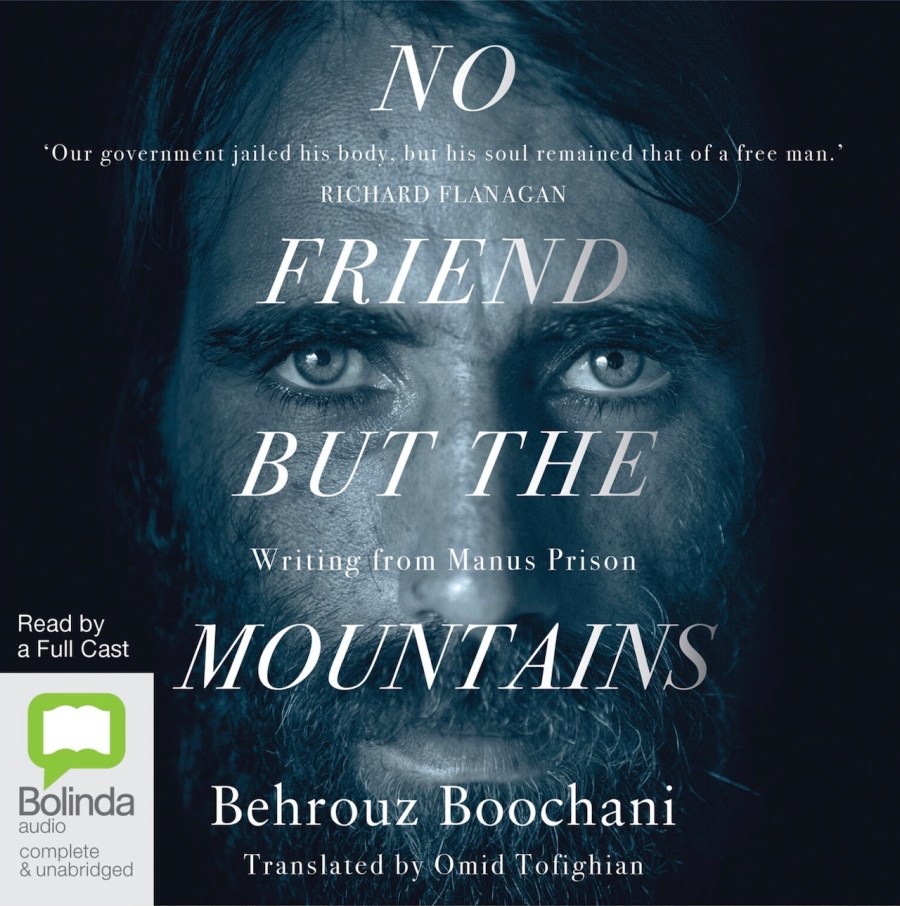
Book review: No Friend But The Mountains by Behrouz Boochani

What is a border? … My whole life has been impacted by the concept of “border”.

Humans have a unique capacity for both kindness, cruelty and survival, attributes that are displayed with stark vividness in this memoir about Australia’s archaic detention policies and what it was like to experience them as an asylum seeker shipped to Manus Island.

For some moments I exert everything to reach something far down inside the deepest existential places of myself. To find something divine. To grab at it… maybe. But I uncover nothing but myself and a sense of enormous absurdity and futility.

The phrase ‘truth is stranger than fiction’ is alive and well in No Friend but the Mountains by Kurdish refugee, Behrouz Boochani. Boochani is a journalist and poet with an education in politics and philosophy. He bore witness to, and survived, Australia’s inhumane detention policies by writing about them. His narrative was written in snatches and dispatched from Manus Island in a series of Farsi text messages over five years. His words were translated to English for the memoir by Omid Tofighian.

For some moments I exert everything to reach something far down inside the deepest existential places of myself. To find something divine. To grab at it … maybe. But I uncover nothing but myself and a sense of enormous absurdity and futility.

The narrative begins on the arduous journey from Indonesia to Australia with a group of mostly strangers gripping to the hope of a safe future beyond their boat that was not seaworthy. Boochani observes his fellow asylum seekers as a mixture of brave, selfless and selfish. As conditions at sea deteriorate, so do the passengers, some displaying their best, and others their worst selves.

The asylum seekers were rescued from their flailing boat and handed over to the Australian navy. A few days later, the men from the boat found themselves imprisoned on Manus Island where they experienced the brutality and degradation of Australia’s immigration detention system and the ‘stop the boats’ policy. The memoir takes us to February 2014 when attacks on the detention centre resulted in the murder of Iranian Kurd, Reza Bharati.

The bureaucratic ranks are determined by relationships of power. Every boss is subordinate to another boss. And the superior boss is also subordinate to another boss. If one investigated this chain it would possibly lead to thousands of other bosses. All of them repeating the one thing: ‘The Boss has given orders.

Nature offered Boochani some relief from the cruel reality of the day to day on Manus. There is beautiful imagery of the sea, mountains, trees, flowers and birds interspersed through observations of his fellow prisoners and captors and the hardships and humiliations they suffered.

The prisoner constructs their identity against the concept of freedom. Their imagination is always preoccupied with the world beyond the fences and in their mind they form a picture of a world where people are free. At every moment their life is shaped by the notion freedom. It’s a basic equation: a cage or freedom.

No Friend but the Mountains won the Victorian Prize for Literature and the Victorian Premier’s Literary Awards Prize for Non-Fiction in 2019. A must read for the socially conscious and those who need to be awoken to become so.

This will take time, but I’ll continue challenging the system and I will win in the end. It’s a long road, but I’ll do it

Book Review: The Yield by Tara June Winch

The Yield is a meditation on Australian Aboriginal culture, the impacts of colonisation policies including the removal of children from families and dispossession, inter generational trauma, returning home, identity and a reclamation of traditional language. The story is fiction, but draws on factual historical records.

He was telling her that there was a lot to remembering the past, to having stories, to knowing your history, your childhood, but there is something to forgetting it too…There exists a sort of torture of memory if you let it come, if you invite the past to huddle beside you, comforting like a leech…a footprint in history has a thousand repercussions, that there are a thousand battles being fought every day because people couldn’t forget something that happened before they were born. There are few worse things than memory, yet few things better.

Three different point of view narratives are interwoven through this book. Wiradjuri Elder, Albert Gondiwindi who wrote a dictionary of traditional language, his granddaughter August, in her early twenties, who returns home for her grandfather’s funeral after living overseas for some years, and Reverand Greenleaf, an empathetic nineteenth century missionary who established Prosperous house for the natives to try and protect them from the damaging white policies.

There are plenty things I haven’t done, and it didn’t make my life any worse.

August’s sister who disappeared when August was young has a strong presence in the story also. She hovers, just out of view throughout the novel. The absence of her point of view emphasises the impact of her disappearance, and symbolises what was lost more broadly to NSW Aboriginal communities.

Since she was a girl the ache had scratched further inside her, for something complete to rest at her tongue, her throat. The feeling that nothing was ever properly said, that she’d existed in a foreign land of herself.

The central Aboriginal family in the novel live at Prosperous house at Masacre Plains. The area is under threat from a tin mine planning to gouge a hole two miles wide and 300 metres deep where August’s family home is located. After returning for her grandfathers funeral, she decides to stay and try to help save the town.

I was born on Ngurambang — can you hear it? — Ngu-ram-bang. If you say it right it hits the back of your mouth and you should taste blood in your words. Every person around should learn the word for country in the old language, the first language — because that is the way to all time, to time travel! You can go all the way back.

The Yield is a slow flowing story about reclaiming Aboriginal language, family, loss, the past and current legacy of colonisation, and returning. Despite the serious topics, the novel also makes room for humour and I thoroughly enjoyed it.

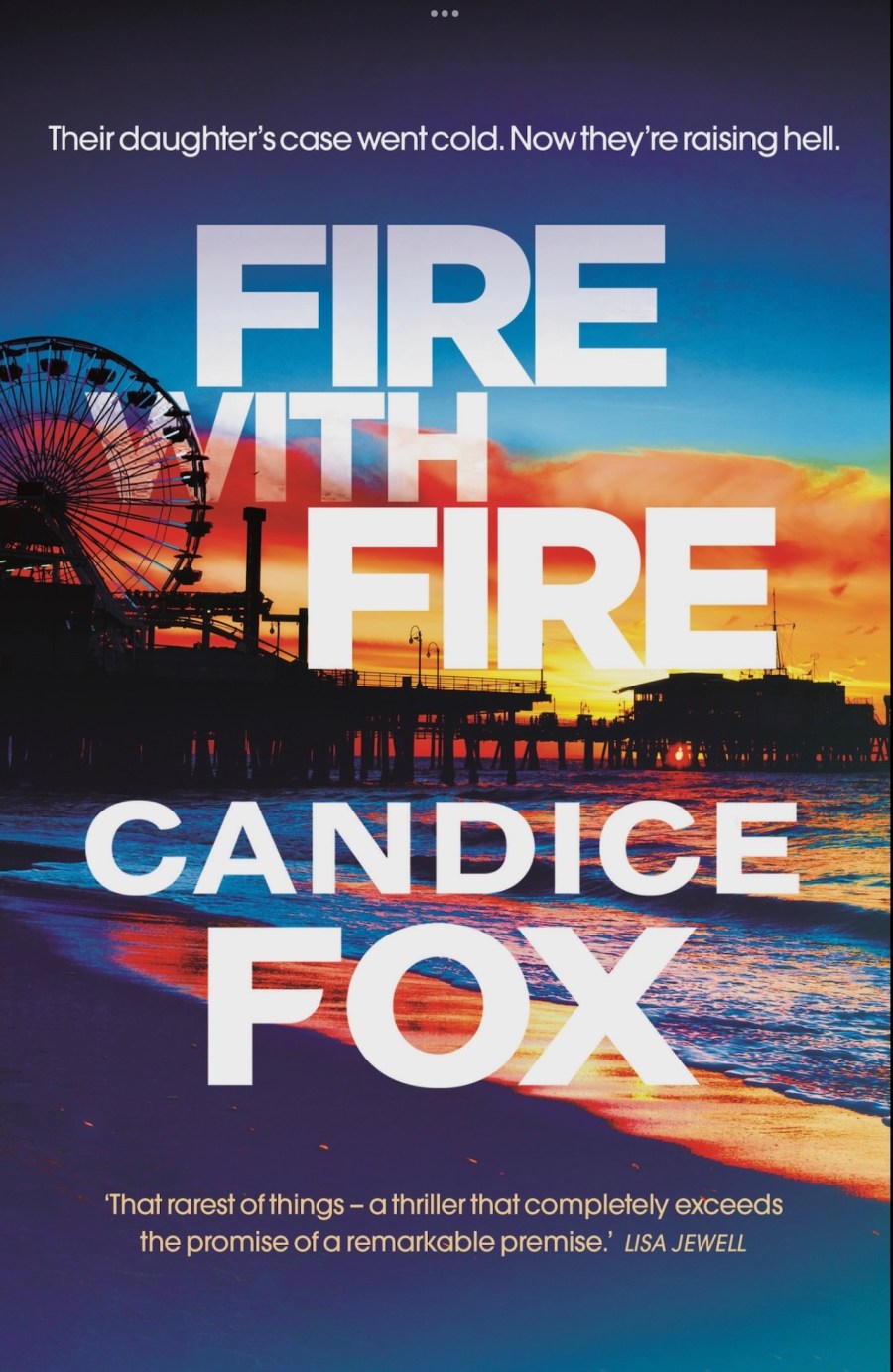
Book review: Fire with Fire by Candice Fox

Fire with Fire, the inestimable Candice Fox’s latest thriller is another cracker. Being a big fan, I have read all her books so I’m a bit gushy about the Australian author. And she seems like a good egg as well.

Constable Lynette Lamb gets fired on the first day of her new job as a cop and goes looking for the one guy who can help her. Detective Charlie Hoskins is in hospital after a near miss with death at the hands of the Death Machines biker gang after being outed when working undercover. The two become unexpected partners when Lamb confronts Charlie to help her get her job back and they are shot at by a gun toting thug, forcing them to make a hasty get away together.

In the hall outside the locker room, she was the new kid in the schoolyard; frozen, vulnerable. When she reached the bullpen, the officer who’d led her to the locker room was standing at the coffee station, one hand on the counter, the other pinching the bridge of her nose. The fuck my life pose. The colleague she was listening to touched her elbow in a consolatory manner and walked away.

Ryan and Elsie Delaney have been pushed over the edge. Desperate parents whose daughter, Tilly, went missing on a beach two years earlier. The girl was never found and the only piece of evidence was lost. They take matters into their own hands and hold up hostages in the police forensic labs – demanding something be done immediately to find out what happened to their kid.

‘My husband Ryan and I have taken over Laboratory 21 of the Hertzberg-Davis Forensic Science Center. And we intend to…to do a lot of damage here…if our demands are not met.’

Candice’s characters are bold oddballs, her plots are tight and each book is a pacy page turner. Fire with Fire is no exception – a Hollywood action thriller on paper, it was over too soon. If only she could write faster…

For other review of Candice Fox book reviews see Hades, Eden, Gathering Dark, The Chase, and 2 Sisters Detective Agency (a collaboration with James Patterson).

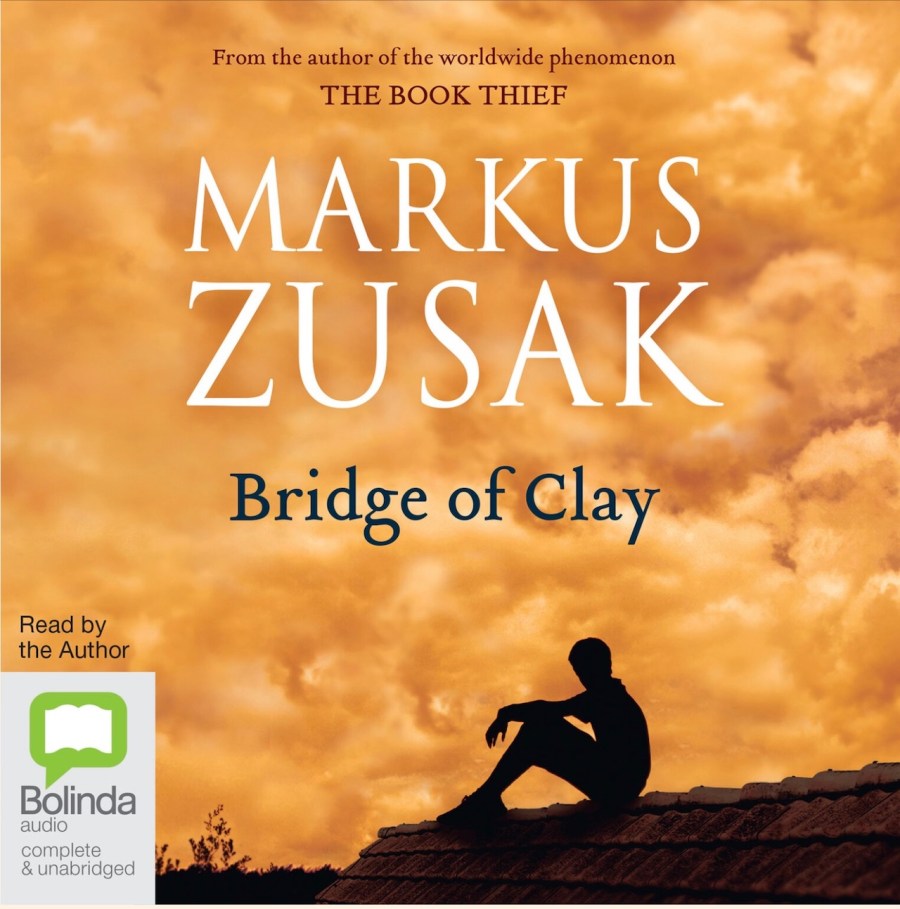
Book review: Bridge of Clay by Markus Zusak

Bridge of Clay is the second novel of author Markus Zusak who also wrote The Book Thief.

Five wild brothers, the Dunbar boys live unsupervised in a Sydney suburb amongst badly behaved pets. The eldest, Matthew, who supports the household and is guardian to his brothers, is the narrator.

Each boy stood, slouched yet stiff, hands in pockets. If the dog had pockets, she’d have had her paws in them, too, for sure

Matthew introduces his brothers – Rory who is prone to getting into fights, Henry who makes them all watch bad movies, Clay the dark horse who loves to run and is the central character through whom others are changed, and Tommy who collects stray animals including Hector the cat, Telemachus the budgie and Achilles the mule who has free range of the kitchen.

He, as much as anyone, knows who and why and what we are: A family of ramshackle tragedy. A comic book kapow of boys and blood and beasts.

One day the boy’s absent father, known to them as ‘the murderer’ reappears after disappearing into the outback, leaving his sons to fend for themselves after the death of his wife, Penelope, to cancer. He asks his sons to help him build a bridge. Clay goes to join him to the chagrin of his brothers. The bridge building threads through the 600 pages of the book and represents reconciliation after the destruction of grief.

She couldn’t ever see how broken he was, while the rest of us stood and watched them. She was in jeans, bare feet and T-shirt, and maybe that’s what finished us off. She looked just like a Dunbar boy. With that haircut she was one of us.

The novel tells the scrambled story of the Dunbar tribe starting with piano loving Penelope’s emigration as a teenager from Eastern Europe. Bridge of Clay is a tender, poetic, chaotic and sometimes violent patchwork story about a blush of boys bringing themselves up after they lose their mother to illness and their father abandons them. It is a story about family, grief, what makes a home, forgiveness and love. A complex, yet simply beautiful tale.

Book review: Exit through the Gift Shop by Maryam Master

Exit Through the Gift Shop is Maryam Maser’s debut middle grade fiction novel that deftly covers some challenging territory.

Part-Persian, Anahita Rosalind Ghorban-Galaszczuk (aka Ana) is the 12.5 years old daughter of divorced parents. Ana is also dying of non Hodgkins lymphoma. She is a circumspect and pragmatic kid who carries on with life, trying to make the best of it – school, friends and family whilst juggling chemo treatment and symptoms.

The thing is that when you’re losing your hair, no shift in focus, whether it be diving head-first into maths homework and tackling a curly algebra equation or playing Jedi mind tricks on Spanx by hiding his kitty litter, will make you feel better about yourself.

No one at school knows about her illness and Ana is relentlessly bullied by a girl called Alyssa – about how she looks, her name and her heritage. Ana dreams of Alyssa dissolving in shame when she finds out about her illness. The day finally comes when Ana decides to tell the school about her illness, but the news has no impact on Alyssa’s behaviour, if anything it gets worse.

Ana’s wingman, Al, asks her loads of questions and he always sticks by her and tries to cheer her up when she’s down. Ana and Al plot revenge on Alyssa.

Rocking a purple punk mohawk, I strut my way past the Science block as if I were showcasing the latest Gucci range on a Paris catwalk during Fashion Week.

Exit Through the Gift Shop is written as an English assignment about the last year of Anna’s life and includes plenty of illustrations. Told in first person, the story covers difficult and sensitive themes such as death and dying, and bullying that shows how evil children can be. But the novel also includes much joy and explores themes like the importance of the love of family and friendship. The book is well written and punchy, but not for everyone due to the sensitive content.

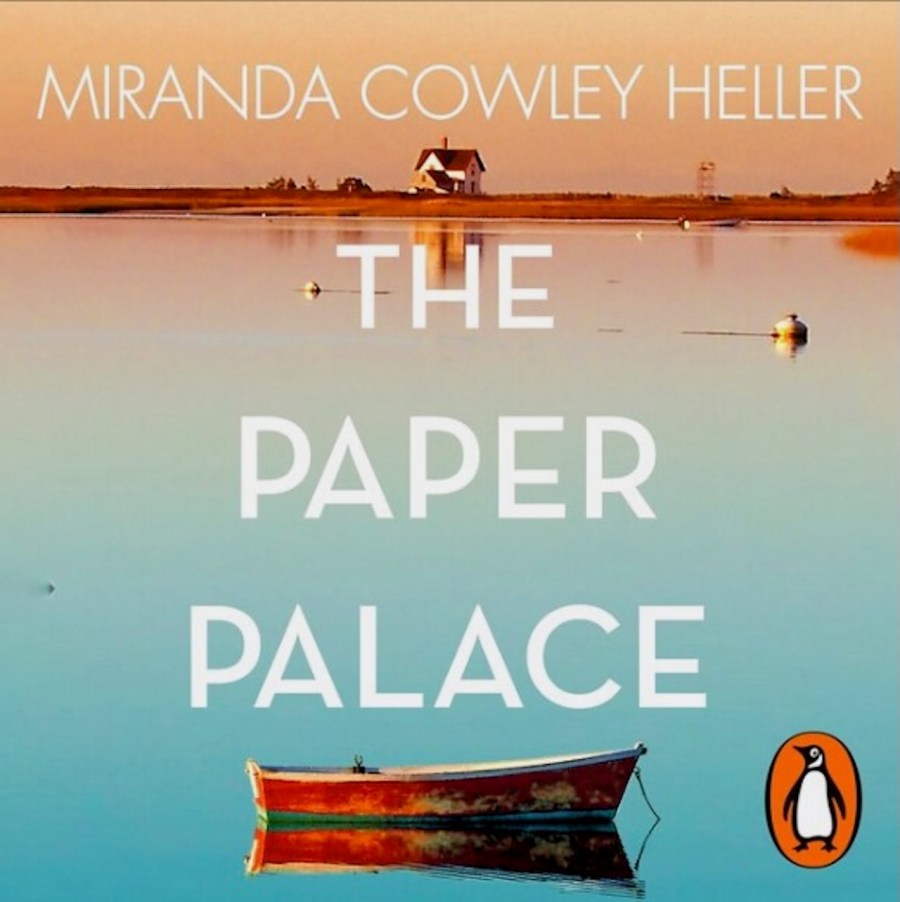
Book review: The Paper Palace by Miranda Cowley Heller

One day unfolds at the same time as Elle Bishop’s life unfolds in the dual narrative novel The Paper Palace. Elle is at the family cabin at Cape Cod where she has spent every summer of her 50 odd years.

I wonder if he would love me if he could see inside my head, the pettiness, the dirty linen of my thoughts, the terrible things that I have done.

I was quite blown away and discomforted by this story. In the first chapter, I thought…saucy…when the main character recalled her secret sex in the dark against the wall of the cabin with her friend from childhood, Jonas, whilst their respective partners were inside talking and Elle’s mother washed the dinner dishes.

There are some swims you do regret, Eleanor. The problem is, you never know until you take them.

But as the story unfolds, interweaving a series of past and present decisive moments in Elle’s life, her frailty is exposed and it becomes apparent that many of her decisions have been driven by tragic events buried in denial, secrets and lies.

But it’s what we do, what we’ve done for years now. We drag our past behind us like a weight, still shackled, but far enough back that we never have to see, never have to openly acknowledge who we once were.

I found The Paper Palace to be a beautifully written, emotionally demanding read. From the beginning Elle’s life is a series of trials that explore themes including failing marriages, blended families, abuse, trauma, lost opportunities, infidelity, and the complexity of intimacy and betrayal. It is dark, heart wrenching and wistful.

Does letting go mean losing everything you have, or does it mean gaining everything you never had?

Book review: Red, White and Royal Blue by Casey McQuiston

In Red, White and Royal Blue you will find out what happens when America’s first son falls in love with the Prince of Wales – it’s funny, romantic and sexy, with a good dose of awkwardness.

Straight people, he thinks, probably don’t spend this much time convincing themselves that they’re straight.

Charismatic Alex Claremont-Diaz is the son of the first female President of the US. He has a beef with his nemesis, Prince Henry and it’s proving to be a risk to US/British diplomacy. The young men’s parents and handlers hatch a plan to make them play nicely together.

‘You are’, he says, ‘the absolute worst idea I’ve ever had.’

At first they are all frenemies, but their attraction to one another soon becomes apparent when they find themselves locked in a broom cupboard together. Of course the world power’s leading men being gay presents a whole lot of other issues.

Love is like a fairy tale, it would come sweeping into your life on the back of a dragon one day.

Red, White and Royal Blue is a delightful, feel good, empowering love story with an imaginative premise. Highly recommend it.