Book review: Hudson Bay Bound by Natalie Warren

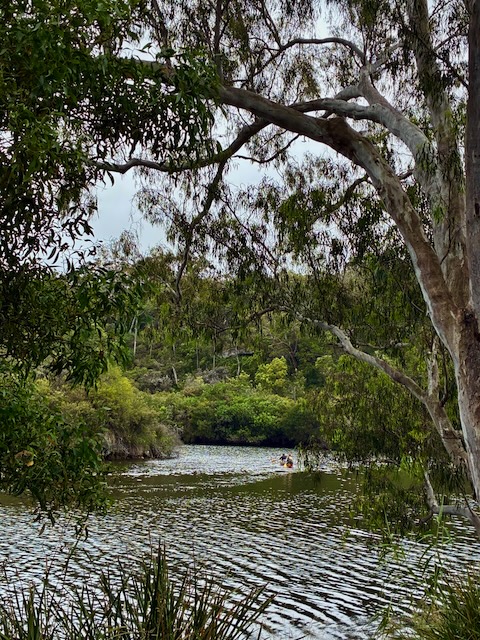
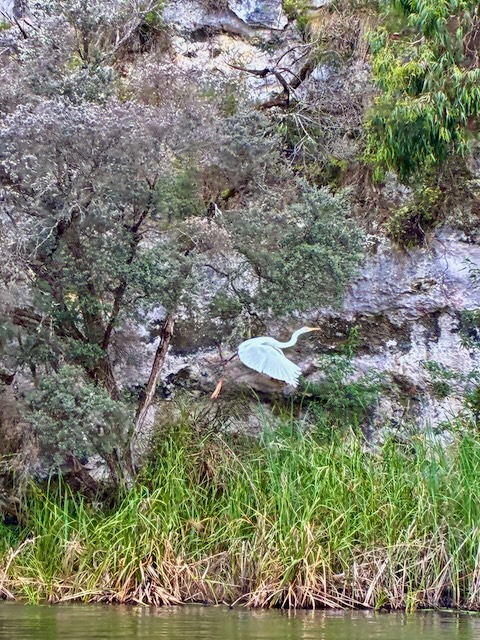
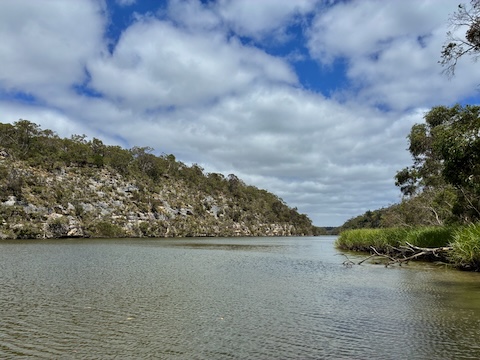
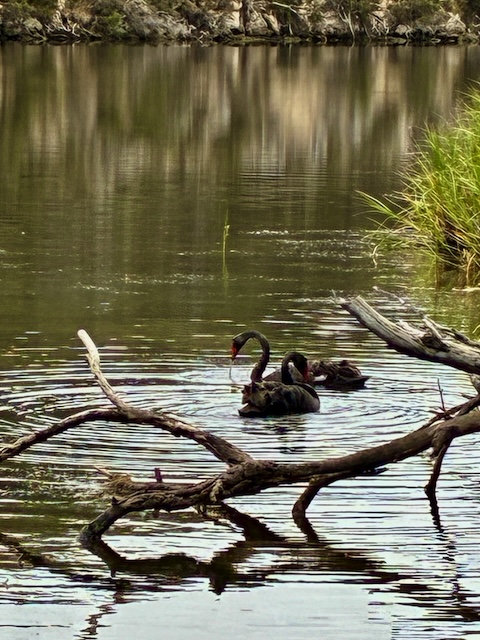
I spent four days over new year canoeing around 50km of the Lower Glenelg River. It’s a wide, deep, slow-flowing tidal river. The Glenelg originates in the Grampians National Park in Victoria and snakes through Balmoral and Casterton. Then, it flows through the Glenelg National Park before doing a sweeping bend through South Australia. It returns to Victoria to join the ocean at Nelson. The river is lined by an impressive layer of Pliocene age limestone and ferricrete gorges. It also features national park inhabited by an abundance of wildlife, particularly birds and koalas.

The most challenging part of an expedition is committing to do it—accepting the unknown changes that will inevitably occur in you and around you. – Hudson Bay Bound

Upon returning home, I attended to some overdue maintenance around the house and bushfire season preparations. That season then arrived with a vengeance last week. Due to the extreme conditions and already active fires to the north, I cleared out on Friday. I don’t currently have animals to care for and I had somewhere to go so it was an easy decision. I did not return home until quite late after the cool change. Thus the late publication of this blog. 

We need to give rivers room to breathe, to protect and improve not only the water but the land surrounding the river, too. – Hudson Bay Bound

Our forested town on the banks of the Yarra River was spared again this time. My heart goes out to those communities that were, and still are, being impacted by the fires. I also feel very sad for all the animals and beautiful Australian landscapes ravaged by the fires. It’s going to be a long summer.

When in doubt, don’t think too much, and walk around the block in your hiking boots. – Hudson Bay Bound

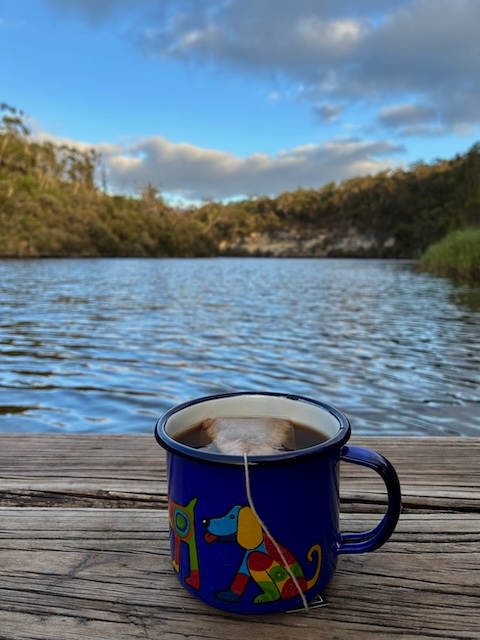
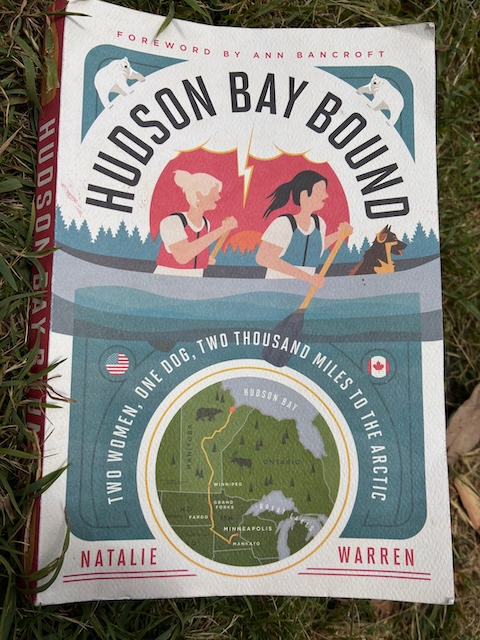
Circling back to my canoe adventure. I have said before that when I travel I like to read something that has some reference to my journey. At the campsites on the Glenelg I dove into the memoir Hudson Bay Bound by Natalie Warren. Hudson Bay Bound tells the story of two young college graduate friends. They became the first women to canoe the 2,000 miles from Minneapolis to Hudson Bay, completing the journey over eighty-five days in 2011. 

Anything that wasn’t a basic need or a life-threatening issue wasn’t worth a worried thought. – Hudson Bay Bound

Hudson Bay Bound narrates the trials and tribulations of this journey. It describes the people the girls meet and explains what they learned about the population’s connections to the river. Hudson Bay Bound also touches on some of the social and environmental issues along the river. Their quest was inspired by Eric Sevareid and Walter C. Port’s wilderness voyage portrayed in the 1935 Canoeing With the Cree. A quick, easy read for those who like an outdoor adventure.

Book review: The Memory Police by Yoko Ogawa

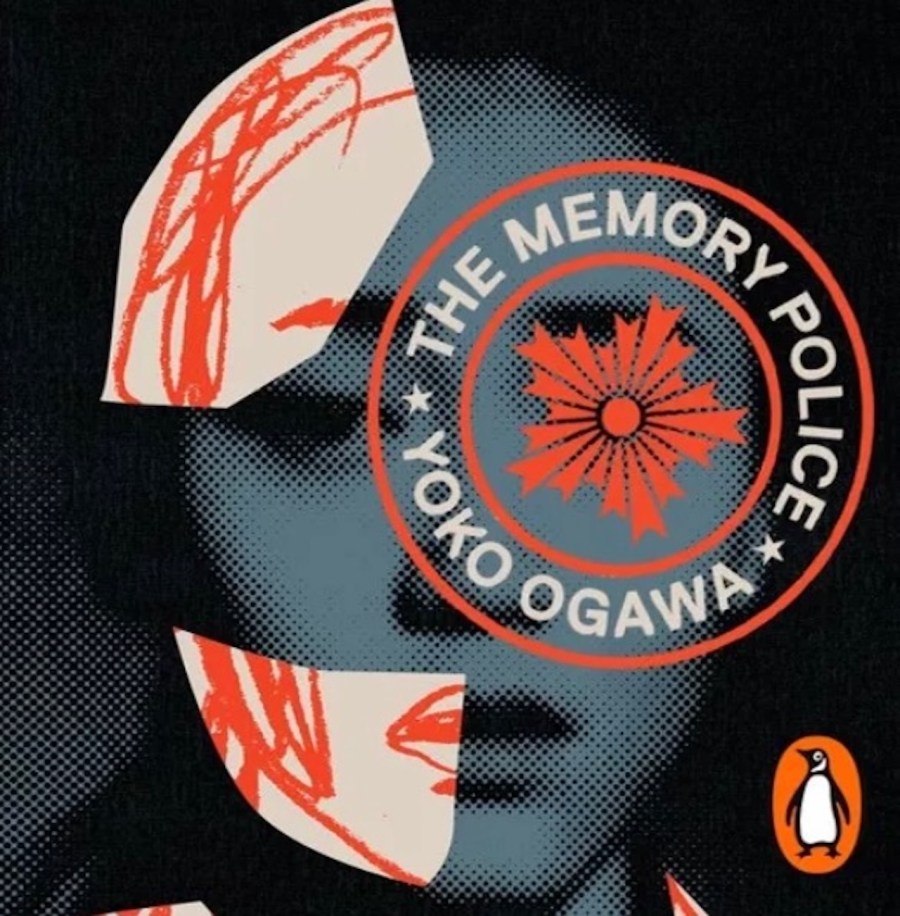
The Memory Police by Yoko Ogawa is a dystopian novel set on a remote island off the coast of Japan where objects – hats, roses, birds, boats – disappear at the hand of an unknown power. The disappearances are reinforced by the Memory Police, and the island population’s memories of the objects fade until they can’t remember their existence at all. Disappearances escalate, and one morning people wake up and their left legs have disappeared – their very essence is thinning. Even nature submits and seasons disappears. The world of the island inhabitants gradually shrinks and loses meaning, but there are a small number of people who retain memories. The Memory Police seek them out, round them up, and take them away. 

People—and I’m no exception—seem capable of forgetting almost anything, much as if our island were unable to float in anything but an expanse of totally empty sea.

The characters are unnamed. The narrator is an author, and she and an old man who is a family friend decide to hide the author’s friend and editor, R, beneath her floorboards in a hidden room when they realise he has memories and is at risk. The room also accumulates what can be salvaged of the things that are disappearing.

I suppose memories live here and there in the body. But they’re invisible, aren’t they? And no matter how wonderful the memory, it vanishes if you leave it alone. If no one pays attention to it. They leave no trace, no evidence that they ever existed.

There is also a story with the story – excerpts from a manuscript that the narrator has been writing about a typist who can only communicate through typing as she has lost her voice. She’s held hostage by her typing teacher and lover in a tower. When novels disappear, R encourages the author to keep writing as a means of preservation. 

Men who start by burning books end by burning other men

Beautifully written in quiet poetic prose with the slow creep of tension, the novel explores memory and its role in identity, connection, loss and isolation, as well as the perils of authoritarianism and the power of art and storytelling as a vehicle for resistance. The story asks us to consider our identity and our relationship to the world around us. It also made me consider mortality as the novel reminded me a little of what happens when we start to die and parts of our bodies succumb to illness or old age, memories fade and friends disappear.

Onomichi, Tomonoura and the Shimanami Kaido

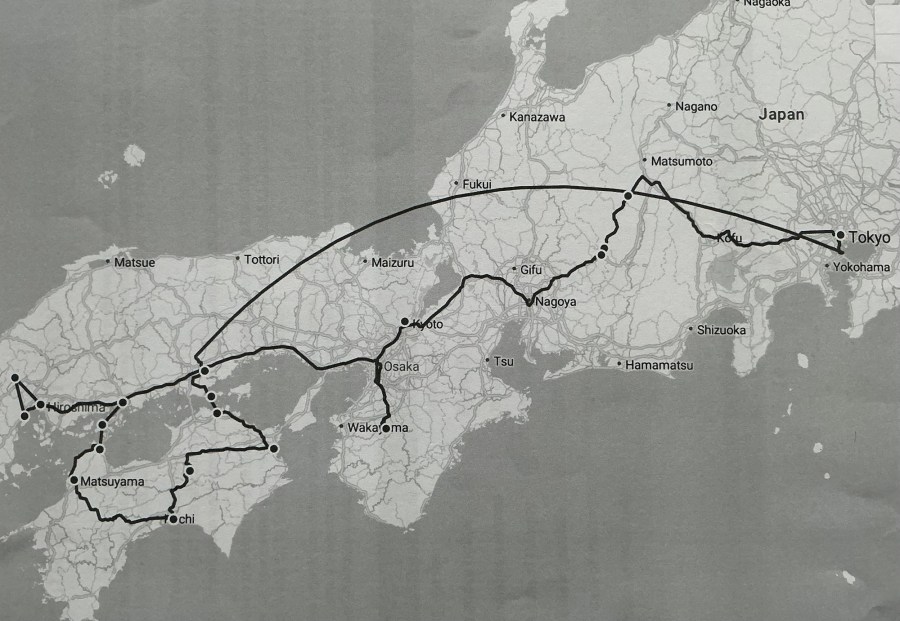
The further away from the main tourist spots we’ve travelled, the more I’m enjoying this trip. After the Hiroshima area we headed to the port town of Onomichi.

ONOMICHI and TOMONOURA

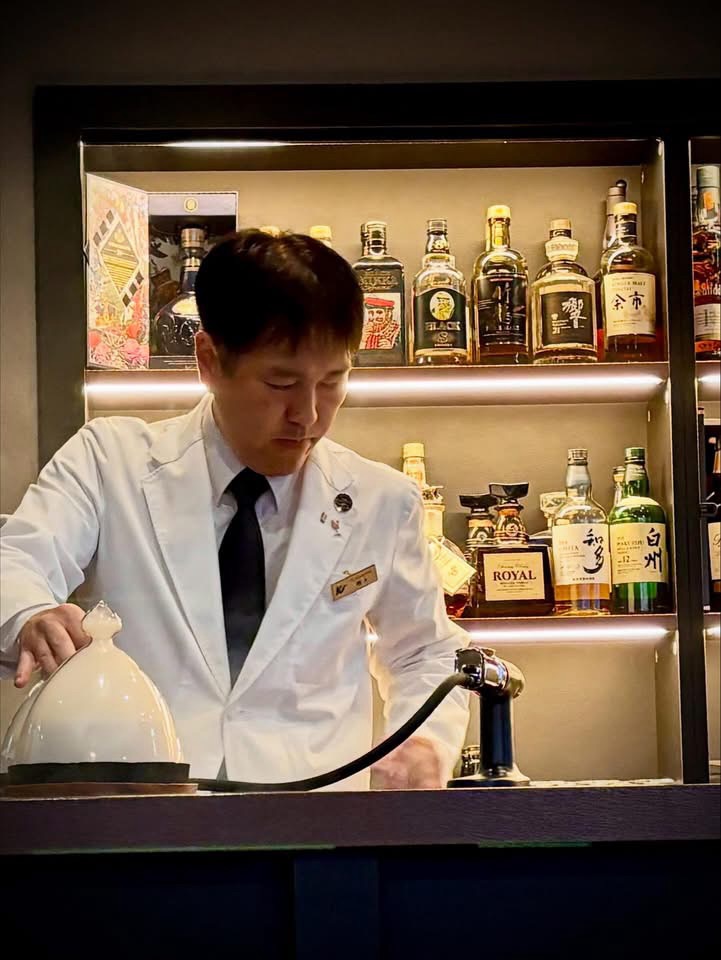
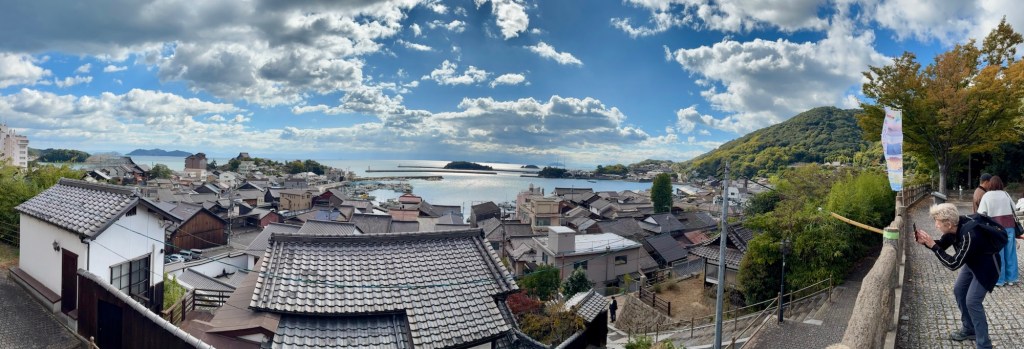
Onomichi is a small seaside port that spreads up the surrounding hillsides where temples (25 in total) and shrines are dotted between houses along steep narrow streets. The view from the top is magnificent and the town reminded me a little bit of Hobart before it was gentrified. Our hotel had a rooftop bar that served chips that the barman smoked by attaching a hose to a transparent dome secured over the bowl and pumping smoke onto them!

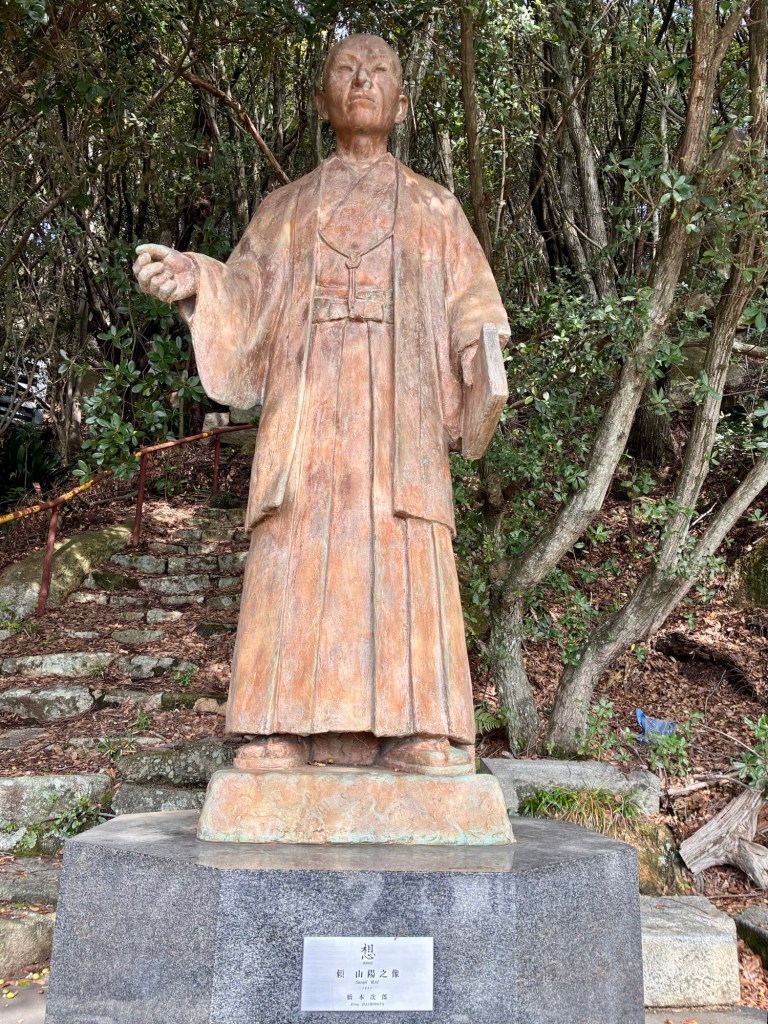
Onomichi is a town that draws artists and creators and has featured in a number of films including Yasujiro Ozu’s classic Tokyo Story. The town also has a strong association with literature and poetry with 25 literary monuments along the Literature Path.

the artist’s job is to grasp the simplicity, precision, and simple individuality of single materials and assemble them into a work of art

– scholar Rai Sanyo

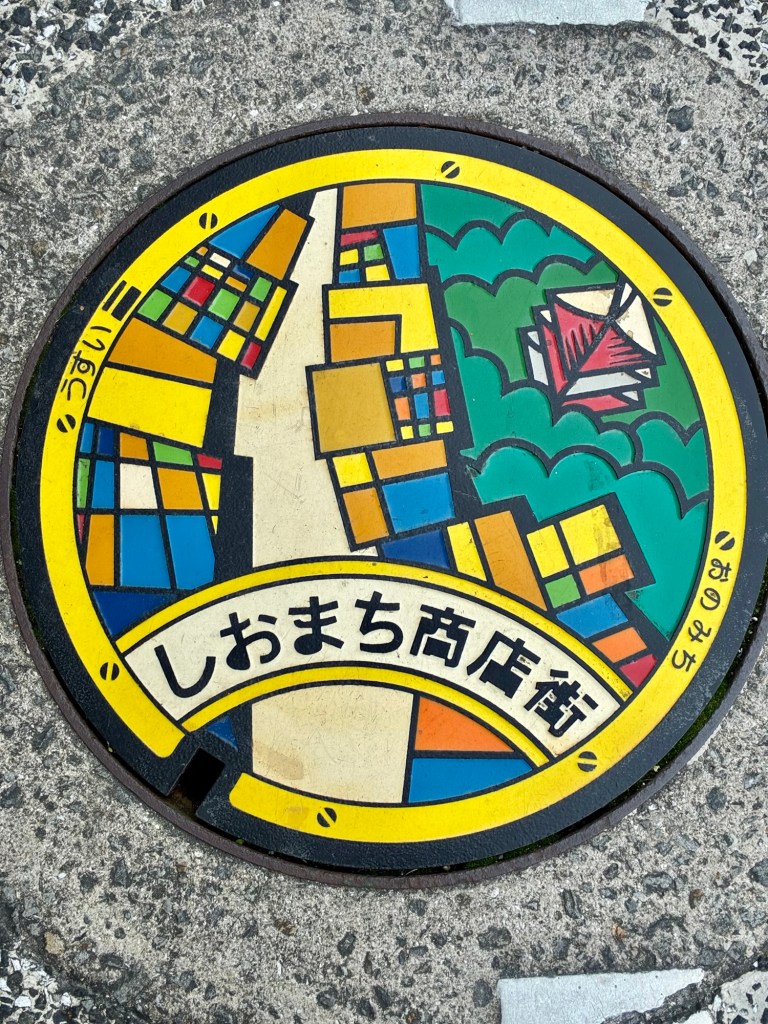
We spent a day exploring the town – making our way up the hillside, checking out the temples and monuments on the way to the museum of art, and exclaiming at the magnificent views over the Seto island sea, and then caught the ropeway back down the hill. In the flat part of the town there is a thriving undercover shopping arcade with a variety of shops and eateries and street performers.

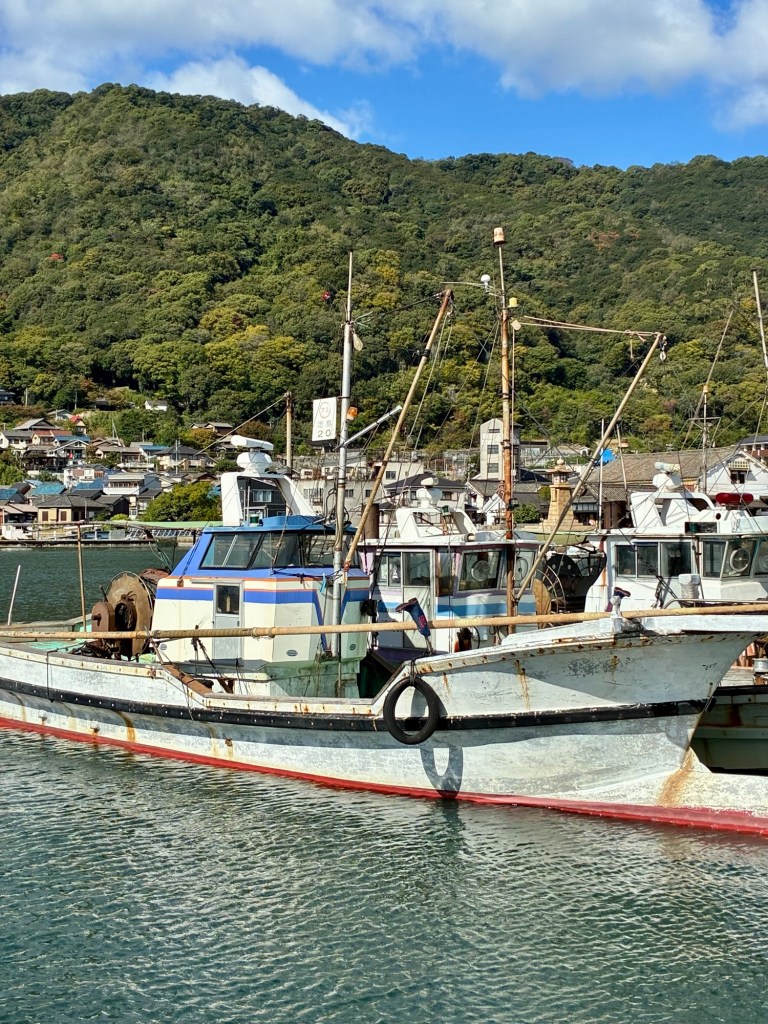
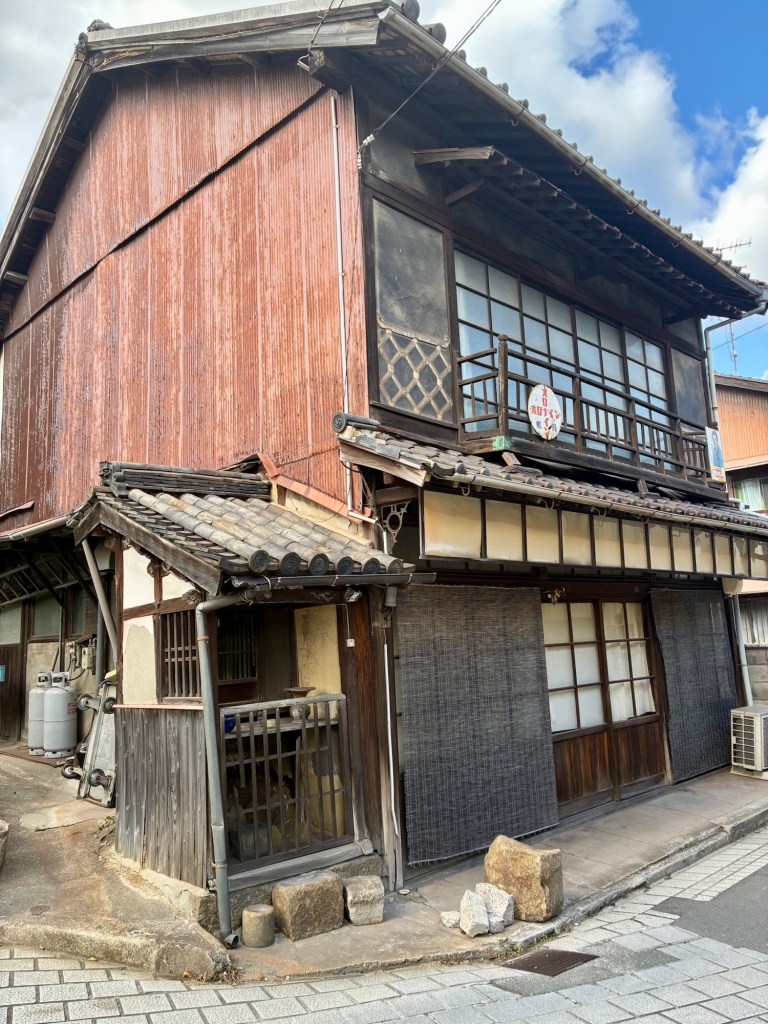
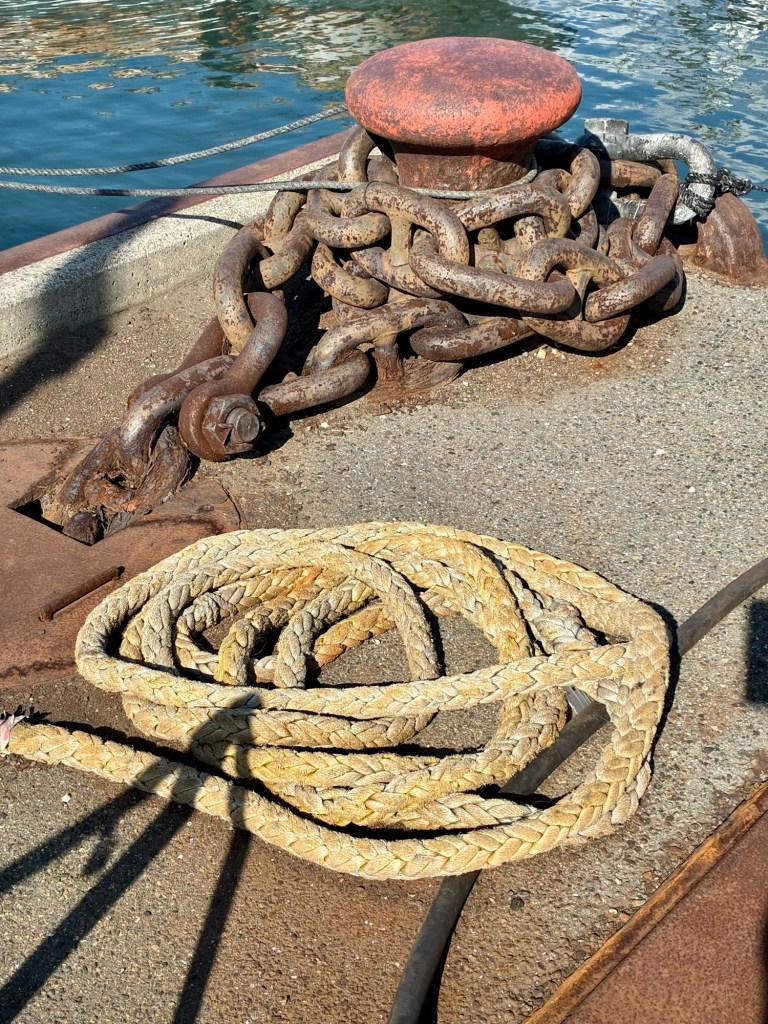
On our second day we caught an old yellow ferry under towering bridges, past ship building yards to the sleepy port fishing town of Tomonoura. It was a perfect sunny day to explore the tiny winding streets lined by dilapidated buildings, junk shops, medicinal alcohol traders, excellent Italian lunch fare and a bakery advertising the

Japanese take on Monte Blanc. Tomonoura has also been used for filming countless movies and TV dramas including The Wolverine staring Hugh Jackman, and is the setting for the amine Ponyo by Director Hayao Miyazaki.

SHIMANAMI KAIDO

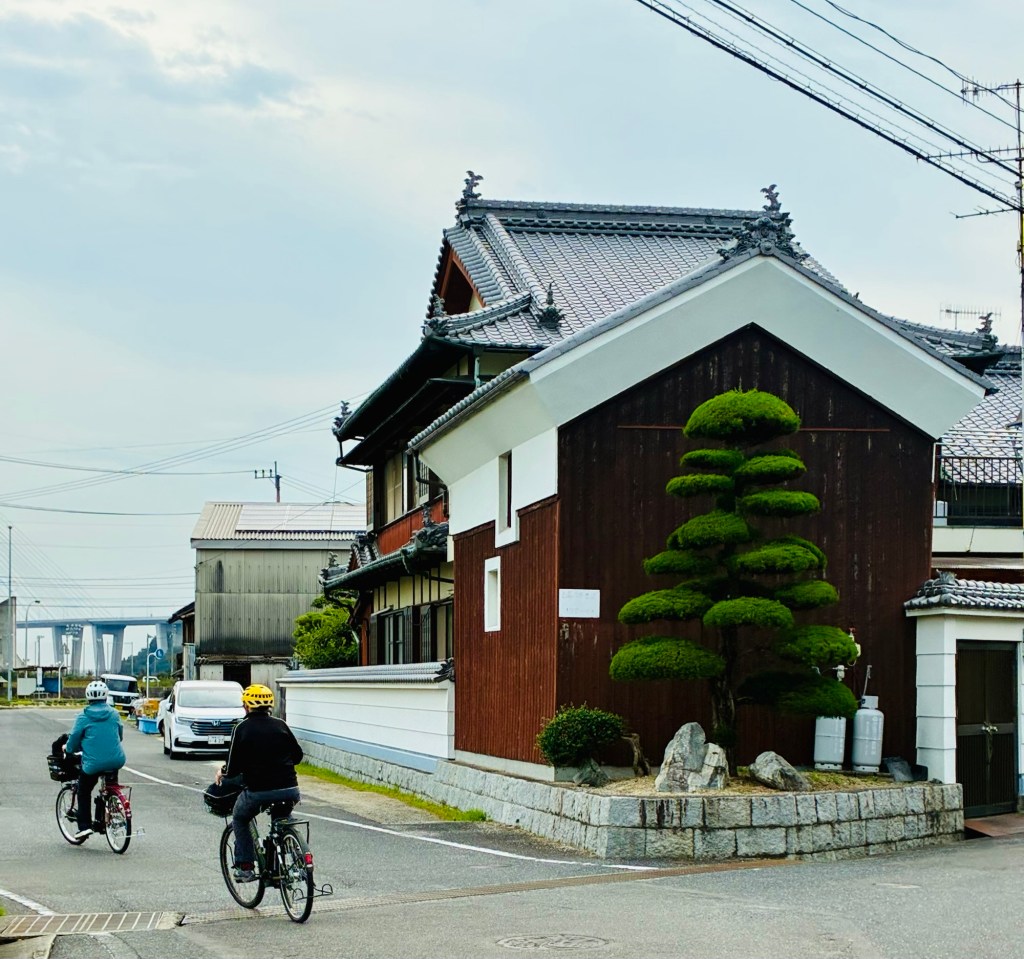
Onomichi is the starting point for the Shimanami Kaido cycling trail that connects Japan’s main island of Honshu with Shikoku via bridges across six islands in the Seto Sea. The bridges all have seperate bike lanes and the entire route is marked by a blue line painted on the road. The ride takes in the spectacular scenery of the islands and winds through local villages.

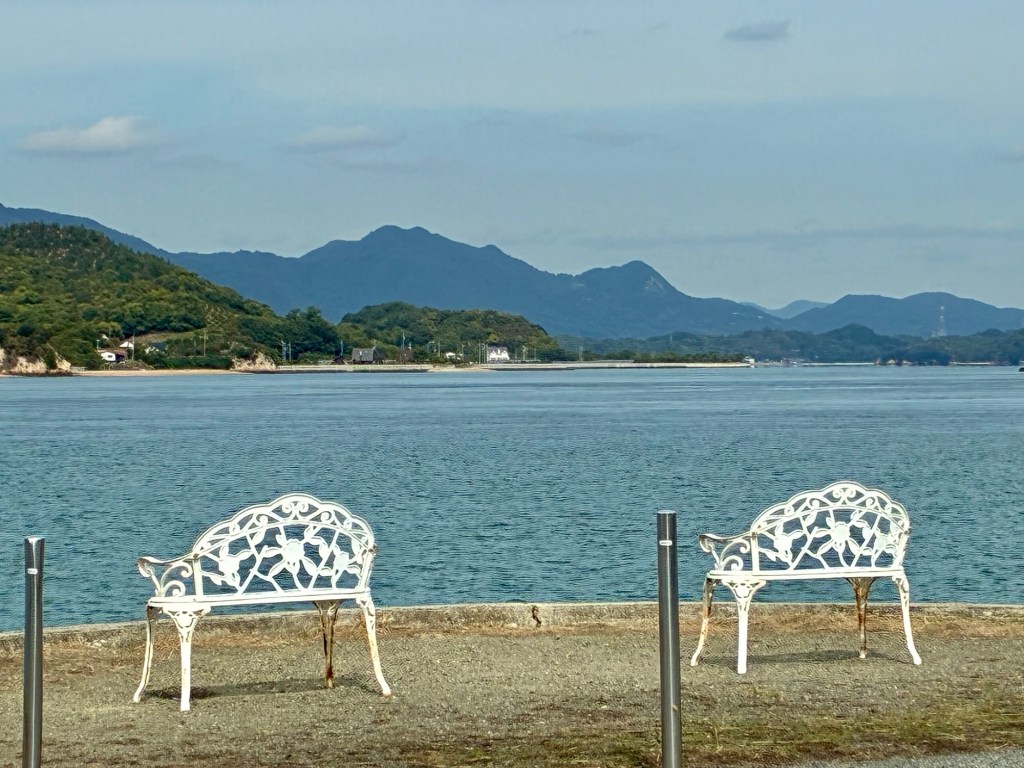
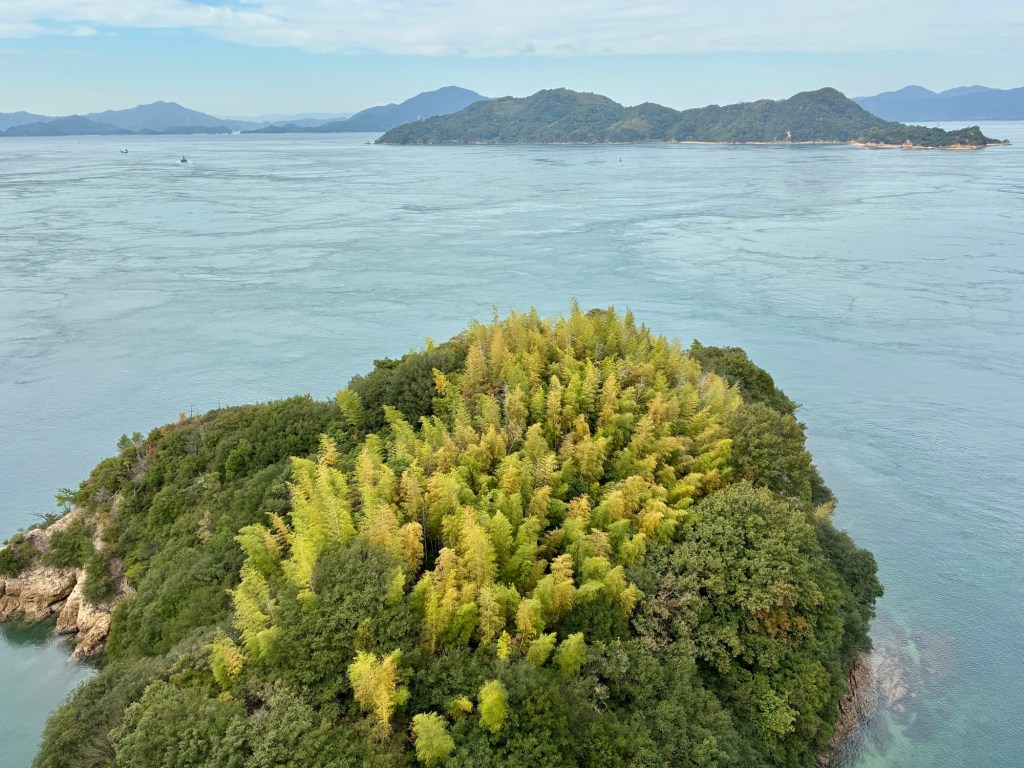
We set off on hired e-assist bikes and rode the section of the Shimanami Kaido cycling route from Onomichi to Omishima Island – mile after mile of beautiful island views. I find the forests really interesting here as the diversity of vegetation gives it a beautiful texture, the likes of which I have not seen in Australia.

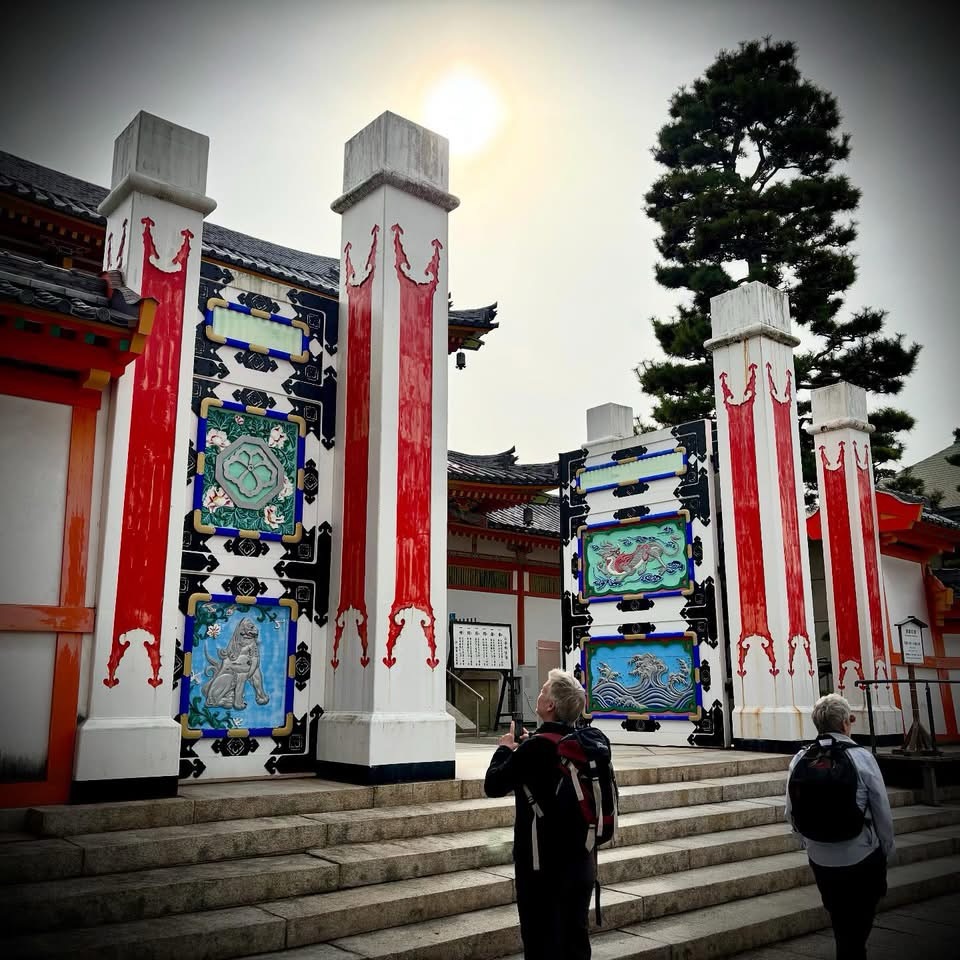
We stopped for lunch and to check out the very unusual and colourful Kosanji Temple on Ikuchijima Island. The temple belongs to the Honganji Sect of the Jodo Shinshu School of Pure Land Buddhism and was founded in 1936 by the industrialist Kozo Kosanji. He built the complex over a 30 year period in dedication to his late mother.

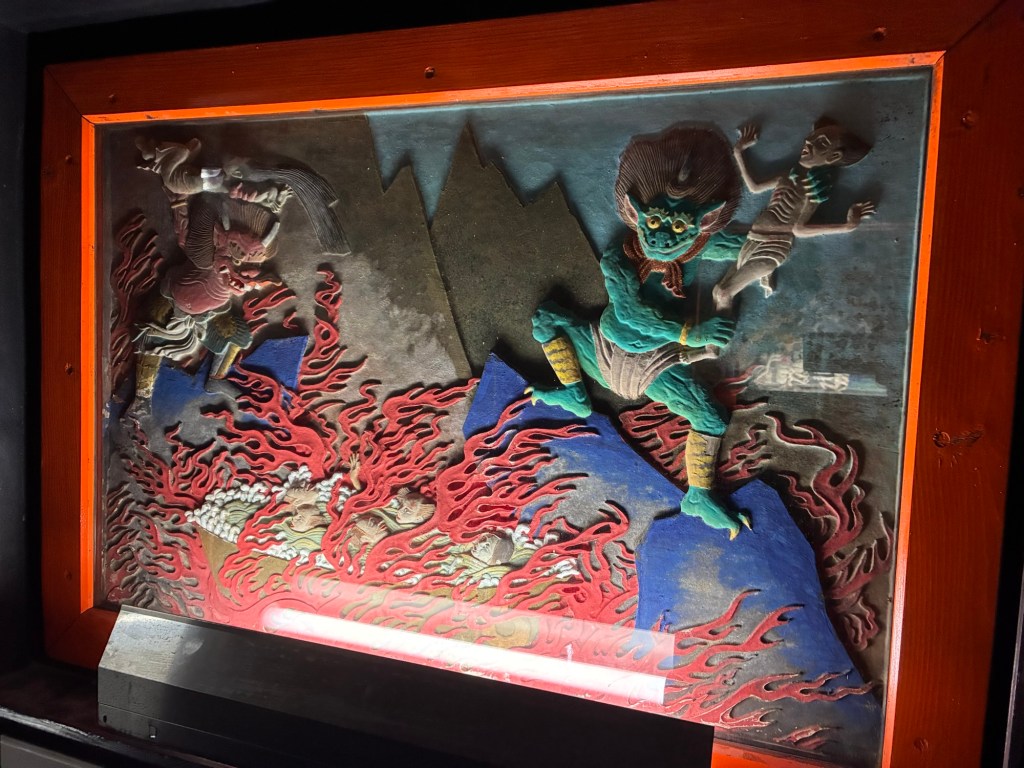
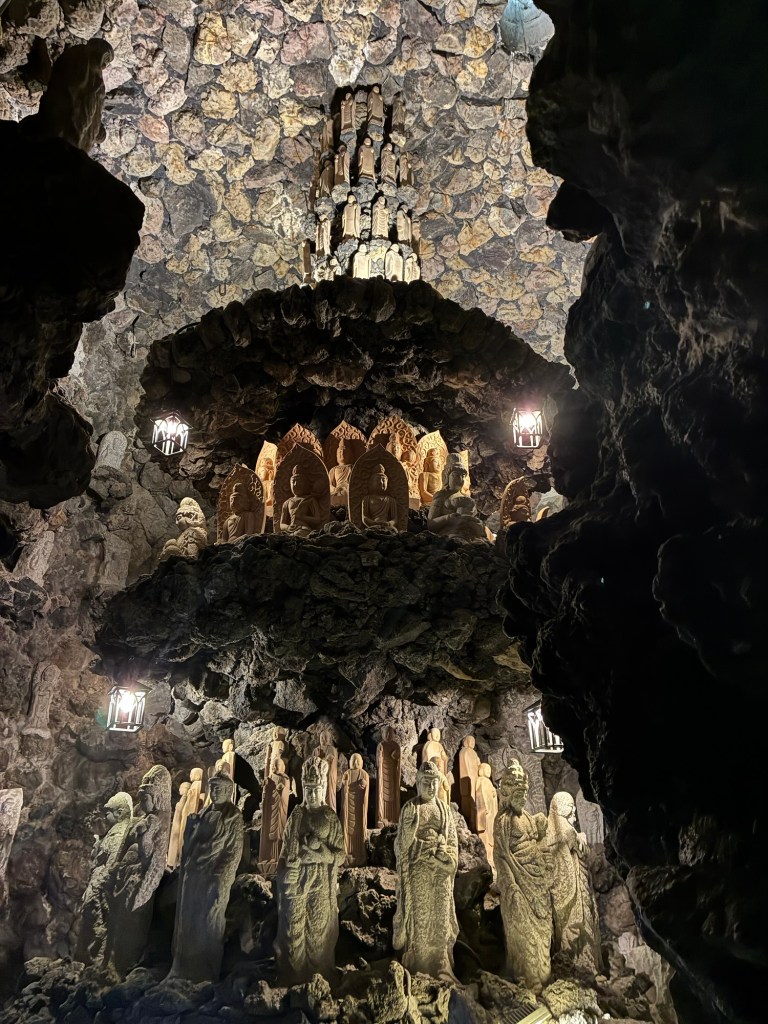
Kosanji was a bizarre place with underground tunnels filled with macabre depictions to illustrate the tortures of Buddhist hell from which you emerge to a massive Buddhist statue. At the top is the Hill of Hope – a marble garden construction using 3,000 tons of Cararra marble. I was gobsmacked by the whole dedication and am pretty sure Freud would have something to say about Kosanji’s relationship with his mother!

On Omashima Island we stayed with an older lady in her house (Guesthouse Farmor). She drove us to a local onsen (Mare Grassia) overlooking the water. The Japanese love their baths and they are great at the end of a long days walking or cycling. This was the best one I’ve been to yet with hot/cold indoor/outdoor baths, a sauna and a salt bath. We ate at a tiny ten seater very cool Japanese restaurant called Gagaku.

The ride to Imabari the next day took in more magical views and the longest bridge I’ve ever crossed at 4.1km. I would rate this as the best bike ride I’ve ever done and highly recommend it regardless of your cycling fitness. The e-bikes make it easy.

MATSUYAMA

The next couple of days were largely transitionary. There was a visit to the Imabari towel lab, home of the best fluffy towels in the world, then a train journey to Matsuyama to pick up a rental car. Matsuyama wins the best castle prize so far with the most impressive dry stone walling I’ve ever seen. There is a unique chairlift to get to it, more spectacular views from the hill made literally of plastic chairs attached to a post.

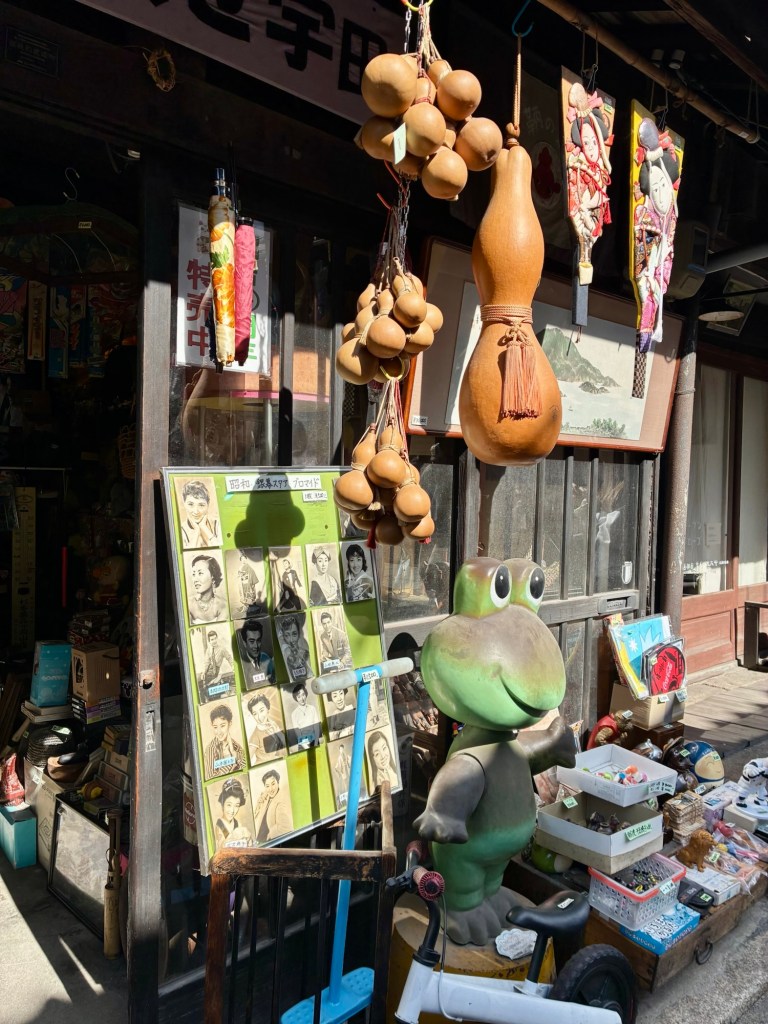
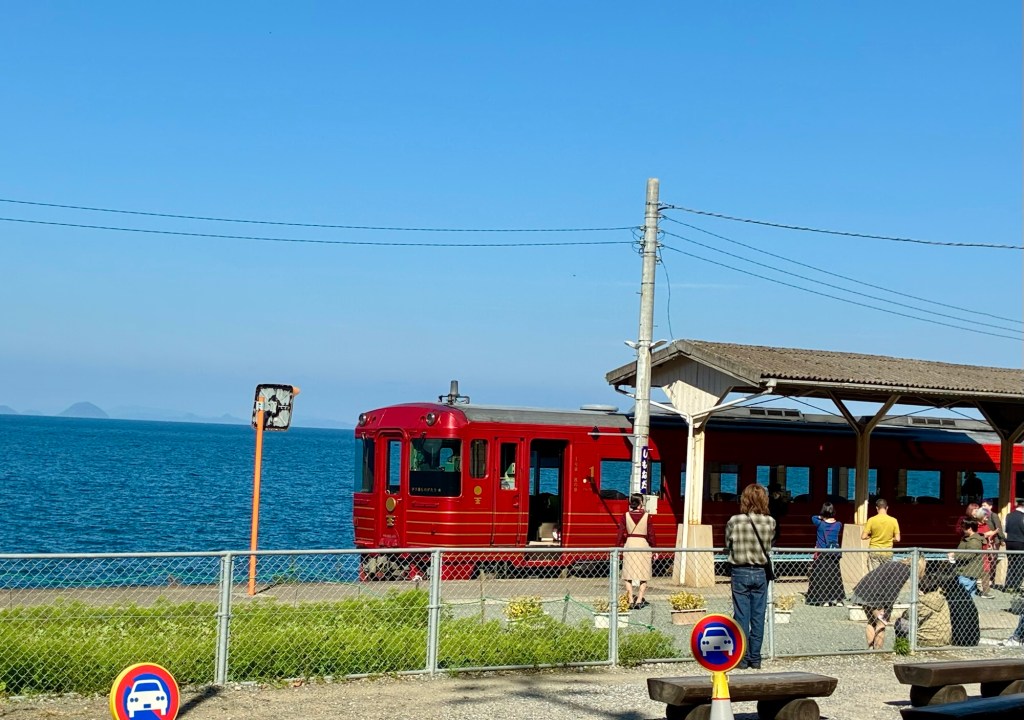
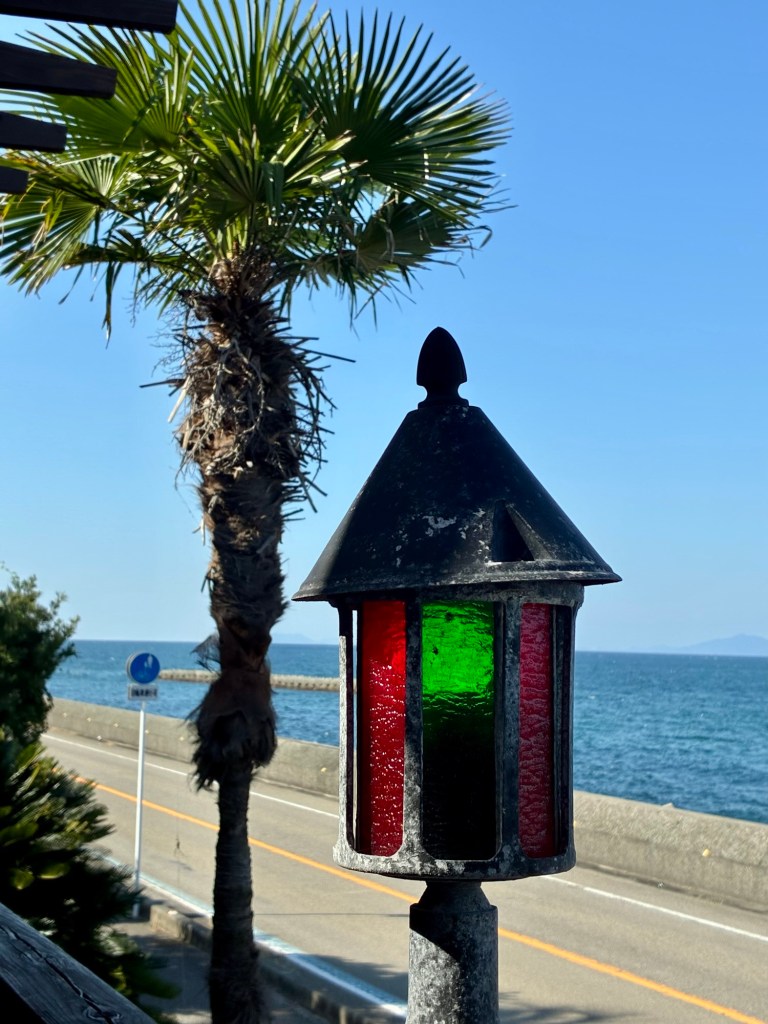
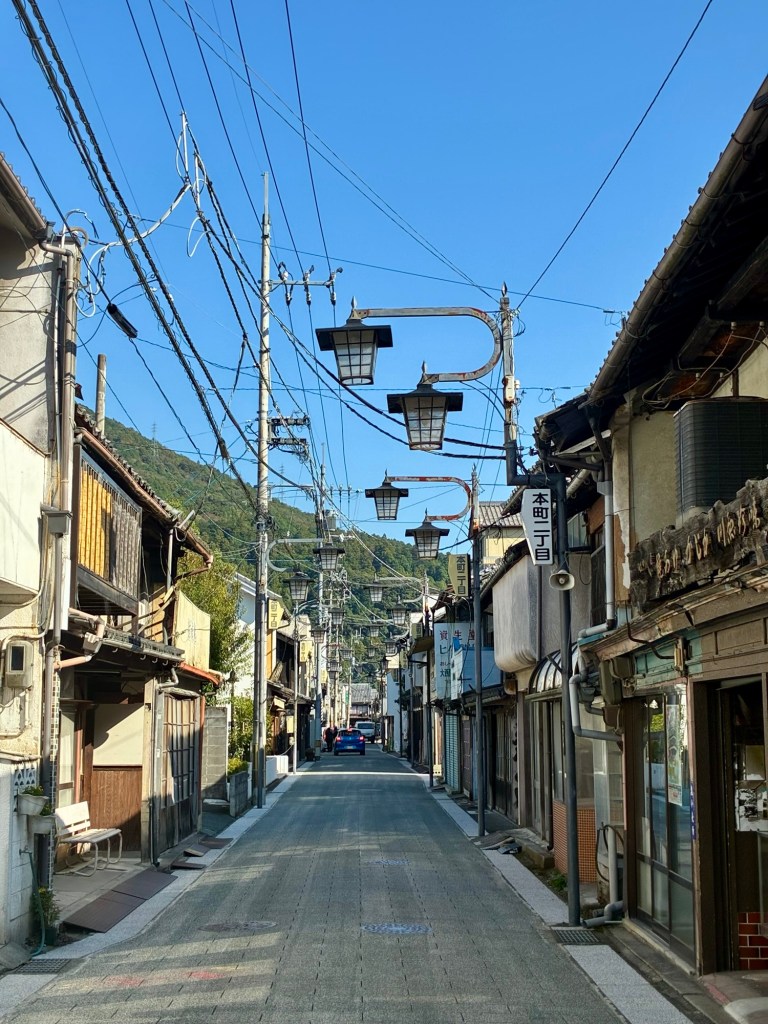
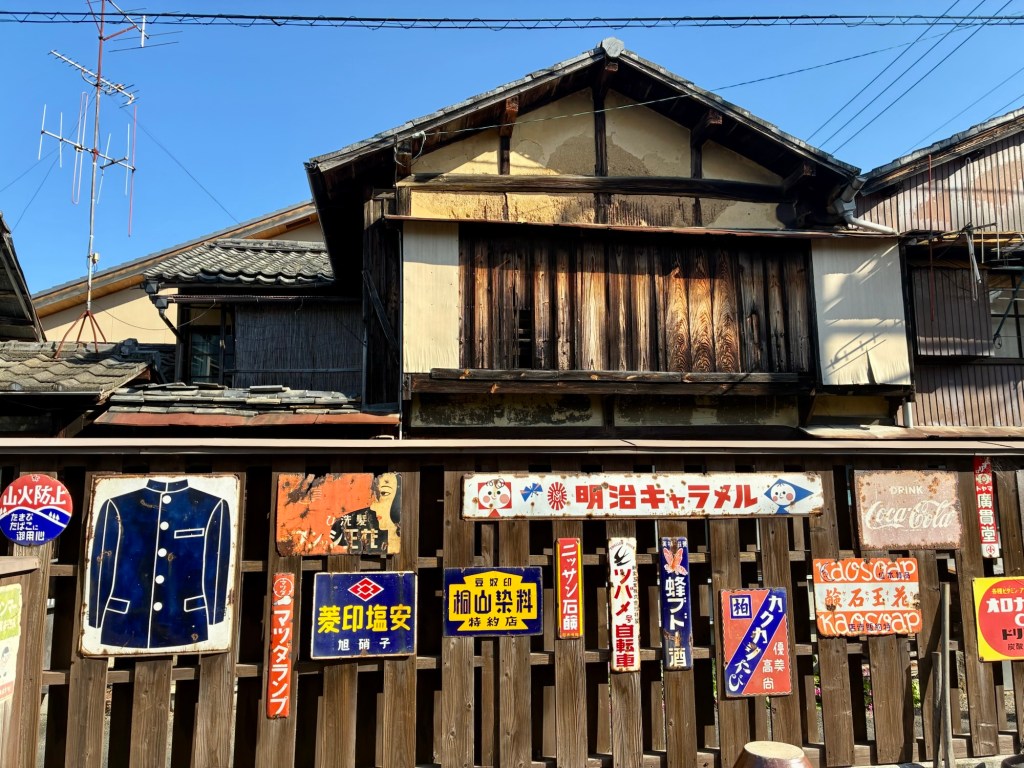
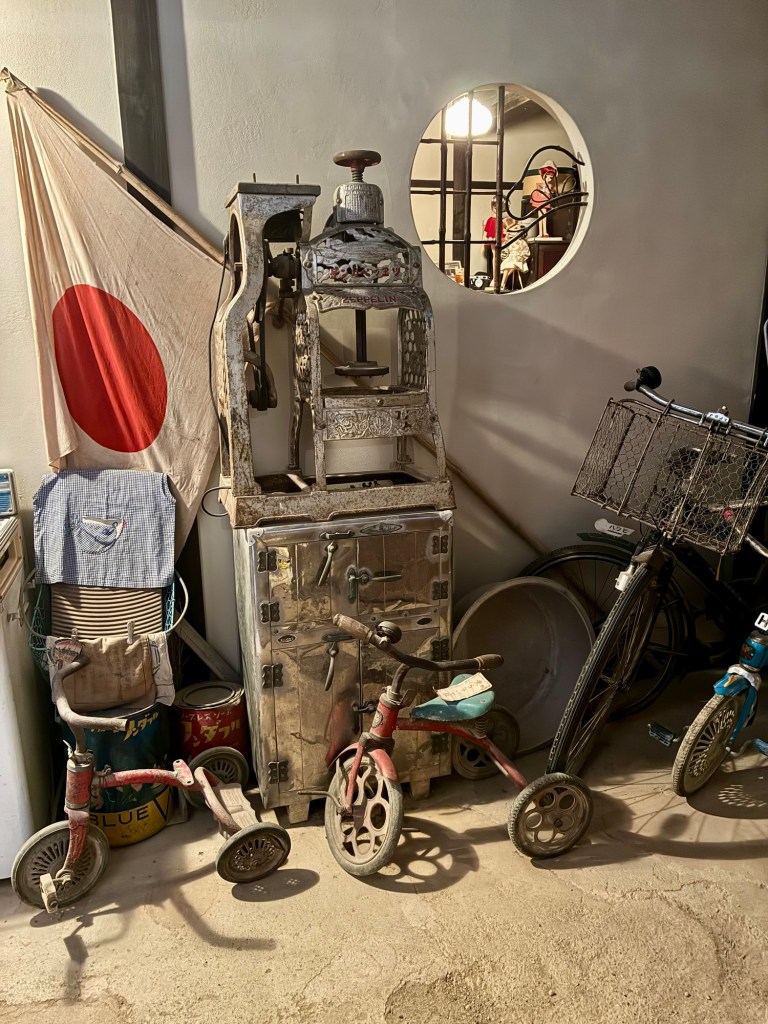
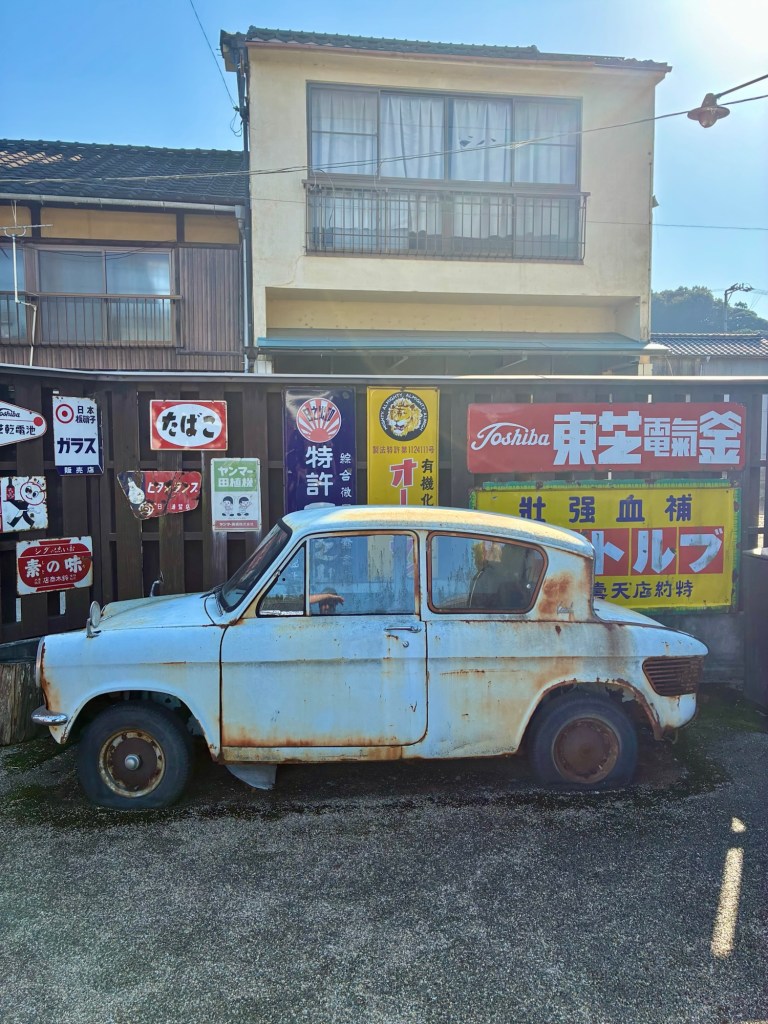
After picking up the car we took a spin down the coast past the most scenic train station in Japan, to the sleepy little town of Ozu also known as the Little Kyoto of Iyo. The Hiji River runs through the town and the place has a frozen in time vibe with fabulous 1960’s signage and paraphernalia.

We have found ourselves in a part of Japan that has a Mediterranean feel and a relaxed vibe. I am also happy to say our itinerary is taking a slower pace also!

Review in transition: Sweet Bean Paste by Durian Sukegawa

When I hear stars whispering at night I feel part of the eternal flow of time.

― Durian Sukegawa, Sweet Bean Paste

When I travel I like to read literature and watch movies from the place I am visiting to promote immersion in the culture and deepen my understanding of a place through the creative lens of local artists. On the plane on the way to Japan I watched Sakura, a mystery-thriller about an investigation into the death of two young woman, one a journalist whose friend Izumi works in the police PR department and believes she may be responsible for her friend’s death after revealing some insider information.

All experience adds up to a life lived as only you could. I feel sure the day will come when you can say: this is my life.

― Durian Sukegawa, Sweet Bean Paste

In keeping with the genre Sakura was tense with a twisting puzzle like plot. But the thing that most fascinated me about the film was the language and dialogue. People were softly spoken and there were many silences and pauses in conversation that left empty space. I love that silence is valued as a meaningful part of dialogue in Japanese culture. The spaces in conversation also contributed to the film’s tension and made me wonder about what was not said.

I began to understand that we were born in order to see and listen to the world. And that’s all this world wants of us.

― Durian Sukegawa, Sweet Bean Paste

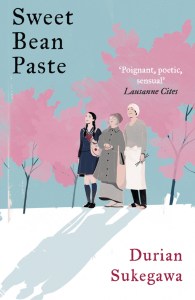
The trip also allowed time to read Sweet Bean Paste by Durian Sukegawa. The novel follows the development of a friendship between a mysterious old woman named Tokue and a man called Sentaro after his release from jail when he is running a dorayaki shop. They bond over perfecting the making of bean paste, and that represents their growing connection.

If all you ever see is reality, you just want to die. The only way to get over barriers, she said, is to live in the spirit of already being over them.

― Durian Sukegawa, Sweet Bean Paste

In Japan people with leprosy were forcibly isolated in sanatoriums up until 1996, preventing them from participation in society. The Sweet Bean Paste reflects on stigmatisation and prejudice in Japan, and the importance of having a purpose in order to be a useful member of society. What happens when societal prejudice prevents you from purpose?

People’s lives never stay the same colour forever. There are times when the colour of life changes completely.

― Durian Sukegawa, Sweet Bean Paste

In keeping with other Japanese literature I have read, the story focussed in on the day to day and the pace of Sweet Bean Paste was laconic.

It’s my belief that everything in this world has its own language. We have the ability to open up our ears and minds to anything and everything. That could be someone walking down the street, or it could be the sunshine or the wind.

― Durian Sukegawa, Sweet Bean Paste

The reverence of silence was prominent again, however in the written form we also gain insight into what is not said by the narrator – his prejudices, desires, insecurities and hopes. So overall my transit left me contemplating the idea of what is said and what is not said, a theme that I suspect will accompany my entire journey.

If I were not here, this full moon would not be here. Neither would the trees. Or the wind. If my view of the world disappears, then everything that I see disappears too. It’s as simple as that.

― Durian Sukegawa, Sweet Bean Paste

You may have guessed by now that my blog for the next few weeks will be reflections on my travels. If this is not of interest to you, come back at the beginning of December when I will return to my regular reviews, otherwise follow along on my journey through Japan.

She said that was the only way for us to live, to be like the poets.

― Durian Sukegawa, Sweet Bean Paste

Book review: Restless Dolly Maunder by Kate Grenville

Restless Dolly Maunder is a fictional retelling of Kate Grenville’s grandmothers life. Born on a NSW sheep farm in 1881, Dolly, the sixth of seven children, was smart, studious, driven and restless. She admired the local young female teacher and her independence, and wanted to become one. But her father said ‘not over his dead body’, and at 14 she was put to work in the house and on the farm and punished for mistakes.

Girls were of no account, you learned that early on. Good enough to make the bread and milk the cow, and later on you’d look after the children. But no woman was ever going to be part of the real business of the world.

Dolly realises the only way out of her predicament was to get married. Bert Russell was a good match in many ways and had faith in Dolly’s business sense and abilities, but he was also a womaniser. 

What could a woman do but marry, and once you were married you belonged to your husband’s world and had to turn your back on your own. It wasn’t betrayal. It was the way the world was.

Discovering Bert’s philandering after the birth of their first child, Dolly is furious and humiliated. She thinks to leave Bert but soon realises she couldn’t manage on her own. Instead she keeps the family moving from one successful business venture to another. Then the Great Depression hits and they are forced to return to farming due to financial difficulties.

What she really wanted was what she’d never had: to be a person on her own, free of any obligations, away from the great sticky tangle of family. To float wherever she liked, like those men in the Depression who’d turned their backs on everything and gone on the wallaby.

When her sons enlist at the outbreak of World War II, Dolly’s anger and sense of helplessness drive her on again, leaving Bert on the farm and drifting alone from job to job, and to help her daughter with her children. Eventually Dolly moves into an apartment beside her daughter’s house when she is old. This is how Kate Grenville remembers her grandmother – as a five year old saying ‘no’ when her grandmother asks her if she loved her.

All you could say was, you were born into a world that made it easy for you or made it hard for you, and all you could do was stumble along under the weight of whatever you’d been given to carry. No wonder at the end of it you’re tired, and sad. But glad to have done it all, even the mistakes. Glad to be alive, too. Even if you were only alive enough to watch another day’s light slide along the wall, and wait for the night.

Restless Dolly Maunder is a story about the rage that built in women at a time when they were not allowed to realise their potential or exercise freedoms due to patriarchal limitations imposed on them. The harshness of that life drove them to unhappiness and emotional detachment in order to survive.

Grenville brings the setting alive through her use of imagery in Restless Dolly Maunder, and emotional oppression seeps from the pages. The story is a reminder of how restricted women’s lives were not so very long ago, and a reminder of the importance of maintaining the freedoms gained. Restless Dolly Maunder won the 2024 Women’s Prize for Fiction.

Not Just a Dog

There is a unique bond between a dog and their person.

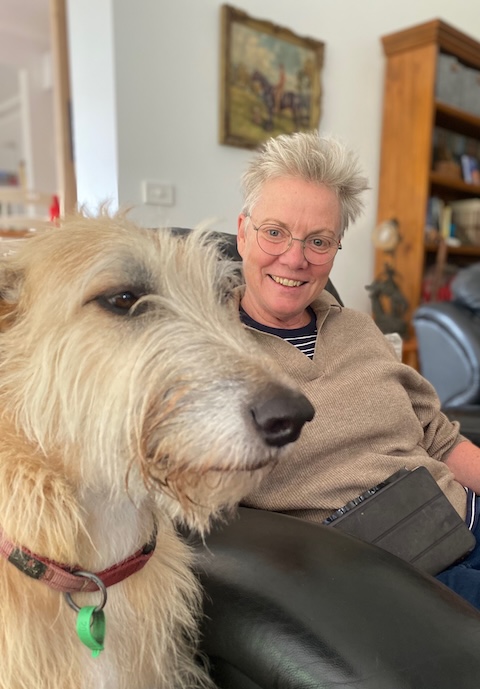
A canine can have a quiet solid presence lying by you on a sleepless night. They motivate you to get up in the morning and take time in nature. They teach patience and the true meaning of loyalty and unconditional big love. They make you laugh when you don’t feel like it, and introduce you to strangers. 

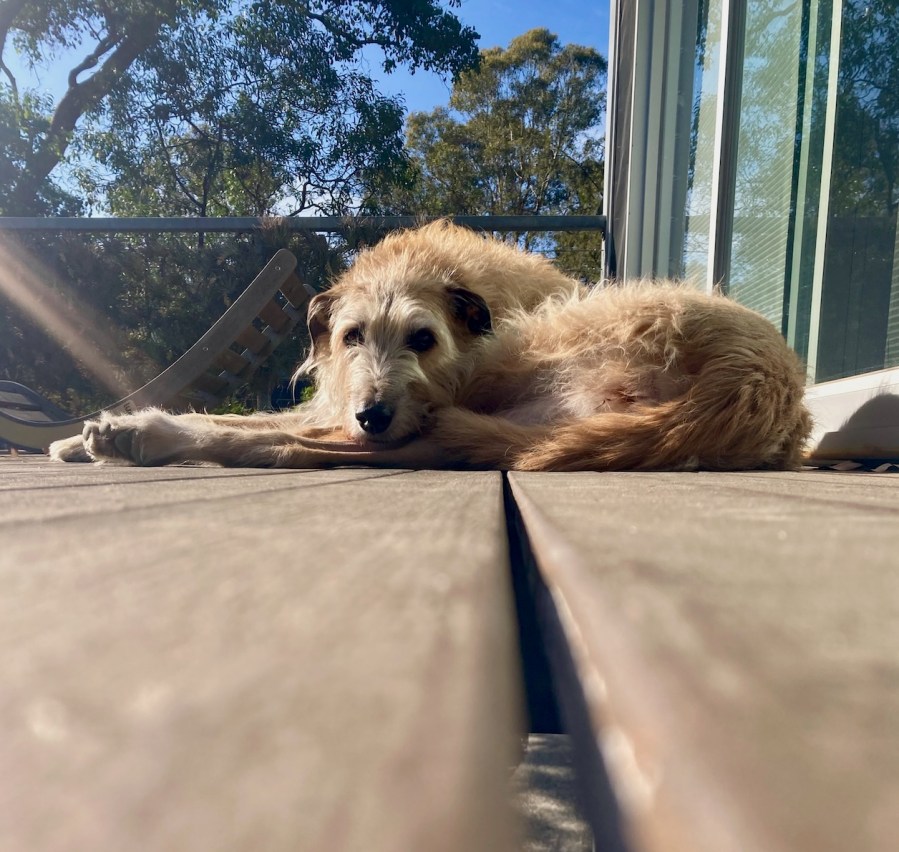
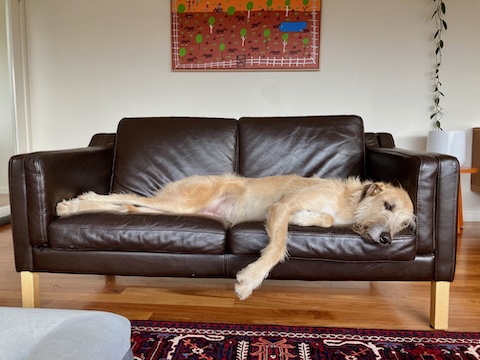
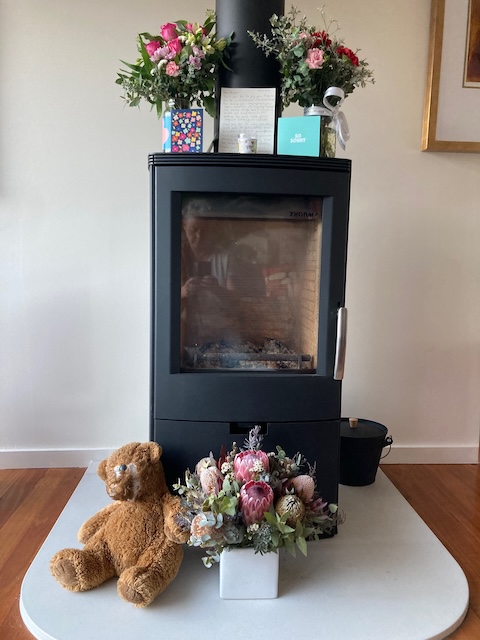
I had to say goodby to my beautiful, gentle big girl Harper on Tuesday evening this week. I am heartbroken but so grateful to have had her in my life. 

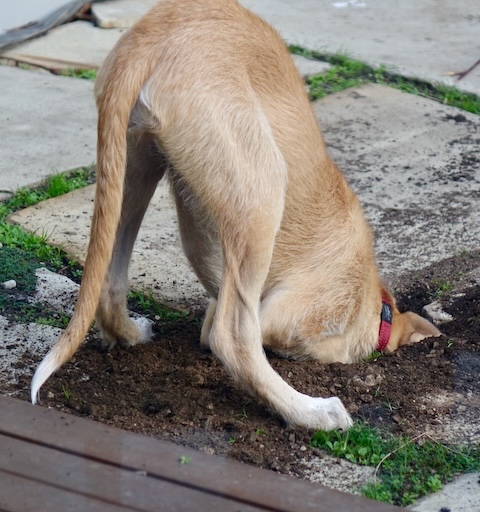
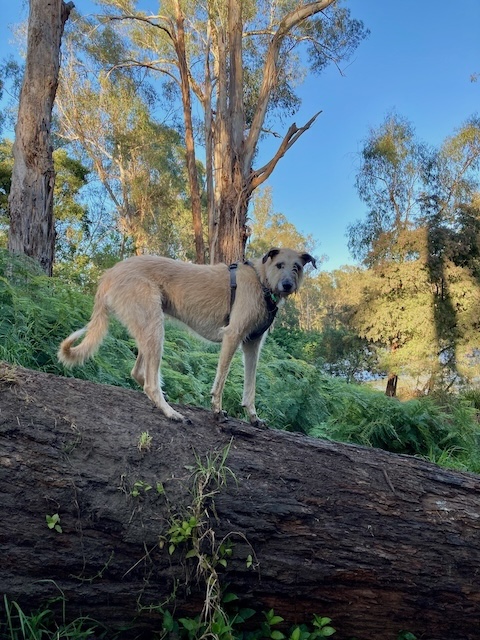
Harper (named after Harper Lee, author of To Kill a Mockingbird) was advertised on a rescue site in 2018 as a puppy destined to grow to a medium size. When I met her, the size of her feet made it evident I had been drawn in by false advertising, but it’s impossible to leave such a beautiful abandoned puppy once met. 

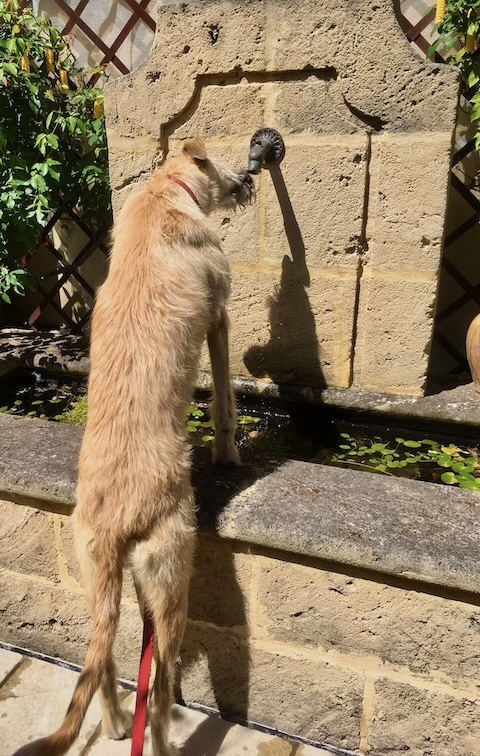
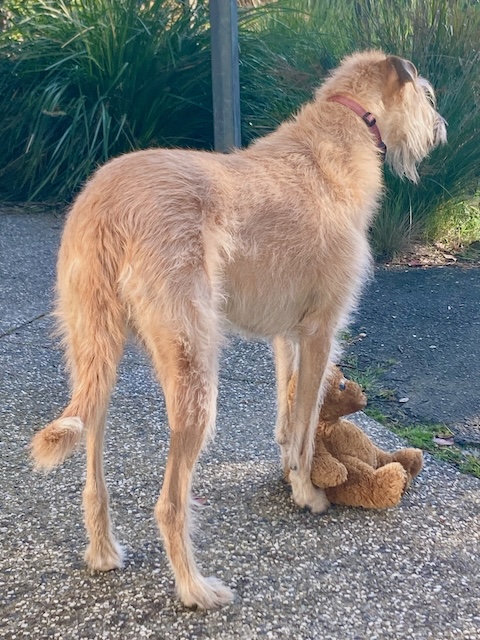
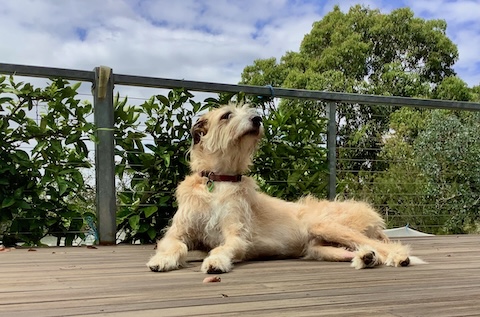
So Harper came home and I set out on a journey with a dog destined to weigh 46kg and stand around 750cm at the shoulder. As a puppy she was a mouthy monster, but a lot of socialising and dog school turned her into a well mannered but sometimes cheeky giant loved by all, and a pleasure to have around. When fully grown she was taller than me when standing on her hind feet.

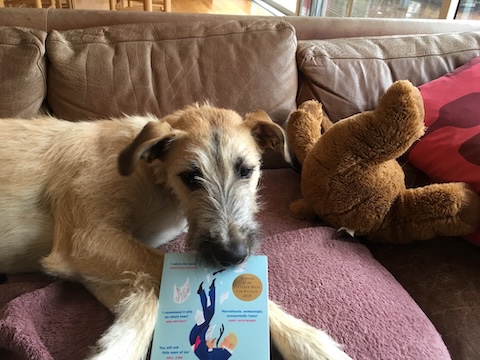
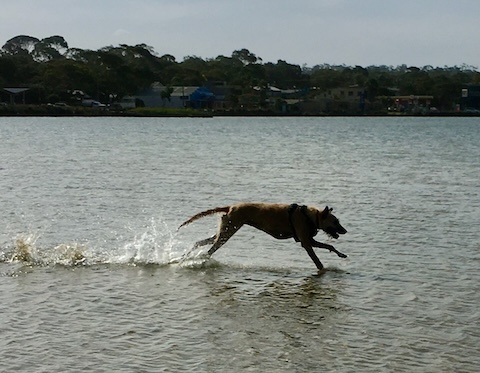
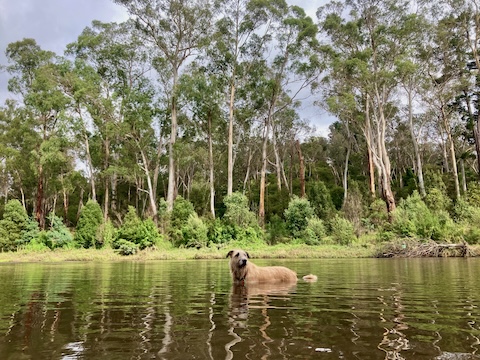
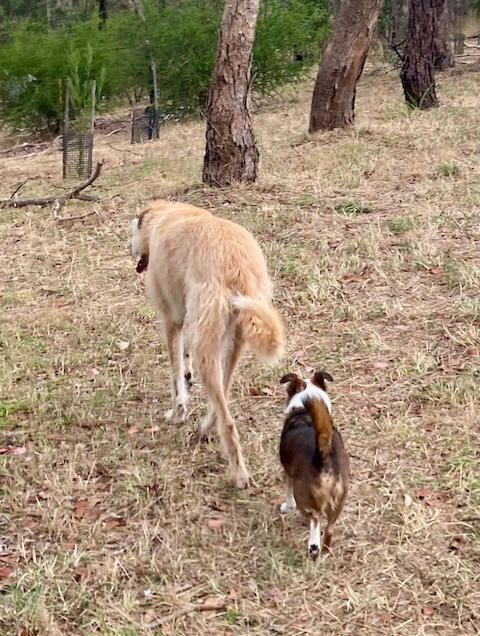
Harper was a lover – of all people, small dogs, lie ins, bushwalks, bin day (for sniffing), rolling in fresh grass, her lifelong teddy, cheese, goldilocksing the most comfortable place to sleep, and wallowing in the river. Her interest in roadside drains led me to believe she would have been a drainage engineer had she been human.

The long legged supermodel of dogs, shaggy blonde Harper was a persistently cheerful adventure buddy. She knew how to get what she wanted through pure love and the strategic use of what I called the ‘magic carpet’, a mat near the back door that she sat on when she wanted something. And she was not averse to a little bossiness – about which walk we’d go on, or whether she’d received her quota of treats, or back rubs each day. 

She had a way of winning people over and the number of friends who came to visit in her final weeks is testament to her impact. One text I received encapsulates the influence she had in her short life:

Hey dear Rachel. You and Harper were on my mind all day, and I just wanted to send you our love. I am so sorry that you had to say goodbye to each other, what a beautiful relationship you shared. I am so grateful to Harper for being the reason we became friends, and for Harper’s ability to help our dog Ruby experience joy with another dog. Harper’s ability to create safety extended not only with Ruby but also to our son, who proudly has built the courage to give her a pat. With love and gratitude to you both 💚

I am grateful to the support I received from friends and Dr Alison the vet from Rest Your Paws who supported us in Harper’s final weeks. A lot of people and animal friends contributed to making Harper’s end of life journey memorable, and as joyful and comfortable as possible. One friend (and dog sitter) came to be with us in our final hours, and was a beautiful quiet presence. Another friend wrote a two page letter to Harper, a short excerpt follows:

Thank you for the joy you bring us. For the unconditional love. For being you – magnificent you, regal, oversize, for setting the pace with your elegant trotting on walks. Thank you for the way you lean into us to get a better back scratch, to show your affection.

And to all the wonderful friends who understand the grief of losing a furry friend, and that they are never with us for long enough, I am thankful for your love and wishes.

Most of all I am grateful to my soul dog Harper for teaching me so much, being faithfully by my side through some of life’s greatest challenges and constantly reminding me of life’s joy. You were worth every second of our years together. Thank you for your big love when I most needed it, you left a legacy that will last so much longer than your too short life.

RIP my sweet big girl Harper: 9 March 2018 – 11 March 2025 

Book review: The Truth According to Us by Annie Barrows

The Truth According to Us by Annie Burrows (co-author of The Guernsey Literary and Potato Peel Pie Society) is about what happens to independent women in 1938 when they refuse to marry a suitor their father thinks they should say yes to.

It’s very demoralizing to be regarded as a problem rather than an individual.

When Layla Beck refuses to marry, her father cuts off her allowance and tells her to get a job. He thinks she’s spoilt. Her uncle helps her out, commissioning her to write the town history of Macedonia, West Virginia, as part of the federal writers project. The version of history she is to write is one sided, dictated by the towns families of influence. No one, including Leyla expects her endeavour to be a success.

I’ve learned that history is the autobiography of the historian, that ignoring the past is the act of a fool, and that loyalty does not mean falling into line, but stepping out of it for the people you love.

She is to board with Romeyns, a local family. The Romeyns household is comprised of twelve year old Willa and her younger sister, Bird, their father Felix and his sisters Jottie, Mae and Minerva. They are the unconventional remnants of a once respected family whose late father ran the local mill.

Whatever gave you the idea we were like everybody else?

Leyla soon begins to thrive, and decides to tell the real history of the town in all its technicolors. Her endeavours takes place against the backdrop of factory strikes and family secrets. What unfolds is the Romeyn family saga (the family become Leyla’s chosen family), and the local towns story, told from the perspectives of Willa, Jottie and Layla.

Ladies don’t smoke in public, Jottie said. In public included a lot of places, even our front room because of all the windows, so Jottie smoked like a stack in the kitchen.

I really enjoyed the unfolding of this tale, and the character building, as hidden truths were unearthed, both by Leyla for her project, and Willa determined to understand the adults in her life and unearth their secrets.

If you’re going to unearth hidden truths, keen observing is your shovel

Book review: The Murder Inn by James Patterson and Candice Fox

I really like the idea of collaborative writing – that is where two or more authors work together to produce a creative work. I have dabbled in collaboration with poetry, but find the idea of collaborating on long form fiction enticing. I imagine it could be very motivating and playful, as well as a challenging learning experience.

One of my favourite crime authors, Candice Fox, began collaborating with American author James Patterson in 2015 and the two have written seven novels together, all of which have been New York Times best sellers.

The Murder Inn is one of Fox and Pattersons collaborations. The Murder Inn, published in 2024, is a sequel to the 2019 collaboration, The Inn, featuring ex cop Bill Robinson. The story also reads as a stand alone. 

Ex cop Bill Robinson runs an Inn with his partner Susan (ex FBI) in Massachusetts. The Inn houses a ragtag collection of tenants. Bill is trying to help Nick, a veteran and guest at the Inn who suffers from PTSD episodes believing someone is trying to kill him.  

The Inn by the Sea was a simple construction: its weather-board exterior, recently painted sunflower-yellow, did little to shut out the freezing Gloucester winters, and its mismatched steel and wood bones rambling with poorly thought-out extensions and adjustments, creaked as the people inside it moved. But it was those people and their stories that give the house its heartbeat.

When Shauna, the widow of Bill’s former colleague (a crooked cop) is assaulted by some thugs who work for a notorious drug lord called Norman Driver who has moved into town, she fights back. The incident uncovers some of her husbands deeply buried secrets. Bill also tries to help Shauna and finds himself in the firing line as well.

Driver had spent most of his twenties feeling the cold hand of Lady Disaster on his shoulder whenever an officer stepped into a diner he was sitting in, or when a police squad car stopped beside him at a traffic light. Pushing sixty now, he simply smiled and nodded.
The personal dramas, dark secrets, betrayals, murders, and violence seeping out of The Murder Inn set a cracking pace and the multiple points of view and plot lines converge to tell a compelling story for thriller lovers.

Book review: The Color Purple by Alice Walker

The Color Purple by Alice Walker, published in 1982, is a Pulitzer Prize winning classic work of literature set in the Deep South of Georgia in the early 20th century.  The novel, brimming with both love and cruelty, was also made into a movie, and a musical.

Everything want to be loved. Us sing and dance and holler, just trying to be loved.
African American sisters Celie and Nettie, separated as children, maintain their relationship through letters that chronically their struggles with intergenerational violence, domestic abuse, forced marriages, poverty and colonialism, and the emotional toll of this life. It is a story about the power of women and how they prevailing in adversity.

Why any woman give a shit what people think is a mystery to me.

Celie’s father forces her to marry a widowed man, Albert who has four children. She was just a teenager herself. Albert is in love with blues singer Shug Avery, and soon Celie is in love with her too.

Sofia the kind of woman no matter what she have in her hand she make it look like a weapon

Shug, and her neighbour, Sofia are unapologetic, powerful women who become role models for Celie, who discovers the color of female power is purple. Eventually Celie leaves Avery and flees to Memphis where she starts a business as a clothes designer.

She look so stylish it like the trees all round the house draw themself up tall for a better look.

The Color Purple, brimming with vivid characters is a deep, powerful, raw story about gender relations and the resilient power of women.

Book review: Apples Never Fall by Liane Moriarty

Apples Never Fall is Liane Moriarty’s ninth adult novel. She’s also known for Big Little Lies and Nine Perfect Strangers, both adapted for television.

Aging tennis star couple Joy and Stan Delaney have been married for 50 years. The couple have a passionate marriage as well as a few lingering resentments, including that none of their children became tennis stars. Now retired after selling their tennis business the couple lack purpose. Their four adult children – laid back Logan, blue haired Amy, flashy Troy and migraine suffering Brooke – are all independent but childless and Joy really wants to be a grandmother.

Each time she fell out of love with him, he saw it happen and waited it out. He never stopped loving her, even those times when he felt deeply hurt and betrayed by her, even in that bad year when they talked about separating, he’d just gone along with it, waiting for her to come back to him, thanking God and his dad up above each time she did.

When a young woman turns up at their door distressed and bruised, Joy and Stan take her in. Supposedly escaping an abusive boyfriend, Savannah ingratiates herself with the aging couple. Joy’s own children are unsettled by the young woman.

We’re all on our own. Even when you’re surrounded by people, or sharing a bed with a loving lover, you’re alone.

Then the day before her 70th birthday, Joy disappears, her phone is found under the marital bed and Savannah is nowhere to be found. Stan becomes a suspect due to unusual scratches on his face, despite his protestations they were caused by a hedge. Two of their children think Stan is innocent, two are not so sure. The police need to find out what really happened and the family are frustrating to deal with.

She found that the less she thought, the more often she found simple truths appearing right in front of her.

The story gradually unfolds as Moriarty takes the reader back and forth in time revealing the very three dimensional character’s secrets, regrets and hopes. Apples Never Fall is a family saga filled with bickering, alignments, competitiveness, failed expectations and small resentments. An especially good story for tennis fans.

As her grandfather used to say, “Never spoil a good story with the facts.