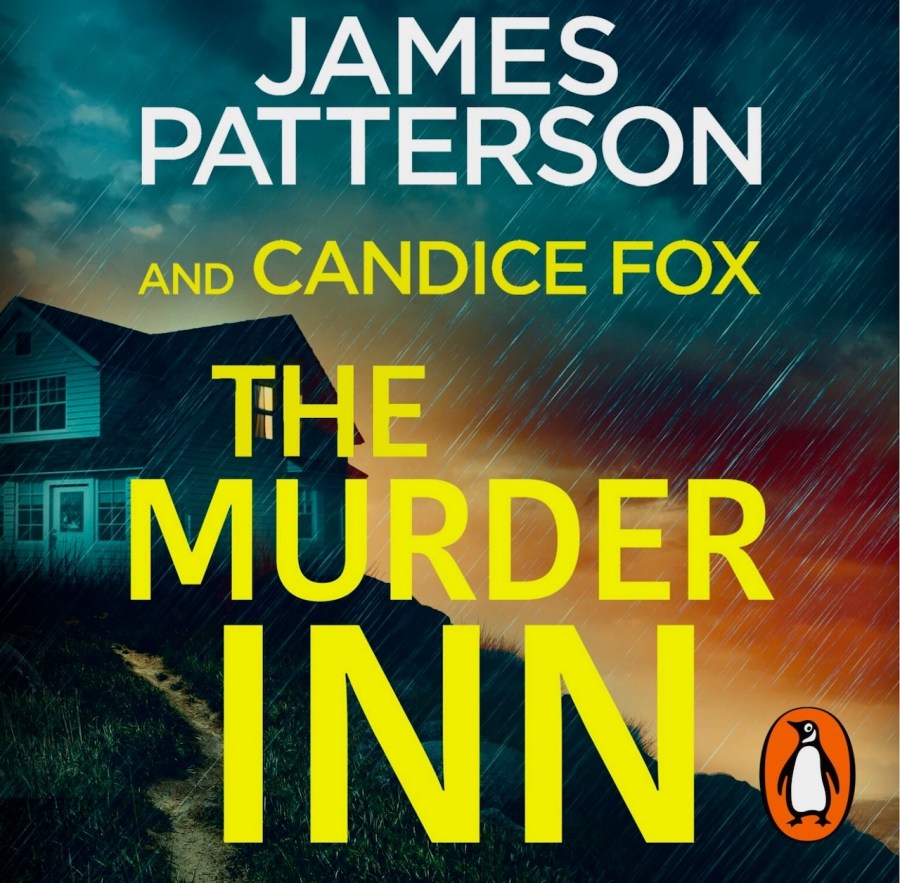
Book review: The Murder Inn by James Patterson and Candice Fox

I really like the idea of collaborative writing – that is where two or more authors work together to produce a creative work. I have dabbled in collaboration with poetry, but find the idea of collaborating on long form fiction enticing. I imagine it could be very motivating and playful, as well as a challenging learning experience.

One of my favourite crime authors, Candice Fox, began collaborating with American author James Patterson in 2015 and the two have written seven novels together, all of which have been New York Times best sellers.

The Murder Inn is one of Fox and Pattersons collaborations. The Murder Inn, published in 2024, is a sequel to the 2019 collaboration, The Inn, featuring ex cop Bill Robinson. The story also reads as a stand alone. 

Ex cop Bill Robinson runs an Inn with his partner Susan (ex FBI) in Massachusetts. The Inn houses a ragtag collection of tenants. Bill is trying to help Nick, a veteran and guest at the Inn who suffers from PTSD episodes believing someone is trying to kill him.  

The Inn by the Sea was a simple construction: its weather-board exterior, recently painted sunflower-yellow, did little to shut out the freezing Gloucester winters, and its mismatched steel and wood bones rambling with poorly thought-out extensions and adjustments, creaked as the people inside it moved. But it was those people and their stories that give the house its heartbeat.

When Shauna, the widow of Bill’s former colleague (a crooked cop) is assaulted by some thugs who work for a notorious drug lord called Norman Driver who has moved into town, she fights back. The incident uncovers some of her husbands deeply buried secrets. Bill also tries to help Shauna and finds himself in the firing line as well.

Driver had spent most of his twenties feeling the cold hand of Lady Disaster on his shoulder whenever an officer stepped into a diner he was sitting in, or when a police squad car stopped beside him at a traffic light. Pushing sixty now, he simply smiled and nodded.

The personal dramas, dark secrets, betrayals, murders, and violence seeping out of The Murder Inn set a cracking pace and the multiple points of view and plot lines converge to tell a compelling story for thriller lovers.
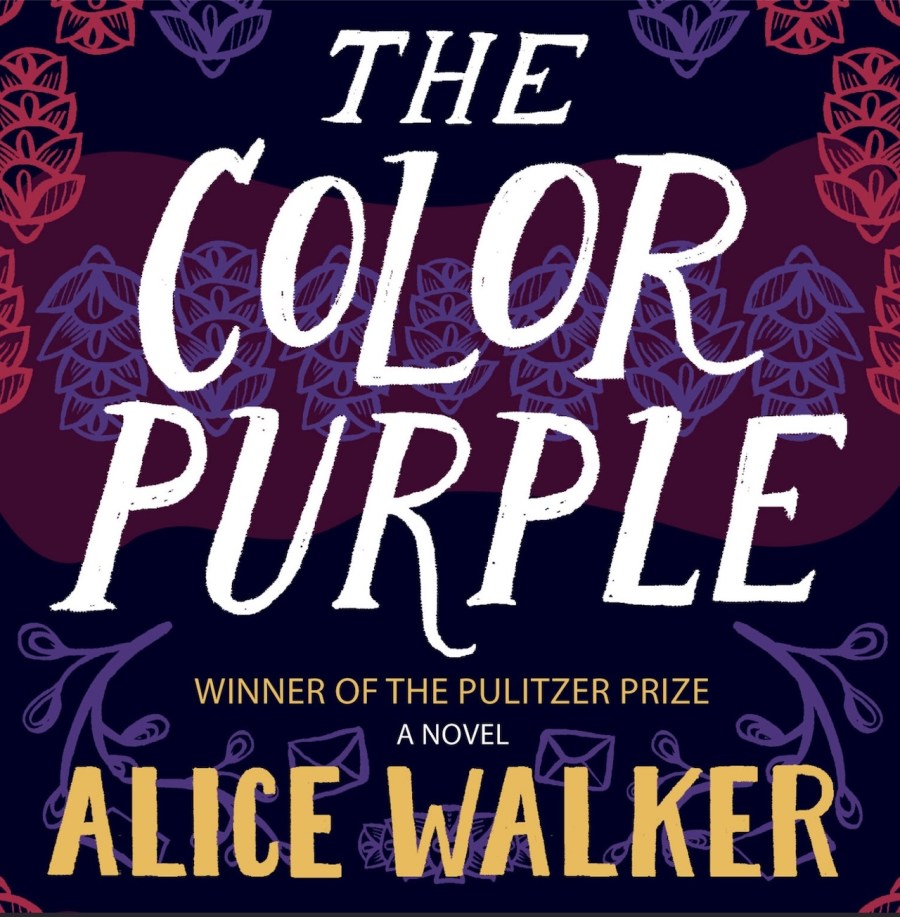
Book review: The Color Purple by Alice Walker

The Color Purple by Alice Walker, published in 1982, is a Pulitzer Prize winning classic work of literature set in the Deep South of Georgia in the early 20th century.  The novel, brimming with both love and cruelty, was also made into a movie, and a musical.

Everything want to be loved. Us sing and dance and holler, just trying to be loved.

African American sisters Celie and Nettie, separated as children, maintain their relationship through letters that chronically their struggles with intergenerational violence, domestic abuse, forced marriages, poverty and colonialism, and the emotional toll of this life. It is a story about the power of women and how they prevailing in adversity.

Why any woman give a shit what people think is a mystery to me.

Celie’s father forces her to marry a widowed man, Albert who has four children. She was just a teenager herself. Albert is in love with blues singer Shug Avery, and soon Celie is in love with her too.

Sofia the kind of woman no matter what she have in her hand she make it look like a weapon

Shug, and her neighbour, Sofia are unapologetic, powerful women who become role models for Celie, who discovers the color of female power is purple. Eventually Celie leaves Avery and flees to Memphis where she starts a business as a clothes designer.

She look so stylish it like the trees all round the house draw themself up tall for a better look.

The Color Purple, brimming with vivid characters is a deep, powerful, raw story about gender relations and the resilient power of women.

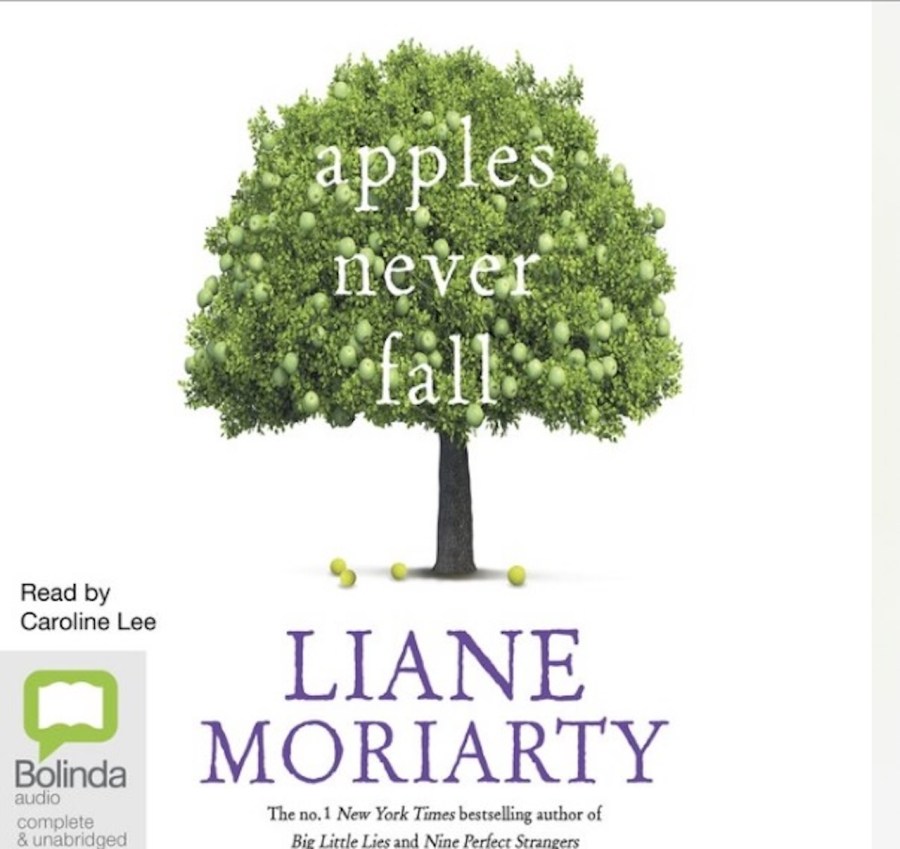
Book review: Apples Never Fall by Liane Moriarty

Apples Never Fall is Liane Moriarty’s ninth adult novel. She’s also known for Big Little Lies and Nine Perfect Strangers, both adapted for television.

Aging tennis star couple Joy and Stan Delaney have been married for 50 years. The couple have a passionate marriage as well as a few lingering resentments, including that none of their children became tennis stars. Now retired after selling their tennis business the couple lack purpose. Their four adult children – laid back Logan, blue haired Amy, flashy Troy and migraine suffering Brooke – are all independent but childless and Joy really wants to be a grandmother.

Each time she fell out of love with him, he saw it happen and waited it out. He never stopped loving her, even those times when he felt deeply hurt and betrayed by her, even in that bad year when they talked about separating, he’d just gone along with it, waiting for her to come back to him, thanking God and his dad up above each time she did.

When a young woman turns up at their door distressed and bruised, Joy and Stan take her in. Supposedly escaping an abusive boyfriend, Savannah ingratiates herself with the aging couple. Joy’s own children are unsettled by the young woman.

We’re all on our own. Even when you’re surrounded by people, or sharing a bed with a loving lover, you’re alone.

Then the day before her 70th birthday, Joy disappears, her phone is found under the marital bed and Savannah is nowhere to be found. Stan becomes a suspect due to unusual scratches on his face, despite his protestations they were caused by a hedge. Two of their children think Stan is innocent, two are not so sure. The police need to find out what really happened and the family are frustrating to deal with.

She found that the less she thought, the more often she found simple truths appearing right in front of her.

The story gradually unfolds as Moriarty takes the reader back and forth in time revealing the very three dimensional character’s secrets, regrets and hopes. Apples Never Fall is a family saga filled with bickering, alignments, competitiveness, failed expectations and small resentments. An especially good story for tennis fans.

As her grandfather used to say, “Never spoil a good story with the facts.

Podcast review: The Publishing Rodeo

I love a good writerly podcast. The Publishing Rodeo is a raw, gloves off, no holds barred look under the hood at the world of publishing. Two authors discuss how the industry works, the different pathways to it, and the elements that come together to make a book a best seller or a flash in the pan.

Sunyi and Scott are two authors who wrote their debuts in the same genre. They signed with the same publisher, but had very different outcomes with their novels – one became a hit and the other barely made a bleep. The Publishing Rodeo interrogates the differential treatment of authors and how that can impact success, the publishing ecosystem, self publishing versus traditional publishing, what ‘success’ looks like and the pitfalls to looks out for (of which there are many).

The podcast is like listening to a bunch of authors in a pub talking about the alchemy of the world of publishing and the injuries they sustained trying to navigate it. The first episode is called ‘Publishing is Nuts’, which is the conclusion you will probably come to after listening to this podcast series.

I love the authenticity of this show. And as an author who has dipped their toe into this world and backed away from publishing offers on the basis of concerns about contract terms, or because I didn’t think I could meet the publishers expectations (because I have a day job), the show is also quite validating. And it has a great title.

My take away is that writing is an activity that must be done foremost for oneself, and that you should never judge your worth by whether you manage to get a publishing contract. There is a significant element of luck and subjectivity at play once you send your words out into the world.

A full list of my favourite podcasts can be found here.

Mayfield Street Poetry Slam

I’ll be joining poets Amy Crutchfield, Joe Pascoe and Suzanne Kennedy for Mayfield Streets first poetry slam and art exhibition, Mrs Cardwell’s Ghost, on 17th February. It’s free, just register via Eventbrite.

Amy Crutchfield – author of forthcoming book The Cyprian. Her poems have been published in Australia, England, Ireland and China and she won the Gwen Harwood Poetry Prize in 2020/21.  She will be reading her poem entitled “The Memory of Water”.

Rachel Smith – poet and crime fiction writer from Warrandyte. Published in poetry magazines, her work has also  featured on the walls of the Deutsche Bank in Krakow for the UNESCO City of Literature Multi Poetry program. She will read a domestic noir prose poetry spoken piece called “Feet of Clay”.

Suzanne Kennedy – Melbourne-based poet, who has lived in Tasmania and Central America. She won the 2022 American Association of Australasian Literary Studies (AAALS) award, the 2022 Nillumbik Poetry prize (open), and was shortlisted for the 2022 Australian Catholic University Poetry Prize. She will be reading her poem “Cemetery Carnival”.

Joe Pascoe – a contemporary Australian poet who bases his work on what people are doing every day in their lives. His new book is called Sharp Pencil.

17 February, 2023 – 7pm
Mayfield Gallery (Upstairs at Cardwell Cellars)
461 Victoria Street
Abbotsford

Dames of Crime: Dorothy B. Hughes

Dorothy B. Hughes (1904-1993) was a journalist, crime fiction reviewer and crime writer of fourteen novels in the hardboiled and noir style.

She carried her head like a lady and her body like a snake.

Dread Journey

Hughes first published book was Dark Certainty (1931) a volume of poetry, followed by Pueblo On the Mesa (1939), a history of the first fifty years of the University of New Mexico. She worked as a journalist in Missouri, New York and New Mexico and Married Levi Allan Hughes Jr. in 1932. They had two children.

By 1940 she had turned to crime with her first novel The So Blue Marble (1940), an Art Deco suspense set in the glamour and luxury of New York’s elite. Hughes then went on to write eleven novels in seven years. All bar one, Johnnie (1944) were crime novels. Influenced by writers such as Eric Ambler, Graham Greene, and William Faulkner she wrote tight suspenseful plots centred around outsiders, haunted loners, or upper-class characters involved in evil intrigues.

Once he’d had happiness but for so brief a time; happiness was made of quicksilver, it ran out of your hand like quicksilver. There was the heat of tears suddenly in his eyes and he shook his head angrily. He would not think about it, he would never think of that again. It was long ago in an ancient past. To hell with happiness. More important was excitement and power and the hot stir of lust. Those made you forget. They made happiness a pink marshmallow.

In a Lonely Place

Three of her crime novels for which she is best known were adapted for Hollywood films – The Fallen Sparrow (1943), Ride the Pink Horse (1947) and In A Lonely Place (1950) about toxic masculinity with a feminist resolution.

Hughes became a professional crime fiction reviewer around 1940 and moved to Los Angeles in 1944. She wrote for the Los Angeles Times, the New York Herald Tribune and the Albuquerque Tribune.

She was afraid. It wasn’t a tremble of fear. It was a dark hood hanging over her head. She was meant to die. That was why she was on the Chief speeding eastward. This was her bier.

Dread Journey

Her last novel, The Expendable Man was published in 1963. She continued to publish short stories and won an Edgar Award for best critical/biographical work for Erle Stanley Gardner: The Case of the Real Perry Mason (1978)

Being a poet before she began writing crime, Hughes books were known for their ominous and mournful quality of mood, infused with dread and intrigue. On their surface they had a middle class normalcy, but scratch the facade and her characters lives were full of danger, desperation and despair that unsettles the reader.

He drove until emotional exhaustion left him empty as a gourd. Until no tears, no rage, no pity had meaning for him.

In a Lonely Place

Published Books

  • Dark Certainty (1931) – poetry
  • Pueblo on the Mesa: The First Fifty Years of the University of New Mexico (1939) – non-fiction
  • The So Blue Marble (1940) – first novel
  • The Cross-Eyed Bear (1940)
  • The Bamboo Blonde (1941)
  • The Fallen Sparrow (1942) – filmed in 1943
  • The Blackbirder (1943)
  • The Delicate Ape (1944)
  • Johnnie (1944)
  • Dread Journey (1945)
  • Ride the Pink Horse (1946) – filmed in 1947
  • The Scarlet Imperial (1946)
  • In a Lonely Place (1947) – filmed in 1950
  • The Big Barbecue (1949)
  • The Candy Kid (1950)
  • The Davidian Report (1952)
  • The Expendable Man (1963)
  • Erle Stanley Gardner: The Case of the Real Perry Mason (1978) – critical biography

Theatre review: WAKE

La Mama Theatre has always been a personal favourite of mine. For over fifty years La Mama has been an institution of Melbourne independent theatre-making, producing a diverse range of shows right in the heart of Carlton.

Last night I saw WAKE, written and directed by Ben Anderson. The work forms part of La Mama’s exploration season that invites artists to explore boundaries and take risks with creative ideas. WAKE is a bunraku-style puppetry and visual theatre show that explores the life of a conspiracy theorist. The puppets were quite beautiful and their handlers multi-skilled sliding from puppeteers, to actors to singers.

The story opens on a stormy sea with gulls, fish and a man in a boat swishing around to beautiful harmonies that presented a stunning opening image. However, the story soon turned dark. There is a lot in this show that is at times both visually beautiful and funny, but at it’s essence the story is about a boy trying to understand his absent father – a man who appeared to suffer from a serious mental illness that caused him to be both highly intelligent and experience delusions.

Please note, the show does come with a trigger warning as there are references to suicide.

WAKE only runs until Wednesday 30th November. If you can’t make it to WAKE there is plenty more on offer at La Mama, so plan a visit.

Book review: The Other Side of Beautiful by Kim Lock

The Other Side of Beautiful by Kim Lock is an escapist novel reminiscent of the Rosie Project and Eleanor Oliphant is Completely Fine.

Mercy Blain has not left her house for two years. Mercy Blain’s house just burnt down and she would have been in it but for a neighbour rescuing her. Her ex husband (and his boyfriend) take her in, but she feels she can’t stay there.

She braves the world and goes out in it with her sausage dog, Wasabi, and spontaneously buys a cult classic camper van off an old man. She and Wasabi, and a box of cremated remains, start driving, and a wrong turn finds them on their way from Adelaide to Darwin.

She’d bought him just before she started her internship, naïvely thinking that the end of med school signalled the beginning of control over her own life.  Maybe a cat would have been a better choice, Mercy thought to herself in the early days, coming home in the bleary dawn after night shift to an avalanche of exploded paper up and down the hallway.  Or even a goldfish, she had thought, walking an excitable, yapping, twisting Dachshund in the dark streets at two am before work.

But Mercy had gotten Wasabi for the same reason anyone gets a puppy: because they embody happiness.  Their fuzzy little faces are gorgeous and irresistible. Their love is unconditional. And no matter how long Mercy was gone, no matter how wrecked she was when she came home, no matter how she had snapped at him or even ignored him, Wasabi was always there.  He never blamed her, never criticised her, never expected her to actualise him.  Always wagging his tail.  Always happy to curl up on her lap and be petted for as long as Mercy needed.

Mercy’s adventures become a healing journey for her anxiety and a lesson on embracing life. The Other Side of Beautiful is a heartwarming story about self-discovery, the kindness of strangers, and climbing out from your darkest place to find insight and sunlight in the great Australian tradition of an outback road trip in a clapped out campervan.

Dames of Crime: Ursula Torday

It’s been a while since I’ve written a Dames of Crime blog, so I thought it was time I shone a light on another great woman of mystery – Ursula Torday.

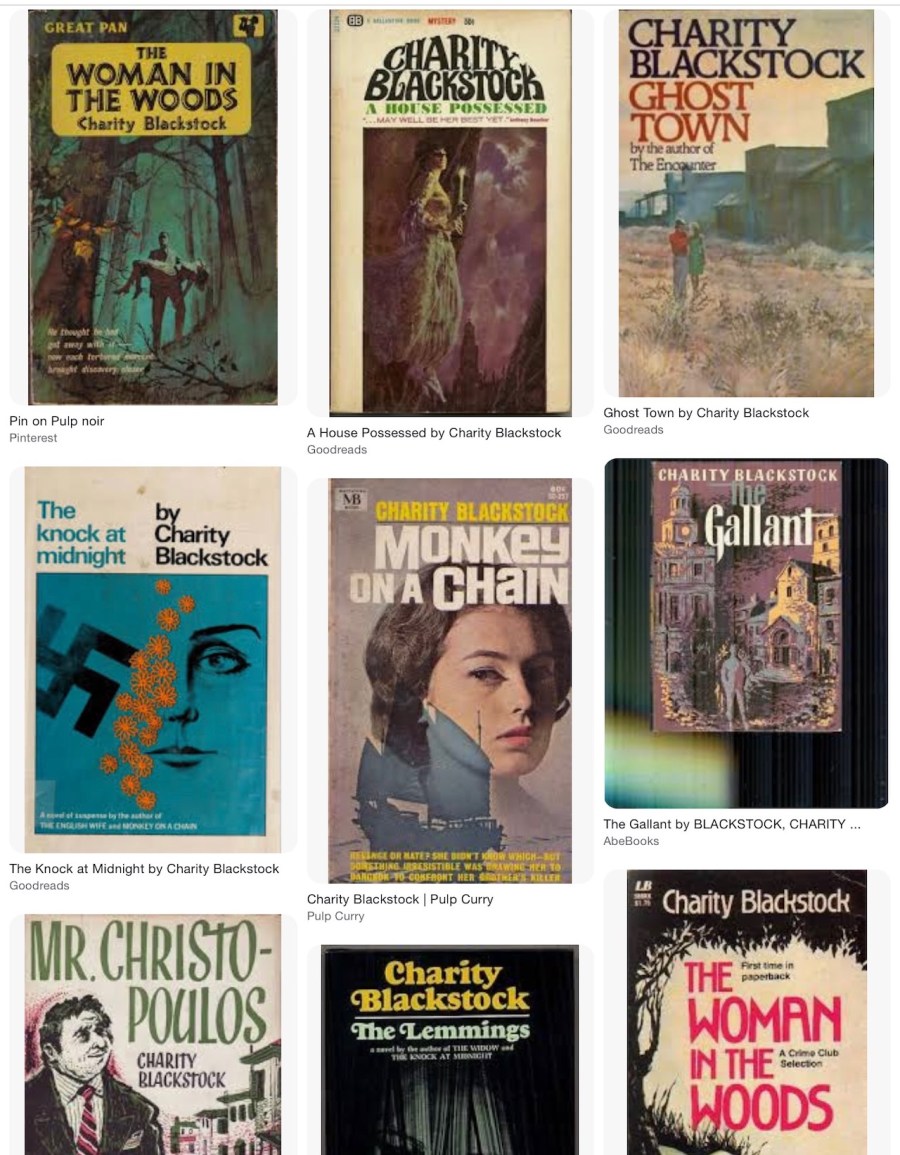
You’d be forgiven for never having heard of writer of mysteries, gothic and historical romance fiction Ursula Torday (1912-1997) because she only wrote three novels under that name. She did write many under pseudonyms, including Paula Allardyce (29 novels), Charity Blackstock (27 novels), Lee Blackstock (2 novels) and Charlotte Keppel (6 novels).

The only child born to a Scottish mother, and a father who was a Hungarian anthropologist, Torday had polio as a child which afflicted her gait throughout her life. She was educated in London at Oxford University and published her first three romance novels in the 1930s under her true name then stopped writing aged 26. She did not publish again until 1954. Over the next three years she published six books and continued to be prolific until the ’80s.

Torday’s dual interests of romance and mysteries meant that emotions and passion were important in her novels and often given precedence over death and motive in her mysteries. Sardonic humour, passion, hate, fear and loathing reverberate through her loathsome mystery characters to create tension and brooding romance.

Torday was said to be her own woman – cultured, sophisticated, opinionated, with wide interests and a zest for life. During World War II she worked as a probation officer for the Citizen’s Advice Bureau then ran a refugee scheme for Jewish children following the war. Her war time work inspired two novels written under the pseudonym Charity Blackstock (The Briar Patch, 1960 and The Children, 1966). Later she worked as a typist at the National Central Library in London which inspired body in the library mystery Dewey Death written under the same name. Dewey Death was set in the Inter-Libraries Despatch Association and includes themes of adultery, drug trafficking, romance and murder. Torday also worked for Naim Attallah’s publishing house (Quartet Books, The Women’s Press) for a period and sat at a desk opposite Quentin Crisp exchanging tips on the latest nail varnishes.

The Woman in the Woods, a mystery-suspense written as Charity Blackstock, in which two schoolboys stumble across a skeleton in the woods and soon the whole village is caught up in the death was nominated to win the 1959 Edgar Award for best novel.

Mystery novels

  • After the Lady (1954) (as Paula Allardyce)
  • The Doctor’s Daughter (1955) (as Paula Allardyce)
  • A Game of Hazard (1955) (as Paula Allardyce)
  • Adam and Evelina (1956) (as Paula Allardyce)
  • The Man of Wrath (1956) (as Paula Allardyce)
  • The Lady and the Pirate (1957) aka Vixen’s Revenge (as Paula Allardyce)
  • Southarn Folly (1957) (as Paula Allardyce)
  • Beloved Enemy (1958) (as Paula Allardyce)
  • My Dear Miss Emma (1958) (as Paula Allardyce)
  • Death My Lover (1959) (as Paula Allardyce)
  • A Marriage Has Been Arranged (1959) (as Paula Allardyce)
  • Johnny Danger (1960) (as Paula Allardyce)
  • The Gentle Highwayman (1961) (as Paula Allardyce)
  • Adam’s Rib (1963) (as Paula Allardyce)
  • Respectable Miss Tarkington-Smith (1964) (as Paula Allardyce)
  • Dewey Death (1956) (as Charity Blackstock)
  • Miss Fenny (1957) aka The Woman in the Woods (as Charity Blackstock) 
  • All Men Are Murderers (1958)  aka The Shadow of Murder (as Charity Blackstock)
  • The Foggy, Foggy Dew (1958) (as Charity Blackstock)
  • The Bitter Conquest (1959) (as by Charity Blackstock)
  • The Briar Patch (1960) aka Young Lucifer (as Charity Blackstock)
  • The Exorcism (1961) aka A House Possessed (as Charity Blackstock)
  • The Gallant (1962) (as by Charity Blackstock)
  • Mr. Christopoulos (1963) (as Charity Blackstock)
  • The Factor’s Wife (1964)  aka The English Wife (as Charity Blackstock)
  • When the Sun Goes Down (1965)  aka Monkey On a Chain (as Charity Blackstock)
  • The Children (1966) (as Charity Blackstock)
  • The Knock at Midnight (1966) (as Charity Blackstock)
  • Party in Dolly Creek (1967)  aka The Widow (as Charity Blackstock)
  • Wednesday’s Children (1967) (as Charity Blackstock)
  • The Melon in the Cornfield (1969)   aka The Lemmings (as Charity Blackstock)
  • The Encounter (1971) (as Charity Blackstock)
  • I Met Murder on the Way (1977) (as Charity Blackstock)
  • The Shadow of Murder (1964) (as Charity Blackstock/Lee Blackstock)
  • Madam, You Must Die (1974) aka Loving Sands, Deadly Sands (as Charlotte Keppel)
  • When I Say Goodbye, I’m Clary Brown (1976) aka My Name Is Clary Brown (as Charlotte Keppel)

Other novels – gothic, historical, romance

  • The Ballad-Maker of Paris (1935) (as Ursula Torday)
  • No Peace for the Wicked (1937) (as Ursula Torday)
  • The Mirror of the Sun (1938) (as Ursula Torday)
  • The Rogue’s Lady (1961) (as Paula Allardyce)
  • Witches’ Sabbath (1961) (as Paula Allardyce)
  • Paradise Row (1964) (as Paula Allardyce)
  • Octavia (1965) (as Paula Allardyce)
  • Emily (1966) (as Paula Allardyce)
  • The Moonlighters (1966) aka Gentleman Rouge (as Paula Allardyce)
  • Six Passengers for the Sweet Bird (1967) (as Paula Allardyce)
  • Waiting At the Church (1968) (as Paula Allardyce)
  • The Ghost of Archie Gilroy (1970) aka Shadowed Love (as Paula Allardyce)
  • Miss Jonas’s Boy (1972) aka Eilza as Paula Allardyce)
  • The Gentle Sex (1974) as Paula Allardyce)
  • Legacy of Pride (1975) (as Paula Allardyce)
  • The Carradine Affair (1976) (as Paula Allardyce)
  • Miss Philadelphia Smith (1977) (as Paula Allardyce)
  • The Daughter (1970) (as Charity Blackstock)
  • The Jungle (1972) (as Charity Blackstock)
  • Haunting Me (1978) (as Charity Blackstock)
  • Miss Charley (1979) (as Charity Blackstock)
  • With Fondest Thoughts (1980) (as Charity Blackstock)
  • The Lonely Strangers (1972) (as Charity Blackstock)
  • People in Glass Houses (1975) (as Charity Blackstock)
  • Ghost Town (1976) (as Charity Blackstock)
  • Dream Towers (1981) (as Charity Blackstock)
  • The Woman in the Woods (1959) (as Charity Blackstock/Lee Blackstock)
  • The Villains (1980) (as Charlotte Keppel)
  • I Could Be Good to You (1980) (as Charlotte Keppel)
  • The Ghosts Of Fontenoy (1981) (as Charlotte Keppel)
  • The Flag Captain (1982) (as Charlotte Keppel)

Comedy Review: Big Funny – Max Paton

Max Paton’s show was unfortunately cancelled at the comedy festival. I was so glad he rescheduled Big Funny at The Motley Bauhaus – it‘s a hoot.

Max is a guy with a lot of energy and delivers fast paced absurd hilarity with a delightful innocence. There are no put downs or character assassination in this show. Instead you get a unique perspective on the world that is pure fun. There are plenty of jokes, character dress ups, creative use of audio, and absurd skits to set your inner child free.

From Jim from the gym, to a duck with a screwdriver penis, and a trip to Bunnings akin to a quest for the mighty sword, it’s a wild ride of tomfoolery that was delightfully refreshing. Get yourself to The Motley Bauhaus and support this young comedian. Show only runs till 9th July, so be quick.

The Motley Bauhaus is a cosy venue with comfy seats and good beer. After the show I recommend dropping into The Olive Jar just around the corner in Rathdowne Street for an authentic Italian meal followed by their singing chef. The combination of a good laugh with Max followed by a good feed will be a night to remember.