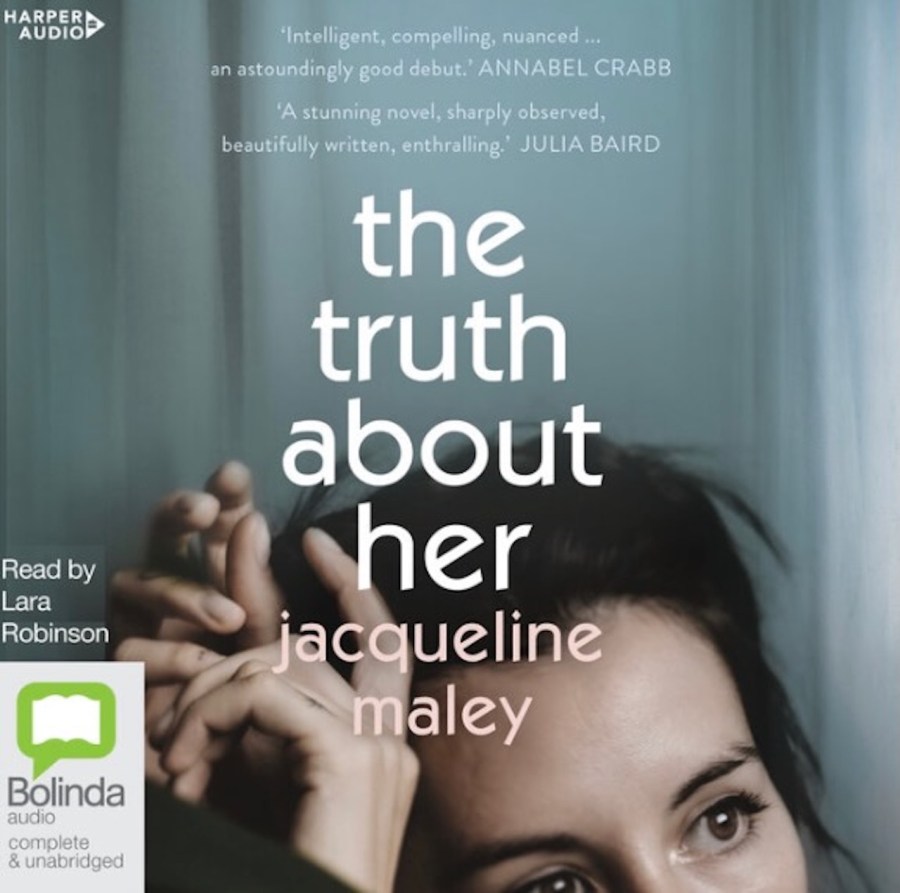
The Truth About Her written by journalist Jacqueline Maley is a story about a key moral dilemma for journalists – who owns the truth and who gets to tell a person’s story. The novel brings to life every journalists worst nightmare – when then penning and publishing of a story has the worst possible of consequences.
Wellness blogger and influencer Tracey Doran takes her own life after being exposed as a fraud. Journalist and single mother Suzy Hamilton finds out about Doran on her way to work, it was her investigative expose that exposed the influencer. Doran is horrified by the news and tries to bury herself in work, looking after her daughter, and having affairs as a distraction. The last distraction results in her losing her job, and her lovers.
The summer after I wrote the story that killed Tracey Doran, I had just stopped sleeping with two very different men, following involvement in what some people on the internet called a ‘sex scandal’, although when it was described that way it didn’t seem like the kind of thing that happened to me.
Suzy starts to receive anonymous letters and is pursued by Doran’s mother who wants her to write a feel good biography about her daughter as a kind of retribution. The two women start to meet regularly so the journalist can write a different story about Tracey. Like the slow peeling of an onion, the exercise gradually reveals the real truth about how the lives of the three women became entwined and what really happened to Tracey.
The Truth About Her is a contemporary novel with a well-drawn flawed protagonist who deftly explores themes about shame, guilt, female anger, and mothering.
Hilary Mantel’s recent death prompted me to pick up Wolf Hall her epic 16th century fictional portrait of Henry VIII’s turbulent court. Thomas Cromwell, a man of humble beginnings rose through perseverance and ambition to become a political fixer and ruthless servant to the king. It is through Cromwell’s third person POV, with his wit and intelligence, that we travel the thirty-five years of English and European history.
Cromwell had a hand in all the important matters of Henry VIII – both personal and professional. He was central in trying to bring about the annulment of Henry’s marriage to his first wife, Katherine of Aragon, to clear the way for him to marry Anne Boleyn. His political maneuverings were key to the battle between Catholicism and Protestantism and Henry’s desire to separate the Church of England from the authority of Rome.
The fate of peoples is made like this, two men in small rooms. Forget the coronations, the conclaves of cardinals, the pomp and processions. This is how the world changes: a counter pushed across a table, a pen stroke that alters the force of a phrase, a woman’s sigh as she passes and leaves on the air a trail of orange flower or rose water; her hand pulling close the bed curtain, the discreet sigh of flesh against flesh
As with all great epics Wolf Hall is abundant with intrigue, betrayal and bloody battles, but an easy read it is not. The prose is sophisticated and eloquent but the cast is large and the narrative so rich in complexity it requires your full attention to keep across who is who. The more you know about the political history of the time, the easier it will be for you to follow.
Wolf Hall is a novel about the old world but it also shines a light on contemporary concerns such as religious extremism, government abuse of authority, separation of church and state, the wealth-poverty gap and all the exploitation that divide entails, torture, and national conflicts driven by private motivations. Perhaps humanity has not changed that much…
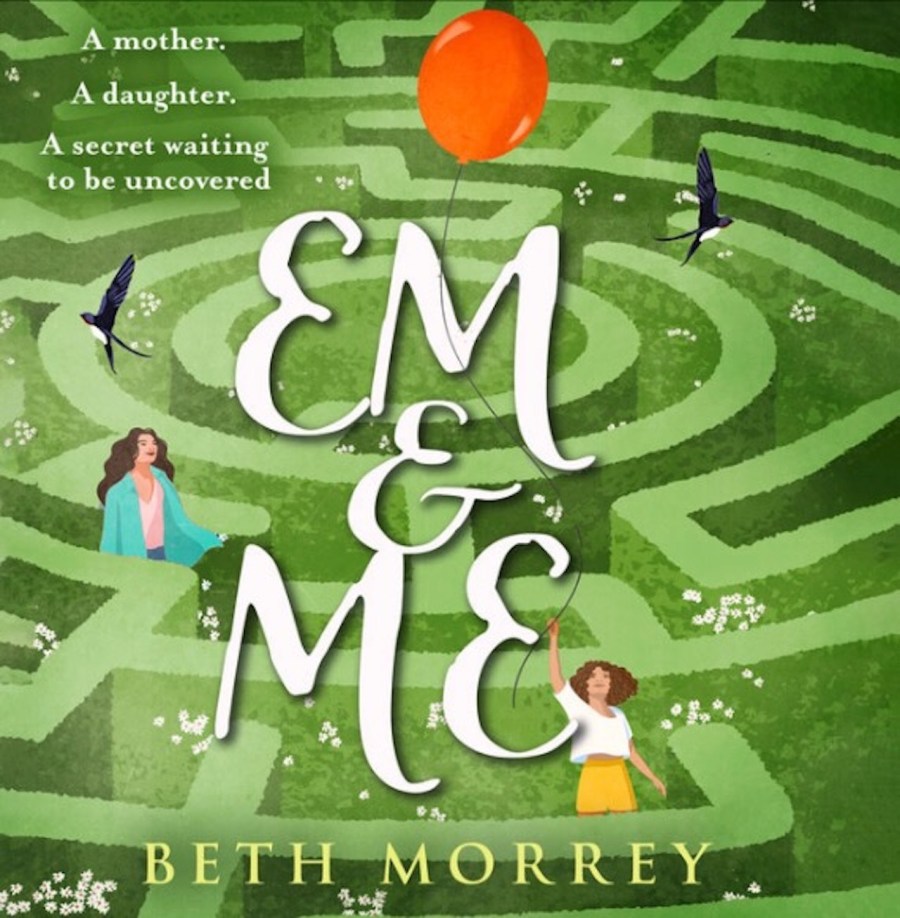
Em and Me by Beth Morrey is a story about poverty, hope, second chances, and learning to back yourself.
Delphine Jones and her daughter Emily share a bedroom in the cramped basement flat where they live with Delphine’s father. He has been depressed since Delphine’s mother died in a tragic accident and now just sits in front of the TV all day.
That’s what life turns on, isn’t it? The choices and moments that change everything
A promising student with a love of literature and destined for an Oxford University as a teenager, Delphine’s life changed after her mother died and then she fell pregnant at seventeen before finishing high school. Her university ambitions had to be abandoned to care for her baby and her father. Now she lives hand to mouth working part time cleaning and waitressing.
We meet mother and daughter when Emily is on the cusp of her teenage years. Emily is smart as a whip and Delphine wants her to have a better life. One day Delphine takes a stand for herself and we follow her on a journey to taking her place in the world and realising her own ambitions through a series of opportunities, setbacks, and second chances.
At some point, while I had been trying to turn my life around, often making a mess of it, my dad had been enjoying his own quiet renaissance – a gentle progression towards the light, nudging his strings, semitone by semitone, along with me. I felt tears rise up, threatening to overcome me as I looked at him, standing there so proudly. Forgetting Adam, and Dylan, Letty, and my own guilt about Em, I sat down at the piano, and began to pick out a tune, softly, Dad humming along, his hand on my shoulder.
A light fun read with characters that are well-drawn and interesting. Em and Me is a heartwarming, optimistic feel-good domestic fiction tale about triumph over adversity.
I’m popping out a couple of extra posts this month as Melbourne Fringe is on and we all need to get out and support the performing arts in Melbourne…go on…
Women have always made history in equal measure to men, but with only about 0.5% of them traditionally appearing on the historical records, their contributions were often forgotten – that is until women started to rewrite the records…
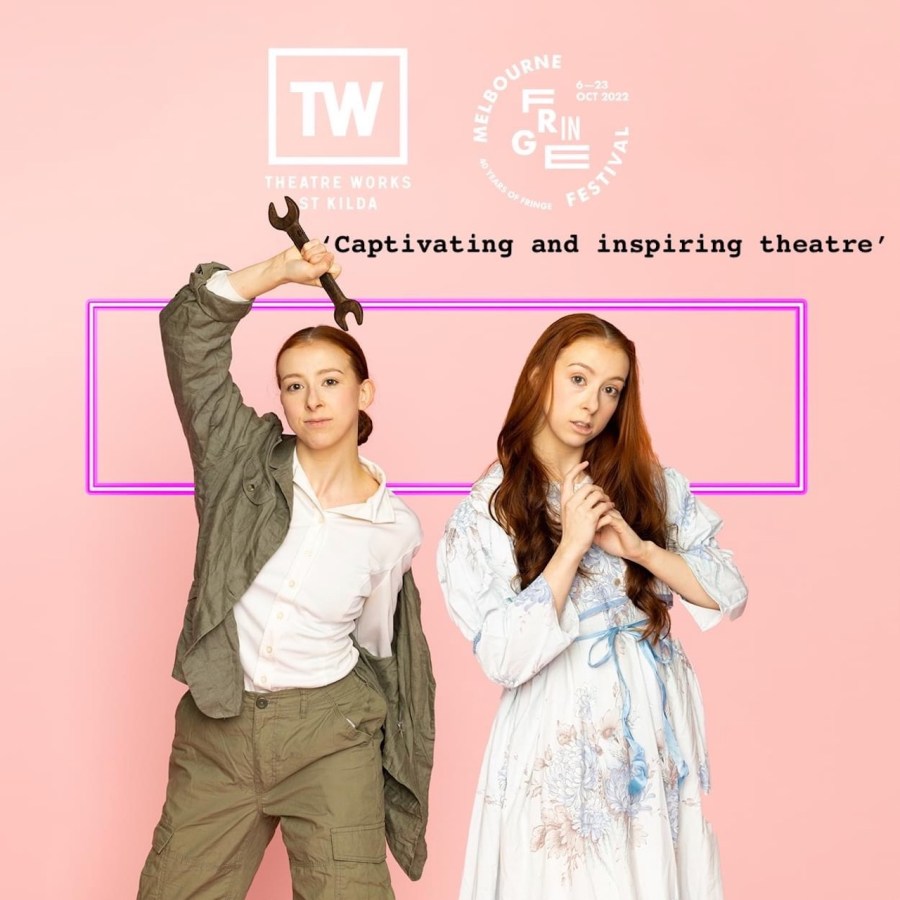
In Melbourne Fringe show, HYSTERICA, actors Tess Parker and Mary Steuten deliver a piece of historical revisionism through monologue to tell the stories of four extraordinary women – Alice Anderson, business woman, garage proprietor and motor mechanic (1897-1926); Joy Hester, artist and member of the Angry Penguins movement and the Heidi Circle integral to the development of Australian Modernism (1920-1960); Elizabeth Gould (1804-1841), botanical artist and illustrator, much of whose work is believed to have been attributed to her husband naturalist and author John Gould (sigh); and the more contemporary story of Dawn Faizey-Webster who developed locked in syndrome after suffering a brainstem stroke that left her only able to communicate by blinking her left eye. Faizey-Webster still went on to complete a degree, a Masters and commence a doctorate.
Despite challenges with the shows lighting (the lighting deck got drenched in yesterdays downpour so the actors had to work under fluorescent strip lighting to avoid electrocuting anyone), Parker and Steuten put on thought-provoking performances that made me want to find out more about the characters they inhabited. Tess Parker’s portraits of Alice Anderson and Elizabeth Gould were particularly expressive and engaging.
HYSTERICA is showing at Theatre Works new venue, the Explosives Factory which is down a back alley and up a flight of stairs into a warehouse space in St Kilda. Running 4-8th October, tonight is the final show, so get in quick.
I stand on the sacrifices of a million women before me thinking what can I do to make this mountain taller so the women after me can see farther
Difficult women have long been pathologised as crazy. Hysteria was the standard diagnosis applied by male doctors who couldn’t work out what was wrong when the fairer sex behaved in ways that deviated from their idealised feminine norm. Of course, the norm was defined as being male, and by comparison women were fundamentally unstable, a problem that manifested as hysteria.
Women were weaker than men – it was their vaginas and uteruses that were the problem. The (male) medical gaze (mis)diagnosed, locked up, electrocuted and medicated women by way of treatments to relieve the symptoms of female existence until women were compliant. Making women crazy was a means by which to regulate and control – the message from doctors was in essence, don’t be a pussy.
Batsh*tis a solo show performed by Leah Shelton and directed by Ursula Martinez as part of Melbourne Fringe. The show explores what was at the root of women’s distress, how the pressures of women’s lives and their limited choices may have often led to their misery.
A disturbing, funny, physical interrogation of female madness and a tribute to Shelton’s grandmother, Gwen. Batsh*tis a wild ride worth a visit, and don’t forget your pussy hat.
Batsh*tis on at Northcote Town Hall Arts Centre as part of Melbourne Fringe from 5 – 15 October.
To know what a person has done, and to know who a person is, are very different things.
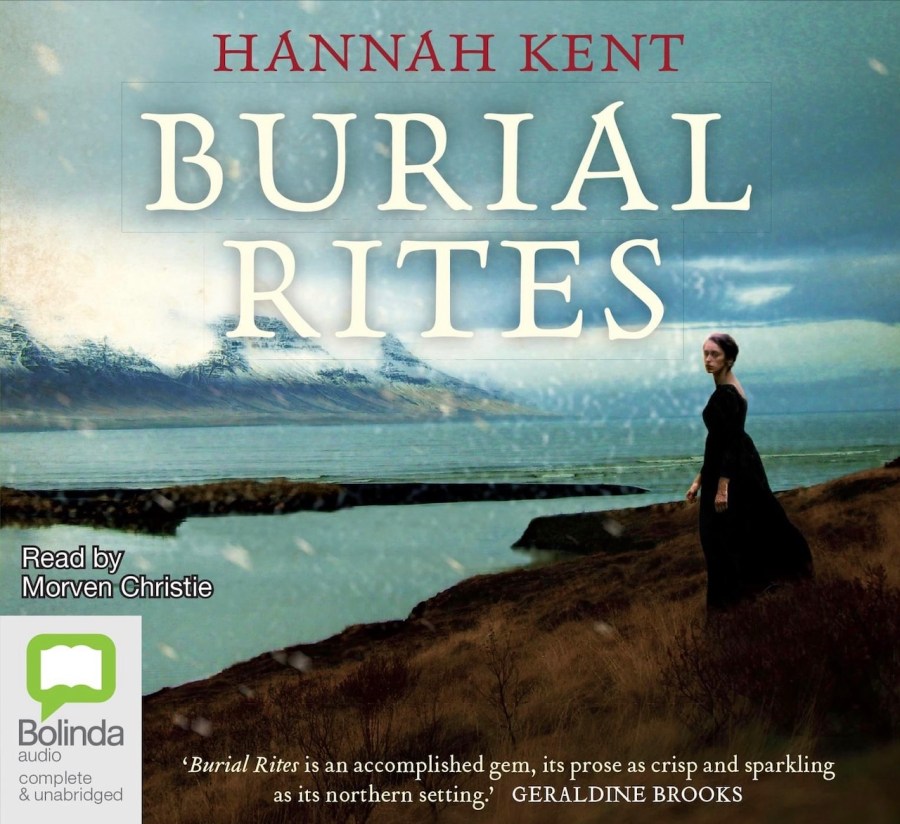
Iceland’s last public execution took place in 1829 when a man and a woman were beheaded for a murder that took place on a remote farm. The woman was detained on a farm over winter whilst she awaited her execution as there were no jails. Hannah Kent’s meticulously researched award winning novel, Burial Rites, imagines that woman story.
She made mistakes and others made up their minds about her. People around here don’t let you forget your misdeeds. They think them the only things worth writing down.
The harsh Icelandic setting of the novel amplifies the brutal reality of class and peasant life of the time. Whilst interned on the farm of Margret, Jon and their two daughters, with a year to live, Agnes reflects on her life leading up to the murder. Her presence creates tensions in the family obliged to keep her, and suspicion in the local rural community. Priest in training, Reverend Tóti, there to help Agnes come to terms with her fate is the device that helps unravel Agnes’s story, maintain peace in the family and develop their relationship with the condemned woman.
Up in the highlands blizzards howl like the widows of fishermen and the wind blisters the skin off your face. Winter comes like a punch in the dark. The uninhabited places are as cruel as any executioner.
Kent has conjured up a voice from the margins in Agnes, a whip smart, dirt poor peasant girl – a combination that set her up for trouble in the times when intelligent outspoken women were cause for grave concern. It was these qualities that drew the attention of freethinker Naan Ketilsson whom she was subsequently accused of murdering. She is only a whisper away from being called a witch.
They see I’ve got a head on my shoulders, and believe a thinking woman cannot be trusted.
The language and voice in the book are striking and amplify the gothic feel of the story through its analogies and painterly descriptors. Burial rites is gothic romance with the feel of an Icelandic saga that deals with ordinary people living in extreme conditions. A remarkable, dark debut novel by Hannah Kent who went on to write The Good People and Devotion.
“He lay back down on the snow. “What’s the name for the space between stars?” “No such name.” “Make one up.” I thought about it. “The soul asylum.”
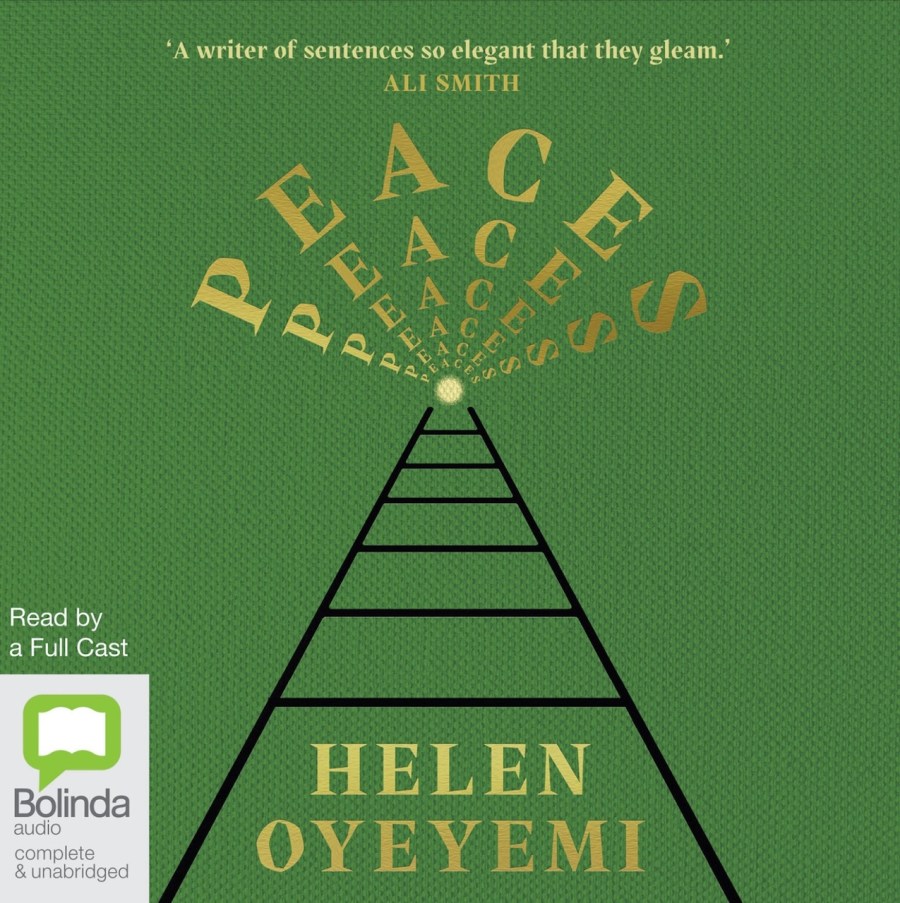
Peaces is a novel worthy of more than one visit. The story is set on a train, a character itself, intense spaces and fleeting glances – carriages in which the laws of physics have been suspended – a portrait gallery, a postal sorting office, a sauna and holding cell, a library with a brocade fainting couch, a glass panelled greenhouse car. The train is called Lucky Day and used to be a tea smuggling train, with dodgy connections to the East India company.
Even though, as I told you, it was an empty room, some of the compositions I played got a better reception than others.
Otto and Xavier Shin are lovers – a mesmerist and a ghostwriter. Otto has a jewel-hoarding mongoose called Arpad the 30th that has, along with some of his predecessors, been Otto’s companion since being acquired to protect him from venomous snakes as a child. Arpad accompanies them on the Lucky Day because mongooses should travel before they hit middle age, otherwise they get narrow-minded.
Xavier’s aunt gifts them a journey on the Lucky Day as a ‘non-honeymoon, honeymoon’ trip. There are only three other passengers on the train. A composer-train driver, a debt control officer, and the trains mysterious owner virtuosos Ava Kapoor. Or are there?
I’m sure almost no one deludes themselves that all their ancestors were decent. Pick a vein, any vein: mud mixed with lightning flows through, an unruly fusion of bad blood and good
In my first turn through this shapeshifting tale, I surrendered to it’s exuberance, revelled in its creative joy and shapeshifting whimsy. If literature were a magic mushroom trip – this would be it.
I was so taken by it, I took a second turn to try and piece together its mysterious puzzle, to orient myself in its pages, draw together the disparate times and memories, backstories and symbolism to find the common thread.
You run the romantic gauntlet for decades without knowing who exactly it is you’re giving and taking such a battering in order to reach. You run the gauntlet without knowing whether the person whose favour you seek will even be there once you somehow put that path strewn with sensory confetti and emotional gore behind you. And then, by some stroke of fortune, the gauntlet concludes, the person does exist after all, and you become that perpetually astonished lover from so many of the songs you used to find endlessly disingenuous.
Hidden in the quirk are whispers of the the effects of the legacy of the British Empire, old money and old cruelties, themes of connection, of desire and wanting, of feeling unseen and wanting to be seen. But the shunt and sway of the carriages and fleeting glimpses soon threw me off again so I was never quite sure what I saw – like the paintings by the artist on shapeshifting canvases and the man who may, or may not have leapt off the moving train.
Perhaps I will need to take the trip a third time…
O! for a muse of fire, that would ascend the brightest heaven of invention.
William Shakespeare
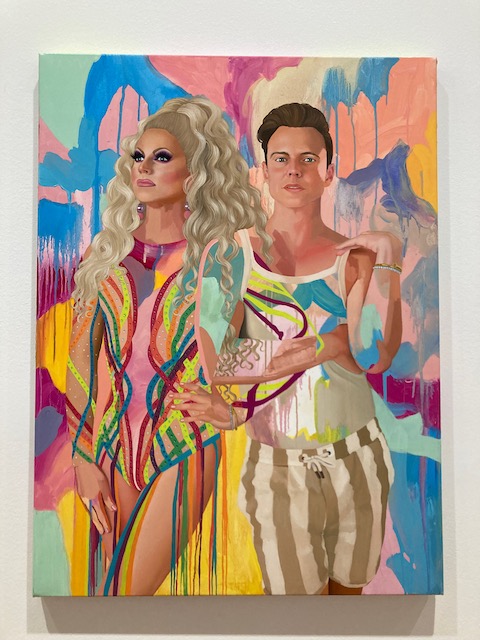
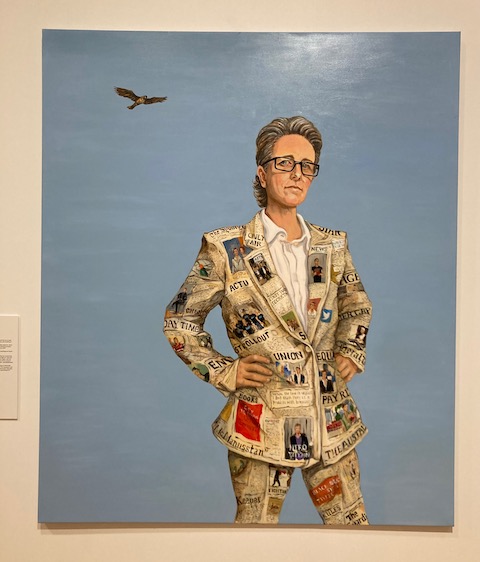
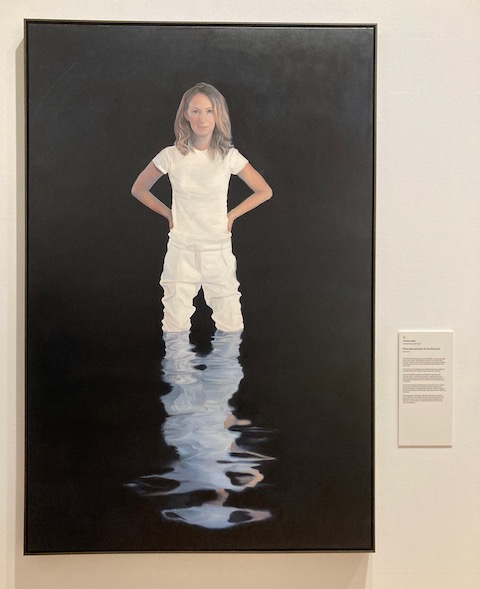
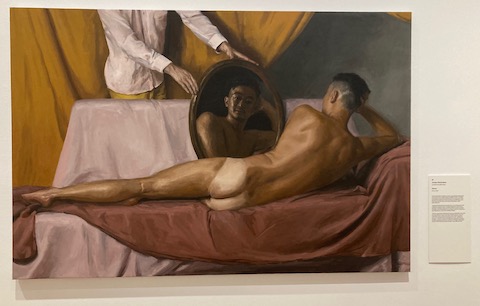
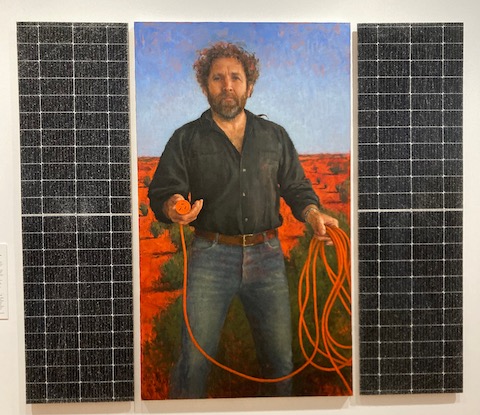
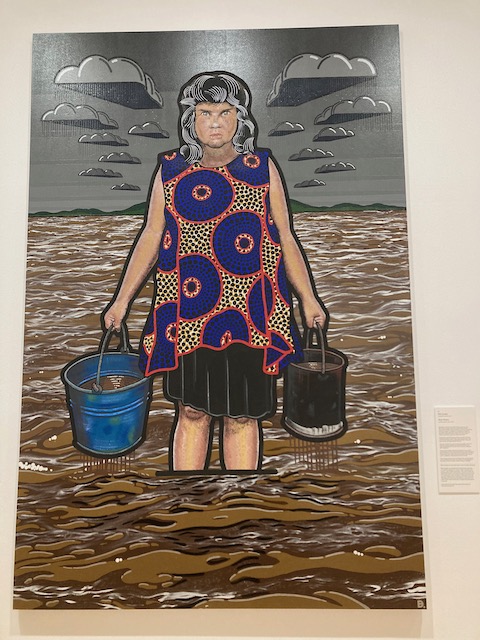
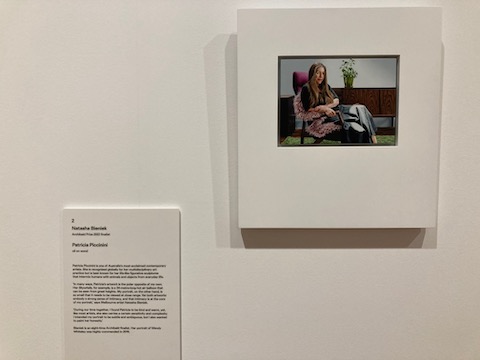
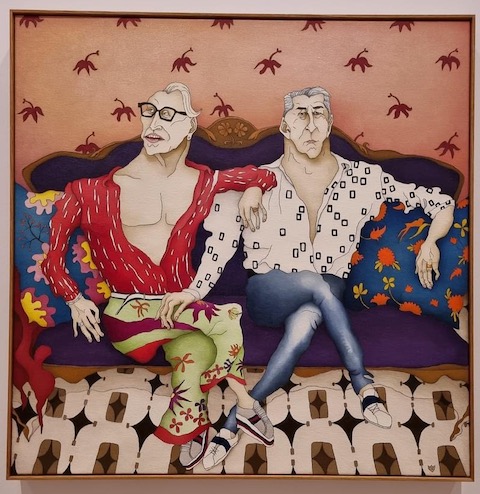
A friend and I made the trek out to Bunjil Place at Naree Warren to see the Archibald Prize and hear a couple of the artists and their subjects in conversation as part of Melbourne Writers Festival.
Kim Leutwyler painted both artist Shane Jenek’s (aka Courtney Act) personas. The work itself is an expression of gender and queerness using a blend of realism and abstraction.
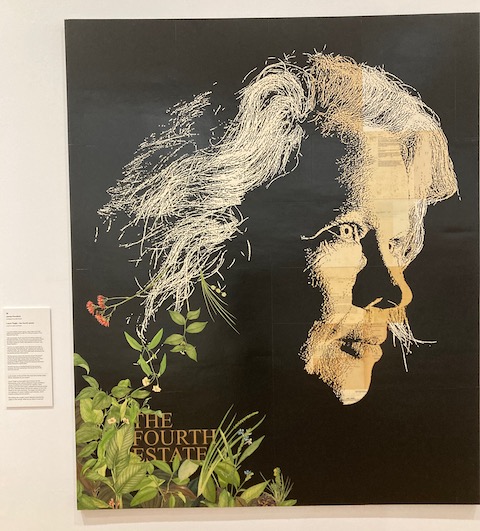
James Powditch pursued chief political correspondent for ABC-TV’s 7.30 and president of the National Press Club, Laura Tingle, determined to capture the fearless political journalist and snippets of the woman behind the image. Her face is superimposed over a collage that includes various pieces of her work including a script from 7.30 and a page from her Quarterly Essay.
As a portrait prize, the Archibald is the perfect vehicle to prompt conversation and thought about the concept of ‘the muse’. In its most basic sense the ‘muse’ is that which inspires the artist. The word has its roots in Greek mythology with Zeus’ daughters forming the nine Muses who presided over the arts and science.
Traditionally the muse was romanticised as the beautiful young woman sitting (and often suffering) for the older male artist who objectified her whilst her own talents were overlooked. To gaze upon an object with such intensity and time lends itself to an intense emotional relationship – think Picasso and Marr, or Auguste Rodin and Camille Claudel, but the power relations are curious. How much is due to admiration, the artistic form or gender dynamics?
I am my own muse. I am the subject I know best. The subject I want to better.
Frida Kahlo
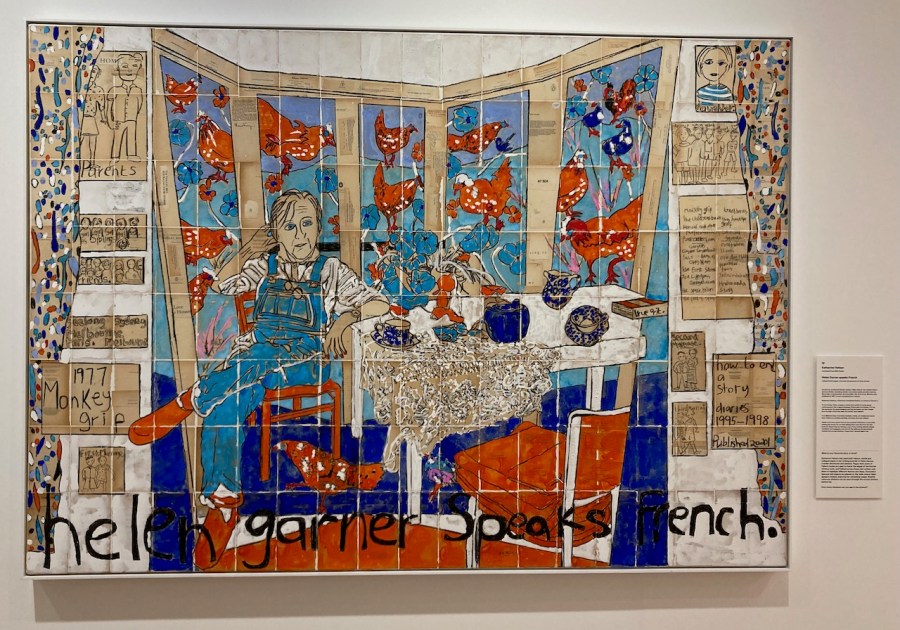
Writers including including Helen Garner (mixed medium on linen by Katherine Hattam) and a nude Benjamin Law (oil on canvas by Jordan Richardson) also posed for the Archibald and literature has had its own famous muse relationships. Think Vita Sackville-West and Virginia Woolf, Charles Dickens and Ellen Ternan, Zelda Sayre and F. Scott Fitzgerald.
Of course not all artist-muse stories left the female muse as an objectified shadow of the artist. Yates fell for English born-Irish revolutionary and feminist icon, Maud Gonne. A firebrand who refused four proposals from Yates because she didn’t want to be tied to a man and he wasn’t Catholic. Yates remained infatuated for five decades, producing a significant work of yearning poetry as a result.
Perversity is the muse of modern literature.
Susan Sontag
Contemporary writers often talk of the muse as a spirit presence that offers inspiration rather than an embodied being and we are commonly advised ‘don’t wait for the muse, start writing and they will show up!’
Show up, show up, show up, and after a while the muse shows up, too. If she doesn’t show up invited, eventually she just shows up.
Isabel Allende
At a Varuna writing residency a few months ago, I found the beauty of the National park became my muse as my daily sojourns provided the creative inspiration to motivate me to complete the first draft of my current manuscript, Gallows Tree. One particularly gruelling outing involving the Furber Steps even surfaced an ending I had not expected.
If you ever venture out to Bunjil Place I can also recommend a short trip further down the road to The Courthouse, next to the Berwick Post Office for a funky cocktail and tapas
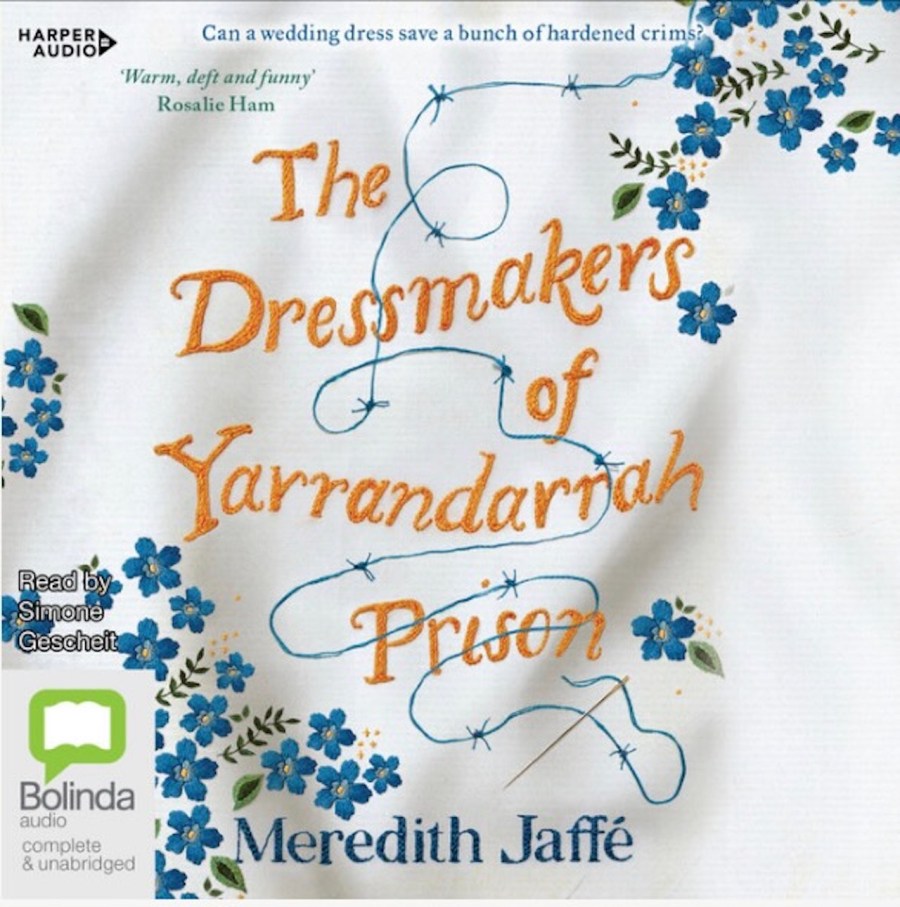
The Backtackers gather daily for a sewing circle with Jane who teaches them to embroider. But the Backtackers are no ordinary group, they are a motley crew of criminals at Yarrandarrah prison.
Derek, who is in for embezzlement, and estranged from his wife and daughter wants to show his daughter how much he loves her and decides he will make her wedding dress. His fellow inmates agree to help him with the job – they want to create something spectacular, but don’t always agree on what that means.
There’s a hierarchy among the long-term residents in this joint, determined by the blend of time and crime. Men like Jack and the Doc are kingpins. Even Parker earns more respect because he put a hole in another man’s chest. If the new kids knew that, they would be so quick to call him names. But Derek? Stealing money to chuck down a poker machine’s gullet isn’t a crime, it’s pathetic.
Inspired by the real story of Fine Cell Work, The Dressmakers of Yarrandarrah Prison is a funny, dark and moving story about friendship and redemption. It is both a heartbreaking and heart-warming reflection on life on the inside and the lives of the prisoners loved ones on the outside.
I found the image of big burly criminals sewing delicate items very original. It created a great juxtaposition to the outbursts of violence that erupted during the novel.
Interestingly the story is written in present tense omniscient narration, which you don’t see very often these days. It made me feel like a constant fly on the wall (or all the walls) and provided a good perspective for dramatic irony.
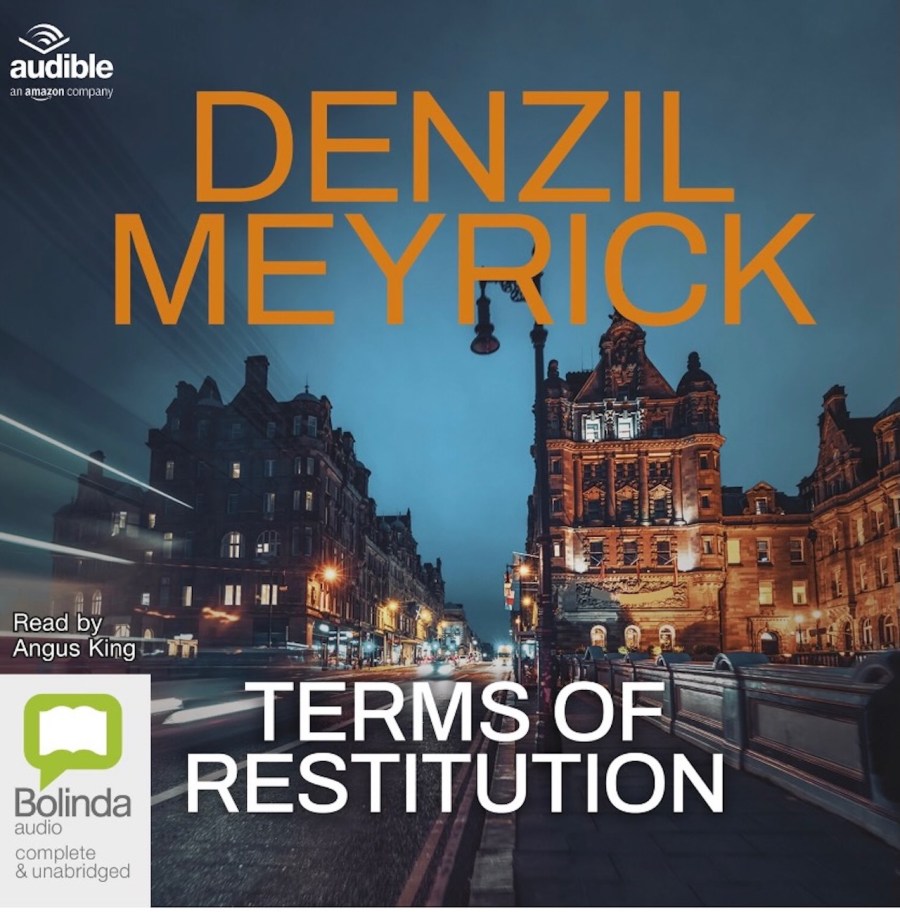
Ferocious gang wars in Paisley and Glasgow are the subject of Denzil Metrick’s Terms of Restitution.
Sometimes it’s better to go, to leave things behind. Often that is the only way to find yourself, to find salvation.
Gangland boss Zander Finn has been laying low in London on the advice of his priest after his son I brutally murdered. When his friend asks him to return to help deal with the threat of Albanian mobsters trying to take over the Scottish underworld, he returns.
It was a warm, gin-clear July day.
What unfolds is a fast paced, brutal tale of survival and misplaced loyalties. Despite the body count and violence, Metrick threads a human story about relationships and friendship with fully formed characters and humour through the novel. From Father Giordano, Zanders lifetime friend and confidant, to Zander’s mother Maggie, the family matriarch who likes to offer the family comfort food of egg, chips and beans – and now she uses vegetable oil, not lard.
Well, its a bastard when you get old. They lifts stink of piss, and there’s all sorts cloaking about. Some shite tried to steal your Auntie Gwen’s purse the last time she came to visit me.






 R L Smith