Puppy with dead stuck down a hole she dug in garden

Blood and guts

This post comes with a trigger warning: may be unsuitable for vegetarians and vegans. If you are squeamish turn away now.

Whilst the celestial orb was preparing itself for the early morning spectacle to slip into the earth’s shadow I was up to my elbows in blood and guts.DSC05587
In the early hours of Saturday morning the longest complete lunar eclipse this century occurred when the earth passed between the sun and the moon and caste the big white orb into shadow. The sunlight filtered and refracted by the earth’s atmosphere bathed the moon and gave it a bright red hue and its name, a blood moon.  The early morning was worth the effort to take a look.

Speaking of blood, destructo dog is now on a new diet.  We joined what I refer to as the dog cult recently (aka dog training school) as I’m keen for Harper to be a well-mannered member of society.  Anyhewz, they run a range of workshops on all things IMG_0731canine.  I went along to one on nutrition which ironically was facilitated by a vegan who was extolling the virtues of a raw food diet.  Subsequent research tells me that the raw food diet for pets is a controversial topic – why should all the controversy be reserved for people after all – but it does make logical sense to me. Before dogs realized humans are a great source of nutrition and security and domesticated us over 10,000 years ago, they didn’t eat carbohydrates, one of the key ingredients in many processed pet foods.  Apparently all carbs do is deliver a burst of energy and upset the pH of their stomach if they eat too much.  It can also contribute to what we call the ‘zoomies’ when doggo gets hyper at the time of evening when I’m ready for a quiet sit on the sofa.  In the wild hounds ate meat (often several days old), greenery, and dirt and have a digestive system designed to process these things.

The pup has had a few digestive problems since she arrived, the detail of which I will spare you, so I decided to give the raw food diet a go.  Off I went in search of the DSC05590ingredients and spent several evenings elbow deep in about 40kg of chicken, beef, turkey and crocodile meat and various types of offal, which has a distinctive metallic smell.  The whole exercise made me think of my grandfather who spent his working life as a butcher.  He was a short, charismatic but volatile man – maybe it was all that meat. I have made up enough meals to fill up the freezer that I installed in the shed for this purpose.  A week of probiotics and a slow transition onto the new diet and hey presto, the hound is already much improved all around.

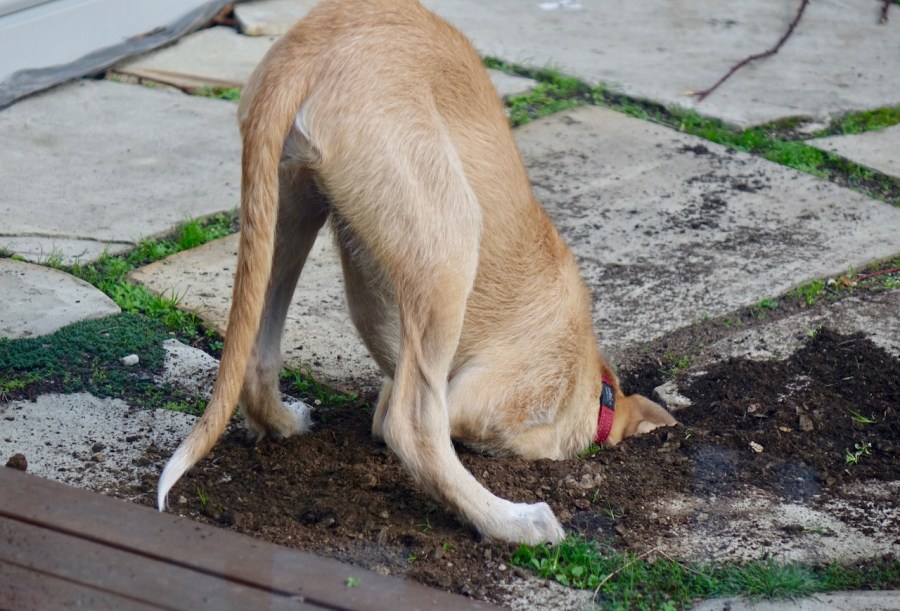
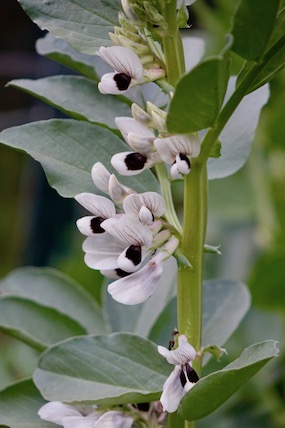
Dogs love to help in the garden.  My old girl Jarrah used to like to drop her frisbee into any holes I was digging, Harper prefers to assist with the digging and helped me make a hole to plant a Mulberry tree this week, which I then had to fence off to ensure she DSC00508wouldn’t dig it up again.  I have also weeded the vegetable patch and popped seeds for tomatoes, basil, zucchini, cucumber and pumpkin in punnets and placed them under cover in a small greenhouse.  The broad beans are flowering and the other winter vegetables are sprouting with spring growth.
This week’s recipe has gone to the dogs and should not be served up to family and friends, but your four-legged mate will love this along with a bone every day.  Apparently you should not feed weight bearing bones but raw poultry necks and carcasses, kangaroo tails, ribs and wings are all good. Apply the same kind of food hygiene you would to your own food preparation.

Raw food recipe for dogs

Ingredients:

  • 400g lean meat of your choice
  • 1/2 teaspoon of good quality cod liver oil or half a can of sardines in water
  • 1/2 teaspoon of ground ginger
  • 1/2 teaspoon of kelp powder
  • 1 egg
  • 1/2 eggshell crushed
  • 30 grams liver, kidney or brains
  • 30 grams broccoli
  • 30 grams capsicum
  • 30 grams spinach
  • I add a calcium supplement for the puppy

Method:

Put it all in a big bowl and mix it up. Adult dogs eat about 2% of their body weight, puppies up to 6%.

I feed my dog this mix, one bone per day and she’s had dog chips in a toy she can eat whenever she wants.

Image: Harper doing some excavating

Inset images: Blood moon; Harper; broad bean

Artwork from Queensland Museum

Beginnings and endings

There are two ways to begin a journey. One is with a clear destination visualized. A definite purpose to drive you forward. The other is with a determination to have an experience without any particular expectation of how it will end. To allow things to unfold and wash over us. Either way where we end up is often not where we expected to be. I have been thinking a lot about beginnings and endings this week after spending a couple of months rewriting the beginning of my own project and contemplating how I feel about the current ending.

Stephen King said “An opening line should invite the reader to begin the story. It should say: Listen. Come in here. You want to know about this.”

I have revisited some beginnings of novels I have read and included some that I’ve found compelling…

I did not scream when I came in the back door of Sal’s Saloon, where I work, to find Sal himself lying there on the floor of the stockroom, the color of blue ruin, fluids leaking from his various holes and puddling on the ground, including a little spot of blood by his head. – Noir: A Novel by Christopher Moore

I found Moore’s voice in the is book really compelling. It’s quite unique. He’s also hooked me with the character who found Sal and the question – why is Sal dead?

It wasn’t as though the farm hadn’t seen death before, and the blowflies didn’t discriminate. To them there was little difference between a carcass and a corpse -The Dry by Jane Harper

Harper evokes rural Australia in such a simple and evocative way with this opening, and of course there is the question of why is there a corpse.

I heard the mailman approach my office door, half an hour earlier than usual. He didn’t sound right. His footsteps fell more heavily, jauntily and he whistled. – Storm Front by Jim Butcher

Butcher sent shivers up my spine with this one and made me wonder if there was a psycho mailman on the loose.

I go by many names, none of my own choosing. – The Parcel by Anoshi Irani

Irani’s opening is short, simple and elegant and asks an evocative question.

A great beginning compels the reader to continue. Sometimes the voice draws you in by insisting on your attention, or using intimacy or intrigue. Sometimes the opening contains a hook or drama to make you want to know what happens next, particularly in mysteries or stories with a quest. A character may be so compelling that you want to know more about them or the rhythm or pacing of the writing can power you to read on. You also have to find the right place and time to begin. Start to soon and you will bore readers with routine and no goal or conflict, start too late and you confuse people with inadequate context.

The ending is a long way from the beginning. But it has to answer the question that was asked at the opening in order to satisfy readers. It has to take all that you have written about in depth and bring it to a satisfying conclusion. If the ending fails to answer the specific question set out in the beginning, the whole book will fail. Many authors say they write the ending before they begin. I cannot always see the ending until I am well into the story. I am fairly confident the ending I wrote in my first draft will not be the ending I finish with. It is something I agonize over intermittently. Time will tell whether I find a satisfying conclusion.

Here are some endings that I’ve found gratifying and that have given me something to take away and think about…

My name is Harry Blackston Copperfield Dresden. Conjure by it at your own risk. When things get strange, when what goes bump in the night flicks on the lights, when no one else can help you, give me a call. I’m in the book. – Storm Front by Jim Butcher

The creatures outside looked from pig to man, and from man to pig, and from pig to man again; but already it was impossible to say which was which. – George Orwell, Animal Farm (1945)

I never saw any of them again — except the cops. No way has yet been invented to say goodbye to them. – The Long Goodbye, Raymond Chandler

When they finally did dare it, at first with stolen glances then candid ones, they had to smile. They were uncommonly proud. For the first time they had done something out of Love. – Perfume: The Story of a Murderer, Patrick Süskind

What are some of your favorite beginnings and endings?


Image: Queensland Museum


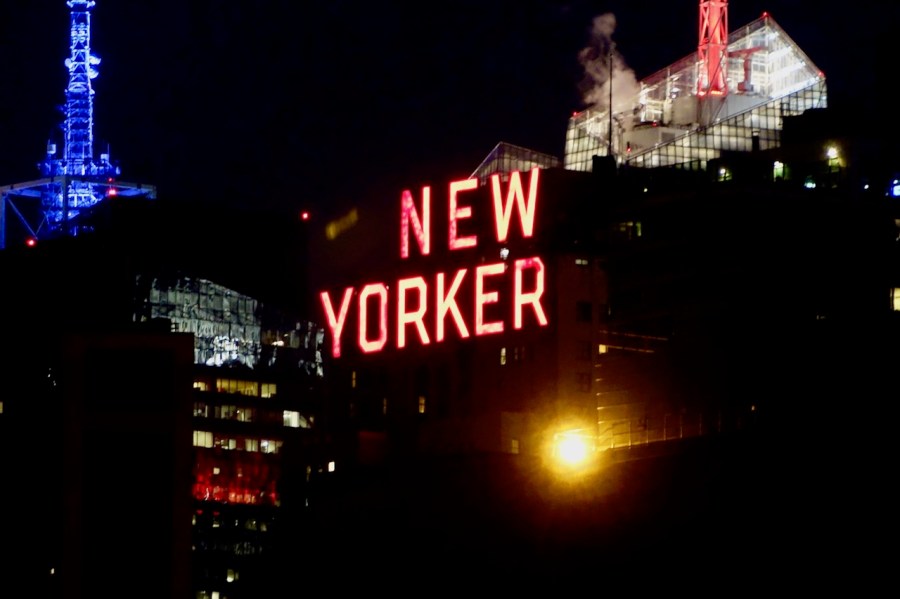
New Yorker sign in NYC

New York potatoes

It’s been a busy week, though not in the garden.  Luckily I don’t rely on it solely for food or we’d be in trouble and living on citrus fruit at the moment.  I entertained myself with the NYC Midnight flash fiction challenge last weekend.  NYC Midnight is a competition in which entrants receive a unique genre, location and object and are given 48 hours to write a story of up to 1,000 words.  The story must be written in the assigned genre, be based predominantly in the location given and the object must physically appear in it.

I was given a fairy tale, a veterinary hospital and a badge and had a lot of fun as I had not tried to write a fairy tale before.  There’s nothing quite like having a deadline to lifeensure you get a piece finished.  Short stories also provide a sense of completion and a bit of light relief from long form fiction which takes forever. Everyone who was given the same prompts will produce wildly different pieces which I look forward to reading when entrants start to share them in the discussion forums. Round two is in September.
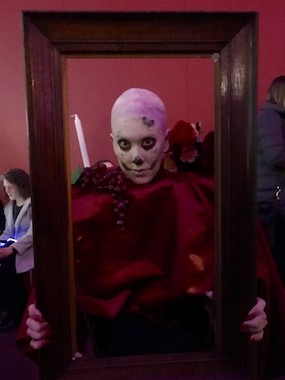
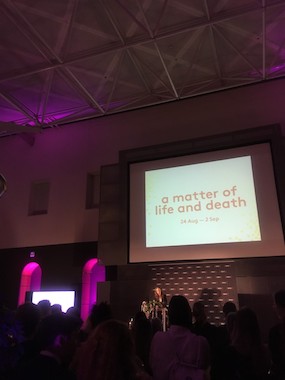
On Wednesday I went along for the first time to a Writers Victoria workshop on voice and point of view facilitated by Robert Gott. I find being in a room with a bunch of other writers and talking about writing motivating and inspiring. A couple of us went along to the opening of the Melbourne Writers Festival at the State Library afterwards.  The theme this year is ‘A Matter of Life and Death’ and will explore issues like survival, fluidity, impermanence, joy, grief, loss, love, determination and empathy.

It’s fitting given the festival theme that potatoes are the food topic for this blog.  The humble potato is believed to have bought an end to famine in Northern Europe after it arrived Deaththere in the late 1500’s.  Then an infestation of potato blight (Phytophthora infestans) in Ireland in the late 1840’s robbed the population of their staple diet and about one million people died from the resulting starvation and disease.  During the Irish Potato Famine, also known as the Great Hunger, more than a million people also emigrated to save their own lives, mostly to America and Canada.
This week I paid homage to the potato and made gnocchi for the first time.  We had a surplus of potatoes after my partner and I had both bought some during the week.  I also had one lunchbox of frozen tomatoes from last summer’s crop still in the freezer, so I decided to give making gnocchi a go.  The gnocchi recipe is from Donnini’s Pasta which is full of recipes for pasta of all shapes and sizes.  It’s much easier to make than I imagined and is delicious.

Gnocchi

  • 600g potatoes, unpeeled – try to select ones of similar size
  • 150g flour
  • 50g Parmigiano cheese, grated
  • 1 dessertspoon salt
  • Extra flour

Boil the potatoes with their skin on in salted water.  When cooked, drain and peel them whilst still hot. Mash the peeled potatoes ensuring the mixtures is lump free.  Incorporate the flour, Parmigiano cheese and salt into the potatoes. The mixture will be sticky but smooth.

Flour a board and your hands and turn the dough out on a board to knead making sure that you constantly fold the dough over onto itself.  The dough is ready when it is velvety to the touch.  Cut the dough into four equal sections and cover three of them with an inverted bowl while you work on the fourth.  Roll the section into a long sausage shape about 2cm thick.  Cut it into 2cm lengths with a sharp knife then roll each piece over the prongs on the back of a fork.  This thins out the middle of the gnocchi a little and the grooves help the sauce stick to each piece.

Make sure you have the sauce ready before you cook the gnocchi.  To cook, boil a large quantity of salted water in a big pot.  The gnocchi is cooked when it floats to the top of the water.  Remove with a slotted spoon and serve up with a dollop of sauce and fresh grated Parmigiano cheese.

Tomato sauce

  • Tomatoes – I had about 4-5 frozen which I defrosted and siphoned off some of the liquid from
  • 1 onion chopped
  • Garlic crushed (1 or 2 cloves)
  • tsp basil
  • Salt and pepper

Fry the onion in olive oil until translucent, add the garlic and basil and fry a minute or so more.  Add the tomatoes, salt and pepper and cook until it is the consistency you want for the sauce.

Image: New York

Inset images: Melbourne Writers Festival Launch

Full moon through electrical pylon wires

Holding up words

Writers are often described as one of two types – plotters or pantsers. It’s curious that one of the things most talked about when discussing how writers write involves a word that doesn’t actually exist. Pantsing (commonly known as dakking if you’re Australian) is a word – the action of pulling down a person’s trousers, but pantser does not exist in the English dictionary and it sends the spellcheck into meltdown.

Plotters (also known as architects or planners) outline the plot points of their story before they sit down to write. Their tales are pre-planned to varying levels of detail and they know what’s going to happen before they put pen to paper. Pantsers (sometimes called gardeners) fly by the seat of their pants when they write. Their approach gives them the freedom to take their novel in any direction, not knowing where they are going or how the story ends. It’s a road trip without a map.Screenshot 2018-07-11 16.02.45

There’s about a 50-50 split in published writers – half plotters, half pantsers. Regardless of which approach is taken, writers who are successful end up in the same place – with  a story that has a beginning, a middle and an end – a structure in other words. I think successful pantsers must have an innate sense for how the plot needs to be structured as their story unfolds.

I confess to being a bit of a geeky nerd and learning about the structural possibilities has become something of a fascination of late. Story structure is the scaffold that supports your words and moves the reader through your story. It creates flow and helps to keep readers engaged. Regardless of whether you write organically, plot your story before writing or use a hybrid of these methods (me) you still need to understand the Screenshot 2018-07-11 15.12.37basic structural elements of a story as without it your story is likely to flop soon after take-off or require endless re-writing to turn it into something that will engage readers.
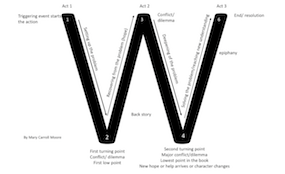
The W-plot structure (made accessible by Mary Carroll Moore on Youtube) provides a great overview of story flow. This is a simple representation of the three act play, though it can have more than three acts of course.

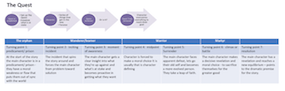
The quest or idea story is a classic for adventure/crime/mystery/speculative fiction stories (think Harry Potter, The Hunger Games, Don Quixote). A question is raised or a problem needs to be solved early on and the novel sets out to find the answer. The mystery novel I am currently working uses a variation on the quest structure and involves seven turning Screenshot 2018-07-11 15.12.49points that each align with an archetype.
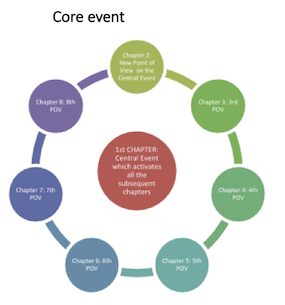
An idea for another novel bubbling away in the back of my mind will most likely use a blend of the core event structure and the place structure. For core event think The Lord of the Rings or The Slap by Christos Tsiolkas were a pivotal dramatic incident (the slap) unleashes a turbulent sequence of events that propel the story forward.

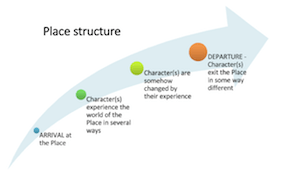
In the place (or milieu) structure (think The Firm, The Wonderful Wizard of Oz or Lord of the Flies) the arrival at a place and the impact it has on its characters is what drives the story. Writers who love world building (eg. science fiction and fantasy) often use this structure. The plot follows a character who explores the world created and is transformed by it. The story starts when the character enters the world and ends Screenshot 2018-07-11 15.12.58when they leave.


Whether you think of yourself as a plotter or a pantser, a solid understanding of structure is a must. Holding the framework on which you want to build your story in your mind will help you drive your adventure where it needs to go.

What type of writer are you? Which story structures have you used?  What about literary fiction?

Main image: Pylons on a full mooon

Inset images: representation of story structures

vanilla bean growing up wall

Jack and the bean stalk

My partner and I went on a trip to Vanuatu several years ago and had an amazing visit to Epi. Epi is a volcanic island, 444 square kilometres in size, and with a population of about 5,000. We travelled to Epi on an eight-seater plane which landed at Valesdir airport. The airport comprised a grass runway, a small shed and a friendly welcome. Island access was weather dependent and driving on the dirt road from one end of the island to the other required a four-wheel drive due to the many potholes along the way.

We stayed at a guesthouse on the south west coast. At the time the owners were away and we were left in the hands of Carol and her young son Rob who worked at the guesthouse and lived in a nearby village. I felt very fortunate to have this experience as we had the place to ourselves and Carol and Rob were very gracious hosts.

Electricity was only available to those who could afford solar and subsistence agriculture was the how most of the locals made a living. Copra was one of the main crops produced and required significant labour. Coconuts were broken open, the water drained out and the kernel dried in a kiln heated with wood. The kernels were sold to manufacturers who crush them to extract oil which we use in baking and cooking. It’s a tough life which I am reminded of every time I pick up a pot of coconut oil.

Carol took us on a tour of her village and showed us their agricultural production. They grew cocoa trees and planned to expand into selling vanilla beans. I was fascinated by the vanilla orchid. It’s an elegant plant with long succulent lance-shaped leaves that zigzag up the tropical trees and bear creamy blooms. It looked quite magical and when I followed its upward trajectory I had an urge to climb it to satisfy my curiosity about what was at the top. I wonder if I would have felt this way had I not read Jack and the Beanstalk.

Jack and the Beanstalk is in part a study on class and wealth disparity (something I was very cognisant of whilst travelling in Vanuatu).  It’s also a Trickster story with Marxist overtones. The very poor, but charming, wily and mischievous Jack comes into conflict with the bigger and more powerful ogre. Jack wins against his more powerful adversary by tricking the giant with his craftiness. The wealthy and gluttonous giant represents both what Jack finds monstrous and what he envies. Jack is both the oppressor and the oppressed. He is absolved of all wrong doing (stealing and killing the giant) due to his actions being about reclaiming his birthright and his right to social mobility. I hope Carol has had some success with breaking into the vanilla bean market and managed to outsmart all those greedy businessmen she would have to deal with.

I was so enamoured by the vanilla bean that I decided to try and grow this tropical plant in Melbourne. I anticipated that this venture would fail but was determined to give it a go. I’ve located it in the warmest and lightest room in the house and it’s made its way up to the ceiling already. I have yet to see whether I can entice it to flower and fruit, but this week’s recipe is what I imagine I will make if I do, using my beans and rhubarb from the garden.

Rhubarb Panna cotta Tart (by Hummingbird High)

Ingredients
Brown Butter Tart Shell (makes a 14 x 5-inch rectangular tart)

  • 6 tablespoons unsalted butter, cut into 1-inch cubes
  • 3 tablespoons water
  • 1 tablespoon granulated sugar
  • 1 tablespoon vegetable oil
  • a pinch of salt
  • 5.5 ounces all-purpose flour

Vanilla Bean Panna Cotta (makes enough for one tart)

  • 2 cups heavy cream
  • 1 vanilla bean
  • 1/4 cup granulated sugar
  • 2 1/2 teaspoons (1 envelope) powdered gelatine
  • 3 tablespoons cold water

Roasted Vanilla Rhubarb Topping (makes around 2 cups, enough for one tart)

  • 1 pound rhubarb, trimmed and sliced into 1-inch thick pieces
  • 1/2 cup granulated sugar
  • 1/4 cup red wine
  • 1 vanilla bean

Use a 14 x 5-inch rectangular tart pan with a removable bottom

Method

Brown Butter Tart Crust:

  • preheat to 410 (F)
  • combine 6 tablespoons unsalted butter, 3 tablespoons water, 1 tablespoon granulated sugar, 1 tablespoon vegetable oil, and a pinch of salt in a Pyrex oven soft bowl
  • place the bowl in the preheated oven for 15 minutes, until the mixture is boiling and the butter starts browning.
  • remove from the oven, and add 5.5 ounces of flour quickly, by spooning in flour in 1 tablespoon sized chunks. Use a heatproof rubber spatula to stir in the flour until it pulls off the sides of the bowl. The mixture will bubble and smoke and make you feel like witch with a cauldron
  • Once the dough is cool enough to touch, use the back of your hand to flatten out the dough onto your tart pan. Use your finger tips to mould the dough up into the corners and sides of the pan. Use a fork to poke several holes into the crust.
  • Place the tart pan on a baking sheet and bake at 410 (F) for 15 minutes, or until the crust is light brown and starts to appear flaky. Once it does, remove from oven and let it rest on a wire rack. The crust is ready for filling when completely cooled.

For the Vanilla Bean Panna Cotta:

  • Combine 2 cups heavy cream and 1 vanilla bean in a heavy bottomed saucepan. Split the vanilla bean lengthwise and scrape the seeds into the cream. Whisk it gently until the seeds are incorporated throughout the cream. Throw in the vanilla bean pod and cook the mixture over medium heat until it begins to just simmer and the cream smells fragrant. Remove from heat and cover, allow the vanilla bean to infuse the cream for 30 minutes.
  • After 30 minutes, fish out the vanilla bean pod. Add 1/4 cup granulated sugar and reheat over medium heat. Don’t let it come to a boil; you want it to heat only until the sugar has dissolved and the mixture is hot (but not boiling) throughout. Remove from heat and allow to cool slightly.
  • While the mixture is cooling, bloom the gelatine. Sprinkle 2 1/2 teaspoons powdered gelatine over the surface of 3 tablespoons water in a small bowl. Let stand for around 5 minutes, until the granules have softened completely, before scraping out into the cream mixture and whisking until the gelatine is completely dissolved. Let cool slightly for another 10 minutes, before pouring into the brown butter tart crust. Transfer to the refrigerator and allow to set for at least 2 hours, until the panna cotta is firm.

For the Roasted Vanilla Rhubarb Topping:

  • Preheat the oven to 350 (F) — if you’re making the filling immediately after baking the shortcakes, your oven should already be ready.
  • Place 1 pound chopped rhubarb in a 9 x 13 inch baking pan. In a small bowl, whisk together 1/2 cup granulated sugar and 1/4 cup red wine — don’t worry if it doesn’t dissolve, it should just be a thick syrup. Drizzle over the rhubarb and toss to combine.
  • Split 1 vanilla bean lengthwise and scrape in seeds from the vanilla bean over the rhubarb mixture. Toss to combine and add the vanilla bean pods. Roast until rhubarb is very tender and the juices are syrupy, around 30 – 40 minutes. Let cool slightly on a wire rack before transferring to the panna cotta tart. Serve immediately.

Image: indoor vanilla bean


Dainty Swallowtail Butterfly on grapefruit leaves

The chrysalis

As the southern hemisphere tilted further and further away from the sun I was beginning to wonder whether the celestial machinery might break down entirely and the sun disappear over the horizon, never to return.    The winter solstice is a reason to rejoice as it marks the journey toward the emergence of spring, but it’s cold enough to freeze the (insert your preferred body part) off a brass monkey at the moment.

The words ‘emerge’ and ‘spring’ make me think of a butterfly as it emerges from its chrysalis and bursts into the air to entertain the spring flowers.  Last week I experienced a different kind of emergence when I went along to the Emerging Writers Festival National Writers Conference.  What is an ‘emerging writer’ you ask?  I love the image of a soft moist writer breaking out of a chrysalis, pen in hand, ready to flutter about enlightening the world with their words. But it’s a bit more complicated and contentious than that.

Humans love a hierarchy of power and it turns out the industry for introverts is no different.  The world of writing has its own meritocracy designed around the utopia of publication.   We are categorized as early, emerging or established depending on how much, and how, we have published.  Early writers have not published, emerging have published in journals or anthologies and established writers have published a full manuscript.  The last category excludes self-publishing.  Publishing and self-publishing is a whole other hierarchical discussion.  These writer categories relate to peer recognition and the politics of power tied to that.  They completely overlook the effort an individual may have put in to produce their work and discount that there are some excellent self-published books on the market.

The writer status must apply to the development of ones ‘craft’ in the public domain rather than a lucrative career given that most published authors still need a day job to sustain them. The terms also serve a purpose in the funding arena to determine who can and cannot apply for grants.  For example, the Richell Prize is for early and emerging writers (publication in anthologies and journals or self-publishing do not exclude you from entry).

I recall when one of my earliest poems (judged blind) had been selected for publication.   The organization sponsoring the prize contacted me and said, “I don’t know why they selected that one,” as if being unknown should have excluded me from the privilege of selection.  It does highlight the importance of not taking yourself or what other says about you too seriously, something I waxed lyrical about in an earlier post about writing resilience.   As the saying goes what other people think of you is none of your business.

Anyway, I digress.  The National Writers Conference was an opportunity to hear a range of established authors reflect on their emergent journeys.  One common theme was that the angst of recognition is almost immediately replaced by a different kind of angst once established.  Many of the established writers who spoke wished for the lack of expectation that existed before they were published.  They suffered from fear of the blank page.  Will I be able to do it again? Perhaps writers and artists in general are an inherently anxious bunch due to the mysterious and sometimes illusive muse, aka imagination.

The festival was a great opportunity to hear writers and publishers reflect on their craft and the industry. The thing I love most about music and writing festivals is coming across an artist you find inspiring but have never heard or read before.  I was particularly taken by Melissa Lucashenko’s reflections to inspire writers.  She also shared her eloquent insights on writing and colonization and how we, as Australian writers, think about land, place, people and out history when writing.   I’ll be adding her novel Mullumbimby to my reading list and she has another one, Too Much Lip, coming out in September.  Rajith Savanadasa, author of Ruins, a novel about a family living in Colombo and grappling with the changes brought about by the Sri Lankan civil war, gave a poetic lecture about nourishing yourself and your creative practice. I will also add his book to my reading list.

What are you reading now?


Image: Dainty Swallowtail Butterfly checking out the grapefruit

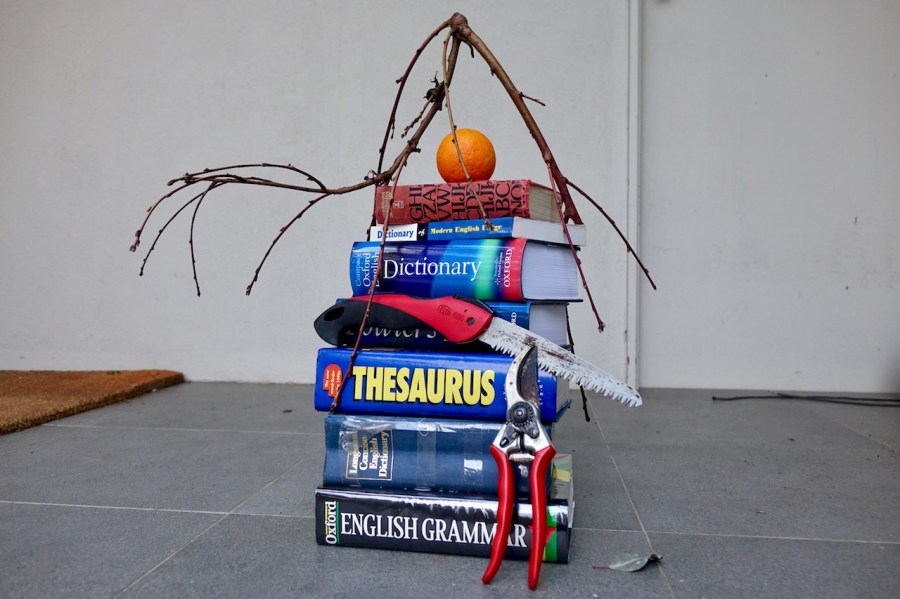
pile of dictionaries, pruning implements and an orange

The big prune

From the age of about eighteen through to twenty-two I lived in households sans television. The result was that I read voraciously. At one point I set out to read a dictionary cover to cover. It was the Longman Concise English Dictionary and I read all 1,651 pages. I still have it on my bookshelf held together with sticky tape.

There’s some great word games you can play with reference books like guessing the correct meaning of obscure words or who can come up with the most synonyms. The synonym, now there’s a beautiful thing. Found in a thesaurus – the treasure chest of words. A guy called Peter Roget, an avid collector of synonyms, developed the first thesaurus in the 1840’s and it’s my favourite reference book. A must have for editing. I’ve been doing some short story and chapter editing recently and the thesaurus has been getting some exercise.

I was thinking about editing whilst I was out pruning the fruit trees the other day, as you do. It turns out that editing and pruning have a lot in common. According to the online power thesaurus, edit and prune have twelve synonyms in common, and are synonyms for each other.

The thought processes for pruning and editing have a lot in common also. Is this the right place to cut? Will it improve the structure? How much should I cut? I also discovered that both pruning and editing are much harder with a puppy in tow. I’m thinking of changing Harpers name to Distractor, though Destructor might be more apt given the hole recently chewed in the sofa whilst watching Paris Texas. Maybe she just thought she was pruning.

Citrus and rhubarb are the garden produce of the moment in the food store until spring arrives. This roast rhubarb recipe is simple and delicious served on yoghurt for dessert or for breakfast.

Ingredients:

  • rhubarb
  • orange zest
  • orange juice
  • honey

Method:
Cut the rhubarb into finger length pieces. Remove the zest from the orange and juice the orange. Mix zest and orange juice with honey to taste (I usually use a ratio of one orange and its zest to one desert spoon of honey). Combine and mix all ingredients in an oven proof dish. Arrange rhubarb into a single layer, cover with tin foil and bake for about 30 minutes at 180 degrees Celsius. Serve hot or cold.


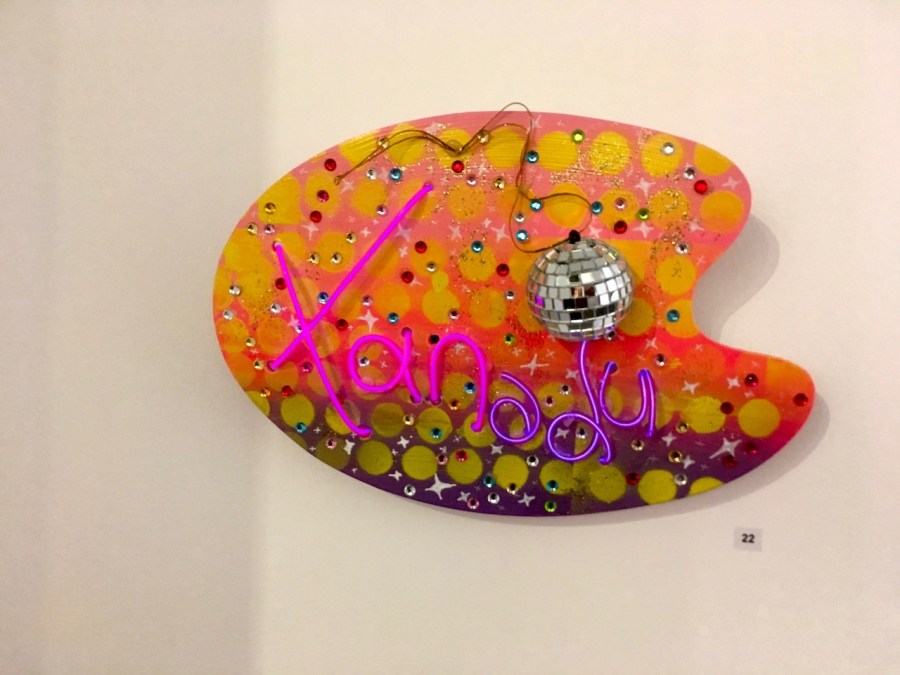
Xanadu - Sue Beyer, The Exquisite Palette exhibition at Tacit Galleries, Collingwood

Creative seeds

The ancient Greeks believed creativity to be something that resulted when a person was bereft of their senses. Goddesses controlled the creation of art and literature and spoke P'ulur'ette - Jen Drysdale, Tacit Galleries to the artist as their muse. In reality sometimes the subject itself acts as the muse and when you give a group of creatives the same task you will get very different outcomes – as many as the number of artists involved.

I attended the opening of an art exhibition at Tacit Galleries in Collingwood recently because a friend had a piece in the show. I had not read the blub about it before I arrived at The Exquisite Palette and the demonstration of creativity and divergent thinking in the exhibition blew me away.

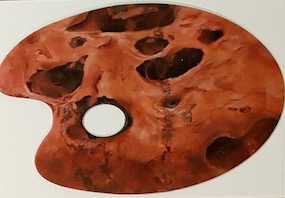
Paper Boat.  Susan BarbicHundreds of artists took a simple blank plywood artists palette to use to create an artwork. The palette’s became a playground for the imagination of the participants, and were indeed exquisite. No two palettes were alike but all shone with the passion and inspiration of the artists. One palette was untouched except for a pencil sketch of a cats head stuck to it with masking tape. It was as if the artist had mocked the process itself. Some were painted with scenes that inspired the creators and incorporated the palette hole into the design. Others were completely deconstructed and no longer recognizable from their original form. Palettes ranged from playful, through elegant, novel and disturbing and used a range of materials from paint to pewter to blood, glass, shells and feathers.
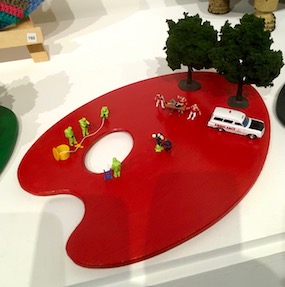
When you speak to creatives their processes are as varied as the number of IMG_0573artists themselves across all art forms. Regardless of whether the creative output is painting, sculpture, writing or design within industry the process begins with a seeding incident, something that inspires curiosity and exploration.
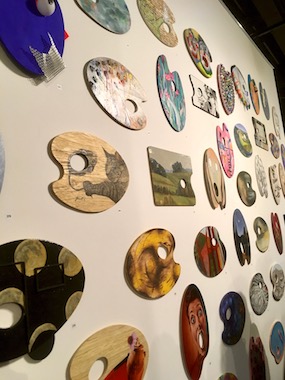
I know that when I write, the starting point is usually either a strong feeling, an image that sticks in my mind or a snippet of a conversation that sparks my imagination. I rarely know where the idea will go, or indeed how I will get there but the seed of inspiration is what drives productivity in creation.

The initial inspiration for the book I have been working on (for what seems like forever now) came from a mashing together of an incident I saw cycling home one day and a IMG_0565 (1)conversation with a work colleague. I let the story take me in the first draft and expect that the end product (if I ever get there) will only contain a shadow of the original spark as development of ideas themselves change and evolve as they progress. Someone else who had the exact same two experiences might have written a romance or science fiction novel.   I was drawn to crime fiction.
The rewrite of the opening of my story which I mentioned in an earlier blog was partly inspired by a throw away comment a friend made over lunch.  I manipulated it into a new context to develop a new character and a different path into the story.  Like a blank palette, a comment or a visual stimulus can bend into new forms and ideas to inspire us in new ways and create fresh works of art.

How does your process begin?

Images in order:

Sue Beyer – Xanadu;

Jen Drysdale – P’ulur’ette;

Susan Barbic – Paper Boat;

Lino Savery – Unfortunate Death (from set of three);

Various artists – wall of palettes at Tacit Galleries.

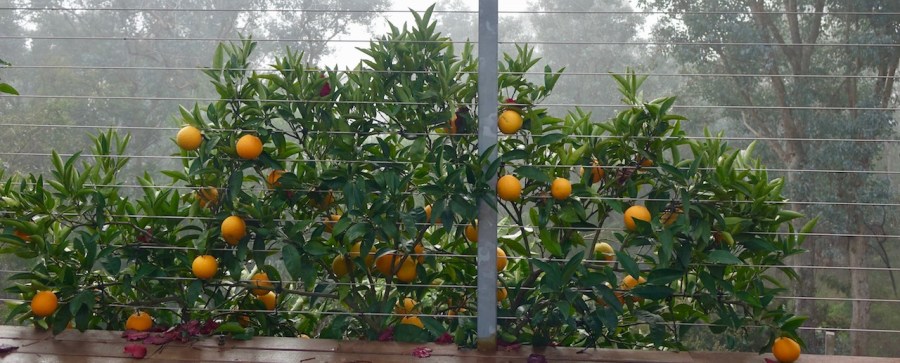
Espaliered oranges

Sailing Stones

Death Valley is located at the lowest altitude in the USA and is known for its extreme heat and cold. There’s a phenomena in Death Valley where black dolomite rocks as heavy as 140 kilos mysteriously hydroplane across the desert lake bed leaving trails in their wake. The occurrences confounded scientists since the 1940’s. Some believed that electromagnetic fields generated by UFO’s were responsible. There are even records of the happenings in Native American rock art depicting something unexplained up in the sky.

Modern technology enabled a couple of determined geologist to solve the mystery in 2014. The geologists set up a weather station and recorded the moving stones on camera after attaching GPS trackers to them. It took two years, a lot of patience, and perfect DSC05553winter conditions before they witnessed the rocks move. A day after rain the pond was covered with a thin layer of sheet ice.  The ice formed around the rocks lifting them clear of the lake bed. When the ice started to thaw and break up during the day some of it clung to the rocks forming a floating seat and the wind was enough to move them across the surface.
Winter carries with it a sense of slowing and contracting. There’s a temptation to curl up on the coach with a cuppa and a book. Mornings are crisp and cold and I often wake up in the clouds. Plant growth slows and aside from a little weeding not much happens in the patch. There are of course those ‘other jobs’. The ones I’ve been avoiding as they are as boring as waiting for stones to levitate across the ground. In fact one of them does require moving stones. Hundreds of them.

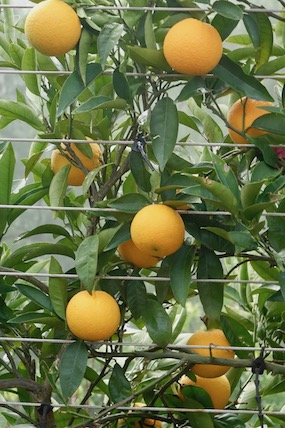
I have espaliered citrus trees in front of the house that enable me to step out onto the deck DSC05548in winter and pluck oranges and tangelos for breakfast. The trees are mulched using stone mulch as we live in a high fire risk area and I didn’t want to put flammable material right next to the house. It does make maintenance labor intensive however. I’ve been contemplating for over a year the task of taking up all the stones to give the trees a really good feed and compost to boost production. The rock wall surrounding the citrus also needed some repairs where it had subsided.   I finally attended to the tedious task this week. It’s quite meditative but it did make me wish for UFO’s or ice sheets to lend some assistance. Just imagine getting up one morning to find all those stones moved to one side without any effort from me.
Speaking of tedious we are still working our way through all those pumpkins, not to mention the kale. I did grow our first edible pomegranates this year which add a bit of zing and variety to a dish…

Kale and roast pumpkin salad with pomegranate molasses and almonds

Ingredients:

  • Pumpkin peeled, seeded and cut into small wedges
  • Bunch of kale
  • Handful of chopped almonds
  • 2 spring onions
  • 1/2 lemon juiced
  • 2 tbsp olive oil
  • 2 tbsp pomegranate molasses
  • 1 small pomegranate – seeds removed. The easiest way to do this is slice off the crown and expose the white membrane. Score around the pomegranate from top to bottom making four quarters. The score should reach the white membrane without cutting the fruit open. Soak the pomegranate in a bowls of cold water for a few minutes then gently pull it apart and remove the seeds which will sink to the bottom of the water.

Method:

  • Heat oven to 180C (fan forced)
  • Toss the pumpkin pieces with 1 tbsp oil and 1 tbsp pomegranate molasses to season then tip onto baking tray and roast for 25 minutes until the pumpkin is tender.
  • Blanch the kale in boiling water for a few minutes then run under cold water to stop it cooking. Drain and dry in a salad spinner or with kitchen paper.
  • Toast the almonds in a dry fry pan.
  • Whisk 1 tbsp oil and 1 tbsp pomegranate molasses with lemon juice and season with salt and pepper. Mix the kale with the dressing and stir in the spring onions.
  • To serve, tip the dressed kale onto plates, place the roast pumpkin on the kale and sprinkle with almonds and pomegranate seeds.

Image: espaliered oranges

staghound cross puppy with autumn leaves

Animal Farm

Animal characters have had central roles in well known fictional stories. A personal favorite was the 1877 novel Black Beauty by Anna Sewell about the life, Harper 1tribulations and adventures of a sleek black horse. Black Beauty highlighted the issue of animal welfare and the importance of treating others with kindness, respect and sympathy. Important lessons for any child. Roald Dahl bought garden bugs to life in his 1961 novel James and the Giant Peach that explored the themes of friendship, death, hope, fear, abandonment, rebellion and transformation. I remember being fascinated by the giant caterpillar who had to tie the shoe laces on his many pairs of boots every morning. The book is still on my shelves and I pull it out and re-read it every now and then.

Stories with animals are not only for kids either. The epic 1851 classic Moby Dick by Herman Melville explores the 19th Century whaling industry in all its brutal glory and has the giant sperm whale as a central character representing nature’s wildness.  At times Melville takes on the non-human perspective imagining how appalling the whaling fleet must appear to a surrounded wounded whale.

There’s also George Orwell’s 1945 classic Animal Farm about the lead up to the 1971 Russian Revolution and the Stalinist era of the Soviet Union. The themes of corruption, class and abuse of power play out using the Harper 5allegory of the Manor Farm ruled by pigs. As power goes to their heads the pigs start to run the place on the premise that “All animals are equal but some animals are more equal than others.” They become so much like the humans they overthrew that eventually they transform into humans themselves.

Like any character, an animal in a story needs a reason to be there, and a reason why the writer chose an animal rather than a human character. It needs to have a place in the plot of the story whether it’s idealistic, political, satirical, comedic, allegorical or fun. Will the animal character appear clearly as an animal or take on human characteristics; will it be a pet or wild; what is the message it will convey?

My own ability to write fell in a hole recently. It was not due to a lack of motivation, enthusiasm or ideas. There was no writer’s block and I did not fall ill. In fact it would be Harper 3fair to stay things were going swimmingly. I had established a great routine of writing early, doing some exercise then either writing again, reading or heading out into the garden depending on the weather.  Then along came Harper.

I was missing my old dogs company and started thinking about getting another one so I signed up to a rescue site called Petrescue. It’s like a dating site connecting up animal rescue organizations with people wanting to adopt a pet. Pictures of cute furry animals can be distracting and the real thing is a whole other level of disturbance.

Harper came from somewhere around Wagga Wagga via Seymour. The advertisement on Petrescue had very little information. Sweet little female mixed breed dog. Sleepy, playful and cute.   Several emails and a phone call to the foster home led to filling out the adoption papers and agreeing to meet.

Harper 6Many country dogs get adopted in Melbourne, and Seymour is a liaison point apparently. The industry is quite mysterious and I think there could be a great fiction story written about the rescue, movement and adoption of animals.

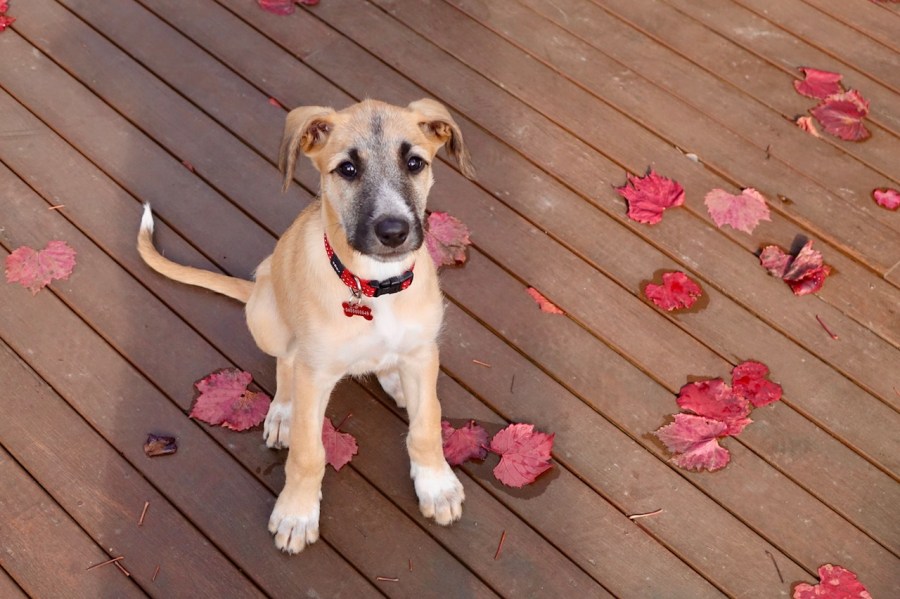
We drove to the rendezvous point in Kings Park and met a lady there with a car full of rescue dogs. I didn’t want another dog like Jarrah (my old kelpie), as it would have felt like I was being unfaithful to my old friend. The puppy was a leggy, sandy colored thing with a slightly worried look. An Australian Staghound crossed with something of unknown origin – probably some kind of cattle dog like a kelpie.

We weren’t sure about whether to take her or not. Then this guy from Pakenham turned up to look at Harpers brother. He picked up the puppy without hesitation, threw it over his shoulder and started filling out the necessary paperwork. He said he had a Harper 7Staghound-kelpie cross at home. “Best dog he’d ever had,” he said, “affectionate, trainable and not as energetic as a kelpie. Likes to lie around on the couch and watch TV.” Sounded like an ideal writing companion.

It does of course take some time to get from puppy to writing companion and after puppy Saturday all writing stopped and novel reading was replaced by books and blogs and videos on puppy wrangling and several days of utter chaos as we got to know Harper and visa-versa. Within three days she had gotten the hang of going outside to the toilet and would come, sit and drop as long as there weren’t too many other distractions. We had also introduced her to ceiling fans, hair dryers, vacuum cleaners, steel and wooden stairs, the shower, collars, coats, leads, a frisbee, tennis balls, new Harper 2people who dropped by and Bunning’s. Believe it or not Bunning’s has a very detailed dog positive policy and we were able to take Harper around the store introducing her to the weird and wonderful world of the great Aussie tradition of a trip to the hardware store.

We had our first day at puppy school to start our long learning adventure together. Each day consists of a cycle of eat, sleep, play, starting at about 6am. I’m particularly fond of the sleeping part and I am hopeful we will settle into a new routine soon so I can get back to some writing. My book does have two dogs in it so I look forward to Harper becoming an inspiration rather than a distraction.

What’s your favorite fictional animal character?

Image: Harper and autumn leaves