Book Review: The Lost Man by Jane Harper

One of three brothers is found dead from exposure under the scorching sun of outback Queensland. There’s a hole dug by hand in the red earth next to his body which is found by the isolated grave of a dead stockman whose own demise many years before is the subject of myths and legends.  The circumstances of his death are odd. The dead guy is an experienced stockman and knew how easy was to perish in the open. His fully stocked vehicle is found in perfect working order ten kilometers away with the keys resting on the driver seat . The question is whether he committed suicide or was killed.The Lost Man Jane Harper

The remaining family gather at the station house of the dead man in the lead up to his funeral and Christmas.  Their shared history and personal secrets come nipping at their heels like a hungry dingo.

A sense of lawlessness lingers through the story and the intensity is amplified by the relentless isolation and heat of the outback that sizzles throughout the setting of the novel. It makes a perfect backdrop for exploring the psychology of intergenerational trauma and violence that The Lost Man puts under the microscope. Harper shows what can happen when access to services, friends and neighbours are limited and problems are dealt with in private.

The book is a disturbing page turner and Harper has once again bought ordinary characters to life by exposing the complex layers of their personalities. Family members face the ugliness of their own shortcomings and expose the underlying noxious histories between them that led to one of their own lying dead alone next to a deserted grave.

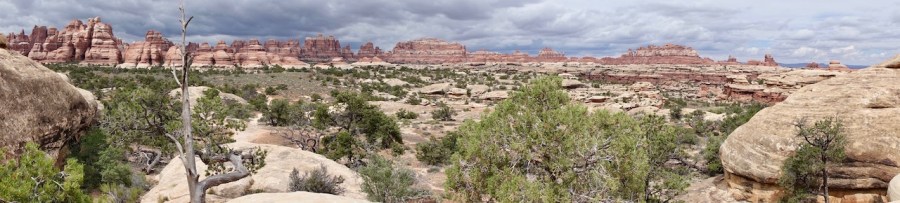
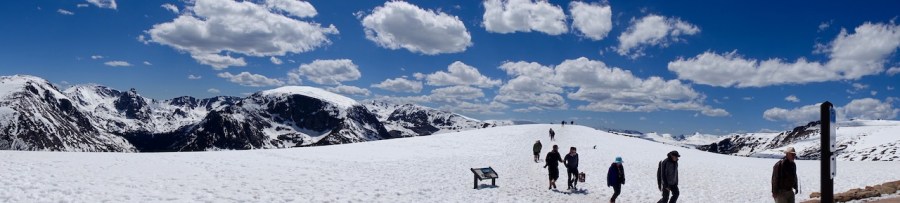
Main image: Canyonlands National Park, Utah

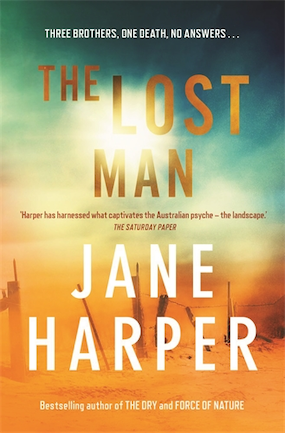
Inset image: The Lost Man cover (from the web)

The nostalgia of mysteries: horses and politics

This week I’ve been thinking about the mystery novels I read and loved years ago.  I hoovered up Dick Francis books as a teenager because I was obsessed with horses. I suspect that was also when my fascination for mysteries was born. As a consequence Francis holds a nostalgic place in my reading memory despite eventually coming to believe that horse racing should be banned. His novels were fast-paced easy reads full of muddy race tracks, crooked bookies, cheating jockeys and brutal owners.IMG_1172

Francis had himself been a jockey and horse trainer and all his novels revolved around the English race tracks. He wrote most, if not all, in collaboration with his wife, a former school teacher and expert researcher. Some people viewed him as the horse worlds Agatha Christie, but Francis was way more brutal than Agatha ever was in the way he physically and mentally tortured his protagonists.

One of my first jobs out of high school in the mid-eighties was as a track rider for a race horse trainer. The job reminded me of Francis’s tough masculine characters every day I went to work. I have one vivid memory of giving a young jockey a lift home and staring in horror when he leaned out of the car window, whip in hand, and cut a female cyclist across buttocks as we passed. When I threatened to turf him out of the car he just laughed. It could have been a scene from one of Francis’s novels.

When Dick Francis said he always tried to think of a dirty deed, and build a plot around it he captured the heart of the mystery.  They open with some kind of disruption to the social order that creates a puzzle our hero must solve. Along the way they uncover secrets, are diverted by red herrings, meet unexpected surprises and have their physical and psychological limits tested. They always prevail and set the world to rights again IMG_1135 (1)enabling the reader to experience the tension vicariously and discover the hero within.
By the late nineties I had started to move on from horse riding as a profession and got what my parents called ‘a real job’ in a more politically leaning pursuit.

One of Dick Francis’s last novels, 10lb Penalty (1997), blended racing and politics and was the last of his books I read. Some time after that I discovered Shane Maloney who introduced me to the use of mysteries as a form of literary protest. Who wouldn’t be excited to find politicised crime fiction novels set in their own town?

Maloney set his novels in 1990’s Melbourne and bought our political and social fabric to life on the page. His public servant protagonist Murray Whelan shone a light on the absurdity of the political landscape that emerged in the Jeff Kennett era. He satirised Australian politics well before The Hollowmen and Utopia came to our screens. Though the latter have demonstrated that the world of politics continues to be ludicrous in a very frightening way.

Maloney’s books edge into the world of the subgenre ‘apparatchik lit’, some say he invented it.  The term lends itself from the word used for bureaucrats in the Russian Communist Party and explores the intimate workings of politics, the machinery of government and lobby groups and how they impact the social fabric of the society they are set in. I love the way Maloney used suspicion, humour and play as a cover for more sinister events in his novels.

While some of the stories that emerge in this type of fiction (or tv series) appear beyond absurd, you’d be surprised how close to real life they can be. A friend who works in a government department once told me that the day after one episode of Utopia their Minister called the office demanding to know who had leaked information about an IMG_1162-1issue that had appeared on the program…
It’s fair to say that the arrogance of our politicians, their moral hypocrisy and power games continue to be ripe for the picking. You only have to turn to our own national political landscape for endless examples at the moment.

The novel I am currently working on is placed in Melbourne but draws on material from recent (mostly) national politics in an attempt to shine a light on some contemporary political absurdities.

If you have any suggestions for more Shane Maloney type novels, particularly if set in Australia – let me know.


Main image: Horses at Warnambool

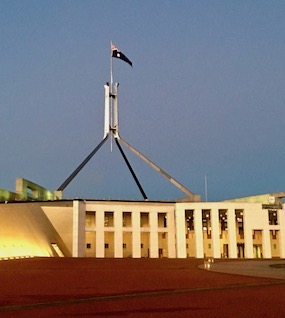
Inset images in order: Horses at Warnambool; Parliament Drive, Canberra; Parliament House, Canberra.

Writing about ‘the other’

How we come to identify and know characters for novels varies greatly. Some writers lend from their own personalities and experiences; friends and acquaintances can inspire IMG_4523them; or random strangers we meet (or have never met) might be bought to life between our pages. In fantasy characters are sometimes concocted from mixed up blends of real creatures or from visions from in sleeping life.
In the mystery novel I am writing, one of the characters was inspired by a real colleague at my workplace. I did actually ask him if he minded me lending parts of him for this purpose and gave him the first few chapters to read. Luckily he was happy enough to even agree to let me use his real first name for the character.
Another of the characters in my novel has a job that is somewhat outside of the realms of my own experience, and not the kind of job that is easy to get an intimate insight into from Google. I could have written the profession as I imagine it might be, but was concerned that I would end up with a character who was a little two dimensional, or worse miss the essence of the characters work life all together.

Lamen Bay - Lamen Island, EpiIt mattered to me that I try to present this profession in a light that someone working in it would want it to be. So, I tracked down a workplace that employs people in the profession and sent an email to ask if any of the staff would be prepared to chat to me about the industry and what they do. I was lucky to get some interest and caught up with a woman who was happy to share her experiences and insights with me. It also gave me a chance to ask about what stereotypes they thought I should avoid and what they would like to see reflected in a character working in the profession. I undertook that I would send my manuscript for them to critique when I am done.
These experiences have made me ponder the debate about ‘write what you know’ which had been running hot in recent times. What does it mean exactly? And where are the limits? After all, if we took the advice literally surely there would be no fantasy novels with dragons right? The advice risks paralysing us into white-washing our words and delivering an oversupply of boring books about people just like us doing everyday things like we do. In my case it would involve a lot of dog walking and gardening.

When we interrogate what is actually meant by ‘write what you know’ perhaps it is more about emotions, desires and feelings and our ability to be sensitive to, and empathise IMG_4283with, the plight of ‘the other’ than it is about events and things. I would add that it obliges us to learn about our subjects and make every attempt to represent ‘the other’ authentically and where possible give the people you are representing an opportunity to critique your version of them before your manuscript sees the light of the publishing world.
We are after all writing fiction, which is about exploring the world in all its technicolor, not simply editorialising our own lives.


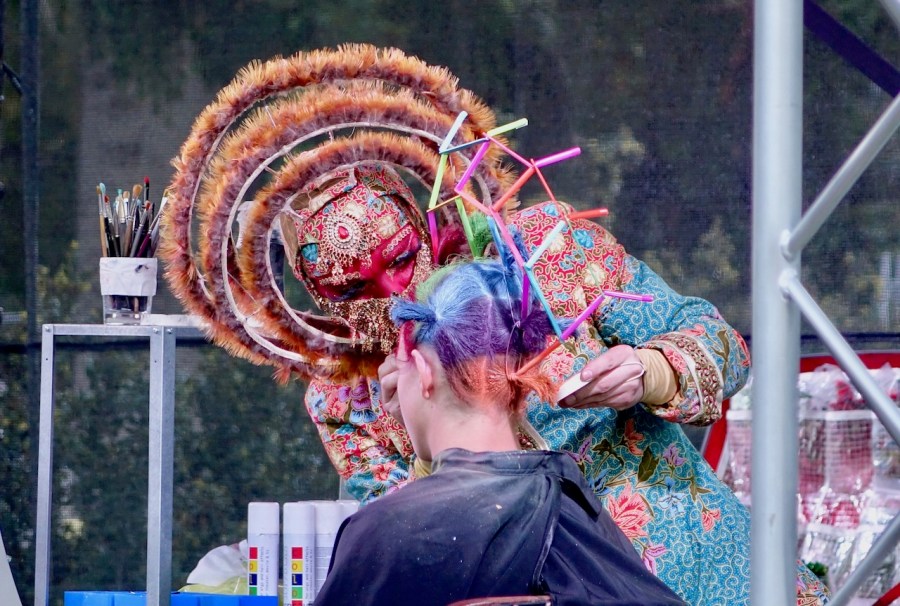
Main image: Hairdresser at WOMAD

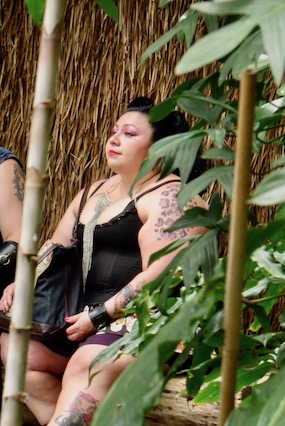
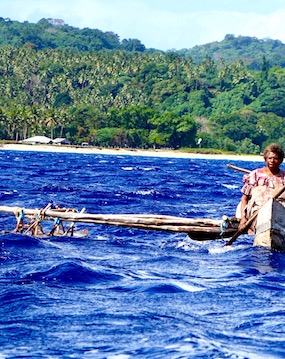
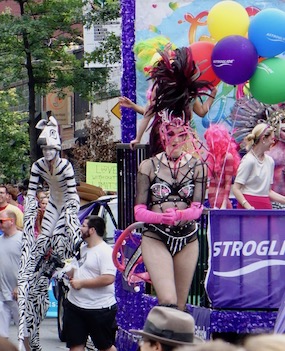
Inset images in order: Resting woman, New York City; Paddling woman, Vanuatu; Pride March, New York City

Is writing fiction a political act?

“…our stories influence what we see and what we believe is possible or impossible in the world.” – Ethan Miller

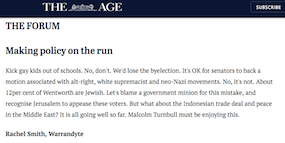
My post last week was a response to events in Australian politics that I found exasperating. The political circus continued to get my goat so much I wrote a letter to The Age. unspecifiedMy week of political writing got me thinking about the role of fiction in relation to politics.

When we consider politics and writing we generally think of journalists. If a journalist fabricates content it is a betrayal of public trust, but making stuff up is the very purpose of creative fiction so does it have a role in politics? Is there such a thing as fiction that is not political? Is writing fiction a political act?

Many say they are not political (or not interested in politics), but the sociopolitical environment in which we reside shapes our entire lives. Politics determines the haves and have-nots.  It tells us who’s experience is legitimate. For example governments determine whether IMG_4092medical facilities exist to ensure we survive childbirth, dictates if we get the opportunity to learn to write at all, the price of milk, who we can and cannot love, and the type of death we can have. Our very existence is enmeshed in, and shaped by the political environment(s) we live in and are exposed to.
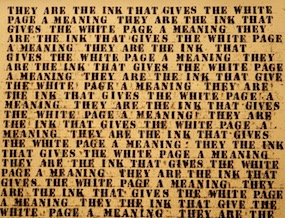
Work of the creative imagination, be it fiction, poetry, art or drama, is shaped by our own experience and our views of the world – in other words our own sociopolitical lens. The world shapes us, and then as writers we try to shape the world. We question or bend reality, invent new worlds and invite readers to consider a new perspective. To understand the other. We pick out themes and create personalities that we sew together into a plot to show, magnify or transform how a particular set of circumstances can impact on the world now, or in the future.

What reader would not be able to name a book that had a significant influence on their lives? Writers, story tellers and poets have been holding a mirror up to reality for centuries. They often say what would otherwise be considered unsay-able in public.

The threat writers pose is evident when we study the history of censured, banned or IMG_4359burned books. Examples of fiction works that have been subject to some kind of censorship or ban at one time or another include Dr Seuss, Winnie the Pooh, Lady Chatterley’s Lover, Catch-22, The Da Vinci Code, Doctor Zhivago, Nineteen Eighty-Four, The Satanic Verses, Sophie’s Choice, The Well of Loneliness and Ulysses. The more restrictive a political regime, the more likely it is to see text as a threat. Over 25,000 books were burnt in Munich four months into Hitler’s regime for being ‘unGerman’.

A lesser known but poignant example of how literature can threaten and intersect with politics was a book called New Portuguese Letters (Novas Cartas Portuguesas) by Muria Isabel Barreno, Muria Teresa Horta and Maria Vento da Costa. The book, published in 1972, was a post-modern collage of fiction, personal letters, poetry, and erotica inspired by the original letters of a Portuguese nun, Mariana Alcoforado to her lover, the Chevalier de Chailly, at the time of Portugal’s struggle for independence against Spain. When New Portuguese Letters was written the Portuguese had been living under a dictatorship for almost fifty years and the book exposed the tyrannical relations that existed between the sexes.

The authorities banned New Portuguese Letters soon after its release – though not before a copy was smuggled to French feminists in Paris who arranged for its translation. The three Marias were arrested and allegedly tortured by the regimes secret police. They were charged with ‘abuse of the freedom of the press’ and ‘outrage to public decency’ by a censorship committee. The three women were criticized because they wrote like men. They were sexually explicit, frank about their desires, fantasies, sexuality and bodies.  They critiqued patriarchal structures, family violence and political repression.

The trial dragged on for two years, made worldwide headlines and gave rise to protests IMG_1892outside Portuguese embassies in Europe, the United States and Brazil. On 25 April 1974 a bloodless coup overthrew the regime. It was called the Carnation Revolution because red carnations were put in the ends of soldiers’ gun barrels. Soon after the coup the case against the three Marias was dismissed, the women freed and the book became a literary symbol of women’s liberation, erotic art, and the Portuguese revolution.
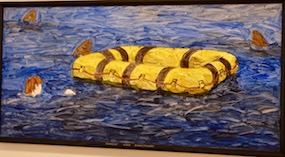
At its essence politics is about power and the rules we impose on society as a way of maintaining order. Do all authors strive to effect change in the world through their writing? If we don’t, why do we hope to be published and read?

What about genre fiction? Is romance gender politics at work? The genre is often dismissed as unworthy. Is that not itself political? Is to disregard romance a dismissal of women (the main consumers of romance), their views on relationships and their sexuality?

Is mystery fiction social justice at work? It often explores and gives voice to the fringes of society – drugs, prostitution, the dispossessed, or the underdog taking on the powerful elite. The very essence of a mystery is about who holds power, who abuses power and how the imbalance can be redressed. That is political. Mystery authors often use their writing to bring to light the concerns of minority groups and to provide commentary on a societies moral issues – Val McDermid’s lesbian protagonist, Lindsay Gordon; Emma Viskic’s deaf character, Caleb; Barry Maitland’s Aboriginal protagonist in the Belltree trilogy.

Reading a novel uncouples us from our ordinary lives and transports us to a self-created world through our interaction with a work of fiction. We read fiction to get ‘lost in a book’ or to ‘escape from our own existence’. Reading is an opportunity for some kind of small transformation.

DSC02842Writing is a way to contribute to the development of a liberal and democratic society. We implant meaning and messages in our plots that we hope will influence how our readers think, not only entertain them.
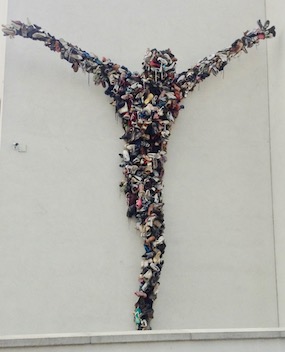
We judge and unpack what we read and ascribe a value to books. That is political – just read any book review or go to a book club meeting and listen to the debate about a novel to see how a single story can take on different contours and unique significance for individual readers.

How do you hope to influence your readers?

Main image: DOX Centre for Contemporary Art, Prague;

Inset images in order: Letter to The Age; Street Art, San Francisco; Guggenheim museum, New York City; Gallery of Modern Art, Brisbane; Threat and Sanctuary, Museum of Modern Art, New York City

Whose freedom is it?

It would be fair to say that reading the news and public commentary this week following leaks about the Religious Freedom Review has made me both sad and angry, so this blog is a bit of a rant.IMG_0159

I have more interest in watching weeds grow than I do in the institution of marriage, but when the equal marriage debate descended into an opportunity to express general bigotry toward LGBTI+ folk, I took notice. I watched with horror as the ‘no’ campaign honed in on young people, the most vulnerable segment of the queer population, and attacked them.

My horror transmogrified into perverse fascination when some segments of the faith community turned themselves into victims, claiming they would be discriminated against if queers were allowed to marry. I say ‘some segments’ intentionally here, as I have had the pleasure of coming to know many (heterosexual) religious people who voted yes and support the evolution of their faiths.

Why any self-respecting queer would want to be married by an establishment that rejects them aside, the territoriality of the institution of marriage by religions is bizarre. The concept of marriage was not invented by god or the churches. Wedding traditions date back to about the third century B.C. in China and at least 30,000 years in Australian DSC00301Aboriginal culture, well before they encountered Christianity.
I suspect a large number of people of faith are damn glad that marriage as a religious institution has evolved. Let’s face it in the Old Testament polygamy was sanctioned, becoming a wife meant becoming the property of your husband, and a woman who was raped could be forced to marry her attacker. Changes isn’t that bad.

I did attend Sunday school, but my interest in religion ended there. Each to their own. It never made sense to me to allow your life to be dictated to by an external deity and a text written around the 4th century. Somehow claiming ‘god says’ felt like abnegating responsibility for your own behavior. I strive to live my life through an ethical lens, which invests in me similar principles to many religions, but my lens is a secular one.

I was mortified when I read the media about the leaks from the Religious Freedoms Review. Religious groups already have exemptions from anti-discrimination laws that allow them to discriminate against queers – including refusing to hire gay teachers or enroll transgender children. The hype read as if the review recommended an increase inIMG_0709 sanctioned bullying and discrimination against LGBTI+ kids. This is deeply disturbing given the vulnerability of same-sex attracted (or questioning) youth who are five times more likely to attempt suicide than heterosexual young people. I feared that ‘religious freedom’ was being used as a smokescreen to justify extending discrimination and bigotry against minorities.
I went to the source this week and read some of the Religious Freedoms Review submissions available on the Department of Prime Minister and Cabinet website. It became apparent to me that allowing queers to marry remains a sore spot for those who were vehemently opposed to it. Most of the submissions that demanded additional protection of religious freedoms were actually bemoaning the fact that the ‘yes’ vote won in the postal survey. IMG_0305 (1)They grasp for an opportunity to be exempt from compliance with the new laws.
The Christian ‘problem’ with queers seems to stem primarily from Leviticus 18:22 that states “You shall not lie with a male as with a woman; it is an abomination.” But I can’t help noticing the selective way in which some choose to quote the bible. Leviticus also states we may possess slaves (25:44); people who work on the sabbath should be put to death (35:2); and that we should get the whole town together and stone to death anyone guilty of blasphemy (24:10-16). Why are faith groups not demanding all god’s laws be adhered to with the same vigor they apply to their objection to gays? And where have the ethics of religion gone in this debate? What happened to compassion, humility and treating others as you would like to be treated? Life and religion have to evolve.

It strikes me as an extraordinary example of moral hypocrisy to cry for more religious freedoms on the grounds of fear of discrimination, then demand that those very freedoms enshrine a right to discriminate against another group. Its particularly IMG_4025disturbing that the loudest voices should choose children as the target of their hostility.

Article 3 of the United Nations Convention on the Rights of the Child, states that all institutions should act with the best interests of the child as a primary consideration.  Media reports suggest the Religious Freedom Review supports this convention.  Yet rejecting a child for who they are cannot be considered to be in their best interests, nor their classmates.  Such behavior would only teach the un-Christian traits of intolerance and hate.

In the shadow of the Royal Commission into Institutional Responses to Child Sexual Abuse it saddens me greatly that some of those institutions may have learnt very little. Abuse comes in many forms. All children deserve to be included, and treated with respect and dignity, including LGBTI+ kids.

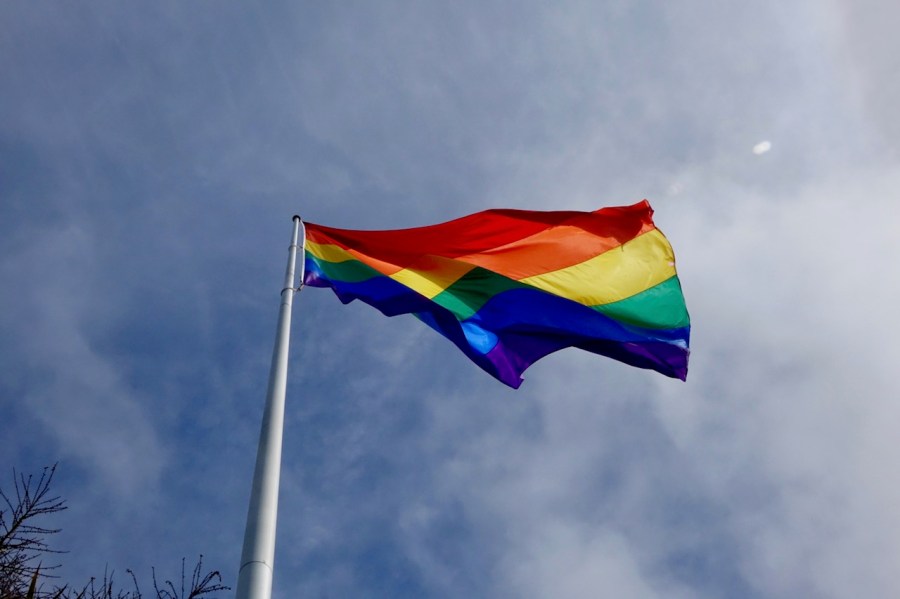
Main Image: Rainbow Flag, San Francisco

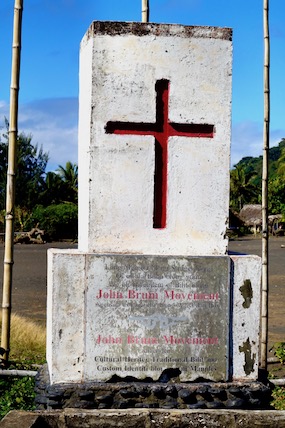
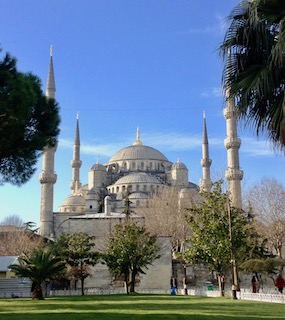
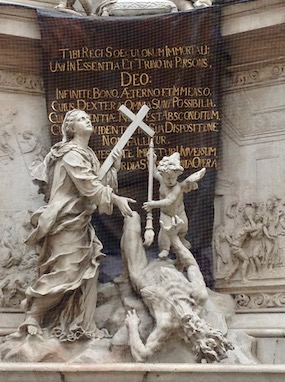
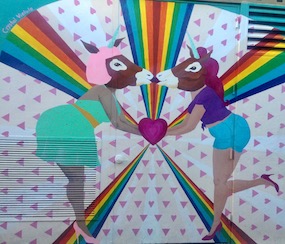
Inset images in order: DOX Centre for Contemporary Art, Prague; John Frum Movement, Vanuatu; Blue Mosque, Istanbul; church statue, Vienna; Street Art, San Francisco

Back to basics: Food and bathrooms in fiction

If you’ve been following my blog you may have noticed my obsession with food. I grow it, cook it and love to eat good food. I’ve been thinking about the basics this week because I have noticed that I do notice when characters in fiction don’t appear to eat, wash or go to the toilet. Ever. And these very basic of human functions can portray so much in a story.

Eating is such a fundamental part of being human and necessary for survival. How and what we eat, and who we eat with, are an important part of life. Eating can be a ritual to bring people together in kinship (think Babette’s Feast or The Kids are Alright); it can expose the absence of significant others such as in Great Expectations; or used to enhance the disintegration of friendships like when the dinner burns in The Party by Sally Potter.

Who we eat with can define us as part of a social or cultural group, as it did in The IMG_0602Hundred Foot Journey and at Bilbo Baggins birthday party in The Fellowship of the Ring. What we eat and where we eat can represent class distinctions. Remember Jay Gatsby’s parties in The Great Gatsby or in Oliver Twist when Oliver tentatively says, “Please sir, I want some more.”

We can portray things about a character’s motivations, attitudes and personality through their relationship to food. We make judgements about people based on their table manners. Who could forget the mammoth Mr Creosote vomiting all over the restaurant from over eating in Monty Python’s The Meaning of Life, or the role of food as a vehicle to portray character transformation in The Poisonwood Bible?

Food often symbolizes sensuality in fiction. It’s a great instrument for romance, passion and desire such as in Like Water for Chocolate; Chocolat; The Lunch Box; and the masturbation with a peach scene in Call Me By Your Name.

IMG_0547Then there’s food to symbolize things that seem wrong, like the madcap chaos of the tea party in Alice’s Adventures in Wonderland where all the rules of etiquette are broken but they teach Alice about the world around her. In The Lion, the Witch and the Wardrobe the White Witch spawns magical evil when she tempts Edmond with Turkish delight and he becomes so intoxicated by it he turns on his siblings.

We can use food to illustrate how a character compensates for emotional, physical or social problems like the painfully thin, gothic, antisocial Lisbeth Slander who compulsively smokes, drinks coffee and eats Billys Pan Pizzas in the Girl with the Dragon Tattoo.

Bathroom scenes are less common than those with food, but can also serve as a vehicle for storytelling. The bathroom is contemplative, intimate and exposing. We drop our guard when we drop out pants and we become vulnerable.

Shower scenes can be character defining, meaningful, sensual, funny or frightening. In Carrie, the main character with eyes closed and neck exposed washes herself seductively then discovers with shock (because she hasn’t been told about it) what menstruation means.  Her cries for help to her friends are met with mockery and shouts of “Plug it up!” In Arthur, the main characters wealthy man-child persona is highlighted in a scene when he takes a bubble bath, cocktail in hand and wearing a top hat and asks the butler to keep him company. The butler perches on the edge of the bath and tells him like a parental figure that bathing is a lonely business.  American Beauty opens with Kevin Spacey masturbating in the shower to symbolize the woeful treadmill of his suburban life. And who could forget the iconic shower-murder scene in Psycho – my that scream!

We all read in the toilet (don’t we?) but how much toilet is there in fiction? Alfred IMG_2646Hitchcock was the first who dared to be risqué in 1960 when he shocked audiences by showing a toilet being flushed (Psycho again). Pulp Fiction makes good use of the lavatory for scene setting, usually as a juxtaposition to frame extreme situations like murder.

Humor on the porcelain throne is most common in kids’ books (Pirate Pete’s Potty) and with blokes (like in Dumb and Dumber and Crocodile Dundee) and the use of poop to make a comment about character can be memorable. We knew something wasn’t right with Kevin when we’re told his mother still had to change his nappies when he was six and that he used his shit as a weapon against her in We Must Talk about Kevin. It’s harder to find examples of women on the loo. One of the most well-known is when Nicole Kidman pees in the opening scene of Eyes Wide Shut as a mechanism to demonstrate to the audience the ease and longevity of her relationship with the character played by Tom Cruise.

We all eat, wash (at least some times), shit and piss, so it’s curious there isn’t more of it in fiction – I’m sure Freud would have something to say about that.

What are some of your most memorable scenes in fiction involving eating or bathrooms?

Do you incorporate eating or bathrooms in your writing?

Main image: After the party

Inset images in order: Turkish tea at smoko, Istanbul; Turkish delight, Istanbul;

Outdoor dunny, Australia

Quince tree flower up close

Mixing words, water and leaves

Kicking goals

This week has been a mixed bag. The implementation of my 1,000 word a day writing target is working pretty well as a motivator. I’ve been getting up at 6am and hitting the computer till the Scrivener bell goes off to tell me I’ve met my goal for the day – and what a lovely sound that is! Having a word count target (as long as it’s realistic) gives you permission to go and play when the bell rings.

Working with frustration

The structural edit is causing enough confusion at times to make me want to throw the towel in. That set off a different kind of bell – the one that told me to go back to basics. I made significant changes to the opening of my novel which has had a ripple effect throughout the story so I have had to revisit my outline to help get my story and characters clear in my head again. When I am happy with the revised outline I will use Scrivener to chop and change scenes IMG_1019around in much the same way I would pieces of paper or cards then fill out the gaps I create. This is one of the features of Scrivener I really like.

Giving myself permission to take a break

The front garden has been weeded and the vegetable patch is almost ready for the summer seedlings to be planted out. I have even spent some time just gazing at my favorite tree in bloom – the quince has the most beautiful, delicate pink and white flowers at this time of year.

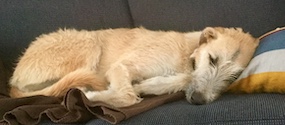
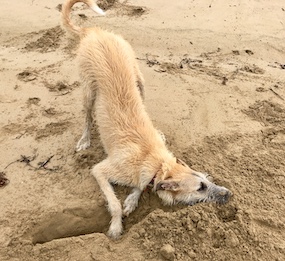
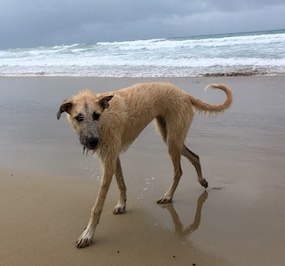
It became evident early on that destructo dog liked water – any water – puddles, the river, the water bowl – all fair game for play. Soon after the puppy arrived, I had to fence off the pond to protect the water life when her first act was to leap onto the reeds in the pond and pee! The other day I wondered why the living room floor was covered in water then turned around and there she was sitting innocently on the sofa with a now empty water bucket IMG_1031in her mouth. I had a dog pool in the shed (the kelpie wasn’t interested in it) which I set up on the deck this week on a warm sunny day and expect I will get hours of entertainment from it.  Destructo dog thought it was Christmas.

Good food

The warm weather we’ve had makes me think of summer salads, so we made tabbouleh with the large quantity of flat leaf parsley about to bolt in the garden. We ate it with a delicious pomegranate dressing, baba ganoush and some lamb – yummo! Here are the recipes…

Tabbouleh

  • 1 cup Bourghal (course is better, but I used fine this time)
  • Large bunch of flat leaf parsley chopped (I had about 4-5 cups when it was chopped up)
  • Handful of mint leaves chopped
  • Coriander leaves (I don’t always include this, but had some left over so threw it in. Remove the leaves and keep whole)
  • 3 tomatoes chopped
  • 2 cucumbers chopped

Pour two cups of boiling water over the bourghal, cover and leave to sit and absorb the water. Pull off and roughly chop as much parsley has you can add a handful of chopped mint leaves and coriander if you have any. Mix the leaves in a bowl with the chopped tomatoes and cucumbers. When the bourghal is ready break up with a fork, drain off any excess water and mix through the salad.

Pomegranate dressing for tabbouleh (this is delicious)

  • 1/2 clove garlic crush with good quality salt
  • Lemon juice
  • Pomegranate molasse’s
  • Maple syrup to sweeten
  • Pinch of allspice
  • Olive oil

Chop the garlic then crush it using the back of a fork and some good quality sea salt. Mix some lemon juice and pomegranate molasses together to taste and add a bit of maple syrup to sweeten it. Mix in a pinch of allspice and double the mixture with olive oil. Shake it up and dress the salad.

Baba ganoush

  • 1 medium sized eggplant
  • 1 clove garlic
  • 3 tbs tahini
  • 3-4 tbs lemon juice
  • Salt

Burn the outside of the eggplant over the gas ring on the stove to give it that nice smoky flavor then pop it in a baking tray in the oven on about 200C (fan) till it collapses. When it’s cooled scrape out the flesh and pop it in a blender. Crush a clove of garlic with a bit of salt and add it, the tahini and lemon juice to the blender. Blend and adjust to taste if needed.

We cooked up some lamb cutlets on a skillet and served them with the tabbouleh and a generous spoon of baba ganoush. There is enough tabbouleh to last about three days so only dress what you are going to eat now and have it again for lunch and dinner the next day with some grilled chicken or snags.

How are your writing and cooking going?

Main image: Quince flower

Inset images: Destructo dog (Harper) checking out the new pool

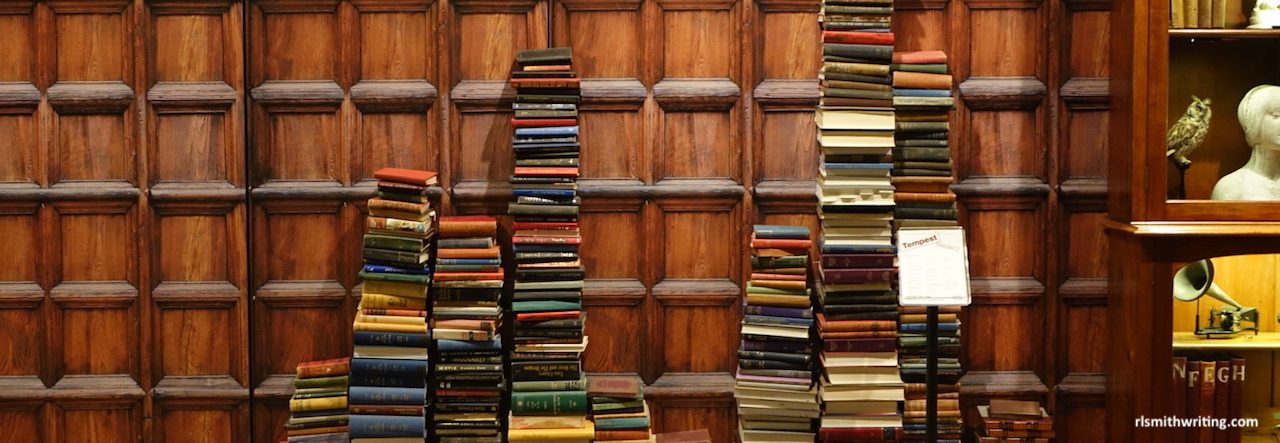
Library Way street name sign, New York

Reading for writing

Do you read for your writing?

I’ve  invested quite a bit of time in the last year into reading books and listening to podcasts about writing to expand my thinking about technique and style and see what I could glean to improve my own skills.

I try to work on my novel every day even if there is only have a small window of time. Writing this blog itself is an experiment in developing my own voice, a way to track my progress and share random ideas about writing and other interests. As I made a promise to myself (and more publicly on this site) that I would post to this blog once a week it has become a great vehicle to make sure I think about writing (and write) every week, even if I don’t feel like it. It was the only writing I did when I was on holidays, but it was writing! I also hope the blog will contribute to firing my motivation to keep working until I complete my book.

There is selection of the reading about writing I have been doing on my Books on Writing page and links to the podcasts I listen to.  There is also a page dedicated to crime fiction related links on my crime page.  I update these resource pages when I find a new reference that inspires me.

What books on writing would you recommend?

I have noticed that how I read fiction changes the more I write and my own creative skills develop. Though not generally a fast reader, I do read as much fiction as possible and try to analyse it to help improve my own practice. When I do read at speed I know I have been gripped by a story and try to understand what it is that I love about it. These days books that do not hold my interest are discarded (often after skipping to the last chapter just to find out what happened).

Most of the books I read are in the genre in which I am writing (mystery) but I do try to read more widely as I think reviewing work outside of your genre also expands your skills, thinking and approach to how you write.

I am currently about 100 pages from the end of Belinda Bauer’s Snap which was long listed for the Man Booker Prize this year and could barely tear myself away from it to write this blog post. Yesterday I caught the bus to the city just so I could sit for an hour each way and read it uninterrupted.

Snap is without a doubt one of the best novels I have read in a while from any genre and reading it has excited me.  I feel there is so much to learn between its pages about writing as well as being a ripping read. The characters all have their own unique, if at times unsavoury, but believable quirks and I cannot  help but be fascinated by what motivates each of them.  The sentence structure and use of words are beautiful and drive me forward as much as the plot, and the short chapters have me simultaneously hungry to read one but disappointed as it feels like the book will end too soon.

I am doing a major structural edit of my own novel at the moment which at times has my mind spinning, but reading Bauer’s book has injected a new enthusiasm to get stuck into my own work with gusto…as soon as I finish reading Snap.

What fiction you have read has inspired your writing?


Image: Library Way, New York

Large fake red and yellow sunflower in garden bed

The forest or the trees

She was overcome by a wild madness that drove her to tear at the ground and hack at the foliage that threatened to devour the universe. The movement transformed her hands into something resembling the walking dead. A ton of dirt lodged under her fingernails, rested like dandruff in her hair and left long black stains on her face and clothes.

Don’t you love spring? The weeds took advantage of my absence and made a concerted effort at a takeover. Little did they realize that I would return with a plan for them as well as a plan to get my writing mojo back. There are seedlings in the greenhouse showing great eagerness to move into the vegetable patch now that the earth is warming up so I have been spending afternoons evicting the weeds.

Like writing, gardening benefits from a plan of attack. I like to mentally carve up the garden into sections and tackle the weeds in a logical order. This approach means I can see my progress and draw a sense of satisfaction as I complete each section. I try to hold the big picture in mind, but focus on the small chunks. I approach writing in much the same way. The big picture is the overarching story and plot points I need to hit, and I chunk it down into chapters and scenes.

I like a bit of technology and use the app Scrivener. The nerd in me became very excited to discover the target feature of the app this week and I have set it up so I have a target word count for each writing day. As the Scrivener marketing ballyhoo says it helps you see the forest or the trees which brings me back to gardening.

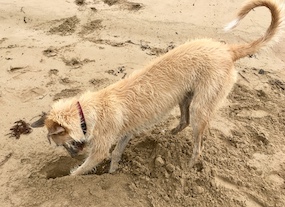
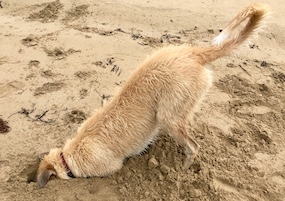
The plan is to get on top of the weeds before they all go to seed. I do not throw out discarded weeds (or words) as they can be reused.  I compost the weeds and use the composted material to build up the soil in the following season. My greatest challenge is that when destructo dog sees me weeding she wants to help but is not discerning about what she digs up.  Can you teach a dog to identify plants?

As much as possible I take inspiration for cooking from what is growing in the garden. I still have mint and an abundance of citrus and there are chilies from last season in the pantry. There’s also a plethora of cheap fennel about as it is in season. I have mentioned my crush on the chef Yotam Ottolenghi before and I often go to his recipes.  This week I made his saffron chicken and herb salad one night which is delicious and I have included the recipe below.

Yotam Ottolenghi’s saffron chicken and herb salad (serves 6)

Ingredients:

  • 1 orange
  • 50g honey
  • 1/2 tsp saffron threads
  • 1 tbsp white wine vinegar
  • 
about 300ml water
  • 1kg skinless chicken breast
  • 4 tbsp olive oil
  • 2 small fennel bulbs, thinly sliced
  • 15g picked coriander leaves
  • 15g picked basil leaves, torn
  • 15 picked mint leaves, torn
  • 2 tbsp lemon juice
1 red chili, thinly sliced
  • 
1 garlic clove, crushed
  • salt and black pepper

Method:

Preheat the oven to 200°C (fan forced).

Trim and discard 1cm off the top and tail of the orange and cut it into 12 wedges. Keep the skin on but remove any pips.

Place the wedges in a small saucepan with the honey, saffron, vinegar and just enough water to cover the orange wedges. Bring to the boil and simmer gently for about an hour. Add water during the cooking if the liquid gets very low.

At the end you should have the soft orange and about 3 tablespoons of thick syrup left. Use a food processor to blitz the orange and syrup into a smooth, runny paste. Add a little water if needed.

Mix the chicken breast with half the olive oil and plenty of salt and pepper, and place on a very hot, ridged griddle pan. Sear for about 2 minutes on each side to get clear char marks all over. Transfer to a roasting tin and place in the oven for 15–20 minutes, or until just cooked.

When the chicken is cool enough to handle, but still warm, tear it with your hands or two forks into rough and quite large pieces. Place in a large mixing bowl, pour over half the orange paste and stir well. Add the remaining ingredients to the salad, including the rest of the olive oil, and toss gently. Add salt and pepper to taste and more olive oil and lemon juice if needed.


Image: Spring in the main street


Pinnochio floating face down in water at the Guggeheim New York

Post-holiday writing re-boot

I gave myself a leave-pass on holidays and did very little work on my novel.  Time I would spend writing was taken up with lie-ins, reading, surfing, eating, long walks on the beach and lazing about with friends. Now I am back at home and the break from reality is over.  Getting back into writing after time off does require some intentional effort.  After all your imagination was on holidays as well if you weren’t exercising it.

What happens when you try to get back to writing again after time away from it?  Do you stare awkwardly at the computer unable to access your imagination through the fog in your head? When you do manage to put down words are they crap? Do your characters seem distant? Do you wonder what happened to your flow?  Is there is a temptation to give up?

I am almost half way through the twelve months I took off work to focus on writing and all those unfinished projects in the garden. Despite being a disciplined and organized person, I do not feel that I have accomplished as much as I expected to when I started my break.  The main reason is that (as usual) my plans were too ambitious for my timeframes when life and day-to-day responsibilities are factored in. At times there is a temptation to focus on what is not done and abandon all plans. Why not just kick back and enjoy the rest of the time off? It’s a sophisticated form of procrastination. Nothing is stopping me getting started again except myself. So, this week has been dedicated to some writer wrangling. At its core is re-creating a routine, discipline and patience. Here are my five tips to get your writing mojo back after a break.

Set aside some uninterrupted time to write on as many days as possible each week IMG_0992(even 15 minutes): During your writing time remove distractions like social media. Do not allow yourself to indulge in your favorite procrastination activities like attending to the washing or the weeds that need to be pulled in the garden – whatever it is that draws you away from your computer (or pen).  I am at my best in the morning so I set the alarm for 6am, get up, make coffee and stand at my computer until at least 8am. When I was doing my day job my uninterrupted time was the hour on the bus on the way to work. I would put ear buds in to discourage others from interacting with me and write on my iPad. During that time read over some completed material, reacquaint yourself with your characters and give yourself permission to write crap.  Expect it to take some time for your writing to return to your expectations.

Schedule in space for procrastination and life commitments: There are things that you have to do and things other than writing that you want to do.  Attend to them when you are not at your best for writing.  For me this is toward the end of the day. I try to book appointments, check social media, read or weed in the afternoon.

IMG_0980(1)Exercise: In my view this is one of the most effective activities to jolt you back into a routine.  Aerobic exercise facilitates information processing, thinking and memory functions, stimulates the growth of new connections and is protective against getting down on yourself or anxious if you are finding getting back into a routine difficult. If you exercise out in nature there is the added benefit of the environment providing stimulation for your imagination and you can use your movement time to think about writing.  You’d be surprised how often activity will provide inspiration and boost your flow.  Destructo dog is now six months old so I’ve started to teach her to come running with me which is great fun for both of us and afterward she makes an excellent writing companion.

IMG_0978Immerse yourself in some writing related activities: Go to a literary event or a writer’s group, and read. In the evenings I am reading The Mermaids Singing by Val McDermid, a fiction work in the genre I am writing my own novel in, and How Fiction Works by James Wood a book about the main elements of fiction. I managed to catch a couple of events at the tail end of the Melbourne Writers Festival and have planned with a fellow writer friend to organize our own writing retreat for a week in November.

Be patient: It takes a bit of time to get back into the flow after a break.  Expect that, and don’t give yourself a hard time about it.  When you get distracted, keep returning to your routine, until it becomes your routine.  Just like it was before you took a break.


Main image: The Guggenheim Museum, New York

Inset images in order: Writing Supervisors; Destructo dog after a run; A Toast: Judith Lucy’s Dream Dinner Party, Melbourne Writers Festival.