A friend of mine has a special Christmas tradition. Every year she posts a selection of photos for what she calls the Twelve days of Creepsmas on Facebook. This post about alarming Christmas traditions is inspired by those photos of creepy Santa’s with terrified children.
Krampus
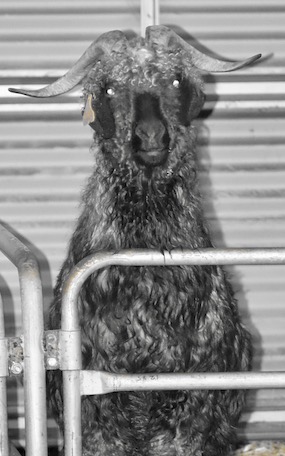
A half-goat, half-demon and his band of ill tempered elves haunt the Tyrolean mountains in the Austrian Alps during the festive season on the hunt for children . Krampus, with his furry body, disfigured face inset with red eyes below big curled horns terrorizes the streets with wild jangling bells, animal like growls and fierce dancing as he beats people with birch branches.
Good children get presents from Santa, bad children (as well as drunks and laggards) got Krampus who whips or abducts them, stuffs them in a sack and drags them off through the snow to the underworld. His roots are in pre-Germanic paganism and he is believed the be the son of the Norse god of the underworld, Hel. His legend has such force that it survived attempts by the Catholic Church to banish his celebrations in the 12th century. Krampus is a perfect antidote to the overly commercial, cheer filled version of Christmas.
Mari Lwyn (Y Fari Lwyd)
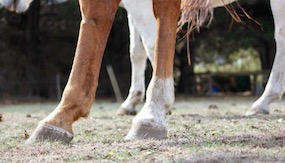
Dead horses are more in fashion than goats in Wales. Mari Lwyd (the Grey Mare) is a horses skull wrapped with a white sheet, empty eye sockets and ear holes decorated and the figure draped with colourful reins, ribbons and bells. Despite her macabre appearance Mari Lwyd is supposed to bring good luck.
She and her entourage go door knocking and sing rhyming insults in Welsh to occupants to try and gain access. In the ritual the occupants of the house must respond with their own verse to try to outwit Mari and prevent her and her gang from entry. Eventually she is let in. Apparently Mari’s entry scares off unwanted problems from the closing year and brings the household luck for the new. She also drinks all the liquor, eats all the food and generally causes mayhem (including chasing any young women she takes a fancy to around the house). You can view an example of the doorstep exchange here.
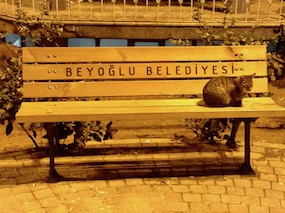
Yule Cat (Jólakötturin)
In Iceland if you don’t have some swanky new clothes to wear at Christmas you could be eaten up by a giant vicious cat. It’s unclear where the cat idea originated from but the clothing part of the myth is thought to have begun as a mechanism to urge farm workers to be more productive in the lead up to Christmas when hard workers were given new clothes to wear by their employers.
Icelanders don’t just have to worry about giant cats at Christmas either. Thirteen trolls with names like Pot Scraper, Bowl Licker, Window Peeper and Doorway Sniffer; along with a many headed, child eating, husband murdering ogress called Grýla come down from the mountains in December. Naughty children are taken back to Grýla’s lair to be devoured.
Witches and broomsticks
In Eastern Europe the Christmas witch Frau Perchta, a shape-shifter, creeps into homes and leaves a piece of silver in the shoes of children and servants who have been good. The naughty ones have their stomachs split open and after being disembowelled their organs are replaced with pebbles and straw. She’s also a bit of a stickler for domestic neatness and lazy ladies get the same treatment as naughty children if their housekeeping standards don’t measure up.
The Norwegians worry about evil spirits and witches that appear on Christmas eve and steal their brooms to go joy riding. Households take preventative measures and hide all the household brooms so they have the equipment needed to clean up after the festivities are over. In some households the men go outside and fire shotguns for good measure to scare the bad spirits away.
I’m anticipating my own Christmas celebrations to be far less dramatic, with a focus on the company of friends and family and the devouring of good food under the watchful eye of the giant hound who will hopefully protect us against any evil visitations. May your season be peaceful and your traditions bring good will. See you on the other side.
How do (or don’t) you celebrate the festive season?
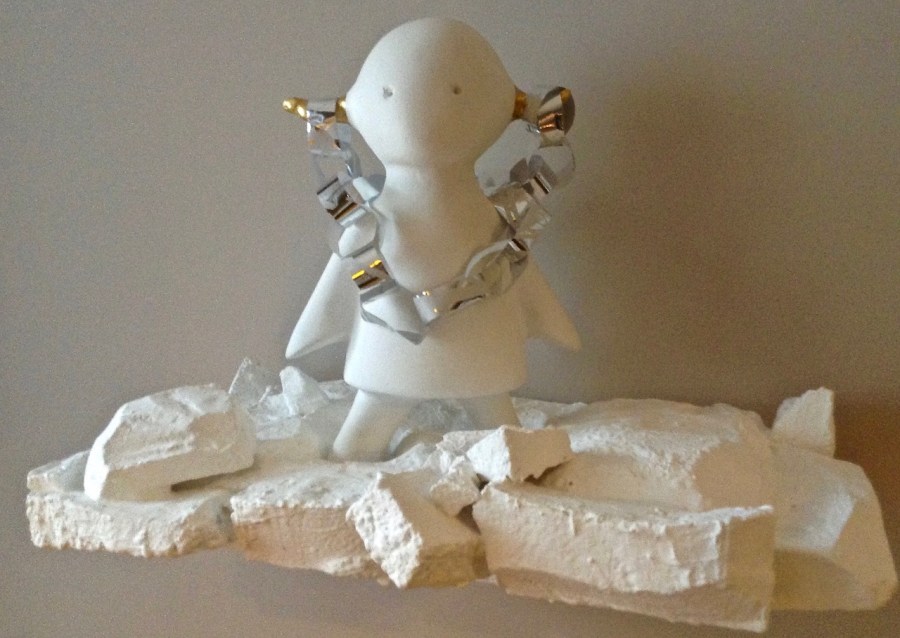
Main image: The decoration, Berlin







 enabling the reader to experience the tension vicariously and discover the hero within.
 issue that had appeared on the program…
 them; or random strangers we meet (or have never met) might be bought to life between our pages. In fantasy characters are sometimes concocted from mixed up blends of real creatures or from visions from in sleeping life.
 It mattered to me that I try to present this profession in a light that someone working in it would want it to be. So, I tracked down a workplace that employs people in the profession and sent an email to ask if any of the staff would be prepared to chat to me about the industry and what they do. I was lucky to get some interest and caught up with a woman who was happy to share her experiences and insights with me. It also gave me a chance to ask about what stereotypes they thought I should avoid and what they would like to see reflected in a character working in the profession. I undertook that I would send my manuscript for them to critique when I am done.
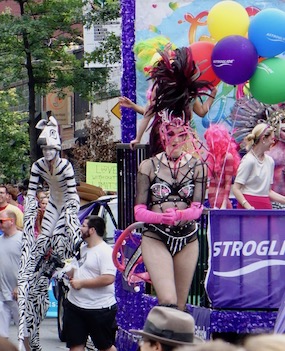 with, the plight of ‘the other’ than it is about events and things. I would add that it obliges us to learn about our subjects and make every attempt to represent ‘the other’ authentically and where possible give the people you are representing an opportunity to critique your version of them before your manuscript sees the light of the publishing world.
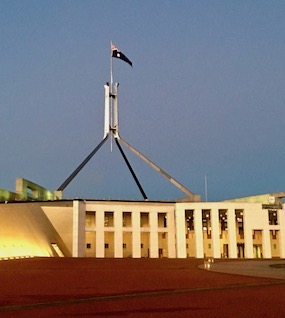
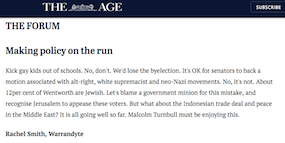 My week of political writing got me thinking about the role of fiction in relation to politics.
 medical facilities exist to ensure we survive childbirth, dictates if we get the opportunity to learn to write at all, the price of milk, who we can and cannot love, and the type of death we can have. Our very existence is enmeshed in, and shaped by the political environment(s) we live in and are exposed to.
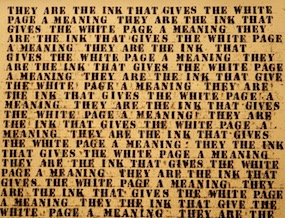 burned books. Examples of fiction works that have been subject to some kind of censorship or ban at one time or another include Dr Seuss, Winnie the Pooh, Lady Chatterley’s Lover, Catch-22, The Da Vinci Code, Doctor Zhivago, Nineteen Eighty-Four, The Satanic Verses, Sophie’s Choice, The Well of Loneliness and Ulysses. The more restrictive a political regime, the more likely it is to see text as a threat. Over 25,000 books were burnt in Munich four months into Hitler’s regime for being ‘unGerman’.
 outside Portuguese embassies in Europe, the United States and Brazil. On 25 April 1974 a bloodless coup overthrew the regime. It was called the Carnation Revolution because red carnations were put in the ends of soldiers’ gun barrels. Soon after the coup the case against the three Marias was dismissed, the women freed and the book became a literary symbol of women’s liberation, erotic art, and the Portuguese revolution.
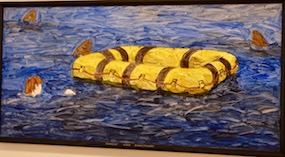 Writing is a way to contribute to the development of a liberal and democratic society. We implant meaning and messages in our plots that we hope will influence how our readers think, not only entertain them.
