Take a Leaf Out of My Book

This week I wrote a flash fiction piece for fun, inspired by my trip to WOMADelaide.

WOMADelaide is a four day open air festival of Music, Arts and Dance held in beautiful Botanic Park in Adelaide. Every year, around 500 artists from 30+ countries perform on 8 stages spread across the 34-hectare park and 18,000 – 20,000 people go each day.

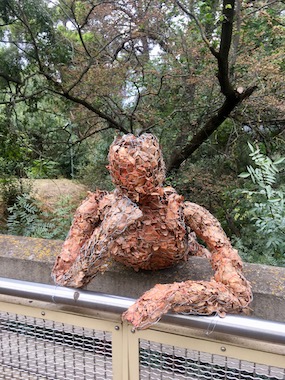
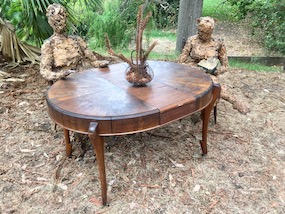
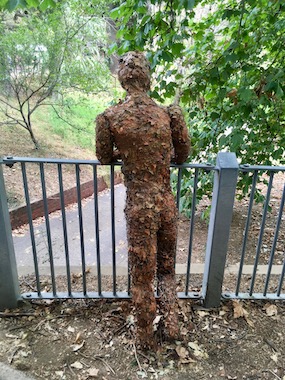
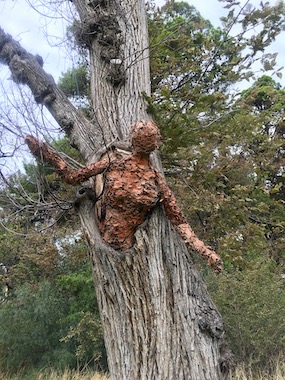
The leaf people shown in the photos were artworks around the park which I found spooky and were the inspiration for this story…

Take a Leaf Out of My Book

I was amongst the thousands who made the pilgrimage to the music festival each year. We traipsed around the parkland gardens like the faithful seeking redemption, enveloped in sound waves that vibrated through the air around as we lay on the cool grass beneath river red gums, Moreton figs and pencil pines. Reality receded fast amongst the tie die, Indian cotton, beards and pigtails, and the thin trail of weed smoke that wended it’s way through the crowd to a melody so sweet it tasted like fairy floss, enfolding me in clouds of saintly bliss.
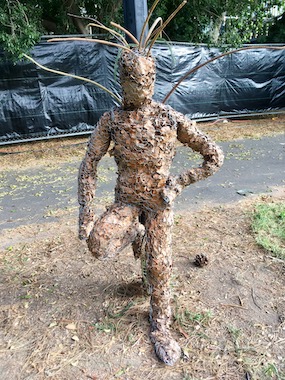
I wandered around the park to soak up the atmosphere and noticed creatures fashioned from chicken wire into the shape of people. They were stuffed with brown autumn leaves that looked like skin after too much time in the sun and scattered through the forest like aberrant seeds. Someone’s idea of art, frozen in ghoulish stances, sitting in chairs, leaning on walls and spilling from the hollows of trees. Faceless creatures in poses of waiting. They appeared at every turn and I started to feel like they were watching me.

On the second day I noticed that the leaf creatures moved around the park over night. One that had been playing a piano in a gully on the first day was no longer there and another riding a bicycle had materialised alongside a path. When I mentioned this to my girlfriend she said I had been drinking too much.
At dusk I was sprawled on the grass listening to the sounds of a throat singer and animal sounds emanate from a wind instrument. Their cries were answered by creatures deep in the park. At one point I was sure I heard a human scream, but when I struggled to my elbows all eyes around me were faced front to the stage, no sign anyone else had noticed, so I lay back down again. After an hour the throat singer melted into the forest and an aboriginal women’s choir dressed in colours of the desert emerged on stage and started to croon. Their haunted voices echoed through the night competing with the owls that dwelled in the high tree branches.
My bladder started to fill to bursting so I scrambled to my feet and headed into the dark toward the portaloos down the back, far enough away that the stink wouldn’t seep into the crowd. I passed through a stand of pines and couldn’t tell whether the rustling of leaves was coming from beneath my own feet or others walking in the shadows out of sight. The gouls in my head took shape in the night around me as I thought I caught glimpses of movement in the dark.

Fortunately the dunny queue was short. The bathroom experience was the worst part of festivals. No matter how often the tireless staff mopped out the stalls, at the end of a hot day the smell of urine was still nauseating, but the relief of emptying my bladder to the distant keening of the singers overrode any feelings of disgust I had for my stinky box cubicle with its invisible splashes sprayed around the walls.
When I stepped back out of the loo, I was alone with the sounds of the night. Already a bit spooked, I started to walk stealthily in the direction of the haunting melody that filtered through the trees, then tripped and landed sprawled on the ground. I heard a low painful moan nearby and scrambled to my feet. In the dim shadows I thought I saw a figure prone on the ground and in my mind it’s mouth was stuffed with flaking brown autumn leaves. I turned and ran through the night as adrenaline flooded my body.

I passed a large tree and something latched onto me from the shadows. When I swiped at it I felt my sleeve grabbed and tugged and started to swing around wildly. A shriek escaped from deep in my throat and I struggled with the dark figure feeling the scrape of chicken wire and the crunch of leaves as it wrestled me to the ground. My panicked mind realised that my daytime fantasy of the chicken wire and leaf people coming alive in the night was real. The person I had tripped over lying prone in the forest must have been a victim and now they had come for me.

Another scream echoed through the forest louder than the distant singing. I was fighting for my life, could feel the sting of wire cuts on my arms. In the distance I thought I heard my name being called and yelled for help while I struggled.

Flashes of torchlight leapt through the forest nearby and after what seemed like a lifetime found me. All the spots converged on my face and there was a deathly silence. I scrambled to my feet and wheeled around wildly in the torchlight ready to defend myself again. Peals of laughter started to fill the forest around me. My attacker, one of the chicken wire and leaf sculptures, was flattened to a pulp at my feet, no signs of life having ever been in it.

Ducking into Adelaide Writers Week

Literary Koala

Adelaide comes alive with festivals in Autumn; The Fringe, Adelaide Festival, Adelaide Writers Week and WOMADelaide, and I am on my annual pilgrimage and arts binge this week.

The city is surrounded by parklands that encase it in a figure eight of open green space of bushland, parkland and the Torrens River. I am fortunate to have a place to stay at St Peters, a north eastern suburb very close to the Torrens River parklands with access to walk all the way to the city through the green corridor that abuts the river.

Each morning this week I have walked the three kilometres along the flood plains of the Torrens River through the traditional lands of the Kaurna people, who’s country includes the Adelaide Plains. The walk takes me from St Peters to the Pioneer Women’s Memorial Garden where Adelaide Writers Week is held .

Casuarinas

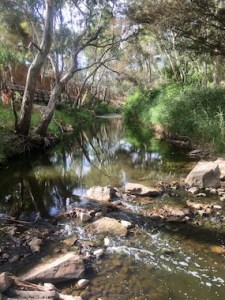
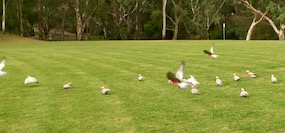
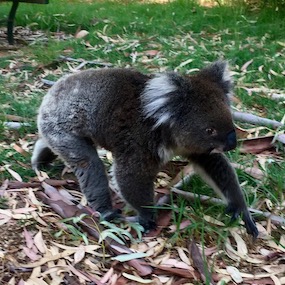
The trail winds along the Torrens watercourses lined by sedges and rushes, past remnant river redgums, SA Blue Gums and through silent stands of Allocasuarinas. I disturb a large flock of Galahs feasting in the grasses, skinks scurry out of my way, and a young koala, stunned by this strange person invading its home, trots along the ground and up a eucalyptus trunk out of harms way. As I approach the city, just past the outskirts of the Adelaide Zoo, the bush land gives way to landscaped, manicured riverside gardens dotted by sculptures, sleeping Pacific Black Ducks, signs warning citizens not to feed the pelicans, which bite, or to touch the bodies of bats fallen from trees in case they carry the deadly Calicivirus.

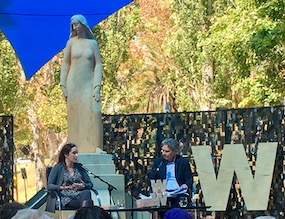
I have attended three Adelaide Festival events this week (Out of Chaos…Gravity and Other Myths; By Heart; and Sarah Blasko) and spent most of my days at Adelaide Writers Week listening to authors and commentators talk on a range of fiction and non-fiction books in the shade of large poplars. The trees were chosen by the designer Elsie Cornish to represent: protection and love (the holly oak and myrtle); love, generosity and devotion (honeysuckle); and memory, protection, youth and tenderness (lilac); for the gardens developed as a tribute to pioneer women. I watched and listened and jotted down reflections and quotes that caught my attention…

…muscle and sinew find order in the sweat of chaos and a physical flight of fancy…

…sex is not an intellectual event…

…Bitcoin is the cash currency of Silk Road, the eBay for drug dealers on the dark web…Nimbin online…

…truth is stranger than fiction…

Rebecca Makkai

…Dread Pirate Roberts ran Silk Road. It was his Utopian dream. Until dealers started to blackmail him, threatening to release the personal details of their customers. Dread Pirate Roberts started putting out hits on them, got a taste for it and the Utopia ideal started to unravel…

…some boffin in the tax department stumbled across Dread Pirate Roberts email and he was tracked down by authorities who nabbed him working in the library …

…you can hire a hitman on the dark web for bitcoin, but most of them are scams…

…despite humorous elements there is real evil on dark web…it has created a safe place for bad people to meet and talk and normalise one another’s behaviour…

…complexity needs to be digested in its entirety and then filtered to make it digestible for the lay person…

…there’s nothing more vivid than a human being, but vivid writing is not a substitute for lack of substance…

…Humour makes things more accessible, particularly difficult subjects…

…if you’re writing about things that need to be fixed in the world you need to have a sense of social responsibility and be prepared to talk about taboos…

…sciences writers can bring in information that scientists can’t to help understand issues. For example to solve sanitation issues that cause diarrhoea, the biggest killer of children, we need roads. Without roads we cannot build sanitation’s infrastructure or get soap into communities…

…if you want to grow up to be a science writer, get a job as a fact checker…

…non-fiction: defining a writer by what they are not…

….the last thing to leave our dying lips may very well be a poem…As though it were aware of the fragility and treachery of man’s faculties, the poem aims at the target of human memory, because memory is usually the last thing to disappear, even when our whole existence crumbles around us…

Torrens Parkland

…a Portuguese man teaches ten strangers Shakespeare’s Sonnet 30 by heart while he laments the loss of an old woman who taught him that words once held inside our hearts can never be lost…

…when writing characters different from yourself you need to write a fully formed human being, you need a soul…don’t try too hard…ask yourself am I doing good by writing this book? If the answer is yes, it’s more likely books on similar diverse topics will be published in the future…

…a novel is an entry way into certain uncomfortable topics for people and a pathway to empathy…We’re not telling these stories as often as we should be…

…is a person with an intellectual disability culpable? What about electricity companies that failed to maintain infrastructure?…Huge number of people with intellectuals disabilities in the legal system…what does this say about our society?…Was the Arsonist a product of systemic failure to provide adequate supports for a child with a disability?…This fire unleashed evil, but we have to do better in our society for kids at risk of creating harm Chloe Cooper…

…it’s getting warmer and more fire prone every year, fires burning hotter and longer all around world. Coal contributes to the systemic problems that create these conditions…It will not be the last time we have to deal with devastating fires resulting in loss of life…We have evolved alongside fire…it will outlast us as a species…

…writers look for character…interesting people to inhabit your books…

…the power of the words unspoken become the power of a book…it’s the definition of show don’t tell…

…language is magical…

Taking flight

…grief is dangerous and tenacious, it appears unexpectedly and tips you over…

…art stills the whole world in an image…forward time stops and cools around you…you are intercepted by something beautiful…the collapse of time…

…writing is about encounters…disturbing encounters that seed the need to make sense…reading and writing are not propositional…they do not explain the world…they are about an imaginative encounter…to be lost in the beautiful and the terrible…

…writing is an act of composition…reading and writing tutors our lives to notice things…to make our hearts open…

Books I will add to my reading list after listening to the authors:

  • Call Me Evie, J.P. Pomare
  • Too Much Lip, Melissa Lucashenko
  • The Darkest Web: Drugs, Death and Destroyed Lives, Eileen Ormsby
  • The Girl Without Skin, Mads Peder Nordbo
  • The Great Believers, Rebecca Makkai
  • The Arsonist, Chloe Hooper
  • Boy Swallows Universe, Trent Dalton
  • The Death of Noah Glass, Gail Jones

I have been filled with ideas, and inspiration from other people’s creative journeys through life and am thankful for these opportunities to stimulate my own thinking. I am also looking forward to four days of the magical mystery tour that is WOMADelaide this weekend.

Main image: Literary Duck

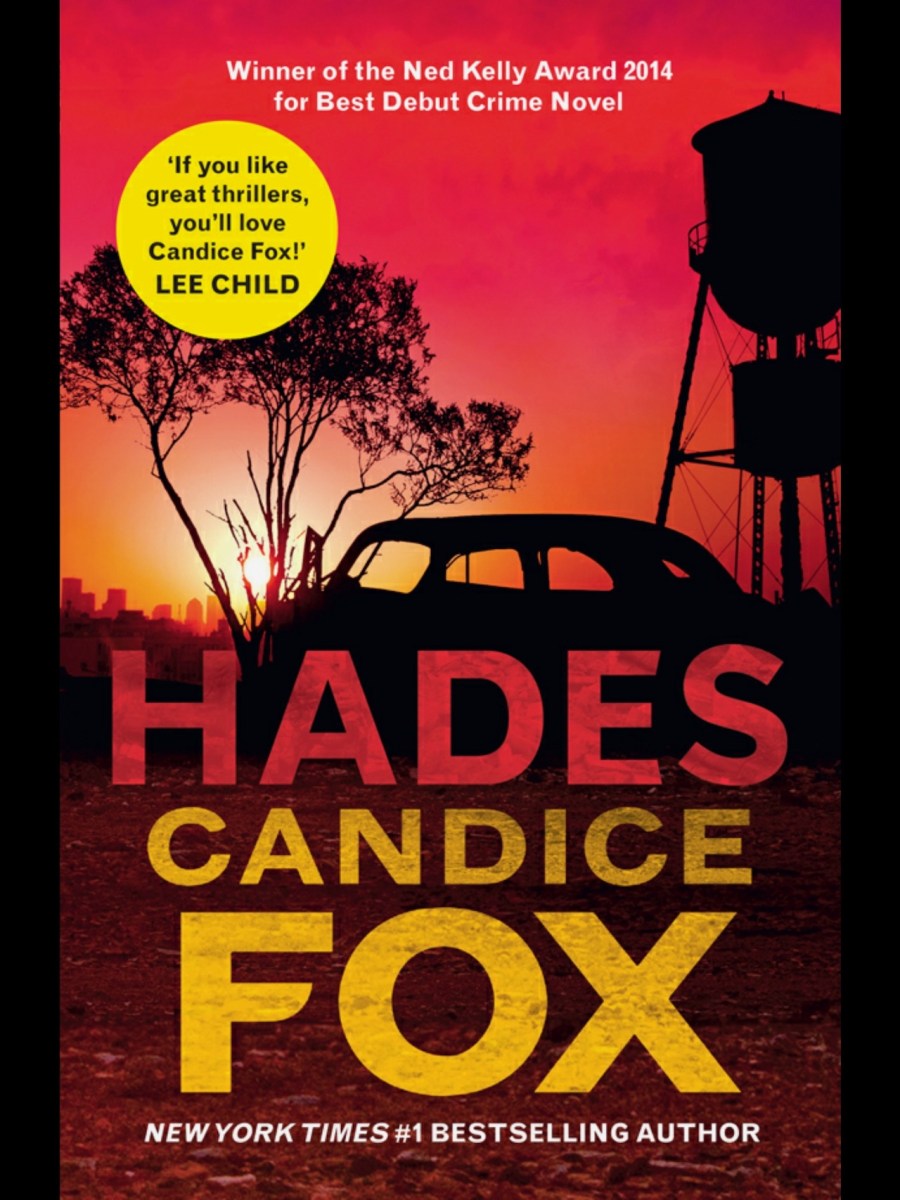
Book review: Eden by Candice Fox

Reading Candice Fox’s novel Hades (reviewed in last weeks blog) set me off on a binge and I followed it straight up with the sequel Eden which won the 2015 Ned Kelly Award for best crime novel. Like it’s predecessor, Eden has several narratives running through it.

We are thrown back to discover how Hades, who bought up Eden and her brother came to be the man he became, the go-to body disposal guy who runs the tip, makes elaborate sculptures from discarded metal and causes many a grown man to tremble in their boots with fear, yet has a heart capable of great love.

Frank the cop who has fallen into a pit of drunken despair after the death of his lover, the death of a colleague and almost dying himself, is forced out of his misery by his work partner, the mysterious and dangerous Eden who loves hunting criminals but doesn’t always wait for the justice system to determine their sentence. She wants Frank back on his feet as they are to be assigned to a murder investigation that will require her to go undercover. She wants him to watch her back on surveillance and Frank can’t say no to her because she knows his dark secret.

As Frank gets drawn into Hades world, helping him solve a long ago mystery an unexpected twist nearly gets Eden killed. Dark, gritty, noirish and poetic, another great read.

Book review: Hades by Candice Fox

I’d known about crime writer Candice Fox for some time, but not actually picked up one of her books until recently, and what a treat it was. Hades, won the Ned Kelly Award for best debut crime novel in 2014.

Caste offs

Hades is an ox of a man who runs the Utulla tip, makes giant sculptures from salvaged scrap metal, and gets rid of unwanted bodies by disposing of them in the mountains of waste to decompose. When a stranger arrives and asks him to dispose of the bodies of two children, saying their deaths were an accident, Hades killed him. Then he notices the toes of one of the tiny bundles move. He keeps the children, raises them as his own.

The children grow up to be cops, crusaders of justice. Eden is dark, beautiful and aloof, and Eric her brother, brash and a stirrer of trouble. Frankie gets assigned to the station as Eden’s partner after both their former colleague are killed, and the two set out to track down a serial killer who harvests organs for people prepared pay, but not to wait. Frankie soon starts to notice something strange about the siblings he can’t quite put his finger on and starts poking and prodding around in their past. Will he live to quench his curiosity?

Cover image of Hades by Candice Fox
Big fish

Fox’s voice rolls out the story like a crashing ocean wave, leaving debris in its wake. It is beautiful, poetic, Gothic and deadly. The characters are compelling anti-heroes, her plotting exquisite and her prose enthralling. I love a local tale and the novel is set in Sydney, Australia, an added bonus.

It was hard to put down and I had a few late nights of page turning in my hunger to find out what happened. Fortunately when I finished, there was a sequel available to pick up. I fear a binge is coming on, so was relieved to find she has ten novels to her name laying in wait for me.

#Writers dog

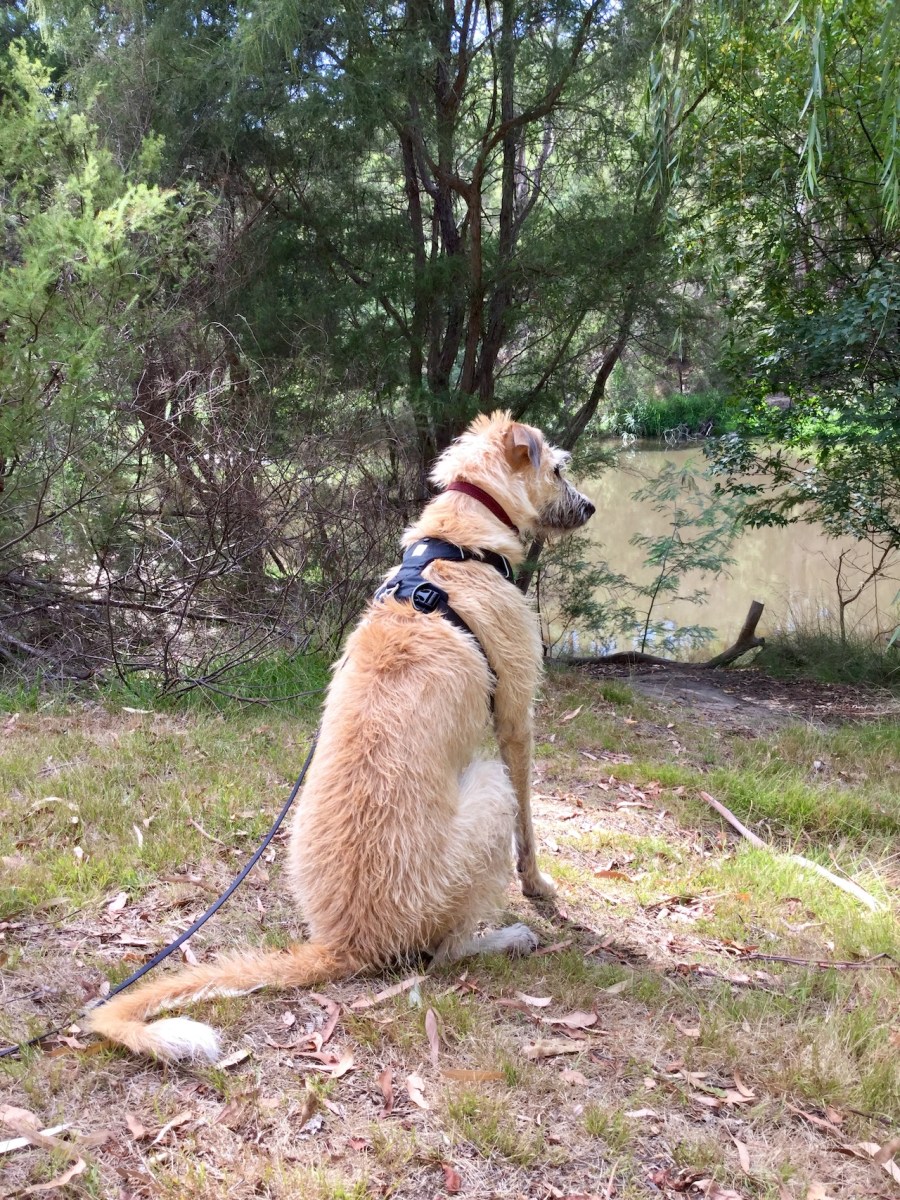
The hound started to get restless at about nine o’clock this morning. Thirty-eight and a half kilograms of restlessness does not make for a relaxing lie in, so I am sitting on the banks of the Birrarung writing this post while Harper contemplates the meaning of life after a walk and a swim.

Come on human

I started this blog to create a record of the twelve months I took off my day job to focus on writing, the sands of which are destined to trickle out in early April. What I have found interesting is that writing about writing has also acted as a mechanism to unravel the knots that sometimes emerge, solidify my practice, and act as a catalyst to resolve some of the frustrations I have encountered along the way.

There was a day last week I was tempted by another shiny idea, to abandon my editing and move on. The internal dialogue went something like this.

“Hey I have an excellent idea for the opening scene of another project I want to do.”

“Yea, but you need to finish this one first.”

“The new one would be loads more fun though.”

Making ripples

“You know they say the best way to avoid becoming an author is to never finish writing a book…”

“But editing is sooo boring and first drafts are such fun.”

“It would be a shame to abandon 65,000 words without finishing the project, how about you try to stick with it a bit longer?”

“The other idea is better.”

“Only if you finish it, rather than quit when the edit gets boring.”

“But I don’t want to lose this amazing idea, I should get started on it.”

“Ok, how about you take a break and write the idea down – one scene only though. Then re-read that blog you wrote about editing and get back to, well, editing.”

Writers dog

So I took my own advice and wrote that scene so I wouldn’t lose the idea, then I re-read my editing hell blog and hey presto! After I cleared the decks and revisited my editing process, it seemed easier. I had cleared away some of the self-imposed confusion and might even have enjoyed some of the edit work of filling in the blank where I had noted write something about x here or re-write this scene. It was a valuable lesson in self strategizing to stick with it.

The draft I am working on now (I would probably call it my third) bares only a shadow of resemblance to the original draft, and I suspect I will still be working on the project when I return to work, but damn, I think I’m going to finish the thing.

What do you do to maintain your discipline to the end?

Main image: Harper in contemplation mode

Editing Hell

Anthony Burgess wrote A Clockwork Orange in three weeks to earn aquick buck and Fyodor Dostoyevsky wrote The Gambler in a few days when he was broke and desperate due to his compulsive gambling habits. But these books are the freaks, the anomalies driven by some kind of demon writing force. At the other end of the spectrum, J.R.R. Tolkien took twelve years to complete Lord of the Rings.

Brunswick Picture House, Brunswick Heads

It was Ernest Hemingway who said the first draft of anything is shit. Some famous writers have completely trashed their first drafts and rewritten them, the published work unrecognizable from the original draft – think William Golding’s Lord of the Flies and Harper Lee’s To Kill a Mockingbird

I have listened to many writers being asked how long it takes to write a book in interviews. Most published authors seem to answer somewhere between one and ten years and they may produce as many as fifteen drafts (though the most I’ve heard quoted was 30).

There is endless advice available on how many drafts it takes to write a book – the three-draft method, the five-draft plan, the seven-draft process. But the more you listen and read, the more it becomes clear that there are as many ways to write a novel as there are writers.

Queensland Museum, Brisbane

What most writers seem to agree on is that the first draft is the vomit draft – your writing is focused only on extracting your imagination to get a version of your story on the page. It’s great fun to write and terrible to read. After that all bets are off. One thing is certain, you have to learn to love editing, and be prepared to kill your darlings, because you will probably go through many more erasers than you will pencils.

How people edit depends on how they write their first draft. For example I have noticed that I find dialogue relatively easy, but tend to leave out the protagonists internal emotional life in a first draft which I have to go back and write it in later. I also have some pet words I like to repeat over and over which I go back to and delete or change.

I have started work on a checklist for my editing to try and make it more efficient and have included it below. It is not exhaustive and I will continue to work on my ‘cheat sheet’ as I learn more about the editing process. I also think about editing at the microlevel of the scene, the mid-level of the chapter and the macrolevel of the overall story. Most of the following list is drawn from the works on my links page Books on writing, particularly the text Self-editing for fiction writers by Renni Browne and Dave King.

Guggenheim Museum, New York
  1. Openings: are they clear, engaging and connected to emotion? Do they raise a questions or hook that makes you want to keep reading? Was there a hint of conflict?
  2. Character: are the characters unique and interesting? Do you care about them (or hate them), do they have believable weaknesses, motivations and challenges?
  3. Characterization and exposition: let readers get to know your characters gradually by showing who they are. Look for where you have too much exposition – describing characters or their history – how much do readers need to know to understand the story and when do they need to know it? Take out what isn’t critical.
  4. Emotion and narrative voice: Read each main characters dialogue aloud – do you detect a unique voice for each, does what they say fit them? Do you feel like you get inside the main characters head? Are you emotionally connected to them?
  5. Drama and story: Is there tension in every scene? Is the story well-paced and does it have forward momentum? Are the stakes high enough? What could be cut/shortened? Are there gaps that need to be expanded?
  6. Themes, subtext and moral dilemmas: what themes and moral dilemmas emerge? Can you see subtext?
  7. World: is the world created unique and interesting? Have you told your reader enough, or too much about it?
  8. Prose: do the story and the characters feel believable? Is it easy to read? Is anything confusing? Is there a strong and consistent point of view? Does it make you want to read on?
  9. Dialogue: is there too much, or too little? Does it reveal character? Is there subtext? Check for emotions mentioned outside of dialogue – they are probably explanations – cut them and see how the dialogue reads – if it’s worse re-write it; are there any verbs other than said? Minimize benign verbs like replied or answered as they are obtrusive to the reader – where possible get rid of speaker attributions all together if it’s clear without them; Have you referred to a character more than one way in a scene ? – it’s confusing be consistent. Do you have the right balance of dialogue and beats (the action interspersed through a scene) to keep you reader grounded? Are your beats too repetitive? Do they show your characters?
  10. Dialogue sound: Read out loud. When you are tempted to change a word – do; does your dialogue sound realistic with enough contractions, fragments, run-on sentences? If your dialogue sounds stiff – is it exposition in disguise? How well do your characters understand one another? Do they mislead one another?
  11. Show and tell: Have you got the right balance between narrative summary and enough real time action? If there’s too much narrative summary can you convert sections into scenes? Do you describe or show your characters feelings? Cut all explanations of feelings (angry, sad, happy) and show them instead.
  12. Be proportionate: Are the characters you develop most fully the important ones throughout the story? Are the descriptive details you provide those your viewpoint character would notice? Do all the subplots and tangents advance the plot? If there aren’t any, should there be? Have you got on your hobby horse and spent too much time on a pet interest?
  13. White space: are your paragraphs too long or are there scenes with no longer paragraphs – Have you got the right balance?
  14. Rude bits: do you use too much swearing? If you have sex scenes, how much do you leave to your readers imagination (you don’t want to win the bad sex award, do you)?
  15. Words – remove unintentional word repeats (I have tendency to use realized and looked way too much) Word hippo is a great resource for synonyms; search and find ‘ly’ adverb – most of them are probably superfluous particularly if they are based on adjectives describing an emotion; minimize ‘ing’ words and ‘as’ phrases; remove extra words; sentences that don’t make sense; if you have lots of short sentences, would they be better strung together with commas? Minimize exclamation points and italics.
  16. Check spelling and grammar.

I recommend focusing on each of the editing elements separately.

What would you add to this list?

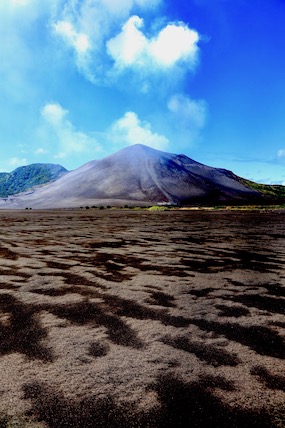
Main image: Mount Yasur, Vanuatu

Book review: Wimmera by Mark Brandi

I’ve heard Mark Brandi talk at a few writers festivals and enjoyed listening to him, so finally got around to picking up his book Wimmera.

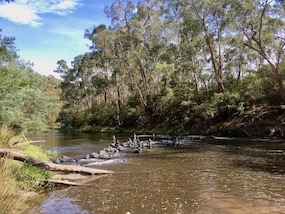
The river

It’s a story about two boys who grew up together in western Victoria in the 1980’s and it exposes dark secrets harboured in a small country town at a time when young adolescents had a lot of freedom and people trusted one another, sometimes a little too much. It shows how kids struggle with how to deal with their own emotions and those of adults who behave badly.

One of the things I found most interesting about this story was how Brandi used his characters change of voice through the work to show the boys at different ages. The first part is told in the voice of young Ben and provides a fascinating insight into the inner workings of adolescent country boys as they navigate growing up. I found the boys fascination with tits and body parts as their hormones raged mildly annoying but admired its realism.

Majesty

Brandi takes us through the story at a pace akin to how life in the country moves and meanders his way to a slow reveal. He uses great restraint in his writing and while he holds back many details, he provides enough of a sense of what’s going to make you wish it wasn’t.

In the second part of the story the two main characters Ben and Fab are in their early twenties and Fab is the narrator. He works at the supermarket, longs after a barmaid married to a man who doesn’t treat her well, and yearns for better things in life.

Ben and Fab meet up again just when Fab has decided to take a risk and try to make a go of moving to the city. The dark sinister secret that has been lurking in the background of the story is revealed when a body is found in the river, and before Fab leaves for the big smoke the boys find themselves caught up in a police investigation.

Cairn

Brandi handles the subject of child sexual abuse delicately, exposes the power relationship between children and adults from a child’s point of view and the lasting scars that can change the course of a child’s life. He provides enough information to know things are wrong but leaves the graphic details to the imagination of the reader. It took me a while to read the first part of the book, but it’s a compelling read and the change of pace in the second half had me racing to the end. I notice he has a new book out called The Rip, so will have to read that one also.

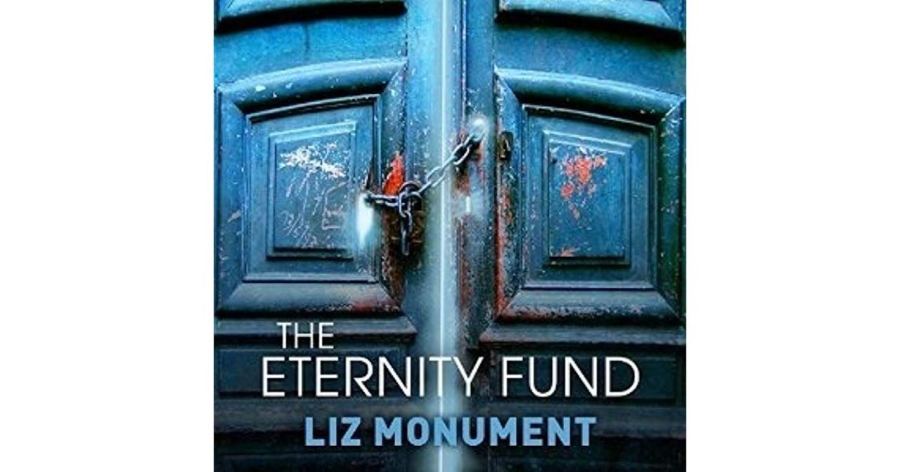
Book Review: The Eternity Fund by Liz Monument

Fahrenheit Press is fast becoming my go-to for crime fiction reads, my latest conquest being The Eternity Fund by Liz Monument.

Mount Yasur, Tanna Island

The Eternity Fund is set in a dystopian future world after some kind of cataclysmic event has laid waste much of what we know, and it’s a tough place to exist for most. The population eat cloned food (except for the very wealthy), vegetation is fake, some people are part human-part animal and others have had their memories, eyes and body parts enhanced with cybernetics.

Mount Yasur, Tanna Island

Ex-sex worker Jess Green gets recruited by the Unit that governs the world to work for Department Thirteen (Crime Solutions) because she’s an empath who can sense peoples movement and thoughts. Mo, her handler is a man of few words with a chip on his shoulders, who is serious about his job and won’t let Jess out of his sight – she’s not supposed to go anywhere without him, but of course she does.

Something is going on in the dead zone known as the Cinderlands, the epicentre of the cataclysm that occurred, and when a sinister brotherhood starts snap freezing large groups of people to harvest their organs, Jess and Mo get put on the case.

The duo investigate the crimes at the same time as Jess’s past starts to haunt her – the two things collide in a dramatic climax, but you’ll have to read the book to find out that part!

I don’t usually ready science fiction, but this futuristic noir thriller hooked me right in and I really enjoyed it.

Writing about place

“It’s not what you look at that matters, it’s what you see.” – Henry Thoreau

Imagine a place that holds significant meaning or memories for you. What emotions does it evoke? How does it smell, sound, look? What stands out? How do you and others interact with it? Are there historical or contemporary narratives associated with this place?

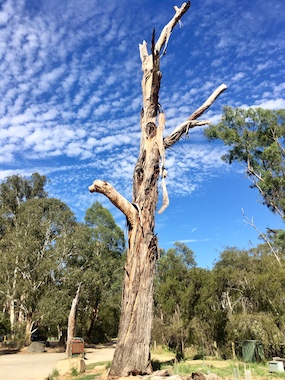
Majestic death

I took a break from working on my novel last week and wrote an essay to enter a Writing of Place competition, the aim of which is to explore the writers relationship with some aspect of the Australian landscape. One of the interesting things about writing an essay is that it draws on your personal lived experience but also opens the writing to historical perspectives, artistic works, science and philosophy. My research has been wide ranging and I have had to refresh my memory for referencing!

But I’m a fiction writer, so why am I bothering with this you might ask? Because place is such an important element of writing fiction (often referred to as world building) that I think it’s worth some focused practice.

In fiction, we incorporate a characters interactions with the environment, what they see, how they see it and what emotional impact it has on them to help develop the character and plot. Understanding our own responses to a place can help to develop our skills for writing place in our fiction.

Melbourne

The idea of place is an elastic and subjective one, constructed through our personal perspective, our cultural lens and the values we attribute to it. Suburban Melbourne beats in the heart of many of Peter Temple’s novels and he uses place to capture the socioeconomic and cultural tone succinctly, as in this excerpt from Shooting Star. On reading this I imagine a working class suburb in the west of Melbourne filled with small houses in disrepair as the owners cannot afford the maintenance.

“The house was in a street running off Ballarat Road. Doomed weatherboard dwellings with rusting roofs and mangy little patches of lawn faced each other across a pocked tarmac strip. At the end of the street, by the feeble light of a streetlamp, two boys kicking a football to each other, uttering feral cries as they lost sight of it against the almost-dark sky.”

Place can be natural or man-made environments and it can be about the minutiae of a particular tree in a forest, or an ant hill, or a room, or extend to the grand scale of a planet, or the universe. Writing about place incorporates our sensory experience of it and aims to open it up and bring it alive in a way that enables a reader to feel, see and understand it in the same way as we (or our characters) experience it. 

In The Picture of Dorian Grey, Oscar Wilde uses the senses to immerse us in the location of the opening scene and evoke a sense of how the character feels about their environment. I am transported to an English summer country garden and the overwhelming perfume of flowers drifting in through casement doors thrown open to the warm day by this passage.

Shoreham

The studio was filled with the rich odour of roses, and when the light summer wind stirred amidst the trees of the garden, there came through the open door the heavy scent of the lilac, or the more delicate perfume of the pink-flowering thorn.”

In writing about place, detail matters and the language we select to etch the detail on the readers mind will determine the resonance left with our audience. Too much detail might be accurate, but it can also be bland. Being selective about descriptive details, but making use of all the senses, creates a feeling of intimacy and mood that immerses the reader in our stories.

In the Handmaid’s Tale, Margaret Atwood uses the detail of Offred’s room to generate a powerful, disturbing and dark world. Her use of simile induces a sense of desolation and loss for the character observing the room. And the staccato sentences ooze desperation.

The Room

“A chair, a table, a lamp. Above, on the white ceiling, a relief ornament in the shape of a wreath and in the centre of it a blank space, plastered over, like the place in a face where the eye has been taken out. There must have been a chandelier once. They’ve removed anything you could tie a rope to.”

A strong sense of place transports the reader into the world of your story. Practicing how a location looks, feels, smells and sounds, and trying to give it a voice helps us to understand how we can use it in our fiction and give place a living voice.

What do you do to develop your skills in writing about place?

Main image: Cairns in the Yarra

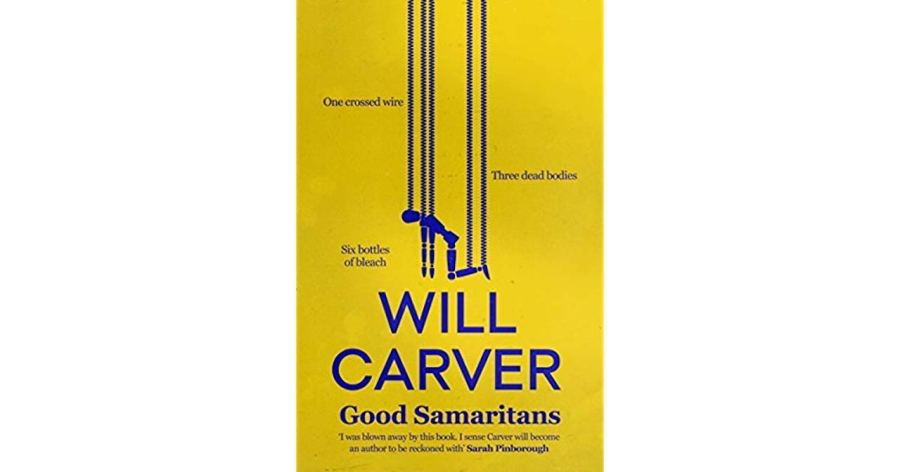
Book Review: Good Samaritans by Will Carver

It takes six bottles of bleach to clean a dead body.

Gallery of Modern Art, Brisbane

A lonely insomniac in a dysfunctional marriage with a wine guzzling wife who compulsively watches crap TV seeks late night comfort in the sympathetic ear of strangers plucked from the phone book at random.

A promiscuous misunderstood woman with several failed relationships and suicide attempts finally meets someone who accepts her for who she is, listens and understands her.

A man traumatised by the suicide of his childhood friend who he found hanging on the back of a door whilst they were traveling overseas together tries to assuage his guilt by dedicating his life to saving others and developing a few obsessive compulsive behaviours.

The character’s flaws are exposed like festering wounds via the short chapters which build suspense and unveil plot twists at every turn switching from one characters bizarre view of the world to another.

The Bridge, Adelaide

The unlikeable characters trudge through life in dysfunctional relationships rife with unhealthy sexual practices and violence while they grapple with dark thoughts and obsessions bought to light via crossed wires. Dark, sick, twisted, quirky contemporary domestic noir set in a dull suburban backdrop.

Thrillers are meant to suck you in, elevate your heart rate and totally freak you out. Will Carver does all these things with Good Samaritans. I could not put it down despite being disturbed and disgusted by the tortured souls and their cat and mouse antics. Even the contrary title made me cringe.