

It the second Australian Writers Centre course I have completed this year. I signed up for Pitch your novel: how to attract agents and publishers as I thought it would be a good companion course to Inside Publishing which I reviewed in August, and I was right.
The online self-paced course was created by historical novel writer Natashia Lester and includes nine modules. As with Inside Publishing purchase of the course gives you twelve months access to it online, and allows you to download the resources. The course presents advice on strategy and practice tips to get yourself pitch ready.
Module one focuses on developing a writing CV which includes building an author platform, an overview of relevant writers societies, creating a pitch package and putting yourself out there to build a writing network.
In the second module Natashia provides advice on how to make your manuscript pitch ready including what professional services are available to provide assistance, and free sources you can tap into for help.
Module three focuses on literary agents – what value they add, why your should consider pitching to agents before publishers, how to identify agents to pitch to, developing a pitch and keeping track of your approaches to agents.
The fourth module focuses on the pitch itself. Natashia provides advice on developing three different types of synopsis and when to use them, including examples from her own work.
Module five covers preparing a pitch package. It explains what research you need to do to develop your pitch package, what to include in the package and in what order.
In modules six and seven you’ll find out about what to do when you get a response from an agent, other than get excited. These modules provide practical advice about how long the process might take and what to do if you receive feedback from an agent.
Module eight moves onto pitching directly to publishers including which publishers are out there, how to find them and decide whether you should pitch to them. Practical advice about submission guidelines, how to organise your material and decide in which order you should approach publishers.
Natashia explores other ways to get published in module nine, including entering competitions, how to find these opportunities, information about some of the main ones in Australia and things to consider when submitting to these programs and prizes.
The final module looks at what to do if you get an offer including some basic advice about contracts and when and how to get help (I recommend Inside Publishing for more detail on actual contracts), as well as dealing with rejection because we all know we’re going to get some of that.
After completing a couple of the Australian Writers Centre online course, I’m a convert. They are professionally constructed, practical and chock a block full of good advice and resources.
Main image: Everything You’ve Got, Epi Island, Vanuatu



















 The more I edit, the more respect I have for those who work as editors. They must find and iron out the faults in order to polish a writers work so that it really sings like a finely tuned instrument, yet balance that imperative with the limits to which they can push a writers ego. No wasted words, no words out of place. And anyone who has had to provide ‘constructive feedback’ knows how hard a line that can be to walk when your hope is to get the best outcome. For many writers their work makes them vulnerable and can be a vehicle for their hopes. Push too far and the feedback can be lost in the others woundedness. Don’t push enough and the work may never meet the authors expectations once out in the world.
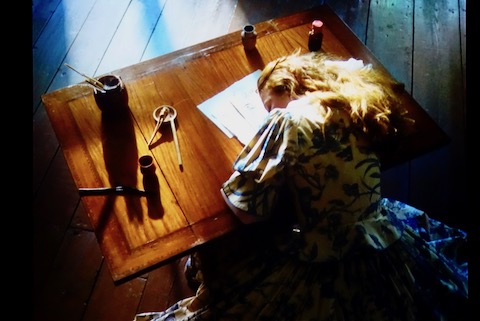 In the moments I feel like I am getting sick of editing I remind myself why I’m doing it. I want to make the work as polished as I can – before one of my beta readers, or an actual professional editor reads it. Because then I will get the best out of the collaborative editing process.
 R L Smith