Review: Law Week Event on Stalking, Trolling and Cyber-Bullying

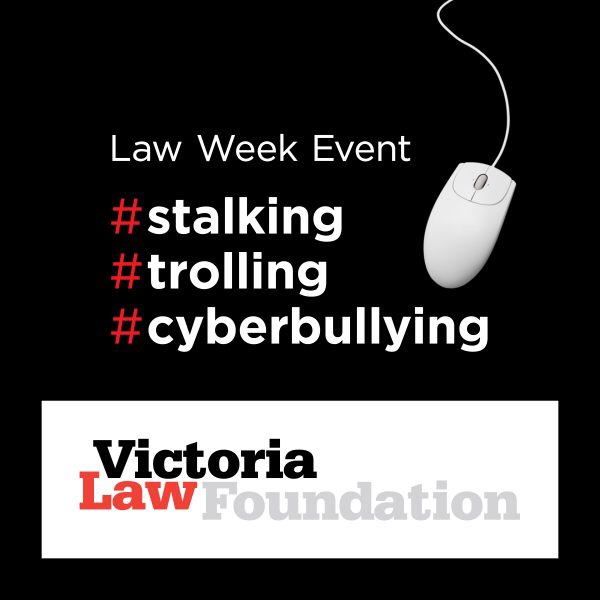
Sisters in crime hosted a Law Week event in partnership with Victoria University last week on the subjects of Stalking, Trolling and Cyber-Bullying. The Age journalist Wendy Tuohy, interviewed authors Ginger Gorman (Troll Hunting: Inside the world of online hate and its fallout), Emma A Jane (Misogyny Online: A short (and brutish) history) and Rachel Cassidy (Stalked – The Human Target) about predator trolls who use technology to bully, troll or stalk their victims to the extreme.
The author talks were reminiscent of Eileen Ormsby, author of The Darkest Web: Drugs, Death and Destroyed Lives, whom I listened to at Adelaide Writers Week. Ormsby talked about how the internet (her focus was the dark web) has created a safe place for bad people to meet, talk and normalise one another’s antisocial behaviour.

The Law Week speakers described the perpetrators of predator trolling as primarily narcissistic, entitled, anglo, straight young men. They often work in well organised, structured syndicates and find someone to target who they see as the ‘other’. They search for a targets weakness and then threaten harm or incite them to hurt themselves. They then set out to demonise, dehumanise and harm by choosing some characteristic (religion, ethnicity, gender, sexuality) to focus their harassment on.
Gorman drew the analogy that cyberhate is the modern day version of workplace harassment and domestic violence. It was an interesting observation on the internet as a social device. As a communication tool the internet can amplify both the good and bad of what has historically only happened in the school yard or the workplace. However, unlike the schoolyard or workplace, there is little, if any attempt to moderate or prevent harmful behaviour online and without moderation or regulation the internet can become like the island in Lord of the Flies.

Ginger Gorman was not entirely without empathy for some of the men she met online, despite having been the victim of trolling herself. She spent some time exploring the common characteristics of those who become predator trolls and found quite a lot of unhappy upbringings in disfunctional families, where parenting was outsourced to the internet and children were left vulnerable to grooming by other angry disenfranchised people online. An experience that perpetuated hate. She also found many trolls to be educated intelligent, but hateful men (mostly), some of whom were married with children and you probably wouldn’t connect with this behaviour if you met them in passing in real life.
When disenfranchised individuals get together in unregulated forums that enable anonymity, bad behaviour can snowball and become amplified. It’s a sad reflection on what’s broken in society if support structures aren’t available for either the disenfranchised youth who are destined to become predator trolls given the right set of circumstances, or the victims they harass.

Gorman has been heavily criticised by some for giving attention to the people she met online, but having been a victim of trolling herself I suspect she did not undertake the exercise lightly. It’s a complex area that will not change without shining a light on it.

It will be interesting to see if cybercrime starts to creep into more crime fiction narratives in the coming years as there’s certainly plenty of content for it. The three authors at Law Week have produced non-fiction works that will prove to be excellent research material for fiction writers with an interest in this area, and present some fascinating insights and plenty of food for thought. The take away message for me was a comment by one of the speakers at the end…

“Take your radical empathy online.”

Respect Matters

There are a lot of ordinary people in the world who do extraordinary things. Most of them pass through life unnoticed by all except those whose lives they touch. A small number become immortalised when their contribution is recognised by the media, awards, or writers who become fascinated enough in their stories to commit them to paper, but most often the extent of a person’s contribution to society, only becomes apparent when we hear others tell stories about them.

Last week I went to a living wake for a woman called Katrina Leason, a long-term friend of my partner, and someone I have come to love and admire through that association.

Zelda’s Place Collective

In the mid-eighties when feminist activists began to challenge dominant discourses about violence against women, a group of young women in Melbourne got together and formed a collective to set up Zelda’s Place which provided support and accommodation to young women who were victims of incest. Katrina was one of the founding collective members.

The collective named Zelda’s Place after Zelda D’Aprano, a staunch feminist, labour unionist and pay justice advocate. Zelda was an unstoppable force in the women’s movement and the labour movement. She got sacked from factory jobs for speaking out about unfair condition for women, organised pub crawls with groups of women to drink in bars that banned women from entering, and chained herself to the doors of the Commonwealth bank in 1969 to protest the dismissal of an arbitration of an equal pay case with the meat industry union. On another occasion she chained herself to the doors of parliament house, only to have her chains cut and removed by a police officer. When the officer suggested she should be embarrassed by her behaviour, Zelda responded she was not because soon there would be more women joining her. Sure enough they did, and Zelda formed the Women’s Action Committee and the Women’s Liberation Centre with them, and the women’s liberation movement was born.

Outdoor glamour

Zelda’s spirit inspired the young women’s collective who formed Zelda’s Place, five of whom were at Katrina’s living wake. The five have taken varies trajectories in their careers, but Katrina, like Zelda, and the in the spirit of that first collective, dedicated her professional life to ending violence against women.

On sighting Katrina from a distance you would not immediately pick her as a staunch feminist, she doesn’t fit the stereotype. She is glamorous. Tall, blonde, immaculately dressed and always made up. It is not until you speak to her that you realise she is a woman not to be taken lightly.

I had known for some time that Katrina had done quite a lot of work with the Australian Football League (AFL) around reducing violence against women. What had not dawned on me was that she was one of the drivers behind the professionalisation of women’s football, which emerged as a national competition backed by the AFL in 2017.

Gathering

Katrina had realised some time ago that Australian’s love of sport could be a vehicle for change and bought her more than twenty-five years of working to create more inclusive environments to the male dominated world of football.  She believed that increasing the participation of women in football was key to the cultural change needed in community football clubs to prevent violence against women and girls, and pursued that belief with the same strength and determination that she pursued all her years of working to eliminate violence against women. I imagine that many of the blokes in the football world would have been surprised by Katrina.  As my partner pointed out; Katrina Leason never shies from a fight, but always turns up dressed for a ball.

Katrina has approached her illness with the same pragmatism she has applied to her life.  Meditation has given her inner strength to withstand many challenges and to stand tall with dignity and pride in the face of opposition and adversity, along with her connection with family and close friends.

We live in a society that is largely afraid of death, and where talking about it is often taboo. Katrina chose to take a different path and engaged a Buddhist death doula to provide non-medical support to her and her family through her end of life journey. Doula’s can help us to lean into death, to steer away from the socialised silence that most commonly surrounds dying and that brings disconnection rather than that which we most crave – connection.

A Splash of Gold

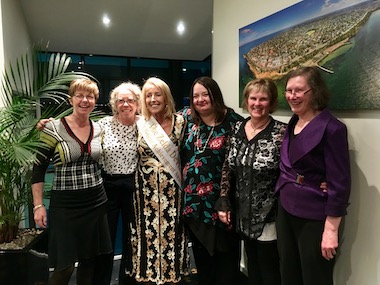
The theme for Katrina’s living wake was semi-formal with a splash of gold and she looked ever glamorous in a long dress with gold braid. The gathering took place over a sit-down dinner at the same place Katrina and her husband, Peter, had married, but the main event was the family and friends who spoke.

Katrina gave those who knew her the opportunity to tell her, and for her to hear their words that she would not have experienced had they been spoken at her funeral. It was a beautiful evening to be part of.

I sprayed my hair gold and shed quite a few tears at the beautiful speeches.  The final speaker presented Katrina with a well-deserved Zelda D’Aprano Lifetime Achievement Award in honour of her tireless work to contribute to the elimination of violence against women. Afterwards I felt I knew Katrina a little better and had a deep sense of gratitude for the woman in who’s honour I was there, for showing us what it means to strive not only for a good life, but for a good death as well.

Book Review: The Shut Eye by Belinda Bauer

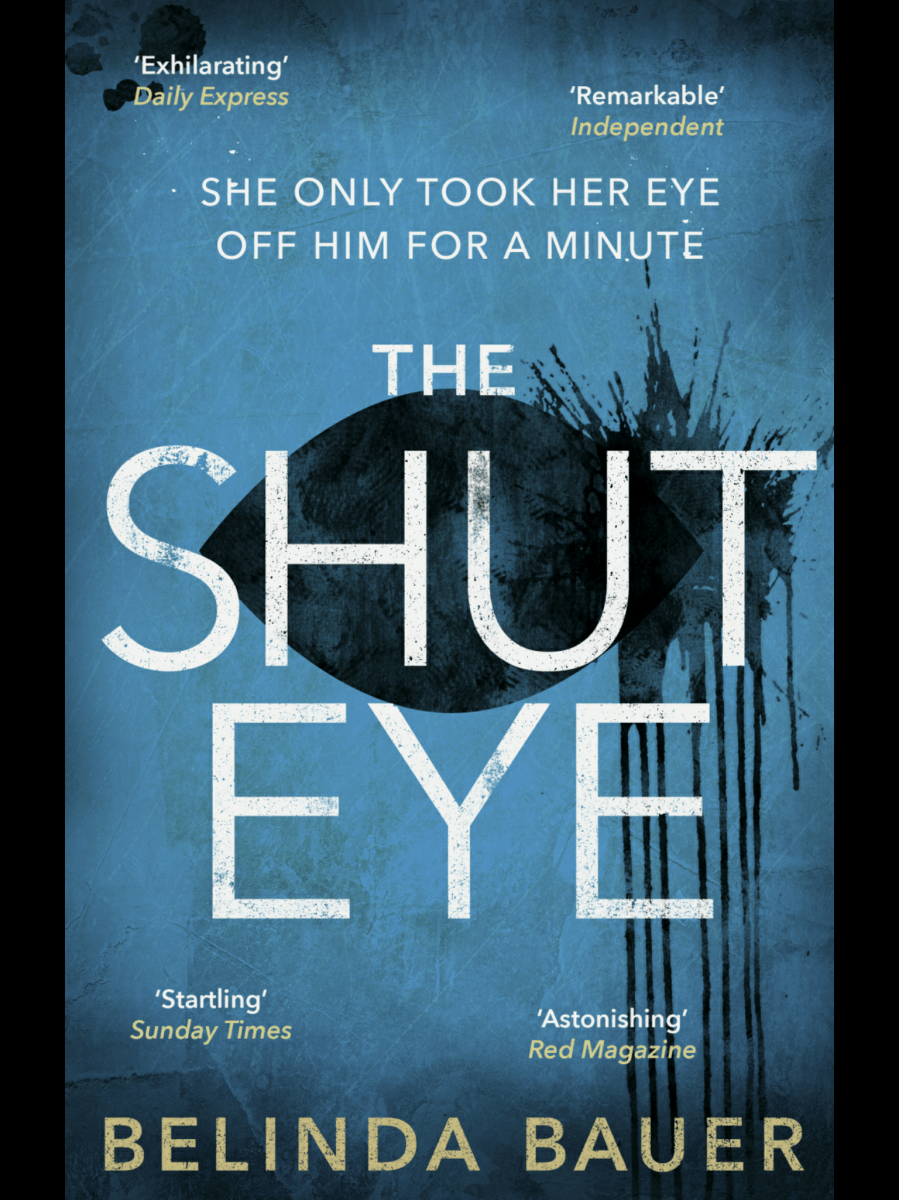
Anna can’t bring herself to end it. Instead she spirals toward insanity while she sits on the pavement outside her house and polishes five tiny footprints embedded in the cement, protecting them from passers-by. Her son Daniel disappeared and the footprints are all she has left.

DCI Marvel is a curmudgeonly detective who hates most people but has a uncharacteristic empathy for the missing and murdered. His mood takes a turn for the worse when he’s assigned to look for his bosses wife’s lost dog.

Anna and Marvel meet when Anna is trying to throw herself off a bridge. When Anna goes to a psychic for help to find Daniel, she meets the owner of the missing dog and decides to help the cynical Marvel find it. Then things take a strange turn.

English crime writer Belinda Bauer brings her characters to life by exposing quirky details about the absurdities of life and then weaving them with human tragedy. She has a knack of making the almost unbelievable plausible and times you’re not sure whether to laugh or cry. Her prose flows in a way that is easy to digest and draws the reader into the characters.

The first Bauer novel I read was Snap, short listed for the Man Booker Prize in 2018. Snap was a page turner that surprised and delighted with its offbeat, idiosyncratic characters and made me an immediate fan. I must admit I wondered if I would enjoy her earlier novels as much given I seemed to have started with the best. I’m pleased to say The Shut Eye did not disappoint and I’ll be delving into more of her work in the future.

Recycling Books

Guggenheim, New York

In 2015 on a trip to New York I had the good fortune to meet a gentleman who worked at the University Club in Manhattan. It’s an elite private club established in 1861. Its purpose now is to promote Literature and Art and it’s based in a Mediterranean-Revival-Italian Renaissance palazzo-style purpose built building constructed in 1899 on West 54th Street. The Club hosts one of New York’s greatest private art collections which includes works by American artists Gilbert Stuart and Childe Hassam. It also has an extraordinary reading room with ceiling murals by H. Siddons Mowbray that were modeled after the Vatican Apartments (unfortunately I couldn’t take photos).

The gentleman gave us a tour of the building, library and rare book collection and it was one of the greatest book highlights of my life so far. Some of the rare books we were shown included:

‎⁨Strahov Monastery and Library⁩, ⁨Prague⁩, ⁨Czech Republic⁩
  • Ptolemy Geographical (1511): an early publication of geographical maps pre-dating knowledge of Australia’s existence, which does not appear in any of the drawings.
  • Domenico Fontana Architecture (1590): which described and illustrated the removal of the Vatican Obelisk from its old location behind the sacristy of St. Peter’s, where it had been since the reign of Caligula, to its present location in the center of the Piazza of St. Peter.
  • The natural history of Carolina, Florida, and the Bahama Islands 3rd edition, Mark Catesby (1771): which contained drawing of the figures of fish, snakes, turtles, etc.
  • Handwritten Patent of Nobility, King Ferdinand to Don Pedro Jacinta Elantra (1750): a royal manuscript printed on velum (goat/sheep skin).
  • Trattato del giuoco della palla (1555), Antonio Scanio: the first book ever written on the rules of tennis.
  • Book of Common prayer (1770’s): which had a fore edge painting, a painting on the edge of pages that can only be viewed from a certain angle.
Guggenheim, New York

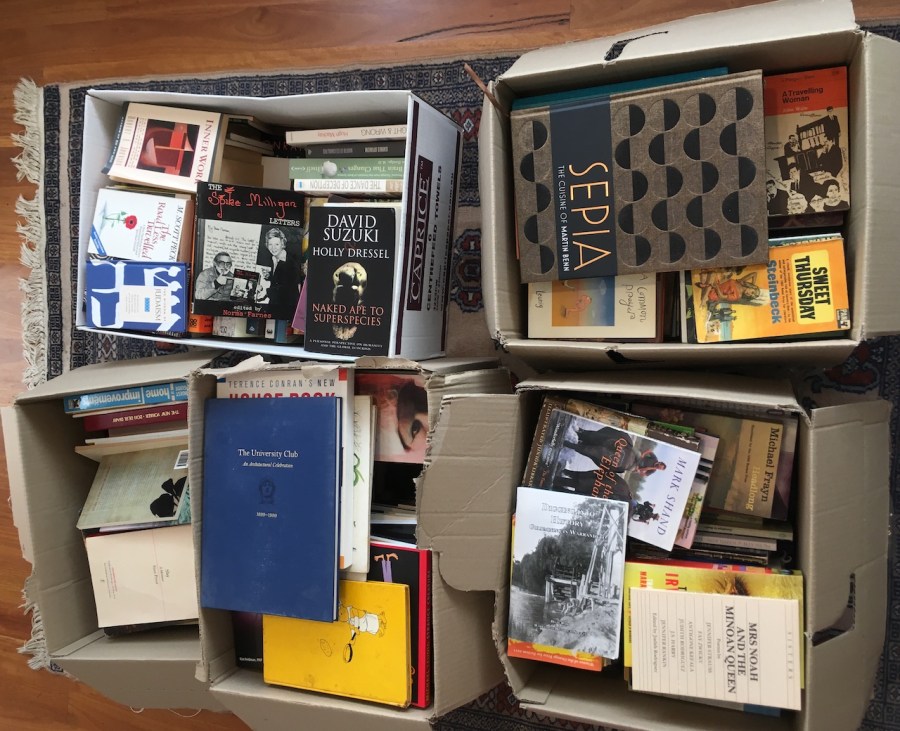
I set about reviewing and rationalising my own book collection for the first time in about ten years last week, and while it may not contain any valuable or rare books it was an interesting trip through my own history, because a book collection can tell us a lot about ourselves. They put on display an intimate insight into our intellectual lives, inspirations, influences and escapes. I remember the last time we did this exercise and took a big load of books to our local second hand bookshop. It was after a youthful phase of reading loads of self-help and personal growth books.

The shop owner foraged through the boxes, turned to us and said, “I hope you feel better now.”

Guggenheim, New York

This time the throw out pile, about eight boxes, includes an eclectic mix of mainly literary and genre fiction. There are also a small number of management, cooking and personal development books.

What we chose to keep on our bookshelves is as interesting as what we discarded. The unread; favourite reference books (cooking and gardening); the books we loved and reread with the bent spines and creased pages (like Tracks by Robin Davidson; The Catcher in the Rye by J. D. Salinger; poetry books; and anything by Jeanette Winterson); the nostalgic volumes that hold some fond memory from childhood that we cart from house to house even though we may never read them again (James and the Giant Peach by Roald Dahl; The Black Stallion Walter Farley; Midnight by Rutherford Montgomery); and the ones we read as adults that hold some historical meaning and we might revisit one day (Equus by Peter Schaffer; Zen and the Art of Motorcycle maintenance and all those tomes on the art of classical dressage written by the greats like François Robichon de La Guérinière and my own teacher Master Nuno Oliviera – even though I no longer ride)

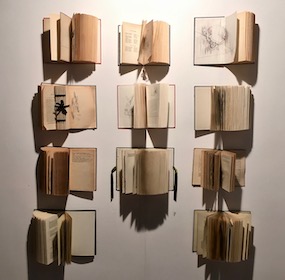
Book Art, Adelaide

Of course when I mentioned discarding books, I didn’t mean throwing them away, that would be sacrilegious, there are many options to consider, disposal being the last resort. I have seen some amazing creative uses of old books from art installations to turning them into a bed base. I will attempt to find homes for as many as possible with friends, at second hand bookshops or by donating them to the local library, or op-shop, or one of the places around Melbourne listed below. Then I’ll set about filling up those empty shelves again.

Aboriginal Literacy Foundation: accepts donations of new and used children’s books. Refer to the criteria on their website before sending or delivering books.

Australian Books for Children of Africa (ABCA): appreciate good quality kindergarten to year seven books, both fiction and non fiction, new and second hand, including story books, dictionaries and atlases.

Lifeline: raise over 80% of their operational costs through retail activities such as Lifeline Shops and has drop off points around the country that accept books

National Prison Book Program: is run by teh The Australian Prison Foundation and has collection points in Melbourne

Street Library, Berlin

Street Library: Community home’s for books in the street where people can simply reach in and take what interests them; when they are done, they can return them to the Street Library network, or pass them on to friends. The website shows drop off points

Brotherhood books: When you donate or purchase a book from Brotherhood Books, you are supporting the Brotherhood of St Laurence in working for an Australia free of poverty. All the proceeds of these book sales are reinvested back into the charitable operations

Vinnies: accept donations of quality books – fiction, non-fiction, childrens

Do you ever clear out your book shelves? What do you do with your second hand books?

Let’s talk about sex

I’m writing a mystery/crime fiction novel. It’s full of secrets and lies and deceit and conflict, and a good dose of humour. It’s about a private investigator going undercover to try to find out who killed two activists, and why someone framed a dead junkie for their murders. It turns out the novel includes sex scenes, and I’m developing a whole new level of appreciation for romance writing all of a sudden because of that.

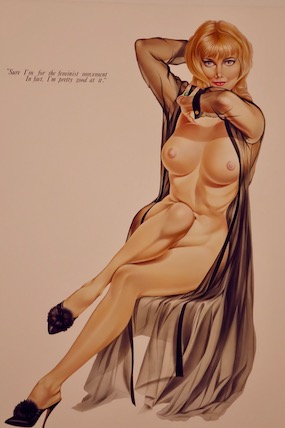
Sure I’m a Feminist,
Whitney Museum of American Art

Despite the fact the novel has a character who is a sex worker, I didn’t intend to include any sex scenes, it’s a crime novel after all, but my MC and a secondary character had other ideas…and it happened.

Writing those scenes made me more nervous than writing any others. Excuse the pun, but is that performance anxiety? Sex is a messy, clumsy, three-dimensional business. One minute you’re chatting over a great curry and the next there’s an entanglement of sweaty body parts. It’s not easy to bring to life with black ink on a page. To little information and its confusing, too much is tipping into pornography…besides people I know might read it.

The Golden Penis,
Prague Castle

The Bad Sex in Fiction Awards lingers like a shadow over my keyboard whilst I edit. Do I hint at a bit of foreplay and fade to black, or follow them into the bedroom and record what goes on in there? I don’t want to sound like a gynecologist, just include enough to get readers imaginations going and leave them to it. I question every word, knowing that crass metaphors and clumsy euphemisms seem to be what gets authors on that Awards list.

My other lingering doubt is the question of whether sex belongs in crime fiction at all, which some seem to have strong feelings about. Desire and conflict are infused in the genre, and as Kurt Vonnegut said, characters must want something ‘even if it’s only a glass of water.’ Lets face it, intimate relationships are ripe for conflict and what greater desire than the sexual urge? Crime novels revolve around a death, so bringing in its intimate cousin is not so strange, is it? Even crime crusaders have sex sometimes, look at James Bond.

Sex Life of Plants,
Flecker Botanical Gardens, Queensland

Sex and death are intimately connected, and not only because they are topics you’re not supposed to talk about in polite company. For some species in the animal kingdom death is the cost of sex. Psychoanalyst Sigmund Freud and French social theorist Michel Foucault argued that the two topics are fused, that humans have a life instinct, and a death instinct, and that the death instinct pervades sexual activity. The French even frame orgasms as la petite mort, translated to the little death, likening the sensation of post orgasm to death.

If the scenes are important for the development of the character or the plot, and add tension, say because it’s someone the MC shouldn’t be getting intimate with, then they a have a purpose. Just make it low risk and avoid too many metaphors and similes I say.

What are your views on sex scenes in fiction? Do you have favourite or most disliked examples?

Main image: Street Art, San Francisco USA


Free Wheeling

It’s the end of the day, of the end of my second week back at work and as may become evident from this stream of consciousness blog, my brain is a little tired and addled. Yesterday it was Bohemian Rhapsody, but ten minutes ago I had the song The Wheels on the Bus going around in a loop in my head, when the wheels on the actual bus made an abrupt stop. As I write this I’m sitting on said bus, and it ain’t going nowhere, having broken down ten kilometres from home when the door jammed open. I’m reframing the experience as an opportunity for more writing time, very Buddhist of me considering what I want most, is to get home, eat dinner and put my feet up.

Buddha Walk, Crystal Castle, NSW

Speaking of Buddhism, as I understand it, the second noble truth is that suffering is due to attachments and expectations, to grasping and clinging. The idea of letting go makes me think about writing practice, when we need to hold on, and when we need to surrender.

I remember when I wrote my first draft, how chuffed I was to complete it, and how attached I was to those 60,000 odd words, little realising the lessons I was about to understand. Learning to edit was about coming to terms with letting go, to absorb feedback and use it to improve technique, to apply critical non-attachment.

It’s a funny thing that us writers can become so attached to those tiny squiggles on the page, invest so much of ourselves in them as if they were a living part of us and we will become less if we let them go.

A Public Practice, Vienna

I often think of writers as being most akin to musicians. When a musician wants to perfect their craft they will spend hours practicing. They study music theory, receive tutoring from a professional instructor, and develop a work ethic that gives them the grit to keep plugging away at it. They can’t afford to get attached to all those notes, to hoard them all and try to prevent them from floating away as they leave their instruments. They don’t think all their notes played in practice are wasted either. I wonder if writers would benefit from thinking of words more like musicians think of notes, embrace our practice as practice, know that not all our words are necessarily destined for the world, and that the cutting and pruning is about honing and perfecting our craft.

A Long Road Home, Nevada

My commute is a long journey, but hey, so is writing a book right? I’ve been editing for a long time now, and it occurred to me this week how my approach to the task has changed over time. It was a hard lesson, well learnt, when I did a structural edit of an early draft and realised I had to cut and rewrite all of the first five chapters. I think I put down my manuscript for a full week, fuming over the realisation, before I could bring myself to do it. Now after much application, I have become detached and carefree about editing, happy to cut and slash and relegate large chunks of text to the bin. I enjoy allowing fresh ideas to surface as I rewrite and rework, and apply what I have learnt to improve my manuscript.

…Oh, here comes another bus, and I must get on it.

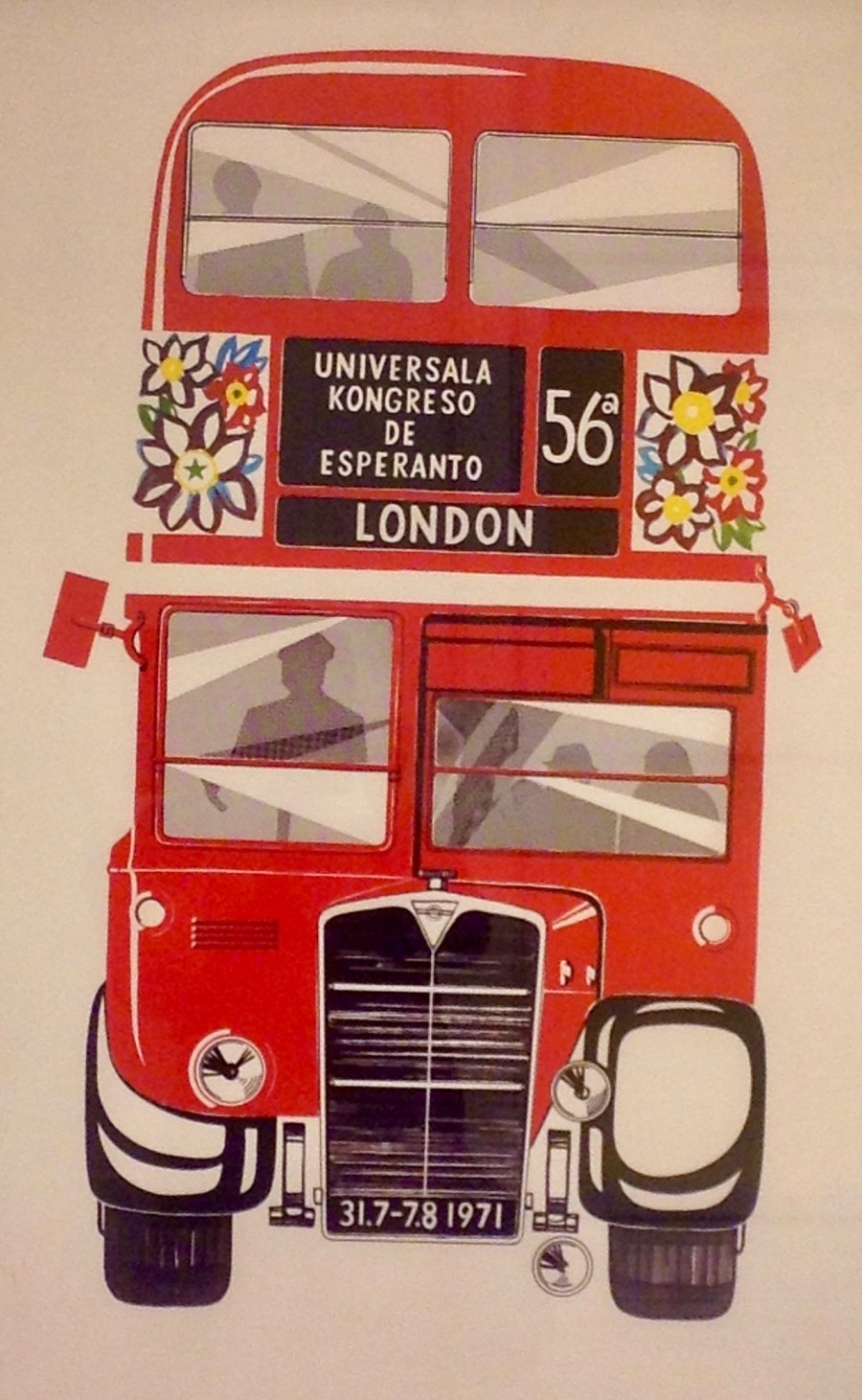
Main image: London Bus, Esperanto Museum, Berlin

The writer’s brain

I’ve been listening to The First Time podcasts recently about the first time you publish a book. Fortuitously, one I listened to this week was an interview with counselor and coach Alison Manning who described part of her work as ‘helping writers with their minds’. She assist writers to understand themselves and their relationship to their writing in a way that aims to overcome roadblocks and self defeating thought patterns.

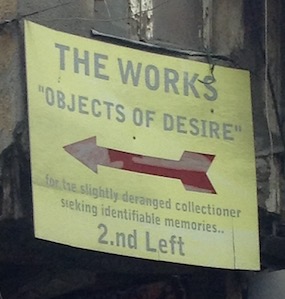
Objects of Desire

The interview included an interesting discussion about some of the myths, from both reader and writer perspectives (particularly first time novel writers), about how beautiful writing is produced. Manning said there is a common lack of understanding of the effort involved in completing a book – that it doesn’t just flow out as the finished product. Writers who are the most resilient operate from a growth mindset. That is that rather than focus on the outcome (getting published, being successful, etc) their emphasis is on valuing effort, development of effective strategies, hard work and learning from whatever happens – regardless of achieving outward success, or what might be perceived as failure. Their interest is primarily in exploring their potential.

Manning quoted research that says one of the five most powerful elements of well-being is achievement for its own sake, doing something that matters a lot to us and doing it because it’s interesting and enjoyable just to see how well we can do it.

Searching for Self

The interview also discussed the importance of focusing on the things we can control, rather than those we can’t. That to find out what’s possible we need to develop the flexibility to allow ourselves to work with what we’ve got, even if it’s not our ideal, and focus on doing what we can.

I thought her advice was useful in a whole range of contexts but the reason I found the discussion so interesting right now was that I had been grappling with feeling a bit disappointed at not completing more of my project during my year off, and wondering how/if I would find the time to finish it once I returned to my busy job. It’s the kind of thinking that can really erode motivation and become self defeating if you give into it. The interview gave me some ideas about managing my own expectations and changing circumstances to help keep up momentum on my project. It could also prove to be valuable advice in the workplace.

Just five more minutes

This week I’ve been adjusting to a new routine after returning to work, as has the hound. We’re up at 5am for the dog walk/run and I’m on the way to the office by 7.30am. My commute is loooong, about 1.5 hours one way, so that is now my writing time – on the bus on an iPad. I’m lucky to always get a seat because I get on at the first stop and off at the last. There will be some days, no doubt, that I will be too tired or full from my day to write and will just sit on the bus and read a book or listen to a podcast, activities related to developing my writing practice, even if not actually writing.

Manning has also done a podcast series called A Mind of One’s Own with novelist Charlotte Wood (The Natural Way of Things) in which they discuss many of the struggles that plague emerging writers, and how you might address them, so I shall also add those to my listening list also. I will add links to both podcasts to my resources page.

Main image: Brain like a Jellyfish

How time flies…

Joseph Campbell was an American mythologist, anthropologist and writer who studied myths and legends. He identified a common thread in story structure that he named the ‘hero’s journey,’ (also known as the monomyth) and noticed that all heroes and heroines took the same journey within stories.

Hero’s cape

The hero’s journey begins with a departure, the call to adventure where the hero departs from the world they know to enter the unknown. Sometimes the hero seeks out the call and sometimes something unexpected happens and pushes them to it. On the journey they face a series of adventures, trials and tribulations that test them (the initiation), they meet allies, enemies and mentors that guide them on their journey and experience an internal transformation that matures them before they returns home changed.

An example of the classic hero’s journey in film is Dorothy in The Wizard of Oz. Dorothy was living an ordinary life in Kanzas and dreaming of excitement when a tornado hit (the call to adventure). Dorothy, our hero enters into the new world of Oz and goes on an adventure. She meets new people (the lion, tin man, and straw man), mentors (Glinda the Good Witch) and enemies (the Wicked Witch of the West). She overcomes challenges like learning Oz is a fraud (the trials) and develops new skills like discovering clicking her heels together will return her home. When our hero returns to her old world she has undergone an inner transformation that furnishes her with a new appreciation for her own life.

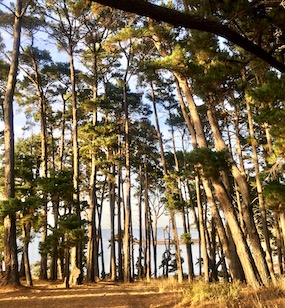
Forest for the trees

Examples of the hero’s journey can also be found in Luke Skywalker (Star Wars), Katniss Everdeen (The Hunger Games), Ishmael in Moby Dick, Jane Eyre, Max in Where the Wild Things Are, and Scout in To Kill a Mocking Bird.

Many say that the adventures and misadventures of our own lives follow the same pattern – we are the heroes of our own journeys and Campbell’s advice was ‘to follow your bliss.’ What he meant by this was that if you do things you are passionate about, you’ll feel fully alive and doors will open up for you.

I am due to return to work on Monday after taking twelve months off to focus on my writing practice and have been reflecting on what I have done and learnt during this past year on my own little hero’s journey. It has been fantastic to have the time off to fully connect with my creative self and focus on my writing practice. I have learnt a lot about plot and character development, story structure, point of view and dialogue, show and tell, exposition, and editing – not to mention procrastination and perseverance.

Adventure awaits

I have learnt that a practice that returns you to the page again and again, even if you don’t feel like it is valuable, and that it’s ok to allow yourself to write crap because that’s where the gems are hidden. I discovered that sometimes writing feels like wading through mud, and at other times you find a state of flow and become so immersed in your work that real world time and space recede. At these times the depths of your subconscious is revealed in surprising and exciting ways and it’s those moments that make you return again and again to the page.

During the year I attended four writers festivals (Melbourne, Emerging, Clunes Booktown and Adelaide Writers Week), completed four creative writing workshops/short courses, a weeks writing retreat, and have almost completed a creative writing course which I commenced in 2016.

Happy Hound

I joined a writers group in my local community and met some fabulous writers via social media – some of whom I have also met in the flesh.

I have written over 200,000 words comprising 63 blog posts, eight short stories and what is now the almost completed fourth draft of my novel. I entered pieces in a number of competitions with mixed results, though for most I am still waiting to hear the outcome, and I took part in a spoken word event reading one of my flash fiction pieces to a crowd of about fifty. Alongside the writing activities I have completed some long awaited garden projects, grieved the loss of my old dog and wrangled a new puppy.

Wishing tree

I am spending my last few days of leave at the beach and as I walk along the foreshore I promise to myself that whilst the shape and speed of my hero’s journey may change, it will continue. I will write on the bus on the way to work and on weekends and continue to develop my craft and learn from the amazing people I have met along the way, and eventually I will finish this damn book so I can unleash some of the other ideas fermenting in my head.

Main image: Shoreham Beach

The Grand Read

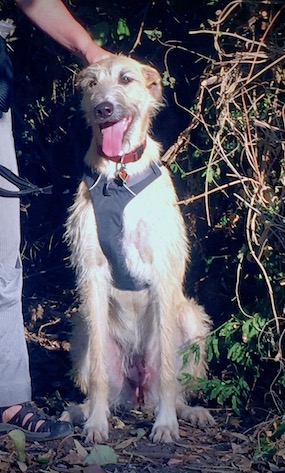
Writers dog

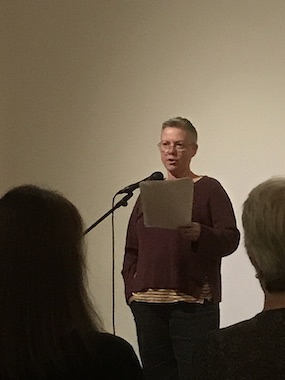
Last week I mentioned that I was taking part in a local spoken word event, The Grand Read. After spending the week torturing the dog with my practice…she probably knows if off by heart now…the night finally arrived. My rehearsals paid off and I succeeded in reading without mishap. I have included the flash fiction piece below and attached an audio file of the reading if you want to hear the spoken version recorded at the event.

Feet of Clay

Lilith rolled and pounded and prodded and plotted. Clay dripped from slender fingers, flecks thrown by the spinning wheel spattered into golden locks, made her beauty more desirable. Twice winner of the pottery prize, prominent and popular, she knew she would be made if she could triumph again. A hat trick to cement her place in the town’s history.

The Grand Read

Rex, her lover, her muse, her confidant, her king; had taken up the craft with the same passion and zeal he had when he had taken up with her, on a summer night many moons ago, on the banks of the river beneath a willow, embraced by the arms of soft green grasses. Lilith admired his body, his coils, his glaze when they sat side by side in the sweltering heat of the kiln, matched only by the heat in his loins, the love she knew he held for her.

Late one night whilst they potted and spun, the soft sounds of love leaking from the stereo; his Swayze to her Moore; Rex leant in close, whispered in her ear so she felt his hot breath brush the down of her lobe.

“I think I’ll enter the prize, we could stand side by side.”

They were doing what they often did, he behind her, clay sliding through fingers, along arms, a sensuous ritual that gave life to art and art to love. The work; a French ceramic flower pot that Lilith would glaze, just so, in imperfect green.

Eden

But his words planted a seed. Its tiny tendrils entwined, wrapping themselves in ever tightening circles around Lilith’s heart, her freedom, herself. That Rex would want not only her, but her dreams, her talents, her prize, struck weeds in her Eden that took root and slowly spread, a demon force that left thorns in her flesh, eroded her love.

Lilith began to work when Rex was away, ignoring his calls, in the dead of the night, to the cries of the owls, the yowls of the cats left out in darkness to hunt like jackals, feast on possums and bats. Creatures that belonged to the night’s forest devoured by those who would slink in and steal their lives.

Prickly Pair

She experimented with silkscreens, with decals and lustres, turned plates, bowls and cups till her back ached and her hands were raw, pitted with cuts and scrapes and burns. Before dawn she squirrelled away her finest work, hoarded from his prying eyes to ensure her stall would be a surprise.

Expo day arrived along with the blues and the whites and the reds of the French. Tents were sprung and tables were set with the fruits of eighty potters for all the world to see, but the coveted potluck prize waited for only one.

Lilith laid her wares with care on white lace cloth, her red dress flared as she twisted and twirled; a flourish here, a tweak there. Embraced in the imperfect green flower pot, planted in soil and ash was foliage the shape of lopsided hearts, splashed, slashed and swirled with plum and purple and scarlet. The showboat and king of the begonia world, its lush and lovely leaves quivered in the summer breeze and set off her stand to perfection.

Woman of Substance

The judge, a dour woman with puckered lips and bulging hips paraded along the river trail inspecting pots, peering in, tut-tutting, enjoying her own importance, before disappearing into a tent to deliberate. Finally emerging, she sauntered a windy path to Lilith’s stall. It was not until she was right up close that she allowed herself to crack a tiny smile.

“Congratulations Lilith, you have won the prize yet again. I was particularly taken with your centrepiece, the imperfect green flower pot holding the begonia. You must tell me your secret to ensuring the good health of this fickle plant.”
Lilith smiled sweetly, gave nothing away, but if you had been listening closely when she bent over the plant after the judge had left you would have heard her whisper.

“We did it Rex.”
Main image: The Queen of the Shire, Deborah Halpren

Microphone, Art Gallery of South Australia

Reading at spoken word events

Street Art, San Francisco

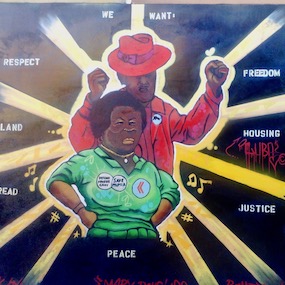
Spoken word existed long before the written word, but its roots as a contemporary performance art lie in the Black Arts Movement (1965-1975) and emerged in the wake of the killings of Martin Luther King, J F Kennedy and Malcolm X. Black artists declared war on racism though their art, spreading messages of black unity, power and nationalism via mobile units of performance poets and spoken word collectives that gathered on street corners and in community parks. As a performance, spoken word, whether poetry or prose, tends to exhibit a heavy use of rhythm and word play compared to traditional writing.

Spoken word can be in the form of poetry, prose monologues, jazz poetry, comedy routines or hip hop. Melbourne has a vibrant spoken word scene and you can go and listen to, or participate in, poetry and prose gigs on most night of the week in pubs and cafe’s and old courthouses across the city and out in the suburbs.

The Grand Read

Since the 1980’s, the town where I live has hosted a two day festival each year that kicks off with a two hour road closure for the street parade with fabulous floats that promenade to the beat of a brass band from one end of town to the other. The weekend unfolds with a film night, an art show, a battle of the bands, pet parades, a giant water slide, canoe and camel rides, billy cart races, gold mine tours, a duck race and a beer brewing competition. One of the concluding events of the festival, commonly known as the cherry on top of the fabulous cake, is The Grand Read, a night of poetry and prose at the pub.

The Grand Read hosts a selection of local writers and poets, and one ‘outsider’ guest. Previous guests have included: poet and psychiatrist, Jennifer Harrison; author and human rights advocate, Arnold Zable; senior lecturer at RMIT and founder of the journal RABBIT, Jessica Wilkinson; and poet and author Kevin Brophy. This years guest is poet, playwright and actor Felix Nobis and I have been invited as one of seven local writers to deliver a seven minute reading.

The piece I will read is a tongue in cheek flash fiction piece about another local event, the potery expo. It will be my first time performing at a spoken word event, so I have been doing some research to help my preparation. Here is a summary of the advice I have gleaned…

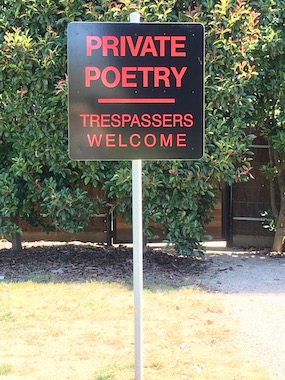
Trespassers Welcome

Breathing: Diaphragmatic breathing is the type of deep breathing done by contracting the diaphragm, such as in yoga practices. You can practice it by lying on the floor and breathing in a way that fills up your belly. Pay attention to the rise and fall of your breath. Diaphragmatic breathing produces a better sound, and has a calming effect because it slows down your heart rate and reduces nerves and stress.

Practice, practice, practice: Performance is a physical activity and rehearsal creates muscle memory in your diaphragm, lungs and tongue, not just your memory. Knowing your piece will improve your performance. Read it out loud walking around the house or to the bathroom mirror until you know it well. Practice until you can lift your eyes off the page and look at the audience and add pause for impact where needed. Don’t be afraid of the quiet between sentences.

Project from your diaphragm: The people in the back of the room have to hear you, so fill up the room with your voice – this doesn’t mean shouting. Most people don’t fully engage their diaphragm, they rely too much on their throats, which not only strains your vocal chords over time, but produces a weaker sound, instead of the round, full sound spoken word poets are known for. To engage the full support of your breath, inhale, allowing your stomach to expand with air, and speak during exhale. The result will be a fuller, projected sound that won’t strain your vocal chords.

Enunciation: Exaggerate the shape of your mouth so you don’t mumble or run your words together. It might feel funny but it’ll force you to slow down and helps your audience understand you. Practice reading with the bottom of a pen or your fingers in your mouth. It helps you learn to shape your mouth the right way and forces you to over-enunciate. Err on the side of exaggeration.

Tempo and speed: It’s harder to slow down than it is to speed up—especially when you’re performing and adrenaline kicks in. Practice slowing down your speech to an uncomfortable, unnatural level so that you can play with pacing in your performance. Emphasize important moments and change pacing in order to help keep your audience captivated. If you feel like you’re speaking too slowly, you’re probably just right.

Spoken Word, San Francisco

Create tension and release: Consider pacing, sound, and intonation to better tell your story. Anticipate the emotional reaction you would like to inspire in the audience, and prepare the performance accordingly by slowing down in places, giving certain words extra space for emphasis, and altering your tone or volume. Identify places within your story where you can pause or add an extra emotional component through performance (you can mark these sections and highlight important words to create a roadmap). How can your voice emphasize the meaning behind the words? Which parts do you want people to remember? What’s the most important phrase or word? Take time to think about these questions and practice different delivery methods.

Be aware of your body: Spoken word is a full body art form – is there anything you can you do with your body that will add to your work? Use natural movement. Standing up straight while speaking is important to get the sound out. It’s especially important to elongate the spine in your neck so as not to constrict the breath in your throat. Lift your chin slightly and imagine a string is pulling the top of you head up. Plus when you stand up straight and assume a strong, confident stance, your audience will be able to hear it in your voice.

Create a warm up routine: Vocal coaches consistently suggest staying hydrated and soothing the throat with warm tea, lemon, and honey. Warming up the mouth and vocal chords is also a a good idea. Try humming your favorite tune to warm up vocal chords, massaging the muscles on the sides of your jaw to release tension, or rolling your tongue and blowing air through relaxed lips to warm up your mouth.

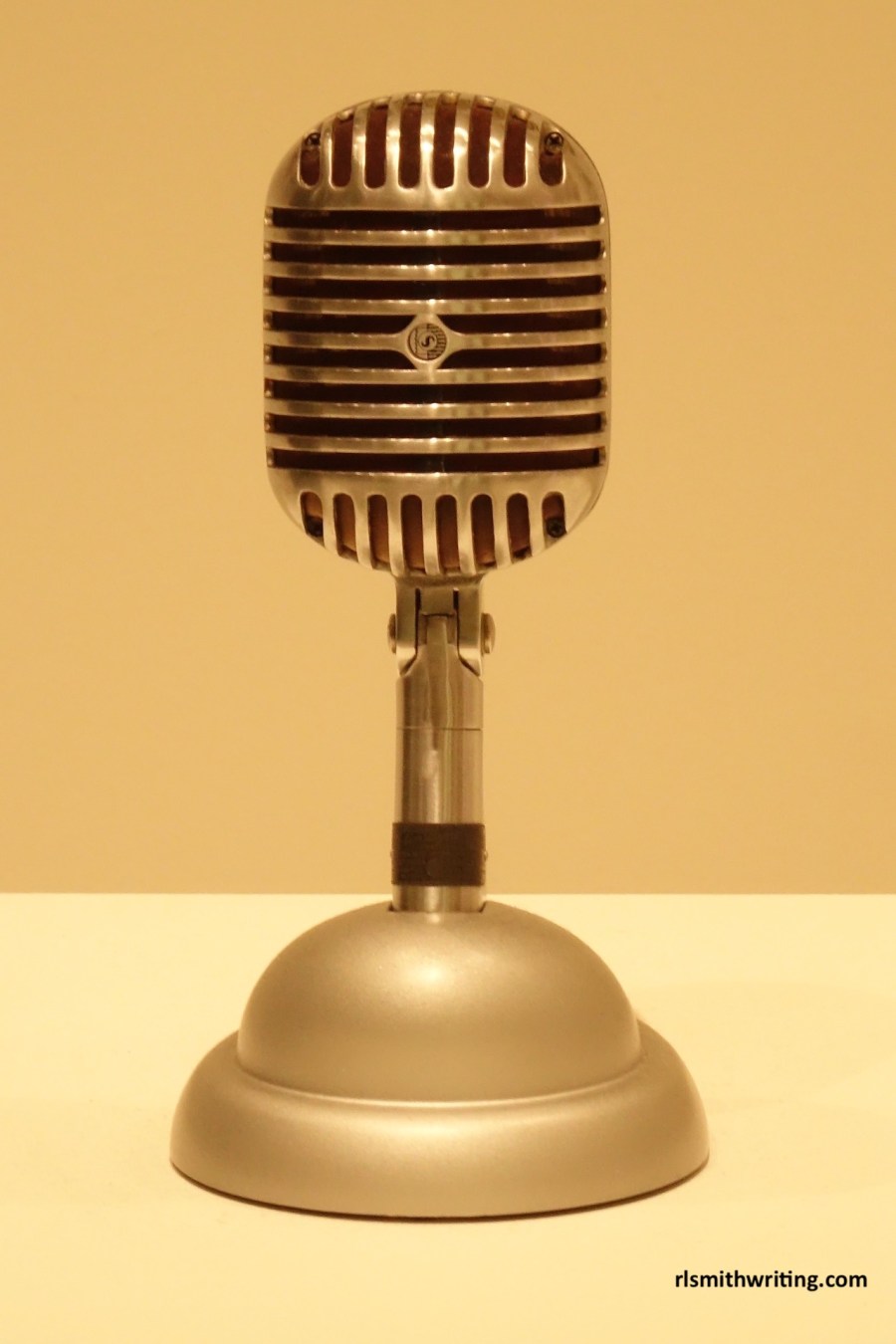
Give the microphone room: Keep the microphone about three inches away from your mouth to produce the best sound.

Waiting

Know that no one likes the sound of their own voice and the audience wants you to do well: When we hear ourselves speak in real time, we pick up on the internal vibrations, as well as the external sounds. But when we hear our voices in a recording, it sounds foreign because we’re not picking up the internal vibrations. We dislike our recorded voice because we rarely hear it as others do and therefore find it unfamiliar, but only you hate the sound of your voice. No one else is cringing and the audience is on your side – they want to have an enjoyable evening.

And lastly…be your authentic self, and eat a banana – it can help you relax…oh, and have fun.