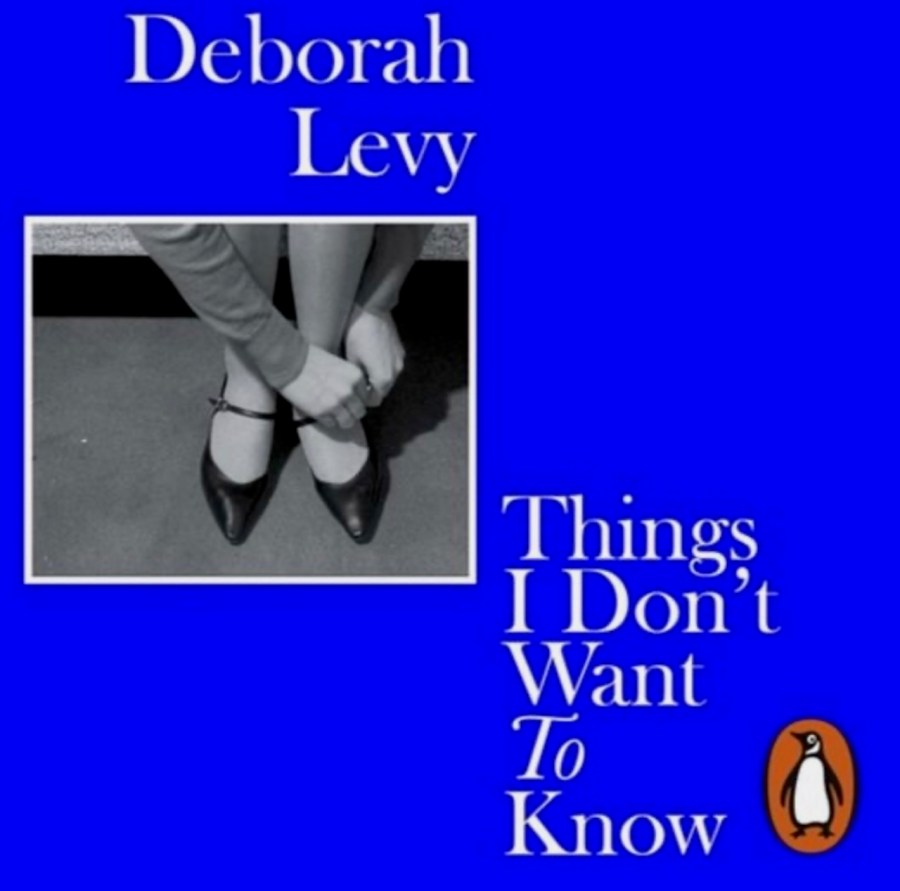
Things I Don’t Want to Know by Deborah Levy is a great title for starters. After all, our self protective measures only ever allow us to see what we want to.
At its heart Things I Don’t Want to Know explores what makes a person want to write. How do we keep doing it in the face of adversity? It is a response to George Orwell’s essay on writing, ‘Why I write’. The existential crisis at the opening catches the reader immediately.
That spring when life was hard and I was at war with my lot and simply couldn’t see where there was to get to, I seemed to cry most on escalators at train stations.
Levy’s writing is exceptional and sophisticated. The book is a short memoir that transitions between Mallorca, South Africa and England. It has four parts, each chapter titled after one of Orwell’s motivations. Two parts are Levy’s life as she’s writing it. One is about her father, an ANC supporter who was jailed in South Africa when she was a child. The fourth is about being a teenager in North London.
Smoking cheap Spanish filthy sock-tobacco under a pine tree was so much better than trying to hold it together on escalators. There was something comforting about being literally lost when I was lost in every other way…
Majorca is at the beginning soon after the escalator crisis. It chronicles an emotional crisis. It also covers the challenges of being a mother and a creative. The final chapter picks up where the author left off in Majorca. Levy has a connection with a Chinese shopkeeper. This results in a realisation. Anywhere with a power point to plug in her laptop to write is where she wants to be.
I rearranged the chair and sat at the desk. And then I looked at the walls to check out the power points so I could plug in my laptop. The hole in the wall nearest to the desk was placed above the basin, a precarious socket for a gentleman’s electric razor. That spring in Majorca, when life was very hard and I simply could not see where there was to get to, it occurred to me that where I had to get to was that socket. Even more useful to a writer than a room of her own is an extension lead and a variety of adaptors for Europe, Asia and Africa.
Levy was born in Apartheid South Africa. She then lived with her godmother after her father was imprisoned. She never really fitted in. After her father was released the family exiled to England. The chapter on egoism explores her teenage self writing on napkins and wearing lime green platform shoes.
When a female writer walks a female character into the center of her literary enquiry (or a forest) and this character starts to project shadow and light all over the place, she will have to find a language that is in part to do with unknotting the ways in which she has been put together by the Societal System in the first place. She will have to be canny in how she sets about doing this because she will have many delusions of her own. In fact it would be best if she was uncanny.
Things I Don’t Want to Know is worth reading for the prose alone. It is also a fascinating dive into the deep self-reflection of a writer.
 R L Smith