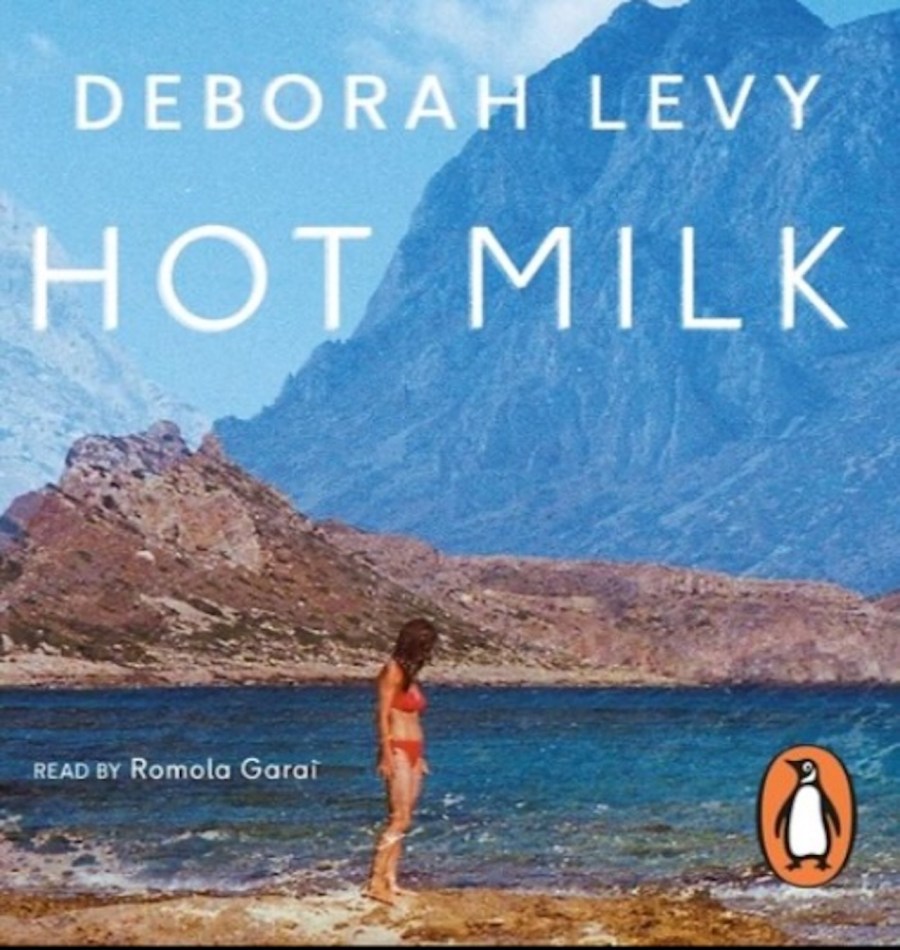
Book review: Hot Milk by Deborah Levy

I spent the weekend at my dad’s place near the beach. It’s a locale not so far from Melbourne but Telstra has largely abandoned it. As a result, there was no internet and little phone coverage. Thus the late review. The few days were very relaxing in a beautiful spot. It was perfect for writing a review set in the Greek islands. 

In the new quiet I heard the sea as if my ears were laid against the ocean floor. I could hear everything. The rumbling earthquake of a ship and spider crabs moving between weeds.

In Deborah Levy’s novel Hot Milk, a mother and daughter travel to Spain. They are seeking diagnosis of, and treatment for, the mother’s mysterious paralysis illness.  

She had no God to plead to for mercy or luck. It would be true to say she depended instead on human kindness and painkillers.

Twenty-five year old almost anthropologist turned waitress, Sofia is her mother’s primary carer. They remortgage the house to pay for treatment by an alternative medicine specialist called Dr Gomez in his Spanish clinic. The doctor, who works with his daughter, is obsessed with a pregnant white cat that lives in his office. It is unclear whether Gomez is legitimate or a quack.

I am my mother’s burden. She is my creditor and I pay her with my legs. They are always running around for her.

Rose frequently uses a wheelchair due to a mysterious intermittent paralysis of her legs and feet. As the story evolves it becomes apparent that Dr Gomez suspects hypochondria rather than a physical illness. He thinks both women are complicit in the illness – Rose for attention and love, and Sophia to avoid making a life of her own. He makes it his mission to try and help both the woman. For Sophia this includes setting a task to steal a fish from the market to build her courage.

Sometimes, I find myself limping. It’s as if my body remembers the way I walk with my mother. Memory is not always reliable. It is not the whole truth. Even I know that.

While in Spain Sofia takes on lovers and explores her sexuality and identity. She meets local Juan when he treats her for Medusa stings after swimming in jellyfish infested waters. She also has a passionate love affair with a German woman called Ingrid. 

Empathy is more painful than medusa stings

Sophia’s relationship with her Greek father is also complex. We discover this when she goes to meet him in Athens. It is their first meeting in eleven years. She wants his help but is unable to ask for it, and her father equally unable to offer.

It would take a while for me not to think of the Greek language as the father who walked out on me

Hot Milk is an exquisite character study of ineffectual parenting. An exploration of the inner world of Sophia and her search for individuation, personal and sexual identity.

My love for my mother is like an axe. It cuts very deep

Hot Milk is a beautifully set, fragmented, quirky and strange story. It is lyrical, haunting and a little depressed. The story is almost dream-like and brimming with poetic metaphors. Sophia strives to become bolder. In doing so, she define herself and her life. Hot Milk was short listed for the 2016 Booker Prize.
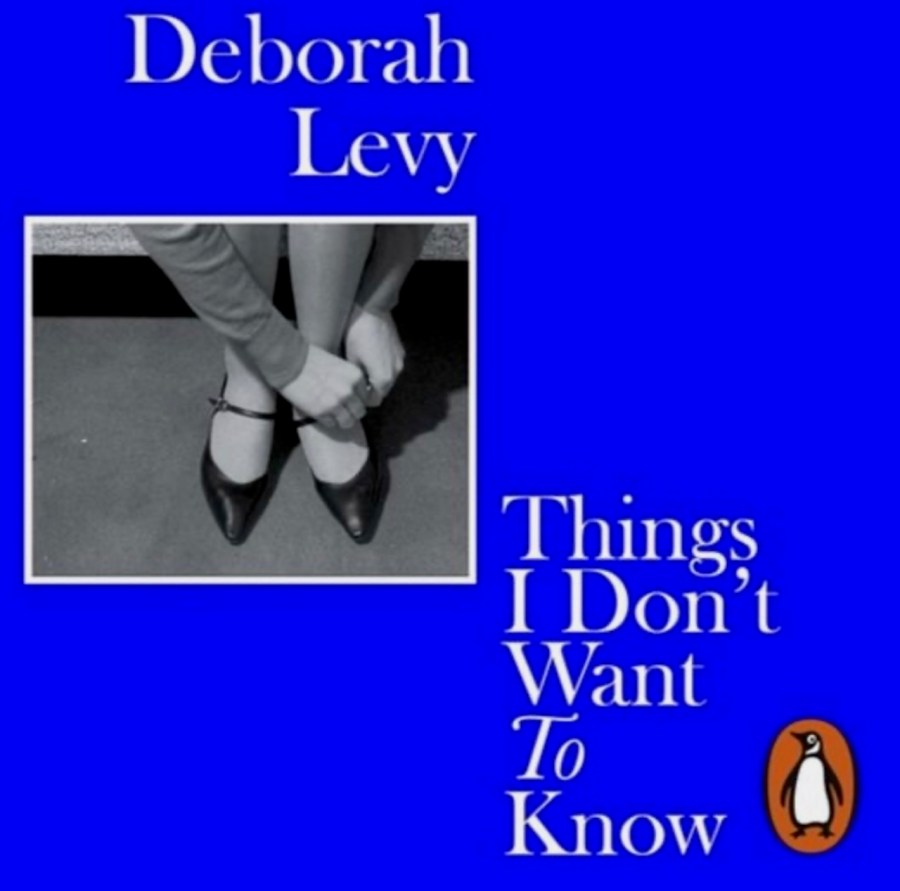
Book review: Things I Don’t Want to Know by Deborah Levy

Things I Don’t Want to Know by Deborah Levy is a great title for starters. After all, our self protective measures only ever allow us to see what we want to.

At its heart Things I Don’t Want to Know explores what makes a person want to write. How do we keep doing it in the face of adversity? It is a response to George Orwell’s essay on writing, ‘Why I write’. The existential crisis at the opening catches the reader immediately. 

That spring when life was hard and I was at war with my lot and simply couldn’t see where there was to get to, I seemed to cry most on escalators at train stations.

Levy’s writing is exceptional and sophisticated. The book is a short memoir that transitions between Mallorca, South Africa and England. It has four parts, each chapter titled after one of Orwell’s motivations. Two parts are Levy’s life as she’s writing it. One is about her father, an ANC supporter who was jailed in South Africa when she was a child. The fourth is about being a teenager in North London.

Smoking cheap Spanish filthy sock-tobacco under a pine tree was so much better than trying to hold it together on escalators. There was something comforting about being literally lost when I was lost in every other way…

Majorca is at the beginning soon after the escalator crisis. It chronicles an emotional crisis. It also covers the challenges of being a mother and a creative. The final chapter picks up where the author left off in Majorca. Levy has a connection with a Chinese shopkeeper. This results in a realisation. Anywhere with a power point to plug in her laptop to write is where she wants to be.

I rearranged the chair and sat at the desk. And then I looked at the walls to check out the power points so I could plug in my laptop. The hole in the wall nearest to the desk was placed above the basin, a precarious socket for a gentleman’s electric razor. That spring in Majorca, when life was very hard and I simply could not see where there was to get to, it occurred to me that where I had to get to was that socket. Even more useful to a writer than a room of her own is an extension lead and a variety of adaptors for Europe, Asia and Africa.

Levy was born in Apartheid South Africa. She then lived with her godmother after her father was imprisoned. She never really fitted in. After her father was released the family exiled to England. The chapter on egoism explores her teenage self writing on napkins and wearing lime green platform shoes.

When a female writer walks a female character into the center of her literary enquiry (or a forest) and this character starts to project shadow and light all over the place, she will have to find a language that is in part to do with unknotting the ways in which she has been put together by the Societal System in the first place. She will have to be canny in how she sets about doing this because she will have many delusions of her own. In fact it would be best if she was uncanny.

Things I Don’t Want to Know is worth reading for the prose alone. It is also a fascinating dive into the deep self-reflection of a writer.