Be Afraid: Terror Australis Readers and Writers Festival

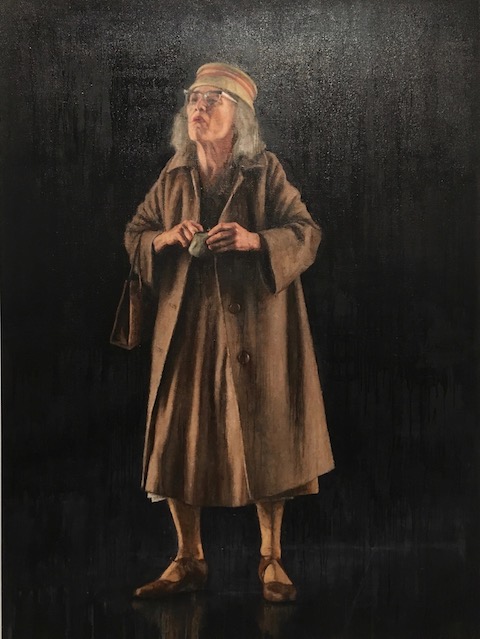
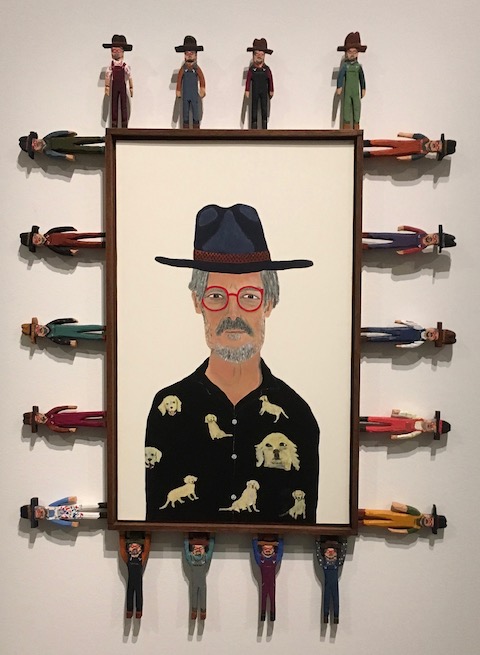
‘Prospero’s Island’, Valerie Sparks

If you’re not into horse racing, bypass Melbourne and head straight down to Hobart over the Halloween – Melbourne cup weekend. Terror Australis Readers and Writers Festival (TAF2019) is a new biennial literary festival to be held at Cygnet in the beautiful Huon Valley 31 October – 5 November. I’ve been looking forward to it for months.

The festival celebrates the work of female crime writers with the theme “Murder She Wrote,” inspired by a visit to Tasmania by Agatha Christie. Christie was on a ten month tour of the British empire taking in South Africa, Australia, New Zealand and Canada in 1922. The correspondence of her travels was published in The Grand Tour: Around the World with the Queen of Mystery. She was so enamoured by Tasmania apparently she said she’d like to live there one day. I’m with Agatha – Tasmania is one of my favourite places also.

“From Australia we went to Tasmania, driving from Launceston to Hobart. Incredibly beautiful Hobart, with its deep blue sea and harbour, and its flowers, trees and shrubs. I planned to come back and live there one day. From Hobart we went to New Zealand.”

– Agatha Christie
‘Prospero’s Island’, Valerie Sparks

I heard someone comment at a writing event I attended a while ago that crime writers are the most fun, and looking at the TAF2019 program, I can see why. The festival kicks off on Thursday and Friday with two days of writing workshops and masterclasses, as well as pitch to the publisher sessions. I’ve booked in for two masterclasses on Friday – one run by Angela Savage and the other by Meg Keneally. I’ll also be performing a spoken word piece at Friday night’s Noir at the Bar – a night of speakeasy jazz, spoken word and cocktails hosted by Naomi Edwards with a 1920’s theme.

Saturday and Sunday hosts a cracker line up of panellists celebrating and exploring crime fiction. I’m looking forward to hearing what some of these folk have to say – Tara Moss, Angela Meyer, Jack Heath, Tansy Rayer Roberts, Meg Keneally, Margaret Keneally, Shamini Flint, Angela Savage,Lindy Cameron, Joanna Baker, Marta Dusseldorp, David Owen, Debi Marshall, Livia Day, Sulari Gentill, L.J.M Owen, and more.

The weekend will be broken up by a Murder Mystery immersive whodunit dinner party on Saturday night set on an archaeological site in 1920’s Cairo. The theme is Curse of the Sphinx in a nod to Agatha Christie’s Death on the Nile. Guests will inhabit a character and try to solve a murder over dinner before coffee is done. Apart from the writers panels and the dinner I’ll also be imbibing a literary whisky with First Dog on the Moon and Angela Meyer on Sunday afternoon while they chat about Angela’s 2018 debut novel, A Superior Spectre.
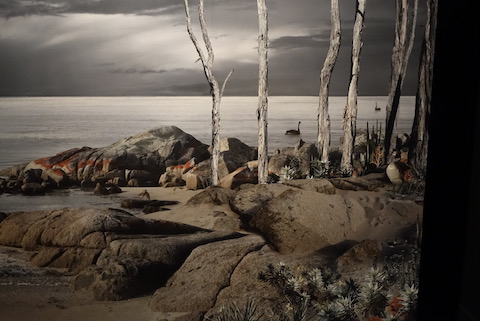
‘Prospero’s Island’, Valerie Sparks

For those who haven’t had their fill on the weekend, its bookended by two days of food and wine inspired, mouth watering culinary events on Monday and Tuesday. As part of Trail of Writers Tears, you can eat and drink your way around the region, learn bookbinding, making Chinese dumplings, Italian food, or go and visit Fat Pig Farm for lunch.

For more information check out the TAF2019 website and listen to an interview with Festival Director, Dr L.J.M Owen with David Milne here. See you on the other side Bwa ha ha ha…

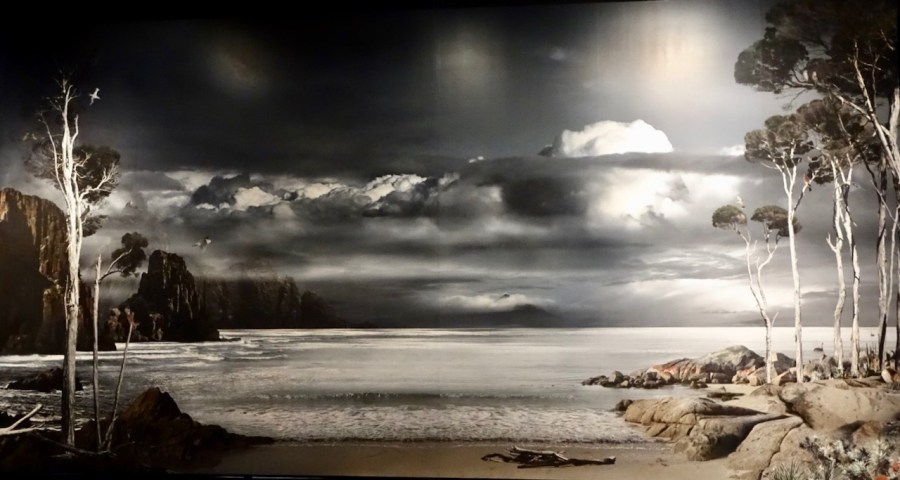
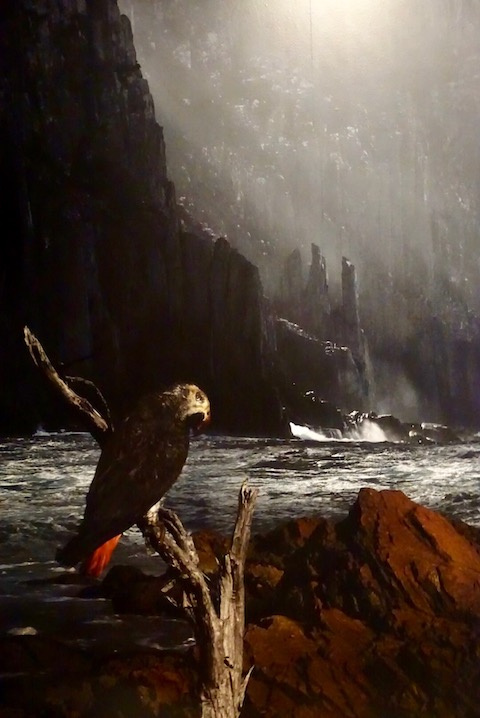
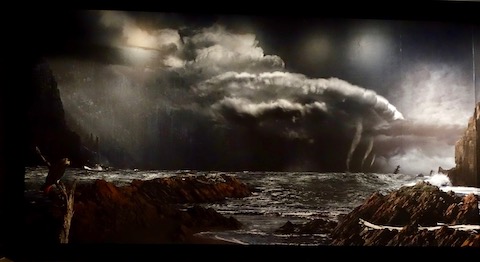
Images: ‘Prospero’s Island’ (2015-16) by Valerie Sparks. Commissioned by TMAG for Tempest

On writing style: Patrick White and Peter Carey

I was captured by the style and writing rhythm of two audio books I listened recently, even more so than their stories. Both The Twyborn Affair by Patrick White published in 1979, and My Life as a Fake by Peter Carey published in 2003 explore identity. In each the authors distinctive styles paint rich pictures of their characters and they were beautiful to listen to.

The Twyborn Affair is written in three parts. One set in a villa on the French Riviera pre-world war one, the second on a sheep station near the Snowy Mountains in the inter-war period, and the third in London just before the second world war. The title of the novel, also the core characters name, provides a clue to the novels story – Twyborn meaning twice-born, and Affair eluding to the characters various love affairs. The story charts the transmigration of a soul throughout three different identities – Eudoxia, Eddie and Eadith – a man bookended by two women. It explores transvestism, split personality and the loss of identity through death and re-birth. It places the anxiety and uncertainty of the human condition under a microscope, expunged of the dichotomy of gender.

It was still impossible for the watcher to decide whether the hair, illuminated by sudden slicks of light, was that of a folle Anglaise or pédéraste romantique, but in whatever form, the swimmer was making for the open sea, thrashing from side to side with strong, sure, professional strokes. It must be a man, Monsieur Pelletier decided, and yet there was a certain poetry of movement, a softness of light surrounding the swimmer, that seduced him into concluding it could only be a woman.

White’s writing style is dense, vivid and beautifully poetic to read. He applies a rhythmic lyricism and elaborate imagery drawing on myth, symbolism and allegory to explore ambiguity, identity, isolation and the search for meaning.

Yet whatever form she took, or whatever the illusion temporarily possessing her, the reality of love, which is the core of reality itself, had eluded her and perhaps always would.”

My Life as a Fake is set in 1972. An editor of an English poetry magazine goes on a junket to Kuala Lumpur and comes across a white man in a bicycle repair shop with ulcers on his legs. He is reading Rilke. The editor discovers that at the end of world war two this man was responsible for a great Australian literary hoax.

Remember, this is the country of the duck-billed platypus. When you are cut off from the rest of the world, things are bound to develop in interesting ways.

Carey toys with mythology in this novel inspired by a true story – the Ern Malley Affair. It explores identity, authenticity and the cultural anxieties of colonial societies. The Ern Malley Affair was a literary hoax involving the publication of poems dashed off as a joke to show that meaningless balony could get taken seriously by the avant-garde. The poems were subsequently published to great acclaim in the Autumn 1944 issue of Angry Penguins. The publication resulted in the humiliation and prosecution of Max Harris, the editor and a champion of modernist poetry, for publishing ‘indecent matter’. Carey draws on original source material but swaps out identities and names of the protagonists and adds in some wholly fictional characters.

I went to bed with the disconcerting knowledge that almost everything I had assumed about my life was incorrect, that I had been baptised in blood and raised on secrets and misconstructions which had, obviously, made me who I was.

Carey plays with Malaysian English slang and the work overflows with literary references including Frankenstein, Milton and WH Auden amongst others. There is a truly distinct use of narrative voice in My Life as a Fake from the crisp upper-class intellectual prose of Sarah, to Slater’s British bluff and effrontery, Chubbs defensive punctuated mash up of Australian and Malay, an aggressive Chinese-Malaysian woman with fractured English, and the elaborate deference of Mulaha. In the written text, one characters dialogue blends into another and folds into the narrative without the benefit of quotation marks.

He is right, he said quietly. The hoax misfired. I wished to make a point, but only to a few. Who cares about poetry? Fifty people in Australia? Ten with minds you might respect. Once Weiss had declared my fake was a work of genius, I wished those ten people to know. That was it, Mem. I never wanted the tabloids. Who would expect the Melbourne Argus would ever be interested in poetry. This was not their business, but what a caning-lah, what a public lashing poor old Weiss was given. I could never have foreseen that.

Both White and Carey have distinctive voices, original styles, and make great use of vocabulary and literary techniques, authors worth studying for any writer.

Creating Characters: the Archibald Prize

JF Archibald (1856-1919) was a Victorian journalist and founder of the Bulletin magazine. He served as a trustee for the Art Gallery of NSW and during that time commissioned portrait artist John Longstaff to paint poet Henry Lawson. He was so enamoured with the work that he left money in his will for an annual portrait prize.

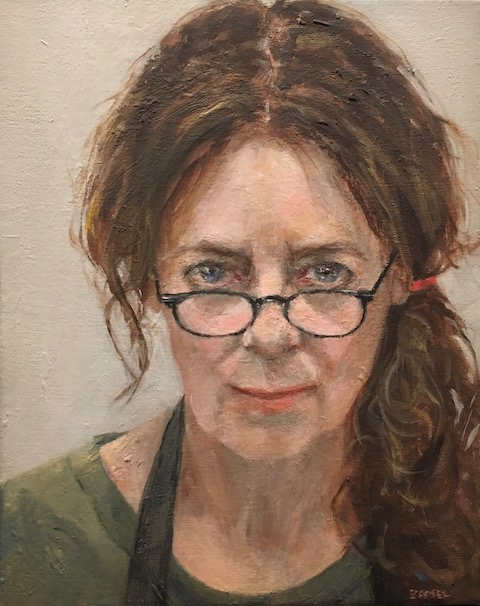
Painting, like writing has genres. Portrait painting became a thing in the thirteenth century and its roots are in memorialising the rich and powerful. The word means to show a likeness. A portrait is an intimate character sketch that seeks to capture the inner essence of its subject, in much the same way as a novel aims to express the inner world of its characters.

The history of the Archibald presents something of a cultural snapshot of Australian society – up until recent years all winners were caucasian males, usually from Victoria or NSW, who painted caucasian male subjects – a mirror of our societies discrimination in education, opportunities and social views of the times. The first woman to win the Archibald was Nora Heyson for her portrait of Madame Elink Schuurman in 1938.

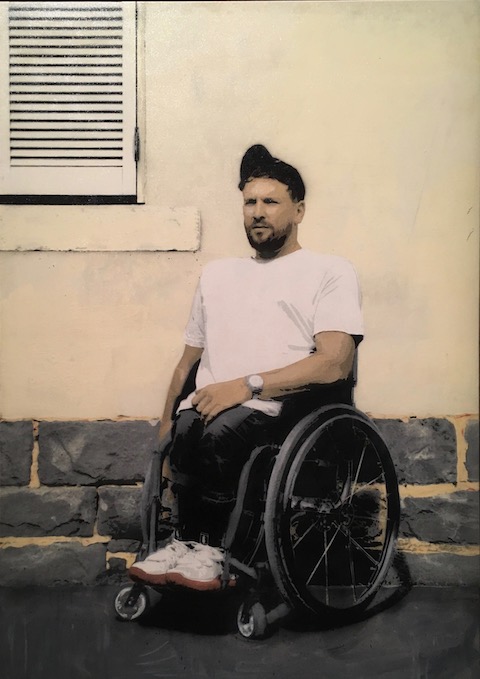
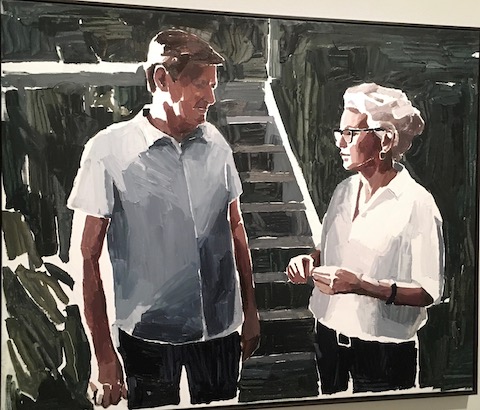
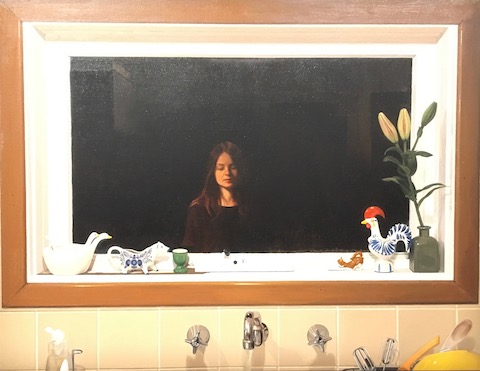
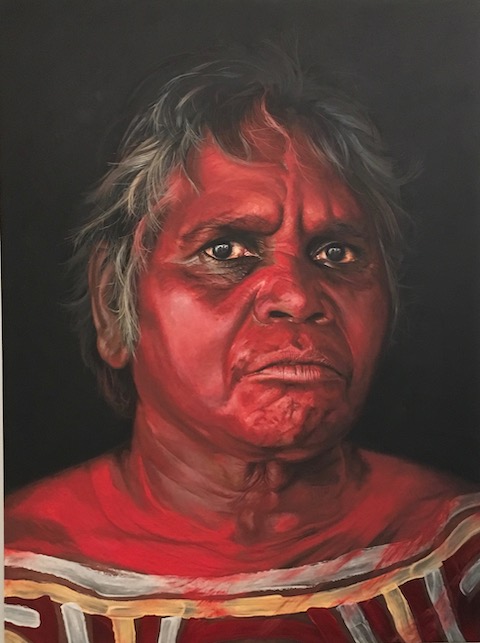
Today, both the subjects and artists are much more representative of Australia’s diversity. This years Archibald finalists include portraits of women of color, Aboriginal Australians, a subject with a disability, queer and elderly subjects. There was in fact a noticeable absence of old white suited men in armchairs and politicians. As I walked around the gallery, I couldn’t help wondering, what were the characters thinking in the moment captured, what is their life like, and what kind of relationship they have to the artist. Each tells a story.

Main image: Sarah Peirse as Miss Docker in Patrick Whites ‘A cheery soul’, Jude Rae

Book Review: The Tattooist of Auschwitz

I’m a writer of fiction, I make stuff up and my work is almost all in the mystery/crime genre. It attempts to shine a light on some elements of the darker side of life, but in truth my imagination ain’t got nothing on reality.

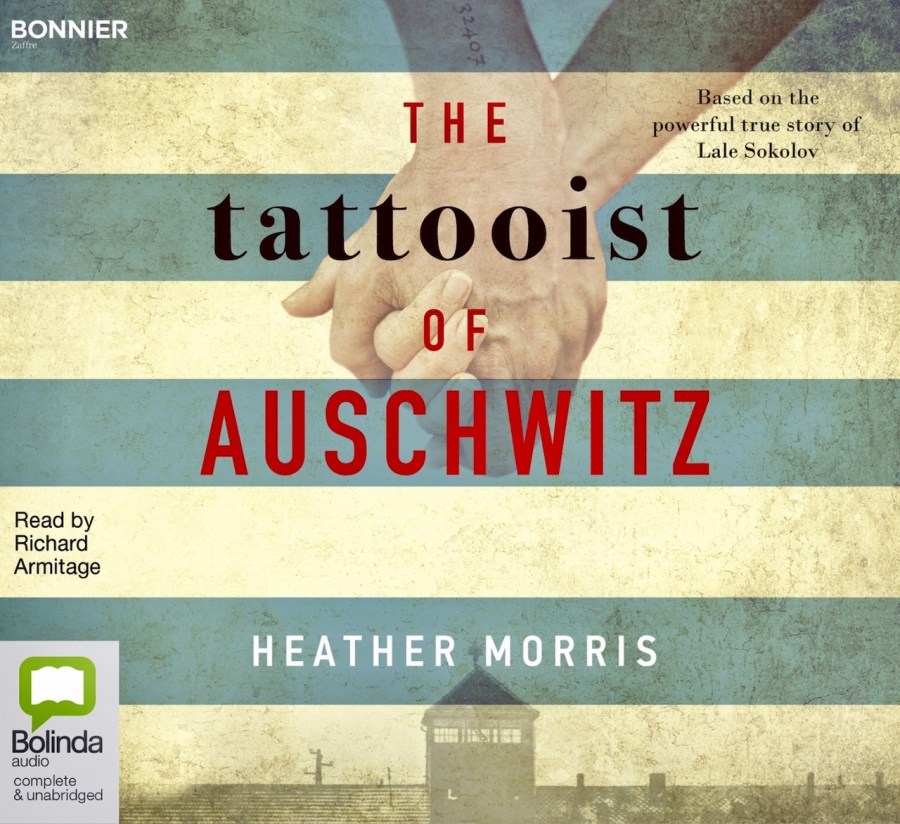
Last week I listened to the audiobook of The Tattooist of Auschwitz by Heather Morris. If I was to use two words to describe this novel they would be harrowing and hopeful. The Tattooist of Auschwitz is the story of Slovakian Jew Lale Sokolov. Lale was imprisoned at Auschwitz in 1942 and became the Tätowierer – the man who tattooed identification numbers on the arms of incoming prisoners. Lale met a young woman called Gita Furman in the camp and the two fell in love. Both survived three years in the concentration camp, partly due to Lale using his privileged position to smuggle additional rations to other prisoners. After the war Lale and Gita moved to Melbourne, where Lale met Morris who was to write his story. When the two discussed the project and Morris confessed she wasn’t Jewish, Lale indicated he thought this was good – he didn’t want anyone else’s baggage to cloud his personal story.

The book received much acclaim and become a best seller, but also received its fare share of criticism. Despite the novel never claiming to be anything other than historical fiction based on Lale’s memories, historians have criticised some details of the work as containing errors, exaggerations and misrepresentations.

Memory is a complicated thing, a relative to truth, but not its twin. – Barbara Kingslover

Interestingly one of the things most criticised was that Gita’s tattooed number in the book is wrong. Lale was 87 when he and Morris began working together, and Gita had already died. Gita had the tattoo removed when she was in her sixties, so presumably if incorrect, the number was incorrectly remembered by Lale.

The controversy around the work raises some interesting reflections about memory and truth. The story is Lale’s, his memory, recollections of his life as reflected on his twighlight years, some seventy years after the events. Perhaps his mis-remembering the number simply reflected his reclamation of his and Gita’s identities as being much more than a tattooed number. Morris committed to tell his story as he tod it, it’s why he trusted her and chose her for the task. She honoured that trust by telling his story as he relayed it, using fiction to fill in the gaps. If Morris had disregarded some of Lale’s most pressing memories in favour of hard historical facts, the novel may have been a more accurate historical account, but would it have been dishonouring Lale’s memories and his story? Lale has passed away, so we cannot ask him how he might have felt about this.

The debate about the value of the work as a resource to understand the history of Auschwitz is interesting and perhaps the incredibly sensitive nature of the Holocaust lends itself to significant scrutiny. I have read some of the criticism including one stating ‘that the novel is “an impression about Auschwitz inspired by authentic events, almost without any value as a document”. It is a sentiment that I must disagree with. Having read the novel, and the criticism, I do not believe the details raised would have significantly changed my experience of the story. I listened to much of it whilst pottering around in the garden and it bought me both to tears and laughter at times. It also significantly increased my very limited knowledge of that period in history – the fictional I Am David by Anne Holm, Viktor Frankel’s Man’s Search for Meaning and Thomas Kenneally’s Schindler’s List being the only other books I’ve read on the subject. It’s knowledge I probably would not have otherwise gained as I would not have been motivated to read an academic paper about it.

The novel may be a blend of an ageing man’s memories, fiction and facts, but it has never claimed to be more than that and should not be devalued on that basis. I found the The Tattooist of Auschwitz to be a moving and well written story and encourage you to read it if you have not already.