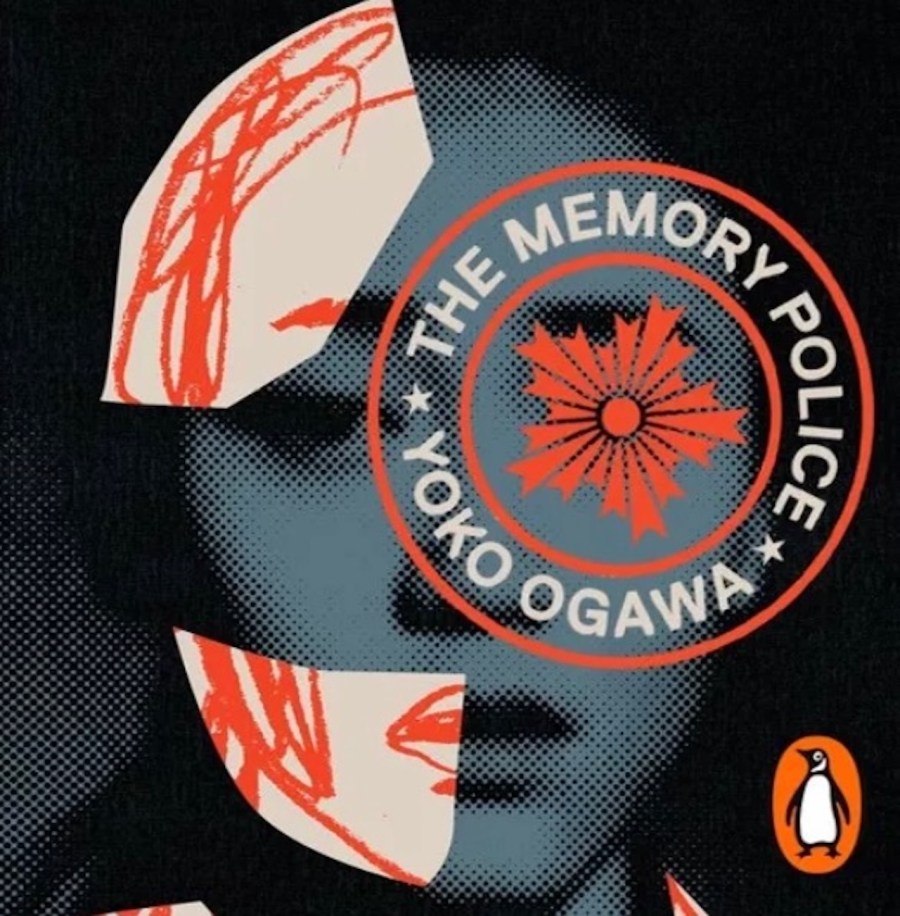
Book review: The Memory Police by Yoko Ogawa

The Memory Police by Yoko Ogawa is a dystopian novel set on a remote island off the coast of Japan where objects – hats, roses, birds, boats – disappear at the hand of an unknown power. The disappearances are reinforced by the Memory Police, and the island population’s memories of the objects fade until they can’t remember their existence at all. Disappearances escalate, and one morning people wake up and their left legs have disappeared – their very essence is thinning. Even nature submits and seasons disappears. The world of the island inhabitants gradually shrinks and loses meaning, but there are a small number of people who retain memories. The Memory Police seek them out, round them up, and take them away. 

People—and I’m no exception—seem capable of forgetting almost anything, much as if our island were unable to float in anything but an expanse of totally empty sea.

The characters are unnamed. The narrator is an author, and she and an old man who is a family friend decide to hide the author’s friend and editor, R, beneath her floorboards in a hidden room when they realise he has memories and is at risk. The room also accumulates what can be salvaged of the things that are disappearing.

I suppose memories live here and there in the body. But they’re invisible, aren’t they? And no matter how wonderful the memory, it vanishes if you leave it alone. If no one pays attention to it. They leave no trace, no evidence that they ever existed.

There is also a story with the story – excerpts from a manuscript that the narrator has been writing about a typist who can only communicate through typing as she has lost her voice. She’s held hostage by her typing teacher and lover in a tower. When novels disappear, R encourages the author to keep writing as a means of preservation. 

Men who start by burning books end by burning other men

Beautifully written in quiet poetic prose with the slow creep of tension, the novel explores memory and its role in identity, connection, loss and isolation, as well as the perils of authoritarianism and the power of art and storytelling as a vehicle for resistance. The story asks us to consider our identity and our relationship to the world around us. It also made me consider mortality as the novel reminded me a little of what happens when we start to die and parts of our bodies succumb to illness or old age, memories fade and friends disappear.
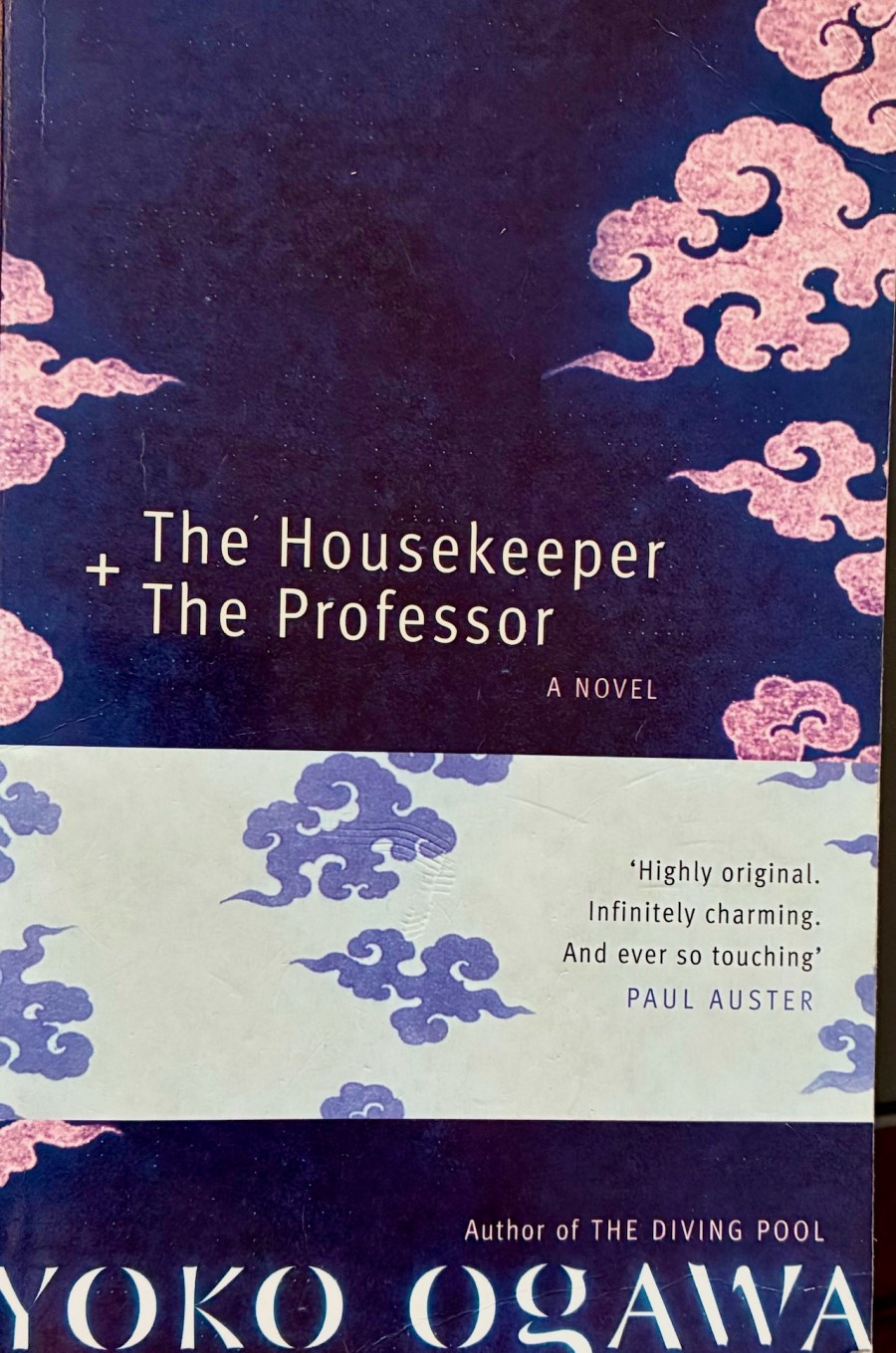
Book review: The Housekeeper and the Professor by Yoko Ogawa

I met an old friend from high school once who had experienced a traumatic head injury – we rode horses at the same place. She had almost photographic recall of long term memories from high school, but almost no short memory. Every time we encountered each other it was as if we were meeting for the first time after many years, and we would often cover the same territory in discussion – remembering our highs school days. The Housekeeper and the Professor by Yoko Ogawa reminded me of that time. The story is a sweet domestic drama set in Japan.

A problem isn’t finished just because you’ve found the right answer.

A housekeeper who is single mother to a young boy is placed by an employment agency with a new client. He is an old man who lives in a two room apartment at the back of his sister-in-laws house. The professor is a brilliant mathematician who’s short term memory only lasts 80 minutes after a traumatic head injury in a car accident. Pinned all over his suit are reminder notes he has written to himself to try and remember things that matter. The disability has not interfered with his ability to solve complex mathematical problems. 

Solving a problem for which you know there’s an answer is like climbing a mountain with a guide, along a trail someone else has laid. In mathematics, the truth is somewhere out there in a place no one knows, beyond all the beaten paths. And it’s not always at the top of the mountain. It might be in a crack on the smoothest cliff or somewhere deep in the valley.

The professor asks the housekeeper for her phone number and shoe size and explains the significant of those numbers, then draws a picture of her and pins it to his jacket.

Soon after I began working for the Professor, I realized that he talked about numbers whenever he was unsure of what to say or do. Numbers were also his way of reaching out to the world. They were safe, a source of comfort.

One day the housekeeper has to take her son to work with her and he and the professor become friends. He calls the boy Root, after the square root sign, because the top of his head is flat. They bond over baseball and maths homework.

He treated Root exactly as he treated prime numbers. For him, primes were the base on which all other natural numbers relied; and children were the foundation of everything worthwhile in the adult world

The Housekeeper and the Professor is an study of number theory – prime numbers, triangular numbers, amicable numbers – and a gentle exploration of relationships without memory.