
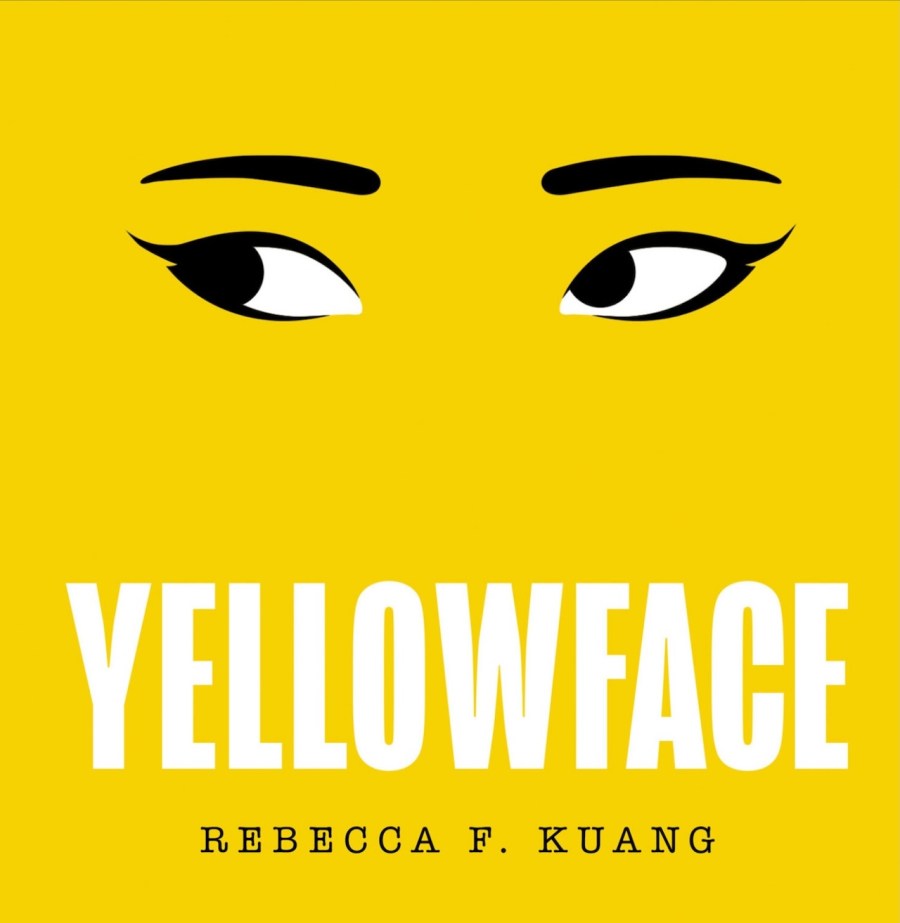
A member of my writing group recommended Yellowface to me, and ironically I began reading it a few days prior to printing out my latest manuscript to give to my writing group colleagues to critique.
Every writer I know feels this way about someone else. Writing is such a solitary activity. You have no assurance that what you’re creating has any value, and any indication that you’re behind in the rat race sends you spiraling into the pits of despair. Keep your eyes on your own paper, they say. But that’s hard to do when everyone else’s papers are flapping constantly in your face.
Yellowface is a story about two ambitious young novelists who met at college. Athena has written a critically acclaimed novel that’s also secured a deal with Netflix, and she is revelling in her success. Her friend Juniper’s debut has almost disappeared from the shelves of bookstores due to poor sales, and she struggles with jealousy of her successful friend.
Writing is the closest thing we have to real magic. Writing is creating something out of nothing, is opening doors to other lands. Writing gives you power to shape your own world when the real one hurts too much.
The young women go out on the town to celebrate Athena’s success then return to Anthea’s apartment where she shows Juniper her, until now, unseen new manuscript. She also decides makes pancakes to dilute their boozy evening. Suddenly, Athena is choking on pancake, clawing at her throat, unable to breathe. She dies while Juniper is on the phone to emergency services.
But the best revenge is to thrive.
On impulse, Juniper slips Anthea’s secret new manuscript into her bag and takes it home to study. Before she knows it she’s refining and editing, then publishing the manuscript as her own work, using her middle name as her surname as it, well, sounds more Asian. June Song. And Juniper’s dream of becoming a famous writer comes true.
The truth is fluid, there is always another way to spin the story.
The trouble with deception is that you set yourself up against both your internal and external worlds, and it’s a fraught space to maintain a fake self. There’s constantly needing to convince yourself that you are not a fraud, it’s as much your work as your dead friends given all the effort you put into making it publishing ready after all. Then there’s the worry about evidence in the world that the work actually belonged to Athena, managing the reactions when people discover you are not in fact Asian, and the growing whispers on Twitter about plagiarism.
But Twitter is real life; it’s realer than real life, because that is the realm that the social economy of publishing exists on, because the industry has no alternative.
Yellowface is a literary heist about the fickle publishing industry, cultural appropriation, and writing the other. It is also a hilarious literary caper told by an unreliable narrator, about the creative life and the desire to be seen. It will particularly appeal to the writers among us.
I wonder if that’s the final, obscure part of how publishing works: if the books that become big do so because at some point everyone decided, for no good reason at all, that this would be the title of the moment.
And, if I suddenly stop my Friday blog, you’ll know where to start looking.
 R L Smith