Theatre review: Pear-Shaped

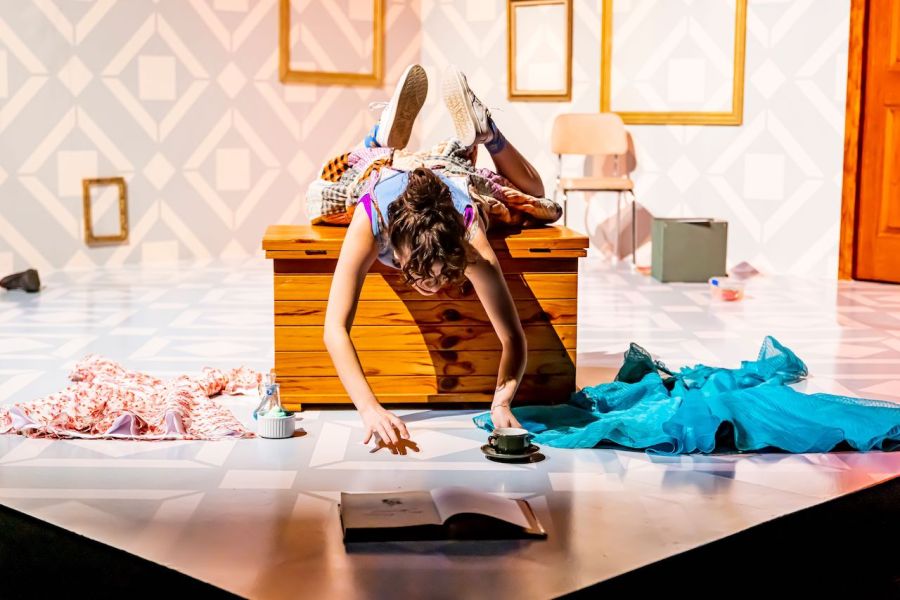
Pear-shaped is a whimsical, funny and at times surreal show that explores the very serious issue of anorexia (trigger warning) and how it impacts families.

Culture, family tradition and sibling relationships take a front seat in this original work by playwrights Miranda Middleton and Ziggy Resnick. The script also draws on the story of Alice in Wonderland as metaphor.

Two sisters of Jewish heritage, played by Ziggy Resnick (Frankie) and Louisa Scrofani (Kayla), grow up in a close knit family with a mother who works relentlessly to support them and a grandmother who survived concentration camps and likes to feed people. When one of the sisters develops a psychological illness their relationship falters.
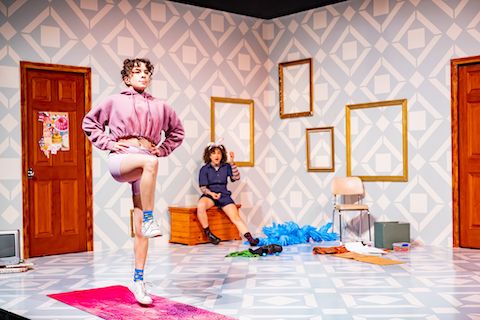
As Kayla struggles with anorexia, the family watch with horror. The mother works harder to try to hold the family together and pay medical bills whilst Ziggy who is trying to work on a show that is an interpretation of Alice in Wonderland becomes resentful at what she perceives as her Kayla’s deliberate insistence on losing weight because she believes she is fat. Her pleading and angry outbursts fall on deaf ears as Kayla remains trapped in her personal torment.

The performance slides between the past and present and slips into Alice in Wonderland with some fabulous moments of playful magical realism that provide both light relief from the sombre subject matter and help communicate it. Humorous puppetry and hand cameos are provided by Cameron Steen.

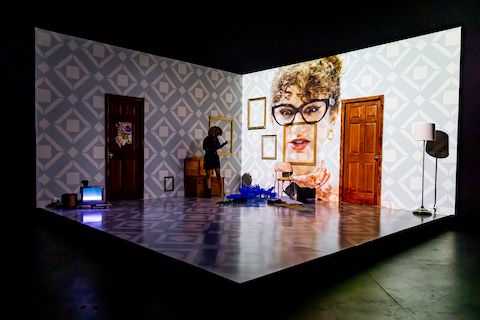
The young cast handles the difficult content and multiple characters well with fast paced direction to keep the narrative moving at pace. The show has great set design by Grace Deacon that adapts well to enable the beautiful moments of magical realism using the Alice tropes and Aaron Murray’s lighting effects.

Pear -Shaped is on at Theatreworks until 15th April. Find tickets here.

The Butterfly Foundation provides support for eating disorders and body image issues.

Theatre review: promiscuous/cities by Lachlan Philpott

Midsumma Festival, Melbourne’s queer arts and cultural festival runs 21 January to 12 February and boy has it come a long way since it began in 1989. Last night I went to see Promiscuous Cities written by Lachlan Philpott and showing at Theatre Works in St Kilda.

The production is set in the round and opens with a lone woman sitting on a stool, then it explodes. The props are sparse but versatile, and well designed costumes help bring the characters of the twelve talented young actors to life. The choreography is exquisite and creative and moves the actors seamlessly at pace from scene to scene in a way that enhances the aesthetics.

Promiscuous Cities has a bit of everything – at one moment like a cabaret, then a ballet, then a traditional play – but what sounds like a mish-mash works beautifully to tell a tale of the city of San Francisco. Multiple fast paced story lines run through the show exposing the underbelly of San Francisco, famed as a place of freedom and liberal thought.

What you get is glimpses into the cities many subcultures, the impact of the IT boom and the gentrification that has spawned homelessness, the ongoing legacy of the HIV pandemic, and the impacts of street violence and drugs. Promiscuous Cities show oozes queerness and reminded me of a trip I did to San Fran about eight years ago when I was lucky enough to get some insights from a local I met there.

Promiscuous Cities is a professional quality production that deserves a full house every night, so get a ticket before they all sell out. The show runs till 24th January.

Theatre review: HYSTERICA

I’m popping out a couple of extra posts this month as Melbourne Fringe is on and we all need to get out and support the performing arts in Melbourne…go on…

Women have always made history in equal measure to men, but with only about 0.5% of them traditionally appearing on the historical records, their contributions were often forgotten – that is until women started to rewrite the records…

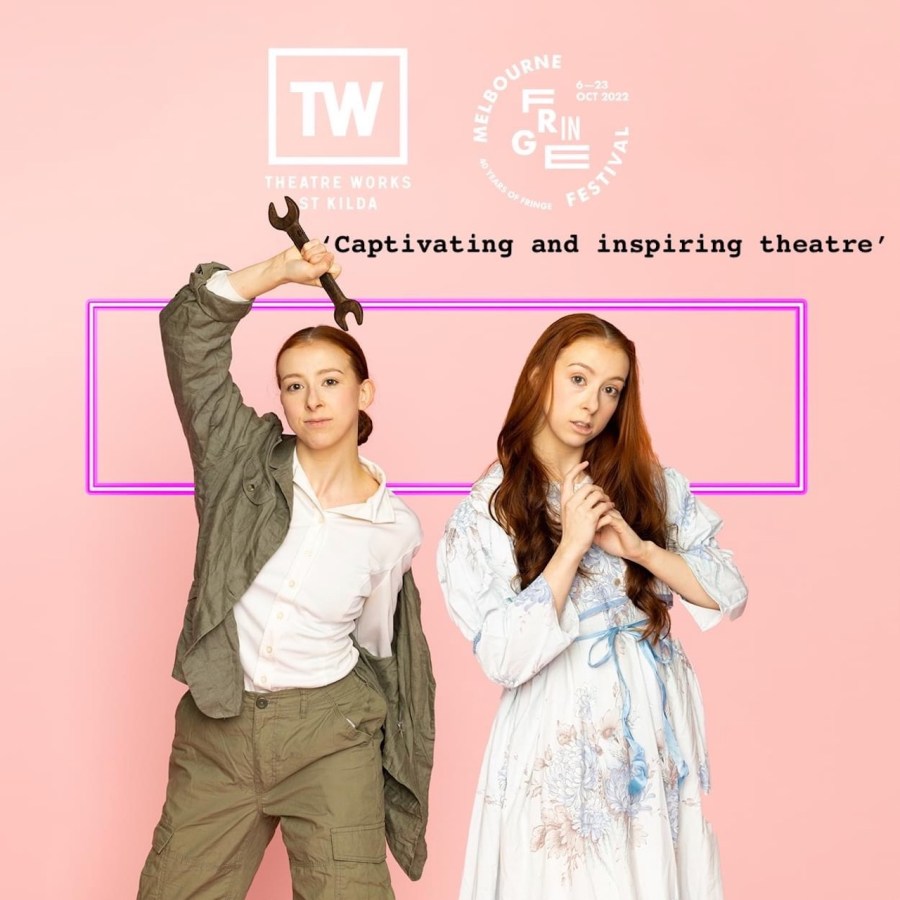
In Melbourne Fringe show, HYSTERICA, actors Tess Parker and Mary Steuten deliver a piece of historical revisionism through monologue to tell the stories of four extraordinary women – Alice Anderson, business woman, garage proprietor and motor mechanic (1897-1926); Joy Hester, artist and member of the Angry Penguins movement and the Heidi Circle integral to the development of Australian Modernism (1920-1960); Elizabeth Gould (1804-1841), botanical artist and illustrator, much of whose work is believed to have been attributed to her husband naturalist and author John Gould (sigh); and the more contemporary story of Dawn Faizey-Webster who developed locked in syndrome after suffering a brainstem stroke that left her only able to communicate by blinking her left eye. Faizey-Webster still went on to complete a degree, a Masters and commence a doctorate.

Despite challenges with the shows lighting (the lighting deck got drenched in yesterdays downpour so the actors had to work under fluorescent strip lighting to avoid electrocuting anyone), Parker and Steuten put on thought-provoking performances that made me want to find out more about the characters they inhabited. Tess Parker’s portraits of Alice Anderson and Elizabeth Gould were particularly expressive and engaging.

HYSTERICA is showing at Theatre Works new venue, the Explosives Factory which is down a back alley and up a flight of stairs into a warehouse space in St Kilda. Running 4-8th October, tonight is the final show, so get in quick.

I stand on the sacrifices of a million women before me thinking what can I do to make this mountain taller so the women after me can see farther

Rupi Kaur

Theatre review: No Ball Games Allowed

Good poetry tackles big ideas, cuts out the unnecessary and makes careful word choices to create powerful imagery and elicit emotion in the reader. It is also often a little elusive to allow us to bring our own meaning and perceptions to a piece. Good theatre is dialectical in the broadest sense and combines sight and sound to engage and challenge us. It makes us think long after we see it.

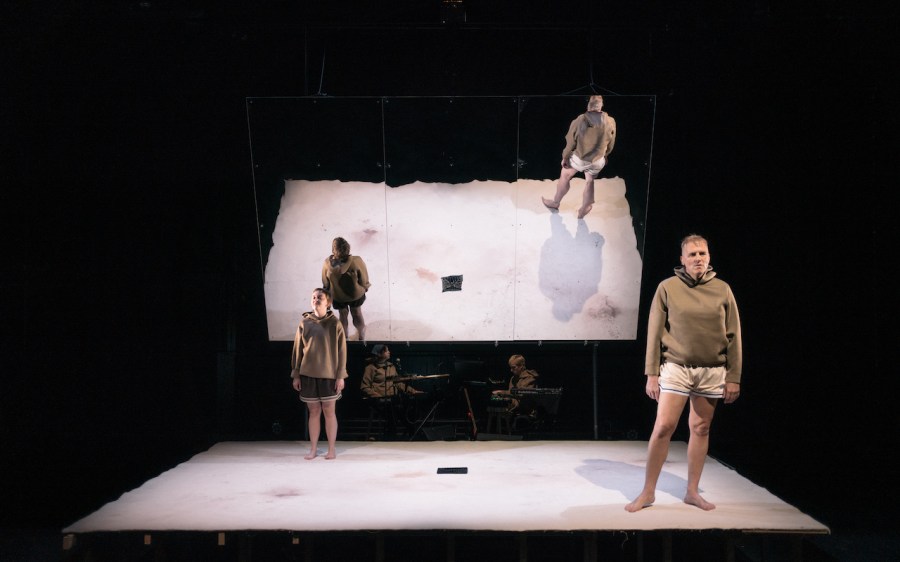
two actors on stage looking at photos projected onto a mirror

From its haunting opening to its dramatic conclusion No Ball Games Allowed written by Kristen Smyth and directed by Kitan Petkovski brings the elements of good poetry and theatre together beautifully.

There are only two actors on the stage (Smyth and Mia Tuco), one young, one older, identically dressed in drab clothing that obscures their gender and identity. The set is parred back to almost nothing, the central focus a continuous drip of water falling from high up to a grate in the floor.

I suspect setting this postdramatic theatre during the Blitz in 1941 London was carefully considered. Locating the piece during a time when the Nazi party viewed any kind of individuality as a punishable offense and sent thousands of queer people to concentration camps to endure unspeakable atrocities draws the audiences attention to the themes of discrimination and prejudice that run through it.

In one scene, a young woman is assaulted and the phrase ‘Make the bitch beg’ is hurled repeatedly at the audience, eliciting the fear such an experience imposes. In another, a mother punishes her thirteen year old son for dressing up in her clothes. She wants him to be a strong man because ‘women aren’t safe’. She cannot see or accept her son for who he is. Her own fears blind her to her son’s confusion and struggle with his identity. At one point the mother even tries to blackmail her son into being the vision of a man she had for him, but you cannot substitute money for love or identity.

Repetition draws the audiences attention to the multiple meanings within the piece. At one point the actors tell one another repeatedly ‘I love you’. It highlights the affection between the characters and at the same time the fact that sometimes people are confused about what love is and how to express it appropriately.

The two actors play multiple characters during the lyrical vignettes, yet I was also left with a sense that on one level they were one and the same. A person speaking to themselves across time in an effort to make sense of the hostile world they found themselves in. A world that rejected the very essence of who they were. The affection, tenderness, and at times affirmation, expressed between the actors on stage helps provide the audience relief from the bleakness of the set and themes explored.

No Ball Games Allowed rejects the idea of a simple, logical, causal representation, instead using conflicting, contested and irreconcilable multiple logics to deliver a powerful, mesmerising and thought provoking piece of theatre that will stay with me for some time. It was clear that the writer, director and actors were in harmony, supported by a music composition (Robert Downie and Rachel Lewindon) that magnified the intense, emotive piece.

No Ball Games Allowed is on at Theatre Works in St Kilda until next Saturday 9th April. Get a ticket, the show is worthy of a full house every night.

Images: all images by Cameron Grant

Be careful who you hate, it could be someone you love

wording on billboards across the USA by Gay Day