
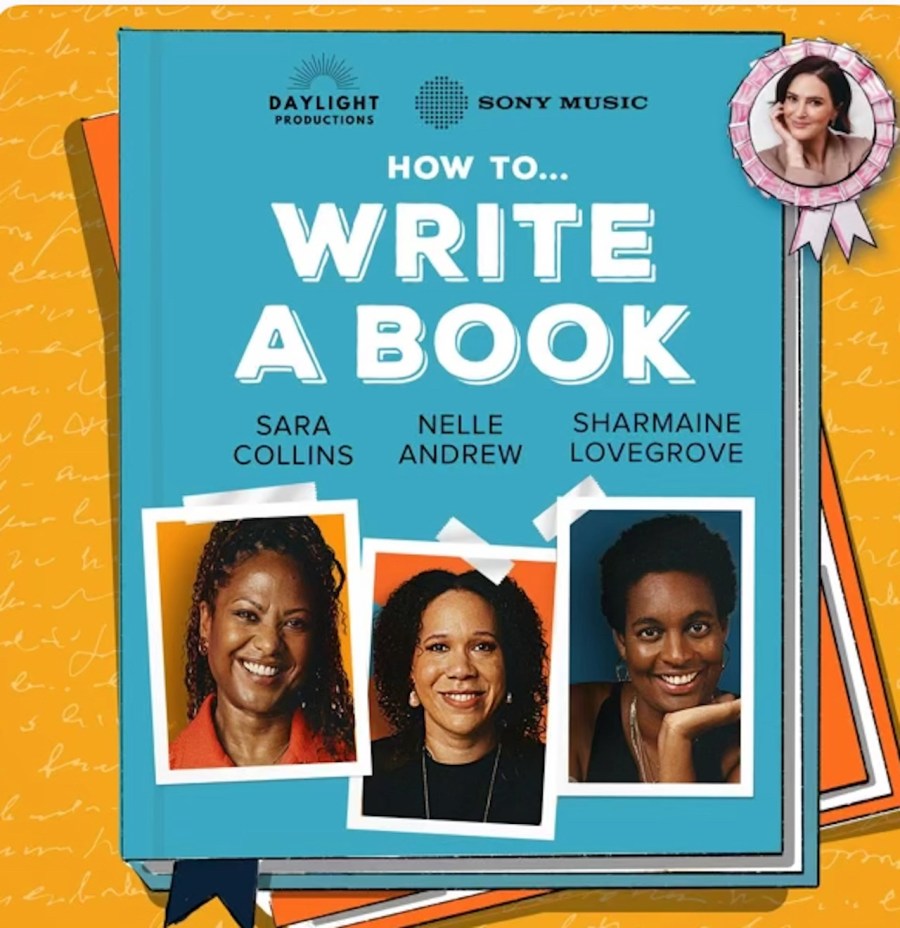
How to Write a Book is a twelve episode podclass produced by author Elizabeth Day, and hosted by author Sara Collins, publisher Sharmaine Lovegrove and agent Nelle Andrew. It’s an entertaining and practical listen that uses examples from published books such as Magpie by Elizabeth Day to demonstrate ideas.
The hosts of How to Write a Book will take you step by step through the writing process. The podclasses span coming up with ideas, discovering your voice, developing characters, dialogue and plot, and publishing. Each episode explores a different element of writing.
The series includes discussion about a range of authors from classics to contemporary, as well as films to demonstrate topic concepts. Books and authors discussed include:
- The Confessions of Frannie Langton by Sara Collins
- The Vanishing Half by Brit Bennett
- Memoirs of a Geisha by Arthur Golden
- Sacred Hunger by Barry Unsworth
- The Color Purple by Alice Walker
- Scissors, Paper, Stone by Elizabeth Day
- Paradise City by Elizabeth Day
- Magpie by Elizabeth Day
- Rainbow Milk by Paul Mendez
- Gone Girl by Gillian Flynn
- Lolita by Vladimir Nabokov
- The Bonfire of the Vanities, Tom Wolfe
- Vanity Fair, William Thackeray
- Elizabeth Bennet from Pride and Prejudice by Jane Austen
- The Unbearable Lightness of Being by Milan Kundera
- Their Eyes Were Watching God by Zora Neale Hurston
- The Talented Mr Ripley by Patricia Highsmith
- Empire of Pain by Patrick Radden Keefe
- The Art of Storytelling by Will Storr
- The Remains of the Day by Kazuo Ishiguro
- The Party by Elizabeth Day
- The Handmaid’s Tale, by Margeret Atwood
- Madame Bovary, Gustave Flaubert
- Flowers for Algernon, Daniel Keyes
- Rodham by Curtis Sittenfeld
- Olive Kitteridge by Elizabeth Strout
- Secret History by Donna Tart
- Hunger Games by Suzanne Collins
- The Confessions of Frannie Langton by Sara Collins
- Fingersmith by Sarah Waters
- August Blue by Deborah Levy
- World War Z by Max Brooks
- Lord of the Rings by John Tolkein
- A Year of Magical Thinking by Joan Didion
- Friendaholic by Elizabeth Day
- In Cold Blood by Truman Capote
- This Is Not A Pity Memoir by Abbi Morgan
- Wuthering Heights by Emily Bronte
- Jane Eyre by Charlotte Bronte
- How the Body Keeps the Score by Bessel Van Der Kolk
- The Cazalet Chronicles by Elizabeth Jane Howard
- Slipstream, a memoir by Elizabeth Jane Howard
- Paper, Scissors, Stone by Elizabeth Day
- Bird by bird by Annie Lamott
How to Write a Book is an insightful, practical, funny, easily accessible and educative podcast. Highly recommend for writers and budding writers in the group.

 R L Smith