Book review: Educated by Tara Westover

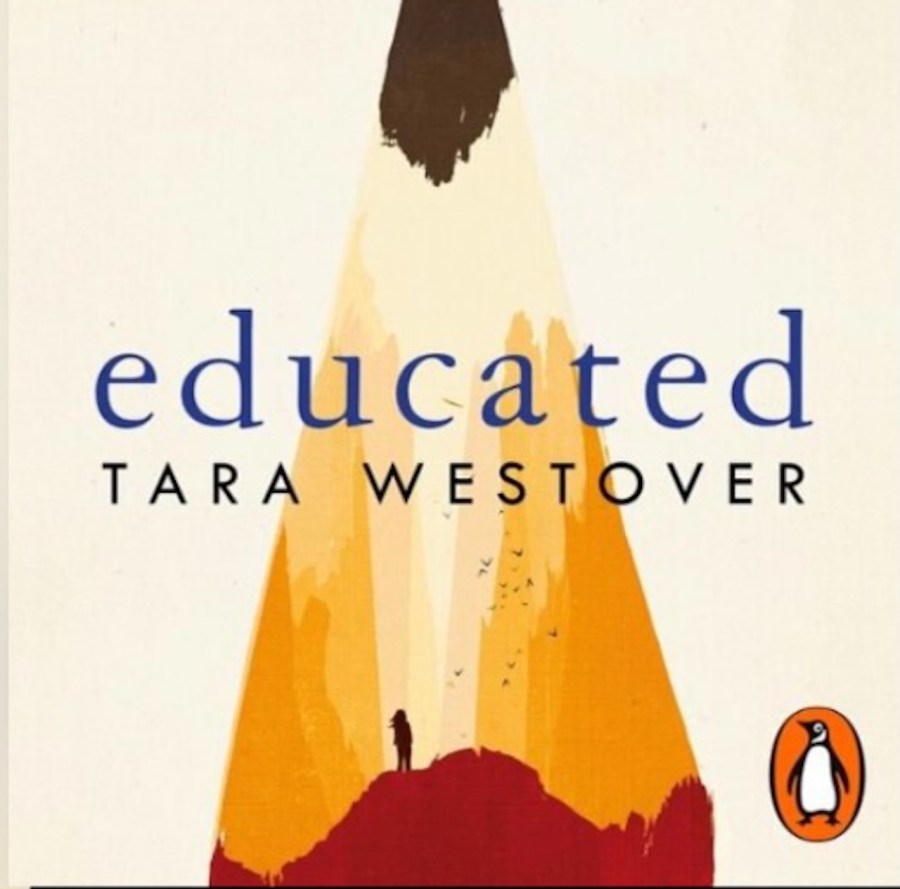
Educated by Tara Westover is a memoir set in an isolated community with views of striking mountains. Geographically Idaho in the USA has large tracts of rugged, beautiful wilderness. The state also has a significant Mormon population. Educated is about growing up in a large family of seven children with fundamentalist Mormon survivalist parents. But it is not a story primarily about religion.

An education is not so much about making a living as making a person.

Tara did not set foot in a classroom till she was seventeen, receiving what little education she did from her mother and through self-learning. The family did not visit doctors or hospitals. Even life threatening injuries were treated by Tara’s mother, a kind of healer who used herbs and tinctures and the will of god to mend people. The children did not have birth certificates, education or medical records until they were teenagers.

But sometimes I think we choose our illnesses, because they benefit us in some way.

The children worked in their father’s scrap yard without protective equipment. He was a man who believed in grand conspiracies, hoarded food and guns, and avoided contact with bureaucracy.

I could tolerate any form of cruelty better than kindness. Praise was a poison to me; I choked on it.

Tara’s desire for an education motivated her to break away from family ties, eventually earning a Doctorate at Cambridge University. When a lecturer described the profile of bipolar in a psychology class, Tara recognised her father in it. The cost of leaving the small community was estrangement from her family, but the decision probably saved her. It also enabled her to learn to trust her own views of the world.

My life was narrated for me by others. Their voices were forceful, emphatic, absolute. It had never occurred to me that my voice might be as strong as theirs.

As the narrative unfolds, it becomes evident that the key themes of Educated are mental illness, loyalty, family violence and how those issues can pervert people’s views of the world – in this case in a framework of religion and conspiracy theories about the end of the world. Tara’s story is also about identity, the reliability of memory and how education can lift one up and offer freedom from a life that seemed predestined .

The decisions I made after that moment were not the ones she would have made. They were the choices of a changed person, a new self. You could call this selfhood many things. Transformation. Metamorphosis. Falsity. Betrayal. I call it an education

Educated if beautifully written but difficult to read. I was mesmerised and left with the sense that sometimes life really is stranger than fiction. It is a wonder that Tara survived to tell the tale.
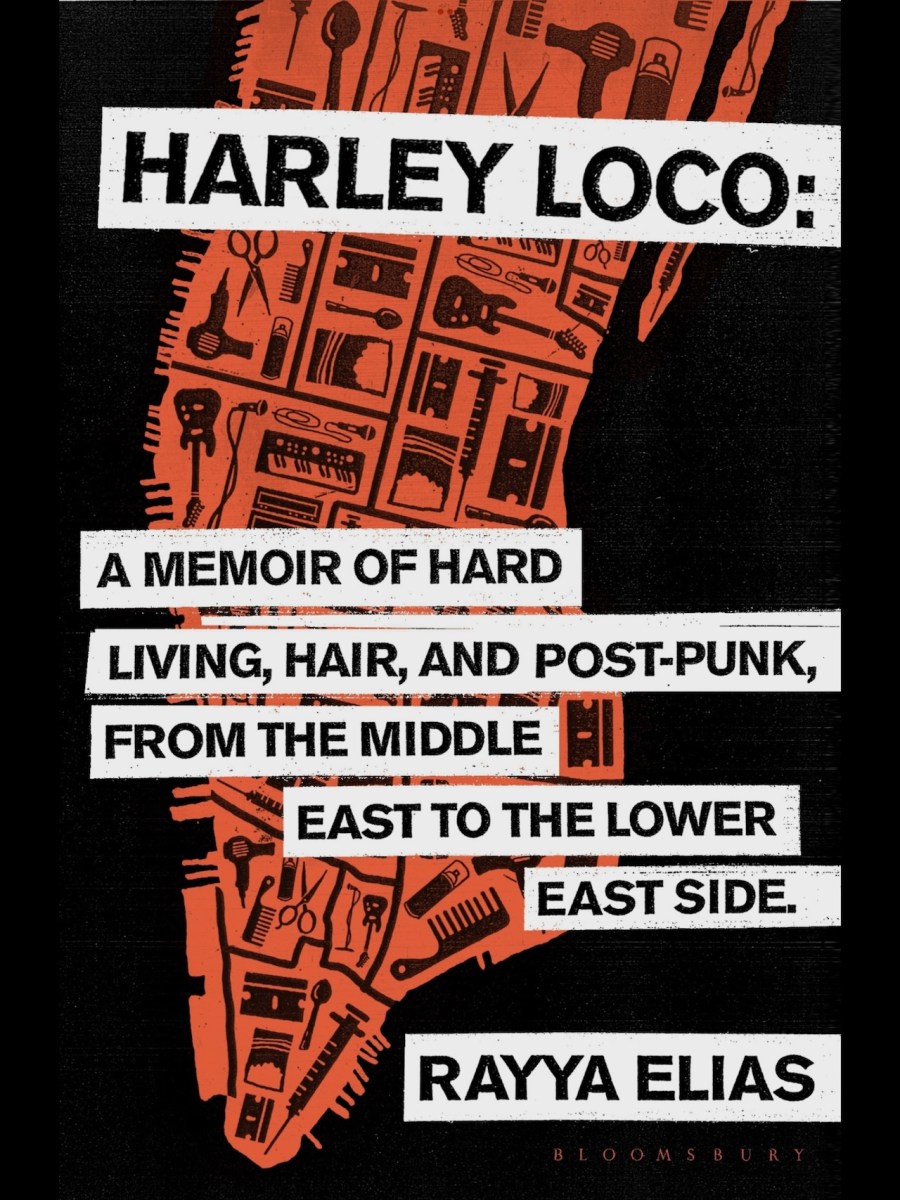
Harley Loco: A memoir of hard living, hair and post-punk, from the Middle East to the Lower East Side by Rayya Elias

I read Harley Loco with my book group, and what a wild ride it was! Rayya Elias’s memoir is about migration, not fitting in, trauma, drugs, hair, music and survival.

Rayya Elias (1960-2018) is Syrian. She was born in Aleppo and grew up with three siblings in a big flat with French windows and marble halls. A couple of childhood accidents – one involving leaping from a wardrobe and her brother failing to catch her, and another where she broke her leg and was bed bound in traction for an extended period were shaping moments for her.

Pain makes you stronger, and nothing is too great for us to achieve.

Orthodox Christians, her family fled Syria as the Ba’ath party rose to power. They headed for the promised land, the USA, and went from being landowner farmers with a father who was treated like a king to being poor immigrants, where the only work her father could find was as a janitor.

One of the first photos I saw of myself was when I was about four or five years old. I was at my brother’s first communion party and I was singing for a table of archbishops and priests with a cookie in my hand…When I look at these pictures, I love myself, and I think I look perfect and adorable. These pictures spark memories of happiness and elation at all the attention I got for singing.

Rayya’s family socialised mainly within the Syrian community in Detroit, but she went to an American school, where, despite her best efforts to fit in and make friends, she was an outsider and mercilessly bullied. Her experiences changed her from being high spirited and fun to developing a tough exterior and taking drugs to numb her discomfort and grief, and because to begin with it felt like fun.

I learned from a very young age that life was chaotic, but if I could hold my breath long enough (even while kicking and screaming), and come up for air once in a while, they I would have the chance to fight for what I wanted or needed.

The drugs soon took hold, but Rayya also discovered she had a talent for cutting hair and making music and started to become successful at both after finding her tribe through those pursuits. She also discovered she preferred girls to boys, a more complex issue for her to grapple with – particularly given her cultural background and that she had a devoted boyfriend at the time.

I could be free. The edge on life that I’d been looking for all along could be mine now: my work, my goal, my pride, and my dream. It seemed easy and obvious and like the only conceivable choice. All I had to do was be clean, that was the edge.

Her first big female lover refused to choose her over a man, and Rayya’s path to self destruction was sealed. Her emotional void was filled with coke, casual sex, porn, crack and eventually heroin and it was not long before all her success in hairdressing and music started a backslide into theft, betrayal, hustling, drug dealing, homelessness, multiple arrests, and jail.

People talk about that moment of clarity for drug addicts. I sat there, in the pile of dirt and sweat I’d woken up in, and I cried. Unable to get up, unable even to turn off the hideous TV, I cried and cried, out of fear for myself and sadness at the mess I’d made of my life. There were no police, parents, rehabs, shrinks, friends, or lovers to tell me what was wrong with me. There was only a voice inside my head, first low and weak, but quickly gathering strength and conviction till it rumbled through me as powerfully as the call for heroin had the evening before. It said: Rayya, you don’t need to do this anymore. You can be free.

Her family never gave up on her, but multiple attempts at getting clean with violent withdrawals failed, until sobriety eventually prevailed. It was either that or die, and she figured given she had overdosed several times and survived, death could not come from drugs.

The calm and smooth ride of life, without all the peaks and valleys, is a goal I constantly strive for now. But back then, it felt unnatural.

English was no Elias’s first language. The writing of her memoir is sparse, frank and brutally honest. She paints herself frankly as she descended into a spiral of self destruction, self absorption and cruelty and she sucked others into her addiction. Harley Loco was uncomfortable to read, but ultimately triumphant as Rayya did escape addiction and find her way to a good life after drugs.

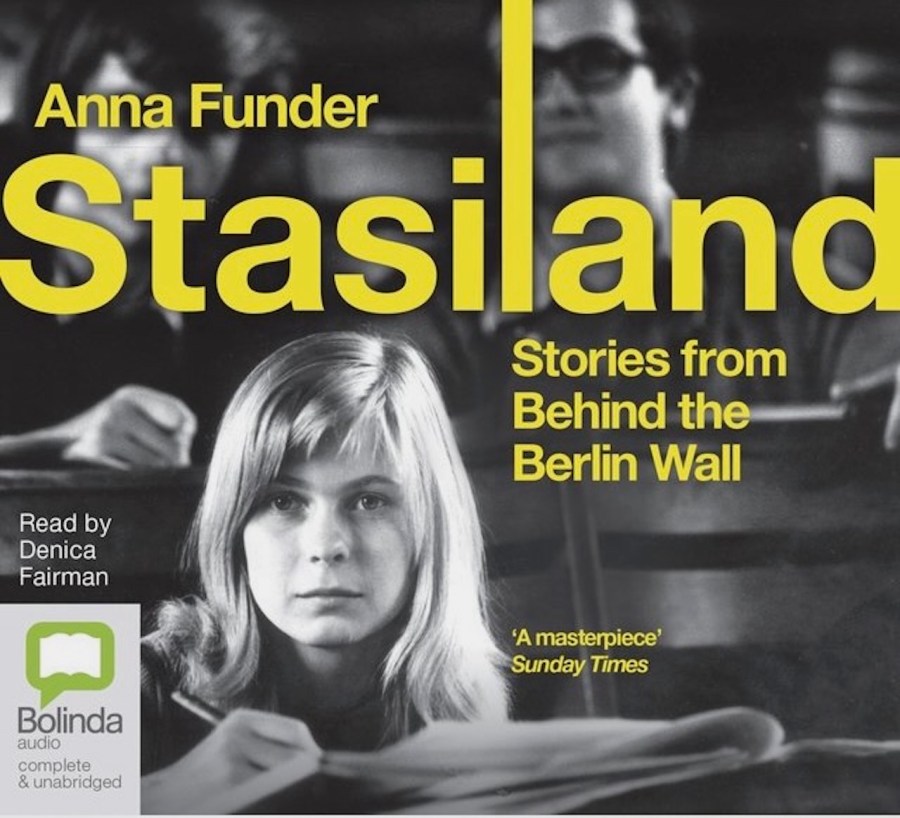
Book review: Stasiland by Anna Funder

Australian author of the narrative non-fiction book Stasiland, Anna Funder developed a fascination with the former East German ministry of state security Stasi while working in Berlin. She placed an advertisement in a newspaper looking for ex Stasi to interview.

Betrayal clearly has its own reward: the small deep human satisfaction of having one up on someone else. It is the psychology of the mistress, and this regime used it as fuel.

A number of notable ex-officials came out of the woodwork and spoke to Funder. Each unique weirdo had sold their soul to the devil for success in the GDR, then lost their power when the Berlin Wall came down.

He can switch from one view to another with frightening ease. I think it is a sign of being accustomed to such power that the truth does not matter because you cannot be contradicted.

Funder also tells the story of those who were part of the resistance. People subjected to surveillance and suffering at the hands of the Stasi and the bizarre and inflexible rules imposed in the GDR. The long lasting effects of the persecution they suffered is evident in their lives after the Wall fell when Funder meets them.

She is brave and strong and broken all at once. As she speaks it is as if her existence is no longer real to her in itself, more like a living epitaph to a life that was.

I found Funder’s visit to the puzzle women heart wrenching. This is a group working to restore the documented evidence of what happened in East Berlin, shredded by the Stasi to cover up their crimes using thousands of paper shredders. The task is projected to take 375 years.

For anyone to understand a regime like the GDR, the stories of ordinary people must be told. Not just the activists or the famous writers. You have to look at how normal people manage with such things in their pasts.

Stasiland effectively uses black humour to provide relief from the sad stories. Funder’s observations are sharp and her prose vibrant to produce an important historical account of life behind the Berlin Wall.

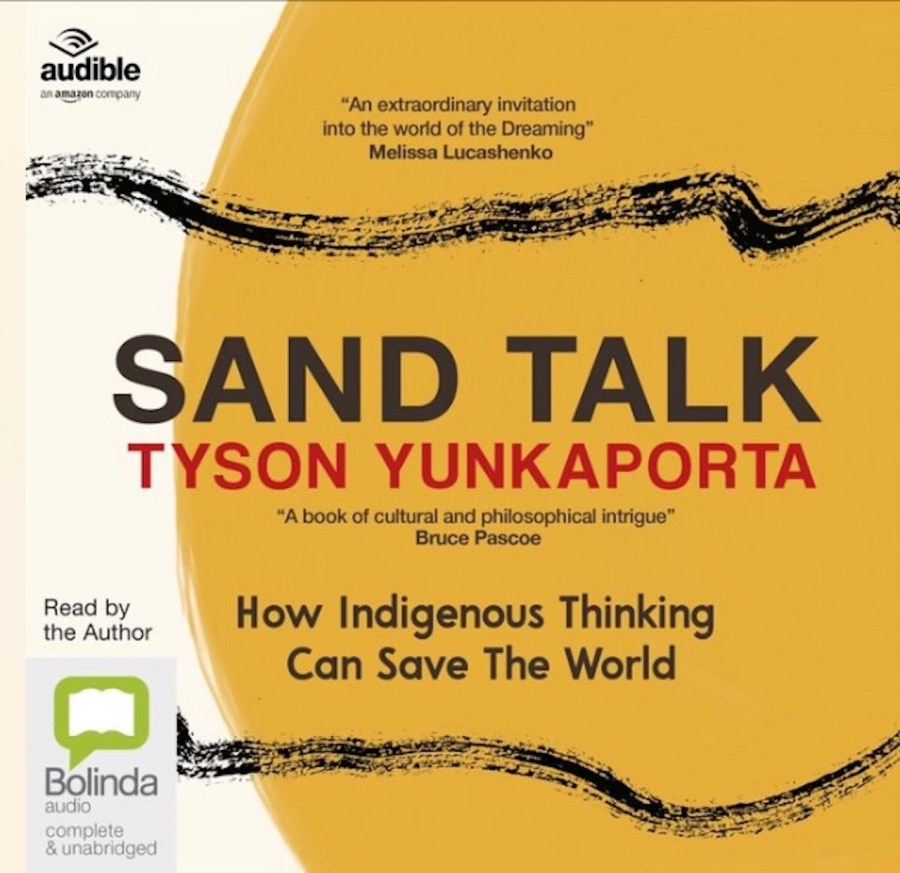
Book review: Sand Talk by Tyson Yunkaporta

I listened to Indigenous author and academic Tyson Yunkaporta’s non-fiction book Sand Talk whilst pottering around the garden and was blown away by its beauty. If you decide to investigate it, I recommend getting hold of the audio book read by the author as I felt the oral history of Aboriginal people, made listening to his yarn more powerful.

We don’t have a word for non-linear in our languages because nobody would consider travelling, thinking or talking in a straight path in the first place. The winding path is just how a path is, and therefore it needs no name.

In Sand Talk, Yunkaporta reflects on global systems from an Indigenous Knowledge perspective. He shares an outlook on natural systems that is complex and non-linear. It rejects the western notion of reducing Indigenous Knowledge down to a series of symbols and codes, and asserts that the complexity of Indigenous Knowledge makes it fit for the challenge of wicked problems like sustainability and climate change.

An Indigenous person is a member of a community retaining memories of life lived sustainably on a land base, as part of that land base.

The title of the work is a reference to the way that Aboriginal cultures transmit knowledge – by drawing on the ground – which enables communication of more meaning than simple words. Yunkaporta talks about relations between individuals and groups of individuals using two terms. He refers to himself and the reader as ‘us-two’, like a kinship pair and encourages the reader to form ‘us-two’ pairings throughout our lives in order to work together successfully. ‘Us-exclusive’ refers to just us, not them, in the context of exclusive groups, but they also need to work together in ‘us-all’ pairings.

If people are laughing, they are learning. True learning is a joy because it is an act of creation.

Each chapter of Sand Talk is a series of thought experiments represented by the carving of a traditional object captured pictorially. In other words he carves everything he writes to preserve the oral cultural orientation of this thoughts. He calls this method of adapting oral culture processes into the written word ‘umpan’. The entire book is represented by a large boomerang which features on the cover. Each carved object is memory inspired and contains within it a wealth of meaning and story.

Our knowledge endures because everybody carries a part of it, no matter how fragmentary. If you want to see the pattern of creation, you talk to everybody and listen carefully.

Sand Talk is a melding of Yunkaporta’s professional, academic, personal and community influences, which itself is representative of on of the works central premises – that knowledge is co-created.

Guilt is like any other energy: you can’t accumulate it or keep it because it makes you sick and disrupts the system you live in – you have to let it go. Face the truth, make amends and let it go.

Aside for an opportunity to hear one Aboriginal man’s story and learn about his attempt to document aboriginal ways of thinking and how this can be applied to our most complex challenge of global warming. Sand Talk is also a beautiful work of literature to listen to that encourages the reader/listener to see the world differently.