Book review: The Awkward Truth by Lee Winter

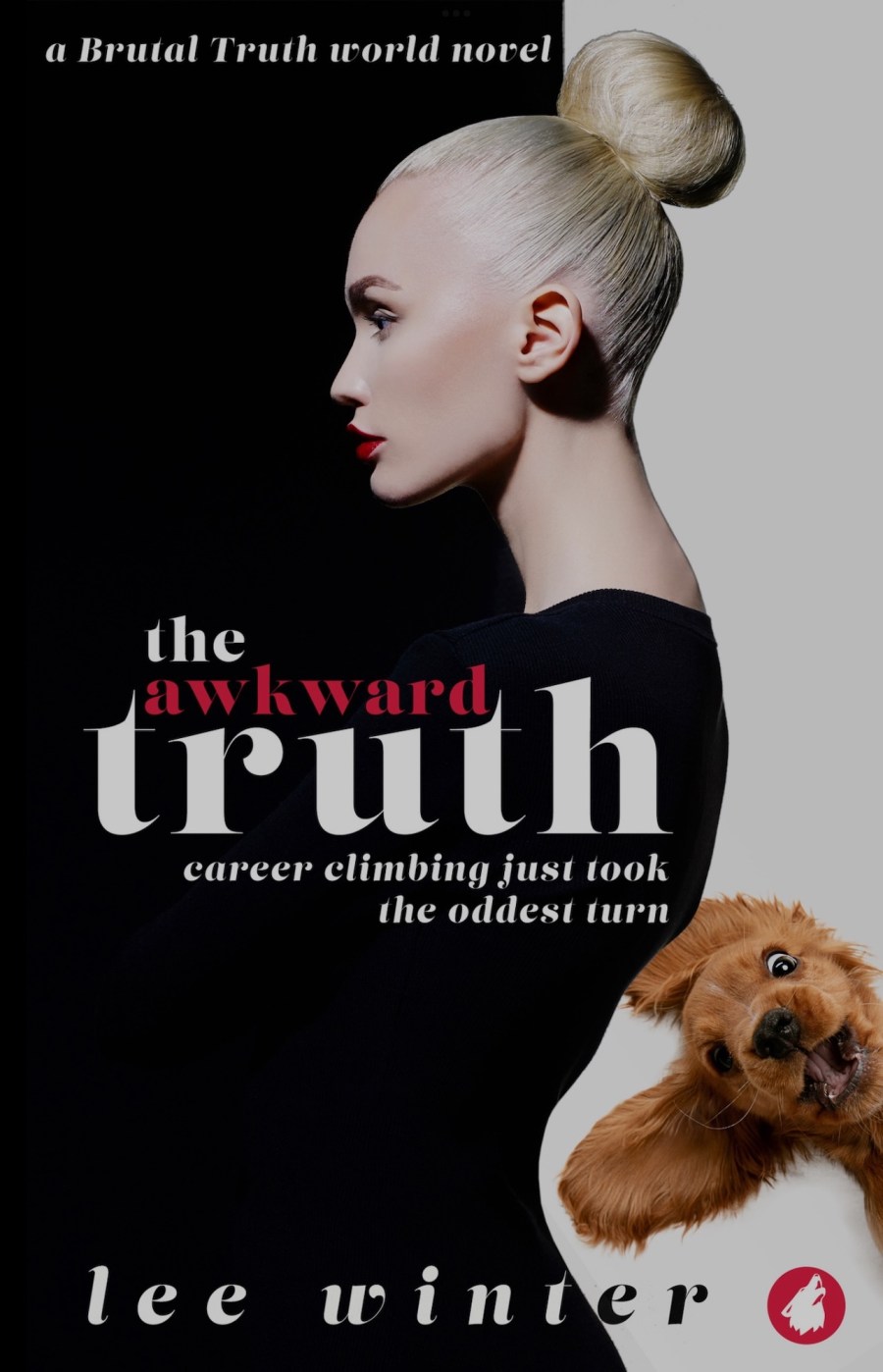
The Awkward Truth by Lee Winter is a fun light lesbian mystery-romcom.

Protagonist Felicity Simmons is a socially awkward but brilliant corporate lawyer, and a tough negotiator who takes independence and self-sufficiency to the extreme. Totally career focussed, she doesn’t need friends, though she does worship her mentor-boss. Felicity is the protégé of Elena Bartell, media tycoon and owner of Bartell Corporation and is in training to become COO because Elena wants to move to Sydney.

“I’m perfectly calm,” Felicity snapped. “You know, this is not the first time I’ve been treated as though I’m some zoo oddity to be picked apart. People often assume the worst about me because I don’t conform to how they think I should be. I’m not warm enough. I don’t smile enough. I don’t hold my tongue or lie or coddle to protect fragile egos. Apparently, I have ‘all the maternal instincts of an alpine glacier.’ Direct quote from my previous boss.”

Felicity is a bit prickly. Her boss Elena sends her protégé off to investigate the charity Living Ruff that provides vet services to the pets of people experiencing homelessness. The charity has announced it’s in financial trouble and about to fold and Elena wants to know what happened to a significant $1.4 million donation she gave it recently. She also wants to test whether Felicity has a heart.

“Then it seems to me you have a choice. Show her she’s wrong about you. Or do absolutely nothing. Those are your options. But understand that if you want to know what your life will be like in ten years, change nothing now.”

Felicity is eager to impress, and takes her logic and smarts off to visit the homeless charity and sort it out. This is where she meets the kind, humble amazonian veterinarian Dr Sandy Cooper. Gradually Felicity starts to see the world through different eyes.

As long as she lived, Felicity would never forget what she’d just seen. It hadn’t ever occurred to her that a powerful, imposing woman might need a Harvey in her life. He seemed to recharge her emotional reserves. That’s why Rosalind loved her mild-mannered bookkeeper. Among other things, he kept her going when she was drained by a demanding world.

The Awkward Truth is a fun engaging opposites attract mystery with bold characters. The story reflects on the notion that the peaks of success are a lonely place without a passion, compassion and people to connect and share you endeavours with. It also explores homelessness, human-animal relationships, and how being confronted by those things can impact and change others. I particularly liked the charity/cute pets element.
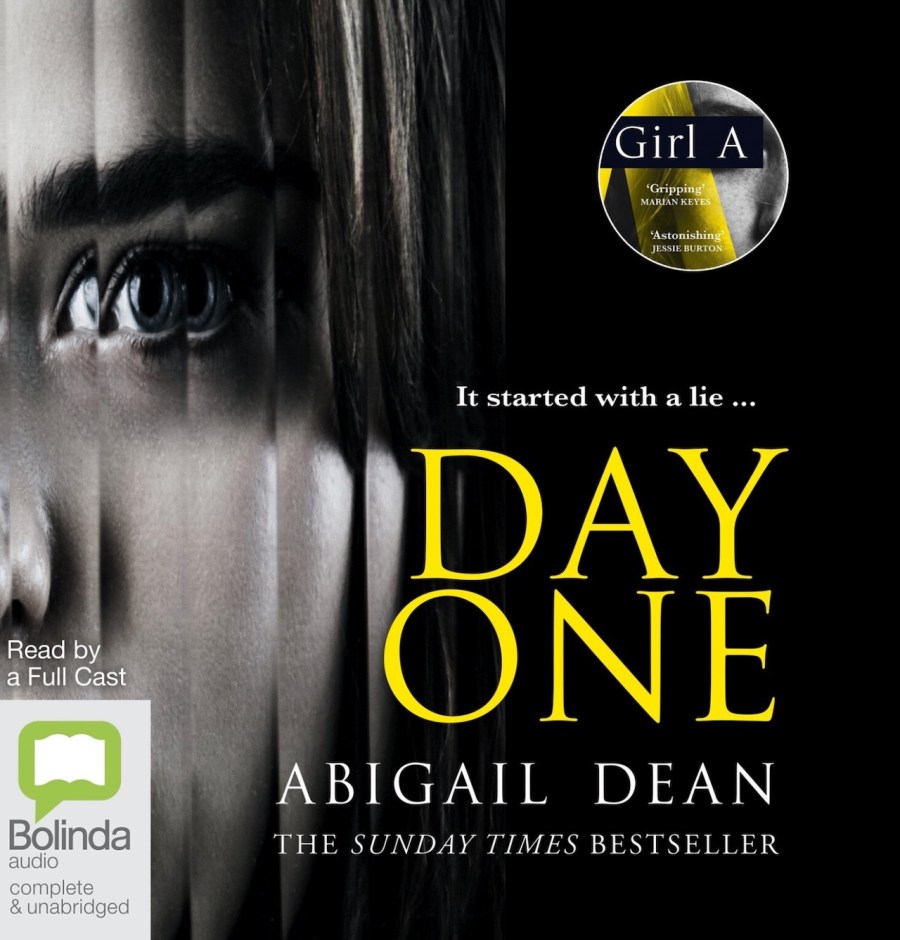
Book review: Day One by Abigail Dean

Day One by Abigail Dean is a story about the fallout from a shooting that takes place during the school play at Stonesmere primary located in a small coastal English town. Ava Ward was a teacher at Stonesmere for many years and while her class are performing, a helmeted man with a rifle started firing from the back of the room. Ava died trying to protect the pupils. Marty, Ava’s daughter, who says she was there on the day of the shooting is one of the point of view characters.

More red flags than a matador convention.

In the months following the incident conspiracy theories start to swirl. Trent Casey who knew the shooter and lived briefly in Stonesmere is involved in promoting the conspiracy theories. Trent is also a point of view character.

My memories trembled. I reassembled the room, just as it should have been. Gathered the children back to the stage. Put the chairs back in place. Dried the floor. Tucked phones back into pockets, handbags, palms. There I was, in the heart of the audience, with my mother’s hand in mine.

Both Marty and Trent are unreliable narrators, but gradually the truth about what occurred leading up to the shooting emerges and what really happened on that fateful day at the school unfolds. 

They had both been children, and when you were a child it was easy to mistake almost anything for love.

Day One contains multiple points of view, split narratives and non-linear timelines that keep the reader guessing as the truth unfurls through pared back prose. A tense, gripping, tragic mystery brimming with secrets and miscommunications. It’s an engaging ready, but not a story for sensitive souls. 

Book review: The Last Devil to Die by Richard Osman

The Last Devil to Die is the final in Richard Osman’s Thursday Murderer Club mystery series. Book 1, The Thursday Murder Club and book 2, The Bullet that Missed are also reviewed on this blog. In The Last Devil to Die the four intrepid pensioners Joyce, Elizabeth, Ron, and Ibrahim from Coopers Chase retirement village look into the murder of antiques dealer Kuldesh Sharma after he is shot in the head and a package he was meant to be looking after disappears. 

We complain about life so endlessly and so bitterly, and yet we cling to it so dearly? Surely that makes no sense?

Additional plot lines are threaded in. Our investigative elders grow suspicious when new resident Mervyn Collins tells them about his online relationship with a Lithuanian called Tatiana. He keeps trying to help her out financially, but the money keeps disappearing and his girlfriend never materialises. They decide Mervyn needs to be saved from himself and what they believe to be a relationship scam. Meanwhile former spy and leader of the oldies gang Elizabeth and her husband Stephen grapple with his advancing dementia.

But, however much life teaches you that nothing lasts, it is still a shock when it disappears. When the man you love with every fibre starts returning to the stars, an atom at a time.

The Last Devil to Die true to style is packed with Osman’s cheeky humour. He manages to make fun of the human condition and aging while still covering difficult topics with sensitivity. Osman crafts Joyce, Elizabeth, Ron, and Ibrahim as pensioners to aspire to be – feisty, fearless and friended to the grave.

That’s the thing about Coopers Chase. You’d imagine it was quiet and sedate, like a village pond on a summer’s day. But in truth it never stops moving, it’s always in motion. And that motion is ageing, and death, and love, and grief, and final snatched moments and opportunities grasped. The urgency of old age. There’s nothing that makes you feel more alive than the certainty of death.

I have now read and thoroughly enjoyed the entire Thursday Murderer Club series and am inspired to develop some outrageous retirement goals myself. I would live at Coopers Chase any day.

Book review: The Sun Walks Down by Fiona McFarlane

When his family discover that six year old Denny Wallace has become lost in the South Australian Flinder Ranges in September 1883, the farming community join forces to look for him. The story takes place over the seven days of searching, the questions of whether he will be found and in what state permeate. 

Failure is a stooped, pale figure with an open mouth and swollen eyes.

McFarlane introduces a swathe of characters in crisscrossing storylines – the local police officer Robert and his new German wife Minna, Swedish artist and his English wife bess, the well meaning but hapless local priest Mr. Daniels, Aboriginal man Billy Rough, Denny’s tough teenage sister Cissy who insists on joining the search, and Denny himself who’s fear and deteriorating state cause him hallucinations and contribute to him staying lost.

For now he studies what he thinks may be his final true desert sunset. The sky burns and leaps, it gilds and candles—every drenched inch of it, until the sun falls below the ranges. Then the sky darkens. The red returns, stealthy now, with green above and lilac higher still. It deepens into purple. Here’s the strange new cloud, hovering in its own grey light. Then night comes in, black and blue and grey and white, and the moon in its green bag swings heavy over the red nation of the ranges.

As each new character’s perspective is introduced the story deepens and becomes more textured with layers of detail unfolding. The evocative danger and beauty of the outback provides a backdrop to the drama as it unfolds.

Poetically crafted literary fiction with themes including belonging and unbelonging, colonialism, isolation, gender roles.

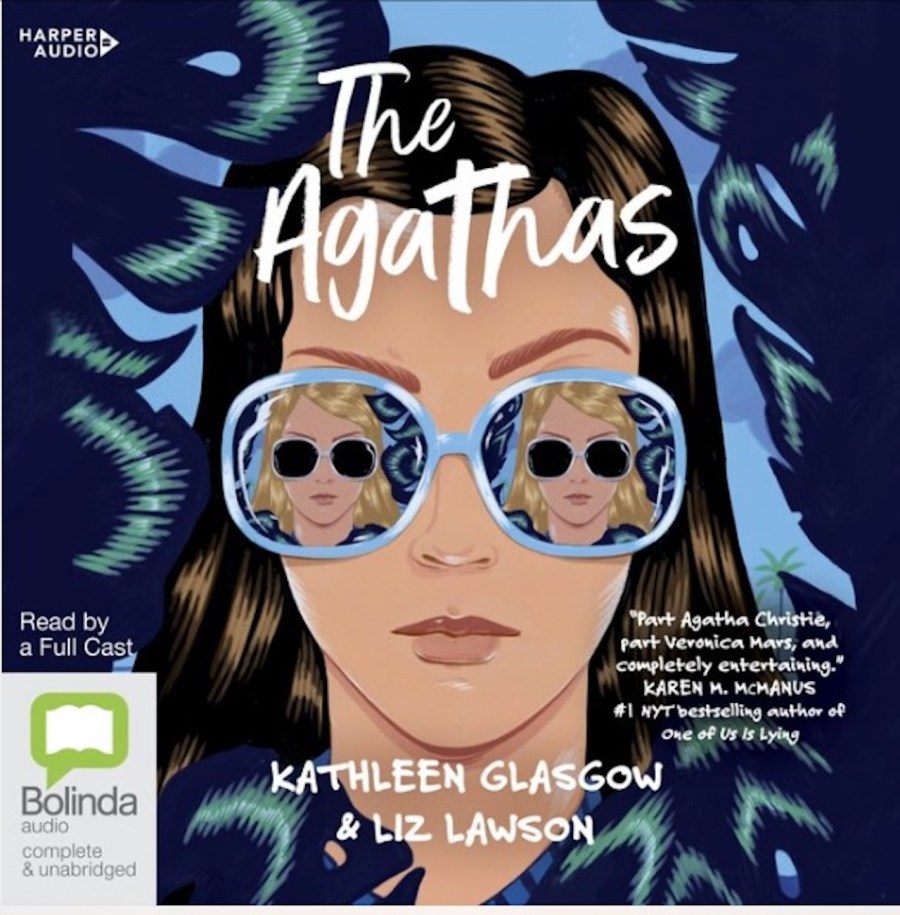
Book review: The Agathas by Kathleen Glasgow & Liz Lawson

The Agathas by Kathleen Glasgow and Liz Lawson is a fun twisty young adult mystery.

Alice Ogilvie is a financially privileged A-lister but her upbringing is largely outsourced. She has been ostracised by the popular group at school after disappearing when her best friend stole her basketball star boyfriend. Now she refuses to talk about it and just needs to stay out of trouble.

Three hours back at school and I’m already in trouble? Good lord, I’ve barely had time to pee.

Iris Adams lives in a working class area with her single mum who works hard to provide for her daughter. Iris is asked by the school to become Alice’s tutor. The two are an unlikely pair, but soon become friends as they bond trying to solve a mystery – the disappearance of Alice’s best friend Brooke.

Well,” I say, “I once saw a show about a guy who bludgeoned his mother to death in the kitchen and then cooked a full meal of pot roast and mashed potatoes, so anything is possible.”
“Iris,” Alice says wearily. “You seem like such a nice person and her your brain is full of horrible things.

As the title suggests, the book pays homage to Agatha Christie. Alice is a big fan and is inspired by what she’s learnt from the mystery writers novels, using the strategies in her own search to solve the mystery of her missing friend.

We are probably this far from donning trench coats, smoking Lucky Strikes, and slinking furtively around town, taking notes in a little black book.
Which doesn’t actually sound all that bad, truth be told.

When Brooke’s body turns up and her boyfriend is arrested, the girls decide they need to find the real truth and fix the miscarriage of justice. They are aided by the hard drinking, smoking, disheveled female lawyer representing the boyfriend who also used to be Iris’s babysitter.

An English writer known for her 66 detective novels and 14 short story collections. Also known as the bestselling author of all time. Also, one bad bitch.

I really enjoyed the characters, the teenage dramas, the red herrings and the Christie references. Something in this one for young and old.

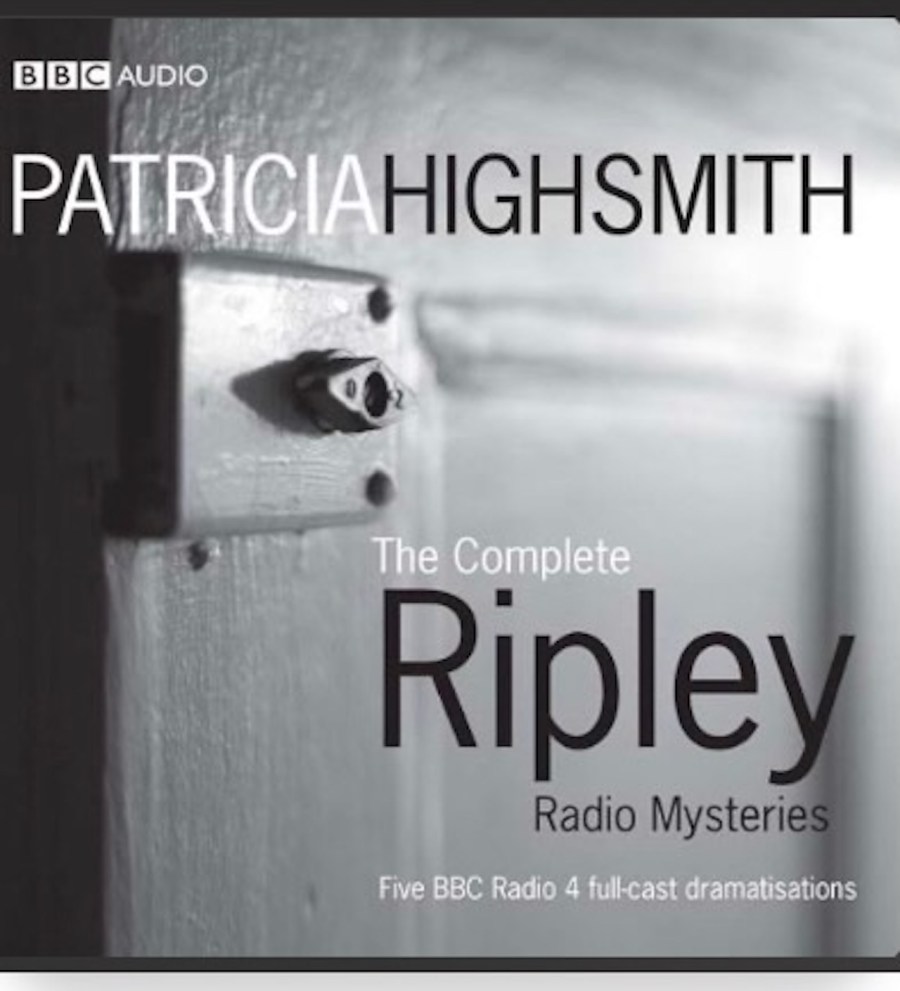
Review: The Complete Ripley Radio Mysteries by Patricia Highsmith

A couple of weeks ago I went to see the documentary Loving Highsmith about American author Patricia Highsmith. The content for the doco was drawn from her unpublished diaries and notebooks, and the personal accounts of her lovers, friends and family.

But love and hate, he thought now, good and evil, lived side by side in the human heart, and not merely in differing proportions in one man and the next, but all good and all evil. One had merely to look for a little of either to find it all, one had merely to scratch the surface. All things had opposites close by, every decision a reason against it, every animal an animal that destroys it, the male the female, the positive the negative.

Strangers on a Train

Highsmith was best known for her psychological thrillers (Strangers on a Train and The Talented Mr. Ripley) and for being part of the Modernist movement. Most of her novels were adapted to the big screen, notably with little need to be changed for the screen.

The partly autobiographical The Price of Salt written in the 1950s and published under the pseudonym Claire Morgan was also adapted for film in 2015 as Carol. Due to the social morals of the time, Highsmith led a double life, hiding her love affairs with women from the public and her family, but reflecting on them in her personal writings. Carol was the first lesbian story with a happy ending published in the USA.

Happiness was like a green vine spreading through her, stretching fine tendrils, bearing flowers through her flesh.

Carol

The documentary was fascinating and led me to seek out the audio series, Ripley Radio Mysteries that dramatises her five Ripley novels. The character of Ripley was inspired by a man Highsmith saw from a hotel room in Italy after she moved to Europe. Ripley is not a nice man, though he only kills when absolutely necessary (I mean who doesn’t?). Highsmith wrote him empathetically so as a reader I both liked and loathed him – it’s creepy.

He loved possessions, not masses of them, but a select few that he did not part with. They gave a man self-respect. Not ostentation but quality, and the love that cherished the quality. Possessions reminded him that he existed, and made him enjoy his existence.

The Talented Mr Ripley

Protagonist Tom Ripley is materialistic, though not in the usual way. He has an unstable sense of identity and possessions give him a feeling of safety and stability. It is this that leads him to his first kill. He befriended Dickie but felt uncertain about their relationship and killing reduced his friend to a collection of possession of clothes, rings and cash – much more predictable.

The series is tense, atmospheric and twisted. Perfect for a thriller!

Dames of Crime: Ursula Torday

It’s been a while since I’ve written a Dames of Crime blog, so I thought it was time I shone a light on another great woman of mystery – Ursula Torday.

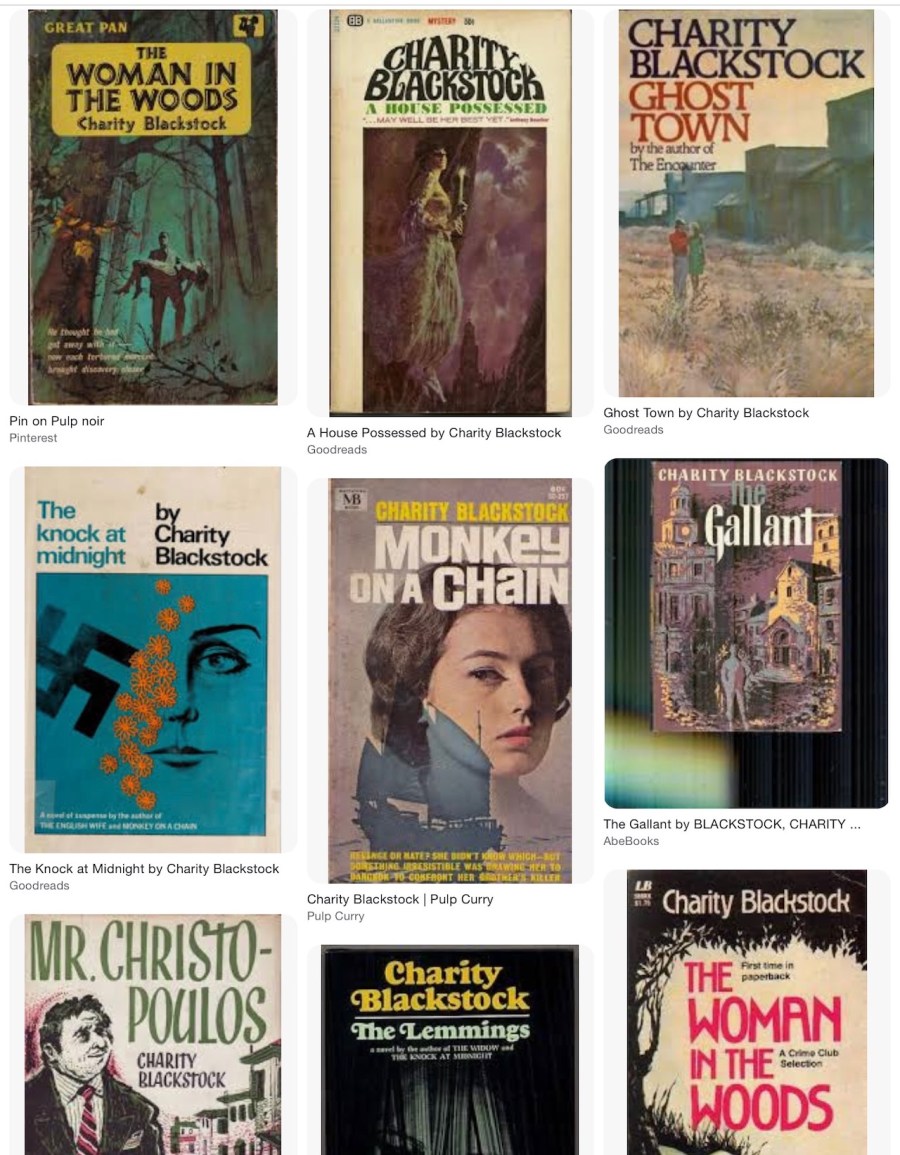
You’d be forgiven for never having heard of writer of mysteries, gothic and historical romance fiction Ursula Torday (1912-1997) because she only wrote three novels under that name. She did write many under pseudonyms, including Paula Allardyce (29 novels), Charity Blackstock (27 novels), Lee Blackstock (2 novels) and Charlotte Keppel (6 novels).

The only child born to a Scottish mother, and a father who was a Hungarian anthropologist, Torday had polio as a child which afflicted her gait throughout her life. She was educated in London at Oxford University and published her first three romance novels in the 1930s under her true name then stopped writing aged 26. She did not publish again until 1954. Over the next three years she published six books and continued to be prolific until the ’80s.

Torday’s dual interests of romance and mysteries meant that emotions and passion were important in her novels and often given precedence over death and motive in her mysteries. Sardonic humour, passion, hate, fear and loathing reverberate through her loathsome mystery characters to create tension and brooding romance.

Torday was said to be her own woman – cultured, sophisticated, opinionated, with wide interests and a zest for life. During World War II she worked as a probation officer for the Citizen’s Advice Bureau then ran a refugee scheme for Jewish children following the war. Her war time work inspired two novels written under the pseudonym Charity Blackstock (The Briar Patch, 1960 and The Children, 1966). Later she worked as a typist at the National Central Library in London which inspired body in the library mystery Dewey Death written under the same name. Dewey Death was set in the Inter-Libraries Despatch Association and includes themes of adultery, drug trafficking, romance and murder. Torday also worked for Naim Attallah’s publishing house (Quartet Books, The Women’s Press) for a period and sat at a desk opposite Quentin Crisp exchanging tips on the latest nail varnishes.

The Woman in the Woods, a mystery-suspense written as Charity Blackstock, in which two schoolboys stumble across a skeleton in the woods and soon the whole village is caught up in the death was nominated to win the 1959 Edgar Award for best novel.

Mystery novels

  • After the Lady (1954) (as Paula Allardyce)
  • The Doctor’s Daughter (1955) (as Paula Allardyce)
  • A Game of Hazard (1955) (as Paula Allardyce)
  • Adam and Evelina (1956) (as Paula Allardyce)
  • The Man of Wrath (1956) (as Paula Allardyce)
  • The Lady and the Pirate (1957) aka Vixen’s Revenge (as Paula Allardyce)
  • Southarn Folly (1957) (as Paula Allardyce)
  • Beloved Enemy (1958) (as Paula Allardyce)
  • My Dear Miss Emma (1958) (as Paula Allardyce)
  • Death My Lover (1959) (as Paula Allardyce)
  • A Marriage Has Been Arranged (1959) (as Paula Allardyce)
  • Johnny Danger (1960) (as Paula Allardyce)
  • The Gentle Highwayman (1961) (as Paula Allardyce)
  • Adam’s Rib (1963) (as Paula Allardyce)
  • Respectable Miss Tarkington-Smith (1964) (as Paula Allardyce)
  • Dewey Death (1956) (as Charity Blackstock)
  • Miss Fenny (1957) aka The Woman in the Woods (as Charity Blackstock) 
  • All Men Are Murderers (1958)  aka The Shadow of Murder (as Charity Blackstock)
  • The Foggy, Foggy Dew (1958) (as Charity Blackstock)
  • The Bitter Conquest (1959) (as by Charity Blackstock)
  • The Briar Patch (1960) aka Young Lucifer (as Charity Blackstock)
  • The Exorcism (1961) aka A House Possessed (as Charity Blackstock)
  • The Gallant (1962) (as by Charity Blackstock)
  • Mr. Christopoulos (1963) (as Charity Blackstock)
  • The Factor’s Wife (1964)  aka The English Wife (as Charity Blackstock)
  • When the Sun Goes Down (1965)  aka Monkey On a Chain (as Charity Blackstock)
  • The Children (1966) (as Charity Blackstock)
  • The Knock at Midnight (1966) (as Charity Blackstock)
  • Party in Dolly Creek (1967)  aka The Widow (as Charity Blackstock)
  • Wednesday’s Children (1967) (as Charity Blackstock)
  • The Melon in the Cornfield (1969)   aka The Lemmings (as Charity Blackstock)
  • The Encounter (1971) (as Charity Blackstock)
  • I Met Murder on the Way (1977) (as Charity Blackstock)
  • The Shadow of Murder (1964) (as Charity Blackstock/Lee Blackstock)
  • Madam, You Must Die (1974) aka Loving Sands, Deadly Sands (as Charlotte Keppel)
  • When I Say Goodbye, I’m Clary Brown (1976) aka My Name Is Clary Brown (as Charlotte Keppel)

Other novels – gothic, historical, romance

  • The Ballad-Maker of Paris (1935) (as Ursula Torday)
  • No Peace for the Wicked (1937) (as Ursula Torday)
  • The Mirror of the Sun (1938) (as Ursula Torday)
  • The Rogue’s Lady (1961) (as Paula Allardyce)
  • Witches’ Sabbath (1961) (as Paula Allardyce)
  • Paradise Row (1964) (as Paula Allardyce)
  • Octavia (1965) (as Paula Allardyce)
  • Emily (1966) (as Paula Allardyce)
  • The Moonlighters (1966) aka Gentleman Rouge (as Paula Allardyce)
  • Six Passengers for the Sweet Bird (1967) (as Paula Allardyce)
  • Waiting At the Church (1968) (as Paula Allardyce)
  • The Ghost of Archie Gilroy (1970) aka Shadowed Love (as Paula Allardyce)
  • Miss Jonas’s Boy (1972) aka Eilza as Paula Allardyce)
  • The Gentle Sex (1974) as Paula Allardyce)
  • Legacy of Pride (1975) (as Paula Allardyce)
  • The Carradine Affair (1976) (as Paula Allardyce)
  • Miss Philadelphia Smith (1977) (as Paula Allardyce)
  • The Daughter (1970) (as Charity Blackstock)
  • The Jungle (1972) (as Charity Blackstock)
  • Haunting Me (1978) (as Charity Blackstock)
  • Miss Charley (1979) (as Charity Blackstock)
  • With Fondest Thoughts (1980) (as Charity Blackstock)
  • The Lonely Strangers (1972) (as Charity Blackstock)
  • People in Glass Houses (1975) (as Charity Blackstock)
  • Ghost Town (1976) (as Charity Blackstock)
  • Dream Towers (1981) (as Charity Blackstock)
  • The Woman in the Woods (1959) (as Charity Blackstock/Lee Blackstock)
  • The Villains (1980) (as Charlotte Keppel)
  • I Could Be Good to You (1980) (as Charlotte Keppel)
  • The Ghosts Of Fontenoy (1981) (as Charlotte Keppel)
  • The Flag Captain (1982) (as Charlotte Keppel)

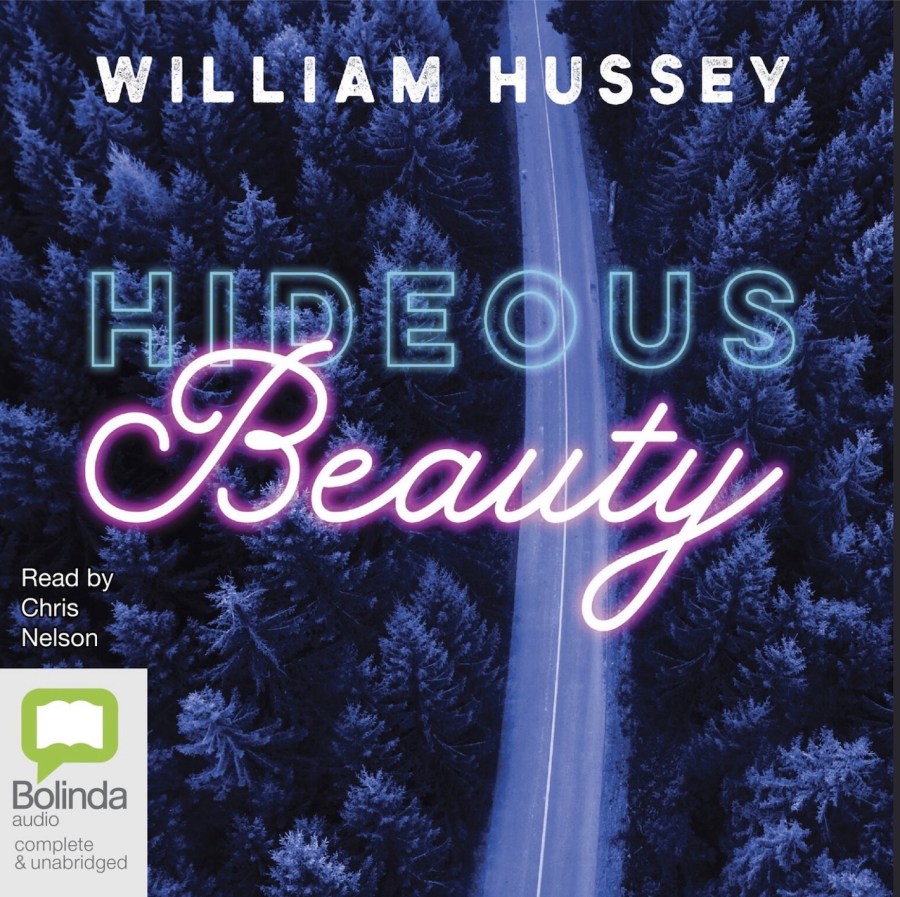
Book review: Hideous Beauty by William Hussey

Hideous Beauty is a mystery about young love, trauma and being queer. Trigger warning – it’s heart wrenching, covers some challenging issues and will most likely make you cry.

Truth is dull and frightening and soul destroying. Art is about the wonderful lies we tell ourselves so we can bear to live the truth.

Dylan is forced to come out before he is ready after a video of him having sex with his boyfriend El goes viral. They decide to get on the front foot and got to the school dance together. It goes surprisingly well and Dylan thinks he has found happiness in being able to be himself with Ellis. Dylan’s euphoria is short lived when El starts behaving strangely, becomes angry and withdrawn. Driving home from the school dance Ellis loses control of the car and the two boys crash into a lake – Dylan is pulled from the car, but Ellis drowns. A grief stricken Dylan vows to find out why his rescuer left Ellis in the car.

We all wanted El to be something he could never be. And we thought us wanting that was somehow acceptable, but it’s not. It’s not about El fitting into some idea of what he should be. Tolerance isn’t conditional. It’s absolute.

A beautiful and sensitive account of first love, coming out, high school politics, illness, grief, and the effects of trauma. Reading it was an emotional roller coaster – and it did make me cry.

Book review: Digging Up Dirt by Pamela Hart

Thought I’d lighten things up a bit this week with a cozy mystery. Cozies are an easy read that can be gobbled up without any uncomfortable feelings, whilst still offering satisfying twists and turns. Digging Up Dirt also includes a splash of simmering romance.

Nothing like the builder digging up bones to halt the work on your renovation. TV researcher Poppy McGowan needs to find out if the bones are human or animal so she can get on with finishing her house. When archaeologist, Dr Julieanne Weaver, whom Poppy doesn’t like, interferes and slaps a heritage order over the property because she thinks the bones a significant Poppy is really annoyed. But then Julieanne is found murdered onsite, face down in the excavation dressed in heels and an evening frock, and things get really complicated.

Pamela Hart is a prolific author who has written more than 35 books and successfully crosses the genre divide. She is best known for her historical fiction (The Soldiers Wife, The War Bride, A Letter from Italy and The Desert Nurse).

Hart has also penned speculative fiction (Ember and Ash)and children’s books under the name Pamela Freeman as well as being an accomplished scriptwriter for ABC kids. I’ve done a few of the online courses she has written for the Australian Writers Centre as well, which have all been of good quality. She’s no slouch!

Digging Up Dirt is Hart’s first mystery novel and it’s a fun Australian read (or listen to the audio book). 

Environmental crime fiction

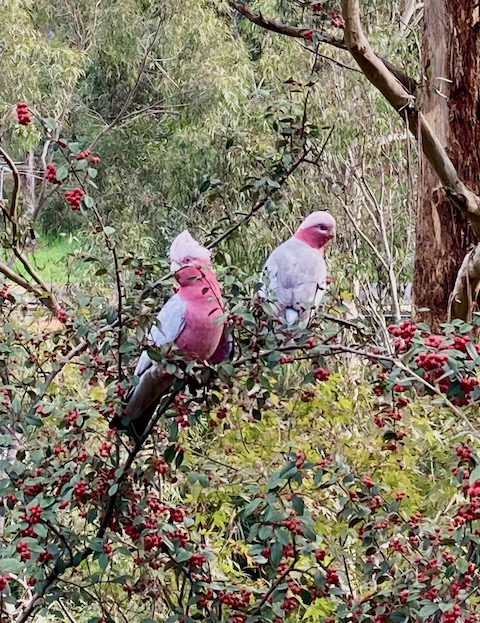
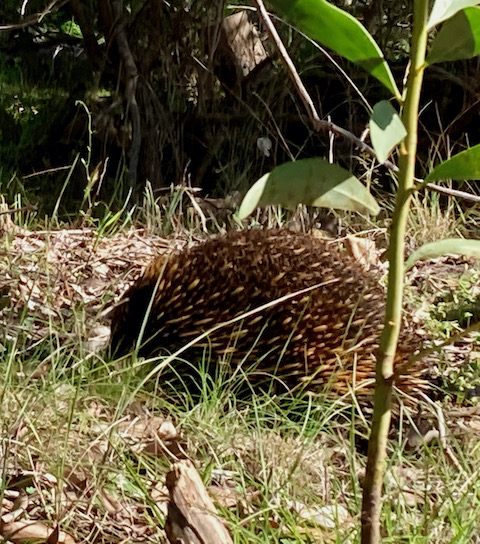
I woke up to a startlingly beautiful sky filled with hot air balloons this morning. After doing some writing I set out with the hound on a long walk. It is a stunning Autumn day. Already I have been squawked at by some cheeky galas and said hello to an echidna going about its day.

Now, I have stopped for a moment and I am squatting on a rock looking at the river scene in the the photos include in this blog post as I write it on my phone. The intermittent sound of birds play a tune over the background base of the swollen Yarra River waters spilling across rocks on their way to the city. It is peaceful and soothing and my mind turns to my writing.

My current manuscript is a crime fiction novel with a backdrop of the environmental movement. One of the underlying themes is climate grief and I have taken much inspiration from my local environment as well as from a period living in East Gippsland.

The idea for the story came to me during a writing workshop I attended with Angela Savage, former CEO of Writers Victoria, at the Terror Australis Readers and Writers Festival (TARWF) in October 2019 and I commenced work on the manuscript in November that year (TARWF will run again this year in November and I hope to go again as it was a hoot last time – I delivered spoken word piece at their Noir at the Bar event. You can listen to that here.)

The story for my current manuscript is set in 2018, before the Victorian bushfires and the pandemic. Whilst the premise pre-dates our recent disasters, the story has certainly been shaped by them. It is a lament to Victoria’s beautiful disappearing landscapes and humanities seeming collective inability to do what needs to be done to save them from the impacts of climate change. There have been moments when I considered abandoning the endeavour, particularly after the terrible bushfires in Victoria that consumed much of the landscape in which the story is set. Instead I made some changes to include a foreboding of disasters such as the fires and the pandemic so that the story does not seem dated.

I entered the first few chapters into a competition for a Varuna Fellowship last year and was chuffed to be shortlisted. I hope to take up the opportunity for a supported residency later this year.

My writing has been interrupted a bit over the last year, but I have now crossed the half way mark of the first draft at just over 40,000 words and am feeling inspired to forge on into the home stretch so I can set myself to editing.

For now, I must continue on my walk as the hound is getting restless.