Book review: Educated by Tara Westover

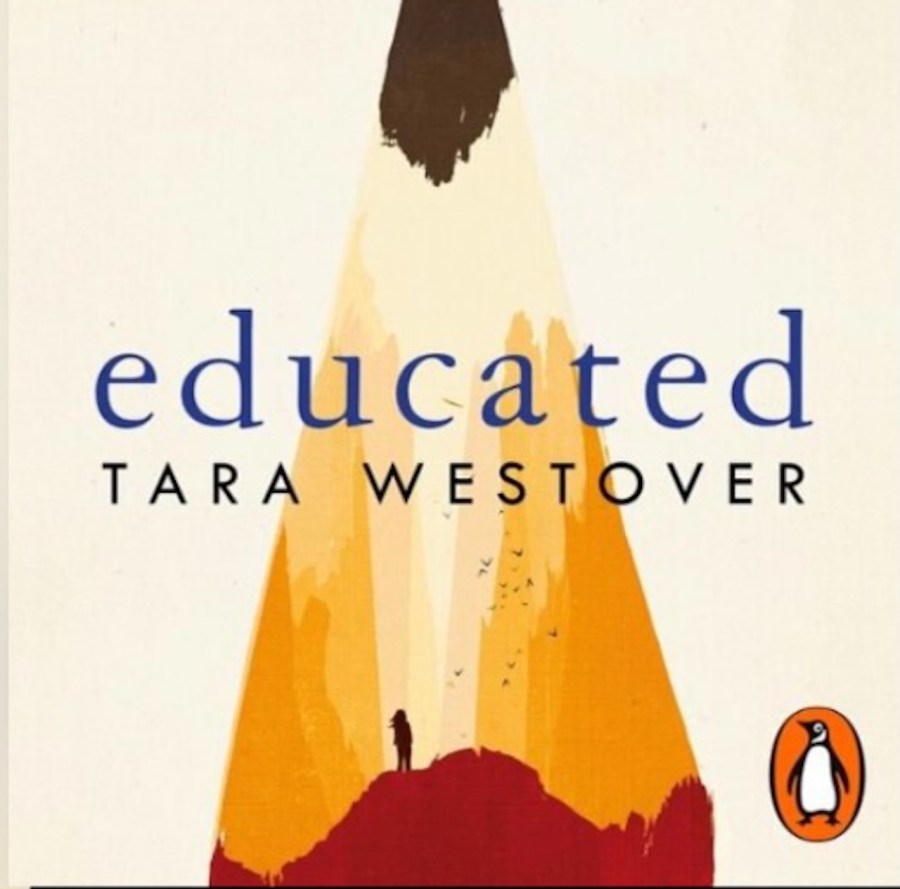
Educated by Tara Westover is a memoir set in an isolated community with views of striking mountains. Geographically Idaho in the USA has large tracts of rugged, beautiful wilderness. The state also has a significant Mormon population. Educated is about growing up in a large family of seven children with fundamentalist Mormon survivalist parents. But it is not a story primarily about religion.

An education is not so much about making a living as making a person.

Tara did not set foot in a classroom till she was seventeen, receiving what little education she did from her mother and through self-learning. The family did not visit doctors or hospitals. Even life threatening injuries were treated by Tara’s mother, a kind of healer who used herbs and tinctures and the will of god to mend people. The children did not have birth certificates, education or medical records until they were teenagers.

But sometimes I think we choose our illnesses, because they benefit us in some way.

The children worked in their father’s scrap yard without protective equipment. He was a man who believed in grand conspiracies, hoarded food and guns, and avoided contact with bureaucracy.

I could tolerate any form of cruelty better than kindness. Praise was a poison to me; I choked on it.

Tara’s desire for an education motivated her to break away from family ties, eventually earning a Doctorate at Cambridge University. When a lecturer described the profile of bipolar in a psychology class, Tara recognised her father in it. The cost of leaving the small community was estrangement from her family, but the decision probably saved her. It also enabled her to learn to trust her own views of the world.

My life was narrated for me by others. Their voices were forceful, emphatic, absolute. It had never occurred to me that my voice might be as strong as theirs.

As the narrative unfolds, it becomes evident that the key themes of Educated are mental illness, loyalty, family violence and how those issues can pervert people’s views of the world – in this case in a framework of religion and conspiracy theories about the end of the world. Tara’s story is also about identity, the reliability of memory and how education can lift one up and offer freedom from a life that seemed predestined .

The decisions I made after that moment were not the ones she would have made. They were the choices of a changed person, a new self. You could call this selfhood many things. Transformation. Metamorphosis. Falsity. Betrayal. I call it an education

Educated if beautifully written but difficult to read. I was mesmerised and left with the sense that sometimes life really is stranger than fiction. It is a wonder that Tara survived to tell the tale.

Book review: Cactus Pear for My Lover by Samah Sabawi

Cactus Pear for My Lover by Samah Sabawi is a memoir that traces her Palestinian family history over more than 100 years from the post-war formation of the state of Israel to the Six Days War in 1967 which resulted in many deaths, ethic cleansing, and the exile of around 250,000 Palestinians from their homeland. Cactus Pear for My Lover is on family’s experience of that time and highlights the injustices of dispossession and oppression in Gaza.

They gave them everything. They gave them the official government buildings, the airports, the seaports, the military equipment and the training. Everything! And they gave us checkpoints, prison cells, torture chambers and targeted assassinations for any one of us who tries to resist.

Sabawi’s father Abdul Karim Sabawi, a renowned Palestinian poet, was the son of a highly intelligent man with a disability and a strong, loving and illiterate mother. We first meet Karim as an elderly man in Australia in 2018 when Sabawi says she wants to write his story. The narrative is told through Karim’s eyes as a child and young man between 1918 and 1967. It recounts Karim’s birth, education, marriage and his work as a journalist and teacher as well as his exile from Gaza after the Six-Day War for his part in the Palestinian resistance. It would have been too dangerous to stay.

It wasn’t until they had finished their dinner, and began sipping on their meramieh tea, that something shifted in the air. An unmistakable sense of foreboding hung thick in the spaces between them, and settled itself in the room like an uninvited guest who kept returning. Pride and joy gave way to an irrational but real fear of loss. That was how this family had become. That is what life had shaped them into. Happiness was always a reminder of grief; pride a reminder of disappointment; and joy always brought his evil cousin, foreboding.

Cactus Pear for My Lover is about day to day life, family, love, history, politics, conflict, resistance, displacement and exile. Sabawi uses fictional characters and dramatisation along with careful research to reconstruct the Palestinian experience of the time.

Sweet cactus pears are in season, and tonight I will personally peel them with my own hands the sweetest cactus pears for my beloved.

The characters in Cactus Pear for My Lover are rich and three dimensional with extraordinary resilience. It is an evocative beautifully crafted but heartbreaking story to read due to the immense human suffering depicted, suffering that continues to this day.

Book review: Peel Me a Lotus by Charmian Clift

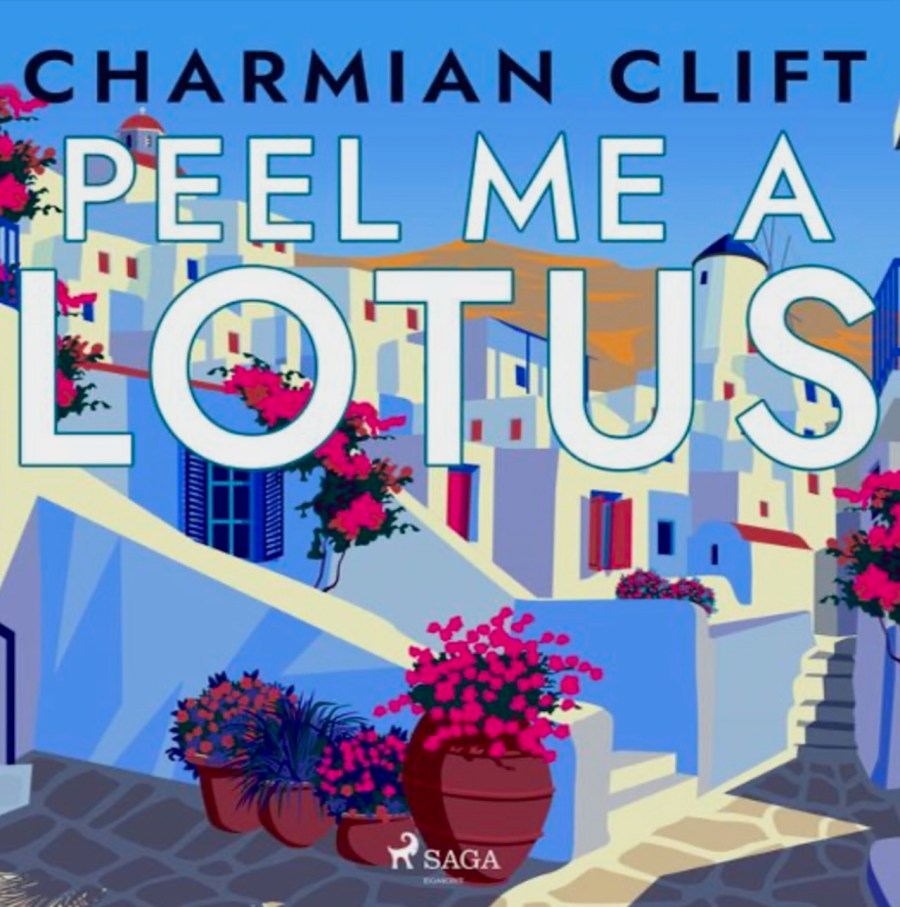
I loved Peel Me a Lotus by Charmian Clift,  first published in 1959, mainly because of its exquisite evocation of place. But there was also something about it that reminded me a little of the two years I spent living in a Portuguese village in the ’80’s that made me feel quite nostalgic.

To accomplish anything it is obvious that a talent is not enough. You need a motive, an aim, an incentive, an overwhelming interest be it ambition or fear or curiosity or only the necessity to fill your belly. You need a star to steer by, a cause a creed, an idea, a passionate attachment. Something must beckon you or nothing is done – something about which you ask no questions.

Charmian Clift and George Johnston fled post war London for Greece in 1951, settling on the island of Kalymnos. Later they moved to Hydra where they bought a house. Peel Me a Lotus is a chronology from February to October as they get to know their new home and the people of Hydra. It is the companion volume to Mermaid Singing (which I have not yet read).

Today we bought the house by the well.

Peel Me a Lotus opens with the family of four in the process of buying a crumbling stone villa, almost exhausting their savings in the process. In the same month Charmian receives news that an American publisher will publish Mermaid Singing.

Was it for this that I so gladly renounced the pleasures of material success? The assurance of the monthly cheque? The visible achievements? The automobile, the well-dressed wife, the comfortable apartment at a ‘good’ address, the tidy, well-mannered children going to tidy, well-mannered schools?”

The villa is on the island of Hydra that has a sizeable expat community made up mostly of artists, writers and intellectuals. Charmian is expecting their third child and there is an urgency to make the house habitable before the baby arrives. The first part of the novel focusses on the trials and tribulations of renovating the property, the people they encounter, moving in, and having the baby. The children slide into their new life, attending Greek school and running amok on the streets of Hydra.

Every one of us, in his own particular way, is a protestant against the rat race of modern commercialisation, against the faster and faster scuttling through an endless succession of sterile days that begin without hope and end without joy. Each of us has somehow managed to stumble off the treadmill, determined to do his own work in his own way…

As spring gives way to summer, their sleepy island paradise grows to be a destination for day-trippers, artists seeking a new life and international celebrities, along with an entire film crew that arrive to shoot the film Island of Love. They bring a promise of change and income for the islanders, while apologising for spoiling their paradise. By the end of that Summer, Charmian’s husband George threatened to sell the house back to London.

Ask nothing of it and the soul retires, the flame of life flickers, burns lower, expires for want of air. Here, in the midst of all our difficulties, life burns high. Though it seems sometimes that we make no progress towards the ideal, yet the ideal exists, and our energies are directed towards it.

Peel Me a Lotus is a beautifully written lyrical memoir about the struggle to make a living from a writing life on a rural island amongst a mix of locals and expats without modern amenities, little water in summer, dodgy sewage, cheap and bountiful food and a magnificent landscape. 

We are poor, but then we have been poor for the last two years – poorer, indeed, than we are now, with a house of our own, and enough money to live for another six months or so even if we should earn nothing more. Those two years of poverty have been the most eventful, the most enjoyable, the most exciting of our lives; we have felt richly defiant and adventurous eating lentils and wearing darned sweaters and thumbing our noses at the Jeremiahs who had said we couldn’t do it. 

Book review: We are the Stars by Gina Chick

I rarely watch television, but was compelled to last year after a number of people insisted that I would enjoy Alone season 1 set in Tasmania. They were right – I love the Tasmanian wilderness and I loved that an unassuming middle aged women beat a load of blokes at a survival contest while being real and vulnerable. That was my first encounter with Gina Chick. 

Music grows into crips, sonic flowers. Harmonic fragrances weave and bloom. It’s an anthem I know and my heart grows wings.

At my last book group meeting, Gina’s memoir, we are the stars, was selected for our monthly read. I can say that it exceeded my expectations and at various times made me laugh and weep. Her writing voice has a lovely poetic magical realism quality to it that captured me.

I’ve lost connection with the girl who danced with storms and talked to birds. Forgotten what it is to follow a flickering shadow, tracking the scalloped breast of a hunting eagle, primary feathers splayed, micro adjustments to keep its body suspended on a cushion of air. I can’t remember the last time I walked barefoot in the bush, lit a fire and slept beside it, caught starts on my tongue, let the booboo’s haunting refrain circle my dreams.

Gina grew up in Jarvis Bay and was, in her own words, a strange kid. She had a greater affinity with animals than other children and was ostracised by her peers at school. Fortunately she had a loving family, a love of reading, and an endless stream of critters to look after, to fortifier her from loneliness during her childhood.

When did I abandon the fey creature who saw worlds of wonder hiding beyond the membrane of the real, and brimmed with love for every living thing?

As a young person at university in Sydney, she found her people in the queer community and at dance parties. But she also possessed a naivety, and that, along with a lingering sense of ‘otherness’ and desire to be liked, meant she was vulnerable to exploitation and found herself in a relationship with a con man who left her with a large debt to pay off. 

Every heart is a house of cards, easily undone by the right lever. The right words. The con whispers a spell, the mark activates it and confers the power to self-destruct, simply by believing it. That’s the kicker with a con. They set things up so we willingly take the gun they’ve so lovingly prepared, turn it on ourselves, and pull the trigger.

Her mother suggests to her that she could be autistic, which makes sense given her narrative about her childhood, forthrightness and vulnerability to exploitation. Despite the setback, soon her extraordinary resilience kicked in and she found a way to clear herself of debt and find her way back to herself through reconnecting with the wilderness. 

I’ve never been able to hate Grayson. He behaved in his nature and I in mine. I wonder if my curse follows him; the consequences of his actions a slow, creeping raft of misery and loneliness. A long life looking out of his own eyes, hearing only the hollow rattle of his stories in the echo chamber of his castle of lies. 

Gina’s mother was adopted. When Gina was 18 her mother discovered her birthmother was writer Charmain Clift, another unconventional women, who’s discovery helped Gina to make more sense of herself.

Stooped into itself, a piano beckons with sweet purity. I’m grateful for the balm of music. 

True love found Gina in the US in a man she met on a wilderness survival course. The two married and had a child called Blaize. Tragedy struck the couple when their daughter died, aged three. Gina shares her deep grief with an extraordinary vulnerability in her memoir – this is the point where I found myself in tears on an plane on my way to Canberra. 

Our only true safety lies in our own resilience and honesty, in being able to look our darkness in the eye and say, yes, you are part of me, a segment of my deepest mystery, even if I don’t understand you yet. Safe is being willing to reach through our fear to clasp the hands of our demons and welcome them in. Not hiding from any part of ourselves.

I think parts of Gina’s story will resonate with many women who grew up in the 80s, and it’s wonderful to see a woman living boldly in mid life. There are so are so many moments that present opportunity for connection for readers – from her love of nature, challenges growing up, finding her people and partying, her losses and grief as an adult, and her life-force that endows her with an extraordinary human resilience and a strength to carry on. We are the stars is a beautifully crafted memoir that inspires reflection on life and what is important. Highly recommend it.

In the magnificent wilderness of my body I’ve become a gardener, hands buried to the elbows in earth and mud and the rot of compost, churning and turning the soil, uncovering small, sad seeds of belief that I’m not enough. It takes tenderness to plant them, right side up, water them with benedictions and whispered spell of forgiveness. With enoughness.

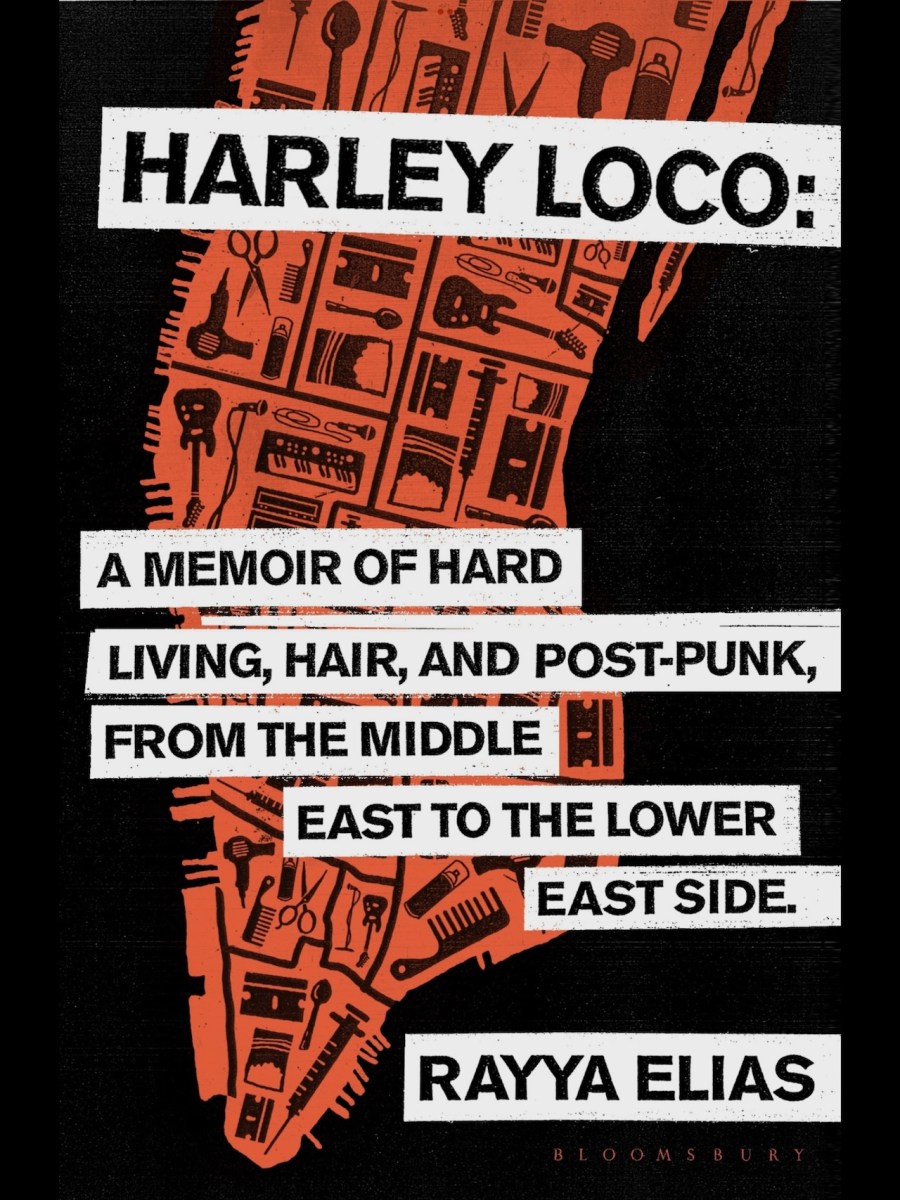
Harley Loco: A memoir of hard living, hair and post-punk, from the Middle East to the Lower East Side by Rayya Elias

I read Harley Loco with my book group, and what a wild ride it was! Rayya Elias’s memoir is about migration, not fitting in, trauma, drugs, hair, music and survival.

Rayya Elias (1960-2018) is Syrian. She was born in Aleppo and grew up with three siblings in a big flat with French windows and marble halls. A couple of childhood accidents – one involving leaping from a wardrobe and her brother failing to catch her, and another where she broke her leg and was bed bound in traction for an extended period were shaping moments for her.

Pain makes you stronger, and nothing is too great for us to achieve.

Orthodox Christians, her family fled Syria as the Ba’ath party rose to power. They headed for the promised land, the USA, and went from being landowner farmers with a father who was treated like a king to being poor immigrants, where the only work her father could find was as a janitor.

One of the first photos I saw of myself was when I was about four or five years old. I was at my brother’s first communion party and I was singing for a table of archbishops and priests with a cookie in my hand…When I look at these pictures, I love myself, and I think I look perfect and adorable. These pictures spark memories of happiness and elation at all the attention I got for singing.

Rayya’s family socialised mainly within the Syrian community in Detroit, but she went to an American school, where, despite her best efforts to fit in and make friends, she was an outsider and mercilessly bullied. Her experiences changed her from being high spirited and fun to developing a tough exterior and taking drugs to numb her discomfort and grief, and because to begin with it felt like fun.

I learned from a very young age that life was chaotic, but if I could hold my breath long enough (even while kicking and screaming), and come up for air once in a while, they I would have the chance to fight for what I wanted or needed.

The drugs soon took hold, but Rayya also discovered she had a talent for cutting hair and making music and started to become successful at both after finding her tribe through those pursuits. She also discovered she preferred girls to boys, a more complex issue for her to grapple with – particularly given her cultural background and that she had a devoted boyfriend at the time.

I could be free. The edge on life that I’d been looking for all along could be mine now: my work, my goal, my pride, and my dream. It seemed easy and obvious and like the only conceivable choice. All I had to do was be clean, that was the edge.

Her first big female lover refused to choose her over a man, and Rayya’s path to self destruction was sealed. Her emotional void was filled with coke, casual sex, porn, crack and eventually heroin and it was not long before all her success in hairdressing and music started a backslide into theft, betrayal, hustling, drug dealing, homelessness, multiple arrests, and jail.

People talk about that moment of clarity for drug addicts. I sat there, in the pile of dirt and sweat I’d woken up in, and I cried. Unable to get up, unable even to turn off the hideous TV, I cried and cried, out of fear for myself and sadness at the mess I’d made of my life. There were no police, parents, rehabs, shrinks, friends, or lovers to tell me what was wrong with me. There was only a voice inside my head, first low and weak, but quickly gathering strength and conviction till it rumbled through me as powerfully as the call for heroin had the evening before. It said: Rayya, you don’t need to do this anymore. You can be free.

Her family never gave up on her, but multiple attempts at getting clean with violent withdrawals failed, until sobriety eventually prevailed. It was either that or die, and she figured given she had overdosed several times and survived, death could not come from drugs.

The calm and smooth ride of life, without all the peaks and valleys, is a goal I constantly strive for now. But back then, it felt unnatural.

English was no Elias’s first language. The writing of her memoir is sparse, frank and brutally honest. She paints herself frankly as she descended into a spiral of self destruction, self absorption and cruelty and she sucked others into her addiction. Harley Loco was uncomfortable to read, but ultimately triumphant as Rayya did escape addiction and find her way to a good life after drugs.

Book review: No Friend But The Mountains by Behrouz Boochani

What is a border? … My whole life has been impacted by the concept of “border”.

Humans have a unique capacity for both kindness, cruelty and survival, attributes that are displayed with stark vividness in this memoir about Australia’s archaic detention policies and what it was like to experience them as an asylum seeker shipped to Manus Island.

For some moments I exert everything to reach something far down inside the deepest existential places of myself. To find something divine. To grab at it… maybe. But I uncover nothing but myself and a sense of enormous absurdity and futility.

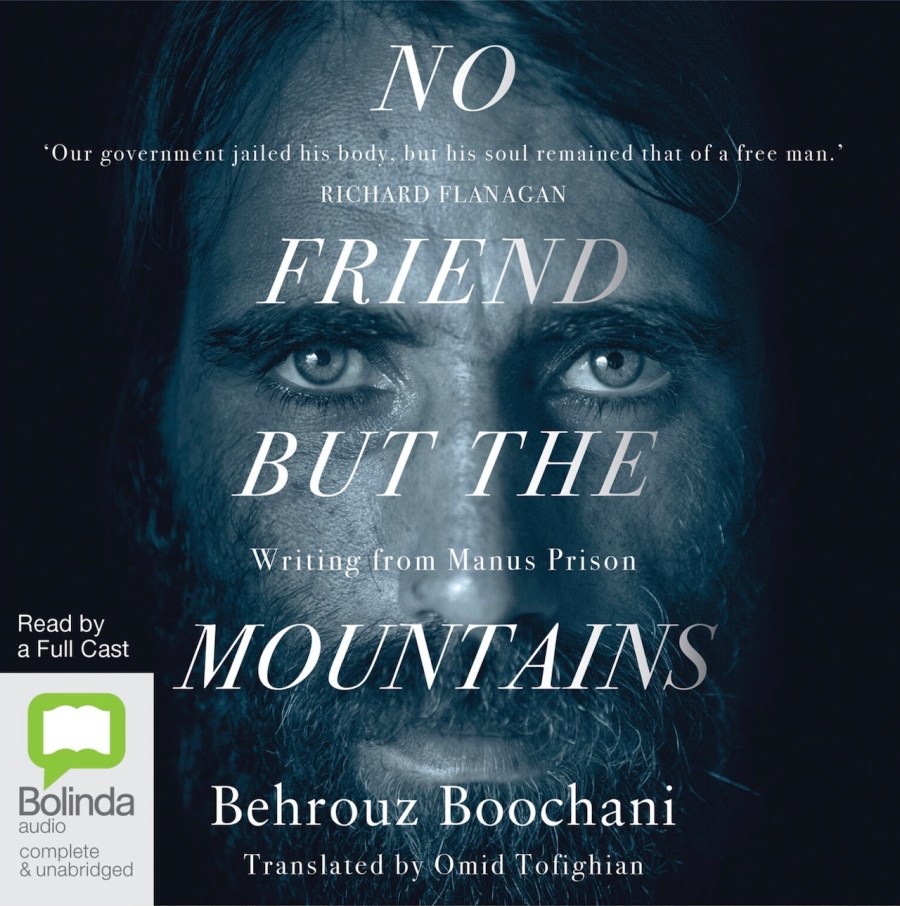
The phrase ‘truth is stranger than fiction’ is alive and well in No Friend but the Mountains by Kurdish refugee, Behrouz Boochani. Boochani is a journalist and poet with an education in politics and philosophy. He bore witness to, and survived, Australia’s inhumane detention policies by writing about them. His narrative was written in snatches and dispatched from Manus Island in a series of Farsi text messages over five years. His words were translated to English for the memoir by Omid Tofighian.

For some moments I exert everything to reach something far down inside the deepest existential places of myself. To find something divine. To grab at it … maybe. But I uncover nothing but myself and a sense of enormous absurdity and futility.

The narrative begins on the arduous journey from Indonesia to Australia with a group of mostly strangers gripping to the hope of a safe future beyond their boat that was not seaworthy. Boochani observes his fellow asylum seekers as a mixture of brave, selfless and selfish. As conditions at sea deteriorate, so do the passengers, some displaying their best, and others their worst selves.

The asylum seekers were rescued from their flailing boat and handed over to the Australian navy. A few days later, the men from the boat found themselves imprisoned on Manus Island where they experienced the brutality and degradation of Australia’s immigration detention system and the ‘stop the boats’ policy. The memoir takes us to February 2014 when attacks on the detention centre resulted in the murder of Iranian Kurd, Reza Bharati.

The bureaucratic ranks are determined by relationships of power. Every boss is subordinate to another boss. And the superior boss is also subordinate to another boss. If one investigated this chain it would possibly lead to thousands of other bosses. All of them repeating the one thing: ‘The Boss has given orders.

Nature offered Boochani some relief from the cruel reality of the day to day on Manus. There is beautiful imagery of the sea, mountains, trees, flowers and birds interspersed through observations of his fellow prisoners and captors and the hardships and humiliations they suffered.

The prisoner constructs their identity against the concept of freedom. Their imagination is always preoccupied with the world beyond the fences and in their mind they form a picture of a world where people are free. At every moment their life is shaped by the notion freedom. It’s a basic equation: a cage or freedom.

No Friend but the Mountains won the Victorian Prize for Literature and the Victorian Premier’s Literary Awards Prize for Non-Fiction in 2019. A must read for the socially conscious and those who need to be awoken to become so.

This will take time, but I’ll continue challenging the system and I will win in the end. It’s a long road, but I’ll do it