It would be fair to say that reading the news and public commentary this week following leaks about the Religious Freedom Review has made me both sad and angry, so this blog is a bit of a rant.
I have more interest in watching weeds grow than I do in the institution of marriage, but when the equal marriage debate descended into an opportunity to express general bigotry toward LGBTI+ folk, I took notice. I watched with horror as the ‘no’ campaign honed in on young people, the most vulnerable segment of the queer population, and attacked them.
My horror transmogrified into perverse fascination when some segments of the faith community turned themselves into victims, claiming they would be discriminated against if queers were allowed to marry. I say ‘some segments’ intentionally here, as I have had the pleasure of coming to know many (heterosexual) religious people who voted yes and support the evolution of their faiths.
Why any self-respecting queer would want to be married by an establishment that rejects them aside, the territoriality of the institution of marriage by religions is bizarre. The concept of marriage was not invented by god or the churches. Wedding traditions date back to about the third century B.C. in China and at least 30,000 years in Australian  Aboriginal culture, well before they encountered Christianity.
I suspect a large number of people of faith are damn glad that marriage as a religious institution has evolved. Let’s face it in the Old Testament polygamy was sanctioned, becoming a wife meant becoming the property of your husband, and a woman who was raped could be forced to marry her attacker. Changes isn’t that bad.
I did attend Sunday school, but my interest in religion ended there. Each to their own. It never made sense to me to allow your life to be dictated to by an external deity and a text written around the 4th century. Somehow claiming ‘god says’ felt like abnegating responsibility for your own behavior. I strive to live my life through an ethical lens, which invests in me similar principles to many religions, but my lens is a secular one.
I was mortified when I read the media about the leaks from the Religious Freedoms Review. Religious groups already have exemptions from anti-discrimination laws that allow them to discriminate against queers – including refusing to hire gay teachers or enroll transgender children. The hype read as if the review recommended an increase in sanctioned bullying and discrimination against LGBTI+ kids. This is deeply disturbing given the vulnerability of same-sex attracted (or questioning) youth who are five times more likely to attempt suicide than heterosexual young people. I feared that ‘religious freedom’ was being used as a smokescreen to justify extending discrimination and bigotry against minorities.
I went to the source this week and read some of the Religious Freedoms Review submissions available on the Department of Prime Minister and Cabinet website. It became apparent to me that allowing queers to marry remains a sore spot for those who were vehemently opposed to it. Most of the submissions that demanded additional protection of religious freedoms were actually bemoaning the fact that the ‘yes’ vote won in the postal survey.  They grasp for an opportunity to be exempt from compliance with the new laws.
The Christian ‘problem’ with queers seems to stem primarily from Leviticus 18:22 that states “You shall not lie with a male as with a woman; it is an abomination.” But I can’t help noticing the selective way in which some choose to quote the bible. Leviticus also states we may possess slaves (25:44); people who work on the sabbath should be put to death (35:2); and that we should get the whole town together and stone to death anyone guilty of blasphemy (24:10-16). Why are faith groups not demanding all god’s laws be adhered to with the same vigor they apply to their objection to gays? And where have the ethics of religion gone in this debate? What happened to compassion, humility and treating others as you would like to be treated? Life and religion have to evolve.
It strikes me as an extraordinary example of moral hypocrisy to cry for more religious freedoms on the grounds of fear of discrimination, then demand that those very freedoms enshrine a right to discriminate against another group. Its particularly  disturbing that the loudest voices should choose children as the target of their hostility.
Article 3 of the United Nations Convention on the Rights of the Child, states that all institutions should act with the best interests of the child as a primary consideration. Media reports suggest the Religious Freedom Review supports this convention. Yet rejecting a child for who they are cannot be considered to be in their best interests, nor their classmates. Such behavior would only teach the un-Christian traits of intolerance and hate.
In the shadow of the Royal Commission into Institutional Responses to Child Sexual Abuse it saddens me greatly that some of those institutions may have learnt very little. Abuse comes in many forms. All children deserve to be included, and treated with respect and dignity, including LGBTI+ kids.
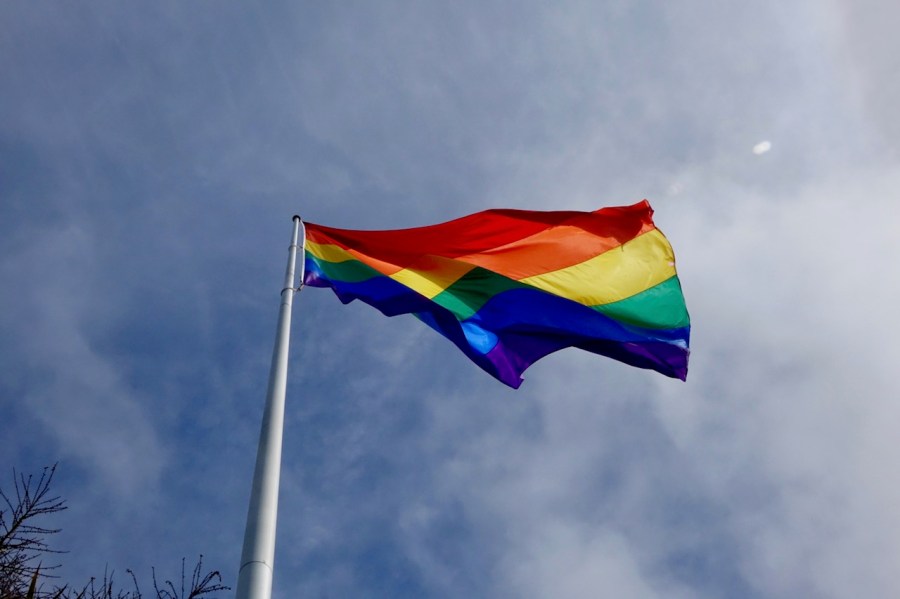
Main Image: Rainbow Flag, San Francisco
Inset images in order: DOX Centre for Contemporary Art, Prague; John Frum Movement, Vanuatu; Blue Mosque, Istanbul; church statue, Vienna; Street Art, San Francisco