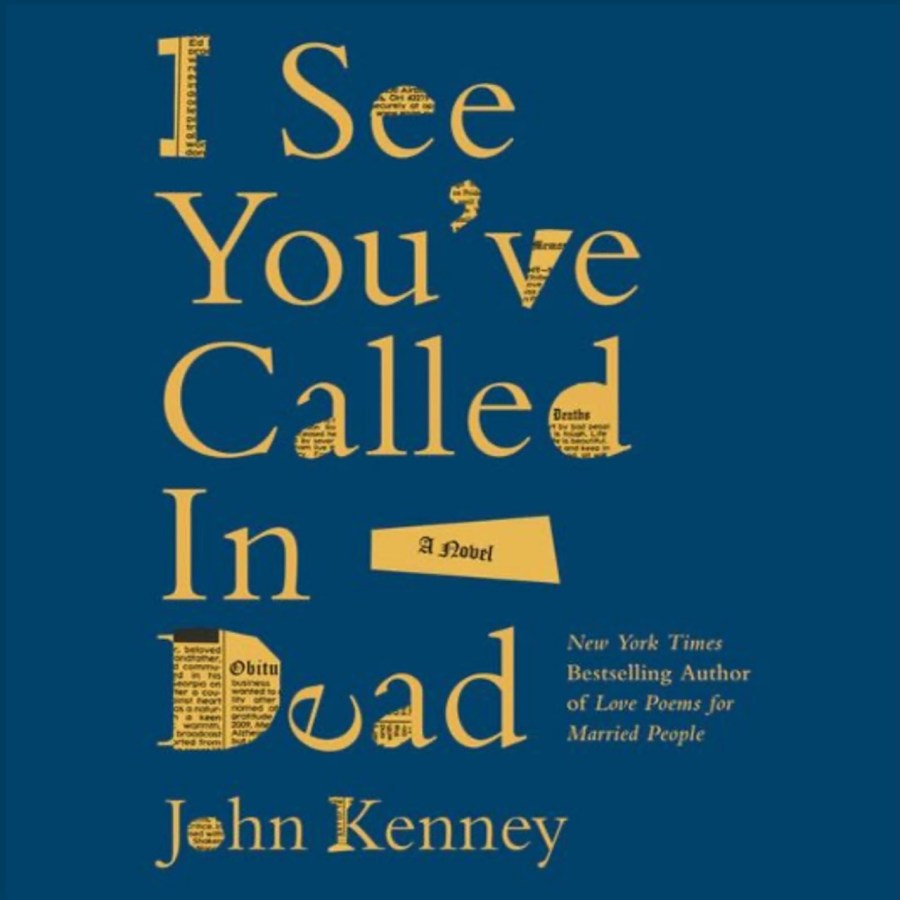
I found I See You’ve Called in Dead by John Kenney hilarious in a laugh out loud way.
One advantage for the dead is that they never have to read your writing.
Bud is a middle aged obituary writer, struggling in the wake of a failed relationship and lack of purpose. On top of all that his recent performance review highlighted a long list of failures – including significant errors in his published work. In one obituary he incorrectly wrote that an 80 year old woman had died by throwing herself off a bridge. What would her grandchildren make of that, his boss asks.
Are we ever fully honest with someone else? I don’t mean to suggest outright lies, but do we really express those quieter, deeper feelings? Those amorphous, hazy things, core things that even we struggle to admit to ourselves. Do we share everything?
Drunk and feeling sorry for himself one night, Bud writes his own obituary and accidentally publishes it to the web. When his company discovers the issue they want to fire him. A legal glitch prevents them – they cannot fire a dead person.
What would you write if you had to write your obituary? Today, right now. What comes to mind? What memories, days, moments? What people and experiences? I realize, at first glance, that the idea of writing one’s own obituary while still alive may sound morbid. It’s not, though. I promise you. It’s a needed reminder of who you are, of what truly matters. Because it’s your life and there’s still time to write it. Before I have to.
While the company tries to sort out Bud’s work situation so they can fire him, they suspend him from work. Bud starts going to the funerals of strangers in a bid to seek meaning in his own life.
Life prevails. How strange and wondrous. In the midst of death, life prevails, calls to us, begs us, says, Come, please, don’t you dare waste this precious gift.
I See You’ve Called in Dead is a wacky character driven, satirical tale about life, death and purpose.
We do not know where death awaits us: so let us wait for it everywhere. To practice death is to practice freedom.

