Book review: The Windup Bird Chronicle by Haruki Murakami

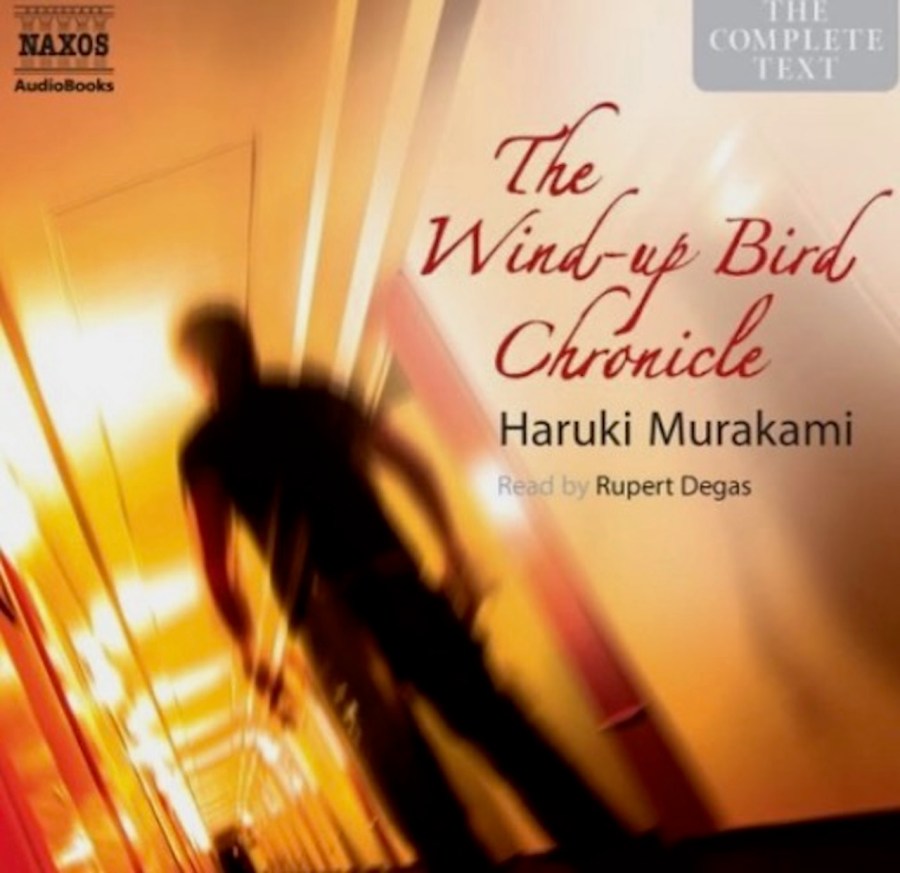
I am a fan of magical realism done well. And I loved the oddness of The Windup Bird Chronicle by Haruki Murakami, translated by Jay Rubin.

I’m not so weird to me.

Toru Okada quit his legal job in Tokyo, making his wife the primary breadwinner. After they lost their cat, Okada seeks help from a psychic. Then his wife Kumiko goes to work one day and does not return. Okada is overwhelmed by the loss, but the psychics take an interest in helping him. They even start appearing in his dreams. The psychics also have a connection to Kumiko’s brother, a rising politician, whom Okada doesn’t like. After Okada’s wife disappears, he is forced to meet her brother several times. He does this in an attempt to find her and win her back. 

I realize full well how hard it must be to go on living alone in a place from which someone has left you, but there is nothing so cruel in this world as the desolation of having nothing to hope for.

Okada becomes fascinated by an old soldier’s story. The tale is about being thrown into a Mongolian desert well by his captors at the start of WWII. Okada decides to drop down into a dry well in the yard of a deserted house next door to think.

The point is, not to resist the flow. You go up when you’re supposed to go up and down when you’re supposed to go down. When you’re supposed to go up, find the highest tower and climb to the top. When you’re supposed to go down, find the deepest well and go down to the bottom. When there’s no flow, stay still. If you resist the flow, everything dries up. If everything dries up, the world is darkness.

Okada’s teenage neighbour, May, calls Okada Mr Windup Bird after the call of a bird he describes to her. They share a fascination in death, and this almost kills him when the teenager traps him in the well. While in the well, he has an out of body experience. This leaves him with a bluish mark on his cheek, a representation of the transformation he then undertakes.

I’d be smiling and chatting away, and my mind would be floating around somewhere else, like a balloon with a broken string.

Dislocation, alienation and nameless fears abound in The Windup Bird Chronicle. The story is an examination of both the challenges of modern life and the shadow side of Japan. 

Book review: Sputnik Sweetheart by Haruki Murakami

Sputnik Sweetheart by Haruki Murakami is a story about friendship, unrequited love and loneliness. The story revolves around three characters.

Why do people have to be this lonely? What’s the point of it all? Millions of people in this world, all of them yearning, looking to others to satisfy them, yet isolating themselves. Why? Was the earth put here just to nourish human loneliness?

The narrator, K, is in love with his best friend Sumire. The protagonist, Sumire is in love with Mia, a woman 17 years her senior who is also her boss.

We’re both looking at the same moon, in the same world. We’re connected to reality by the same line. All I have to do is quietly draw it towards me.

K and Sumire spend hours on the phones in deep conversation about life, desire, sexuality and writing. Sumire is an unconventional aspiring novelist. K is a solitary intelligent primary school teacher. K’s unrequited love roots a deep longing and loneliness in him.

Don’t pointless things have a place, too, in this far-from-perfect world?

The exotic Mui employs Sumire in her wine company despite her limited skills or qualifications.  Mui has no idea Sumire is infatuated with her. 

In the spring of her twenty-second year, Sumire fell in love for the first time in her life.

Sumire and Mui go on a business trip. They end up on a Greek Island for a holiday after a house is offered to them over the summer by a couple of gay men they meet.

A story is not something of this world. A real story requires a kind of magical baptism to link the world on this side with the world on the other side.

One night K receives a distressing call from Mui imploring him to get on a plane immediately and go to the island. It is something to do with Sumire so he goes without question.

Who can really distinguish between the sea and what’s reflected in it? Or tell the difference between the falling rain and loneliness?

This is where the novel turns into a mystery. Sumire has disappeared without a trace from the island. It seems impossible without anyone noticing anything. Enter magical realism.

Understanding is but the sum of misunderstandings.

Sputnik Sweetheart is a short, cleanly crafted, story about existence, identity, what is real and what is hidden. As is common in Japanese literature Sputnik Sweetheart is a simple story with plenty of depth.

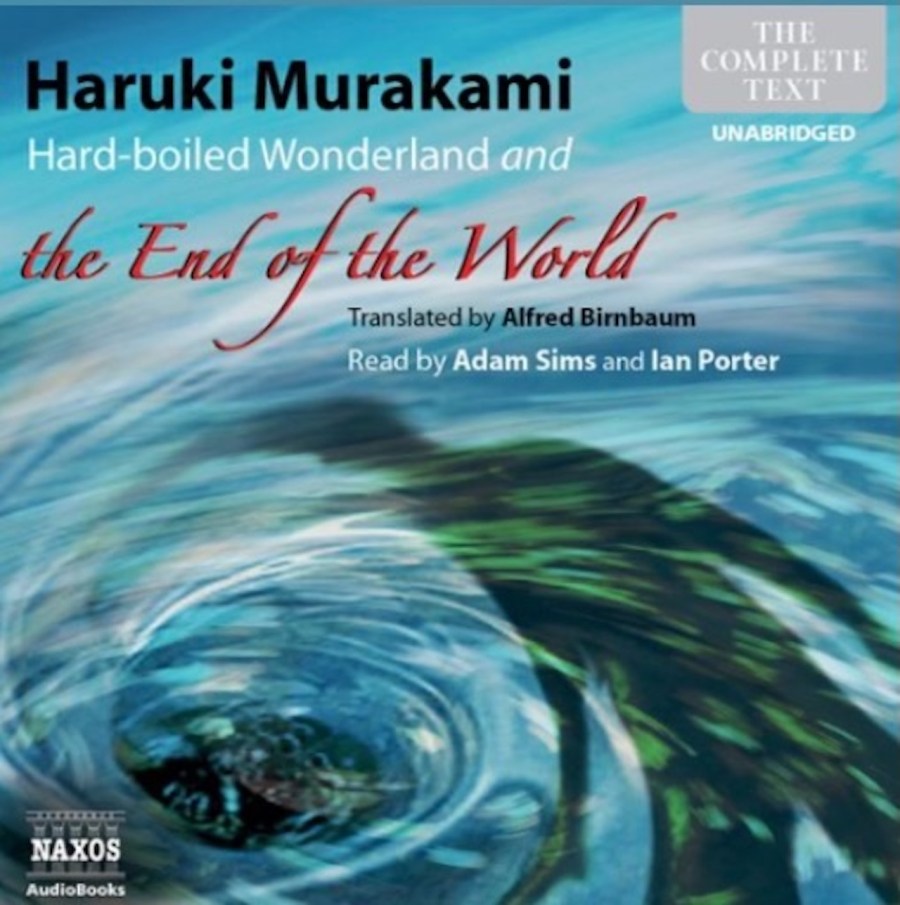
Book review: Hard boiled Wonderland and the End of the World by Haruki Murakami

Hard-boiled Wonderland and the End of the World by Haruki Murakami has two narratives. The hard-boiled narrative involves an unnamed Tokyo data processor who works for an entity called the System. He becomes involved with a scientist and his granddaughter after the scientist hires the narrator to launder and shuffle his research data. 

I never trust people with no appetite. It’s like they’re always holding something back on you.

The parallel end of the world narrative is set in a walled city where people are separated from their shadows and lose their minds. In this world the narrator is hired as a Dreamreader. The two narrators are linked by the Tokyo protagonists mind being shuffled into the end of the world.

I wasn’t particularly afraid of death itself. As Shakespeare said, die this year and you don’t have to die the next.

The story is as weird and layered as the title, but also totally engaging (despite a little sexism and cringe worthy fatphobic language at times, though it was first published in 1985). Speculative fiction and magical realism meets hard-boiled detective story. There’s even unicorns.

Huge organizations and me don’t get along. They’re too inflexible, waste too much time, and have too many stupid people.

Hard-boiled Wonderland and the End of the World explores subconsciousness and consciousness, how identity and memory are formed by the stories we tell ourselves, and fate and free will. There’s a whiff of Kafkaesque and Orwellian existential meditations…