
When I hear stars whispering at night I feel part of the eternal flow of time.
― Durian Sukegawa, Sweet Bean Paste
When I travel I like to read literature and watch movies from the place I am visiting to promote immersion in the culture and deepen my understanding of a place through the creative lens of local artists. On the plane on the way to Japan I watched Sakura, a mystery-thriller about an investigation into the death of two young woman, one a journalist whose friend Izumi works in the police PR department and believes she may be responsible for her friend’s death after revealing some insider information.
All experience adds up to a life lived as only you could. I feel sure the day will come when you can say: this is my life.
― Durian Sukegawa, Sweet Bean Paste
In keeping with the genre Sakura was tense with a twisting puzzle like plot. But the thing that most fascinated me about the film was the language and dialogue. People were softly spoken and there were many silences and pauses in conversation that left empty space. I love that silence is valued as a meaningful part of dialogue in Japanese culture. The spaces in conversation also contributed to the film’s tension and made me wonder about what was not said.
I began to understand that we were born in order to see and listen to the world. And that’s all this world wants of us.
― Durian Sukegawa, Sweet Bean Paste
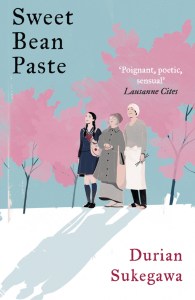
The trip also allowed time to read Sweet Bean Paste by Durian Sukegawa. The novel follows the development of a friendship between a mysterious old woman named Tokue and a man called Sentaro after his release from jail when he is running a dorayaki shop. They bond over perfecting the making of bean paste, and that represents their growing connection.
If all you ever see is reality, you just want to die. The only way to get over barriers, she said, is to live in the spirit of already being over them.
― Durian Sukegawa, Sweet Bean Paste
In Japan people with leprosy were forcibly isolated in sanatoriums up until 1996, preventing them from participation in society. The Sweet Bean Paste reflects on stigmatisation and prejudice in Japan, and the importance of having a purpose in order to be a useful member of society. What happens when societal prejudice prevents you from purpose?
People’s lives never stay the same colour forever. There are times when the colour of life changes completely.
― Durian Sukegawa, Sweet Bean Paste
In keeping with other Japanese literature I have read, the story focussed in on the day to day and the pace of Sweet Bean Paste was laconic.
It’s my belief that everything in this world has its own language. We have the ability to open up our ears and minds to anything and everything. That could be someone walking down the street, or it could be the sunshine or the wind.
― Durian Sukegawa, Sweet Bean Paste
The reverence of silence was prominent again, however in the written form we also gain insight into what is not said by the narrator – his prejudices, desires, insecurities and hopes. So overall my transit left me contemplating the idea of what is said and what is not said, a theme that I suspect will accompany my entire journey.
If I were not here, this full moon would not be here. Neither would the trees. Or the wind. If my view of the world disappears, then everything that I see disappears too. It’s as simple as that.
― Durian Sukegawa, Sweet Bean Paste
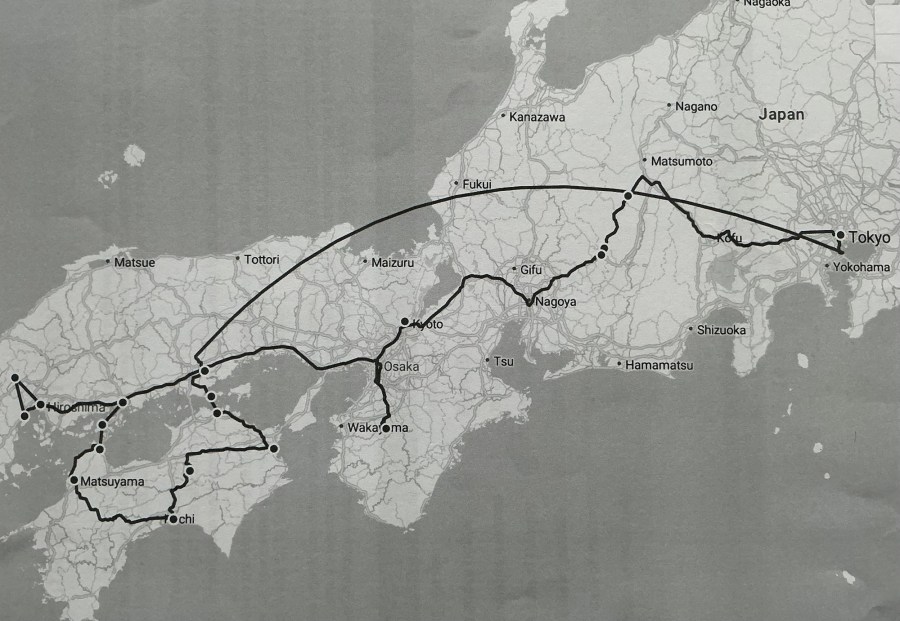
You may have guessed by now that my blog for the next few weeks will be reflections on my travels. If this is not of interest to you, come back at the beginning of December when I will return to my regular reviews, otherwise follow along on my journey through Japan.
She said that was the only way for us to live, to be like the poets.
― Durian Sukegawa, Sweet Bean Paste
 R L Smith