Fantasy novel, The Siren, the Song and the Spy by Maggie Tokuda-Hall is the sequel to The Mermaid the Witch and the Sea. In The Siren, the Song and the Spy there are more characters, the stakes are higher, and the story bigger than the first book.
The Sea is forever destined to forget. And I am forever destined to remember.
The Sea worries about the continued hunting of mermaids for their blood, Alfie has been helping pirates stage a rebellion against the Empire, and the Empire has been quelling rebellions as fast as it can.
I don’t believe we can beat them. Not because we are not fierce enough, but because in order to win, we’d have to abandon everything that we are.
Meanwhile Genevieve washes up on the Red Shore of Wariuta. Koa who finds her decides to spare her life even though she had a crack at his and his sister, Kaia. Kaia doesn’t trust her. As Genevieve begins to discover things are not all as she believed in the Empire, she has to decide where her loyalties lie.
Let’s go make something of this world.
The Siren, the Song and the Spy is an action packed, emotionally complex and rich story told from multiple points of view. There is deep diversity in the characters, and the world building is impressive and large scale. Themes include colonialism, oppression, imperialism, resistance,racism, ableism,
History, magical pencils, memory, stories, computer science, family drama, identity, culture, and queer romance are all packed into Allison King’s debut, The Phoenix Pencil Company. Duel timelines and multiple narrators reveal a family sage full of secrets and betrayal. The story is told in an epistolary format via blog-journal entries (Monica Tsai) and letters written by Monica’s grandmother (Wong Yun) to her cousin (Meng).
Written words are incredible in this way—they take a whole idea and condense it down with the help of the writer’s mind. The writer pulls in only the important parts. Each word is efficient, each tells the reader something.
Monica Tsai, a computer engineering college student, leaves school to care for her aging grandparents who raised her. Her grandmother, Wong Yun, has developed Alzheimers. While caring for grandma, Monica works for her professor’s tech company on a program called EMBRS – online diary software.
if our stories will be lost, no matter how hard we try to preserve them, then the only thing that really matters is the people in our lives, and how we treat them in this moment in time.
While searching for a gift for her grandmother’s ninetieth birthday, Monica finds her grandmother’s cousin, Meng via a young woman called Louise Sun. Louise is a student studying memory at Princeton and has interviewed Meng. She has a gift from Meng for Wong – a pencil. The two young women connect.
I couldn’t reconcile the Taiwan I knew with the Taiwan that EMBRS was trying to show me, a history of martial law and terror, its citizens disappeared or mysteriously killed for protesting, or simply for attending one wrong gathering.
Monica discovers a secret kept by her grandmother. Wong was involved in running the Pheonix Pencil Company in 1930s Shanghai when she was young and can ‘reforge’ pencils. This is a process by which she can access all the content ever written by the pencil as they retain the memory of the words put to paper. Japan invaded Manchuria in 1931, which led to WWII then the Chinese civil war – the pencil forging was used to support espionage by the Chinese military.
We heard about the forced confessions of business owners, how everyone was once again paranoid, trying to sniff out any capitalist leanings among their neighbors.
The Phoenix Pencil Company was inspired by King’s grandparents who ran a pencil company in Shanghai. A genre-bending story with insight into Chinese history, data, and privacy. The novel also asks who owns our stories?
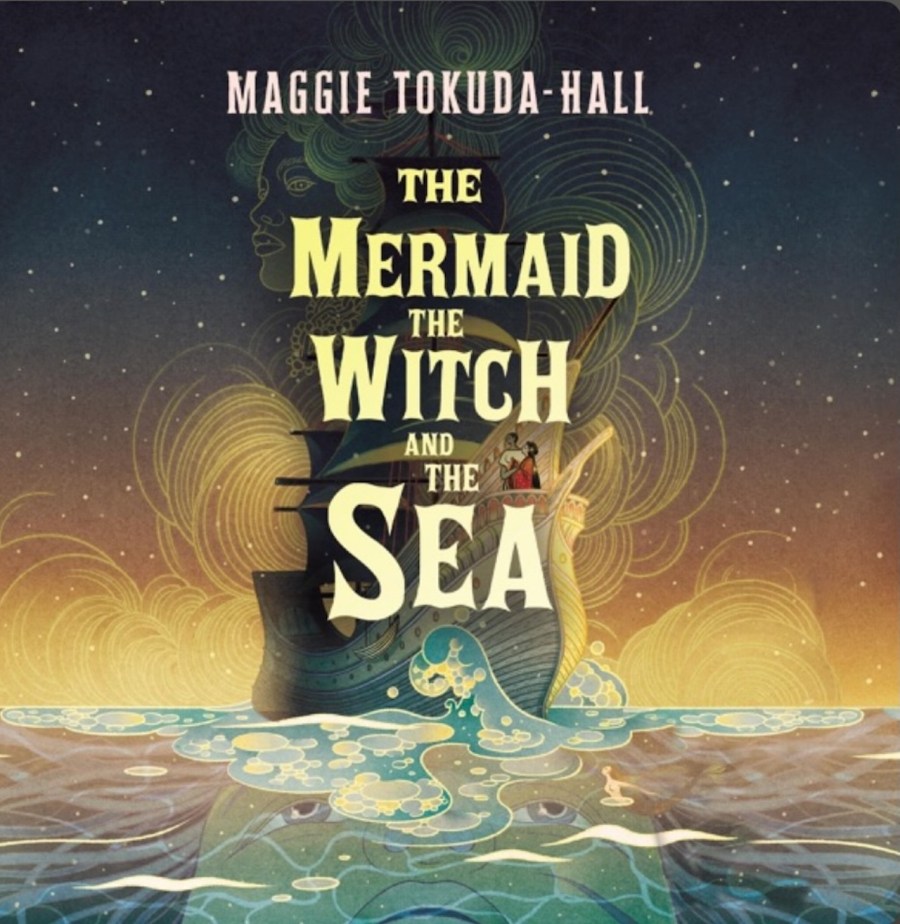
I read The Mermaid, the Witch, and the Sea by Maggie Tokuda-Hall with my book group and loved it. Queer + Pirates, what more could you want?
There’s freedom in stories, you know. We read them and we become something else. We imagine different lives, and while we turn the pages, we get to live them. To escape the lot we’re given.
The story is a young adult swashbuckling, fantastical, sapphic, girls own adventure. There are pirates, mermaids, greed driven, despotic overlords, hero’s and villains. Not that different to the real world really…colonialism, imperialism, misogyny.
Corsets are stupid
Flora and her brother became pirate crew in order to have a place to live and food in their bellies. Gender fluid and black, Flora disguises herself as a man called Florian (think Pope Joan?) and falls in love with one of the passengers – Lady Evelyn Hasegawa.
If Florian was the wall that guarded Flora, then Evelyn had scaled his heights.
Evelyn is on board supposedly to be wed in an arranged marriage at their destination. In actual fact her parents had sold her to the highest bidder due to her difference (code for lesbian). There’s a catch as the wealthy passengers are about to be told they are to be sold as slaves. So of course Florian has to rescue Evelyn.
After that, she wondered, how improper was it — really — to slap a man in the face for staring?
The pair make a daring escape, rescuing a mermaid in the process, who then along with the sea (a character with thoughts and feelings) rescues them – spitting them out on an island shore where a witch revives them.
There’s nothing out there to punish evil, no one out there to reward the righteous. We’re all just adrift.
The Mermaid, the Witch, and the Sea is brimming with diversity, adventure, romance and a good lashing of the kind of violence, blood and guts colonialism is famous for. A fun read and other worldly adventure.
I spent the weekend at my dad’s place near the beach. It’s a locale not so far from Melbourne but Telstra has largely abandoned it. As a result, there was no internet and little phone coverage. Thus the late review. The few days were very relaxing in a beautiful spot. It was perfect for writing a review set in the Greek islands.
In the new quiet I heard the sea as if my ears were laid against the ocean floor. I could hear everything. The rumbling earthquake of a ship and spider crabs moving between weeds.
In Deborah Levy’s novel Hot Milk, a mother and daughter travel to Spain. They are seeking diagnosis of, and treatment for, the mother’s mysterious paralysis illness.
She had no God to plead to for mercy or luck. It would be true to say she depended instead on human kindness and painkillers.
Twenty-five year old almost anthropologist turned waitress, Sofia is her mother’s primary carer. They remortgage the house to pay for treatment by an alternative medicine specialist called Dr Gomez in his Spanish clinic. The doctor, who works with his daughter, is obsessed with a pregnant white cat that lives in his office. It is unclear whether Gomez is legitimate or a quack.
I am my mother’s burden. She is my creditor and I pay her with my legs. They are always running around for her.
Rose frequently uses a wheelchair due to a mysterious intermittent paralysis of her legs and feet. As the story evolves it becomes apparent that Dr Gomez suspects hypochondria rather than a physical illness. He thinks both women are complicit in the illness – Rose for attention and love, and Sophia to avoid making a life of her own. He makes it his mission to try and help both the woman. For Sophia this includes setting a task to steal a fish from the market to build her courage.
Sometimes, I find myself limping. It’s as if my body remembers the way I walk with my mother. Memory is not always reliable. It is not the whole truth. Even I know that.
While in Spain Sofia takes on lovers and explores her sexuality and identity. She meets local Juan when he treats her for Medusa stings after swimming in jellyfish infested waters. She also has a passionate love affair with a German woman called Ingrid.
Empathy is more painful than medusa stings
Sophia’s relationship with her Greek father is also complex. We discover this when she goes to meet him in Athens. It is their first meeting in eleven years. She wants his help but is unable to ask for it, and her father equally unable to offer.
It would take a while for me not to think of the Greek language as the father who walked out on me
Hot Milk is an exquisite character study of ineffectual parenting. An exploration of the inner world of Sophia and her search for individuation, personal and sexual identity.
My love for my mother is like an axe. It cuts very deep
Hot Milk is a beautifully set, fragmented, quirky and strange story. It is lyrical, haunting and a little depressed. The story is almost dream-like and brimming with poetic metaphors. Sophia strives to become bolder. In doing so, she define herself and her life. Hot Milk was short listed for the 2016 Booker Prize.
Queer, atmospheric, and lyrical, The Unbecoming of Margaret Wolf by Isa Arsén is a noirish drama.
Only two things have come with me all the way to New York City from south of the Mason-Dixon Line: a bottle of Wild Turkey from what I once called home and an orange telephone.
In 1950’s New York, two Shakespearean actors marry for convenience. Margaret Shoard, who struggles with her mental health, marries her best friend Wesley. He is trying to avoid the scrutiny of the House Un-American Activities Committee for his relations with men. The two are asexual soul mates.
We were all of us strays, blacklisted or rich enough yet stymied by arrest records, the city’s shiniest if unpalatable dross.
Margaret plays Lady Macbeth on opening night. She identifies a little too much with her character which leads to a mental breakdown. She can’t work so wanders the streets of New York and takes prescription medication to get through her aimless days. After Wesley is hired to perform at Shakespeare’s Globe Theatre in the New Mexico desert over the summer, Margaret thinks this opportunity might be just what she needs. It could help her get her mojo back.
Every day of mine is a gift
What unfolds is drug fueled months of complicated arrangements with another theatre employee. The threesome results in a pregnancy, visitations from Lady Macbeth, and abuse.
Her gaze was bright and glittering with drink. She was the sort who held her liquor by way of deepened elegance and wit rather than sloppy dissolution.
Love, betrayal, female rage, self-discovery, theatre mobsters, and plenty of nods to the Bard can be found in The Unbecoming of Margaret Wolf. Content warning the story includes sexual assault, self-harm, murder and substance abuse.
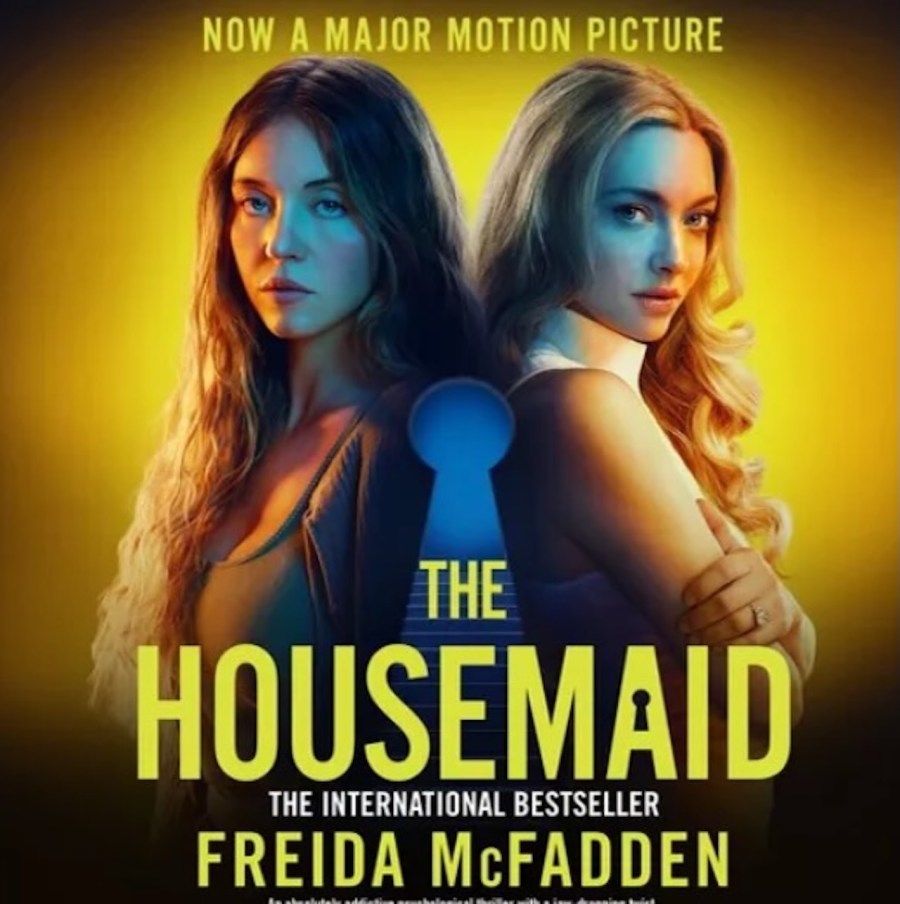
Plot twists abound in domestic suspense/psychological thriller The Housemaid by Freida McFadden. It’s got a feel of Sleeping With the Enemy meets Single White Female with its volatile domestic setting. The story involves a wealthy couple, Andrew and Nina. Their hired help, Millie, lives in a room in the attic.
Sometimes people do exactly what you think they’re going to do, and they still manage to disappoint you.
Homeless ex-con Millie is hired by the frumpy, volatile, and slightly unhinged Nina. Her job is to keep house for Nina, her hot charming husband Andrew, and her precocious blonde daughter. The women of the household always wear white.
“My mother always says the only way two people can keep a secret,” she says, “is if one of them is dead”.
Millie thinks Nina has hired her without looking into her past. She’s a little taken aback when shown to her small attic room. The window in the room won’t open, and the door has a lock on the outside. She decides to believe that the room was once just a storage cupboard, and it’s better than a prison cell.
Then again, plenty of men are idiots.
There is also Enzo, the non-English speaking gardener who lurks outside muttering in Italian that the place is not safe. Millie assumes it’s because Nina is so difficult.
Dad always says that if you’re going to do something wrong, at least be smart enough not to let anybody see you do it.
The Housemaid is full of plot twists, bizarre behaviour, and secrets and lies, like any good psychological thriller. Millie and Nina’s narration takes the reader on a roller coaster ride. Their crazy domestic life includes a doozie of a twist at the end. It’s a compelling fast read for lovers of domestic suspense. The Housemaid left me feeling like my life is comfortably pedestrian.
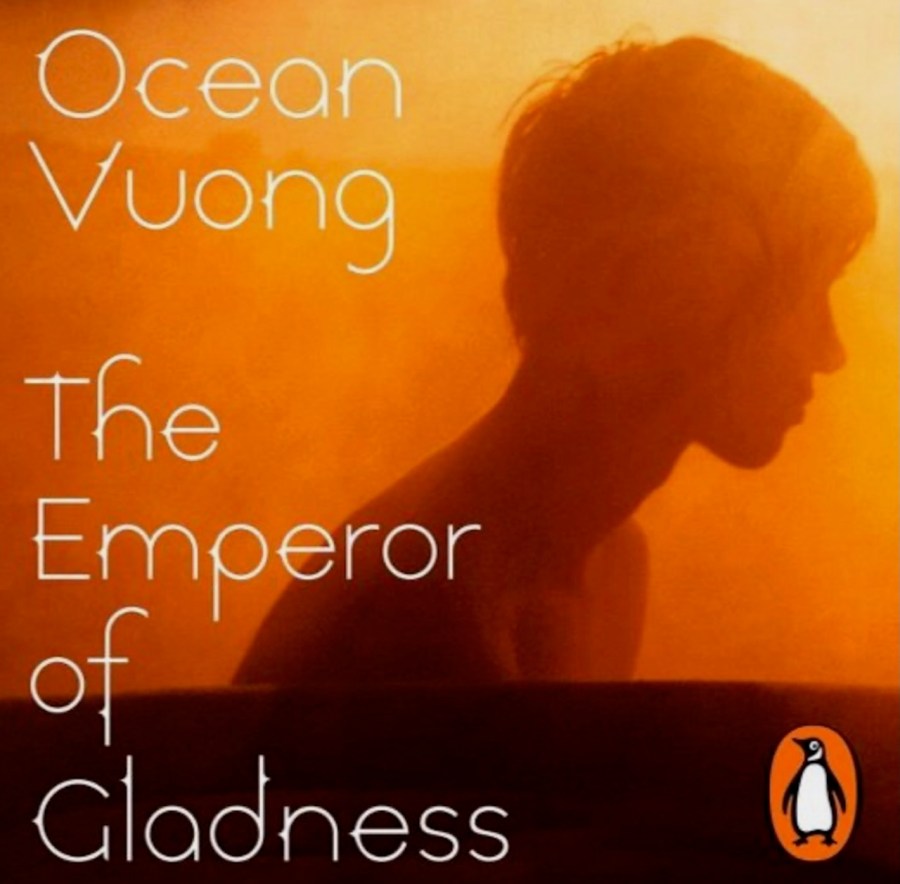
The Emperor of Gladness by Ocean Vuong is a poetic rendering. It is also a bleak story, both beautiful and sad.
The hardest thing in the world is to live only once. But it’s beautiful here, even the ghosts agree.
The Emperor of Gladness is set in the fictional town of East Gladness, Connecticut. Nineteen year old Hai stands on a bridge looking down at the river and contemplating jumping. He is interrupted by an old woman who threatens to call the police if he doesn’t climb down.
Words cast spells. You should know this as a writer. That’s why it’s called spelling, Labas.
The woman is eighty-two year old Grazina from Lithuania with mid-stage dementia. She demands that Hai come to her when he climbs down, and she adopts him.
You see, carrots become bright orange because it’s so dark in the ground. They make their own light because the sun never reaches that far—like those fish in the ocean who glow from nothing? So when you eat it, you take in the carrot’s will to go upward. To heaven.
Hai moves in with Grazina and becomes her carer and friend. He also rifles through her medicine cabinet looking for medications to feed his addiction.
The prisons and madhouses have locked them up, so you think you’re the only one out there losing your mind when in fact there are many like you, trapped in this supposedly free world of work and sleep and endless fucking cakes.
Meanwhile, Hai’s Vietnamese mother thinks he has gone to medical school in Boston. Hai continues this charade, calling his mother to give her updates on his studies, for much of the novel. As Grazina’s mental state worsens, Hai uses various role plays to assist her. Her delusional episodes make her relive distressing scenes from her escape from Nazi-occupied Europe.
It was one of those friendships that came on quick, like the heat on a July day, and long after midnight you could still feel its sticky film on your skin as you lie awake in your room, the fan blowing in what remained of the scorched hours, and realize for the first time in your peep of a life that no one is ever truly alone.
The Emperor of Gladness is about grief, addiction, despair, poverty, sadness and trauma. There is also an enduring hope in the friendship that develops between Hai and Grazina.
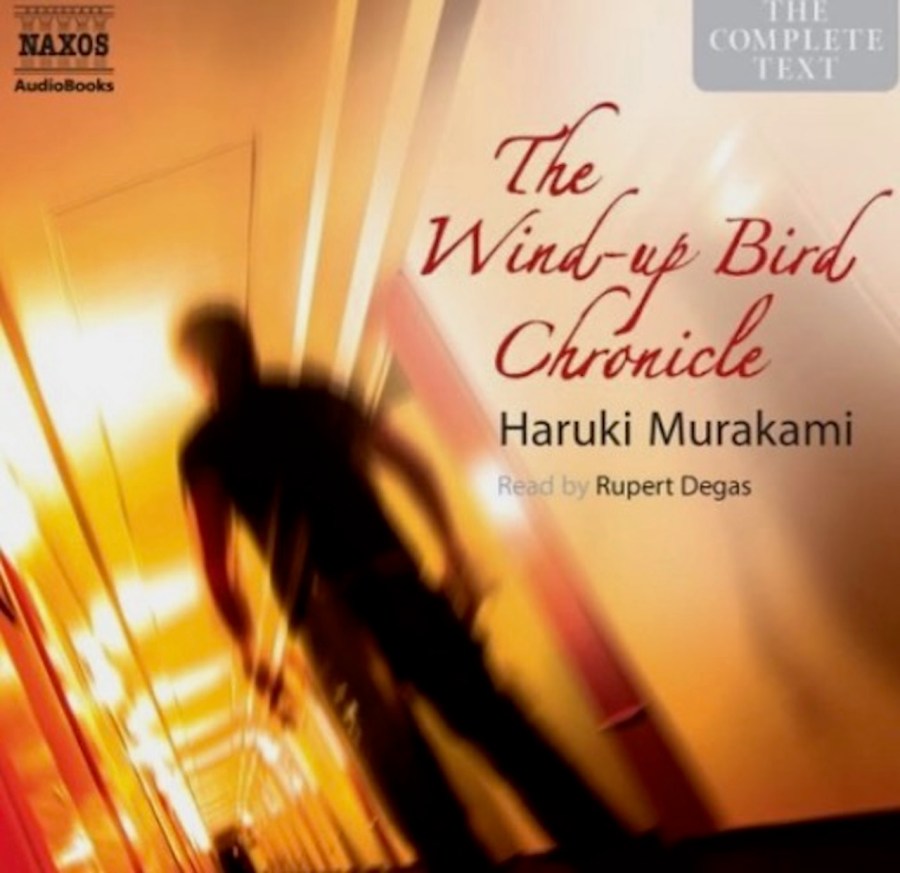
I am a fan of magical realism done well. And I loved the oddness of The Windup Bird Chronicle by Haruki Murakami, translated by Jay Rubin.
I’m not so weird to me.
Toru Okada quit his legal job in Tokyo, making his wife the primary breadwinner. After they lost their cat, Okada seeks help from a psychic. Then his wife Kumiko goes to work one day and does not return. Okada is overwhelmed by the loss, but the psychics take an interest in helping him. They even start appearing in his dreams. The psychics also have a connection to Kumiko’s brother, a rising politician, whom Okada doesn’t like. After Okada’s wife disappears, he is forced to meet her brother several times. He does this in an attempt to find her and win her back.
I realize full well how hard it must be to go on living alone in a place from which someone has left you, but there is nothing so cruel in this world as the desolation of having nothing to hope for.
Okada becomes fascinated by an old soldier’s story. The tale is about being thrown into a Mongolian desert well by his captors at the start of WWII. Okada decides to drop down into a dry well in the yard of a deserted house next door to think.
The point is, not to resist the flow. You go up when you’re supposed to go up and down when you’re supposed to go down. When you’re supposed to go up, find the highest tower and climb to the top. When you’re supposed to go down, find the deepest well and go down to the bottom. When there’s no flow, stay still. If you resist the flow, everything dries up. If everything dries up, the world is darkness.
Okada’s teenage neighbour, May, calls Okada Mr Windup Bird after the call of a bird he describes to her. They share a fascination in death, and this almost kills him when the teenager traps him in the well. While in the well, he has an out of body experience. This leaves him with a bluish mark on his cheek, a representation of the transformation he then undertakes.
I’d be smiling and chatting away, and my mind would be floating around somewhere else, like a balloon with a broken string.
Dislocation, alienation and nameless fears abound in The Windup Bird Chronicle. The story is an examination of both the challenges of modern life and the shadow side of Japan.
If Cats Disappeared from the World by Genki Kawamura is a short quirky novel translated from Japanese by Eric Selland.
I wonder why people always expect from others things that they themselves can’t or won’t do.
After a visit to the doctor, a thirty year old postman discovers he has a terminal brain tumour. He’s a pretty pedestrian guy. He has few friends and is estranged from his father. He is out of touch with his ex girlfriend and lives with his cat, Cabbage. Cabbage gains the power of speech during the novel.
Love has to end. That’s all. And even though everyone knows it they still fall in love. I guess it’s the same with life. We all know it has to end someday, but even so we act as if we’re going to live forever. Like love, life is beautiful because it has to end.
The postman decides to make a bucket list. He arrives home to find the devil in a Hawaiian shirt sitting on his sofa. The devil is called Aloha and he has a proposition. He will grant the postman an extra day of life for each item he agrees that the devil can remove entirely from the world.
In order to gain something, you have to lose something.
The first object the postman selects is phones. No big drama. The absence of phones just seems to make people more engaged with the world. Clocks and movies are next. The postman uses his extra days to connect with people that have had meaning in his life. The agreement works swimmingly until Aloha suggests that cats should disappear from the world. Then the postman has to start weighing up the real value of his own life.
I don’t know whether I’m happy or unhappy. But there’s one thing I do know. You can convince yourself to be happy or unhappy. It just depends on how you choose to see things.
If Cats Disappeared from the World delves into themes such as grief and love. It explores what makes life worth living and the importance of human connection.
Against the Loveless World by Susan Abulhawa is a historical fiction work about trauma (trigger warning). It is a tense, emotional and absorbing read. The story is narrated by a Palestine woman, Nahr, from solitary confinement. She has spent years in a small cement prison cell as a political prisoner. After a sympathetic guard provides her with pencils and a notebook Nahr begins to fill the pages with an account of her life.
I colonized the colonizer’s space of authority. I made myself free in chains and held that courtroom captive to my freedom.
Nahr and her family had been displaced many times. From Kuwait, her country of birth, Iraq, Jordan, and Palestine, her ancestral homeland. Nahr was subject to an arranged marriage at a young age to a Palestinian man who subsequently abandoned her. She was then tricked and blackmailed into becoming a sex worker by a women called Um Buraq. The exploitation gave her financial independence, but she also lost faith in love and men.
This was what it meant to be exiled and disinherited—to straddle closed borders, never whole anywhere.
Eventually Nahr traveled to Palestine to seek a divorce. Through her husbands brother she got involved with a group of young resistance fighters. This is how she ended up being locked in the concrete cube accused of being a terrorist.
To act is to be committed, and to be committed is to be in danger.
Against the Loveless World is much more than a story about personal trauma and the violence of conflict and war. It is a novel about politics, displacement, the desire for belonging, gender, survival and love. A very powerful read.