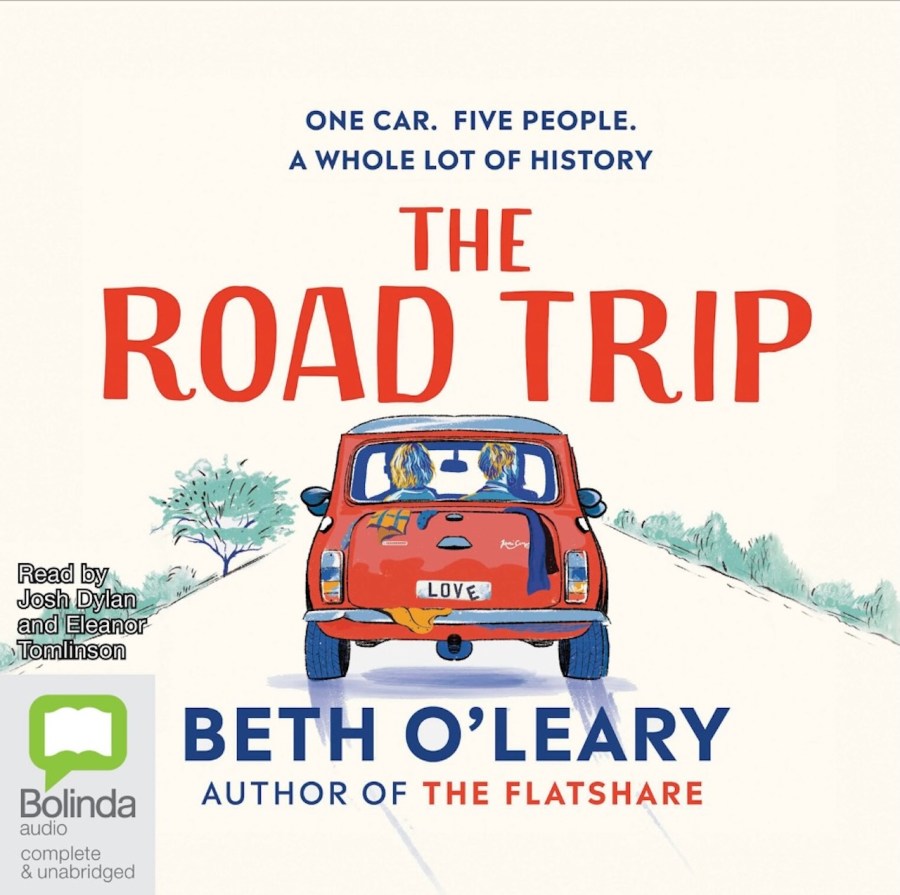
Book review: There are Rivers in the Sky by Elif Shafak

Water will always find a way. Water is life-giving, scarce (despite covering over 70% of the earth’s surface) and political.

Water is the consummate immigrant, trapped in transit, never able to settle.

There are Rivers in the Sky by Elif Shafak revolves around the points of view of three characters, spans centuries and moves between London, Ancient Mesopotamia, Turkey and Iraq.  Shafak is also the author of The Island of Missing Trees.

Home is where your absence is felt, the echo of your voice kept alive, no matter how long you have been away or how far you may have strayed, a place that still beats with the pulse of your heart.

Narin is a young Yazidis girl who lives near the Tigris and is gradually losing her hearing. Her grandmother is determined that Narin be baptised in the Valley of Lalish in Iraq. The Yazidis community has been subject to persecution since the year 637 of the Common Era.

Better to be a gentle soul than one consumed by anger, resentment and vengeance. Anyone can wage war, but maintaining peace is a difficult thing.

Arthur is highly intelligent and has a brilliant memory but was born into extreme poverty in London in 1840 near the river Thames.  Arthur begins his working life in a publishing house, but his passion is a quest for the sacred tablets that depict poems dating back to Mesopatamia. Arthur’s character is based on Assyriologist George Smith, who first discovered and translated the The Epic of Gilgamesh.

It is an odd thing, to lose faith in the beliefs you once held firmly. How strange it is to have carried your convictions like a set of keys, only to realize they will not open any doors.

Zleekhah is a hydrologist who moves to live in a houseboat on the Chelsea Embankment on the River Thames in 2018 after her marriage fails. The houseboat is owned by a tattooist who befriends her, and then becomes her lover. Zleekhah studies the lifecycle of rainfall and her character gives voice to the water crisis unfolding from climate change.

As ripples of heat rise into the air, the raindrop will slowly evaporate. But it won’t disappear. Sooner or later, that tiny, translucent bead of water will ascend back to the blue skies. Once there, it will bide its time, waiting to return to this troubled earth again…and again. Water remembers. It is humans who forget.

The story begins  in ancient Mesopotamia with a droplet of water falling into the hair of erudite king Ashurbanipal. We follow the raindrop through cycles, forms and centuries as it interacts with each of the characters until it intersects in 2018 with the main protagonist Zaleekhah Clarke who is fascinated by the notion that water might have memory.

She wants to excuse herself from a world where she often feels like an outsider, a confused and clumsy latecomer, an accidental guest who walked in through the wrong door at the wrong time.

It is hard to imagine initially how the disparate threads will come together, but they do. Along the way you learn about the ancient Assyrian city of Nineveh, the architecture and art of Mesopotamia, cuneiform writing, the Epic of Gilgamesh, the horrors of living under ISIS, as well as about life along the River Thames in the UK.

For every displaced person understands that uncertainty is not tangential to human existence but the very essence of it.

There are Rivers in the Sky is an exquisitely written, vibrant, rich and meticulously researched story. Sharak is a great story teller and the novel is both intellectually stimulating and thought provoking. 

people fall into three camps: those who hardly, if ever, see beauty, even when it strikes them between the eyes; those who recognise it only when it is made apparent to them; and those rare souls who find beauty everywhere they turn, even in the most unexpected places.
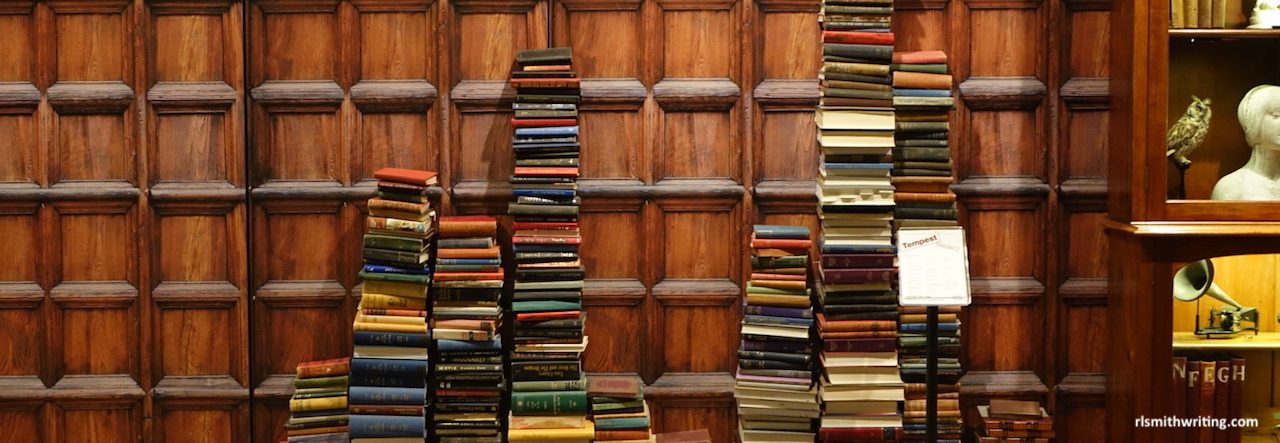
Book review: The Awkward Truth by Lee Winter

The Awkward Truth by Lee Winter is a fun light lesbian mystery-romcom.

Protagonist Felicity Simmons is a socially awkward but brilliant corporate lawyer, and a tough negotiator who takes independence and self-sufficiency to the extreme. Totally career focussed, she doesn’t need friends, though she does worship her mentor-boss. Felicity is the protégé of Elena Bartell, media tycoon and owner of Bartell Corporation and is in training to become COO because Elena wants to move to Sydney.

“I’m perfectly calm,” Felicity snapped. “You know, this is not the first time I’ve been treated as though I’m some zoo oddity to be picked apart. People often assume the worst about me because I don’t conform to how they think I should be. I’m not warm enough. I don’t smile enough. I don’t hold my tongue or lie or coddle to protect fragile egos. Apparently, I have ‘all the maternal instincts of an alpine glacier.’ Direct quote from my previous boss.”

Felicity is a bit prickly. Her boss Elena sends her protégé off to investigate the charity Living Ruff that provides vet services to the pets of people experiencing homelessness. The charity has announced it’s in financial trouble and about to fold and Elena wants to know what happened to a significant $1.4 million donation she gave it recently. She also wants to test whether Felicity has a heart.

“Then it seems to me you have a choice. Show her she’s wrong about you. Or do absolutely nothing. Those are your options. But understand that if you want to know what your life will be like in ten years, change nothing now.”

Felicity is eager to impress, and takes her logic and smarts off to visit the homeless charity and sort it out. This is where she meets the kind, humble amazonian veterinarian Dr Sandy Cooper. Gradually Felicity starts to see the world through different eyes.

As long as she lived, Felicity would never forget what she’d just seen. It hadn’t ever occurred to her that a powerful, imposing woman might need a Harvey in her life. He seemed to recharge her emotional reserves. That’s why Rosalind loved her mild-mannered bookkeeper. Among other things, he kept her going when she was drained by a demanding world.

The Awkward Truth is a fun engaging opposites attract mystery with bold characters. The story reflects on the notion that the peaks of success are a lonely place without a passion, compassion and people to connect and share you endeavours with. It also explores homelessness, human-animal relationships, and how being confronted by those things can impact and change others. I particularly liked the charity/cute pets element.

Book review: Blue Sisters By Coco Mellors

Set across Paris, LA, London and New York, Blue Sisters by Coco Mellors is about four very different sisters, one of whom (Nicky) has recently died in an accident. Each chapter follows a different remaining sister (Avery, Bonnie, Lucky) as they grapple with grief and self-destructive behaviours. A year after Nicky’s death the sisters meet up in New York City when their parents have decided to sell Nicky’s apartment.

Barely perceptibly, unnoticed by anyone else, they leaned toward each other, like plants for whom the other was the sun.

The remaining sisters are between mid twenties and mid thirties. Each leads a very different life. Avery the oldest is a former addict turned corporate lawyer married to a woman who was her therapist. Bonnie is a champion boxer working as a bouncer in Los Angeles and in love with her boxing coach though neither have acknowledge this. Lucky the youngest has been a model since she was fifteen and lives the party life in Paris. The deceased sister Nicky was a Manhattan high school English teacher who longed to become a mother but died from an overdose of painkillers taken to try and manage very painful endometriosis. 

The trick to loving Lucky, Bonnie wanted to tell Avery, was to respect her need to be free. Let her come and go as she pleased and eventually, she would land on you

Avery’s carefully managed life starts to crack under the strain of her grief.  Lucky’s drug fuelled party life leaves her feeling more and more isolated. Bonnie takes out her grief fuelled rage on a racist patron at the bar she works at.

None of us really know what another is going through until that person feels able to share the truth of their lived experience.

As the story unfolds family and sibling dynamics and triggers and their influence on shaping character are gradually unveiled. This forms the spine of the novel which shows how these dynamics impact day to day life of each of the sisters in their relationships with each other and their relationships with other people. There is a great Freudian tension throughout. 

Avery had previously thought love was built on large, visible gestures, but a marriage turned out to be the accrual of ordinary, almost inconsequential, acts of daily devotion—washing the mugs left in the sink before bed, taking the time to run up or downstairs to kiss each other quickly before one left the house, cutting up an extra piece of fruit to share—acts easy to miss, but if ever gone, deeply missed.

Themes in Blue Sisters include grief, sibling relationships and the impact of addiction in families. The prose is beautiful, rich and visceral and the characterisation is an excellent driver of tension throughout. Blue Sisters is a great read even for someone who doesn’t have sisters.

Once you get to my age, you will learn that you can take a lot of wrong turns and still end up in the right place.

Book Review: Bottom of The Breath by Jayne Mills

Debut novel Bottom of the Breath by American author Jayne Mills is intriguing from the opening. It is a story about a woman called Cyd coming to terms with revelatory family secrets after receiving a surprise inheritance, overcoming betrayal, and facing her fears to discover that she is much stronger than she believed herself to be.

Helen’s recipe for a happy life, then and now: Stop wanting something other than what is. 

There is a massive storm heading straight for the small coastal town of Lola in Florida and the residents are battening down the hatches in preparation. The approaching hurricane provides an ominous backdrop and sense of foreboding to the beginning of Cyd’s story and is a great vehicle to amplify the tensions emerging in her life. Cyd is helping her friends Helen and Nick for prepare the Osprey Cafe for the onslaught of the storm. 

I’ve lost my ability to imagine what I should do or can do. I need something or someone to believe in.

Nick asks Cyd to drive to a nearby town to pick up some supplies for the café and she agrees despite an aversion to driving. Noticing patterns in the everyday, Cyd experiences a surge of happiness when she glances at the car’s clock and sees the time 11:11 right before a cataclysmic event. When Cyd discovers the circumstances of what happened to her it disrupts her life and her sense of self, and a transformative journey begins.

There is no beginning and no end, just layer upon layer of rock and sediment for as far as she can see, dug through to expose the very heart of the earth. The colors are endless, at once muted and brilliant: purples and blues, oranges and golds, deep green and stark white. There are cliffs and gullies, mesas and buttes, and sandstone walls penetrating a vertical mile from top to bottom.

Travelling from Florida to Sedona and the Grand Canyon in Arizona, Cyd goes in search of answers, and in search of self. I remember visiting the Grand Canyon back in 2005 and being in awe of its vastness and Mills does a great job of capturing that sense. The Grand Canyon scenes are another example of environment as character in the story and how nature can shape us. I particularly enjoyed this element of Bottom of the Breath.

It represents beginnings and endings, the natural passage of the cycles of life. The perfection of the path that has led her to this moment is as clear as the stream she waded in the previous day. There is no room for regret. Regret is wasted energy. None of her past can be changed nor should it be. Only her mindset can change. The story can change.

Bottom of the Breath is contemporary fiction with elements of adventure, mystery and romance. Discover a new literary voice by pre-ordering Bottom of the Breath now from your preferred bookstore or it will be available for general released on July 8, 2025, published by She Writes Press. Thanks to Jayne Mills and She Writes Press for the ARC.

While I was reading Bottom of the Breath some questions came to mind that I wanted to ask Jayne and she was kind enough to take the time to respond:

What inspired you to write this particular book?  I’ve heard it said that oftentimes the book you set out to write is not the book you actually write. That was true for me. The first germ of an idea was one I carried around for decades. It is based on a true family secret. After the shock of what I learned wore off a bit, I thought, “This would make a great book.” Much of the story changed as I wrote, but that part never did.

What was most challenging in the writing of the book? You don’t know what you don’t know. Although I have always been a voracious reader, it wasn’t until I wrote the first draft of this book that I realized how little I knew about structuring a novel. I had to study the craft over the course of years as I wrote. I also had to write as much as I could while working full-time in my “real” job as a portfolio manager. I would tell any writer, don’t doubt that you can write a book in 15-minute intervals. You absolutely can!

What’s your favorite part of the writing process? I love writing. It’s my meditation. I truly never tire of it.

Do you have a specific writing routine or environment? I wrote this book whenever I could, mostly early mornings and weekends. But I will write whenever and wherever. I don’t have a particular routine as far as a place or a word-count goal. My life is too varied for that type of structure. I am a disciplined and determined person, though, so that helped me stay committed over a long period of time.

What are you working on now? I’m working on my second novel, which is set in my hometown of St. Augustine, Florida, the nation’s oldest city. I love setting. It plays a huge role in Bottom of the Breath, and it will play a big role in my next book. St. Augustine is steeped in history and is known for its ghost stories. The town and some of its past residents will be part of my next literary adventure. I’ve also gone deep down into the astrology rabbit hole over the past couple of years. It’s my latest obsession, and I’m studying every chance I get.

What authors inspire you? So, so many. I love everything by Liane Moriarty and Ann Patchett. Lauren Groff and Maria Semple are incredible. I just discovered Eleanor Lipman, who is delightful, and I recently devoured Bear by Julia Phillips. Alice Munro and Claire Keegan are among my favorite short story writers. I just reread Jane Eyre. (It was my mother’s favorite.) And I’m reading Constance Fenimore Woolson, who wrote in St. Augustine in the late 1800s as part of the research for my next novel. (Yes, I read men, too! I thoroughly enjoyed Who is Rich by Matthew Klam, and I could read Breakfast at Tiffany’s every year.)

Book review: When God Was a Rabbit by Sarah Winman

Things happen. To everyone. No one escapes.

When God was a Rabbit by Sarah Winman is a story about the bond between siblings Elly and Joe spanning four decades. The story begins in 1968 and ends when they are adults in 2011. It is about growing up and how the good, bad, funny and weird that can happen in ordinary life shape us, and how people come in and out of our orbits through life and leave an impression.  When God was a Rabbit is also about how family in all its imperfections can provide a container for the the light and shade of existence.

I divide my life into two parts. Not really a Before and After, more as if they are bookends, holding together flaccid years of empty musings, years of late adolescent or the twentysomething whose coat of adulthood simply does not fit.

The first part of the novel covers Elly and Joe’s close childhood relationship, family connections, eccentric and sometimes dark friendships, and Elly’s relationship with her pet Belgian hare called God who was given to her by her brother. The vehicle of the rabbit God will resonate with anyone who had a special relationship with an animal and/or imaginary friends that had a magical realism quality to them in childhood.

She was of another world; different. But by then, secretly, so was I.

The second part of the story is set in adulthood. From Elly to her movie star aunt and lottery winning parents to her queer brother and odd ball friend Jenny Penny, the characters are beautifully flawed, generous, passionate, baggage laden uniquely ordinary people. Set partly in the UK and partly in the US, the passing of time is marked by pivotal public events like the death of John Lennon and Princess Diana and the 9/11 attacks. 

‘Do you believe in God, Arthur? I said, eating the last piece of sponge.

‘Do I believe in an old man in the clouds with a white beard judging us mortals with a moral code from one to ten? Good Lord no, my sweet Elly, I do not! Do I believe in a mystery; the unexplained phenomenon that is life itself? The greater something that illuminates inconsequence in our lives; that gives us something to strive for as well as the humility to brush ourselves down and start all over again? Then yes, I do. It is the source of art, of beauty, of love, and proffers the ultimate goodness to mankind. That to me is God.That to me is life. That is what I believe in.’

The rabbit as a deity provides humour in some of the darker moments of the novel and reappears as a symbol of the enduring power of relationships in the face of uncertainty. When God was a Rabbit is a lyrical beautifully crafted story – and what a fabulous title!

I am here but I am not yours.

Book review: Translations by Jumaana Abdu

I have been making my way through the books shortlisted for the Stella Prize and recently finished reading Jumaana Abdu’s debut Translations. It is a novel with a beautiful cover and a story that is rich and complex.

In the weeks before leaving the city, she had wished her father’s house would collapse on her to grant her some relief. In the last days of her marriage, she had sat on their penthouse balcony and watched planes fly low overhead, gripped by a superb terror when for a moment it seemed a plane might stoop so low as to crash into her building, low enough to crush her, suffocate her, obliterate everything.

Set during a summer of raging bushfires in NSW, Aliyah and her nine-year old daughter, Sakina, move to a rural town and buy and old house, shedding their previous lives as Moslem women. The house, we discover as the novel unfolds, has its own complicated history.

The violence of a settler colony pushed me out of my land, only for me to come here where the same violence is ongoing. I do to you what was done to me. And those who forced me to escape slaughter were once forced to do the same. Like a chain of loss and expulsion, only none of us get back what was ours. It takes a hypocrite to flee from occupied land to a land of the occupied, or maybe just a desperate man, but you can’t say that you don’t expect me to take responsibility when I say that I expect it from Israeli children who were born and raised on the land I consider my own, which is also the only land they have ever known. The two thoughts can’t be reconciled, and yet I live here, I want to plant my feet here, and I also hate that feet are planted where I lived before, so I’m ashamed. I know what’s yours.

Needing help to develop the property in her image of a permaculture farm, Aliyah hires a farmhand. Shep is an extremely private and mostly silent Palestinian man and the areas imam. Aliyah also works as a nurse in the local hospital a few days each week where she befriends the local midwife, Aboriginal woman Billie and her family.

Aliyah took the blow. She turned away and pressed her hand hard across her eyes. This crisis, which should have swept the two women together, had instead torn open an honesty that marooned them almost two decades apart. Perhaps the closest they had ever been was the moment they had first met, drawing blood, and every meeting thereafter had been an attempt to regain an irretrievable intimacy.

During a storm Alyiah encounters a childhood friend, Hana, who has escaped a difficult home situation.  Aliyah takes her in and the two women and Shep try to navigate a curious triangle.

They became uncitizens. Aliyah ran the idea over and over in her mind, all down the highway splitting the bush either side of her like an emerald sea. She thought it in the prophetic tense, to frame it as a future so certain it was as though it had already happened.

Themes explored include friendship, faith, race, identity, belonging, colonialism, trauma, and living with natural disasters. Translations is a beautiful layered philosophical read that, like a permaculture garden, works perfectly as a cohesive whole and invites reflection.

Book review: Love Objects by Emily Maguire

Love Objects by Emily Maguire is not an easy read. The novel shines a light on the dark side of class relations, the challenges of the mental health condition hoarding and what is means to care for family with mental illness.

As Nic said, second-hand clothes were like day drinking, government handouts and having a lawyer: classy if you’re rich, proof you’re trash if you’re poor.

Forty-five year old Nic, a childless department store check out chick living alone in her inherited childhood home collects random stuff. She falls after climbing onto piles of things to reach a hook to hang something she collected on the way home from work and injures herself badly. Unable to move she drifts in and out of consciousness. Childhood memories keep her company, triggered when she spies an old tiara under her bed.

People have died of sadness, Lena knew. Was this what it felt like, just before?

Lena is Nic’s niece. She lives hand to mouth at the Sydney university where she studies, hiding her economic disadvantage from her wealthy peers. She meets and has sex with rich boy Joshua not realising he is filming them. He posts the video on the internet and despite hiding Lena’s face, she is recognisable by a large scar on her arm.

No such thing as custody rights to your sister’s kid. No matter how destroyed you are by her absence.

Will is Nic’s nephew. After being released from jail for drug offences, he has a relationship with a woman who has children by someone else. He loves this life, but is cut adrift when the woman ends the relationship and he heads south to Sydney to see his sister and aunt. He is trying to deal with a rotten tooth that gives him a lot of pain but he cannot afford a dentist.

Will, she texted, how have we gone all these years and not known our aunty is completely and utterly batshit crazy?

Lena goes looking for Nic after she doesn’t turn up at a lunch date and finds her semi-concsious in her house so crammed with stuff that emergency services have to cut a path through the clutter to get her out. Nic is a hoarder. While Nic is in hospital the house is deemed a health hazard by a social worker and Lena agrees to deal with the contents so Nic can return home. Will arrives and helps Lena finish the job.

She puts today’s newspaper on the kitchen table, where it slips about for a few seconds before settling nicely. It would sit on the kitchen table until she had a chance to finish reading it, and if that hasn’t happened by bedtime she will put it with its colleagues in the hallway, waiting for a day when she has more time, better concentration.

Love Objects has a third person narrative divided between the three main characters – all of whom are dealing with their own losses, but the central focus is Nic’s hoarding disorder and how the three characters respond. Maguire offers great compassion to her characters through her compelling writing and this carries the reader through a difficult read.

Book review: The Last Devil to Die by Richard Osman

The Last Devil to Die is the final in Richard Osman’s Thursday Murderer Club mystery series. Book 1, The Thursday Murder Club and book 2, The Bullet that Missed are also reviewed on this blog. In The Last Devil to Die the four intrepid pensioners Joyce, Elizabeth, Ron, and Ibrahim from Coopers Chase retirement village look into the murder of antiques dealer Kuldesh Sharma after he is shot in the head and a package he was meant to be looking after disappears. 

We complain about life so endlessly and so bitterly, and yet we cling to it so dearly? Surely that makes no sense?

Additional plot lines are threaded in. Our investigative elders grow suspicious when new resident Mervyn Collins tells them about his online relationship with a Lithuanian called Tatiana. He keeps trying to help her out financially, but the money keeps disappearing and his girlfriend never materialises. They decide Mervyn needs to be saved from himself and what they believe to be a relationship scam. Meanwhile former spy and leader of the oldies gang Elizabeth and her husband Stephen grapple with his advancing dementia.

But, however much life teaches you that nothing lasts, it is still a shock when it disappears. When the man you love with every fibre starts returning to the stars, an atom at a time.

The Last Devil to Die true to style is packed with Osman’s cheeky humour. He manages to make fun of the human condition and aging while still covering difficult topics with sensitivity. Osman crafts Joyce, Elizabeth, Ron, and Ibrahim as pensioners to aspire to be – feisty, fearless and friended to the grave.

That’s the thing about Coopers Chase. You’d imagine it was quiet and sedate, like a village pond on a summer’s day. But in truth it never stops moving, it’s always in motion. And that motion is ageing, and death, and love, and grief, and final snatched moments and opportunities grasped. The urgency of old age. There’s nothing that makes you feel more alive than the certainty of death.

I have now read and thoroughly enjoyed the entire Thursday Murderer Club series and am inspired to develop some outrageous retirement goals myself. I would live at Coopers Chase any day.

Book review: Theory and Practice by Michelle de Kretser

Michelle de Kretser’s latest novel, Theory & Practice, opens as a conventional fiction narrative, but soon after it begins is abruptly interrupted by the narrator. Cindy proceeds to reflect on her life, first as a child in Sri Lanka and then as a young woman living in Melbourne in 1986 and tackling post graduate study on her idol, Virginia Woolf whom she calls ‘Woolfmother’.  As her studies progress, she struggle with Woolf’s flawed humanity and contradictions between her progressive public persona and her private racism and pretentiousness.

Instead of shapeliness and disguise, I wanted a form that allowed for formlessness and mess. It occurred to me that one way to find that form might be to tell the truth

For those of us who were of University age in the mid 80s when education was free, the work is both familiar and compelling. It was a time when learning was seeped in theories about how we ought to live, while life was experimental and relationships were complicated. This tension between what we believe about how we should live, and how we actually live runs throughout the story as our protagonist’s feminist ideals clash with her lived experience. But as humans we often abandon our moral principles in pursuit of self-interest.

While trusting in feminism’s transformative power, I retained a stubborn, dazed belief in love.

Cindy becomes friends with a couple called Kit and Olivia. Cindy and Kit become lovers and Cindy develops a distant and jealous dynamic with Olivia, behaviour that defies her feminist principles. Meanwhile she contends with a constant stream of passive-aggressive messages from her widowed mother who lives in Sydney and continues to exert maternal influence making Cindy feel guilty for leaving her to move to Melbourne.

I was twenty-four. The first thing I did in Melbourne was buy a vintage dress. The dress was made of lace, and had cap sleeves, an empire waist and a fitted knee-length skirt. It dated from the early sixties, when thousands of its kind must have been made. Now fashion had plucked it from oblivion and filled it with warm young bodies again. Powder-blue and rose and coffee-cream variants existed, but my dress was Intellectual Black.

Theory & Practice is unsentimental and bristling with the anxiety of youth. Fiction and non fiction collide throughout this novel which defies conventional form, blending fiction, essay and memoir.  Themes include identity, displacement, feminism and colonialism. Highly recommended, especially if you enjoy unconventional narratives and remember the 80’s.

Book review: Our Homesick Songs by Emma Hooper

Our Homesick Songs by Emma Hooper is a book about place and the people who inhabit it. In Big Running, Newfoundland, where the community relies on the fishing industry, the fish have disappeared and the people begin to abandon their homes in search of work.

When they needed to remember where they were from, they could sing to see, to remember. They’d sing along, all together, sing and sing until morning.

Aidan and Martha Connor don’t want to move off the island so they job share on Canada’s mainland while also juggling home and children, Finn aged 10 and Cora aged 14, on the island.  Cora spends her time decorating the abandoned houses in the town by turning them into different countries – Italy, England, Mexico. When Cora goes missing, Finn becomes desperate to attract the fish back to Big Running in the hope it will reunite his family.

And sometimes the water was blue, more blue than sky, and sometimes it was dark and green and thick, and sometimes it was hardly any colour, changing and moving and pushing and pulling like breath.

Our Homesick Songs is a story of what happens to small communities when their primary natural resources disappear and is both heartbreaking and hopeful, in part due to the dual timelines. Finn in the present (1992-93) and his parents union twenty years earlier when fish were plentiful. 

All songs are homesick songs, Finn. Even the happy ones? Especially the happy ones.

Hooper elicits a compelling sense of place and atmosphere in this poetic story about family, love, being brave and keeping the faith. The reader can almost hear the plaintive mermaid song across the water.